Re-Entry Permit Florida: Avoid Green Card Abandonment
For Lawful Permanent Residents (LPRs) in Florida, understanding how to prevent green card abandonment is crucial, especially when planning extended trips outside the U.S. A re-entry permit (Form I-131) is a vital document designed to protect your permanent residency status, allowing you to remain abroad for up to two years without raising concerns about your intent to abandon your U.S. home. This guide covers everything from defining green card abandonment and the importance of a re-entry permit to a step-by-step application process, required documents, processing timelines, and associated costs. Learn to avoid common mistakes and identify when legal counsel from Florida Immigration Lawyers is essential to secure your status and ensure smooth re-entry into Florida.

A re-entry permit is a crucial document for Lawful Permanent Residents (LPRs) in Florida who plan to stay outside the U.S. for extended periods, typically over one year but less than two. It serves as evidence that you did not intend to abandon your green card status, protecting you from potential issues upon re-entry. Without it, absences exceeding six months can raise questions, and absences over one year are presumed abandonment, requiring a complex immigrant visa process to return. Obtaining a re-entry permit from USCIS before departure is key to safeguarding your permanent residency.
- A re-entry permit prevents the presumption of green card abandonment.
- It allows LPRs to remain outside the U.S. for up to two years without issues.
- Application (Form I-131) must be filed while physically in the United States.
- Biometrics are required, typically at a Florida Application Support Center (ASC).
- Consulting an attorney is vital for complex cases or long-term travel plans.
Imagine you're a Lawful Permanent Resident (LPR) in Gainesville, Florida, with family abroad or a job opportunity overseas. You might plan to travel for several months, or even a year or two. While your green card grants you permanent residency in the U.S., extended absences can put your status at risk. Many LPRs are unaware that staying outside the United States for too long can lead to the presumption of green card abandonment, potentially jeopardizing their ability to return home to Florida.
This comprehensive guide will explain what a re-entry permit is, why it's essential for Florida LPRs, and how to navigate the application process to protect your hard-earned permanent residency. We'll delve into the nuances of long-term travel, common pitfalls, and when professional legal guidance is indispensable. Don't let uncertainty threaten your immigration status. Call Florida Immigration Lawyers at 1-844-967-3536 for a free consultation and ensure your travels do not compromise your future in Florida.
Understanding Green Card Abandonment for Florida Residents
As a Lawful Permanent Resident, your green card signifies your intent to make the United States your permanent home. When you spend significant time outside the country, U.S. Customs and Border Protection (CBP) officers at ports of entry, including Florida's busy airports like Miami International or Orlando International, may question whether you have abandoned this intent. The legal framework for this presumption is found in 8 CFR 211.1(a)(2) and is a critical consideration for any LPR planning extended international travel.
Generally, an absence from the U.S. of less than six months is considered temporary and usually does not raise abandonment concerns. However, absences between six months and one year can prompt CBP officers to scrutinize your intent. They may ask for evidence demonstrating your continued ties to the U.S., such as property ownership in Florida, family here, U.S. tax filings, or employment. An absence of one year or more automatically creates a presumption of abandonment, making re-entry challenging without proper documentation like a re-entry permit. This is particularly relevant for LPRs in Florida who might travel frequently to the Caribbean, Central, or South America for business or family reasons.
Proving you did not abandon your residency can be difficult without a re-entry permit. Factors considered include your initial intent when leaving, the duration of your absence, whether you maintained U.S. ties (like a Florida driver's license, bank accounts, or voter registration), and the reasons for your prolonged stay abroad. If CBP determines you abandoned your residency, you could be placed in removal proceedings, which is a stressful and complex situation requiring expert legal defense. Understanding these risks is the first step in protecting your LPR status, especially for those in vibrant, internationally connected communities across Florida, from Jacksonville to Tampa to Miami. For more information on maintaining your status, visit USCIS.
What is a Re-Entry Permit (Form I-131) and Why Do You Need It?
A re-entry permit is a travel document issued by U.S. Citizenship and Immigration Services (USCIS) on Form I-131, Application for Travel Document. Its primary purpose is to allow Lawful Permanent Residents to remain outside the United States for up to two years without being considered to have abandoned their permanent resident status. For many Florida LPRs, this document provides invaluable peace of mind when planning extended international trips, whether for work, education, family emergencies, or simply long visits with relatives abroad.
When you present a valid re-entry permit upon returning to the U.S., it serves as prima facie evidence of your intent not to abandon your permanent residency. This means that CBP officers will generally not question your intent to return, significantly streamlining your re-entry process. Without this permit, you might face extensive questioning, delays, or even denial of entry and placement into removal proceedings if the officer believes you've given up your U.S. home. It also allows you to apply for a visa at a U.S. embassy or consulate abroad if you need one to enter another country, as it serves as a valid travel document in lieu of a passport in some cases, though it does not replace your passport.
The re-entry permit is typically valid for two years from the date of issuance. It is important to note that you must apply for the permit while you are physically present in the United States. You cannot file this application from abroad. This means that if you are an LPR living in Orlando or Fort Lauderdale and anticipate needing to travel for an extended period, you must plan ahead to file Form I-131 before your departure. This foresight is critical for maintaining your status and avoiding complications upon your return to Florida. The permit is governed by section 223 of the Immigration and Nationality Act (INA).
Step-by-Step Guide to Applying for a Re-Entry Permit in Florida
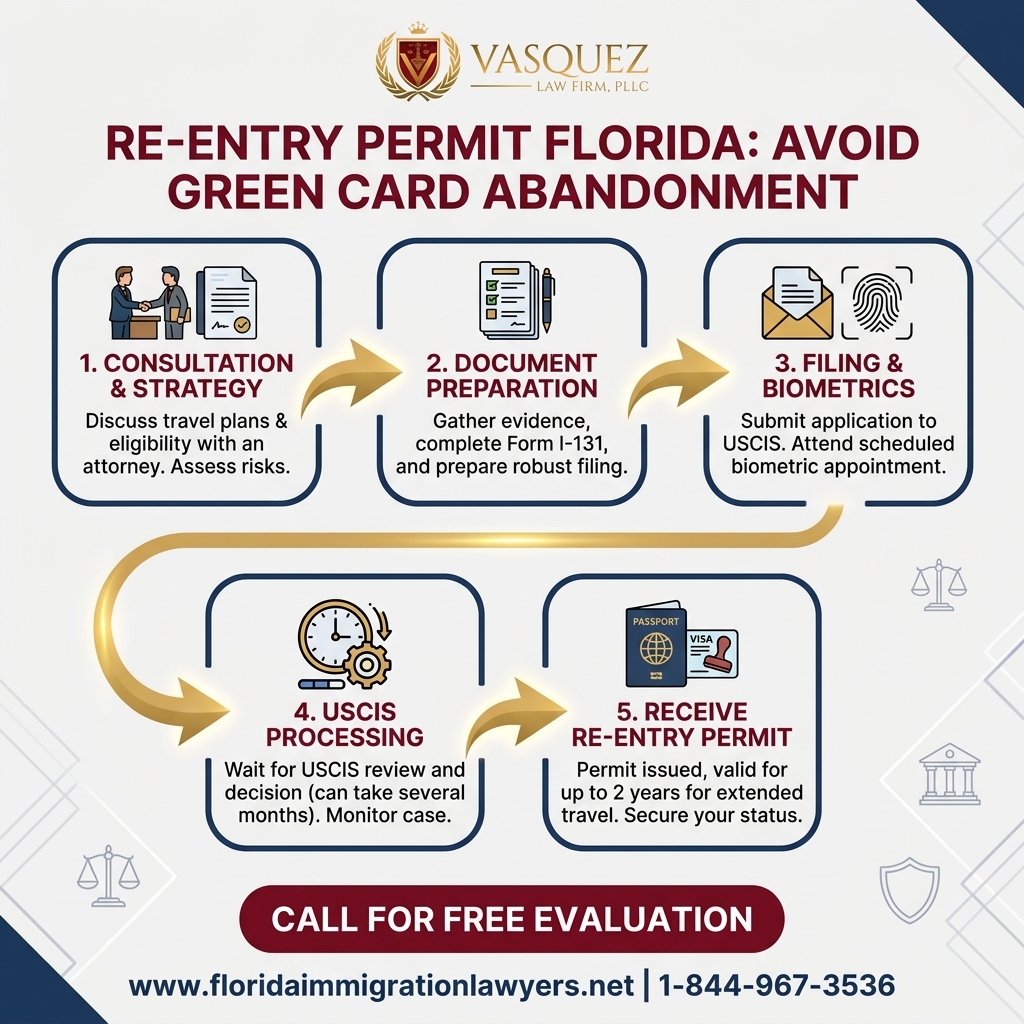
Applying for a re-entry permit (Form I-131) can seem daunting, but following a structured approach can simplify the process for Florida LPRs. Here's a detailed guide:
-
Determine Eligibility: First, ensure you are a Lawful Permanent Resident or a conditional permanent resident. You must be physically present in the U.S. when you file Form I-131. If you have been outside the U.S. for a cumulative total of four of the last five years since becoming an LPR, you might be issued a permit valid for only one year, unless you are a professional athlete or work for a U.S. government entity.
-
Complete Form I-131: Download the latest version of Form I-131, Application for Travel Document, from the USCIS website. Fill it out accurately and completely. Pay close attention to all sections, especially those asking for your travel plans and reasons for extended absence. Any inaccuracies or omissions can lead to delays or denials.
-
Gather Supporting Documents: Collect all necessary evidence. This typically includes copies of your Green Card (Form I-551), your passport biographical page, two passport-style photos, and any previous re-entry permits. You may also need to provide documentation supporting your reasons for travel, such as employment letters, school enrollment, or medical records, though this is not always explicitly requested at the initial filing stage.
-
Pay the Filing Fees: Submit the correct filing fee for Form I-131, along with the biometrics services fee. USCIS fees are subject to change, so always check the most current fees on the USCIS website before filing. Fees are non-refundable, even if your application is denied.
-
File Your Application: Mail your completed Form I-131, all supporting documents, and the fee payment to the USCIS Lockbox facility specified in the form instructions. For most I-131 applications, this is the Dallas Lockbox. Do not send it to a local USCIS office in Florida.
-
Attend Biometrics Appointment: After filing, USCIS will send you a notice for a biometrics appointment (fingerprints, photos, and signature) at an Application Support Center (ASC). For Florida residents, this could be in Orlando, Miami, Jacksonville, Tampa, or other locations. You MUST attend this appointment. You cannot travel internationally before attending biometrics, as USCIS may consider your application abandoned. If you must travel urgently, discuss options with an attorney.
-
Wait for Decision: USCIS will process your application. You will receive a notice when your re-entry permit is approved and mailed to the address you provided. If you plan to travel before the permit is issued, you may arrange for it to be sent to a U.S. embassy or consulate abroad, but this requires specific arrangements and is best managed with legal counsel. The permit is typically valid for two years from its issue date.
Required Documents for Your I-131 Application
A complete and accurate application package is vital for a smooth re-entry permit process. Missing documents or incorrect information can lead to delays, Requests for Evidence (RFEs), or even denial. For Florida LPRs applying for Form I-131, ensure you have the following:
- Copy of your Green Card (Form I-551): Provide clear photocopies of both the front and back of your Permanent Resident Card. This is primary proof of your LPR status.
- Copy of your Passport's Biographical Page: Include a copy of the page from your valid passport that shows your photo, name, date of birth, and passport expiration date.
- Two Identical Passport-Style Photos: These photos must meet specific USCIS requirements (2x2 inches, white background, full face, unretouched, taken within 30 days of filing). Write your name and A-number lightly on the back of each photo.
- Proof of Identity (if applicable): If you do not have a Green Card yet but have other evidence of your LPR status (e.g., I-90 stamp in your passport), include copies of those documents.
- Copy of any Previously Issued Re-Entry Permit: If you have previously been issued a re-entry permit, include a copy of it, even if it has expired. This helps USCIS track your travel history.
- Evidence of Ties to the U.S. (Optional but Recommended): While not always mandatory for initial filing, including documents that demonstrate your continued ties to the U.S. can strengthen your case, especially if your travel history is complex. Examples include property deeds in Florida, U.S. tax returns, bank statements, utility bills, employment verification letters, or school enrollment records in Florida.
- Statement of Reasons for Travel: A brief letter explaining the purpose and anticipated duration of your extended absence from the U.S. is often helpful. This is particularly important for absences exceeding one year.
Re-Entry Permit Processing Timelines and Expectations for Florida Applicants
The processing time for a re-entry permit (Form I-131) can vary significantly, depending on USCIS workload, policy changes, and the specific service center handling your case. For Florida applicants, understanding these timelines is crucial for planning your international travel effectively. As of early 2026, typical processing times can range from several months to over a year. It is important to check the USCIS website for current processing times, as these figures are updated regularly.
After filing your Form I-131, you will first receive a receipt notice (Form I-797C) within a few weeks, acknowledging that USCIS has received your application. The next major step is the biometrics appointment. This appointment is usually scheduled 3-8 weeks after your receipt notice. For LPRs in Florida, this will take place at a local Application Support Center (ASC) in cities like Miami, Tampa, Orlando, or Jacksonville. It is absolutely critical that you attend this appointment before you leave the U.S. If you depart before your biometrics are taken, USCIS may deny your application for abandonment.
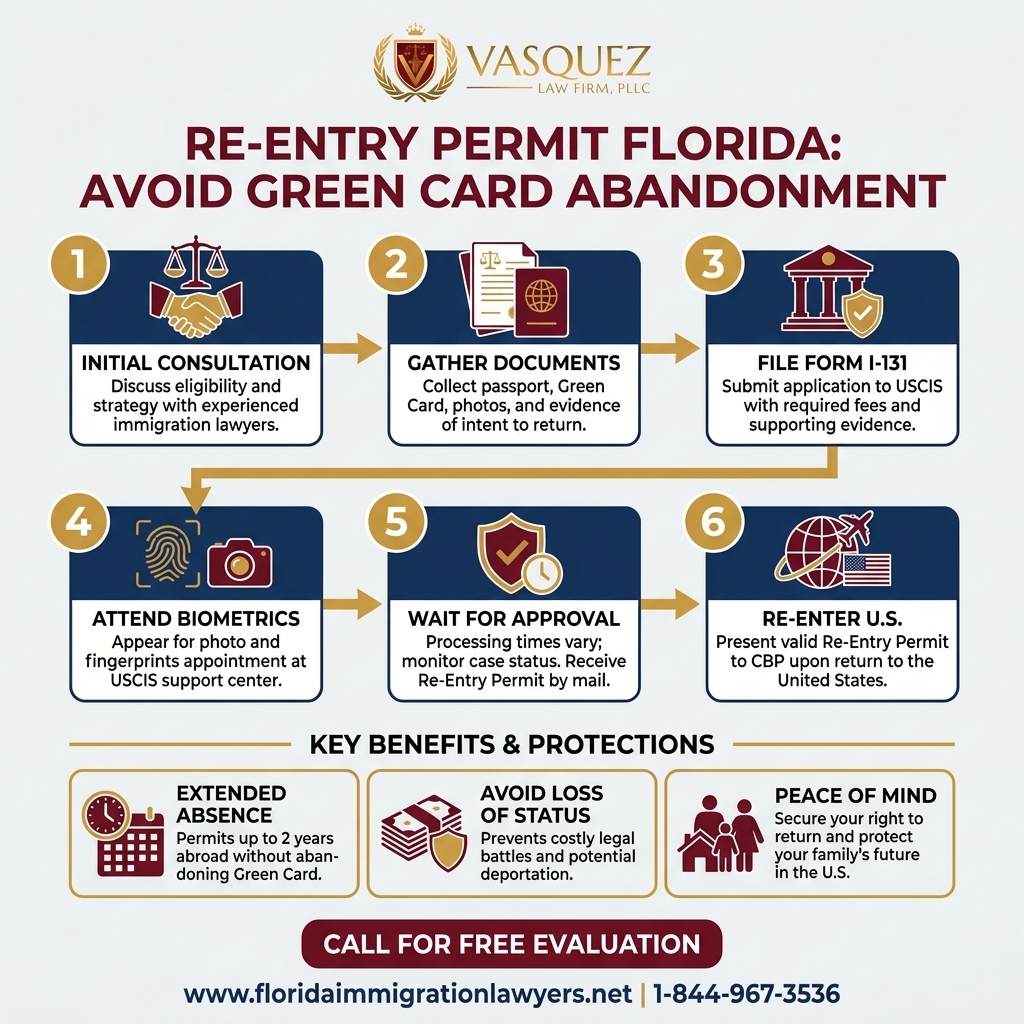
Once biometrics are completed, the waiting period for the final decision and mailing of your re-entry permit begins. While some cases might be processed faster, it is not uncommon for the entire process to take 9-15 months. If you anticipate needing to travel before your permit is issued, you generally have two options: either delay your travel until the permit arrives, or arrange for the permit to be mailed to a U.S. embassy or consulate abroad where you can pick it up. The latter option requires careful coordination and is best facilitated with the assistance of an experienced immigration attorney. Planning well in advance is the best strategy to avoid any disruption to your travel plans or your LPR status.
Cost Factors and Fee Breakdown for the I-131 Application
Understanding the costs associated with applying for a re-entry permit is an important part of your planning. The fees are set by USCIS and are subject to change, so always verify the current amounts on the official USCIS website before submitting your application. There are primarily two types of fees you will encounter:
First, there is the Form I-131 filing fee. This is the base fee for processing your application. This fee is non-refundable, regardless of the outcome of your application. Second, there is a separate biometrics services fee. This fee covers the cost of collecting your fingerprints, photograph, and signature at a USCIS Application Support Center. Both fees must be paid at the time of filing your Form I-131 application.
In addition to these government fees, you should also factor in potential legal fees if you choose to hire an immigration attorney. While not mandatory, legal representation can be invaluable, especially for complex cases, those with prior immigration issues, or LPRs who have already spent significant time outside the U.S. An attorney can help ensure your application is accurate, complete, and submitted with all necessary supporting documentation, minimizing the risk of delays or denials. Furthermore, an attorney can assist with any Requests for Evidence (RFEs) or other communications from USCIS, and help arrange for the permit to be sent abroad if you must travel before it's issued.
Other potential costs might include postage for mailing your application, travel expenses to your biometrics appointment in Florida, and the cost of obtaining passport-style photographs. While these may seem minor, they add to the overall financial commitment. Budgeting for all these components ensures a smoother application process without unexpected financial burdens. Always consult the official USCIS fee schedule for the most up-to-date information before preparing your payment.
Common Mistakes to Avoid When Applying for a Re-Entry Permit
Even a small error in your re-entry permit application can lead to significant delays or even denial, putting your green card status at risk. Be vigilant and avoid these common pitfalls:
-
Filing While Outside the U.S.: You must be physically present in the United States when you file Form I-131. Filing from abroad will result in an immediate denial, as required by 8 CFR 223.2(b)(1).
-
Departing Before Biometrics Appointment: This is a critical mistake. If you leave the U.S. before attending your scheduled biometrics appointment, USCIS will typically consider your application abandoned and deny it. Plan your travel carefully.
-
Incomplete or Inaccurate Form I-131: Failing to fill out every section, providing inconsistent information, or making typos can trigger Requests for Evidence (RFEs) or outright denial. Double-check all entries, especially your A-number and address.
-
Submitting Incorrect or Expired Fees: USCIS fees change periodically. Always verify the current filing fee and biometrics fee on the USCIS website. Sending an incorrect amount will cause your application to be rejected.
-
Insufficient Supporting Documentation: Not including clear copies of your green card, passport, or required photos can delay processing. For complex cases, lack of evidence of U.S. ties can also be problematic.
-
Not Planning for Processing Times: Assuming your permit will arrive quickly is a mistake. Processing times can be lengthy, often 9-15 months or more. File well in advance of your planned departure date.
-
Overstaying the Permit's Validity: A re-entry permit is typically valid for two years. Overstaying this period without returning to the U.S. and re-applying can still lead to abandonment issues upon re-entry. It does not grant indefinite absence.
-
Misrepresenting Intent or Travel Reasons: Providing false information about your reasons for extended travel can have severe immigration consequences, including findings of fraud or misrepresentation.
-
Failing to Update Address with USCIS: If you move within Florida or to another state while your application is pending, you must update your address with USCIS promptly to ensure you receive all notices, including your biometrics appointment and the approved permit.
-
Not Consulting an Attorney for Complex Cases: If you have a criminal history, previous immigration violations, or a lengthy record of absences, attempting to navigate the I-131 process alone is risky. Legal advice is paramount.
When to Call a Lawyer for Your Re-Entry Permit Application
While some straightforward re-entry permit applications might be filed independently, many situations warrant the expertise of an experienced immigration attorney. For Lawful Permanent Residents in Florida, seeking legal counsel can prevent costly mistakes and safeguard your status. You should strongly consider contacting Florida Immigration Lawyers if any of the following scenarios apply to you:
- Complex Travel History: If you have a history of frequent or very long absences from the U.S., or if you've previously faced questioning about abandonment at a port of entry, an attorney can help prepare a strong case.
- Prior Immigration Issues: Any past denials of immigration benefits, previous removal proceedings, or criminal convictions can complicate your I-131 application. An attorney can assess the impact of these issues and advise on the best approach.
- Urgent or Unforeseen Travel: If you need to travel urgently and cannot wait for the standard processing times, an attorney can explore options like expedited processing or strategies for picking up your permit abroad.
- Uncertainty About U.S. Ties: If you're unsure whether your ties to Florida are strong enough to demonstrate intent not to abandon your residency, a lawyer can help you gather and present compelling evidence.
- Risk of Abandonment: If you have already been outside the U.S. for an extended period (e.g., nearing or exceeding six months) and are concerned about abandonment, an attorney can provide immediate guidance.
- Need for Multiple Permits: If you foresee needing multiple re-entry permits over several years, an attorney can help plan a long-term strategy to maintain your LPR status.
- Any Doubts or Questions: Immigration law is complex and constantly evolving. If you have any doubts about your eligibility, the application process, or potential risks, a free consultation with Florida Immigration Lawyers can provide clarity and peace of mind.
Our firm specializes in helping individuals with immigration matters, including deportation defense, and ensuring they understand their rights and responsibilities as LPRs. Don't risk your future; contact us for professional assistance.
About Florida Immigration Lawyers
Florida Immigration Lawyers is a leading law firm dedicated to providing exceptional legal representation to immigrants across the entire state of Florida. With a deep understanding of U.S. immigration law and a compassionate approach, we assist clients with a wide range of services, including family immigration, business immigration, naturalization, asylum, and citizenship applications. Our team of experienced attorneys is committed to protecting your rights and helping you achieve your immigration goals, whether you are in Gainesville, Miami, Orlando, or anywhere else in the Sunshine State.
We pride ourselves on offering personalized legal strategies tailored to each client's unique circumstances. We understand the challenges and anxieties that come with navigating the complex immigration system, and we are here to provide clear, effective guidance every step of the way. When you choose Florida Immigration Lawyers, you gain a dedicated advocate who will fight tirelessly on your behalf. We offer free consultations, are available 24/7, and our bilingual staff is ready to assist you. Call us today at 1-844-967-3536 to discuss your case.
Sources and References
- U.S. Citizenship and Immigration Services (USCIS)
- U.S. Department of State
- Executive Office for Immigration Review (EOIR)
- 8 U.S.C. Chapter 12 - Immigration and Nationality Act (INA) Section 223
- 8 CFR 211.1(a)(2) - Documentary requirements for immigrants
- 8 CFR 223.2(b)(1) - Application for Reentry Permit
Related services: immigration practice areas, family immigration services, asylum protection.
This article provides general legal information and is not intended as legal advice. Every case is unique, and outcomes depend on specific facts and circumstances. Contact an attorney for advice about your particular situation.
Don't let the fear of green card abandonment or the complexities of immigration law deter your travel plans or jeopardize your future in Florida. Proactively protect your LPR status by understanding your options, like the re-entry permit. For personalized legal guidance and a free consultation with a trusted immigration attorney, call Florida Immigration Lawyers today at 1-844-967-3536. Se Habla Español - Estamos aquí para ayudarle.
Do Not Navigate This Process Alone
Our experienced immigration attorneys are ready to fight for you. Get a free, confidential consultation today.
Se Habla Español
Frequently Asked Questions
Florida Immigration Lawyers
Immigration Attorney | Founder, Vasquez Law Firm
U.S. Air Force veteran and immigration attorney with thousands of cases resolved. J.D., NCCU School of Law. AILA member. Admitted to the 4th, 5th, and 11th Circuit Courts.
Available 24/7 - Free Evaluations
Related Legal Services
Our Florida immigration attorneys can help you with immigration practice areas, free immigration consultation and experienced immigration attorneys. Call today at 1-844-967-3536 for a free consultation.
Related Links
Related Topics
Free Legal Consultation
Discuss your case with our experienced attorneys. We're available 24/7.
Se Habla Español - Estamos aquí para ayudarle.
Related Articles
Immigration Appeal BIA Process in Florida | VLF Florida
Facing an immigration appeal in Florida can be challenging. Learn about the BIA process, common mistakes, and when to seek legal help. Contact Florida Immigration Lawyers for guidance.
F-1 Reinstatement Process for Students in Florida | VLF Florida
Explore the F-1 reinstatement process for students in Florida. Learn how to regain legal status and avoid common pitfalls with guidance from Florida Immigration Lawyers. Call 1-844-967-3536 for a free consultation.
U Visa for Crime Victims in Florida: What You Need to Know
Discover how the U visa can offer immigration relief to crime victims in Florida. Learn about eligibility, the application process, and how to avoid common mistakes. Contact Florida Immigration Lawyers for guidance.
L-1 Visa Intracompany Transfers in Florida | VLF Florida
Discover how an L-1 visa can facilitate your intracompany transfer to Gainesville, Florida. Learn about the process, required documentation, and common pitfalls. Schedule a free consultation with Florida Immigration Lawyers today.
