U Visa Certification: Law Enforcement's Role in Florida
For immigrant crime victims in Florida, obtaining U visa certification from law enforcement is a crucial step towards legal status. This involves securing a signed I-918 Supplement B from agencies like Miami-Dade Police, attesting to your helpfulness in a criminal investigation. The U visa provides protection and a path to residency for those who have suffered substantial abuse from qualifying crimes. Understanding eligibility, the role of Florida law enforcement, and the detailed application process is vital. Florida Immigration Lawyers offers guidance to help victims navigate this complex journey, ensuring all requirements are met and advocating for your rights.
U visa certification in Florida involves a crucial step where a qualifying law enforcement agency confirms a crime victim's helpfulness in investigating or prosecuting criminal activity. This certification, typically documented on Form I-918, Supplement B, is essential for victims of certain serious crimes who have suffered substantial physical or mental abuse. It demonstrates that the victim has cooperated with authorities like the Miami-Dade Police Department or the Florida Department of Law Enforcement. Securing this certification is a critical prerequisite for applying for the U nonimmigrant status, offering a pathway to legal residency and protection for vulnerable individuals in Florida.
- U visa certification is a crucial endorsement from law enforcement.
- It confirms a victim's helpfulness in crime investigation or prosecution.
- Form I-918, Supplement B, is the official document for certification.
- Eligibility requires victims of specific crimes to suffer substantial abuse.
- Florida law enforcement agencies play a vital role in this process.
Experiencing a crime can be a traumatic and life-altering event, especially for immigrants who may fear deportation or have limited understanding of their legal rights. If you are an immigrant in Florida and have been a victim of certain serious crimes, you may be eligible for a U nonimmigrant visa, commonly known as the U visa. This visa offers protection and a pathway to legal status for victims who have suffered substantial physical or mental abuse and are helpful to law enforcement in the investigation or prosecution of criminal activity.
Understanding the intricacies of U visa certification, particularly the role of law enforcement agencies in Florida, is paramount to a successful application. This comprehensive guide from Florida Immigration Lawyers will walk you through the requirements, the certification process, and common pitfalls to avoid. We will explain how local and state authorities, from Miami to Jacksonville, contribute to this vital immigration benefit. Do not navigate this complex process alone; call Florida Immigration Lawyers at 1-844-YO-PELEO for a free consultation and personalized guidance.
Understanding U Visa Certification in Florida
The U nonimmigrant status was created by Congress to provide protection to victims of certain crimes who cooperate with law enforcement. Specifically, the Immigration and Nationality Act (INA) at INA § 101(a)(15)(U) establishes the U visa category. For an immigrant victim to be considered for a U visa, they must first obtain a certification from a qualifying law enforcement agency. This certification confirms that the victim has been, is being, or is likely to be helpful in the investigation or prosecution of one or more qualifying criminal activities.
In Florida, this means engaging with local police departments, sheriff's offices, or state attorneys who have jurisdiction over the criminal act. The certification process is not automatic and requires a specific request from the victim or their legal representative. It is a critical piece of evidence, demonstrating to U.S. Citizenship and Immigration Services (USCIS) that the victim meets the cooperation requirement for the U visa. Without this certification, a U visa petition cannot proceed.
The U visa provides a unique opportunity for victims, offering a chance to rebuild their lives free from fear. It is designed to encourage victims to report crimes and assist authorities without fear of immigration consequences. This policy benefits both victims and the community by increasing public safety and ensuring that criminals are brought to justice. Florida Immigration Lawyers are dedicated to helping crime victims in Miami, Orlando, Tampa, and throughout Florida understand and obtain this vital certification.
What is Form I-918, Supplement B?
The official document used for U visa certification is Form I-918, Supplement B, titled "U Nonimmigrant Status Certification." This form is completed and signed by a certifying official from a qualifying law enforcement agency. The form requires the official to attest to various facts, including the nature of the criminal activity, the victim's suffering of substantial physical or mental abuse, and their helpfulness in the investigation or prosecution.
It is crucial that this form is accurately completed and signed by an authorized official. Errors or omissions can lead to delays or even denial of the U visa petition. The certifying official must be someone with supervisory authority over the investigation or prosecution of the qualifying criminal activity. This could be a police chief, sheriff, district attorney, or other authorized personnel within the agency.
Eligibility Criteria for the U Visa
To be eligible for a U nonimmigrant visa, an applicant must meet several strict criteria set forth by USCIS. These requirements are designed to ensure that the U visa is granted only to those who genuinely qualify as victims of serious crimes and have contributed to justice. Understanding these criteria is the first step in determining your eligibility and preparing a strong application.
First, you must be a victim of a "qualifying criminal activity." The law specifies a list of crimes, including but not limited to domestic violence, sexual assault, trafficking, abduction, torture, felonious assault, and murder. The crime must have occurred in the United States or violated U.S. laws. It is important to note that not all crimes qualify, so consulting with an experienced attorney is essential to confirm your specific situation.
Second, you must have suffered "substantial physical or mental abuse" as a result of the qualifying criminal activity. This is a broad definition, and USCIS considers various factors, including the nature of the injury, the severity of the harm, the duration of the abuse, and the extent of intervention required. This element emphasizes the severe impact the crime has had on your well-being, both physically and psychologically.
Third, you must possess information about the qualifying criminal activity and be "helpful" to law enforcement in the investigation or prosecution of that activity. This is where the U visa certification from a law enforcement agency becomes indispensable. Your cooperation could involve providing testimony, identifying perpetrators, or assisting in any other way requested by the authorities. This requirement ensures that the U visa serves its purpose of aiding criminal justice efforts.
Finally, you must be "admissible" to the United States. If you have certain inadmissibility grounds, such as prior immigration violations or criminal history, you may need to apply for a waiver. The U visa includes provisions for waivers of inadmissibility, which can be crucial for many applicants. An attorney can help assess your admissibility and prepare any necessary waiver applications to address potential hurdles.
The Critical Role of Florida Law Enforcement in U Visa Certification
For immigrants in Florida seeking a U visa, obtaining the I-918 Supplement B certification from a local or state law enforcement agency is arguably the most challenging and crucial step. Law enforcement agencies across Florida, from the Florida Department of Law Enforcement (FDLE) to individual city police departments and county sheriff's offices, are designated certifying agencies. Their decision to certify your helpfulness is discretionary but guided by federal regulations (see 8 CFR § 214.14).
In a populous state like Florida, with diverse communities and varying local government structures, understanding which agency to approach is key. For instance, if the crime occurred in Miami, you might seek certification from the Miami-Dade Police Department, the Miami Police Department, or the Miami-Dade State Attorney's Office. In other parts of Florida, like Orlando or Tampa, the Orange County Sheriff's Office or the Hillsborough County Sheriff's Office, respectively, would be appropriate.
The certifying official, typically a head of the agency or someone with delegated authority, reviews the victim's request and determines if they meet the criteria for helpfulness. This often involves reviewing police reports, witness statements, and other evidence related to the crime. Agencies are encouraged by USCIS to develop internal policies for handling these requests to ensure consistency and fairness, though practices can vary significantly from one jurisdiction to another within Florida.
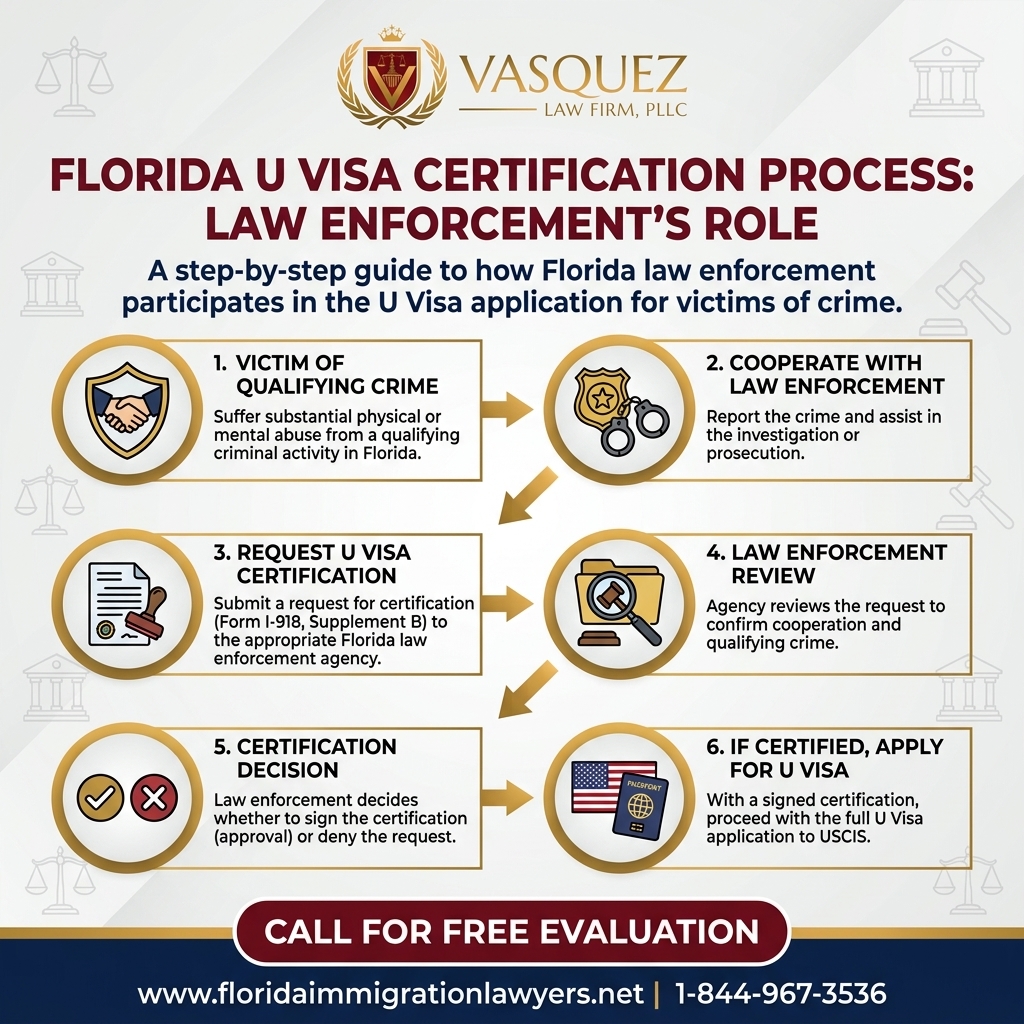
Effective communication and proper presentation of your case to these agencies are vital. An immigration attorney can assist by preparing a compelling request letter, compiling supporting documentation, and acting as a liaison with the law enforcement agency. Their experience can help navigate bureaucratic hurdles and address any concerns the certifying official might have. This collaboration is essential to securing the necessary certification that unlocks the U visa application process.
Step-by-Step Guide to the U Visa Application Process
Applying for a U visa is a multi-stage process that requires meticulous attention to detail and a thorough understanding of immigration law. For crime victims in Florida, navigating these steps successfully often hinges on legal assistance. Here is a general outline of the application process:
-
Obtain Law Enforcement Certification (Form I-918, Supplement B): This is the crucial first step. You or your attorney must request and secure a signed certification from the relevant Florida law enforcement agency. This document attests to your helpfulness in the investigation or prosecution of a qualifying crime. Building a strong case for certification often involves compiling police reports, court documents, and a detailed personal statement explaining your cooperation.
-
Prepare and File Form I-918, Petition for U Nonimmigrant Status: Once you have the certification, your attorney will help you complete Form I-918. This form is the primary application for the U visa. It requires detailed information about you, the qualifying crime, and your eligibility. Along with this form, you will submit all supporting documentation, including your law enforcement certification, evidence of substantial abuse, and a personal statement.
-
Gather Supporting Documentation: This includes evidence of the crime (police reports, court documents), evidence of the harm suffered (medical records, psychological evaluations, affidavits), proof of your helpfulness (the I-918 Supplement B, letters from prosecutors), and personal identity documents (birth certificate, passport, photos). For applicants with inadmissibility issues, Form I-192, Application for Advance Permission to Enter as Nonimmigrant, will also be prepared and filed.
-
Submit the Complete Application Package to USCIS: The entire package, including Forms I-918, I-918 Supplement B, I-192 (if applicable), and all supporting evidence, is mailed to the appropriate USCIS lockbox facility. It is vital to ensure all forms are signed and all required fees (or fee waiver requests) are included. A well-organized application can help prevent requests for evidence (RFEs) and processing delays.
-
Attend Biometrics Appointment: After filing, USCIS will send you a notice to attend a biometrics appointment at an Application Support Center (ASC) in Florida. At this appointment, your fingerprints, photograph, and signature will be collected for background checks. Missing this appointment can significantly delay your case.
-
Wait for USCIS Decision: U visa processing times can be lengthy due to statutory caps and backlogs. During this waiting period, you may receive a Notice of Prima Facie Case, which offers certain benefits. Eventually, you will receive a decision on your petition. If approved, you will be granted U nonimmigrant status for four years, and after three years in U status, you may be eligible to apply for lawful permanent residency.
Essential Documents for Your U Visa Application
A successful U visa application hinges on a meticulously prepared package of documents. Gathering all necessary evidence can be overwhelming, but it is critical for proving your eligibility to USCIS. Here is a comprehensive list of documents typically required:
- Form I-918, Petition for U Nonimmigrant Status: The main application form, correctly filled out and signed.
- Form I-918, Supplement B, U Nonimmigrant Status Certification: The signed certification from a qualifying Florida law enforcement agency. This is non-negotiable.
- Form G-325A, Biographic Information: Required for all applicants aged 14 to 79.
- Form I-192, Application for Advance Permission to Enter as Nonimmigrant: If you have any grounds of inadmissibility, this waiver application is crucial.
- Personal Statement: A detailed narrative in your own words describing the crime, the harm you suffered, and your helpfulness to law enforcement. This statement is a powerful piece of evidence.
- Police Reports and Court Documents: Official records from the Florida law enforcement agency that investigated the crime, including incident reports, arrest records, and court transcripts.
- Medical and Psychological Records: Documentation of physical injuries, mental health conditions, or trauma suffered as a direct result of the crime. This can include doctor's notes, hospital records, and therapy reports.
- Affidavits from Witnesses: Statements from individuals who can corroborate the crime, your suffering, or your helpfulness to authorities.
- Evidence of Relationship (for derivative family members): Birth certificates, marriage certificates, and other documents proving your relationship to any qualifying family members you wish to include in your petition.
- Identity Documents: Copies of your passport, birth certificate, national identity card, or any other government-issued identification.
- Photographs: Passport-style photographs meeting USCIS specifications.
- Fee Waiver Request (Form I-912) or Fee Payment: If applicable, documentation supporting your inability to pay filing fees.
U Visa Processing Timelines and Expectations
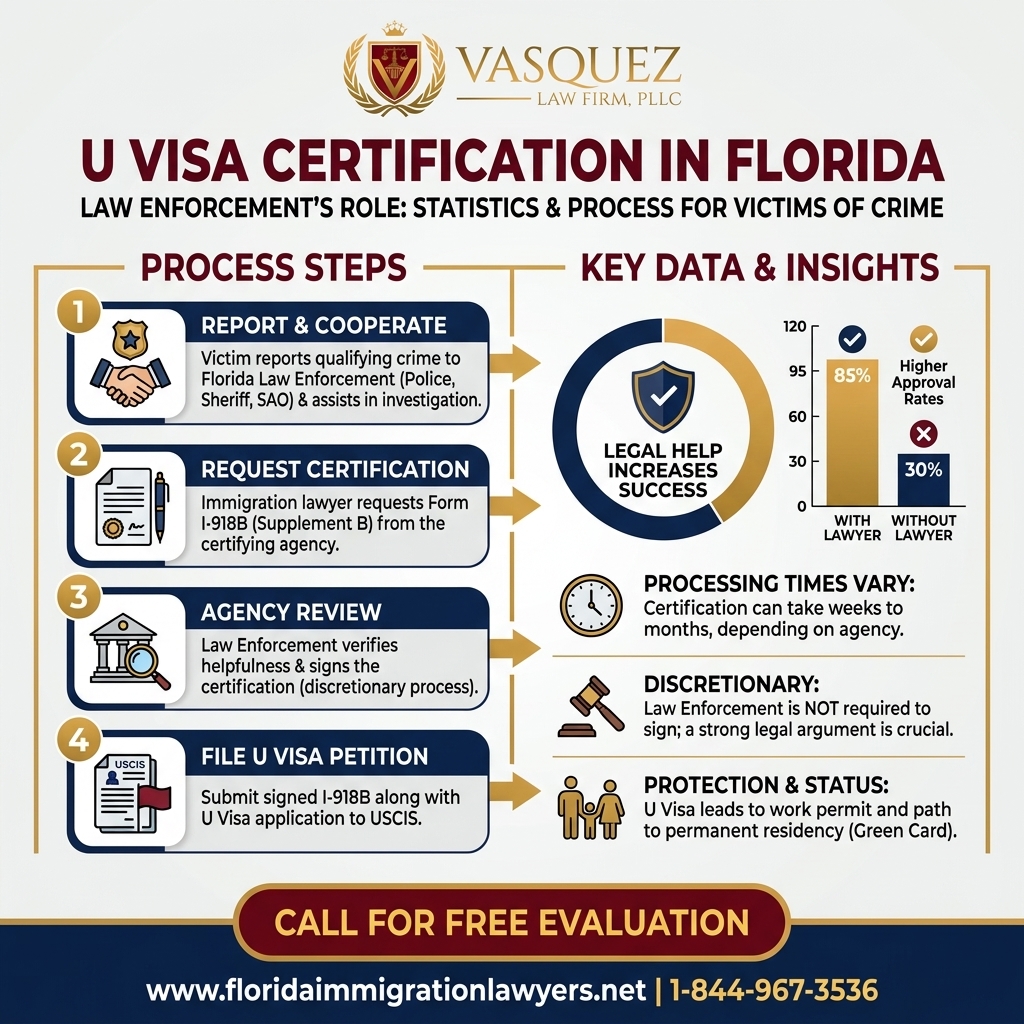
The U visa application process is known for its lengthy processing times, primarily due to the statutory cap of 10,000 U visas issued each fiscal year and the significant backlog of petitions. While this can be frustrating for victims seeking stability, understanding the typical timeline can help manage expectations and plan for the future.
After you submit your complete U visa petition to USCIS, you will first receive a receipt notice (Form I-797C). This confirms that USCIS has received your application. Following this, you will typically receive a notice for a biometrics appointment within a few weeks or months. This appointment is crucial for background checks and security clearances.
One of the most significant stages is waiting for a determination of "bona fide" eligibility. Due to the annual cap, USCIS places eligible U visa petitioners on a waiting list. Before being placed on this list, USCIS reviews petitions to determine if they are "bona fide" – meaning they appear to meet all U visa requirements. If your petition is deemed bona fide, you may be granted "deferred action" and an Employment Authorization Document (EAD).
The waiting list for U visas can be several years long. As of 2026, it is not uncommon for applicants to wait 5-7 years or even longer for a final decision on their U visa. During this period, deferred action allows you to legally remain in the U.S. and work, providing much-needed stability. Once a U visa number becomes available, USCIS will conduct a final review of your petition and issue a decision. If approved, you will receive U nonimmigrant status for four years. After three years in U status, you become eligible to apply for adjustment of status to lawful permanent resident.
Understanding U Visa Application Costs and Fees
The costs associated with a U visa application can vary, but it's important to understand the potential financial commitments involved. While some forms may not have a filing fee, other costs can add up, making financial planning an essential part of the process for crime victims in Florida. It is important to note that USCIS fees are subject to change, so always check the official USCIS website for the most current fee schedule.
Generally, there is no filing fee for Form I-918, Petition for U Nonimmigrant Status. This is a significant relief for many vulnerable applicants. However, if you need to file Form I-192, Application for Advance Permission to Enter as Nonimmigrant (for waivers of inadmissibility), there is typically a substantial filing fee. This fee can be a significant barrier for some applicants.
USCIS also charges a fee for the biometrics services. This fee covers the cost of fingerprinting, photographs, and signature collection. This is a mandatory fee unless you qualify for a fee waiver. Beyond government fees, applicants should also consider potential legal fees. While it is possible to file a U visa petition without an attorney, the complexity of the process, the need for precise documentation, and the interaction with law enforcement often make legal representation invaluable.
Legal fees for U visa cases can vary depending on the complexity of your case, the attorney's experience, and the services provided. Many Florida immigration attorneys offer payment plans to make legal assistance more accessible. Additionally, some non-profit organizations may offer low-cost or pro bono services for U visa applicants. It is always wise to discuss all potential costs with your attorney during your initial consultation to ensure full transparency.
Do not navigate this process alone. The complexities of immigration law, especially involving U visa certification and application, demand experienced legal counsel. Contact Florida Immigration Lawyers today to schedule your free consultation and ensure your case is handled with the experience and care it deserves. We are here to help victims across Florida.
Common Mistakes to Avoid in U Visa Cases
Navigating the U visa process can be fraught with challenges, and even minor errors can lead to significant delays or outright denials. Being aware of common mistakes can help you avoid unnecessary complications and strengthen your application.
-
Failing to Obtain Law Enforcement Certification: This is the most critical mistake. Without a signed Form I-918, Supplement B, from a qualifying agency, your U visa petition will be rejected. Many victims are unaware they need this specific document or how to request it properly from Florida law enforcement.
-
Submitting an Incomplete Application: Missing forms, unsigned documents, or insufficient evidence can lead to a Request for Evidence (RFE) or denial. Ensure every section is completed, and all required supporting documents are included and clearly organized.
-
Inaccurate or Inconsistent Information: Discrepancies between your personal statement, police reports, and other documents can raise red flags with USCIS. Always provide truthful and consistent information throughout your application.
-
Missing Deadlines: Failing to respond to RFEs or other USCIS requests within the specified timeframe can lead to abandonment or denial of your petition. Keep track of all correspondence and deadlines.
-
Not Addressing Inadmissibility Issues: If you have any grounds of inadmissibility, such as a criminal record or previous immigration violations, failing to file Form I-192 and provide a compelling waiver argument can result in denial. Many U visa applicants require a waiver.
-
Lack of Evidence for Substantial Abuse: Simply stating you were abused is not enough. You must provide concrete evidence, such as medical records, psychological evaluations, or affidavits, to prove you suffered substantial physical or mental abuse.
-
Inadequate Proof of Helpfulness: While the I-918 Supplement B is key, a detailed personal statement and other supporting evidence demonstrating your cooperation with agencies like the Miami-Dade State Attorney's Office can further strengthen your claim of helpfulness.
-
Attempting to Navigate the Process Alone: The U visa process is complex. Without legal guidance, many applicants overlook crucial details, fail to properly present their case, or miss opportunities for waivers. This can be particularly true when dealing with multiple Florida law enforcement agencies.
When to Call Florida Immigration Lawyers
The U visa process, especially obtaining U visa certification from law enforcement in Florida, is intricate and demands specialized legal knowledge. While the U visa offers a beacon of hope, navigating its complexities without professional guidance can lead to unnecessary delays or even denial. Knowing when to seek legal counsel is crucial for your success.
You should contact Florida Immigration Lawyers immediately if you have been a victim of a crime and believe you may be eligible for a U visa. We can help you determine if your specific crime qualifies and if you meet the other eligibility criteria. Our attorneys have extensive experience working with various Florida law enforcement agencies, including the Broward County Sheriff's Office and the Florida Highway Patrol, to secure the necessary certifications.
Additionally, if you have a criminal record, prior immigration violations, or any other factor that might make you inadmissible to the U.S., our team can assess your situation and prepare the necessary waivers. We understand the nuances of immigration law and how to present a compelling case to USCIS. We also provide invaluable assistance in drafting your personal statement and gathering comprehensive supporting documentation.
If you have already started the process but received a Request for Evidence (RFE) or a Notice of Intent to Deny (NOID), it is not too late to seek help. Our attorneys can review your existing application, identify weaknesses, and formulate a robust response. Do not risk your future by attempting to handle complex legal matters on your own. Florida Immigration Lawyers are here to provide the representation you need throughout your U visa journey.
About Florida Immigration Lawyers
Florida Immigration Lawyers is a leading law firm dedicated to providing comprehensive and compassionate immigration legal services across the state of Florida. With a deep understanding of both federal immigration law and the specific needs of Florida's diverse immigrant communities, we are committed to helping individuals achieve their immigration goals.
Our experienced attorneys focus on a wide range of immigration matters, including asylum, deportation defense, family-based immigration, business immigration, and citizenship. We pride ourselves on offering personalized legal strategies tailored to each client's unique circumstances. We understand the challenges and anxieties that come with immigration processes, and we are here to offer unwavering support and guidance.
Choosing Florida Immigration Lawyers means choosing a team that is available 24/7, offers free consultations, and is fluent in both English and Spanish. We serve clients in Orlando and all other cities throughout Florida. Our commitment is to provide accessible, high-quality legal representation to ensure the strongest possible outcomes for our clients. Visit our attorneys page to learn more about our dedicated team and our approach to client success, or contact us directly to discuss your case.
Sources and References
- U.S. Citizenship and Immigration Services (USCIS) - Form I-918 Petition for U Nonimmigrant Status
- U.S. Citizenship and Immigration Services (USCIS) Policy Manual - Volume 3, Part B, Chapter 2 (U Nonimmigrant Status)
- Executive Office for Immigration Review (EOIR)
- 8 U.S.C. § 1101(a)(15)(U) - Immigration and Nationality Act (INA) Section 101(a)(15)(U)
- 8 CFR § 214.14 - Procedures for U Nonimmigrant Status
Related services: asylum and refugee protection, asylum application process, refugee status and resettlement.
This article provides general legal information and is not intended as legal advice. Every case is unique, and outcomes depend on specific facts and circumstances. Contact an attorney for advice about your particular situation.
Your journey towards safety and legal status as a crime victim in Florida does not have to be an uphill battle. With the right legal support, you can navigate the complex U visa process with confidence. Take the first step towards a secure future. Call Florida Immigration Lawyers now at 1-844-YO-PELEO for your free, confidential consultation. Se Habla Espanol - Estamos aqui para ayudarle.
If you need legal assistance, learn more about speak with an immigration lawyer, or call us at 1-844-YO-PELEO for a free consultation.
Do Not Navigate This Process Alone
Our experienced immigration attorneys are ready to fight for you. Get a free, confidential case review today.
Se Habla Español
Or leave your details and we’ll call you:
Free Evaluation in 24 Hours
Or talk to us right now

AI voice assistant — available 24/7
FreeFrequently Asked Questions

William J. Vásquez
Founding Attorney · Vasquez Law Firm
U.S. Air Force veteran and immigration attorney with years of hands-on U.S. immigration experience. J.D., NCCU School of Law. AILA member. Admitted to the 4th, 5th, and 11th Circuit Courts.
Available 24/7 - Free Evaluations
Reviewed for legal accuracy by William J. Vásquez
Licensed in North Carolina; U.S. immigration is federal practice.
Related Legal Services
Our Florida immigration attorneys can help you with free immigration consultation, business immigration and deportation defense. Call today at 1-844-YO-PELEO for a free case review.
Related Links
Related Topics
Free Legal Case Review
Discuss your case with our experienced attorneys. We're available 24/7.
Se Habla Español - Estamos aquí para ayudarle.
Related Articles
EB-5 Investor Green Card in Florida: A 2026 Guide
Explore how to obtain an EB-5 investor green card in Florida. Learn about the investment requirements, processes, and benefits of participating in this program. Discover how Florida's economic landscape can be an ideal setting for your investment. Contact Florida Immigration Lawyers for a free case review.
Certificate of Eligibility for Expungement in Florida 2026
For non-U.S. citizens in Florida, understanding how a state expungement impacts immigration status is critical. A certificate of eligibility for expungement in Florida allows a criminal record to be sealed or expunged under state law. However, federal immigration agencies often disregard such state-level relief, still considering the original criminal offense as a conviction for immigration purposes. This can have severe implications for visa applications, green card eligibility, naturalization, and even lead to deportation. This guide clarifies the Florida expungement process, its limited effect on federal immigration law, and key steps to protect your status in 2026. Learn about common mistakes, required documents, timelines, and when to seek expert legal counsel from Florida Immigration Lawyers to navigate these complex issues effectively.
Immigration Lawyer Orlando Free Consultation in Florida
For individuals and families in Orlando, Florida, navigating the complexities of U.S. immigration law requires expert guidance. An immigration lawyer in Orlando offers crucial support for everything from visa applications and green card processes to naturalization and deportation defense. This comprehensive guide details what a free consultation covers, providing a step-by-step overview of immigration pathways, essential document checklists, and expected timelines in 2026. We also highlight common mistakes to avoid, discuss the critical role of legal counsel in deportation and asylum cases, and explain why choosing a local Orlando immigration attorney is beneficial. Florida Immigration Lawyers is dedicated to serving the diverse community of Orlando with compassionate, effective legal solutions, ensuring you receive personalized advice and robust representation for a successful immigration journey.
Fiance Visa in Miami: Your 2026 Florida K-1 Guide
For U.S. citizens in Florida, including Miami and Orlando, who wish to bring their foreign fiance(e) to the U.S. for marriage, the K-1 fiance visa is the primary immigration pathway. This comprehensive guide details the K-1 visa process for 2026, covering eligibility requirements for both the petitioner and beneficiary, the necessary documentation, expected timelines, and associated costs. We break down the stages from filing Form I-129F with USCIS to consular processing and the subsequent Adjustment of Status after marriage. Learn about common mistakes to avoid and understand when to seek professional legal assistance. Florida Immigration Lawyers offers expert guidance to help you navigate this complex journey, ensuring a smooth and successful application. Call us for a free case review.