Schedule A Nurse Immigration for Florida Hospitals
Explore the efficient Schedule A nurse immigration process for Florida hospitals, focusing on Tampa's healthcare needs. Learn how to navigate the EB-3 visa category and secure your future in the U.S. healthcare system.

Schedule A nurse immigration allows qualified nurses to obtain a green card through the EB-3 visa category, designed specifically for healthcare professionals. This process helps Florida hospitals, especially in Tampa, address nursing shortages quickly. Key points include:
- Fast-tracked application process
- No labor certification required
- Immediate eligibility for green card application
Introduction
Imagine a bustling Tampa hospital, where the demand for skilled nurses is higher than ever. The Schedule A nurse immigration program offers a streamlined path for foreign nurses to work in Florida, filling crucial gaps in healthcare staffing. This article explores the process, requirements, and benefits of this immigration route. For personalized assistance, call Florida Immigration Lawyers at 1-844-967-3536 for a free consultation.
Florida, renowned for its vibrant communities and growing elderly population, faces a persistent and escalating demand for qualified healthcare professionals. Hospitals across the state, particularly in rapidly expanding metropolitan areas like Tampa, Orlando, and Miami, struggle to maintain optimal staffing levels amidst a national nursing shortage. This shortage not only impacts patient care quality but also places immense pressure on existing nursing staff, leading to burnout and further attrition.
The Schedule A designation by the U.S. Department of Labor provides a critical lifeline for these institutions. By pre-certifying certain occupations, including registered nurses, as having an insufficient number of U.S. workers available, it significantly expedites the immigration process. This means that foreign-trained nurses, who are often highly skilled and experienced, can more quickly contribute their expertise to the U.S. healthcare system, directly addressing the urgent needs of Florida's hospitals and the communities they serve.
Understanding Schedule A Nurse Immigration
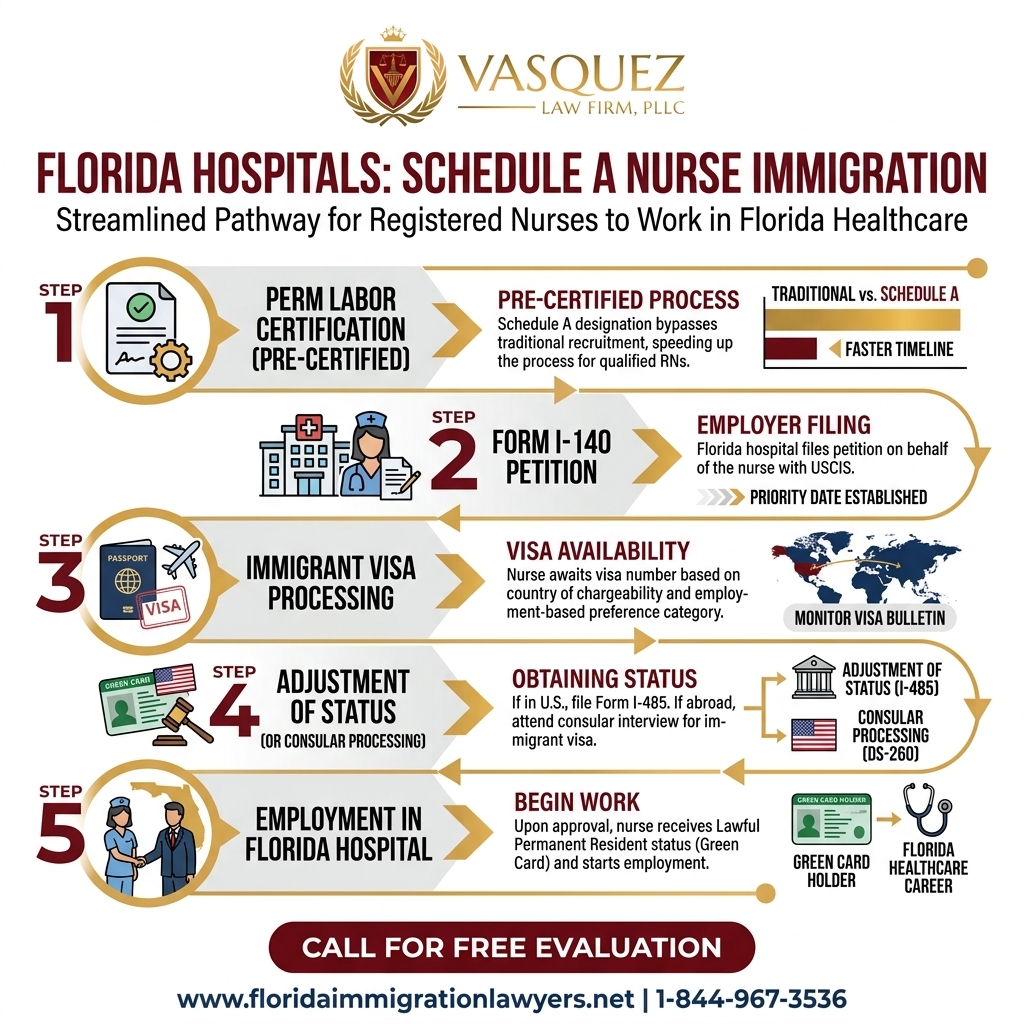
Schedule A is a designation by the U.S. Department of Labor for occupations in high demand, including registered nurses. This program allows employers to bypass the lengthy labor certification process, expediting the immigration of qualified nurses. In Florida, particularly in cities like Tampa, this is vital for maintaining healthcare standards.
Nurses applying through Schedule A fall under the EB-3 visa category, which prioritizes skilled workers. This means eligible nurses can directly apply for a green card, enhancing their employment opportunities in the U.S.
Unlike other employment-based green card categories that require employers to undergo a rigorous and often time-consuming PERM labor certification process, Schedule A occupations are deemed to have a chronic shortage of U.S. workers. This pre-certification eliminates the need for extensive recruitment efforts by the employer to prove that no qualified U.S. worker is available for the position. For hospitals grappling with immediate staffing needs, this waiver is invaluable, cutting down months, sometimes even years, from the overall immigration timeline.
The EB-3 visa category, while generally requiring a labor certification, makes an exception for Schedule A professionals. This pathway is specifically designed for professionals, skilled workers, and other workers. For registered nurses, meeting the educational and licensing requirements typically qualifies them as skilled workers, making them prime candidates for this expedited route. This not only benefits the nurses by offering a direct path to permanent residency but also ensures a steady influx of talent into critical healthcare sectors.
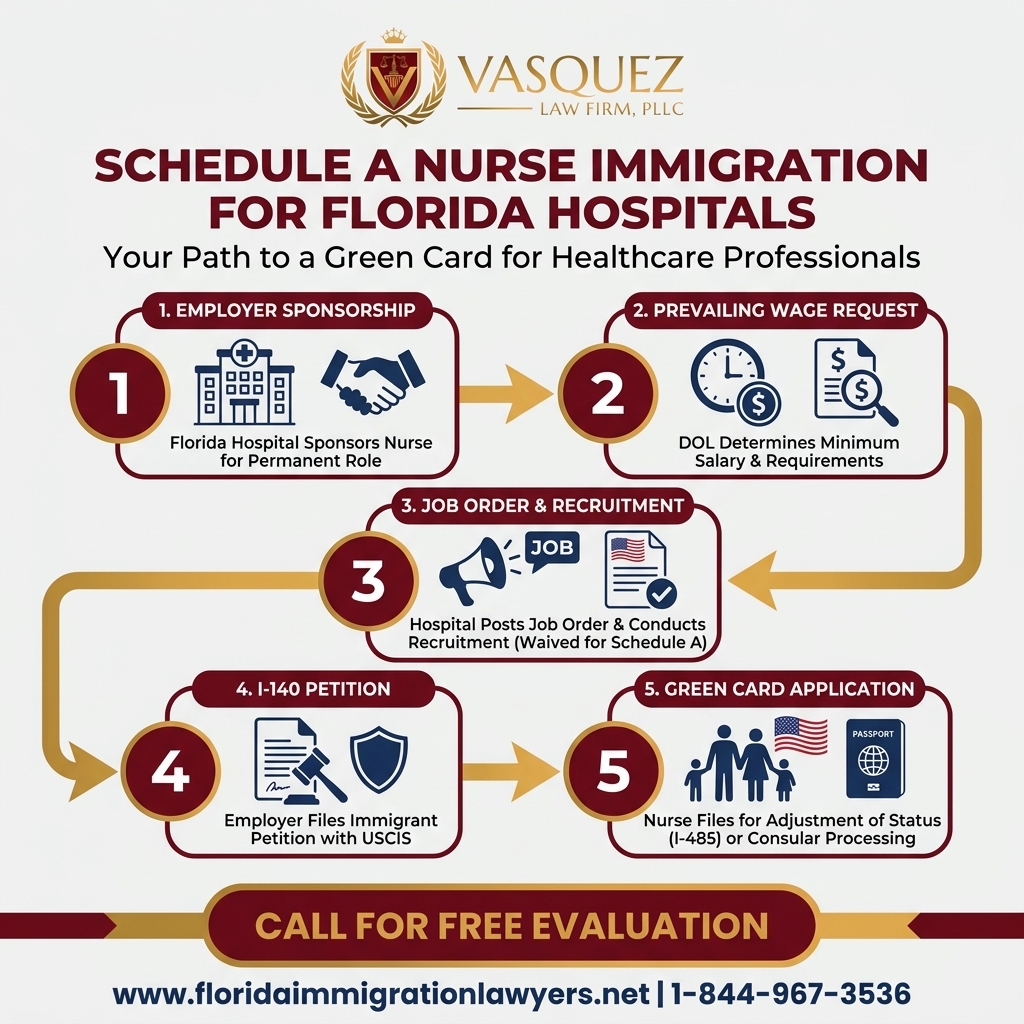
Step-by-Step Guide to Schedule A Nurse Immigration
- Employer Petition: The process begins with the employer submitting Form I-140, Immigrant Petition for Alien Worker, to USCIS. This petition serves as the foundation of the nurse's green card application, establishing the job offer and the nurse's qualifications. The employer must demonstrate a legitimate job offer for a permanent, full-time nursing position and provide evidence of the nurse's eligibility, such as educational credentials and licensure.
- Visa Bulletin Check: Ensure the applicant's priority date is current based on the Visa Bulletin. The priority date is established when USCIS receives the I-140 petition. The Visa Bulletin, published monthly by the Department of State, indicates when immigrant visas are available for different categories and countries. It's crucial to monitor this bulletin closely, as retrogression (when a priority date that was current becomes unavailable) can occur, causing delays.
- Consular Processing or Adjustment of Status: Depending on whether the nurse is inside or outside the U.S., they may proceed with consular processing or file for adjustment of status. Nurses already in the U.S. on a non-immigrant visa (e.g., H-1B, F-1) may be eligible to file Form I-485, Application to Register Permanent Residence or Adjust Status. Those outside the U.S. will complete their visa application through a U.S. consulate or embassy in their home country, a process known as consular processing.
- Medical Examination: Complete a medical examination by a USCIS-approved physician. This examination is a mandatory step to ensure the applicant meets health-related admissibility standards. It includes a physical examination, mental health evaluation, blood tests for certain communicable diseases, and verification of required vaccinations. It's essential to schedule this with a designated civil surgeon and bring all necessary medical records.
- Interview and Decision: Attend an interview if required, then await the final decision on the green card application. For adjustment of status applicants, an interview at a USCIS field office may be waived in some cases, but it is common for consular processing. During the interview, an immigration officer will review the application, verify information, and ask questions to confirm eligibility. After the interview, a decision is typically issued, leading to either approval or a request for additional evidence.
Navigating these steps requires meticulous attention to detail and a thorough understanding of immigration law. Florida Immigration Lawyers can provide invaluable assistance at each stage, ensuring all forms are correctly filed and deadlines are met. We understand the nuances of the Schedule A process and are dedicated to helping nurses achieve their dream of working and living in Florida.
A common scenario involves a nurse from the Philippines who has secured an offer from a Tampa hospital. After the I-140 is approved, they would monitor the Visa Bulletin for their country's EB-3 category. Once current, they would undergo consular processing, attending an interview at the U.S. Embassy in Manila. Successfully completing this leads to visa issuance and entry into the U.S. as a lawful permanent resident.
Document Checklist for Schedule A Nurses
- Valid passport
- Nursing license from home country
- U.S. nursing license or proof of eligibility (e.g., CGFNS certificate, NCLEX registration)
- Form I-140 receipt notice
- Visa fee payment receipt
- Medical examination record
- Proof of employment offer from a U.S. hospital
Beyond the core documents, applicants should be prepared to provide a comprehensive array of supporting evidence. This includes educational transcripts and diplomas from all nursing programs, proof of any specialized certifications, and detailed resumes outlining professional experience. For married applicants, marriage certificates and birth certificates for any dependent children will also be required to include family members in the immigration process.
It is crucial to ensure all foreign-language documents are accompanied by certified English translations. These translations must be signed by the translator, affirming their competence and the accuracy of the translation. Additionally, obtaining police clearances or good conduct certificates from all countries where the applicant has lived for more than six months since the age of 16 is a standard requirement, demonstrating good moral character.
Practical Tip: Start gathering these documents well in advance. Many international documents can take time to procure, and having everything organized and translated beforehand can prevent significant delays in your application. Creating a master checklist and making multiple copies of all submitted documents for your records is also a wise practice.
Timeline and Processing Expectations
The Schedule A process is generally faster than other employment-based categories due to the waiver of labor certification. However, factors like priority date backlogs and individual circumstances can affect processing times. Typically, applicants may expect a timeline of 6-12 months for the entire process.
While the absence of labor certification significantly streamlines the initial stages, other variables can influence the overall timeline. The country of the applicant's birth plays a critical role, as some countries, like India and China, often face visa bulletin backlogs in the EB-3 category, leading to longer waits for a current priority date. USCIS processing times for Form I-140 and I-485 can also fluctuate based on workload and policy changes, which are updated regularly on their website.
Applicants should also account for potential Requests for Evidence (RFEs) from USCIS. An RFE is issued when an immigration officer requires additional documentation or clarification to make a decision on a petition or application. Responding promptly and thoroughly to an RFE is crucial to avoid further delays or even denial. Engaging with an experienced immigration lawyer, such as Florida Immigration Lawyers, can help mitigate these risks by ensuring a robust initial application and expert RFE responses.
Cost Factors and Fee Breakdown
Applicants should consider costs such as USCIS filing fees, medical examinations, and potential attorney fees. These costs can vary, so it's advisable to consult with an immigration attorney for a detailed breakdown. Florida Immigration Lawyers offer competitive rates and comprehensive services.
A detailed breakdown of costs typically includes several components. USCIS filing fees are non-negotiable and include fees for Form I-140, and if applicable, Form I-485 (Adjustment of Status), biometrics, and potentially Forms I-765 (Employment Authorization Document) and I-131 (Advance Parole). These fees are subject to change, so always check the most current amounts on the USCIS website. For consular processing, fees for the DS-260 application and immigrant visa issuance are paid to the Department of State.
Beyond government fees, other significant expenses include the medical examination by a USCIS-approved civil surgeon, which can range from a few hundred to over a thousand dollars depending on the required tests and vaccinations. Professional fees for credential evaluation (e.g., CGFNS), NCLEX registration and examination, and state nursing license application fees are also part of the initial investment. Furthermore, travel costs for interviews or to relocate to Florida should be factored in.
While attorney fees represent an investment, they often prove cost-effective in the long run by preventing errors, delays, and potential denials. Florida Immigration Lawyers provide transparent fee structures and comprehensive support, ensuring that clients understand all financial aspects of their immigration journey. We are committed to making this process as clear and manageable as possible for our clients.
Do not navigate this process alone. Contact Florida Immigration Lawyers today.
Common Mistakes to Avoid
- Ignoring Visa Bulletin Updates: Not checking the Visa Bulletin for priority date changes can delay your application. Always subscribe to updates or regularly check the Department of State website to ensure your priority date is current before proceeding with the next steps, especially filing for adjustment of status or preparing for consular processing.
- Incomplete Documentation: Missing documents can result in application denials or delays. Every form and supporting document must be meticulously prepared and included. Even a minor omission, such as a missing signature or an uncertified translation, can lead to an RFE, significantly extending the processing time.
- Misunderstanding Qualification Requirements: Ensure all nursing qualifications meet U.S. standards. This includes holding a valid nursing license from your home country, passing the NCLEX-RN exam, and obtaining a VisaScreen certificate from CGFNS. Failure to meet these specific requirements will lead to rejection.
- Overlooking Medical Examination: Failing to schedule a timely medical examination can hold up your process. The medical exam has a validity period, and delays in scheduling or obtaining required vaccinations can push back your interview or adjustment of status approval. Plan this well in advance.
- Incorrect Fee Payments: Always verify fee amounts and payment methods with USCIS. Fees are subject to change, and incorrect payments can lead to the rejection of your entire application package. Double-check the USCIS website for the most current fee schedule and acceptable payment methods.
- Not Consulting an Attorney: Navigating immigration law alone can lead to costly errors. The complexity of U.S. immigration law, coupled with frequent policy changes, makes professional legal guidance invaluable. An experienced immigration lawyer can identify potential issues, strategize solutions, and ensure compliance.
- Missing Application Deadlines: Keep track of all submission and interview dates to avoid issues. Strict deadlines apply to various stages of the immigration process, from responding to RFEs to attending scheduled interviews. Missing these can result in delays, denial, or even the termination of your application.
Beyond these common pitfalls, applicants sometimes underestimate the importance of maintaining their non-immigrant status while their green card application is pending, if they are already in the U.S. Allowing a visa to expire or violating its terms can jeopardize the adjustment of status process. It's crucial to consult with Florida Immigration Lawyers to understand how to maintain legal status throughout the entire process.
Another frequent error is failing to disclose complete and accurate information on all forms. Any misrepresentation, whether intentional or unintentional, can have severe consequences, including accusations of fraud and permanent bars from entering the U.S. Honesty and transparency are paramount in all immigration filings.
When to Call a Lawyer
Consider consulting an immigration lawyer if you encounter complex issues, such as visa denials, expired priority dates, or questions about dual intent. Florida Immigration Lawyers specialize in these matters and can provide expert guidance tailored to your situation. For immediate assistance, reach out to us at 1-844-967-3536.
A lawyer becomes indispensable when facing challenges like an RFE that seems overly complex or requires specific legal arguments. For instance, if USCIS questions the validity of your nursing credentials or the employer's ability to pay the proffered wage, an attorney can draft a compelling legal response supported by relevant statutes and case law. This level of expertise is often beyond what an individual applicant can manage alone.
Furthermore, if there are any past immigration violations, criminal history, or issues related to previous visa applications, consulting an attorney is not just advisable but often critical. These complexities can trigger grounds of inadmissibility, which may require waivers or specialized legal strategies. An experienced attorney can assess your unique circumstances and advise on the best course of action to mitigate potential risks.
Case Scenario: A nurse, currently on an H-1B visa, receives an RFE questioning their continuous lawful presence in the U.S. due to a short gap between visa statuses years ago. Without legal counsel, they might struggle to provide the correct evidence and legal arguments. Florida Immigration Lawyers could step in, analyze their immigration history, gather necessary affidavits and documents, and craft a detailed legal brief to successfully address USCIS's concerns, ultimately saving the application from denial.
About Florida Immigration Lawyers
Florida Immigration Lawyers is a dedicated firm offering comprehensive immigration services across Florida. We specialize in family immigration, deportation defense, and employment-based visas, including Schedule A nurse immigration. Our team is available 24/7 to provide free consultations and personalized legal strategies. Call us at 1-844-967-3536 or visit our website at floridaimmigrationlawyers.net.
Our commitment extends beyond simply filling out forms; we provide holistic support, guiding our clients through every intricate detail of the immigration journey. From the initial assessment of eligibility to preparing for interviews and responding to complex RFEs, our experienced attorneys serve as trusted advocates. We pride ourselves on clear communication, ensuring clients are informed and confident at every stage of their application.
We understand that the immigration process can be daunting and emotionally taxing. That's why Florida Immigration Lawyers strives to be more than just legal representatives; we are partners in your journey. Our deep understanding of federal immigration laws and specific state requirements for healthcare professionals in Florida positions us uniquely to assist nurses seeking to contribute their vital skills to our communities. We are dedicated to achieving positive outcomes for our clients, helping them build new lives and careers in the Sunshine State.
Sources and References
- U.S. Citizenship and Immigration Services (USCIS)
- Executive Office for Immigration Review (EOIR)
- U.S. Department of State Visa Bulletin
- 8 U.S.C. Chapter 12 - Immigration and Nationality Act
For additional details regarding specific state nursing board requirements in Florida, prospective nurses should consult the Florida Board of Nursing website. Understanding both federal immigration law and state professional licensing mandates is crucial for a successful transition into the U.S. healthcare system.
Frequently Asked Questions (FAQs)
Here are some common questions regarding the Schedule A nurse immigration process:
Related services: immigration practice areas, family immigration services, citizenship and naturalization.
This article provides general legal information and is not intended as legal advice. Every case is unique, and outcomes depend on specific facts and circumstances. Contact an attorney for advice about your particular situation.
For a seamless immigration process, call Florida Immigration Lawyers at 1-844-967-3536. Se Habla Espanol - Estamos aqui para ayudarle.
If you need legal assistance, learn more about Florida immigration legal team, or call us at 1-844-967-3536 for a free consultation.
Do Not Navigate This Process Alone
Our experienced immigration attorneys are ready to fight for you. Get a free, confidential consultation today.
Se Habla Español
Or leave your details and we’ll call you:
Free Evaluation in 24 Hours
Or talk to us right now

AI voice assistant — available 24/7
FreeFrequently Asked Questions

William J. Vásquez
Founding Attorney · Vasquez Law Firm
U.S. Air Force veteran and immigration attorney with years of hands-on U.S. immigration experience. J.D., NCCU School of Law. AILA member. Admitted to the 4th, 5th, and 11th Circuit Courts.
Available 24/7 - Free Evaluations
Reviewed for legal accuracy by William J. Vásquez
Licensed in North Carolina; U.S. immigration is federal practice.
Related Legal Services
Our Florida immigration attorneys can help you with asylum protection, deportation defense and citizenship and naturalization. Call today at 1-844-967-3536 for a free consultation.
Related Links
Related Topics
Free Legal Consultation
Discuss your case with our experienced attorneys. We're available 24/7.
Se Habla Español - Estamos aquí para ayudarle.
Related Articles
Military Naturalization Expedited in Florida Bases
Explore military naturalization options for families at Florida bases, including parole in place benefits in Miami. Learn how to expedite your application with expert guidance from Florida Immigration Lawyers.
Immigration Lawyer Orlando Free Consultation 2026
Explore the cost of an immigration lawyer in Orlando in 2026. Understand attorney fees, what to expect during a consultation, and how to make the best choice for your immigration needs.
I-601A Provisional Waiver Plantation: Florida Guide 2026
The I-601A provisional unlawful presence waiver offers a crucial pathway to legal residency for many immigrants in Florida. This waiver allows individuals to apply for forgiveness of unlawful presence from within the U.S. before their immigrant visa interview abroad, minimizing family separation. This comprehensive guide for 2026 details eligibility requirements, the complex 'extreme hardship' criteria, a step-by-step application process, and essential documentation. We also cover typical timelines, cost factors, and common mistakes to avoid, emphasizing the importance of expert legal assistance. For families in Plantation, Kissimmee, and across Florida, understanding this waiver is key to reuniting and building a secure future. Florida Immigration Lawyers provides dedicated support for these critical applications.
Work Permit Process and PERM Labor Certification in Florida
Navigating the PERM labor certification process is essential for obtaining a work permit in Florida, especially in areas like Naples. This guide covers the steps, requirements, and common pitfalls to avoid. Contact Florida Immigration Lawyers for personalized assistance.