Expungement Effect on Immigration Florida: What You Need
Many non-citizens in Florida mistakenly believe that a state expungement or sealed record erases their criminal history for federal immigration purposes. This is a critical misconception. Federal agencies like USCIS and immigration courts often still have access to these records and can consider them when evaluating eligibility for green cards, naturalization, or defending against deportation. Understanding the distinct definitions of 'conviction' under state and federal law is vital. This blog post clarifies why Florida expungements typically do not clear your record for federal immigration, explores common pitfalls, and emphasizes the indispensable role of an experienced immigration attorney in navigating these complex legal waters.
How Florida Expungement and Sealing Works (State Perspective)
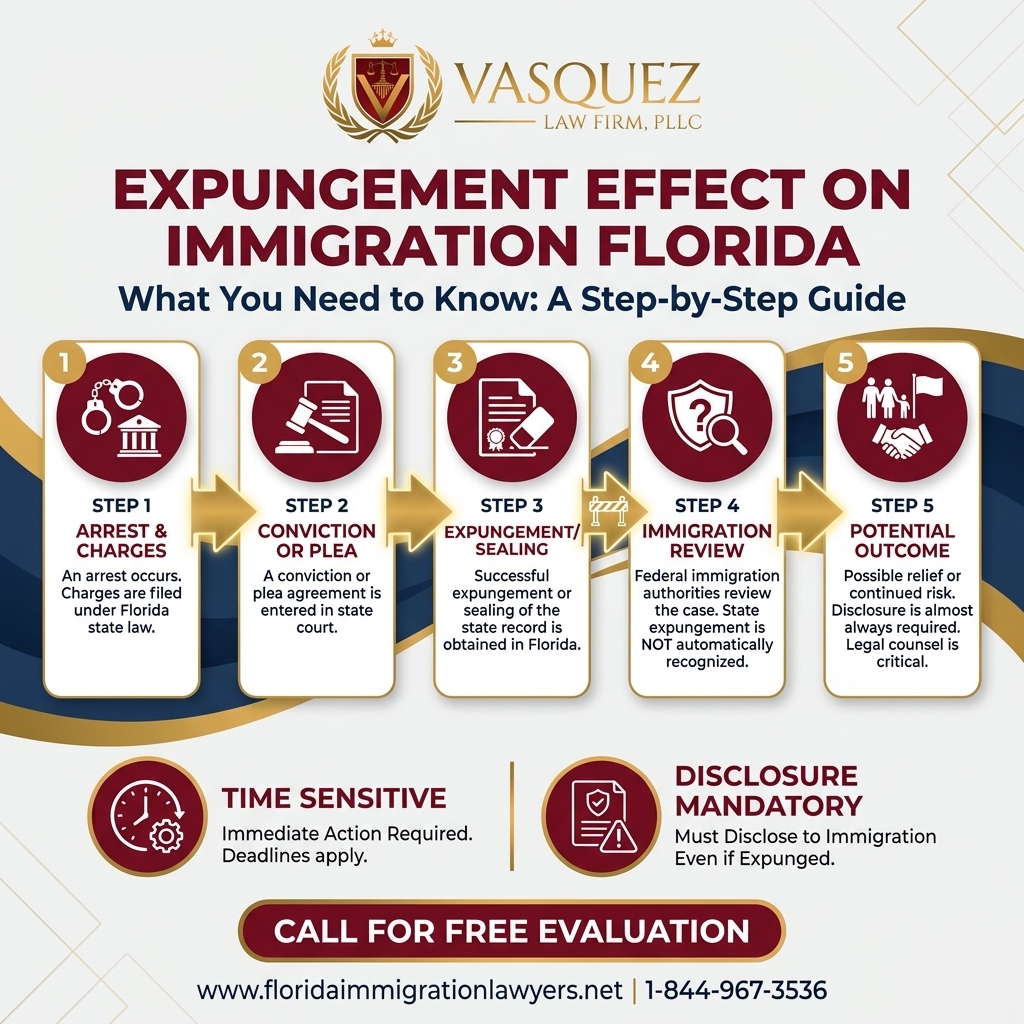
In Florida, individuals may be eligible to have their criminal records expunged or sealed under specific circumstances. The process typically involves submitting an application to the Florida Department of Law Enforcement (FDLE), obtaining a Certificate of Eligibility, and then petitioning a state court. Expungement generally means the physical destruction of the record, while sealing makes the record confidential and inaccessible to the general public. Certain offenses, such as minor drug possession, petty theft, or some misdemeanors, are often eligible, provided the individual has no prior convictions or other disqualifying factors. Serious felonies or crimes involving violence are typically not eligible for either expungement or sealing.
The state-level benefits of expungement or sealing are substantial. They can help with employment, housing, and educational opportunities by allowing an individual to legally state that they have never been arrested or convicted of the expunged or sealed offense. However, it is crucial to reiterate that these state-level benefits do not automatically extend to federal immigration matters. While a Florida court order might grant you a fresh start within the state, it does not dictate how federal immigration agencies will view that same record. This is a common pitfall for many non-citizens in Florida, from Jacksonville to Fort Lauderdale, who mistakenly believe their state expungement will clear their path to a green card or citizenship. For any questions regarding your immigration status and potential deportation, visit our Deportation Defense page.
Immigration Consequences: When Expungement Fails to Protect
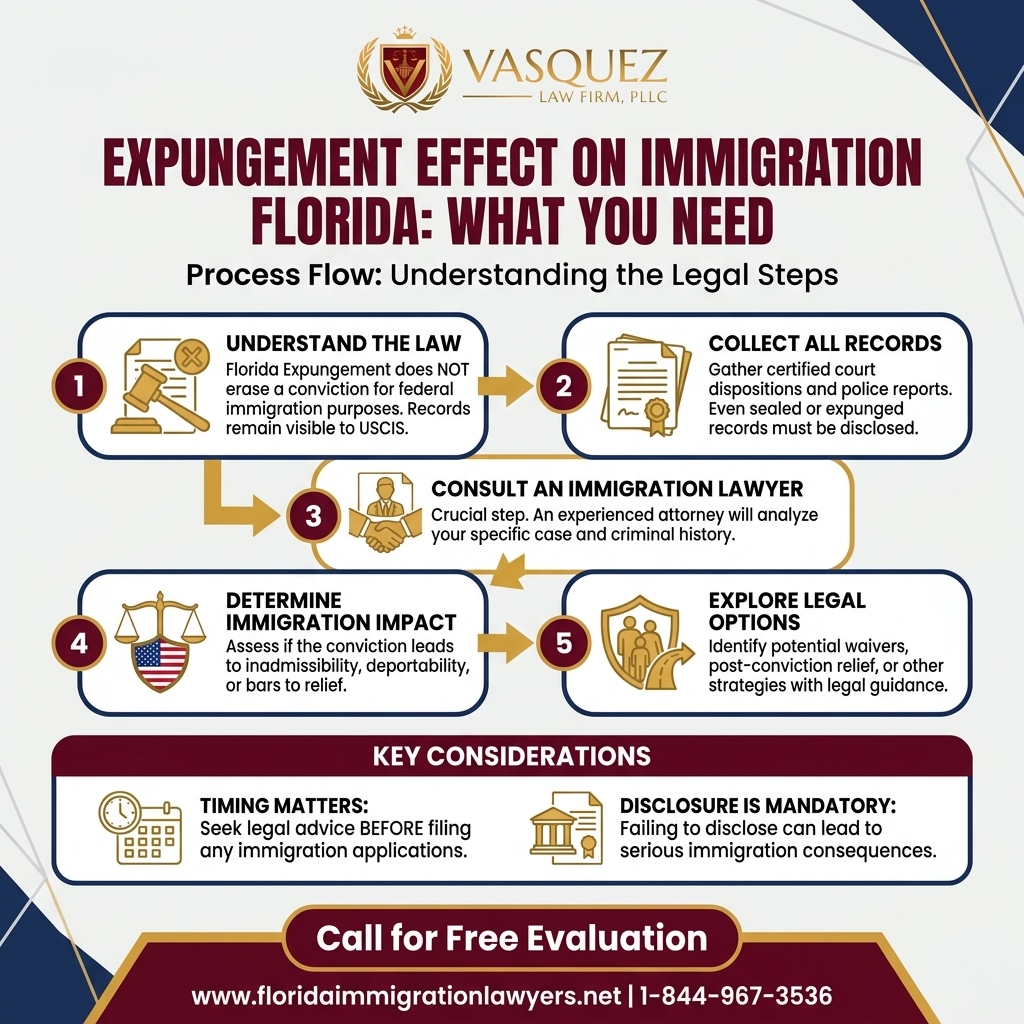
The most critical aspect of the expungement effect on immigration Florida is understanding when and how these records continue to impact an immigrant's status. Despite a state expungement, federal immigration law can still consider the underlying arrest, charge, or disposition for various immigration benefits and processes. This is particularly true for applications such as naturalization (Form N-400), adjustment of status to a lawful permanent resident (green card), visa applications through the Department of State, and any defense against deportation or removal proceedings.
For naturalization, a criminal record, even if expunged, can prevent an applicant from meeting the 'good moral character' requirement. For green card applications, certain expunged offenses, particularly those involving moral turpitude (CIMT) or controlled substance violations, can render an individual inadmissible to the U.S. under INA Section 212(a)(2). Even a minor offense like a single possession of marijuana, if it results in a 'conviction' under federal immigration law, can lead to inadmissibility, regardless of a Florida expungement. Furthermore, individuals facing deportation in immigration court will find that an expunged record can be used as a ground for deportability under INA Section 237(a)(2). The federal government's broad definition of a 'conviction' ensures that many state dispositions, including Florida's common 'withholding of adjudication,' are treated as convictions for immigration purposes, making the expungement largely ineffective. For more information on becoming a U.S. citizen, explore our Citizenship services.
Navigating Specific Criminal Grounds of Inadmissibility and Deportability
To fully grasp the expungement effect on immigration Florida, it is essential to understand the specific criminal grounds that can lead to inadmissibility or deportability. These grounds are outlined in the Immigration and Nationality Act and are not nullified by state expungement orders. Key categories include Crimes Involving Moral Turpitude (CIMT), controlled substance violations, and aggravated felonies. A CIMT is generally defined as a crime that involves an act of baseness, vileness, or depravity contrary to the accepted rules of morality and the duties owed between persons. Examples often include theft, fraud, assault with intent to injure, and certain drug offenses. Even if expunged, a CIMT can make an individual inadmissible or deportable, though a narrow 'petty offense exception' may apply in very specific circumstances.
Controlled substance violations are particularly harsh under federal immigration law. Even a single conviction or admission of a violation related to a controlled substance, regardless of its minor nature or subsequent expungement in Florida, can render an individual inadmissible. There is generally no waiver available for controlled substance offenses, except for a single offense of possession of 30 grams or less of marijuana for personal use. Aggravated felonies, a broad category under INA 101(a)(43) that includes crimes like murder, rape, drug trafficking, and certain thefts, carry severe consequences, often leading to mandatory detention and making almost all forms of immigration relief unavailable. It is critical to note that an offense classified as a misdemeanor in Florida could be considered an aggravated felony under federal immigration law. Understanding these complex classifications is vital for anyone with a criminal history in Florida seeking immigration benefits. If you are seeking protection in the U.S., our Asylum page offers valuable resources.
The Role of an Experienced Immigration Attorney in Florida
Given the complexities of how a Florida expungement effect on immigration Florida, the guidance of an experienced immigration attorney is not just beneficial, but often indispensable. It is a common mistake for individuals to seek expungement through a criminal defense attorney who may not fully understand the nuances of federal immigration law. An immigration lawyer, especially one specializing in criminal immigration law, can provide a comprehensive analysis of your criminal record from a federal perspective *before* you pursue any state-level remedies or apply for immigration benefits.
An attorney from Florida Immigration Lawyers can help you in several critical ways. We can obtain and review certified court dispositions for all arrests and charges, even those that have been expunged or sealed. We will accurately assess whether a past offense constitutes a 'conviction' or a 'CIMT' under the INA, and determine if it triggers any grounds of inadmissibility or deportability. Our team can advise you on the potential benefits and risks of pursuing an expungement for your specific immigration goals, and explore any available waivers or forms of relief that might mitigate the impact of your criminal record. From our Orlando office, serving clients across Florida, we understand the specific challenges faced by immigrants in this state and are equipped to provide the precise legal counsel you need. For legal representation, learn more about our attorneys.
Do not navigate this process alone. The stakes are too high. Contact Florida Immigration Lawyers today for a free consultation to discuss your specific situation and understand how your criminal record, expunged or not, may impact your immigration future.
Common Mistakes to Avoid Regarding Expungement and Immigration
Navigating the intersection of Florida criminal law and federal immigration law can be fraught with peril. Many individuals make critical errors that can jeopardize their immigration status, even after obtaining a state expungement or sealed record. Avoiding these common mistakes is essential for protecting your future in the United States.
- Assuming State Expungement Clears Federal Record: This is the most prevalent and dangerous misconception. A Florida expungement does not erase the record for federal immigration purposes; USCIS and immigration courts can still access and consider it.
- Not Disclosing Expunged/Sealed Records: Federal immigration forms explicitly ask about all arrests, charges, and convictions, regardless of whether they have been expunged or sealed. Failing to disclose this information is considered a material misrepresentation and can lead to fraud allegations, denial of benefits, or even a bar from future immigration relief.
- Applying for Immigration Benefits Without Legal Review: Submitting an application for a green card, visa, or naturalization without first having an immigration attorney review your criminal history can inadvertently trigger removal proceedings if you have an undisclosed or unaddressed criminal issue.
- Misunderstanding "Conviction" Definition Under INA: The Immigration and Nationality Act has a very broad definition of a 'conviction' (INA 101(a)(48)(A)) that often includes deferred adjudications, withholdings of adjudication, or pleas that result in any form of punishment or penalty, even if expunged under state law.
- Believing Minor Offenses Don't Matter: Even seemingly minor offenses, like petty theft or simple possession of a controlled substance, can have severe immigration consequences, especially if they are deemed Crimes Involving Moral Turpitude (CIMT) or drug offenses.
- Failing to Obtain Certified Court Dispositions: When dealing with immigration, simply stating a record was expunged is insufficient. You need certified copies of all court documents, including the original charges, plea agreement, sentence, and the expungement order itself.
- Ignoring Travel Risks: Even with an expunged record, attempting to travel internationally can lead to issues at ports of entry, where federal agents may have access to your full criminal history and could deny re-entry or initiate secondary inspection.
- Waiting Until It's Too Late: Many immigrants only seek legal advice after their application has been denied or they have received a Notice to Appear (NTA) in immigration court. Proactive consultation is always better.
- Relying on Non-Immigration Attorneys for Advice: While a criminal defense attorney is essential for your state case, they may not have the specialized knowledge of federal immigration law required to advise on the immigration consequences of your expungement.
- Not Understanding Moral Turpitude: The concept of Crimes Involving Moral Turpitude (CIMT) is complex and subjective. Many offenses that seem minor can fall into this category, leading to inadmissibility or deportability.
When to Call a Florida Immigration Lawyer
Given the nuanced and often unforgiving nature of federal immigration law concerning criminal records, knowing when to seek legal counsel is paramount. You should immediately contact an experienced Florida immigration lawyer if any of the following scenarios apply to you:
- You have any past arrests, charges, or convictions, even if they were dismissed, expunged, sealed, or resulted in a withholding of adjudication.
- You are considering seeking an expungement or sealing of a criminal record in Florida and are not a U.S. citizen.
- You are preparing to apply for any immigration benefit, such as a green card, visa, Temporary Protected Status (TPS), DACA, or U.S. citizenship.
- You have already applied for an immigration benefit and received a Request for Evidence (RFE) or a Notice of Intent to Deny (NOID) related to your criminal history.
- You have been served with a Notice to Appear (NTA) in immigration court or are otherwise facing deportation or removal proceedings.
- You are a lawful permanent resident concerned about the impact of a past or recent criminal offense on your ability to travel or remain in the U.S.
- You were previously denied an immigration benefit due to a criminal record.
Florida Immigration Lawyers has extensive experience assisting individuals across Florida, from Orlando to Naples, in navigating these complex issues. Our team understands the critical interplay between state criminal records and federal immigration law, and we are dedicated to protecting your rights and your future. Do not hesitate to seek professional guidance.
About Florida Immigration Lawyers
Florida Immigration Lawyers is an immigration law firm dedicated to serving individuals and families across the entire state of Florida. With a deep understanding of U.S. immigration law and a commitment to our clients, we provide comprehensive legal services tailored to meet your unique needs. Our experienced attorneys focus on a wide array of immigration matters, including family-based petitions, employment visas, deportation defense, asylum claims, naturalization, and the complex interplay of criminal records with immigration status.
We pride ourselves on offering compassionate, accessible, and effective legal representation. Our team understands the challenges and anxieties that come with immigration processes, especially when facing issues like the expungement effect on immigration Florida. We are available 24/7 to answer your urgent questions and offer free, confidential consultations to help you understand your options. Choose Florida Immigration Lawyers for dedicated advocacy and a steadfast commitment to achieving the strongest possible outcome for your case. Contact us today at 1-844-YO-PELEO or visit our website at Vasquez Law Firm.
Sources and References
- U.S. Citizenship and Immigration Services (USCIS)
- Executive Office for Immigration Review (EOIR)
- U.S. Department of State - Bureau of Consular Affairs
- Immigration and Nationality Act (INA) Section 101(a)(48)(A) - Definition of Conviction
- Immigration and Nationality Act (INA) Section 212(a)(2) - Criminal and Related Grounds of Inadmissibility
- Immigration and Nationality Act (INA) Section 237(a)(2) - Criminal Grounds of Deportability
- Immigration and Nationality Act (INA) Section 101(a)(43) - Definition of Aggravated Felony
- 8 Code of Federal Regulations (CFR) Part 1003 - Executive Office for Immigration Review
- Florida Statutes Chapter 943 - Department of Law Enforcement
Related services: immigration practice areas, family immigration services, business immigration, free immigration consultation.
This article provides general legal information and is not intended as legal advice. Every case is unique, and outcomes depend on specific facts and circumstances. Contact an attorney for advice about your particular situation.
Don't let a past mistake jeopardize your future in Florida. The complexities of the expungement effect on immigration Florida demand legal guidance. Call Florida Immigration Lawyers today at 1-844-YO-PELEO for a free, confidential consultation. Se Habla Español - Estamos aquí para ayudarle.
If you need legal assistance, learn more about our immigration legal services, or call us at 1-844-YO-PELEO for a free consultation.
Do Not Navigate This Process Alone
Our experienced immigration attorneys are ready to fight for you. Get a free, confidential case review today.
Se Habla Español
Or leave your details and we’ll call you:
Free Evaluation in 24 Hours
Or talk to us right now

AI voice assistant — available 24/7
FreeFrequently Asked Questions

William J. Vásquez
Founding Attorney · Vasquez Law Firm
U.S. Air Force veteran and immigration attorney with years of hands-on U.S. immigration experience. J.D., NCCU School of Law. AILA member. Admitted to the 4th, 5th, and 11th Circuit Courts.
Available 24/7 - Free Evaluations
Reviewed for legal accuracy by William J. Vásquez
Licensed in North Carolina; U.S. immigration is federal practice.
Related Legal Services
Our Florida immigration attorneys can help you with asylum protection, citizenship and naturalization and immigration practice areas. Call today at 1-844-YO-PELEO for a free case review.
Related Links
Related Topics
Free Legal Case Review
Discuss your case with our experienced attorneys. We're available 24/7.
Se Habla Español - Estamos aquí para ayudarle.
Related Articles
EB-5 Investor Green Card in Florida: A 2026 Guide
Explore how to obtain an EB-5 investor green card in Florida. Learn about the investment requirements, processes, and benefits of participating in this program. Discover how Florida's economic landscape can be an ideal setting for your investment. Contact Florida Immigration Lawyers for a free case review.
Certificate of Eligibility for Expungement in Florida 2026
For non-U.S. citizens in Florida, understanding how a state expungement impacts immigration status is critical. A certificate of eligibility for expungement in Florida allows a criminal record to be sealed or expunged under state law. However, federal immigration agencies often disregard such state-level relief, still considering the original criminal offense as a conviction for immigration purposes. This can have severe implications for visa applications, green card eligibility, naturalization, and even lead to deportation. This guide clarifies the Florida expungement process, its limited effect on federal immigration law, and key steps to protect your status in 2026. Learn about common mistakes, required documents, timelines, and when to seek expert legal counsel from Florida Immigration Lawyers to navigate these complex issues effectively.
Immigration Lawyer Orlando Free Consultation in Florida
For individuals and families in Orlando, Florida, navigating the complexities of U.S. immigration law requires expert guidance. An immigration lawyer in Orlando offers crucial support for everything from visa applications and green card processes to naturalization and deportation defense. This comprehensive guide details what a free consultation covers, providing a step-by-step overview of immigration pathways, essential document checklists, and expected timelines in 2026. We also highlight common mistakes to avoid, discuss the critical role of legal counsel in deportation and asylum cases, and explain why choosing a local Orlando immigration attorney is beneficial. Florida Immigration Lawyers is dedicated to serving the diverse community of Orlando with compassionate, effective legal solutions, ensuring you receive personalized advice and robust representation for a successful immigration journey.
F-1 Visa Guide for Florida University Students 2026
International students looking to study at Florida universities need to understand the F-1 visa process. This guide covers eligibility, application steps, required documents, and common pitfalls. Learn how Florida Immigration Lawyers can help you navigate your educational journey in the U.S.