TPS Honduras: Latest News & Key Updates for 2026 in Florida
Stay informed on the latest news and key updates regarding Temporary Protected Status (TPS) for Honduras in 2026. This comprehensive guide from Florida Immigration Lawyers clarifies the evolving legal landscape, re-registration procedures, and essential documentation. Learn what these changes mean for Honduran immigrants in Florida, understand common pitfalls, and discover when professional legal assistance is crucial. With ongoing court challenges and potential policy shifts, proactive engagement and accurate information are vital to protect your TPS status and work authorization. Get expert insights and personalized guidance to navigate the complexities of TPS Honduras in 2026.

As of 2026, the Temporary Protected Status (TPS) designation for Honduras remains a complex and evolving issue, heavily influenced by ongoing legal challenges and potential policy shifts. Honduran TPS beneficiaries in Florida and across the U.S. must stay vigilant for official announcements regarding re-registration periods, eligibility criteria, and any changes to the program's future. It is crucial to re-register promptly during designated windows to maintain status and work authorization. The legal landscape surrounding TPS is subject to judicial review and administrative decisions, making up-to-date information and legal guidance essential for all beneficiaries.
- **Stay Informed:** Regularly check USCIS for official updates on TPS Honduras.
- **Re-registration is Key:** Timely re-registration is mandatory to maintain your TPS benefits.
- **Legal Challenges Continue:** The future of TPS for Honduras is subject to ongoing court cases and policy changes.
- **Consult an Attorney:** Seek legal advice from an immigration lawyer for personalized guidance on your specific situation.
- **Florida Impact:** Honduran communities in Florida are particularly affected by these policy decisions.
For thousands of Honduran immigrants across Florida, the Temporary Protected Status (TPS) program represents a lifeline, offering temporary protection from deportation and work authorization in the United States. As we navigate 2026, the status of TPS for Honduras continues to be a topic of immense concern and frequent updates. The immigration landscape is constantly shifting, with legal battles, administrative changes, and political discussions often creating uncertainty for beneficiaries and their families. Understanding the latest developments is not just important; it is critical for safeguarding your future.
This comprehensive guide from Florida Immigration Lawyers aims to provide clarity on the latest news and key updates surrounding TPS for Honduras in 2026. We will delve into the program's background, current status, re-registration procedures, and what these changes could mean for you, especially if you reside in Florida. Our goal is to equip you with the knowledge needed to make informed decisions and protect your immigration status. Do not navigate these complex waters alone. Call Florida Immigration Lawyers at 1-844-967-3536 for a free consultation and personalized legal guidance.
What is Temporary Protected Status (TPS) and How Does it Apply to Hondurans?
Temporary Protected Status (TPS) is a humanitarian immigration benefit granted by the U.S. government to eligible nationals of certain countries facing conditions that make it unsafe for their citizens to return home. These conditions typically include ongoing armed conflict, environmental disasters (like earthquakes or hurricanes), or other extraordinary and temporary circumstances. The Immigration and Nationality Act (INA) Section 244 provides the legal framework for this designation, allowing individuals from designated countries to live and work legally in the U.S. for a temporary period.
Honduras was initially designated for TPS in January 1999 following the devastation caused by Hurricane Mitch in late 1998. Since then, the designation has been extended multiple times, providing relief and stability to tens of thousands of Hondurans who could not safely return to their home country. While TPS offers significant benefits, it is important to remember that it does not lead directly to permanent residency or U.S. citizenship. It is a temporary form of relief, and its continuation depends on periodic re-designations or extensions by the Secretary of Homeland Security. For the large Honduran community in Florida, from Hollywood to Miami and Orlando, TPS has been a cornerstone of their ability to build lives and contribute to the state's vibrant economy.
Beneficiaries of TPS receive protection from deportation and are authorized to work in the United States. This protection is vital for individuals who have established lives, families, and careers in Florida. Understanding the specific conditions under which TPS is granted and extended is crucial for all beneficiaries. The program requires consistent monitoring of the conditions in the designated country to determine if they still warrant protection. The legal and political climate surrounding TPS has been particularly volatile in recent years, emphasizing the need for beneficiaries to remain informed and proactive about their status.
What are the Latest News and Updates for TPS Honduras in 2026?
As of 2026, the status of TPS for Honduras remains subject to ongoing legal and administrative developments, creating a complex and often uncertain situation for beneficiaries. The future of TPS for Honduras is heavily influenced by court decisions stemming from lawsuits challenging the previous administration's attempts to terminate the designation. These legal battles, such as Ramos v. Mayorkas, have provided temporary injunctions, preventing the immediate termination of TPS for several countries, including Honduras.
However, these injunctions are not permanent solutions. The Biden administration has indicated a review of TPS designations, but specific long-term decisions for Honduras are still pending or subject to further judicial review. This means that while TPS for Hondurans has been extended through various notices, often tied to the outcomes of these lawsuits, the possibility of termination or a fundamental change in policy remains. Beneficiaries must pay close attention to official announcements from USCIS and the Department of Homeland Security (DHS) regarding re-registration periods and the program's ultimate fate. The political climate surrounding immigration, with potential shifts in policy as seen in recent news regarding broader immigration rule changes, adds another layer of complexity. These broader policy pushes can indirectly influence how TPS is managed or reviewed.
For Honduran TPS holders in Florida, these national policy discussions have direct local impacts. Many have established deep roots, owning businesses, raising families, and contributing significantly to local economies. Any change to their status could have profound effects on communities across the state. It is essential to understand that while a temporary extension may be in place, it is not a guarantee of indefinite protection. The legal landscape is fluid, and future court rulings or administrative actions could alter the current trajectory. Seeking advice from an experienced immigration attorney is highly recommended to interpret these complex updates and understand their implications for your individual case.
How Do I Re-Register for TPS Honduras in 2026? A Step-by-Step Guide.
Re-registering for TPS Honduras in 2026 is a critical process to maintain your protected status and work authorization. It is not automatic, and failure to re-register within the designated window can lead to the loss of your benefits. As of 2026, the re-registration process typically involves submitting specific forms and supporting documentation to USCIS. You must act promptly once a re-registration period is announced.
- **Monitor Official Announcements:** The first and most crucial step is to regularly check the official USCIS website for the announcement of the re-registration period for TPS Honduras. These announcements will specify the exact dates for filing and any updated eligibility requirements.
- **Complete Form I-821, Application for Temporary Protected Status:** This is the primary form for TPS re-registration. Ensure all sections are filled out accurately and completely. Any errors or omissions can cause delays or even a denial.
- **Complete Form I-765, Application for Employment Authorization (Optional but Recommended):** If you wish to continue having work authorization, you must file Form I-765. This form allows you to receive an Employment Authorization Document (EAD), which is your proof of eligibility to work in the U.S.
- **Complete Form I-131, Application for Travel Document (Optional):** If you anticipate needing to travel outside the United States and wish to re-enter under TPS, you must file Form I-131. Traveling without an approved advance parole document can jeopardize your TPS status.
- **Pay Required Fees or Request a Fee Waiver:** Each form generally has an associated filing fee. As of 2026, USCIS fees are subject to change. If you cannot afford the fees, you may be eligible to apply for a fee waiver by submitting Form I-912, Request for Fee Waiver. Ensure you meet the criteria for a waiver before applying.
- **Gather Supporting Documentation:** Collect all necessary documents, including proof of identity, nationality, and your continuous residence in the U.S. since the initial designation date. Even for re-registration, it is wise to be prepared with these documents to avoid Requests for Evidence (RFEs).
- **Attend Biometrics Appointment:** After submitting your application, you will typically receive a notice to appear for a biometrics appointment at a local Application Support Center (ASC). This appointment is mandatory for fingerprinting and photographs.
- **Keep Copies and Track Your Case:** Always make copies of everything you submit to USCIS. Utilize the receipt number provided by USCIS to track the status of your application online.
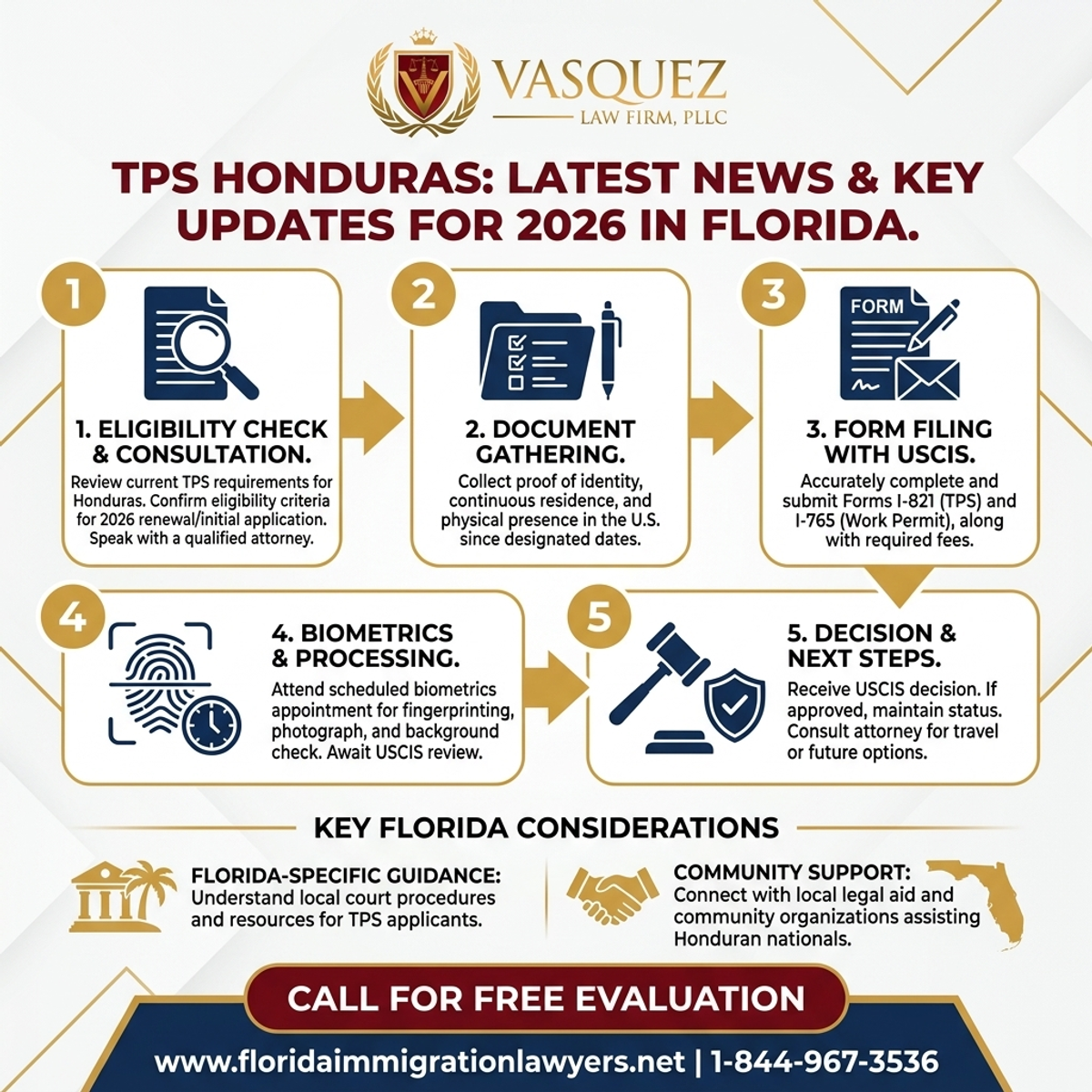
Step-by-Step Process — TPS Honduras: Latest News & Key Updates for 2026 in Florida
Timely filing is paramount. Missing the re-registration deadline, even by a single day, can result in the loss of your TPS benefits. For individuals in Hollywood or other Florida cities, staying informed about these deadlines is crucial. Consulting with an immigration attorney can help ensure that your application is complete, accurate, and submitted on time.
What Documents Do I Need for TPS Re-Registration or Initial Application?
Whether you are re-registering for TPS Honduras or, in rare circumstances, submitting an initial application (if eligible under specific conditions such as a new designation or if you previously missed a deadline due to extraordinary circumstances), having the correct documentation is vital. The more thoroughly prepared you are, the smoother the process will likely be. Incomplete documentation is a leading cause of delays and Requests for Evidence (RFEs) from USCIS.
Here is a general checklist of documents you will typically need:
- **Proof of Identity and Nationality:**
- Copy of your birth certificate from Honduras with a certified English translation.
- Copy of your Honduran passport (if available and valid).
- Copy of your national identity document from Honduras (Cédula de Identidad).
- Any previous U.S. immigration documents, such as Form I-94 (Arrival/Departure Record).
- **Proof of Entry into the U.S.:**
- Copy of your passport with U.S. entry stamp.
- Form I-94, Arrival/Departure Record.
- If you entered without inspection, provide other evidence of your date of entry, such as affidavits.
- **Proof of Continuous Residence in the U.S.:** You must demonstrate continuous residence in the U.S. since the initial designation date for Honduras (January 5, 1999) or any subsequent eligibility date. This is a critical requirement. Examples include:
- Employment records (pay stubs, W-2 forms, letters from employers).
- Rent receipts, utility bills, or mortgage statements.
- School records (transcripts, report cards) for yourself or your children.
- Hospital or medical records.
- Bank statements.
- Letters from churches, unions, or other organizations.
- Affidavits from friends, family, or employers attesting to your presence.
- **Proof of Continuous Physical Presence in the U.S.:** You must also demonstrate continuous physical presence since the most recent re-designation date. This is generally met if you have maintained continuous residence.
- **Two Passport-Style Photos:** Recent, color photographs meeting USCIS specifications.
- **Previous TPS Approval Notices:** If you have previously been granted TPS, include copies of your approval notices (Form I-797) and EAD cards.
Ensure all foreign language documents are accompanied by a complete English translation certified by a competent translator. For Florida residents, gathering these documents can sometimes be challenging, especially for records dating back many years. An immigration lawyer can help you identify and organize the necessary evidence to strengthen your application.
What is the Timeline for TPS Honduras Processing in 2026?
The processing timeline for TPS Honduras applications and re-registrations in 2026 can vary significantly based on several factors, including the volume of applications USCIS receives, the specific service center handling your case, and whether your application is complete and accurate. It is crucial to manage expectations and understand that processing times are estimates and not guarantees. Delays are common, especially with the fluctuating policy environment and potential legal challenges affecting EOIR (Executive Office for Immigration Review) dockets and USCIS workloads.
Here is a typical timeline breakdown:
| Stage | Typical Timeframe | Notes |
|---|---|---|
| **Application Submission** | Within designated re-registration period (e.g., 60-90 days) | Crucial to file on time; late applications may be rejected. |
| **Receipt Notice (I-797C)** | 1-4 weeks after filing | Confirms USCIS received your application; provides receipt number for tracking. |
| **Biometrics Appointment Notice** | 3-8 weeks after receipt notice | Schedule for fingerprinting and photos at an Application Support Center (ASC). |
| **Biometrics Appointment** | Typically 2-5 weeks after notice | Mandatory; failure to attend without rescheduling can lead to denial. |
| **Request for Evidence (RFE) / Interview (Rare)** | Variable, if applicable | If USCIS needs more information or clarification; an interview is rare for re-registration. |
| **Employment Authorization Document (EAD)** | 6-12 months (or longer) | Processing times for Form I-765 can be lengthy; check USCIS processing times online. |
| **TPS Approval Notice (I-797)** | 6-18 months (or longer) | Final decision on your TPS re-registration. |
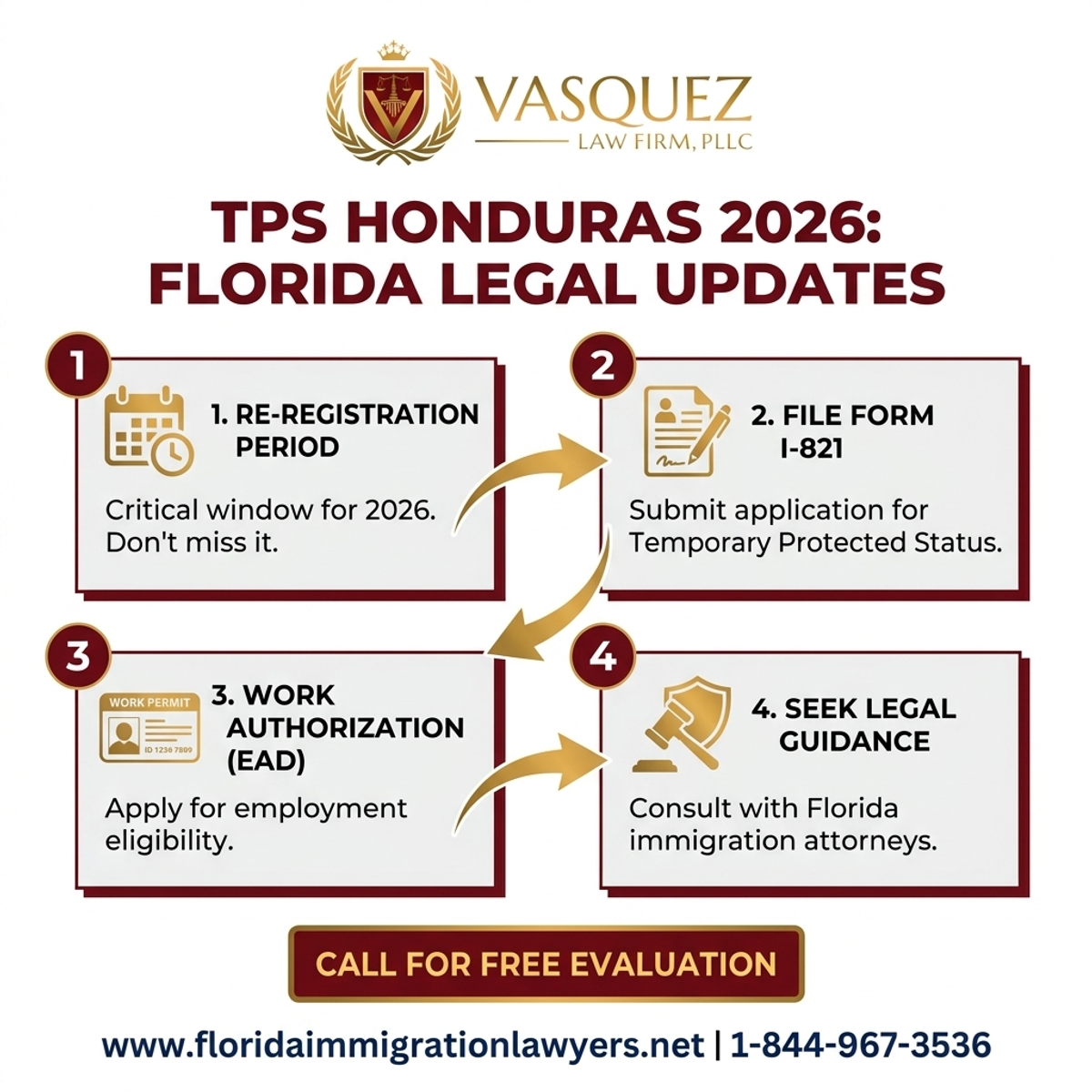
Key Statistics — TPS Honduras: Latest News & Key Updates for 2026 in Florida
It is important to note that these timeframes are estimates. USCIS provides an online tool to check current processing times by form type and service center, which can offer a more precise estimate. For Honduran TPS holders in Florida, particularly those in areas with high immigrant populations like Hollywood, the local USCIS field offices and ASCs may experience higher volumes, potentially impacting appointment scheduling. Maintaining a valid EAD is essential for continued employment. In some cases, USCIS may issue automatic extensions of EADs for TPS beneficiaries, which will be announced officially.
What are the Costs Associated with TPS Honduras Applications in 2026?
Understanding the costs associated with TPS Honduras applications and re-registrations in 2026 is crucial for financial planning. USCIS fees are subject to change, so it is always important to consult the official USCIS website for the most current fee schedule. While the TPS application (Form I-821) itself has no filing fee, there are other mandatory fees that can quickly add up. These fees are typically non-refundable, regardless of the outcome of your application.
| Item | Typical Fee (as of 2026, subject to change) | Notes |
|---|---|---|
| **Form I-821, Application for TPS** | $0 | No filing fee for the TPS application itself. |
| **Biometrics Services Fee** | Approx. $85 | Mandatory for all applicants aged 14 and older; covers fingerprinting and photos. |
| **Form I-765, Application for Employment Authorization** | Approx. $410 | Required if you wish to obtain or renew your Employment Authorization Document (EAD). |
| **Form I-131, Application for Travel Document** | Approx. $575 | Required if you need to travel outside the U.S. and re-enter. |
| **Attorney Fees** | Variable (e.g., $1,500 - $3,000+) | Costs for legal representation, which can vary widely based on complexity and services. |
| **Certified Translations** | Variable (e.g., $20 - $50+ per page) | If any supporting documents are not in English. |
Applicants who demonstrate an inability to pay certain fees may be eligible for a fee waiver by submitting Form I-912, Request for Fee Waiver. Eligibility for fee waivers is based on income, receipt of means-tested benefits, or financial hardship. It is crucial to provide sufficient evidence to support your fee waiver request. For many Honduran families in Florida, these costs can be a significant burden, making careful planning and understanding fee waiver options essential. An immigration attorney can help determine if you are eligible for a fee waiver and assist with the application process, ensuring all forms are correctly completed.
Do not navigate this process alone. The complexities of TPS Honduras, especially with the ongoing legal and political uncertainties, demand expert legal guidance. Contact Florida Immigration Lawyers today at 1-844-967-3536 for a free consultation. Our experienced team is ready to help you understand your options and protect your status.
Common Mistakes to Avoid When Applying for TPS Honduras
Navigating the TPS process can be challenging, and even minor errors can lead to significant delays or even denial. Avoiding these common mistakes is crucial for a successful application or re-registration:
- **Missing the Re-registration Deadline:** This is perhaps the most critical mistake. USCIS provides a specific window for re-registration. Failing to file within this period, even by a day, can result in the loss of your TPS status and associated benefits. Always mark your calendar and file early.
- **Incomplete or Inaccurate Forms:** Submitting forms with blank fields, incorrect information, or inconsistent data will almost certainly lead to a Request for Evidence (RFE) or rejection. Double-check every entry for accuracy and completeness.
- **Insufficient Supporting Documentation:** Failing to provide all required documents, especially proof of continuous residence and continuous physical presence, can significantly delay your application. Ensure you have robust evidence for all eligibility criteria.
- **Not Providing Certified English Translations:** Any document not in English must be accompanied by a complete and certified English translation. This includes birth certificates, marriage certificates, and foreign identity documents.
- **Incorrectly Calculating Fees or Forgetting Biometrics Fee:** USCIS fees change periodically. Always verify the current fees on the official USCIS website. Forgetting the biometrics fee (if applicable) or submitting the wrong amount will cause delays.
- **Failing to Disclose Criminal History:** Even minor arrests or convictions, regardless of the outcome, must be disclosed. Failing to do so can be considered misrepresentation and lead to denial, even if the offense itself wouldn't disqualify you. Consult an attorney about any criminal history.
- **Not Attending Biometrics Appointment:** The biometrics appointment is mandatory. Missing it without proper rescheduling can lead to your application being considered abandoned and subsequently denied.
- **Assuming Automatic Extensions:** While USCIS sometimes grants automatic extensions for EADs and TPS status during processing, you cannot assume this will always happen. Always verify official announcements and plan to re-register.
- **Using Outdated Forms:** USCIS frequently updates its forms. Always download the latest version directly from the USCIS website to avoid using an outdated form that will be rejected.
- **Not Keeping Copies of Everything:** Always make and keep copies of every document and form you submit, as well as proof of mailing. This protects you in case of lost mail or if USCIS requests additional information.
- **Failing to Update Address with USCIS:** If you move, you must notify USCIS of your new address within 10 days using Form AR-11. Failure to do so can result in missed notices and critical deadlines.
- **Not Seeking Legal Advice for Complex Cases:** If you have any criminal history, previous immigration violations, or an unusual situation, attempting to file alone can be detrimental. An attorney can identify potential issues and guide you.
When to Call a Lawyer for TPS Honduras Assistance
While some TPS applications may seem straightforward, the ongoing legal and political complexities surrounding TPS Honduras, especially in 2026, make legal counsel invaluable. You should consider calling an experienced immigration lawyer from Florida Immigration Lawyers in several key scenarios:
- **Complex Eligibility Issues:** If you are unsure about your eligibility for TPS, particularly regarding continuous residence or physical presence, or if you have had any breaks in your stay.
- **Criminal History:** Any arrests, charges, or convictions, regardless of how minor or old, can impact your TPS eligibility. An attorney can assess your criminal record and advise on potential waivers or bars to relief.
- **Previous Immigration Denials or Violations:** If you have previously been denied immigration benefits, had an order of removal, or committed any immigration violations, a lawyer can help navigate these complex issues.
- **Difficulty Gathering Documents:** If you struggle to obtain sufficient proof of identity, nationality, or continuous residence, an attorney can assist in strategizing alternative forms of evidence.
- **Receiving a Request for Evidence (RFE) or Notice of Intent to Deny (NOID):** These notices indicate USCIS needs more information or intends to deny your application. Responding correctly and thoroughly within the strict deadlines is crucial.
- **Seeking Other Immigration Relief:** If you are considering applying for other forms of immigration relief concurrently with or after TPS, an attorney can advise on the best strategy to avoid jeopardizing your TPS or future applications.
- **Uncertainty About Travel:** If you need to travel outside the U.S. and are unsure about the advance parole process or its impact on your TPS status, legal advice is essential.
- **General Confusion or Anxiety:** The immigration process can be overwhelming. If you feel confused, stressed, or simply want peace of mind that your application is handled correctly, an attorney can provide clarity and support.
Florida Immigration Lawyers has extensive experience assisting Honduran immigrants with their TPS applications and re-registrations. We understand the unique challenges faced by the community in Hollywood, Miami, and throughout Florida. Our team is dedicated to providing compassionate and effective legal representation.
About Florida Immigration Lawyers
Florida Immigration Lawyers is a leading immigration law firm dedicated to serving the diverse needs of immigrants across the entire state of Florida. With a deep understanding of U.S. immigration law and a commitment to our clients, we provide comprehensive legal services, from family-based petitions and business immigration to asylum claims and deportation defense. Our experienced attorneys are passionate advocates for immigrant rights, offering personalized and strategic legal solutions.
We pride ourselves on our client-centered approach, ensuring that every individual receives the attention and respect they deserve. Our team is fluent in both English and Spanish, making legal counsel accessible to Florida's vibrant Hispanic communities, including those in Hollywood and surrounding areas. We offer free consultations to discuss your immigration needs and are available 24/7 to provide support and guidance. Whether you are seeking to obtain TPS, navigate a complex visa process, or defend against deportation, Florida Immigration Lawyers is here to help you achieve your immigration goals. Visit floridaimmigrationlawyers.net or call us today.
Sources and References
- U.S. Citizenship and Immigration Services (USCIS)
- Executive Office for Immigration Review (EOIR)
- 8 U.S.C. Chapter 12 - Immigration and Nationality Act (INA) Section 244 - Temporary Protected Status
- 8 CFR Part 244 - Temporary Protected Status
- Ramos v. Mayorkas, 336 F. Supp. 3d 1083 (N.D. Cal. 2018) and subsequent appellate decisions
- U.S. Department of State (Travel.State.Gov) - for country conditions information
Related services: immigration practice areas, family immigration services.
This article provides general legal information and is not intended as legal advice. Every case is unique, and outcomes depend on specific facts and circumstances. Contact an attorney for advice about your particular situation.
The journey through the U.S. immigration system can be daunting, especially with the constant changes affecting programs like TPS Honduras. Do not face it alone. Florida Immigration Lawyers is committed to providing the expert legal assistance you need. Call us today at 1-844-967-3536 for a free, confidential consultation. Se Habla Espanol - Estamos aqui para ayudarle.
If you need legal assistance, learn more about immigration case consultation, or call us at 1-844-967-3536 for a free consultation.
Do Not Navigate This Process Alone
Our experienced immigration attorneys are ready to fight for you. Get a free, confidential consultation today.
Se Habla Español
Or leave your details and we’ll call you:
Free Evaluation in 24 Hours
Or talk to us right now
AI voice assistant — available 24/7
FreeFrequently Asked Questions

William J. Vásquez
Founding Attorney · Vasquez Law Firm
U.S. Air Force veteran and immigration attorney with years of hands-on U.S. immigration experience. J.D., NCCU School of Law. AILA member. Admitted to the 4th, 5th, and 11th Circuit Courts.
Available 24/7 - Free Evaluations
Reviewed for legal accuracy by William J. Vásquez
Licensed in North Carolina; U.S. immigration is federal practice.
Related Legal Services
Our Florida immigration attorneys can help you with family immigration services, immigration practice areas and free immigration consultation. Call today at 1-844-967-3536 for a free consultation.
Related Links
Related Topics
Free Legal Consultation
Discuss your case with our experienced attorneys. We're available 24/7.
Se Habla Español - Estamos aquí para ayudarle.
Related Articles
Immigration Lawyer Orlando Free Consultation 2026
Discover the cost of hiring an immigration lawyer in Orlando in 2026. Learn about various fees, free consultations, and how to choose the right legal representation for your immigration needs.
Expungement Immigration Consequences in Florida 2026
Many immigrants in Florida mistakenly believe that an expunged criminal record is completely erased for immigration purposes. However, federal immigration law, including the INA, often does not recognize state expungements, meaning the underlying conviction can still lead to severe consequences for visas, green cards, or naturalization. This comprehensive guide, updated for 2026, explains the critical differences between state and federal law, outlines the steps to address a criminal record for immigration, details necessary documentation, and highlights common mistakes to avoid. Learn how to navigate these complexities in Florida, from Hollywood to Miami, and protect your immigration future. Florida Immigration Lawyers offers free consultations to assess your unique situation.
What is a Derived Citizen? Your Path to U.S. Citizenship in
Discover what it means to be a derived citizen and how this automatic path to U.S. citizenship can impact your family in Florida. This comprehensive guide covers eligibility requirements under INA Section 320, the step-by-step process for documenting derived citizenship with Form N-600, and essential documents needed. Learn about typical processing timelines in 2026, associated costs, and critical mistakes to avoid. Whether you're in Hialeah, Miami, or anywhere across the state, understanding this pathway is vital. Florida Immigration Lawyers provides expert guidance, ensuring you navigate the complexities with confidence and clarity. Call us for a free consultation to secure your family's future.
Farmers and H-2A in Florida: What You Need to Know
The H-2A visa is crucial for Florida farmers needing seasonal agricultural workers. This guide covers eligibility, application steps, and common pitfalls. Call Florida Immigration Lawyers for expert assistance.