TPS Honduras 2026: Navigating Your Status in Florida
Honduran nationals in Florida face ongoing uncertainty regarding their Temporary Protected Status (TPS) as 2026 approaches. This comprehensive guide clarifies the complex history of TPS for Honduras, including the impact of federal court injunctions like *Ramos v. Mayorkas* that continue to extend protections. We detail the step-by-step application process, essential documents required, and critical timelines. Learn about Florida-specific considerations for TPS beneficiaries and common mistakes to avoid. Florida Immigration Lawyers provides expert guidance to navigate re-registration requirements and explore long-term immigration solutions. For personalized advice, contact us for a free consultation.
Temporary Protected Status (TPS) for Honduras has a complex history, with past terminations and ongoing legal challenges impacting its status through 2026. Many Honduran beneficiaries in Florida may continue to have their TPS and related work authorizations automatically extended under court orders. It is crucial to stay informed about USCIS announcements regarding re-registration periods and eligibility.
- TPS for Honduras is currently protected by court injunctions, extending benefits.
- Beneficiaries should monitor USCIS for re-registration instructions, even with automatic extensions.
- Eligibility for TPS requires continuous residence and physical presence in the U.S.
- A Florida immigration lawyer can provide essential guidance for your TPS Honduras 2026 status.
- Failure to re-register or meet requirements can lead to loss of status.
TPS Honduras 2026: Navigating Your Status in Florida
Are you a Honduran national living in Florida, uncertain about the future of your Temporary Protected Status (TPS) as 2026 unfolds? The landscape of U.S. immigration law, especially concerning TPS for Honduras, is often complex and subject to change. Many families and individuals in communities like Hollywood, Florida, rely on TPS for stability and the ability to work legally.
Understanding the current status, potential extensions, and the necessary steps for your TPS Honduras 2026 application or re-registration is critical. This comprehensive guide from Florida Immigration Lawyers aims to clarify these complexities. We will walk you through the history, current situation, application process, and vital considerations for TPS beneficiaries in Florida.
The information provided here is general in nature. For personalized advice regarding your specific situation, it is always best to consult with an experienced legal professional. Call Florida Immigration Lawyers at 1-844-967-3536 for a free consultation today. Our team is ready to assist you.
Understanding Temporary Protected Status (TPS) for Honduras
Temporary Protected Status, or TPS, is a humanitarian immigration benefit provided by the U.S. government. It allows eligible individuals from designated countries to live and work in the United States temporarily. Countries are designated for TPS due to extraordinary and temporary conditions, such as armed conflict, environmental disaster, or other exceptional circumstances.
Honduras was initially designated for TPS on January 5, 1999, following the devastation caused by Hurricane Mitch. Since then, the designation has been extended multiple times due to ongoing challenging conditions in the country. TPS provides protection from deportation and grants work authorization, offering a lifeline to many Honduran immigrants in Florida and across the nation.
The legal framework for TPS is found in Section 244 of the Immigration and Nationality Act (INA), codified at 8 U.S.C. § 1254a, and its implementing regulations at 8 CFR Part 244. These laws outline the eligibility requirements, application procedures, and the process for designation and termination of TPS. Staying informed about these regulations is key to maintaining your status.
The Current Status of TPS for Honduras in 2026
The status of TPS for Honduras has been a source of significant concern and uncertainty for many years. In 2017, the Department of Homeland Security (DHS) announced its decision to terminate TPS for Honduras, with an effective date initially set for January 5, 2020. However, this termination has been temporarily blocked by federal court orders.
Specifically, the nationwide injunction issued in the *Ramos v. Mayorkas* lawsuit has prevented the termination of TPS for several countries, including Honduras. As of early 2026, this injunction continues to provide protection. It means that existing TPS beneficiaries from Honduras, who have maintained their status, generally retain their TPS and related benefits, including employment authorization documents (EADs).
USCIS has issued guidance on automatic extensions of EADs and other documentation for Honduran TPS beneficiaries. These extensions typically cover periods through specific dates in 2026, or sometimes even further, depending on the latest court rulings and DHS announcements. It is crucial to regularly check the official USCIS website for the most current information regarding your TPS Honduras 2026 status and any re-registration requirements.
Navigating the TPS Honduras 2026 Landscape: A Step-by-Step Guide
For Honduran nationals in Florida seeking to maintain or re-register for TPS in 2026, a clear understanding of the process is vital. While court injunctions have provided temporary relief, beneficiaries are generally still required to follow re-registration procedures when announced. Here is a step-by-step guide to help you navigate this complex process:
-
Determine Your Eligibility: First, ensure you meet the basic eligibility criteria for TPS. This typically includes demonstrating continuous physical presence (CPP) and continuous residence (CR) in the United States since the initial designation date for Honduras. You must also be a national of Honduras and not be inadmissible under certain grounds, such as certain criminal convictions.
Even if your TPS has been automatically extended, understanding these core requirements is important for any future re-registration or adjustment of status. A Florida immigration lawyer can help assess your eligibility.
-
Stay Informed on Re-registration Periods: Although automatic extensions may be in place due to litigation, USCIS may still announce specific re-registration periods. You must monitor official USCIS announcements closely. Missing a re-registration deadline, even with automatic extensions, can jeopardize your status.
These announcements will specify the forms to file and the submission deadlines. Florida Immigration Lawyers can help you stay current with these critical updates.
-
Prepare Required Forms: The primary form for TPS application or re-registration is Form I-821, Application for Temporary Protected Status. If you need a new or renewed Employment Authorization Document (EAD), you will also file Form I-765, Application for Employment Authorization. In some cases, Form I-601, Application for Waiver of Grounds of Inadmissibility, may be necessary.
Ensure you use the most current versions of these forms, available on the USCIS website. Outdated forms can lead to rejection and delays.
-
Gather Supporting Documents: A comprehensive set of supporting documents is crucial for a successful TPS application. These documents prove your identity, nationality, date of entry, and continuous residence and physical presence in the U.S. since the designated dates.
We will detail a comprehensive document checklist in the next section. Organize all your documents carefully before submission.
-
Pay Applicable Fees or Apply for a Fee Waiver: There are typically fees associated with filing Form I-821, Form I-765, and for biometrics services. These fees can change, so always check the USCIS website for current amounts. If you cannot afford the fees, you may be eligible to apply for a fee waiver using Form I-912, Request for Fee Waiver.
Ensure your fee payment method is correct, or your fee waiver application is properly documented. Errors in payment can cause significant processing delays.
-
Submit Your Application Package: Once all forms are completed, signed, and all supporting documents are gathered, assemble your application package. Mail it to the correct USCIS lockbox facility as specified in the form instructions. It is advisable to send your application via certified mail with a return receipt requested.
This provides proof of mailing and delivery, which can be invaluable if there are questions about your submission. Keep a complete copy of your entire application package for your records.
-
Attend Biometrics Appointment: After USCIS receives your application, you will typically receive an appointment notice for biometrics collection. This involves having your fingerprints, photograph, and signature taken. These biometrics are used for background checks.
It is mandatory to attend this appointment. Failing to do so without proper rescheduling can lead to your application being denied.
-
Respond to Requests for Evidence (RFEs): USCIS may send you a Request for Evidence (RFE) if they need more information or clarification on your application. It is crucial to respond to an RFE promptly and completely within the specified timeframe.
A well-prepared response can prevent delays or even denial of your TPS application. If you receive an RFE, contacting Florida Immigration Lawyers can be very beneficial.
-
Await Decision: After all steps are completed, you will await a decision from USCIS. Processing times can vary significantly. You can check the status of your case online using the receipt number provided by USCIS.
While waiting, ensure your address is always updated with USCIS if you move. This ensures you receive all official correspondence.
Essential Documents for Your TPS Application
Preparing a thorough and accurate set of documents is paramount for a successful TPS Honduras 2026 application. Missing or incorrect documentation is a common reason for delays or denials. Here is a comprehensive checklist of documents you will typically need:
- Proof of Identity and Nationality:
- Copy of your Honduran passport.
- Copy of your Honduran birth certificate.
- Copy of your national identity document from Honduras (cédula).
- Any other official Honduran document bearing your photograph and/or fingerprint.
- Proof of Date of Entry into the U.S.:
- Copy of your Form I-94, Arrival/Departure Record.
- Copies of passport entries and exit stamps.
- Airline or vessel tickets.
- Other credible evidence showing your entry date.
- Proof of Continuous Residence (CR) and Continuous Physical Presence (CPP):
- Employment records (pay stubs, W-2s, employment verification letters).
- School records (transcripts, enrollment letters, diplomas).
- Medical records (hospital bills, doctor's notes, vaccination records).
- Rent receipts, utility bills (electricity, water, gas, internet) in your name.
- Bank statements showing transactions in the U.S.
- Tax returns (federal, state, local) for the relevant period.
- Affidavits from friends, family, or employers attesting to your presence.
- Copies of Florida driver's licenses or state IDs issued during the period.
- Any other dated receipts, letters, or documents showing your presence in Florida or the U.S.
- Two Passport-Style Photographs:
- Must meet USCIS specifications (2x2 inches, white background, full-face frontal view).
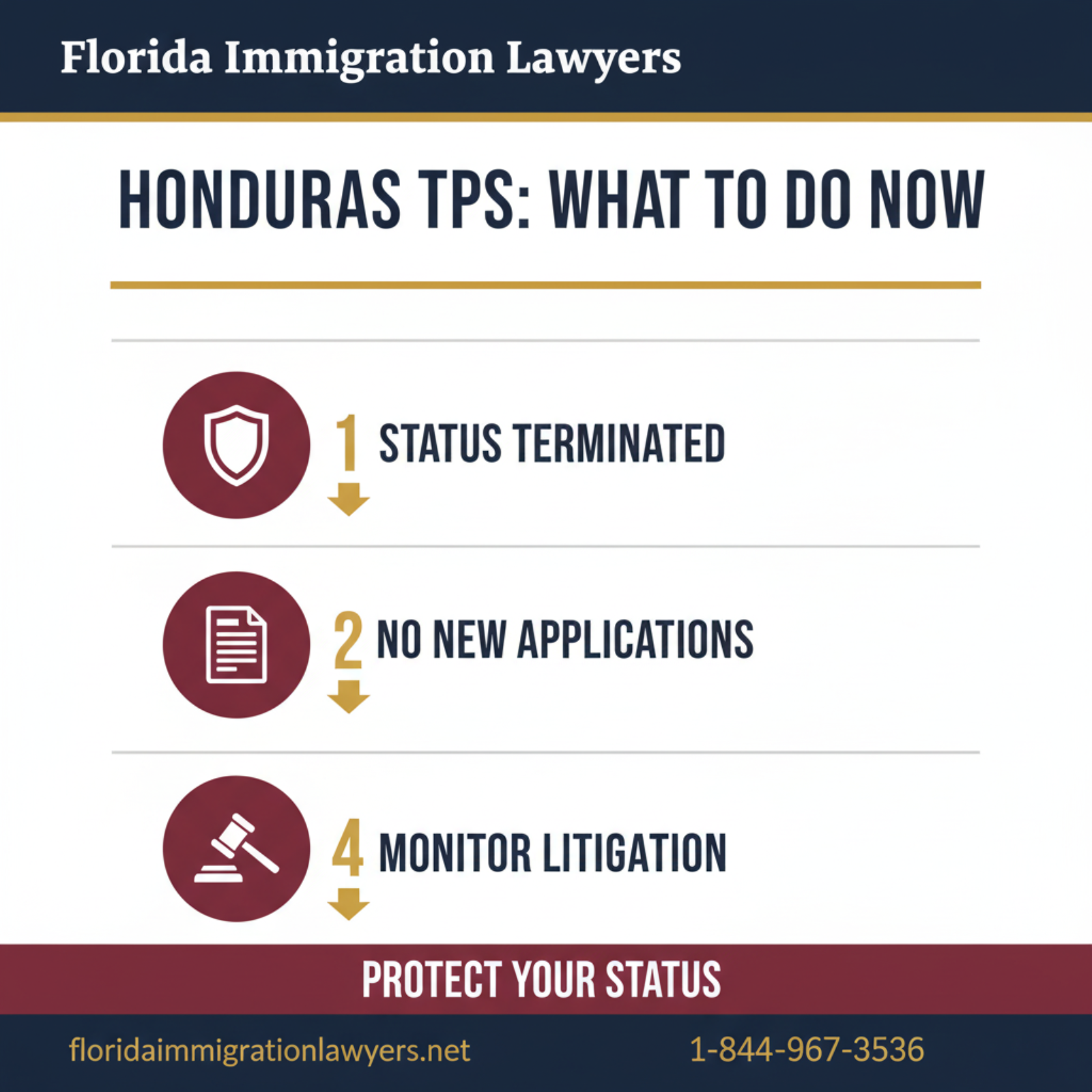
Step-by-Step Process Guide - Previous TPS Documentation (if applicable):
- Copies of previous TPS approval notices (Form I-797).
- Copies of previous EADs.
Always submit copies of your original documents, not the originals themselves, unless specifically requested by USCIS. Keep your original documents safe. Organizing your documents chronologically with clear labels can significantly aid in the review process by USCIS officers.
TPS Processing Timelines and Cost Considerations
Understanding the potential timeline and costs involved in a TPS Honduras 2026 application is essential for planning. Immigration processing times can be unpredictable and vary based on several factors, including the volume of applications, the specific USCIS service center handling your case, and the complexity of your individual application.
Generally, after submitting your application, you can expect to receive a receipt notice within a few weeks. The biometrics appointment typically follows within a few months. The final decision on your TPS application can take anywhere from several months to over a year. USCIS provides an online tool to check processing times for different forms and service centers.
It is important to note that even with automatic extensions of EADs due to litigation, the underlying TPS application still needs to be processed. Delays are common, so patience is key. Florida Immigration Lawyers can help you monitor your case status and respond to any inquiries from USCIS.
Understanding Application Fees for TPS Honduras
The cost of filing for TPS involves several potential fees. These fees are set by USCIS and are subject to change, so always verify the current amounts on the official USCIS website before filing. Typically, the fees include:
- Form I-821, Application for Temporary Protected Status: There is a filing fee for this form, though it may be waived for re-registrants in some circumstances.
- Form I-765, Application for Employment Authorization: There is a separate filing fee if you are requesting an EAD.
- Biometrics Services Fee: This fee covers the cost of fingerprinting and background checks.
For individuals who demonstrate an inability to pay, USCIS offers a fee waiver option using Form I-912, Request for Fee Waiver. Eligibility for a fee waiver is based on specific income guidelines or receipt of means-tested benefits. It is crucial to correctly complete and support your fee waiver request, as an improperly filed request can lead to rejection of your entire application.
Florida-Specific Considerations for TPS Applicants
Florida is home to a significant Honduran immigrant population, particularly in areas like Miami-Dade, Broward (which includes Hollywood), Orange, and Hillsborough counties. This demographic reality means that the implications of TPS decisions resonate deeply within our communities. Florida Immigration Lawyers understands the unique challenges and opportunities faced by Honduran nationals in the Sunshine State.
For TPS applicants residing in Florida, your application will typically be processed by a USCIS service center, and your biometrics appointment will be scheduled at a local Application Support Center (ASC) in Florida. There are several ASCs throughout Florida, including locations in Miami, Orlando, and Tampa. Knowing your local resources and how they operate can be beneficial.
Furthermore, Florida law has specific provisions regarding driver's licenses and state identification cards for TPS holders. Generally, individuals with valid TPS and employment authorization are eligible to obtain a Florida driver's license. This is a critical aspect of daily life and work for many in our state.
Navigating the local nuances of immigration law, from understanding specific USCIS office procedures to accessing state-level benefits, can be complex. Consulting with a Florida immigration lawyer who is familiar with both federal immigration law and its interaction with Florida state regulations is highly recommended. Our firm serves clients across all of Florida, offering tailored advice and representation.
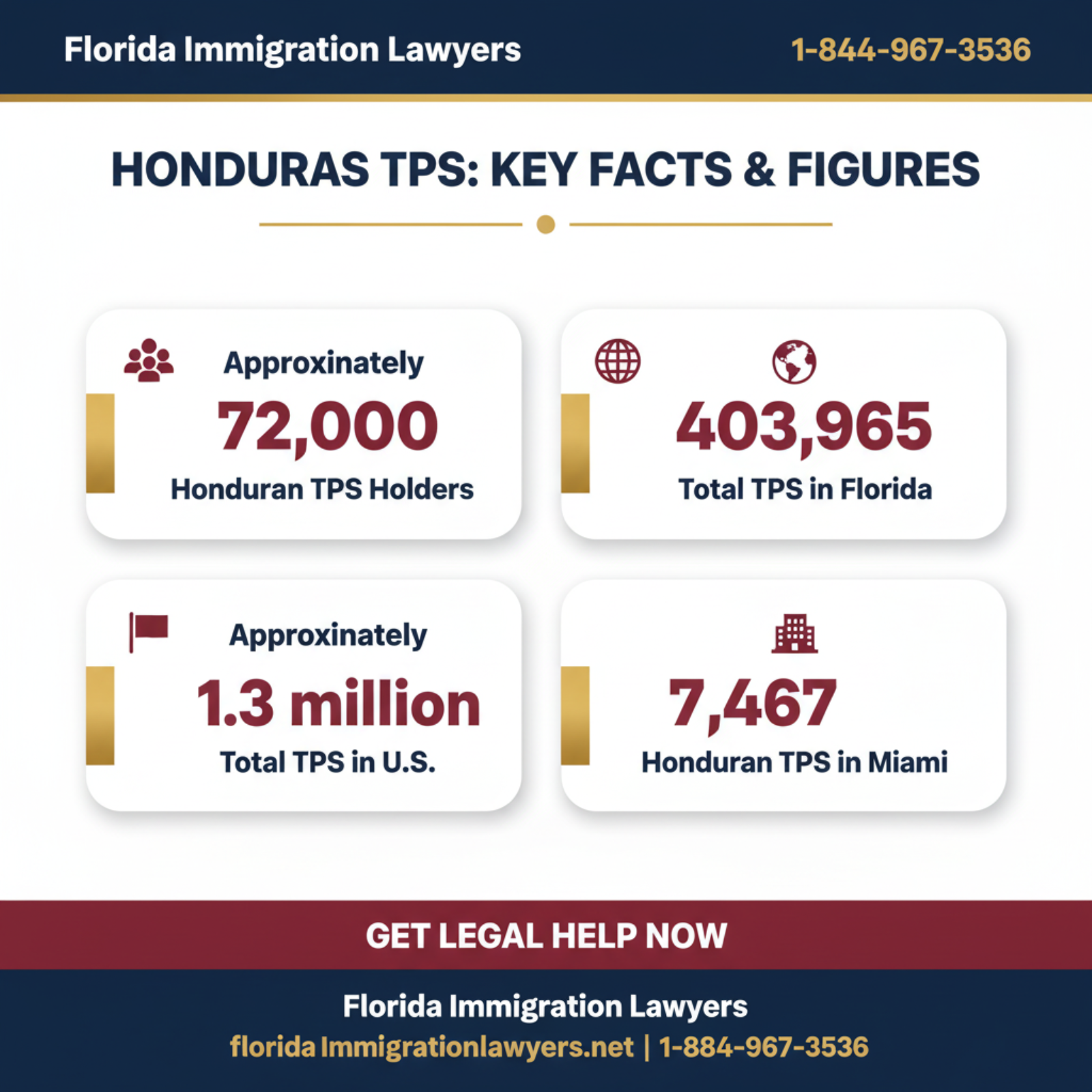
Common Mistakes to Avoid in Your TPS Honduras Application
Applying for or re-registering for TPS is a detailed process where small errors can lead to significant delays or even denial. Being aware of common pitfalls can help you avoid them and ensure a smoother application. Here are some key mistakes to watch out for:
-
Missing Re-registration Deadlines: Even with automatic extensions, USCIS often announces re-registration periods. Failing to re-register within the specified timeframe can result in the loss of your TPS status, even if the general designation is still protected by injunction.
Always assume you need to re-register unless USCIS explicitly states otherwise for your specific situation.
-
Submitting Incomplete or Outdated Forms: Using an old version of Form I-821 or I-765, or leaving required fields blank, will lead to rejection. USCIS is very strict about form completeness.
Always download the latest forms directly from the USCIS website before you begin filling them out.
-
Insufficient Supporting Evidence: Providing too little evidence to prove continuous residence or physical presence is a frequent issue. You need robust documentation covering the entire required period.
Gather as many different types of evidence as possible to strengthen your case.
-
Failing to Disclose Criminal History: Any criminal convictions, even minor ones, must be disclosed on your application. Failure to do so can be considered misrepresentation and lead to denial.
It is always best to consult an attorney if you have any criminal history, as some convictions can make you ineligible for TPS.
-
Not Understanding Eligibility Criteria: Some applicants mistakenly believe they are eligible when they do not meet all the specific requirements for continuous residence, physical presence, or inadmissibility grounds.
Thoroughly review all eligibility requirements, preferably with legal counsel, before applying.
-
Incorrectly Calculating Continuous Physical Presence (CPP) or Continuous Residence (CR): The rules for calculating CPP and CR can be tricky, especially regarding brief, casual, and innocent departures from the U.S. Miscalculations can lead to denial.
An attorney can help accurately assess your travel history against TPS requirements.
-
Failing to Update Your Address with USCIS: If you move, you must notify USCIS of your new address within 10 days using Form AR-11. Failure to do so can result in missed notices, RFEs, or even denial of your application without your knowledge.
Always keep your address current to ensure you receive all official correspondence.
-
Not Keeping Copies of Everything: Never send original documents unless specifically requested, and always keep a complete copy of your entire application package. This includes forms, supporting evidence, and payment receipts.
These copies are vital for your records and if USCIS requests additional information or if your original application is lost.
-
Assuming Automatic Approval or Extension: While some benefits may be automatically extended, this does not negate the need to follow all USCIS instructions. Never assume your case will be approved without diligent effort on your part.
Proactive engagement with the process is always the safest approach.
-
Improperly Filing a Fee Waiver Request: If you apply for a fee waiver, ensure Form I-912 is fully completed and supported by adequate evidence of your inability to pay. An improperly filed fee waiver will lead to the rejection of your entire application.
Review the instructions for Form I-912 carefully and provide all requested documentation.
-
Not Seeking Legal Advice: Attempting to navigate the complex TPS process without legal guidance, especially with a complicated history, can lead to costly errors.
A qualified immigration attorney can help you avoid these mistakes and present the strongest possible case.
When to Call a Florida Immigration Lawyer for TPS Honduras 2026
While this guide provides general information, the complexities of immigration law mean that individual circumstances often require personalized legal advice. For Honduran nationals in Florida considering their TPS Honduras 2026 status, there are specific scenarios where contacting an experienced immigration attorney is highly advisable. Florida Immigration Lawyers are here to offer expert guidance.
- Complex Eligibility Issues: If you have questions about whether you meet the continuous residence or physical presence requirements, or if you have had brief departures from the U.S., a lawyer can help interpret the rules for your specific situation.
- Criminal History: Any past arrests, charges, or convictions, no matter how minor, can affect your TPS eligibility. An attorney can assess the impact of your criminal record and advise on potential waivers or inadmissibility issues.
- Prior Immigration Violations: If you have previously been ordered removed, had an asylum claim denied, or have other immigration violations, these can complicate your TPS application. A lawyer can help navigate these complexities and explore all available options, including asylum.
- Difficulty Gathering Documents: If you are struggling to obtain sufficient proof of identity, nationality, or continuous presence, an attorney can advise on alternative forms of evidence and strategies for gathering necessary documentation.
- Received a Request for Evidence (RFE) or Notice of Intent to Deny (NOID): If USCIS sends you an RFE or NOID, it means they require more information or are considering denying your application. This is a critical juncture where legal representation can significantly improve your chances of a favorable outcome.
- Exploring Other Immigration Options: TPS offers temporary relief, but many individuals seek a more permanent solution. An attorney can evaluate your eligibility for other forms of relief, such as adjustment of status, family-based petitions (family immigration), or citizenship, and help you strategize your long-term immigration goals.
- Deportation Concerns: If you are facing deportation proceedings or have any fear of removal, a TPS application can sometimes offer a temporary reprieve. A lawyer can assess your situation and integrate TPS into a broader defense strategy.
- For Peace of Mind: Even if your case seems straightforward, having a knowledgeable attorney review your application and guide you through the process can provide immense peace of mind and significantly reduce the risk of errors.
Florida Immigration Lawyers has extensive experience assisting Honduran nationals with their TPS applications and other immigration matters. Our team is dedicated to protecting your rights and helping you achieve your immigration goals in Florida.
Frequently Asked Questions (FAQs) About TPS Honduras 2026
The situation surrounding TPS for Honduras often raises many questions. Here, we address some of the most common inquiries, especially concerning the outlook for 2026.
Q: Will TPS for Honduras be extended in 2026?
A: As of early 2026, the termination of TPS for Honduras remains enjoined by federal court orders, particularly the *Ramos v. Mayorkas* litigation. This means that TPS and related benefits, including work authorization, are generally automatically extended for existing beneficiaries through specific dates in 2026, and potentially beyond, pending further court decisions or government action. It is crucial to monitor official USCIS announcements for the most up-to-date information on re-registration periods and expiration dates for your documents.
Q: Did Trump cancel TPS for Honduras?
A: Yes, in 2017, the Trump administration announced its decision to terminate TPS for Honduras, citing improved country conditions. However, this termination was challenged in federal court. The *Ramos v. Mayorkas* lawsuit resulted in a nationwide injunction that has temporarily prevented the termination from taking effect, allowing beneficiaries to maintain their status.
Q: Did TPS for Honduras get approved?
A: Honduras was initially designated for TPS in 1999. The question of "approval" typically refers to individual applications or re-registrations. For existing beneficiaries, the focus in 2026 is on the ongoing validity of the TPS designation due to court injunctions and any re-registration requirements. New initial applications for TPS for Honduras are generally not being accepted unless specifically announced by DHS.
Q: Is TPS automatically extended?
A: Under the current federal court injunctions, certain TPS benefits for Honduran beneficiaries, such as the validity of their Employment Authorization Documents (EADs) and other documentation, have been automatically extended. However, beneficiaries may still be required to re-register during specific periods announced by USCIS to maintain their underlying TPS status. Always check USCIS guidance for precise instructions regarding automatic extensions and re-registration requirements.
About Florida Immigration Lawyers
Florida Immigration Lawyers is a leading immigration law firm dedicated to serving the diverse needs of immigrants across all of Florida. With a deep understanding of U.S. immigration law and a compassionate approach, we provide comprehensive legal services to individuals and families seeking to achieve their immigration goals.
Our experienced attorneys specialize in a wide range of immigration matters, including Temporary Protected Status, asylum, deportation defense, family-based petitions, business immigration, and citizenship. We pride ourselves on offering personalized attention and strategic legal solutions tailored to each client's unique situation.
Why choose Florida Immigration Lawyers? We are committed to excellence, integrity, and client success. Our team is available 24/7 to answer your questions and provide support. We offer free consultations to help you understand your options without financial obligation. Serving clients from Hollywood to Miami, Orlando, Tampa, and throughout Florida, we are your trusted partners in immigration.
Contact us today for a free consultation: 1-844-967-3536 or visit our website: https://www.floridaimmigrationlawyers.net.
Sources and References
- U.S. Citizenship and Immigration Services (USCIS) - Temporary Protected Status
- Executive Office for Immigration Review (EOIR) - Immigration Review Decisions
- 8 U.S.C. Chapter 12 - Immigration and Nationality Act (INA) § 1254a (Temporary Protected Status)
- 8 CFR Part 244 - Temporary Protected Status Regulations
- Ramos v. Mayorkas, 3:18-cv-03155-EMC (N.D. Cal. 2018) and subsequent appellate decisions.
This article provides general legal information and is not intended as legal advice. Every case is unique, and outcomes depend on specific facts and circumstances. Contact an attorney for advice about your particular situation.
The complexities of TPS Honduras 2026 demand careful attention and expert legal counsel. Do not leave your future to chance. Contact Florida Immigration Lawyers today at 1-844-967-3536 for a free, confidential consultation. Let our experienced team guide you through every step. Se Habla Español - Estamos aquí para ayudarle.
Frequently Asked Questions
Florida Immigration Lawyers
Legal Team
Our experienced attorneys at Florida Immigration Lawyers have been serving clients across Florida for over 20 years. We specialize in immigration, personal injury, criminal defense, workers compensation, and family law.