TPS Honduras 2026 Florida Update: Navigate Status with a Lawyer
For Honduran nationals in Florida, navigating Temporary Protected Status (TPS) in 2026 requires vigilance due to ongoing legal challenges. This guide from Florida Immigration Lawyers provides essential information on eligibility, re-registration, required documents, and what to expect regarding TPS Honduras. Learn how to protect your status and work authorization amidst changing policies. We emphasize the importance of staying informed through USCIS updates and avoiding common mistakes. Discover when to seek legal counsel to ensure your application is accurate and complete, safeguarding your future in Florida. Contact our experienced immigration lawyers for a free consultation.
For Honduran nationals in Florida, Temporary Protected Status (TPS) provides a vital shield against deportation and grants work authorization. While the termination of TPS for Honduras was previously announced, ongoing litigation means protections generally remain in effect. Eligible individuals must diligently monitor USCIS updates and re-register during designated periods to maintain their status. Consulting a qualified immigration lawyer is crucial for navigating these complex legal developments.
- TPS for Honduras continues due to ongoing litigation, though termination was announced.
- Eligible Hondurans in Florida must re-register during specific windows to maintain status.
- TPS provides protection from deportation and work authorization.
- USCIS is the primary source for official updates and re-registration instructions.
- Seek legal counsel from Florida Immigration Lawyers to ensure compliance and protect your rights.
Are you a Honduran national in Florida, concerned about your Temporary Protected Status (TPS) beyond 2026? Many families across Jacksonville and the state share these concerns. The legal landscape for TPS Honduras has been complex, with terminations announced but extensions granted due to ongoing court cases.
Understanding your rights and obligations regarding TPS Honduras 2026 is crucial. This guide from Florida Immigration Lawyers covers the current status, eligibility, re-registration, and what to expect. We bring clarity to your situation, helping protect your future in Florida.
Don't face these challenges alone. For personalized guidance, call Florida Immigration Lawyers at 1-844-967-3536 for a free consultation. Our experienced team is ready to assist you.
Understanding Temporary Protected Status (TPS) for Hondurans in Florida
Temporary Protected Status (TPS) offers crucial protection to eligible nationals from designated countries. These designations occur when conditions, like armed conflict or natural disaster, prevent safe return. For Honduran nationals, TPS was first granted in 1999 following Hurricane Mitch.
This program allows beneficiaries to live and work legally in the U.S. It provides a vital lifeline for many families in Florida, offering stability and protection from deportation.
The Current Status of TPS Honduras in 2026
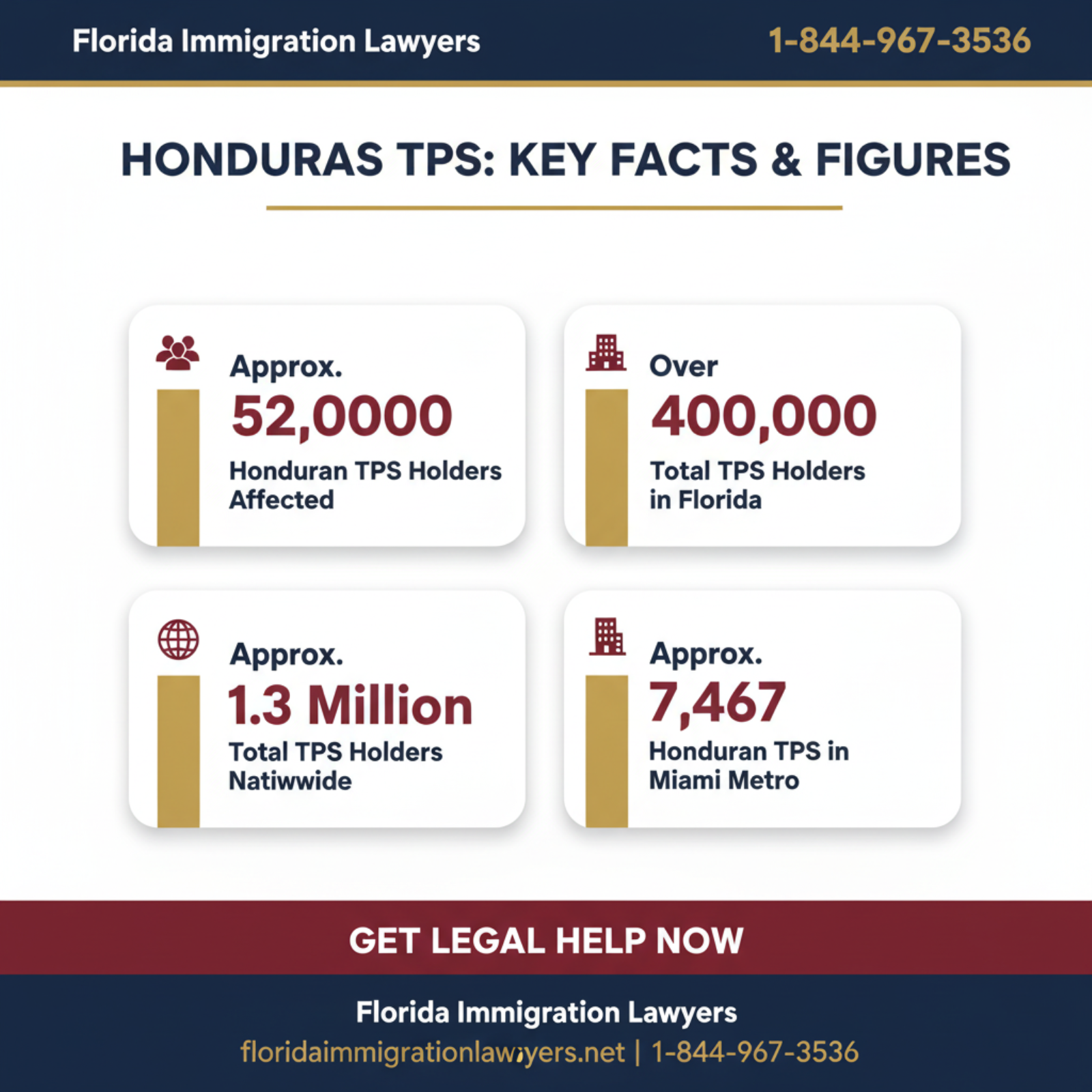
The legal status of TPS for Honduras remains complex in 2026. While DHS announced termination, federal court injunctions have largely maintained these protections. Lawsuits like Ramos v. Mayorkas have challenged the termination, leading to extensions.
As of early 2026, TPS and related Employment Authorization Documents (EADs) for eligible Hondurans generally remain valid. Regularly checking official USCIS TPS Honduras updates is paramount for all beneficiaries in Florida.
Who is Eligible for TPS Honduras?
TPS eligibility is not automatic. Individuals must be Honduran nationals, continuously residing and physically present in the U.S. since specific dates. Applicants must also pass security and criminal background checks.
Certain offenses can disqualify an applicant. Assessing your specific eligibility is intricate. Consulting an immigration attorney is highly recommended to understand the detailed requirements for Temporary Protected Status Florida.
Benefits of Holding TPS in Florida
Holding TPS offers significant advantages for Honduran nationals in Florida. It provides protection from deportation, granting peace of mind and stability. This allows individuals to maintain their lives and contributions in communities like Jacksonville.
Additionally, TPS beneficiaries receive an Employment Authorization Document (EAD), enabling legal employment. This fosters economic stability. In some cases, TPS holders may also qualify for travel authorization, permitting re-entry under strict conditions.
Step-by-Step Guide: Navigating TPS Re-registration for Hondurans
Re-registering for TPS Honduras 2026 is essential to maintain your protected status. Despite litigation-driven automatic extensions, understanding the official process is vital. Errors or missed deadlines can jeopardize your status.
Here is a general guide to help you prepare. Always consult official USCIS announcements for the most current and specific instructions.
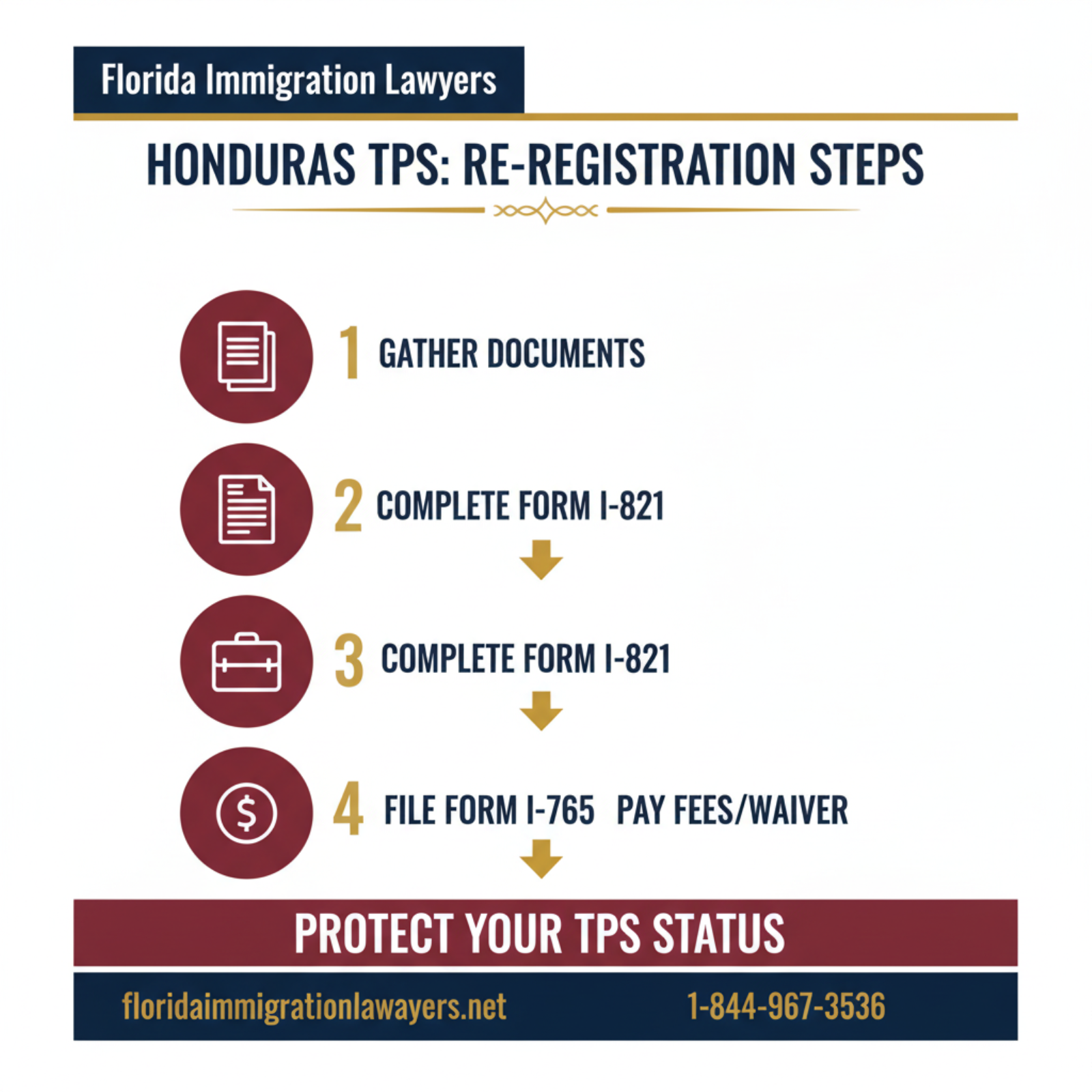
- Stay Informed with Official USCIS Announcements: Check the official USCIS TPS Honduras webpage regularly for updates on re-registration periods, eligibility dates, and EAD extensions.
- Confirm Your Eligibility: Re-confirm you meet all criteria, including continuous U.S. residence and physical presence since designated dates. Ensure no new disqualifying factors have arisen.
- Complete Form I-821: Accurately fill out Form I-821, Application for Temporary Protected Status. Provide current information, ensuring consistency with previous applications.
- Complete Form I-765 (Optional): File Form I-765, Application for Employment Authorization, if you need a new or renewed EAD for legal work authorization.
- Complete Form I-601 (If Applicable): If specific inadmissibility grounds apply, filing Form I-601, Application for Waiver of Grounds of Inadmissibility, may be necessary. Seek legal advice for this complex area.
- Gather Required Supporting Documents: Collect all documentation proving identity, nationality, continuous residence, and physical presence. Refer to our checklist for details.
- Pay Applicable Fees or Request a Fee Waiver: Be prepared for government filing fees for I-821 and I-765, plus a biometrics fee. If eligible, apply for a fee waiver using Form I-912. Check current fees on the USCIS website.
- Submit Your Application Package: Mail your completed forms, documents, and fees (or waiver) to the designated USCIS address within the re-registration period. Use certified mail for proof.
- Attend Biometrics Appointment (If Required): If notified, attend your biometrics appointment at an Application Support Center (ASC) in Florida. This is mandatory.
- Monitor Your Case Status: Track your application online using the receipt number from your Form I-797C notice. Respond promptly to any Requests for Evidence (RFEs).
Navigating these steps demands precision. Florida Immigration Lawyers offers expert assistance, ensuring your application is complete and accurate. We are dedicated to supporting the Honduran community in Florida.
Essential Documents for Your TPS Honduras 2026 Application
A complete and accurate application package is vital for successful TPS re-registration. Missing documents can cause delays or denial. Carefully gather all required documents before submitting to USCIS.
While USCIS provides specific lists for each re-registration, the following are generally required for TPS Honduras extension 2026:
- Proof of Identity and Nationality: Copy of Honduran passport (biographic page), or birth certificate with photo ID, or national identity document.
- Proof of Continuous Residence in the U.S.: Employment records, rent/utility bills, school records from Florida, medical records, affidavits, or bank/credit card statements.
- Proof of Continuous Physical Presence in the U.S.: Similar documents demonstrating U.S. physical presence.
- Two Passport-Style Photographs: Must adhere to USCIS specifications.
- Previous TPS Documentation (if applicable): Copy of prior Form I-797 Approval Notice and previous EAD.
- Marriage Certificate and Birth Certificates of Dependents (if applying for family members).
- Court Dispositions or Certified Criminal Records (if applicable): Provide certified copies for any arrests or convictions. Non-disclosure leads to severe consequences.
Organizing these documents can be challenging. Our team at Florida Immigration Lawyers assists in compiling robust application packages, reducing the risk of RFEs or denials for your TPS Honduras 2026 submission.
TPS Honduras 2026: Timeline, Processing, and What to Expect
The timeline for TPS Honduras re-registration varies significantly. Specific re-registration periods and expiration dates are subject to court orders and USCIS announcements. Diligent monitoring of these updates is crucial.
As of early 2026, protections for Honduran TPS beneficiaries generally continue under existing court injunctions. This means previous EADs and TPS validity notices are often automatically extended. However, these extensions are temporary and can change based on judicial decisions or new government policies.
Re-registration Periods and Automatic Extensions
USCIS typically announces a 60-day re-registration period when TPS is extended. Beneficiaries must then file Form I-821 and Form I-765 (for EADs). Due to litigation, USCIS has frequently issued automatic extensions for EADs and TPS validity for affected countries, including Honduras.
These notices often extend EADs with specific expiration dates through a future date. This ensures continued work authorization and protection from removal. Always check the USCIS website for recent Federal Register notices concerning these TPS Honduras extension 2026 updates.
Processing Times and Case Status
After submission, USCIS processing times vary based on application volume and complexity. Check estimated times on the USCIS website. You will receive a receipt notice (Form I-797C) with a receipt number to track your case online.
If you applied for a new EAD, it should arrive after processing. Delays are common, so patience is necessary. Be prepared to respond promptly to any Requests for Evidence (RFEs).
Potential Changes and Future Outlook
The future of TPS Honduras 2026 and beyond depends on federal litigation outcomes and potential legislative action. While court orders currently maintain protections, their lifting could lead to termination. This would require beneficiaries to explore other immigration avenues.
Conversely, Congress might pass legislation creating a pathway to permanent residency for long-term TPS holders. Such efforts face political challenges. Staying informed and preparing for various scenarios with an experienced immigration lawyer Florida is the wisest approach.
Cost Factors and Fees for TPS Applications in Florida
Understanding the financial aspects of TPS re-registration is crucial. Several fees are associated with filing for Temporary Protected Status with USCIS. These fees are subject to change, so always refer to the most current USCIS fee schedule online.
Generally, applicants for TPS Honduras 2026 will encounter the following fees:
USCIS Filing Fees
Re-registering for TPS typically involves a filing fee for Form I-821. If you need an Employment Authorization Document (EAD), there's a separate fee for Form I-765. A biometrics services fee is also usually required for fingerprinting and background checks.
Certain age groups may be exempt from some fees; for instance, applicants under 14 or over 65 might not pay the biometrics fee. Always verify the specific fee schedule for your situation. Do not send cash.
Fee Waivers and Exemptions
If you cannot afford USCIS filing fees, you may qualify for a fee waiver by filing Form I-912. Eligibility is typically based on household income below 150% of Federal Poverty Guidelines, receiving a means-tested public benefit, or financial hardship.
Strong evidence of your financial situation is essential for a fee waiver request. Incomplete requests can lead to rejection and delays. Consult an attorney to determine eligibility and proper submission.
Legal Fees for Immigration Attorney Services
Beyond government fees, consider the cost of legal representation. While self-filing is possible, the complexities of immigration law, especially with ongoing litigation for TPS Honduras extension 2026, make legal guidance highly advisable. An experienced immigration lawyer Florida can help you avoid errors and represent you.
Legal fees vary by firm and case complexity. Florida Immigration Lawyers offers transparent fee structures and free initial consultations. Investing in legal counsel can save time, stress, and potential long-term issues.
The immigration process, particularly concerning complex issues like TPS Honduras 2026, is filled with legal intricacies. Do not navigate this process alone. Contact Florida Immigration Lawyers today to secure expert guidance and peace of mind. We are here to advocate for your rights.
Common Mistakes to Avoid When Applying for TPS Honduras
Applying for or re-registering for TPS demands meticulous attention. Even minor errors can cause significant delays or denial. Avoid these common mistakes to protect your Temporary Protected Status Florida:
- Missing Re-registration Deadlines: Failing to submit within the designated period is critical. This leads to loss of TPS and work authorization. Always check USCIS announcements.
- Incomplete or Inaccurate Forms: Blank fields, inconsistent information, or incorrect answers cause RFEs or denials. Double-check everything before submission.
- Insufficient Supporting Documentation: Lack of evidence for identity, nationality, residence, or physical presence weakens your case. Submit copies only, never originals unless requested.
- Failure to Disclose Criminal History: Hiding any arrests or convictions is a severe offense. It leads to misrepresentation and potential immigration bars. Always be honest and provide certified court documents.
- Incorrectly Calculating Continuous Residence/Physical Presence: Precise dates are vital for TPS eligibility. Miscalculating these can lead to an ineligibility finding.
- Not Attending Biometrics Appointments: Missing this mandatory appointment without rescheduling can result in application abandonment or denial.
- Sending Incorrect or Missing Fees: Incorrect amounts, expired payment methods, or forgotten fees (without an approved waiver) will cause rejection. Verify the current fee schedule.
- Failing to Respond to Requests for Evidence (RFEs): You must respond completely and promptly to RFEs by the deadline. Failure to do so almost certainly results in denial.
- Traveling Internationally Without Authorization: Leaving the U.S. without an approved travel document (Advance Parole) can be deemed abandonment of your TPS status.
- Assuming Automatic Extensions: While litigation-driven extensions occur, they are temporary. Relying solely on them without verifying the latest USCIS guidance is risky.
- Not Seeking Legal Advice for Complex Cases: If you have a criminal record, prior immigration violations, or residence gaps, self-filing is risky. A lawyer identifies issues and strategizes solutions.
When to Call a Florida Immigration Lawyer for TPS Assistance
The legal complexities of TPS Honduras 2026 often necessitate professional legal assistance. An experienced immigration lawyer Florida can be invaluable for residents in Jacksonville and throughout the state.
Specific Scenarios Requiring Legal Help:
- Initial TPS Application: A lawyer helps determine eligibility, gather evidence, and correctly complete forms.
- Complex Re-registration: Significant personal changes (e.g., marriage, new dependents, travel history) benefit from legal guidance.
- Criminal History: Any arrests or convictions impact TPS eligibility. A lawyer assesses this and advises on disclosure/waivers. We offer robust deportation defense.
- Previous Immigration Violations: Prior deportation orders or asylum denials require a lawyer to navigate their effect on your TPS application.
- Requests for Evidence (RFEs) or Notices of Intent to Deny (NOIDs): A lawyer helps understand and respond comprehensively to these critical USCIS communications.
- Appeals: If your TPS application is denied, a lawyer advises on appeal options, including with the AAO or through the asylum process.
- Exploring Other Immigration Pathways: If TPS's future is uncertain, a lawyer explores alternatives like family-based immigration, employment visas, or citizenship.
- International Travel: An attorney can help apply for an Advance Parole document (Form I-131) to ensure safe re-entry when traveling abroad with TPS.
Florida Immigration Lawyers specializes in assisting individuals and families statewide. Our attorneys are experts in Temporary Protected Status Florida, committed to compassionate, effective representation. Contact us for a free consultation.
About Florida Immigration Lawyers
Florida Immigration Lawyers is a leading law firm serving diverse immigration needs across Florida. From Jacksonville to Miami, we provide exceptional legal representation and guidance.
We understand immigration's profound impact on your life. Our firm approaches every case with empathy, professionalism, and commitment to achieving the best outcomes. Our skilled attorneys have extensive experience in immigration law.
Why Choose Florida Immigration Lawyers?
- Experienced and Dedicated Attorneys: Knowledgeable in evolving U.S. immigration law.
- Client-Centered Approach: Personalized strategies tailored to your unique situation.
- Comprehensive Services: Covering TPS, asylum, family petitions, deportation defense, and more.
- Bilingual Support: Services in English and Spanish for clear communication.
- Available 24/7: Accessible around the clock for urgent immigration issues.
- Free Consultations: Initial free consultations to discuss your case and options.
Let us be your trusted partner. Your future in Florida is our priority.
Phone: 1-844-967-3536
Website: https://www.floridaimmigrationlawyers.net
Sources and References
- U.S. Citizenship and Immigration Services (USCIS) - Temporary Protected Status
- USCIS Form I-821, Application for Temporary Protected Status
- USCIS Policy Manual
- Executive Office for Immigration Review (EOIR)
- 8 U.S.C. § 1254a - Temporary Protected Status (Immigration and Nationality Act Section 244)
- 8 CFR Part 244 - Temporary Protected Status
- Ramos v. Mayorkas, No. 18-15585 (9th Cir.) - Relevant court case regarding TPS terminations.
This article provides general legal information and is not intended as legal advice. Every case is unique, and outcomes depend on specific facts and circumstances. Laws are subject to change, and judicial decisions can impact immigration policies. Contact an attorney for advice about your particular situation and to ensure compliance with the latest regulations.
The journey through immigration law, especially with the evolving situation of TPS Honduras 2026, can be intricate and emotionally taxing. At Florida Immigration Lawyers, we are dedicated to providing clarity, support, and expert legal representation to the Honduran community in Florida. Let us help you protect your status and secure your future.
Don't delay. Call Florida Immigration Lawyers today at 1-844-967-3536 for a free, confidential consultation. Se Habla Español - Estamos aquí para ayudarle.
Frequently Asked Questions
Florida Immigration Lawyers
Legal Team
Our experienced attorneys at Florida Immigration Lawyers have been serving clients across Florida for over 20 years. We specialize in immigration, personal injury, criminal defense, workers compensation, and family law.