RFE: Request for Evidence Florida Response Guide for USCIS Cases
Receiving a Request for Evidence (RFE) from USCIS can be daunting, but it's a critical opportunity to strengthen your immigration case. This guide provides Florida residents, especially in Kissimmee, with essential steps to prepare a thorough and timely RFE response. Learn how to interpret your RFE notice, compile necessary documents, avoid common mistakes, and understand the processing timeline. A well-organized RFE response is crucial for your application's success. Florida Immigration Lawyers offers expert legal assistance to navigate this complex process, ensuring your case receives the meticulous attention it deserves. Contact us for a free consultation to protect your immigration future.
A Request for Evidence (RFE) from USCIS means your immigration application requires additional information or documentation. Responding accurately and on time, typically within 30-87 days, is crucial to avoid denial. Gather all requested evidence, ensure it directly addresses USCIS's concerns, and consider professional legal guidance. A well-prepared RFE response significantly strengthens your case.
- An RFE is a request for more information, not a denial.
- Timely and thorough responses are critical for case approval.
- Organize all evidence clearly and address each point.
- Legal assistance can significantly improve your RFE response.
- Failure to respond can lead to application denial.
Navigating the complex world of immigration can be challenging, especially when you receive an unexpected notice from U.S. Citizenship and Immigration Services (USCIS). For many individuals and families in Florida, particularly in areas like Kissimmee, a Request for Evidence (RFE) can bring worry and confusion. This crucial document means USCIS needs more information to make a decision on your immigration application or petition.
Understanding an RFE and knowing how to respond correctly is vital for the success of your case. A poorly managed or delayed response can lead to significant setbacks, including the denial of your application. This comprehensive guide will walk you through what an RFE entails, how to prepare a robust RFE response, and why expert legal assistance from a Florida immigration lawyer can be your best asset. We are here to help you understand this process.
If you have received an RFE and feel overwhelmed, do not hesitate. Call Florida Immigration Lawyers at 1-844-967-3536 for a free consultation to discuss your specific situation. Our team is ready to provide the guidance you need.
What is a Request for Evidence (RFE)?
A Request for Evidence (RFE) is an official notice issued by USCIS when they determine that an immigration petition or application is missing required initial evidence, or that the submitted evidence does not establish eligibility for the benefit sought. It is a common part of the immigration process, affecting many applicants across Florida and the nation. Receiving an RFE does not mean your case is denied. Instead, it indicates that USCIS needs more clarity or proof to make a final decision.
USCIS issues an RFE to ensure that all eligibility requirements are met under the Immigration and Nationality Act (INA) and relevant regulations. For instance, if you are applying for a family-based immigration, USCIS might issue an RFE if they need more proof of your relationship to the petitioner or your financial ability. Similarly, business immigration cases often receive RFEs concerning the company's financial stability or the applicant's qualifications.
Common Reasons for an RFE
RFEs can be issued for a variety of reasons, depending on the specific immigration benefit you are seeking. Often, they relate to missing documents, insufficient proof of a relationship, questions about financial support, or concerns regarding an applicant's background. For example, a common RFE might request additional birth certificates, marriage licenses, or tax transcripts.
In some cases, an RFE might seek to clarify discrepancies in previously submitted information. USCIS aims to ensure that every application is thoroughly reviewed and meets all legal standards. Understanding the specific reason for your RFE is the first critical step in formulating an effective immigration response.
Understanding Your RFE Notice in Florida
When you receive an RFE from USCIS, it will typically arrive by mail to the address on file for you or your attorney. This notice is a critical document that outlines exactly what additional evidence USCIS requires. It is imperative to read your RFE notice very carefully and understand every detail. Missing even a small request can jeopardize your case.
The RFE notice will specify the type of evidence needed, the deadline for your RFE response, and the consequences of failing to respond adequately. USCIS processing centers, including those that handle cases for Florida residents, issue these notices with precise instructions. For example, the National Benefits Center (NBC) or a specific service center might be processing your petition.
Key Elements of Your RFE Notice
Your RFE notice will include several important pieces of information. It will clearly state your application's receipt number, the type of application, and the specific evidence requested. Pay close attention to the deadline for response, which is typically between 30 and 87 days from the date the RFE was issued. This deadline is non-negotiable, and no extensions are generally granted.
The RFE will also explain why the evidence is needed and what specific criteria it aims to satisfy. For instance, if USCIS questions the bona fides of a marriage for a green card application, the RFE might ask for joint bank accounts, lease agreements, or affidavits from friends and family. Your RFE response must directly address each point raised in the notice.
Step-by-Step Guide to Responding to an RFE
Responding to an RFE in Florida requires meticulous attention to detail and a strategic approach. Follow these steps to prepare a comprehensive and timely USCIS RFE response.
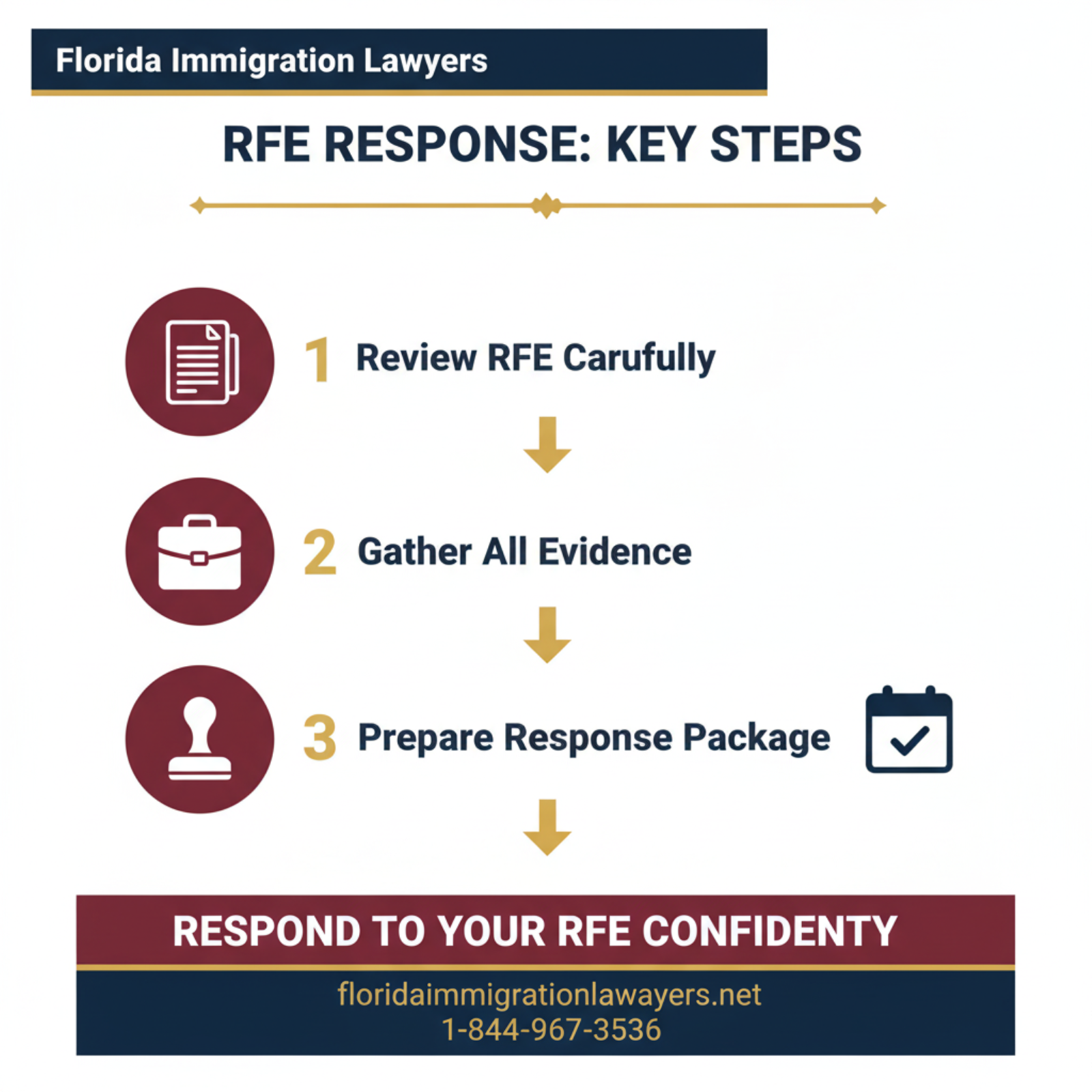
- Read the RFE Carefully and Completely: Do not just skim the document. Read every sentence to understand precisely what USCIS is asking for. Highlight or make notes on each specific request. This is the foundation of your effective request for evidence strategy.
- Identify the Specific Evidence Needed: Break down the RFE into individual requests. Determine what type of document or information is required for each point. Sometimes, USCIS asks for multiple types of evidence to prove one fact.
- Gather All Requested Documents: Begin collecting all necessary evidence as soon as possible. This may involve obtaining original documents, requesting official records, or preparing sworn affidavits. Ensure all documents are legible and complete.
- Organize Your Response Packet: Create a well-organized submission. Place the original RFE notice on top of your response packet. Use cover letters and tabs to clearly label each section of evidence, corresponding to the requests in the RFE. Include your USCIS receipt number on every page.
- Write a Comprehensive Cover Letter: Your cover letter should clearly list all documents submitted and explain how each piece of evidence addresses a specific point in the RFE. Reference the RFE's paragraph numbers or bullet points for clarity.
- Provide Explanations for Missing Documents (If Applicable): If you cannot provide a requested document, explain why in your cover letter. Include secondary evidence or affidavits from individuals with personal knowledge of the facts. USCIS may accept alternative forms of proof.
- Make Copies of Everything: Before mailing, make a complete copy of your entire RFE response packet for your records. This is crucial for future reference and for your immigration lawyer.
- Mail Your Response by the Deadline: Send your RFE response well before the deadline using a trackable mail service (e.g., USPS Certified Mail, FedEx, UPS). This provides proof of delivery, which is essential. The mailing address will be provided on your RFE notice.
- Consult with an Immigration Attorney: For complex RFEs or if you are unsure about any aspect of your response, it is highly advisable to seek legal counsel. An experienced Florida immigration lawyer can help you interpret the RFE and prepare a strong immigration response.
Essential Document Checklist for Your RFE Response
Preparing a thorough RFE response requires careful compilation of documents. While the specific items will vary based on your RFE, this general checklist can help you organize. Remember to only submit copies unless USCIS specifically requests originals.
- Original RFE Notice
- A detailed cover letter outlining the submitted evidence
- Copy of your original application/petition
- Proof of identity (e.g., passport copy, birth certificate)
- Proof of relationship (e.g., marriage certificate, birth certificates of children, joint bank statements, utility bills, photos, affidavits from friends/family for family-based petitions)
- Financial evidence (e.g., tax transcripts, W-2s, pay stubs, bank statements, Affidavit of Support Form I-864 and supporting documents)
- Educational documents (e.g., diplomas, transcripts, evaluation reports for employment-based petitions)
- Employment verification (e.g., letters from employers, pay stubs, job offer letters for employment-based petitions)
- Medical examination results (Form I-693, if requested)
- Police clearance certificates or court dispositions (if requested due to criminal history)
- Any other specific documents requested by USCIS to establish eligibility
Ensure every document is clearly labeled and directly corresponds to the RFE's requests. If a document is not in English, it must be accompanied by a certified English translation.
Timeline and Processing Expectations for RFE Responses
Once USCIS receives your RFE response, the processing clock essentially "resets" or resumes from where it left off. There is no fixed timeline for how long it will take USCIS to make a decision after they receive your additional evidence. However, understanding the general expectations can help manage your anxiety.
Typically, USCIS aims to process cases efficiently, but the actual time can vary significantly based on the service center, the type of application, and the complexity of the evidence submitted. You can monitor your case status online using the receipt number provided on your RFE notice or original application.
What Happens After USCIS Receives Your RFE Response?
After your RFE response is delivered, USCIS will update your online case status to "Response to RFE Received." An immigration officer will then review the submitted documents to determine if the additional evidence satisfies the requirements. This review process can take anywhere from a few weeks to several months.
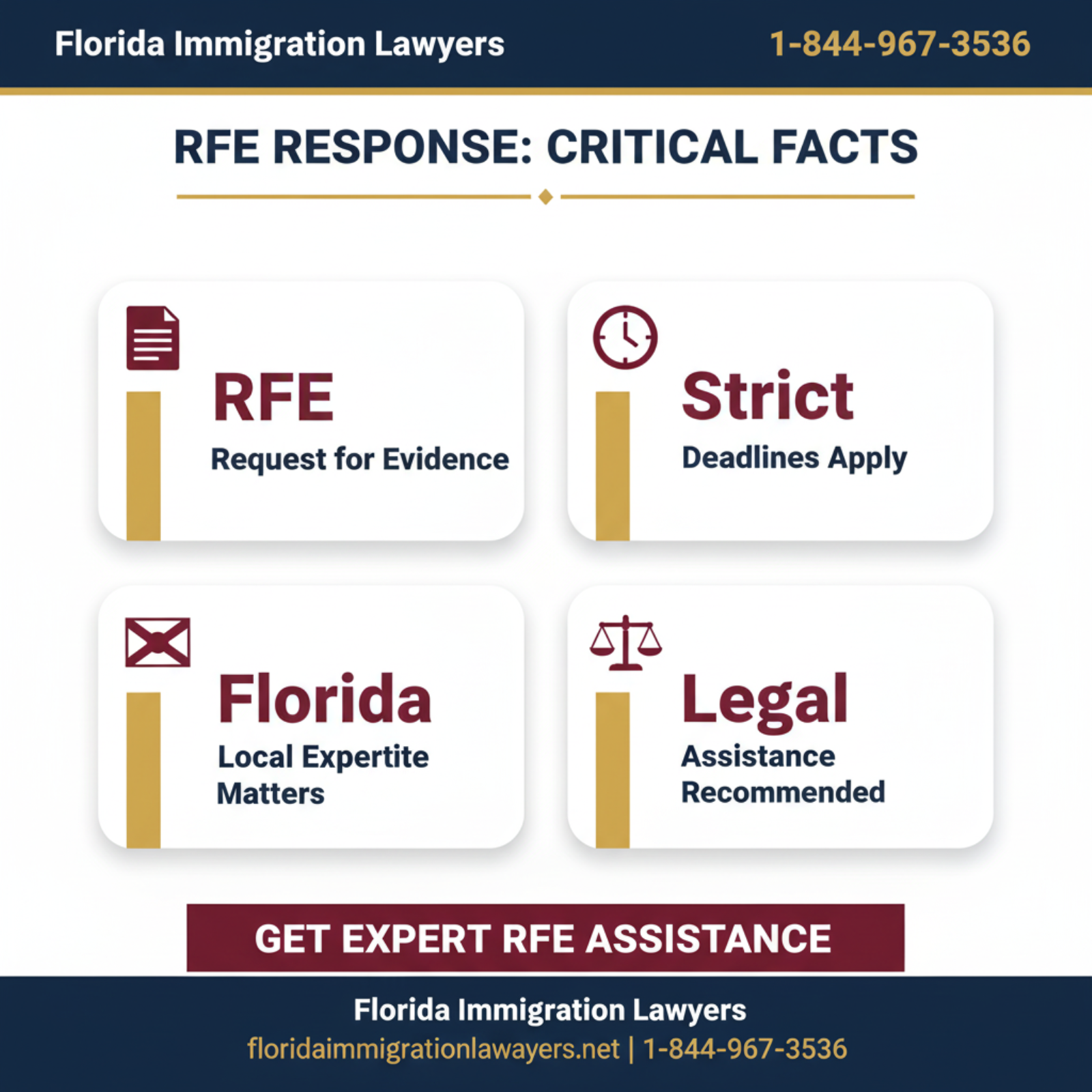
During this period, it is possible, though less common, for USCIS to issue a second RFE or a Notice of Intent to Deny (NOID) if the submitted evidence is still insufficient. More often, a decision will be issued: either an approval, a denial, or a request for an interview. Patience is key during this waiting period after submitting your request for evidence material.
Cost Factors and Legal Fees for RFE Assistance
Navigating an RFE can involve various costs, both direct and indirect. While there isn't a separate filing fee for submitting an RFE response itself, the costs can arise from gathering documents and, most significantly, from legal assistance.
The primary costs associated with an RFE often include obtaining official documents like birth certificates, marriage licenses, police records, or certified translations. These fees vary by jurisdiction and type of document. For applicants in Kissimmee or other parts of Florida, these costs are typically standard government or agency fees.
The Value of Legal Counsel for Your RFE
Engaging an experienced immigration attorney Florida based, like Florida Immigration Lawyers, is a significant investment that can dramatically improve your chances of a successful outcome. Legal fees for RFE assistance vary depending on the complexity of the RFE and the amount of work required. A lawyer can:
- Help you accurately interpret the RFE.
- Advise on the best evidence to submit.
- Assist in drafting compelling cover letters and affidavits.
- Ensure your RFE response is complete and timely.
- Represent you in communications with USCIS.
While there is a cost, the potential for avoiding a denial and the peace of mind knowing your case is handled professionally often outweigh the expense. Many firms, including ours, offer free consultations to discuss your RFE and provide an estimate of legal fees.
Do not navigate this complex process alone. A single mistake in your RFE response can have long-lasting consequences for your immigration journey in Florida. Contact Florida Immigration Lawyers today to ensure your case receives the meticulous attention it deserves.
Common Mistakes to Avoid When Responding to an RFE
An RFE is a critical juncture in your immigration case. Avoiding common pitfalls can significantly increase your chances of approval. Here are some mistakes to watch out for when preparing your request for evidence response:
- Ignoring the Deadline: Failing to submit your RFE response by the specified deadline is one of the most common reasons for automatic denial. USCIS deadlines are strict and generally non-extendable.
- Misinterpreting the RFE: Submitting irrelevant documents or failing to address every specific point requested by USCIS can lead to a denial or another RFE. Read the RFE carefully.
- Submitting Incomplete Evidence: Providing only part of the requested information or documents will likely result in your immigration response being deemed insufficient. Ensure all required evidence is included.
- Sending Original Documents (Unless Requested): Generally, USCIS prefers copies. Sending original irreplaceable documents can lead to loss, and USCIS may not return them. Only send originals if explicitly asked.
- Lack of Organization: A disorganized response packet makes it difficult for USCIS officers to review. This can cause delays or lead to the officer missing crucial evidence, potentially resulting in a denial.
- Providing False Information: Never submit fraudulent or misleading documents or statements. This can lead to severe immigration consequences, including findings of misrepresentation and potential bans.
- Forgetting to Include the Original RFE Notice: Always place the original RFE notice on top of your response packet. This helps USCIS quickly identify your case and the context of your submission.
- Not Keeping a Copy of Your Response: Always make a complete copy of everything you send to USCIS. This serves as your record and is vital if there are questions or issues later.
- Failing to Get Certified Translations: Any document not in English must be accompanied by a complete, certified English translation. Failure to do so renders the document unusable by USCIS.
- Assuming an RFE is a Bad Sign: While an RFE means more work, it is often an opportunity to strengthen your case and clarify issues. It is not necessarily a precursor to denial.
- Not Seeking Legal Advice: Attempting to navigate a complex RFE without legal guidance can be risky. An experienced immigration lawyer can provide invaluable insights and ensure a robust RFE response.
When to Call a Florida Immigration Lawyer
While some RFEs might seem straightforward, many are complex and require a nuanced understanding of immigration law. If you are in Florida, particularly in Kissimmee, and have received an RFE, knowing when to seek professional legal help is crucial. An experienced immigration attorney Florida can make a significant difference in the outcome of your case.
You should consider contacting Florida Immigration Lawyers if:
- The RFE is complex or extensive: If USCIS is asking for a large volume of documents or for evidence that is difficult to obtain, a lawyer can help strategize and organize your response.
- You are unsure how to interpret the RFE: The legal language in an RFE can be confusing. An attorney can clarify what USCIS truly requires.
- You believe some requested documents do not exist or are impossible to obtain: A lawyer can advise on acceptable secondary evidence or alternative proofs.
- There are potential legal issues: If the RFE touches on issues like previous immigration violations, criminal history, or questions about eligibility, legal counsel is essential.
- You have a tight deadline: An attorney can help expedite the process of gathering and submitting your RFE response to meet the deadline.
- You want to maximize your chances of approval: Even with seemingly simple RFEs, a lawyer can help present your evidence in the most persuasive way, reducing the risk of a denial after RFE response.
Our firm, Florida Immigration Lawyers, specializes in helping individuals throughout Florida with their immigration challenges, including RFE responses. We understand the local context, including the procedures at the Orlando USCIS Field Office that serves Kissimmee and surrounding areas. We offer services in family-based immigration, business immigration, asylum, deportation defense, and citizenship, all of which can involve RFEs. Let us review your RFE and provide a clear path forward.
Frequently Asked Questions About RFE Responses
Many applicants have similar questions when facing a Request for Evidence. Here are answers to some common concerns:
How long after response to USCIS Request for Evidence was received?
Once USCIS receives your RFE response, the processing time varies. There is no set timeframe, but you can typically expect a decision anywhere from a few weeks to several months. You can track your case status online using your receipt number on the USCIS website. The processing clock resumes after they receive your evidence.
How to respond to a Request for Evidence?
To respond to a Request for Evidence, you must carefully read the RFE, gather all requested documents, organize them clearly with the original RFE notice and a detailed cover letter, make copies for your records, and mail the complete packet to USCIS before the deadline. Consulting an immigration attorney is highly recommended for complex cases.
Can USCIS deny after RFE response?
Yes, USCIS can deny an application even after receiving an RFE response. A denial can occur if the submitted evidence is still insufficient, does not address the RFE's concerns, or if new issues are discovered. This underscores the importance of a comprehensive and accurate response.
What percentage of RFE is approved?
There are no publicly available official statistics on the exact approval rate after an RFE response. However, an RFE is an opportunity to strengthen your case. A well-prepared and timely response significantly increases the likelihood of approval. Conversely, an inadequate response often leads to denial.
About Florida Immigration Lawyers
Florida Immigration Lawyers is a leading immigration law firm dedicated to serving individuals and families across the entire state of Florida. With a deep understanding of U.S. immigration laws and a commitment to our clients, we provide compassionate and effective legal representation for a wide range of immigration matters. Our experienced attorneys are here to guide you through every step of your immigration journey, including complex RFE responses.
We offer comprehensive legal services including family immigration, business immigration, asylum, deportation defense, and naturalization/citizenship. Our firm prides itself on providing personalized attention and strategic advice tailored to your unique circumstances. We understand the challenges immigrants face and are committed to protecting your rights and helping you achieve your American dream.
Our team is available 24/7 to answer your questions and provide support. We offer free consultations to assess your case and explain your options. Whether you are in Kissimmee, Orlando, Miami, or anywhere else in Florida, we are here to assist you.
Phone: 1-844-967-3536
Website: https://www.floridaimmigrationlawyers.net
Services: Family Immigration, Business Immigration, Asylum, Deportation Defense, Citizenship, Visa Petitions, Green Cards, RFE Responses.
Sources and References
- U.S. Citizenship and Immigration Services (USCIS)
- Executive Office for Immigration Review (EOIR)
- 8 U.S.C. § 1101 et seq. - Immigration and Nationality Act (INA)
- 8 CFR Part 103 - Adjudication of Applications and Petitions
- USCIS Policy Manual
This article provides general legal information and is not intended as legal advice. Every case is unique, and outcomes depend on specific facts and circumstances. Contact an attorney for advice about your particular situation.
Do not let an RFE create unnecessary stress or lead to a denial. Take proactive steps to protect your immigration future. Call Florida Immigration Lawyers today at 1-844-967-3536 for a free, confidential consultation. Our dedicated team is ready to provide the expert legal guidance you need. Se Habla Español - Estamos aquí para ayudarle.
Need help with Immigration?
Our Florida immigration attorneys offer free consultations. Call today or schedule online.
Frequently Asked Questions
Florida Immigration Lawyers
Legal Team
Our experienced attorneys at Florida Immigration Lawyers have been serving clients across Florida for over 20 years. We specialize in immigration, personal injury, criminal defense, workers compensation, and family law.