H-1B Visa Fee Increase in Florida 2026: What Employers Must Know
The H-1B visa fee increase, including a new $100,000 fee for certain petitions, significantly impacts Florida employers and skilled foreign workers in 2026. This comprehensive guide from Florida Immigration Lawyers breaks down the new fee structure, discusses exemptions, and provides crucial steps for navigating the H-1B application process. We cover understanding who pays the H-1B visa fees 2026, how to prepare your petition, and avoiding common mistakes. Learn about processing timelines, essential documents, and when to seek legal counsel to ensure compliance and success in the evolving immigration landscape. Our firm is dedicated to providing expert guidance across Florida, offering free consultations to help you understand the H1B visa cost to employer and secure your talent.
The H-1B visa fee increase, particularly the significant $100,000 fee for certain petitions, profoundly impacts employers and skilled foreign workers in Florida, effective September 21, 2025. These changes demand meticulous planning for new applications and renewals in 2026. Understanding who pays, who is exempt, and how to prepare is critical.
- A new $100,000 fee applies to specific H-1B petitions.
- Exemptions exist for certain non-profit and educational organizations.
- Employers bear the primary burden of these increased H1B visa fees 2026.
- Expert legal guidance is crucial to navigate the complex new fee structure.
Imagine your thriving business in Naples, Florida, relying on a skilled professional whose expertise is vital to your operations. Suddenly, new immigration fee structures threaten to significantly increase the cost of retaining or hiring that talent. This scenario is becoming a reality for many Florida employers and skilled foreign workers due to recent changes in H-1B visa fees.
The landscape of U.S. immigration law is constantly evolving, and the H-1B visa program has seen substantial updates, particularly concerning its associated costs. These changes, especially the implementation of a new $100,000 fee for certain H-1B petitions, have profound implications for businesses and individuals across Florida, from the tech hubs of Orlando to the healthcare sectors in Miami and the growing industries in Naples.
This comprehensive guide will explore the H-1B visa fee increase, its specific implications for Florida employers and applicants in 2026, and how to effectively navigate these complex changes. We will break down the new fee structure, discuss exemptions, and provide actionable steps to ensure compliance. Do not face these challenges alone; call Florida Immigration Lawyers at 1-844-967-3536 for a free consultation today.
Understanding the H-1B Visa Fee Increase in Florida for 2026
The H-1B visa program is a cornerstone of the U.S. economy, allowing U.S. employers to temporarily employ foreign workers in specialty occupations. These occupations generally require a bachelor's degree or higher in a specific field. Many businesses in Florida, particularly in technology, healthcare, and engineering, rely on H-1B visa holders to fill critical talent gaps.
As of September 21, 2025, significant changes to the H-1B visa fee structure came into effect. These changes introduce new financial considerations for employers seeking to sponsor H-1B workers. It is imperative for businesses throughout Florida, including those in Naples, Tampa, and Jacksonville, to understand these new costs.
The primary driver of these recent changes is a regulatory update aimed at ensuring the integrity of the H-1B program and providing additional resources for immigration enforcement. These adjustments are outlined in various sections of the Immigration and Nationality Act (INA) and its corresponding regulations.
What is the H-1B Visa Program?
The H-1B visa is a non-immigrant visa that permits U.S. employers to temporarily employ foreign workers in specialty occupations. These roles typically demand theoretical and practical application of a body of highly specialized knowledge, and a bachelor's degree or higher in the specific specialty, or its equivalent, is usually a minimum entry requirement. Examples include IT professionals, engineers, doctors, and researchers.
The program is capped annually, meaning there's a limited number of H-1B visas issued each fiscal year. This cap, generally 65,000 visas plus an additional 20,000 for those with a U.S. master's degree or higher, makes the competition for these visas intense. Florida businesses often compete nationally for this limited pool of talent, making every application critical.
The New $100,000 H-1B Visa Fee: Who is Affected?
A major development for H1B visa fees 2026 is the introduction of a $100,000 fee for certain H-1B petitions. This fee is specifically targeted at employers who meet certain criteria, often referred to as 'H-1B dependent employers' or those with a high percentage of H-1B workers. This significant cost is in addition to other existing fees.
Generally, this $100,000 fee is paid by the petitioning employer, not the foreign worker. It applies primarily to new H-1B petitions, transfers, and extensions where the employer falls within the specified parameters. Current H-1B holders are typically not required to pay this $100,000 fee for standard extensions unless their employer's profile or the nature of the petition changes in a way that triggers this specific regulatory requirement.
It is crucial for employers in Florida to assess whether they fall under the scope of these new regulations. Understanding the definition of an H-1B dependent employer and other triggering conditions is vital for accurate financial planning. This is where expert legal counsel becomes indispensable to avoid costly errors.
Regarding the query, "Do I have to pay $250 to enter the US?" it's important to clarify that the $100,000 H-1B fee is an application fee paid by the employer for the H-1B petition itself. This is distinct from any potential entry fees or other charges that might apply to various types of visas or border crossings, which are generally much lower and depend on the specific visa category and circumstances.
Navigating the H-1B Visa Application Process with New Fees
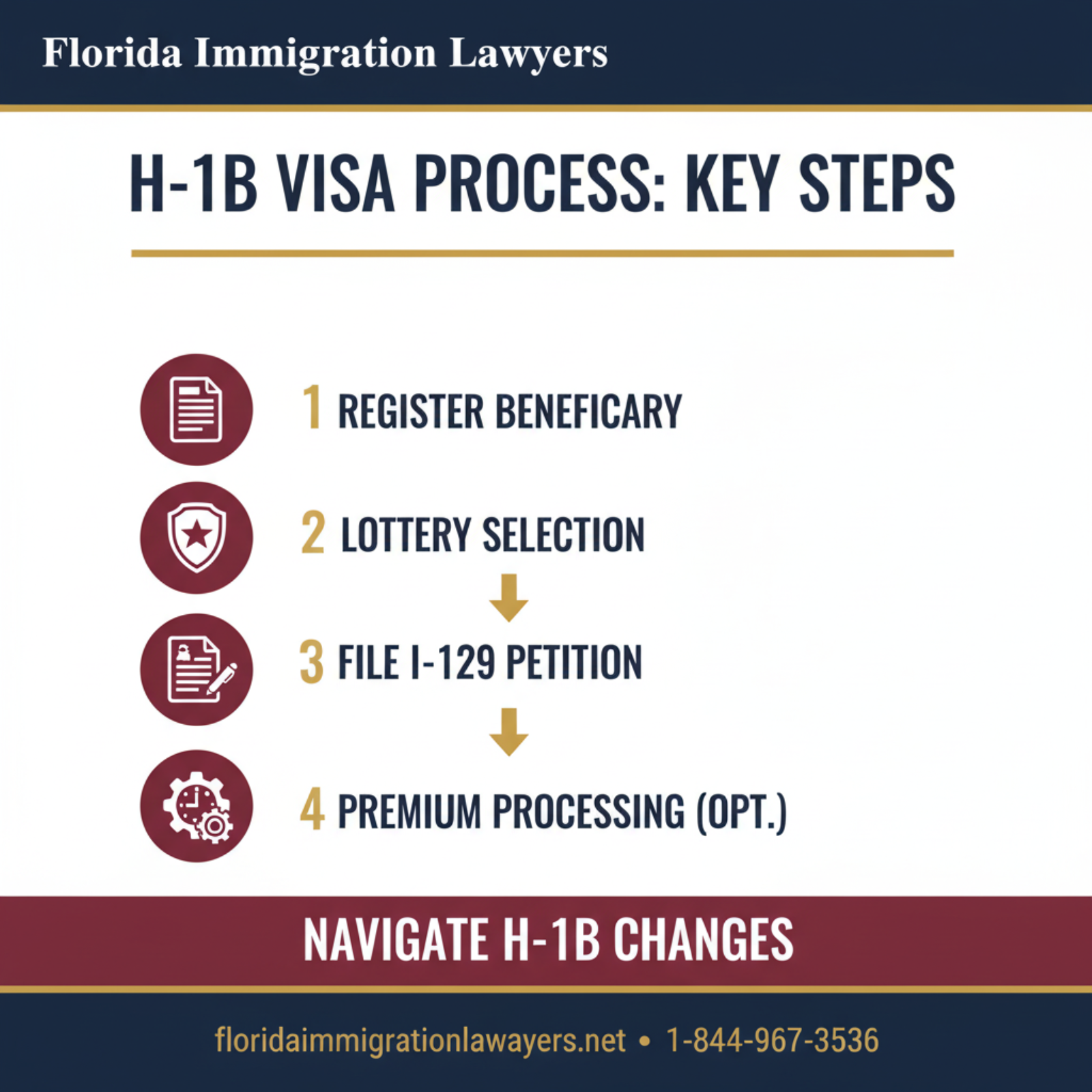
The H-1B visa application process remains complex, and the addition of new fees only adds another layer of intricacy. For Florida employers looking to secure H-1B talent in 2026, a meticulous, step-by-step approach is essential. Our firm, Florida Immigration Lawyers, can guide you through each stage.
-
Labor Condition Application (LCA) Filing: The employer must first file a Form ETA-9035, Labor Condition Application, with the U.S. Department of Labor (DOL). This document attests that the employer will pay the H-1B worker at least the prevailing wage for the occupation in the area of employment (e.g., Naples, Florida) and provide working conditions that will not adversely affect other workers. This step is mandatory before filing the H-1B petition with USCIS. The DOL typically processes LCAs within 7-10 days.
-
H-1B Petition (Form I-129) Filing with USCIS: Once the LCA is certified, the employer files Form I-129, Petition for a Nonimmigrant Worker, with U.S. Citizenship and Immigration Services (USCIS). This is the core of the H-1B application. It includes all supporting documentation about the employer, the foreign worker, and the job offer. This is where the various H1B visa fees 2026, including the new $100,000 fee if applicable, are submitted.
-
H-1B Lottery (If Applicable): If USCIS receives more petitions than the annual cap allows, a lottery system is used to select petitions. This random selection process typically occurs in late March for the fiscal year beginning October 1. Employers in Florida must be prepared for the possibility of their petition not being selected in the lottery.
-
Petition Adjudication and Request for Evidence (RFE): USCIS reviews the filed petition. During this phase, they may issue a Request for Evidence (RFE) if they require additional information or clarification. Responding to an RFE accurately and promptly is crucial for the success of the petition. Failure to do so can lead to denial.
-
Visa Interview or Adjustment of Status: If the petition is approved, the foreign worker, if outside the U.S., will attend a visa interview at a U.S. embassy or consulate abroad. If already in the U.S. in another lawful status, they may be eligible to apply for an Adjustment of Status (Form I-485) or a Change of Status (Form I-129, which includes the H-1B request). This final step leads to the issuance of the H-1B visa or status.
Essential Document Checklist for Your H-1B Visa Petition
A complete and accurate submission of documents is paramount for a successful H-1B visa petition, especially with the increased scrutiny surrounding the new H-1B visa fee increase. Missing or incorrect documents can lead to delays, RFEs, or even denial. Here is a general checklist of essential documents:
- Certified Labor Condition Application (LCA Form ETA-9035).
- Form I-129, Petition for a Nonimmigrant Worker, and its various supplements.
- Employer's Federal Employer Identification Number (FEIN).
- Company financial statements, tax returns, and business licenses to demonstrate viability.
- Detailed job description, including duties, responsibilities, and required qualifications.
- Offer of employment letter.
- Beneficiary's educational degrees, transcripts, and diplomas (U.S. equivalent evaluations if obtained abroad).
- Beneficiary's professional licenses or certifications relevant to the specialty occupation.
- Beneficiary's resume/CV and letters of experience from previous employers.
- Beneficiary's passport copy, visa, I-94 arrival/departure record, and previous I-797 approval notices (if applicable).
- Beneficiary's birth certificate and marriage certificate (if petitioning for dependents).
- Any other documents requested by USCIS or relevant to the specific case.
H-1B Visa Processing Timelines and Expectations for Florida Applicants
The processing times for H-1B petitions can vary significantly based on factors such as the USCIS service center handling the petition, the volume of applications, and whether a Request for Evidence (RFE) is issued. For Florida applicants, petitions are typically processed by the Vermont Service Center or the California Service Center, depending on the employer's location and the type of petition.
Standard processing for an H-1B petition can range from several months to over a year. After the H-1B lottery (if applicable), it can take 3-6 months for initial adjudication. If an RFE is issued, this can add another 2-4 months to the process. These timelines underscore the importance of early and accurate filing, especially with the new H-1B visa fee increase adding complexity.
Factors Influencing H-1B Processing Delays
Several factors can lead to delays in H-1B processing. Incomplete petitions or those with errors are almost guaranteed to receive an RFE, extending the timeline considerably. Changes in immigration policy or increased caseloads at USCIS also contribute to longer waits. Furthermore, the complexity of the job duties or the beneficiary's qualifications can sometimes lead to additional scrutiny.
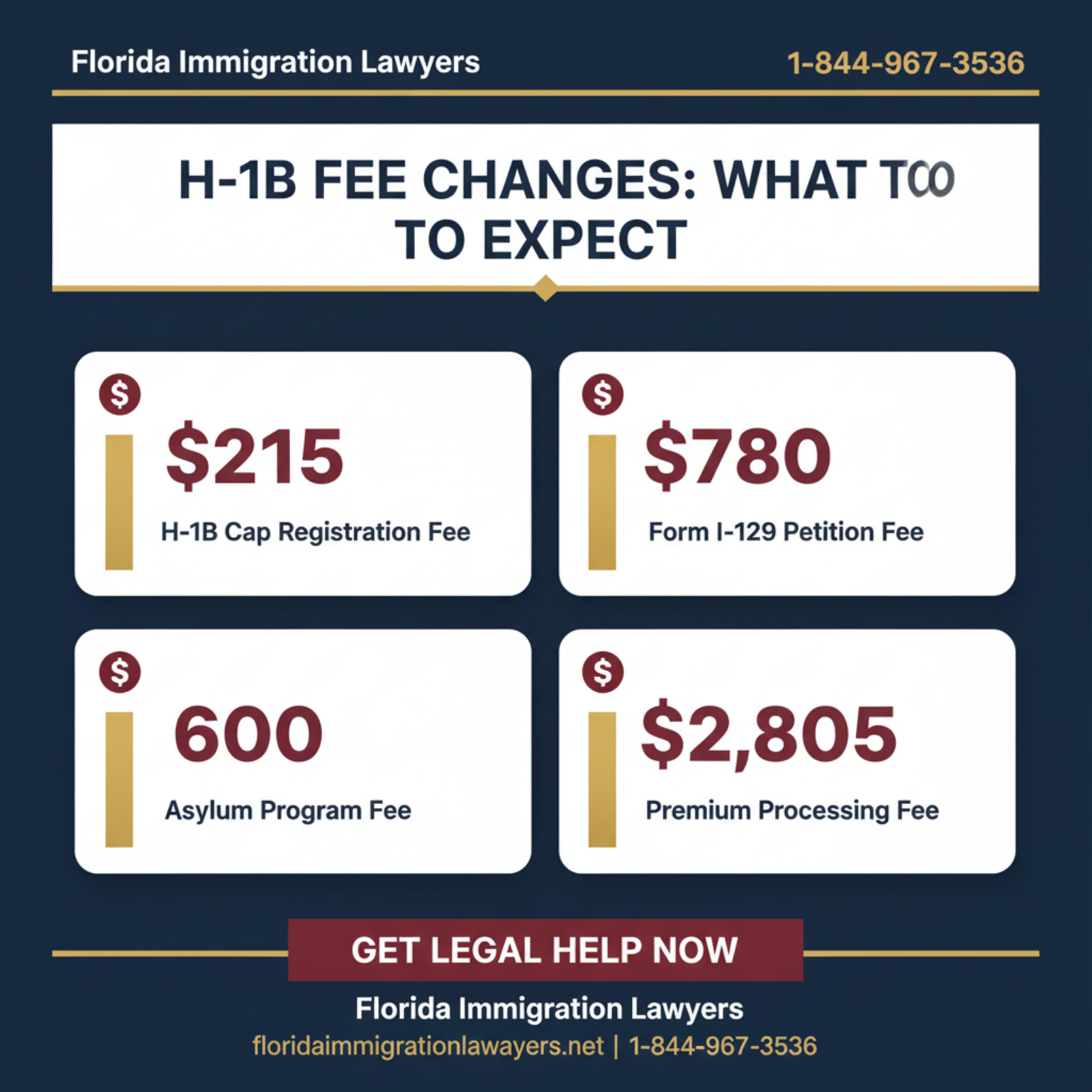
Employers considering the H1B visa cost to employer must also factor in the time implications. Delays can mean a longer wait for critical talent, impacting project timelines and business growth in competitive markets like Florida. Utilizing premium processing, when available, can significantly shorten adjudication times to 15 calendar days, for an additional fee.
Cost Factors and Fee Breakdown for H-1B Visas in 2026
The total cost of an H-1B visa petition is a significant consideration for employers, especially with the recent H-1B visa fee increase. It is important to understand that the H1B visa cost to employer is not just a single fee but a combination of several components. These fees are subject to change, so always consult the latest USCIS fee schedule.
Typically, H-1B petition fees include a base filing fee for Form I-129, an American Competitiveness and Workforce Improvement Act (ACWIA) fee, and a Fraud Prevention and Detection Fee. The ACWIA fee varies based on the size of the employer, while the Fraud Prevention and Detection Fee is a flat rate. For employers with 50 or more employees, with more than 50% of their workforce in H-1B or L-1 status, an additional Public Law 114-113 fee may apply.
Now, in 2026, the most impactful addition is the new $100,000 H-1B fee for specific petitions. This fee significantly increases the H1B visa cost to employer for those who fall under its criteria. It is crucial to determine if your organization is subject to this substantial additional charge.
While the H1B visa cost for employee is typically minimal or zero, as most fees are legally mandated to be paid by the employer, employees may incur costs related to document translation, educational credential evaluations, or travel for visa interviews. However, the core H-1B petition fees remain the employer's responsibility.
Understanding H1B Fee Exemptions
Fortunately, there are exemptions to some of these fees, including the new $100,000 H-1B fee. Certain non-profit organizations, educational institutions, and government research organizations may be exempt from the ACWIA fee and potentially the $100,000 fee. These exemptions are critical for universities and research facilities in Florida that rely on skilled foreign talent.
Additionally, some H-1B petitions, such as those for extensions of stay for current employees, may not trigger all the additional fees that apply to new petitions. The specific conditions for the H1B $100k fee exemption are complex and depend on various factors related to the employer's nature, size, and the beneficiary's previous immigration history. Consulting with an experienced immigration attorney is the best way to determine eligibility for any exemptions.
Do not navigate this process alone. The complexities of the H-1B visa fee increase and the application process can be overwhelming. Contact Florida Immigration Lawyers today to ensure your petition is prepared accurately and efficiently. Our experienced team is ready to assist you.
Common Mistakes to Avoid with H-1B Visa Petitions
Navigating the H-1B visa process, especially with the H-1B visa fee increase, is fraught with potential pitfalls. Avoiding common mistakes can save time, money, and prevent devastating denials. Here are some of the most frequent errors and their consequences:
-
Incorrectly Calculating or Omitting Fees: Consequences include rejection of the petition, significant delays, and potential re-filing expenses. Ensure all H1B visa fees 2026 are correctly calculated and submitted.
-
Misinterpreting H1B $100k Fee Exemption Criteria: Incorrectly claiming an exemption can lead to an RFE or denial, as well as a loss of filing fees. Thoroughly verify eligibility with legal counsel.
-
Filing an Incomplete Petition: Missing forms, documents, or signatures will almost certainly result in an RFE or outright rejection, prolonging the process significantly.
-
Failing to Meet Prevailing Wage Requirements: The LCA requires employers to pay at least the prevailing wage. Non-compliance can lead to DOL investigations, back pay liabilities, and penalties, affecting the H1B visa cost to employer.
-
Inadequate Documentation of Specialty Occupation: Failing to clearly demonstrate that the position qualifies as a specialty occupation can lead to an RFE or denial. Provide robust evidence of the job's complexity and degree requirements.
-
Late Filing: Missing deadlines, especially for the H-1B cap lottery, means waiting another year. For extensions, late filing can lead to gaps in employment authorization.
-
Insufficient Response to a Request for Evidence (RFE): RFEs require precise and comprehensive responses. A weak or incomplete response will likely result in a denial. Seek legal help immediately upon receiving an RFE.
-
Not Maintaining Public Access Files for LCAs: Employers must maintain a public access file for each LCA. Failure to do so can result in penalties from the Department of Labor.
-
Ignoring Changes in Immigration Law: Immigration laws and policies are dynamic. Relying on outdated information can lead to non-compliance and adverse outcomes. Stay informed about updates, especially regarding the H1B $100k fee lawsuit status or new regulations.
-
Misrepresenting Information: Any false statements or misrepresentations on forms can lead to severe consequences, including petition denial, future visa bans, and criminal charges. Always provide accurate and truthful information.
When to Call a Lawyer for Your H-1B Visa in Florida
While this article provides general information, the complexities of the H-1B visa process, particularly with the new H-1B visa fee increase, often necessitate professional legal assistance. Florida Immigration Lawyers are here to help you navigate these intricate waters. You should consider contacting an attorney in the following specific scenarios:
- Understanding the New $100,000 Fee: If you are an employer unsure whether your organization is subject to the new $100,000 H-1B fee or if you qualify for an H1B $100k fee exemption, an attorney can provide a clear assessment.
- Complex Case Scenarios: If your case involves unique circumstances, such as prior immigration violations, multiple employers, or a change of employer, legal counsel is highly recommended.
- Receiving a Request for Evidence (RFE): An RFE indicates that USCIS requires more information. A lawyer can help you craft a comprehensive and persuasive response to maximize your chances of approval.
- Petition Denials: If your H-1B petition is denied, an attorney can analyze the reasons for denial and advise on potential appeal options or strategies for re-filing.
- Compliance and Audit Concerns: Employers need to ensure ongoing compliance with H-1B regulations, including public access file requirements and prevailing wage rules. An attorney can conduct internal audits and provide guidance to prevent issues.
- Strategic Planning for H1B Visa Fees 2026: For businesses in Naples, Miami, or across Florida planning to sponsor multiple H-1B workers, an attorney can help develop a long-term immigration strategy that accounts for costs and potential challenges.
- Questions about H-1B Salary Requirements: An attorney can clarify prevailing wage determinations and ensure your LCA complies with DOL requirements, preventing issues related to the H1B visa cost to employer.
Our firm, Florida Immigration Lawyers, offers comprehensive services for H-1B visa petitions, including initial filings, RFE responses, and strategic planning. We understand the specific challenges faced by businesses and individuals in Florida and are dedicated to providing personalized and effective legal solutions. We monitor developments like the H1B $100k fee lawsuit to keep our clients informed.
About Florida Immigration Lawyers
Florida Immigration Lawyers is a leading immigration law firm dedicated to serving individuals, families, and businesses across the entire state of Florida. With years of experience and a deep understanding of U.S. immigration law, our attorneys provide expert legal guidance and compassionate representation to clients navigating the complexities of the immigration system.
We specialize in a wide range of immigration services, including family-based immigration, business immigration, deportation defense, asylum claims, and naturalization. Our firm is committed to empowering our clients with the knowledge and support they need to achieve their immigration goals. Whether you are in Naples, Orlando, Tampa, or anywhere else in Florida, our team is ready to assist you.
Why Choose Florida Immigration Lawyers?
- Expertise: Our attorneys possess extensive knowledge of current immigration laws and policies, including recent changes to H-1B visa fees.
- Client-Centered Approach: We prioritize your needs and provide personalized strategies tailored to your unique circumstances.
- Accessibility: We are available 24/7 and offer free consultations to discuss your case.
- Bilingual Services: Our team offers services in both English and Spanish, ensuring clear communication and understanding.
Contact us today for a free consultation to discuss your immigration needs. Call Florida Immigration Lawyers at 1-844-967-3536 or visit our website at https://www.floridaimmigrationlawyers.net.
Sources and References
- U.S. Citizenship and Immigration Services (USCIS) - H-1B Specialty Occupations
- U.S. Citizenship and Immigration Services (USCIS) - Fee Schedule
- U.S. Department of Labor (DOL) - H-1B Program
- 8 U.S.C. Chapter 12 - Immigration and Nationality Act (INA), specifically INA Section 214(g) regarding H-1B numerical limitations.
- 8 CFR Part 214 - Regulations Governing Nonimmigrant Classes.
- USCIS Policy Manual - Volume 2, Part H, Chapter 1 - H-1B Classification.
This article provides general legal information and is not intended as legal advice. Every case is unique, and outcomes depend on specific facts and circumstances. Contact an attorney for advice about your particular situation.
The H-1B visa fee increase represents a significant challenge for employers and skilled workers in Florida. However, with the right legal guidance, you can successfully navigate these changes and achieve your immigration goals. Do not let these complexities deter you.
Florida Immigration Lawyers is here to provide the expert support you need. Schedule your free consultation today to discuss your H-1B visa needs. Call us at 1-844-967-3536. Se Habla Español - Estamos aquí para ayudarle.
Need help with Immigration?
Our Florida immigration attorneys offer free consultations. Call today or schedule online.
Frequently Asked Questions
Florida Immigration Lawyers
Legal Team
Our experienced attorneys at Florida Immigration Lawyers have been serving clients across Florida for over 20 years. We specialize in immigration, personal injury, criminal defense, workers compensation, and family law.