Canada Immigration News Today: Florida Updates & Legal Help 2026
Stay informed with the latest Canada immigration news today and its direct impact on Florida residents. From understanding U.S. visa options for Canadians to navigating travel restrictions and policy changes in 2026, this guide provides crucial insights. Learn about essential documents, processing timelines, and common pitfalls to avoid. Whether you are a Canadian living in Naples, Florida, or a Floridian with Canadian ties, our expert advice will help you make informed decisions. Discover when professional legal assistance is vital and how Florida Immigration Lawyers can support your journey. Contact us for a free consultation.
Navigating Canada and U.S. immigration changes from Florida requires up-to-date information. While Canada's immigration policies primarily affect those moving there, U.S. policies often impact Canadians living or traveling in Florida. Staying informed about travel advisories, visa requirements, and legal updates is crucial for Canadians and Floridians alike in 2026.
- Monitor Canadian and U.S. travel advisories regularly.
- Understand visa requirements for Canadians entering the U.S. or vice versa.
- Policy changes can impact temporary stays and permanent residency.
- Consult a Florida immigration lawyer for personalized guidance.
- USCIS updates affect various immigration processes for all foreign nationals.
Are you a Canadian citizen living in Florida, or perhaps a Floridian with ties to Canada, wondering about the latest Canada immigration news today? The interplay between Canadian and U.S. immigration policies can be complex, especially with updates constantly emerging. For those residing in areas like Naples, Florida, understanding these changes is vital for seamless travel, work, or family reunification.
This comprehensive guide from Florida Immigration Lawyers will delve into the critical updates and considerations for 2026. We will explore how recent developments in Canadian immigration might indirectly affect you in Florida, along with key U.S. immigration policies relevant to Canadians. Our goal is to provide clear, actionable insights to help you navigate this intricate landscape.
Do not let uncertainty about immigration rules create stress or delays for you and your family. For personalized advice on your unique situation, call Florida Immigration Lawyers at 1-844-967-3536 for a free consultation today. Our experienced team is ready to assist you.
Understanding the Interplay of Canada and U.S. Immigration Policies for Florida Residents
While Canada's immigration system is distinct from that of the United States, developments in one country often have ripple effects on the other, particularly for border communities and states like Florida. Many Canadians choose Florida for seasonal stays, retirement, or business ventures. Conversely, many U.S. citizens consider Canada for new opportunities.
The year 2026 brings its own set of challenges and opportunities, with potential shifts in policy and enforcement. It is essential for Canadians in Florida, and Floridians with Canadian connections, to remain vigilant about these changes. We will specifically focus on how Canada immigration news today might influence your status or plans in the Sunshine State.
Key Policy Changes Impacting Canada-US Travel and Residency
Both Canada and the United States frequently adjust their immigration regulations. These changes can affect everything from short-term visits to long-term residency and citizenship pathways. Keeping abreast of these updates is crucial for anyone crossing the border or maintaining status in either country.
For instance, new requirements for electronic travel authorizations, changes in visa waiver programs, or adjustments to work permit categories can significantly impact individuals. Understanding these nuances can prevent unexpected delays or complications. Our firm stays on top of these developments to better serve our clients.
Navigating Travel Advisories and Border Updates
In the current global climate, travel advisories and border policies are subject to rapid change. Canadians traveling to Florida, or Floridians traveling to Canada, must check official government sources before planning any trip. These advisories provide critical information on entry requirements, health protocols, and potential restrictions.
For the latest information on travel to the U.S. from Canada, you should always consult the U.S. Department of State and the U.S. Customs and Border Protection websites. Similarly, for travel to Canada, review the Government of Canada's official travel advice. This due diligence can save you considerable trouble at the border.
Step-by-Step Guide for Canadians Navigating U.S. Immigration from Florida
Canadians generally enjoy considerable freedom to visit the United States without a visa for short tourist or business trips. However, for longer stays, work, study, or permanent residency, specific immigration processes are required. Navigating these pathways from Florida can be complex without proper guidance.
Whether you are seeking a temporary work visa, exploring investment opportunities, or pursuing family-based immigration, understanding the precise steps is crucial. Our Florida immigration lawyer team is well-versed in assisting Canadians through these procedures. Here is a general step-by-step guide:
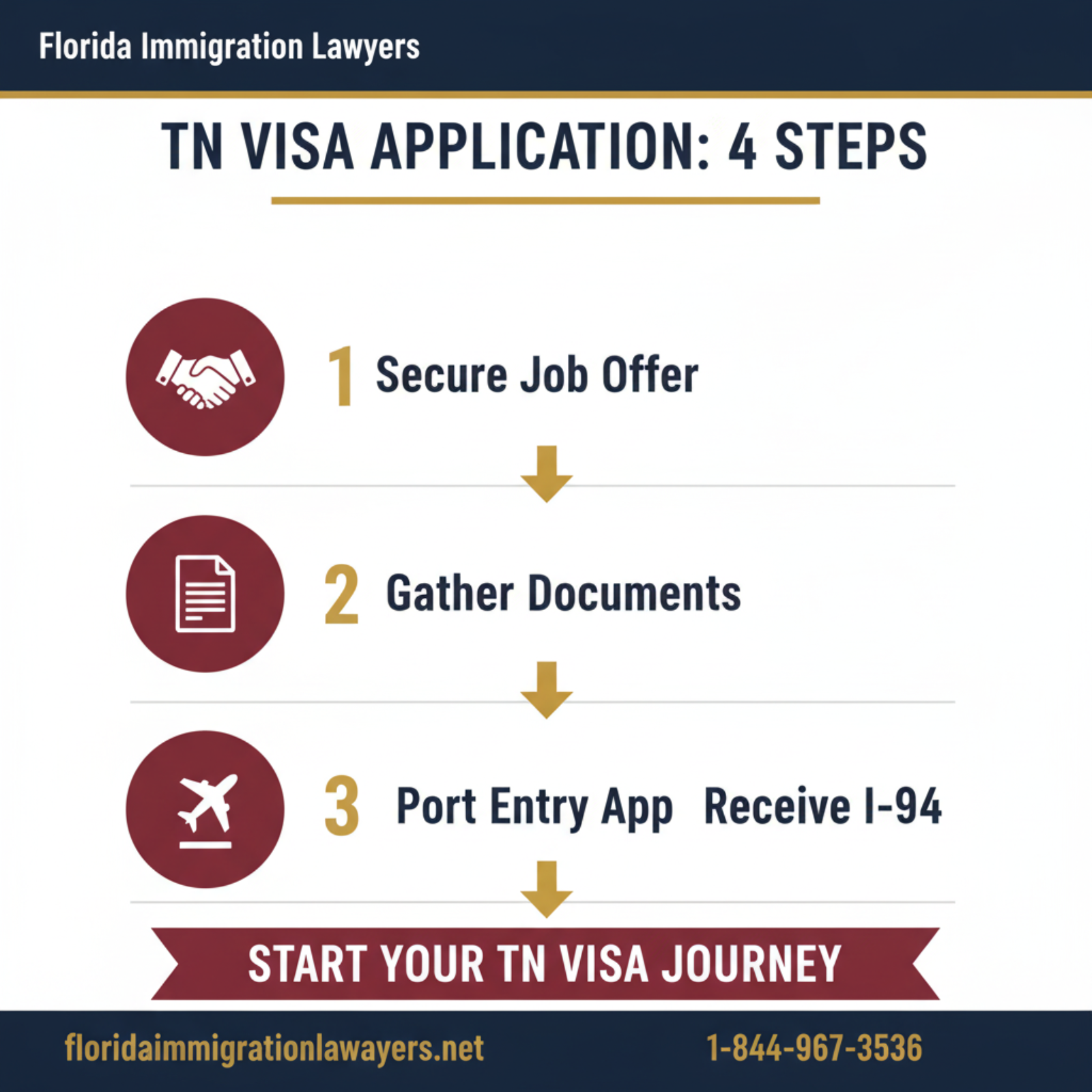
- Determine Your Immigration Goal: Clearly define why you need to enter or remain in the U.S. Are you seeking a tourist stay, a work visa (like a TN visa for professionals under NAFTA/USMCA), a student visa, an investment visa (E-2), or a green card through family or employment? Your goal dictates the appropriate path.
- Research Visa Categories and Eligibility: Once your goal is clear, research the specific visa category that aligns with it. Each category has unique requirements, eligibility criteria, and application procedures. For example, a TN visa requires specific professional qualifications and a job offer.
- Gather Required Documentation: This is a critical step. Collect all necessary personal documents, educational records, employment letters, financial statements, and any other supporting evidence. Accuracy and completeness are paramount to avoid delays. (See our detailed document checklist below.)
- Complete and File Necessary Forms with USCIS or Department of State: Depending on the visa type, you will file petitions with U.S. Citizenship and Immigration Services (USCIS) or apply directly through a U.S. consulate or embassy. Pay close attention to filing fees and submission instructions.
- Attend Interviews and Biometrics Appointments: Many immigration processes require an interview at a U.S. consulate in Canada or a USCIS office in the U.S. for adjustment of status. Biometrics appointments are also common to collect fingerprints and photographs.
- Await Decision and Maintain Status: After submission and interviews, you will await a decision. If approved, ensure you understand the terms of your visa or status and adhere to them strictly. If you are already in the U.S., be mindful of maintaining your legal status throughout the process.
- Consider Legal Counsel: Due to the intricacies of immigration law, consulting a Florida immigration lawyer is highly recommended. Our firm can help assess your eligibility, prepare your application, represent you in interviews, and troubleshoot any issues that arise.
Essential Document Checklist for Canadian Applicants in Florida
Regardless of your specific immigration pathway, thorough documentation is key to a successful application. Missing or incorrect documents are common reasons for delays or denials. This general checklist provides an overview of documents typically required. Always verify the exact list for your specific visa type.
Preparing these documents meticulously can significantly streamline your application process. Our team at Florida Immigration Lawyers regularly assists clients in compiling comprehensive application packages, ensuring all requirements are met.
- Valid Canadian passport (and any previous passports).
- Birth certificate.
- Marriage certificate (if applicable).
- Divorce decrees or death certificates (if applicable).
- Educational diplomas, transcripts, and professional licenses.
- Letters of employment, job offers, and detailed resumes/CVs.
- Financial statements, tax returns, and proof of funds.
- Police certificates or background checks from all countries of residence.
- Medical examination results from a USCIS-approved physician.
- Proof of U.S. ties, such as property ownership in Naples or other Florida cities, or family connections.
- Completed USCIS forms specific to your application (e.g., Form I-129 for TN status, Form I-130 for family petitions).
- Passport-style photographs meeting U.S. government specifications.
Timeline and Processing Expectations for U.S. Immigration for Canadians
Immigration processing times can vary widely based on the type of application, the volume of submissions, and the specific USCIS service center or consulate handling your case. It is important to set realistic expectations and plan accordingly. These timelines are general estimates and can change.
Factors such as the complexity of your case, the completeness of your documentation, and any requests for additional evidence can all impact the processing duration. Staying informed about current processing times directly from USCIS is advisable.
Typical Processing Times for Common Visa Types
For temporary visas such as the TN visa, processing can be relatively quick, sometimes even adjudicated at the border or within a few weeks via mail. However, more complex petitions, like those for employment-based green cards or family-sponsored visas, can take several months to several years. For instance, some family preference categories face significant backlogs.
Adjustment of Status applications filed from within Florida to change from a non-immigrant to immigrant status can also vary. These are typically processed at local USCIS field offices, such as the one serving the Naples area, and national service centers. We encourage you to check the official USCIS website for the most current processing times.
Factors Influencing Your Application Timeline
Several elements can affect how long your application takes. These include the accuracy of your submitted forms, your response time to Requests for Evidence (RFEs), and the overall caseload at USCIS or consular offices. International events and policy changes can also introduce unforeseen delays.
Working with an experienced Florida immigration lawyer can help minimize delays by ensuring your application is meticulously prepared and filed. Our team can also help you monitor your case status and respond promptly to any agency inquiries. We understand the urgency often associated with these processes.
Cost Factors and Fee Breakdown for U.S. Immigration Applications
Pursuing U.S. immigration involves various fees, which can include government filing fees, legal service fees, and other associated costs. It is important to budget for these expenses to avoid financial surprises during your application process. Government fees are subject to change and should always be verified on official websites.
While we cannot provide exact current filing fees here (as they frequently change), we can outline the types of costs you should anticipate. Understanding these components will help you plan your immigration journey effectively. Our firm offers transparent fee structures for our legal services.
Government Filing Fees
U.S. Citizenship and Immigration Services (USCIS) charges fees for most forms and petitions. These can include fees for initial petitions (e.g., I-129 for non-immigrant workers, I-130 for family petitions), applications for adjustment of status (I-485), work authorization (I-765), and travel documents (I-131). There are also fees for biometrics appointments.
Additionally, some visa categories may require a visa issuance fee or a processing fee to the U.S. Department of State. Always refer to the official USCIS Fee Schedule (uscis.gov/forms/fees) for the most up-to-date information. These fees are typically non-refundable, regardless of the outcome of your application.
Legal Service Fees
Retaining a Florida immigration lawyer is an investment in the success and efficiency of your case. Legal fees cover the lawyer's expertise, time spent preparing your application, communicating with government agencies, and representing you. Our firm provides clear explanations of our fees during your initial consultation.
The cost of legal services varies depending on the complexity of your case, the type of visa or immigration benefit sought, and the amount of legal work required. While not mandatory, legal representation can significantly reduce stress and the likelihood of errors, especially for complex situations involving Canada immigration news today or unique circumstances.
Other Potential Costs
Beyond government and legal fees, you may incur other expenses. These can include costs for obtaining necessary documents (e.g., birth certificates, police records), translation services if documents are not in English, medical examination fees, and travel expenses for interviews or biometrics appointments. Planning for these ancillary costs is an important part of your overall budget.
For example, if you need to travel from Naples to a USCIS office or a U.S. consulate in Canada, those travel costs should be factored in. Our team can help you understand all potential expenses associated with your specific immigration process.
Do not navigate the complexities of U.S. immigration laws or Canada immigration news today alone. The stakes are too high. Contact Florida Immigration Lawyers today for expert guidance and dedicated representation. We are here to simplify your journey.
Addressing Common Concerns for Canadians in Florida
Canadians in Florida often have specific questions regarding their status, travel, and potential paths to longer-term residency. Understanding the answers to these common concerns can help alleviate anxiety and inform your decisions. Our Florida immigration lawyer team regularly addresses these inquiries.
How long can Canadians stay in Florida?
Canadian citizens generally can enter the U.S. as visitors for up to six months without a visa. This is typically for tourism or permitted business activities. However, the exact duration of your authorized stay is determined by the U.S. Customs and Border Protection (CBP) officer at your port of entry. They will stamp your passport or issue an I-94 record with the "admitted until" date. Overstaying this period can lead to serious immigration consequences.
Is Canada still accepting US immigrants?
Yes, Canada continues to welcome immigrants from the U.S. and around the world. Canada has various immigration programs, including Express Entry for skilled workers, family sponsorship, and provincial nominee programs. While this article focuses on U.S. immigration from Florida, it is important to know that Canada maintains robust immigration pathways. For specific details on Canadian immigration, you would need to consult Canadian government resources like Immigration, Refugees and Citizenship Canada (IRCC).
What is happening with Canada immigration?
Canada's immigration system is dynamic, with ongoing policy adjustments to meet economic and social needs. Recent focuses have included increasing immigration targets, addressing labor shortages, and refining Express Entry draws. These changes aim to attract skilled workers and facilitate family reunification. While these policies directly affect those applying to Canada, they can indirectly influence the overall North American immigration landscape. Staying updated on Canada immigration news today helps understand broader trends.
Are babies born in Canada automatically citizens?
Yes, under Canadian law, any child born on Canadian soil is automatically a Canadian citizen, regardless of the parents' nationality or immigration status. This principle is known as "jus soli" or birthright citizenship. This is similar to birthright citizenship in the United States. This does not, however, grant Canadian citizenship to the parents.
What are the new rules for entering the U.S. from Canada?
Entry requirements for the U.S. from Canada can change. While Canadians typically do not need a visa for short visits, they must present a valid passport or other approved travel document. Enhanced security measures and health screenings may be in place. It is crucial to check the U.S. Customs and Border Protection website (cbp.gov) and the U.S. Department of State's travel advisories (travel.state.gov) before any trip to ensure compliance with the latest regulations. These sources will provide the most current information regarding Canada travel restrictions related to U.S. entry.
Common Mistakes to Avoid in Your Immigration Journey
Navigating immigration processes can be fraught with potential pitfalls. Avoiding common mistakes can save you significant time, money, and stress, and even prevent serious immigration consequences. Our Florida immigration lawyer team sees these errors frequently.
- Overstaying Your Authorized Period: This is a critical error. Even by a single day, overstaying your permitted stay in the U.S. can lead to accrual of unlawful presence, future bars to re-entry, and make it difficult to obtain future U.S. visas or green cards. Always know your "admitted until" date.
- Misrepresenting Information: Providing false or misleading information on any immigration form or during an interview can result in a finding of fraud or misrepresentation. This can lead to a permanent bar from the U.S., with very limited waivers available. Honesty is always the best policy.
- Failing to Disclose Criminal History: Even minor arrests or convictions, including those from Canada, must be disclosed. Failure to do so can be considered misrepresentation and lead to severe penalties, including deportation. Consult an attorney about any criminal record, no matter how old or minor.
- Submitting Incomplete or Incorrect Applications: Missing documents, unsigned forms, or incorrect information can lead to Requests for Evidence (RFEs), delays, or outright denials. USCIS expects meticulous attention to detail.
- Not Understanding Your Visa Category: Applying for the wrong visa type or misunderstanding its limitations can lead to a denial. For example, trying to work on a tourist visa is illegal and has severe consequences.
- Missing Deadlines: Immigration processes often involve strict deadlines for filing responses or applications. Missing these can result in the closure of your case or denial without further review.
- Entering the U.S. with "Immigrant Intent" on a Non-Immigrant Visa: If a CBP officer suspects you intend to permanently reside in the U.S. while attempting to enter on a temporary visa, you may be denied entry. This is especially relevant for Canadians with strong ties to Florida.
- Failing to Update Your Address with USCIS: If you move within Florida or elsewhere in the U.S., you must inform USCIS of your new address within 10 days using Form AR-11. Failure to do so can result in missed notices and even deportation proceedings. (Refer to 8 CFR § 265.1 for this requirement).
- Not Seeking Professional Legal Advice: Immigration law is incredibly complex and constantly changing. Attempting to navigate it alone, especially in complicated cases or when dealing with Canada immigration news today that might affect you, can lead to costly errors.
- Ignoring Travel Advisories: Disregarding official travel warnings or restrictions can lead to denied boarding, denied entry, or unexpected quarantines. Always check travel.state.gov and cbp.gov before traveling.
When to Call a Florida Immigration Lawyer
While some immigration processes appear straightforward, many situations warrant the expertise of a seasoned legal professional. Immigration law is dynamic, with frequent updates and nuanced interpretations. A Florida immigration lawyer at Florida Immigration Lawyers can provide invaluable assistance, especially when dealing with the intricacies of Canada immigration news today and its impact on your U.S. status.
Specific Scenarios Requiring Legal Help
- Complex Visa Applications: If your case involves multiple family members, a criminal history, previous immigration violations, or unique professional qualifications, legal guidance is essential.
- Denied Applications or Requests for Evidence (RFEs): If USCIS or a consulate denies your application or sends an RFE, an attorney can help you understand the reasons and formulate a strong response or appeal.
- Deportation or Removal Proceedings: Facing deportation is a serious matter. Our firm offers robust deportation defense services to protect your rights and explore all available legal avenues.
- Asylum Claims: If you fear persecution in your home country, seeking asylum is a complex process that requires expert legal counsel.
- Family-Based Immigration Challenges: Issues with petitions for spouses, children, or other relatives can be intricate. A family immigration lawyer ensures proper documentation and adherence to regulations.
- Business or Investment Visas: For Canadians looking to invest or establish businesses in Florida, navigating business immigration visas like E-2 or L-1 requires specialized knowledge.
- Citizenship and Naturalization: While seemingly straightforward, the citizenship process can have hidden complexities, especially if you have an unusual travel history or minor infractions.
- Changes in Immigration Law: With constant updates to policies (including those related to Canada travel restrictions or U.S. entry), an attorney ensures your application adheres to the latest requirements.
Warning Signs and Red Flags
If you encounter any of the following, it is a strong indicator that you need to consult with an attorney immediately:
- You receive a Notice to Appear (NTA) in immigration court.
- You are detained by ICE or CBP.
- Your visa application is denied, or you receive an RFE.
- You are unsure about your eligibility for a specific visa or green card.
- You have a criminal record, even a minor one, and are concerned about its impact.
- You have previously been denied entry to the U.S. or Canada.
- You are considering overstaying your authorized period.
Do not wait for a problem to escalate. Proactive legal advice can often prevent future complications. Our dedicated immigration attorneys at Florida Immigration Lawyers are here to provide the clarity and support you need. Learn more about our team on our attorneys page.
About Florida Immigration Lawyers
Florida Immigration Lawyers is a premier law firm dedicated to providing exceptional immigration legal services across the entire state of Florida. With years of experience and a deep understanding of U.S. immigration law, our firm is committed to helping individuals, families, and businesses achieve their immigration goals.
Our team of compassionate and knowledgeable attorneys specializes in a wide range of immigration matters, including family-based petitions, employment visas, deportation defense, asylum, citizenship, and complex litigation. We pride ourselves on offering personalized attention and strategic advice tailored to each client's unique circumstances, whether you are in Naples, Miami, Orlando, or anywhere else in Florida.
We understand that navigating the immigration system can be daunting. That is why we strive to make the process as smooth and stress-free as possible for our clients. Our firm is known for its unwavering advocacy, meticulous preparation, and commitment to achieving the best possible outcomes.
We are available 24/7 to address your urgent immigration concerns and offer free, confidential consultations to discuss your case. Se Habla Español, ensuring that language is never a barrier to quality legal representation. When you choose Florida Immigration Lawyers, you gain a trusted partner dedicated to protecting your rights and securing your future in the United States.
Contact us today for a free consultation: 1-844-967-3536 or visit our website at https://www.floridaimmigrationlawyers.net. We are here to help you every step of the way.
Sources and References
- U.S. Citizenship and Immigration Services (USCIS)
- U.S. Department of State - Bureau of Consular Affairs
- U.S. Customs and Border Protection (CBP)
- Executive Office for Immigration Review (EOIR)
- Immigration, Refugees and Citizenship Canada (IRCC)
- 8 U.S.C. Chapter 12 - Immigration and Nationality Act (INA)
- 8 CFR § 265.1 - Change of address reporting requirement
- North American Free Trade Agreement (NAFTA) / United States-Mexico-Canada Agreement (USMCA)
This article provides general legal information and is not intended as legal advice. Every case is unique, and outcomes depend on specific facts and circumstances. Contact an attorney for advice about your particular situation. Laws are subject to change, and this content reflects information as of the publishing date.
Do not leave your immigration future to chance. Whether you are seeking to understand Canada immigration news today or need assistance with a U.S. visa, our experienced Florida immigration lawyer team is here to guide you. Call Florida Immigration Lawyers today at 1-844-967-3536 for a free consultation. Se Habla Español - Estamos aquí para ayudarle.
Need help with Immigration?
Our Florida immigration attorneys offer free consultations. Call today or schedule online.
Frequently Asked Questions
Florida Immigration Lawyers
Legal Team
Our experienced attorneys at Florida Immigration Lawyers have been serving clients across Florida for over 20 years. We specialize in immigration, personal injury, criminal defense, workers compensation, and family law.