Refugee Status Florida Resettlement: Your Guide to a New...
Discover a comprehensive guide to refugee status and resettlement in Florida, specifically for those seeking a new beginning in cities like Hialeah. Learn about the U.S. Refugee Admissions Program, the roles of UNHCR and ORR, and the step-by-step process from referral to integration. This article details essential documents, timelines, financial support, and common mistakes to avoid. Understand the benefits available to refugees in Florida and when to seek expert legal assistance for adjustment of status, citizenship, or family reunification. Florida Immigration Lawyers offers compassionate guidance for your journey.

Refugee status in Florida offers a pathway to safety and a new beginning for individuals fleeing persecution. The resettlement process involves government agencies and local organizations working together to provide essential support, including housing, medical care, and employment assistance. Understanding your eligibility and the steps involved is crucial for a successful integration into life in Florida, especially in areas like Hialeah.
- Refugee status is for individuals outside their home country facing persecution.
- The U.S. Refugee Admissions Program (USRAP) facilitates resettlement.
- Florida offers robust support services through local agencies.
- Refugees can apply for a Green Card after one year in the U.S.
- Legal guidance is vital for navigating the complex process.
Imagine leaving everything you know behind, seeking safety and a fresh start in a new country. For many, this journey leads to the United States, and specifically to Florida, a state known for its diverse communities and welcoming spirit. If you are seeking or have been granted refugee status, understanding the intricacies of refugee status Florida resettlement is your first step towards building a secure future.
This comprehensive guide from Florida Immigration Lawyers will walk you through the entire process. We will cover everything from eligibility requirements and the resettlement journey to available benefits and potential challenges. Our goal is to empower you with the knowledge needed to navigate this complex path successfully.
Do not face this challenging journey alone. For personalized guidance on refugee status Florida resettlement, call Florida Immigration Lawyers at 1-844-967-3536 for a free consultation. We are here to help you understand your rights and options.
Understanding Refugee Status and Resettlement in Florida
Refugee status is a legal designation granted to individuals who have fled their home country due to a well-founded fear of persecution. This persecution can be based on race, religion, nationality, membership in a particular social group, or political opinion. The definition is codified under U.S. immigration law, specifically in the Immigration and Nationality Act (INA).
Unlike asylum seekers who apply for protection from within the U.S. or at a port of entry, refugees typically apply from outside the United States. The process is managed by the U.S. Refugee Admissions Program (USRAP), a collaborative effort involving several government agencies and international organizations. Florida plays a significant role in receiving and integrating refugees.
Once granted refugee status, individuals are often assigned to a resettlement agency in a specific U.S. city. Florida, with its established infrastructure and diverse population, is a common destination. Cities like Hialeah, Miami, and Orlando have robust support systems designed to help new arrivals adjust to life in America.
The Role of UNHCR and ORR in Refugee Resettlement
The United Nations High Commissioner for Refugees (UNHCR) plays a critical role in identifying individuals who meet the international definition of a refugee. UNHCR often refers eligible individuals to countries like the United States for resettlement consideration. This referral is typically the first step in the long process.
Domestically, the Office of Refugee Resettlement (ORR) within the U.S. Department of Health and Human Services oversees programs for refugees. ORR provides funding and guidance to states and local agencies, including those in Florida, to assist refugees in becoming self-sufficient. These programs are vital for initial support and long-term integration.
The Step-by-Step Refugee Resettlement Process in Florida
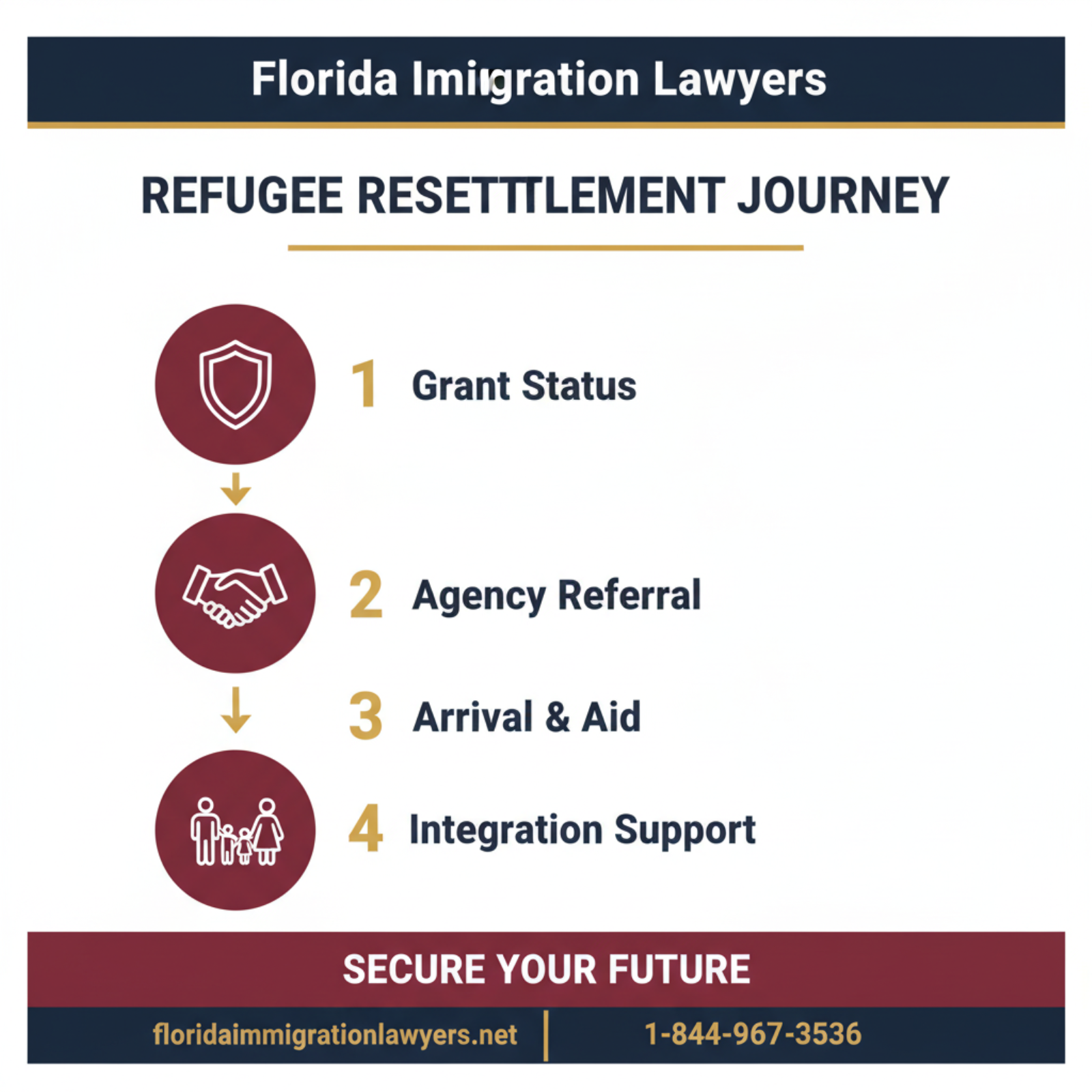
The journey from applying for refugee status to settling in Florida is multi-faceted and can take a considerable amount of time. Understanding each stage can help you prepare and manage expectations. Here is a general outline of the process:
-
Referral to the U.S. Refugee Admissions Program (USRAP): Most refugees are referred to the USRAP by UNHCR or a U.S. Embassy. In some cases, specific family reunification programs or designated groups may also provide referrals. This initial referral is crucial for entering the U.S. system.
-
Security Clearances and Interviews: Once referred, you will undergo extensive security checks by various U.S. government agencies. You will also be interviewed by U.S. Citizenship and Immigration Services (USCIS) officers, often overseas, to determine your eligibility for refugee status based on the INA criteria. This interview is a critical juncture in your application.
-
Medical Examination: A comprehensive medical examination is required to ensure you meet U.S. health admissibility standards. This is conducted by an approved physician and helps prevent the spread of communicable diseases. All necessary vaccinations will also be administered at this stage.
-
Cultural Orientation: Before departure, many refugees participate in cultural orientation programs. These sessions provide vital information about life in the United States, including laws, customs, and expectations. They help prepare you for the cultural adjustments ahead.
-
Assignment to a Resettlement Agency: If approved, you will be matched with a U.S. resettlement agency that operates in a specific location, such as Florida. Factors like family ties, medical needs, and community support networks influence placement decisions. This agency will be your primary point of contact upon arrival.
-
Travel to the United States: Travel arrangements are coordinated by the resettlement agency and the International Organization for Migration (IOM). Your travel costs are typically covered through a loan, which you will be responsible for repaying after your arrival. You will typically arrive at a major airport like Miami International Airport (MIA).
-
Initial Assistance and Integration in Florida: Upon arrival in Florida, your assigned resettlement agency will meet you. They provide immediate support, including finding initial housing, furnishing your home, enrolling children in school, and connecting you with English language classes and employment services. This initial period is critical for establishing your new life.
Essential Documents for Refugee Resettlement
Having your documents in order is paramount for a smooth resettlement process. While your resettlement agency will guide you, understanding the types of documents you will need can help you prepare. Always keep original documents safe and carry copies when needed.
- Form I-94, Arrival/Departure Record: This document serves as proof of your refugee status and date of admission to the U.S. It is incredibly important and should be safeguarded.
- Refugee Travel Document (Form I-571): If you wish to travel outside the U.S. after being granted refugee status, you will need this document instead of a passport from your home country.
- Identity Documents: Any available passports, national ID cards, or birth certificates for yourself and all family members. Even if expired, these can be useful for establishing identity.
- Medical Records: Vaccination records, medical history, and any reports from your medical examination conducted prior to travel.
- Educational and Employment History: Diplomas, transcripts, professional licenses, and letters of recommendation. These can assist with school enrollment and job placement in Florida.
- Marriage Certificates and Birth Certificates: For all family members, to prove relationships for family reunification and benefits eligibility.
- Social Security Card: Your resettlement agency will assist you in applying for a Social Security number shortly after your arrival. This is essential for employment and accessing many services.
- Employment Authorization Document (EAD): While refugees are employment authorized upon admission, an EAD (work permit) can be helpful for employers and formalizing your ability to work.
Timeline and Processing Expectations for Refugees in Florida
The timeline for refugee status Florida resettlement can vary significantly. The initial processing of a refugee application overseas, from referral to arrival in the U.S., can often take several years due to extensive vetting and logistical coordination. Patience is a necessary virtue throughout this phase.
Upon arrival in Florida, the immediate resettlement phase typically lasts for the first 30 to 90 days. During this time, your resettlement agency provides intensive support to help you establish yourself. This includes securing housing, applying for benefits, and beginning language or job training.
Refugees are eligible for certain federally funded benefits and services for a limited period, typically up to 8 months, but some services may extend up to 5 years from their date of entry. This period is designed to facilitate self-sufficiency. For instance, Refugee Cash Assistance (RCA) and Refugee Medical Assistance (RMA) are generally available for a short duration, while other programs like employment services might be longer term.
What Happens After 5 Years of Refugee Status?
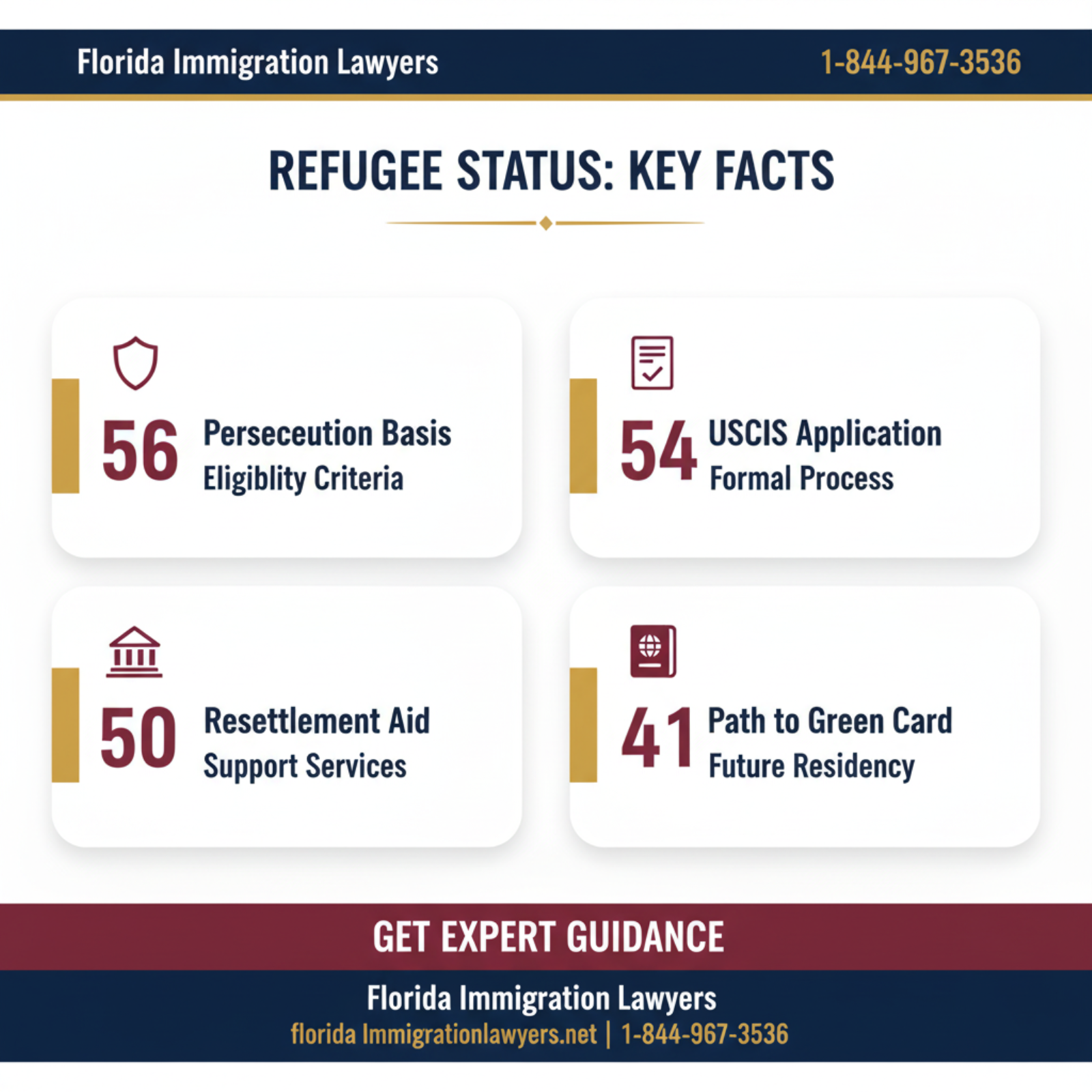
By law, refugees are required to apply for Adjustment of Status (Green Card) one year after their admission to the United States. This application, Form I-485, grants you lawful permanent resident status. Once you have a Green Card, your immigration status is no longer tied to your refugee designation, but to your permanent residency.
After holding a Green Card for five years (including the time you were in refugee status), you generally become eligible to apply for U.S. citizenship through naturalization. At this point, the focus shifts entirely to your long-term integration as a permanent resident or citizen. While some specialized refugee services may cease, you gain access to the broader range of benefits and rights available to permanent residents and citizens.
Cost Factors and Financial Support for Refugees
The good news for individuals seeking refugee status Florida resettlement is that there are generally no application fees for refugee status itself. However, there are other financial considerations and significant support systems in place to help you.
Your travel to the United States is typically funded through a loan from the International Organization for Migration (IOM). You will be expected to repay this loan, usually starting several months after your arrival. Your resettlement agency will help you understand the repayment schedule and process.
Upon arrival, initial resettlement costs, such as rent, food, and basic necessities, are covered by your resettlement agency through federal funding. This support is temporary, designed to give you a strong start while you work towards self-sufficiency. In Florida, these services are coordinated through the Department of Children and Families (DCF) Refugee Services Program.
What benefits do refugees get in Florida? Refugees in Florida may be eligible for a range of benefits. These can include:
- Refugee Cash Assistance (RCA): Financial assistance for eligible refugees who are not eligible for other federal cash assistance programs.
- Refugee Medical Assistance (RMA): Health insurance coverage for a limited period for eligible refugees not covered by Medicaid or other health programs.
- Employment Services: Job search assistance, vocational training, and English language instruction (ESL) to help you find employment quickly.
- Social Services: Access to mental health services, assistance with school enrollment, and cultural orientation programs.
Later, when you apply for your Green Card (Adjustment of Status) and eventually for U.S. citizenship, there will be associated filing fees for USCIS forms. These fees can be substantial, but fee waivers may be available for eligible individuals based on income. Your attorney can advise you on these costs and potential waivers.
Do not navigate this process alone. The complexities of refugee status Florida resettlement require expert guidance. Contact Florida Immigration Lawyers today to ensure your case is handled correctly and efficiently. We are here to support your journey to a new life.
Common Mistakes to Avoid During Refugee Resettlement
Navigating the resettlement process can be challenging, and avoiding common pitfalls is crucial for a successful outcome. Here are some mistakes to watch out for:
-
Providing Inconsistent Information: Any discrepancies in your story or application documents can raise red flags with immigration authorities. Always be truthful and consistent in all your statements.
-
Missing Deadlines: The U.S. immigration system operates on strict deadlines. Missing a deadline for an application, response to a Request for Evidence (RFE), or interview can lead to delays or even denial of your case.
-
Failing to Engage with Resettlement Agencies: Your assigned agency is your primary resource for initial support. Not participating in programs or communicating effectively can hinder your integration and access to critical services.
-
Not Pursuing English Language Skills: While not mandatory immediately, learning English significantly improves your job prospects, ability to navigate daily life, and overall integration into Florida society. Delaying this can limit your opportunities.
-
Misunderstanding Benefits Eligibility: Refugee benefits are time-limited. Misunderstanding the duration or scope of these benefits can lead to financial hardship once they expire. Plan for self-sufficiency from the start.
-
Traveling Outside the U.S. Without a Refugee Travel Document: If you travel internationally using a passport from your home country or without a Refugee Travel Document (Form I-571), you risk losing your refugee status and inadmissibility to the U.S.
-
Failing to Apply for a Green Card After One Year: Refugees are required to apply for Adjustment of Status (Form I-485) within one year of their admission. Failing to do so without good cause can have serious negative consequences for your immigration status.
-
Neglecting to Update Your Address with USCIS: If you move, you must notify USCIS of your new address within 10 days using Form AR-11. Failing to do so can result in missed notices and jeopardized applications.
-
Getting Involved in Criminal Activity: Even minor offenses can have severe immigration consequences, potentially leading to loss of status or even deportation. It is crucial to strictly adhere to U.S. laws.
-
Ignoring Legal Advice: Attempting to navigate complex legal processes without professional guidance can lead to errors that are difficult and costly to correct. Always consult with an experienced immigration attorney.
When to Call Florida Immigration Lawyers for Refugee Assistance
While resettlement agencies provide invaluable initial support, their role is not to provide legal advice. Immigration law is incredibly complex, and certain situations absolutely warrant the expertise of an experienced attorney. Florida Immigration Lawyers is here to provide that crucial legal support for your refugee status Florida resettlement journey.
You should contact us if you:
- Are seeking asylum: While related, asylum is a distinct process. We can help you understand the differences and apply for asylum if you are already in the U.S. or at a port of entry. Learn more about asylum.
- Need to apply for Adjustment of Status (Green Card): One year after arriving as a refugee, you must apply for permanent residency. This is a critical step, and our attorneys can ensure your application is accurate and timely.
- Wish to apply for U.S. Citizenship: After holding your Green Card for five years, we can guide you through the naturalization process. Explore our citizenship services.
- Are seeking family reunification: If you want to bring eligible family members to the U.S., our firm can assist with the complex petitions required.
- Have received a Request for Evidence (RFE) or Notice of Intent to Deny (NOID): These notices indicate a problem with your application that requires a detailed and timely legal response.
- Are facing deportation or removal proceedings: If you receive a Notice to Appear (NTA) in immigration court, immediate legal representation is essential. We offer robust deportation defense.
- Have questions about your travel document or re-entry permit: Understanding your ability to travel internationally without jeopardizing your status is vital.
- Encounter any legal challenges or have concerns about your status: Any uncertainty about your immigration standing warrants a professional legal review.
Our attorneys at Florida Immigration Lawyers understand the unique challenges faced by refugees. We are committed to providing compassionate and effective legal representation throughout Florida, including Hialeah and surrounding communities. Visit our attorneys page to learn more about our team.
About Florida Immigration Lawyers
Florida Immigration Lawyers is a leading immigration law firm dedicated to serving individuals and families across the entire state of Florida. Our team of experienced attorneys is passionate about helping clients navigate the complexities of U.S. immigration law, providing expert legal counsel and representation for a wide range of immigration matters.
We understand that immigration journeys are often filled with hope, challenges, and significant life changes. That is why we offer comprehensive services, including assistance with general immigration, asylum claims, deportation defense, family-based petitions, business immigration, and naturalization. Our firm is committed to achieving the best possible outcomes for our clients.
Why choose Florida Immigration Lawyers? We pride ourselves on our client-focused approach, deep legal knowledge, and unwavering dedication. We offer transparent communication, personalized strategies, and a compassionate understanding of your unique situation. Our goal is to make your immigration process as smooth and stress-free as possible.
We are available 24/7 to answer your questions and provide support. We offer free consultations to discuss your case and explore your legal options. Contact us today at 1-844-967-3536 or visit our website at https://www.floridaimmigrationlawyers.net. We serve all of Florida, ensuring expert legal help is always within reach.
Sources and References
- U.S. Citizenship and Immigration Services (USCIS) - Refugees and Asylum
- Executive Office for Immigration Review (EOIR) - Refugee and Asylum Law
- Office of Refugee Resettlement (ORR) - U.S. Department of Health & Human Services
- 8 U.S.C. Chapter 12 - Immigration and Nationality Act (INA) Section 101(a)(42)
- 8 U.S.C. § 1159 - Adjustment of Status of Refugees
- 8 CFR Part 207 - Refugee Status Procedures
- USCIS Policy Manual, Volume 7, Part M, Chapter 1 - Refugees
This article provides general legal information and is not intended as legal advice. Every case is unique, and outcomes depend on specific facts and circumstances. Contact an attorney for advice about your particular situation.
Embarking on a new life in Florida as a refugee is a journey filled with hope and complex legal steps. Let Florida Immigration Lawyers be your trusted partner every step of the way. Our dedicated team is here to provide the expert legal guidance you need to secure your future and achieve your dreams in the Sunshine State. Do not hesitate to reach out.
Call Florida Immigration Lawyers today at 1-844-967-3536 for your free, confidential consultation. Se Habla Español - Estamos aquí para ayudarle.
Do Not Navigate This Process Alone
Our experienced immigration attorneys are ready to fight for you. Get a free, confidential consultation today.
Se Habla Español
Frequently Asked Questions
Florida Immigration Lawyers
Immigration Attorney | Founder, Vasquez Law Firm
U.S. Air Force veteran and immigration attorney with thousands of cases resolved. J.D., NCCU School of Law. AILA member. Admitted to the 4th, 5th, and 11th Circuit Courts.
Available 24/7 - Free Evaluations
Related Legal Services
Our Florida immigration attorneys can help you with free immigration consultation, experienced immigration attorneys and business immigration. Call today at 1-844-967-3536 for a free consultation.
Related Links
Related Topics
Free Legal Consultation
Discuss your case with our experienced attorneys. We're available 24/7.
Se Habla Español - Estamos aquí para ayudarle.
Related Articles
U Visa for Crime Victims in Florida: What You Need to Know
Discover how the U visa can offer immigration relief to crime victims in Florida. Learn about eligibility, the application process, and how to avoid common mistakes. Contact Florida Immigration Lawyers for guidance.
L-1 Visa Intracompany Transfers in Florida | VLF Florida
Discover how an L-1 visa can facilitate your intracompany transfer to Gainesville, Florida. Learn about the process, required documentation, and common pitfalls. Schedule a free consultation with Florida Immigration Lawyers today.
Cancellation of Removal Guide for Florida | VLF Florida
Explore cancellation of removal in Florida with our comprehensive guide. Learn eligibility criteria, step-by-step application process, and common mistakes to avoid. Contact Florida Immigration Lawyers for expert assistance.
ICE Check-In Attorney Representation in Florida | VLF Florida
Facing an ICE check-in in Jacksonville? Learn how legal representation can make a difference. Discover key steps and common mistakes to avoid. Call Florida Immigration Lawyers for a free consultation.