Public Charge Rule Florida: What Immigrants Need to Know in 2026
Understand the public charge rule in Florida for immigrants in 2026. Learn about benefits, inadmissibility, and how it impacts your status. Contact Florida Immigration Lawyers for a free consultation.
Public Charge Rule Florida: What Immigrants Need to Know in 2026
For immigrants in Florida and across the United States, understanding the Public Charge Rule is paramount to a successful immigration journey. This complex regulation, often misunderstood, determines whether an individual is likely to become primarily dependent on the government for subsistence. As we look towards 2026, the principles guiding this rule remain consistent with long-standing policy, emphasizing self-sufficiency while distinguishing between various types of public assistance.
Navigating the nuances of the Public Charge Rule requires careful attention to detail and a clear understanding of what benefits are considered and which are not. For families and individuals seeking permanent residency or other immigration benefits in Florida, being well-informed can make all the difference. This comprehensive guide will demystify the Public Charge Rule, provide historical context, clarify which benefits are relevant, explain the "totality of the circumstances" test, highlight exemptions, and offer essential advice for preparing your application.
Understanding the Public Charge Rule: A Historical Context
The concept of a "public charge" has been part of U.S. immigration law for over a century, reflecting a long-held principle that immigrants should be self-sufficient. While the core idea remains, its interpretation and application have evolved, leading to periods of confusion and concern within immigrant communities. For those in Florida, understanding this history is key to grasping the current landscape.
Brief History of the Public Charge Rule
The Immigration and Nationality Act (INA) states that an individual who is likely to become a "public charge" is inadmissible to the United States. Historically, this meant someone primarily dependent on the government for subsistence, typically through direct cash assistance or long-term institutional care at government expense. A significant shift occurred in 2019 when the Trump administration implemented a much broader and more restrictive public charge rule, expanding the types of benefits considered and making it harder for many immigrants to qualify. However, this 2019 rule was rescinded in March 2021. This means that as of 2026, the U.S. government has reverted to the 1999 Interim Field Guidance on Public Charge, which is less expansive than the 2019 version. This return to the previous policy offers a clearer, more predictable framework for immigrants and their families, focusing on a narrower set of benefits and a holistic assessment of an applicant's circumstances.
Under the current policy, a public charge determination is a forward-looking assessment by U.S. Citizenship and Immigration Services (USCIS) or a consular officer at the U.S. Department of State. They evaluate whether an applicant is likely to become primarily dependent on the government for subsistence, as demonstrated by the receipt of specific public cash assistance for income maintenance or long-term institutionalization at government expense. This distinction is crucial for anyone navigating the immigration process, particularly those considering or currently receiving public benefits.
What Benefits Are (and Aren't) Considered Under the Public Charge Rule?
One of the most critical aspects of the Public Charge Rule is understanding which public benefits are considered in a determination and which are not. Misinformation in this area can lead to unnecessary fear and discourage eligible individuals from accessing vital services. For Florida residents, clarity on this point is essential to make informed decisions about their families' well-being.
Benefits That Might Count
Under the current 1999 guidance, only a very specific and limited set of public benefits are considered when making a public charge determination. These include:
- Supplemental Security Income (SSI): A federal program providing cash assistance to low-income individuals who are aged, blind, or disabled.
- Temporary Assistance for Needy Families (TANF): A federal program that provides cash assistance to families with children. This includes state and local cash assistance programs that provide benefits for income maintenance.
- State and Local Cash Assistance Programs: Any state or local cash benefit programs designed for income maintenance.
- Long-term Institutionalization at Government Expense: This refers to situations where an individual is institutionalized in a nursing home or mental health facility, and the cost of care is primarily borne by the government (e.g., through Medicaid for long-term care).
It is important to note that the use of these benefits must be significant and for income maintenance to potentially trigger a public charge concern. Incidental or short-term use is generally not sufficient to deem someone a public charge.
Benefits That Do Not Count
The vast majority of public benefits that individuals and families rely on are NOT considered in public charge determinations. This is a vital distinction that often alleviates significant concerns for immigrant communities. These non-counted benefits include:
- Medicaid (except for long-term institutionalization): This includes emergency Medicaid, Medicaid for pregnant women, children, and most other forms of medical assistance.
- Children's Health Insurance Program (CHIP): Health insurance for children and sometimes pregnant women.
- Supplemental Nutrition Assistance Program (SNAP/Food Stamps): Assistance for purchasing food.
- Housing Assistance: Programs like Section 8 housing vouchers or public housing.
- Women, Infants, and Children (WIC): Nutritional support for pregnant women, new mothers, and young children.
- School Lunch Programs: Free or reduced-price meals for students.
- Emergency Disaster Relief: Assistance provided during natural disasters.
- Foster Care and Adoption Assistance: Support for children in foster care or adopted.
- Educational Assistance: Student loans, grants, and other educational benefits.
- Immunizations and Testing for Communicable Diseases: Public health services.
- Childcare Services: Assistance with childcare costs.
- Job Training Programs: Vocational training and employment services.
The use of these non-cash, non-income maintenance benefits will NOT negatively impact an immigrant's application under the Public Charge Rule. This allows individuals and families in Florida to access necessary services without fear of jeopardizing their immigration prospects.
The "Totality of the Circumstances" Test: How USCIS Evaluates Your Case
When assessing whether an applicant is likely to become a public charge, USCIS and consular officers employ a "totality of the circumstances" test. This means they do not look at just one factor in isolation but rather consider a range of elements that paint a comprehensive picture of the applicant's financial stability, health, and prospects for self-sufficiency. This holistic approach is designed to provide a fair and thorough evaluation.
Key Factors in the Totality of the Circumstances Test
The factors considered in the totality of the circumstances test are outlined in the statute and regulations. These include:
- Age: An applicant's age can indicate their capacity to work and support themselves.
- Health: Current health status and any medical conditions that might impact their ability to work or require extensive public medical care.
- Family Status: The number of dependents and their financial needs.
- Assets, Resources, and Financial Status: This is a crucial factor, including income, savings, property, and other financial holdings.
- Education and Skills: The applicant's educational background, job skills, and employment history, which indicate their potential to secure stable employment.
- Affidavit of Support: The existence and strength of an Affidavit of Support (Form I-864) from a U.S. citizen or lawful permanent resident sponsor.
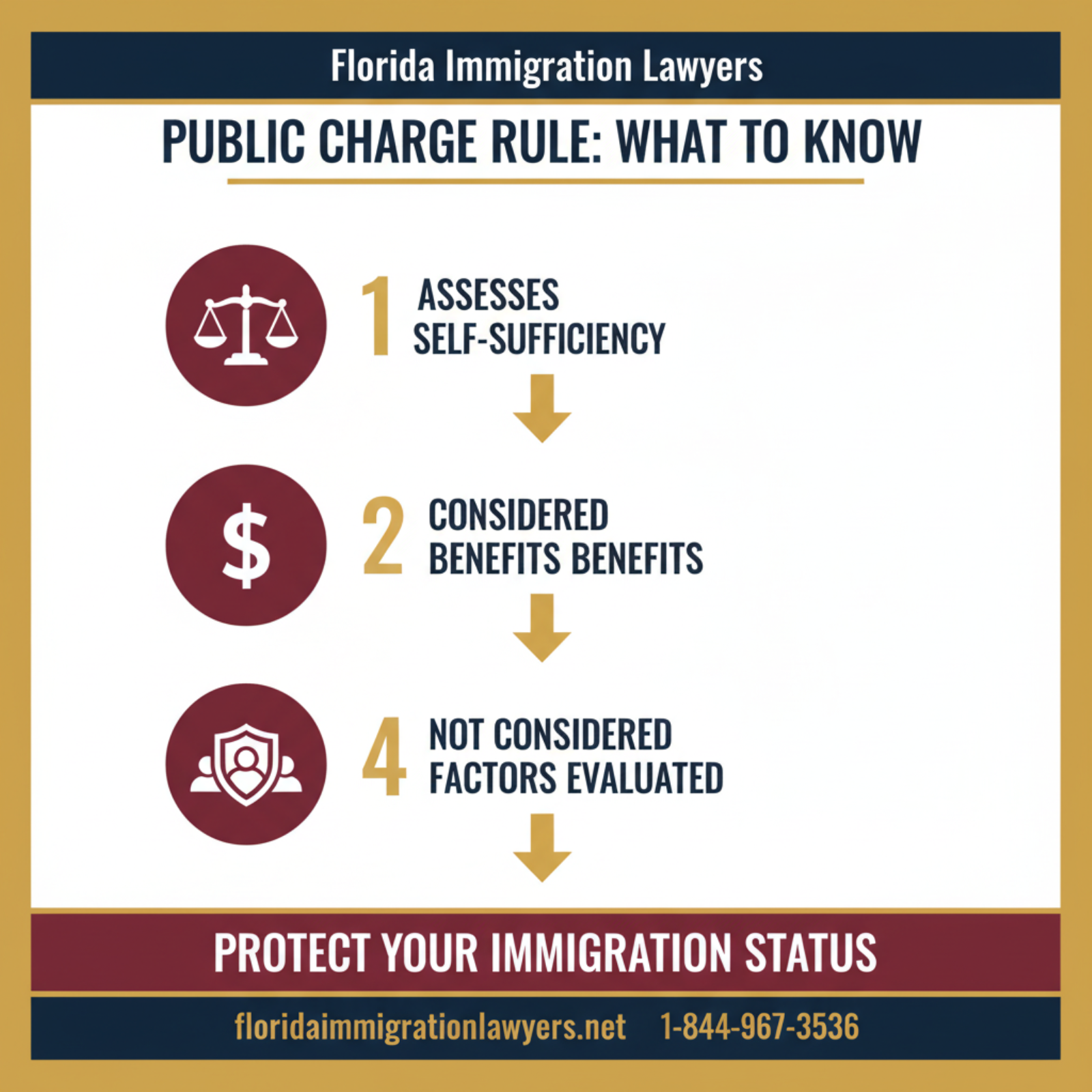
Officers weigh both positive and negative factors. For example, a young, healthy applicant with a strong education and job skills, even with limited current assets, might be viewed favorably. Conversely, an older applicant with significant health issues, no job skills, and no financial support might face greater scrutiny. The goal is to determine if, based on these factors, the individual is likely to become primarily dependent on the government for subsistence.
The Role of an Affidavit of Support
For many family-based immigration cases, an Affidavit of Support (Form I-864) is a mandatory and critical component. This is a legally binding contract signed by a sponsor (usually the petitioning relative) who promises to financially support the immigrant. The sponsor must demonstrate an income at or above 125% of the federal poverty guidelines for their household size. A strong Affidavit of Support is a significant positive factor in a public charge determination, as it demonstrates that the immigrant has a committed source of private financial backing, reducing the likelihood of them becoming a public charge. Without a sufficient I-864, many applicants will be found inadmissible on public charge grounds.
Public Charge Rule Exemptions and Waivers
It is important to recognize that not all immigrants are subject to the Public Charge Rule. Certain categories of individuals are exempt from this inadmissibility ground due to the humanitarian nature of their immigration status or other specific legal provisions. Understanding these exemptions can provide peace of mind for many vulnerable populations in Florida.
Who Is Exempt from the Public Charge Rule?
Several categories of immigrants are explicitly exempt from the public charge ground of inadmissibility. These include:
- Asylum Seekers and Refugees: Individuals seeking or granted asylum or refugee status are not subject to the public charge rule. This is because their need for protection often arises from circumstances beyond their control, and denying them assistance would undermine the humanitarian purpose of these protections.
- VAWA Self-Petitioners: Victims of domestic violence who self-petition under the Violence Against Women Act (VAWA) are exempt. This exemption acknowledges their vulnerability and the need to escape abusive situations without fear of immigration consequences due to seeking assistance.
- T and U Visa Applicants: Victims of human trafficking (T visa) and victims of certain crimes (U visa) are also exempt. These visas are designed to protect and assist vulnerable individuals who cooperate with law enforcement.
- Special Immigrant Juveniles (SIJ): Children who have been abused, abandoned, or neglected and granted SIJ status are exempt.
- Afghan and Ukrainian Parolees: Certain parolees from Afghanistan and Ukraine are also exempt from public charge inadmissibility.
These exemptions ensure that individuals in dire circumstances or those seeking humanitarian protection can do so without the added burden of public charge concerns. If you fall into one of these categories, it is crucial to confirm your exemption with a qualified immigration attorney.
While specific waivers for the public charge ground are less common than for other inadmissibility grounds, the overall assessment of the totality of circumstances allows for a nuanced review. In some cases, compelling humanitarian factors or strong mitigating evidence can help overcome potential public charge concerns. However, it is always best to consult with an attorney to explore all available options and strategies for your specific situation.
Navigating the Public Charge Rule in Florida: State-Specific Considerations
Florida, with its diverse population and significant immigrant communities, presents unique considerations when it comes to the Public Charge Rule. While the rule itself is federal, the way it intersects with state-level resources, demographics, and legal practices can be particularly relevant for residents. Understanding these local nuances is crucial for immigrants living and working in the Sunshine State.
Florida is home to large populations from Latin America, the Caribbean, and other regions, many of whom are navigating the complex U.S. immigration system. These communities often rely on a mix of federal, state, and local programs to support their families, especially during periods of transition or economic hardship. For example, Florida offers various state-funded health programs, educational initiatives, and social services that, like their federal counterparts, generally do not count against an immigrant in a public charge determination. However, it’s vital for individuals to distinguish between these non-counted benefits and the specific cash assistance programs that might be considered.
The state's robust economy and diverse job market can be a positive factor for many applicants. Demonstrating a strong work history in Florida or having marketable skills that align with the state's industries (such as tourism, agriculture, healthcare, or technology) can significantly strengthen an applicant's case under the "totality of the circumstances" test. Conversely, individuals in Florida who have faced unemployment or relied on cash assistance for an extended period may need to provide additional evidence of their future self-sufficiency. This is where the role of a strong Affidavit of Support from a Florida-based sponsor becomes even more critical.
Furthermore, Florida has a dynamic legal landscape concerning immigration. Local attorneys specializing in immigration law are intimately familiar with the specific challenges and opportunities faced by immigrants in the state. They can provide tailored advice on how to present your case most effectively, considering your personal circumstances and the resources available in Florida. They can also help clarify how state-specific benefit programs align with federal public charge definitions, ensuring that you do not inadvertently jeopardize your immigration application. For mixed-status families in Florida, where some members are U.S. citizens and others are immigrants, understanding that benefits received by U.S. citizen children do not typically impact the immigrant parent's public charge assessment is a common and important point of clarification.
Preparing for Your Immigration Application: Essential Steps
Proactive preparation is key to a successful immigration application, especially when the Public Charge Rule is a consideration. By taking deliberate steps to strengthen your case, you can increase your chances of a favorable outcome. For immigrants in Florida, careful planning can alleviate much of the stress associated with the process.
Here are essential steps to prepare:
- Gather Financial Documents: Compile comprehensive records of your income, assets (savings, property), and any investments. This includes pay stubs, tax returns, bank statements, and property deeds. If you have an Affidavit of Support, ensure your sponsor's financial documents are also in order.
- Maintain Good Health Records: While most Medicaid doesn't count, demonstrating good health can be a positive factor. Keep records of routine medical check-ups and any treatments received.
- Seek Educational and Skill-Building Opportunities: If possible, pursue education or vocational training that enhances your job prospects. Documentation of degrees, certifications, or professional licenses can demonstrate your potential for self-sufficiency.
- Limit Reliance on Cash Assistance: If you are applying for a green card or visa subject to the public charge rule, try to avoid using cash public assistance programs (SSI, TANF, state/local cash assistance) if possible.
- Consult with an Attorney Early: The most crucial step is to seek legal advice from an experienced immigration attorney. They can review your specific situation, identify potential public charge issues, and help you strategize the best way to present your case. Don't wait until you've submitted your application to seek help. You can contact us for a consultation.
Seeking Expert Legal Guidance: Your Ally in Florida Immigration Law
The Public Charge Rule is undeniably complex, and its implications can be far-reaching for immigrants and their families. Attempting to navigate these regulations without expert assistance can lead to errors, delays, or even denial of your immigration application. This is particularly true in a state like Florida, where the volume of immigration cases and the diversity of situations demand specialized knowledge.
An experienced immigration attorney serves as an invaluable ally throughout your immigration journey. They can:
- Provide Personalized Assessment: Evaluate your specific financial, health, and family circumstances to assess potential public charge concerns.
- Clarify Benefit Usage: Help you understand which benefits you can safely use and which might pose a risk, based on current policy.
- Prepare Strong Documentation: Assist in gathering and organizing all necessary financial, educational, and personal documents to present the strongest possible case for self-sufficiency.
- Address Potential Issues: Identify any red flags in your application and develop strategies to mitigate them, such as providing additional evidence or a robust Affidavit of Support.
- Represent You: Advocate on your behalf with USCIS or consular officers, responding to Requests for Evidence (RFEs) or addressing any questions about your public charge determination.
- Prevent Inadmissibility and Deportation: By ensuring your application addresses public charge concerns proactively, an attorney can help prevent inadmissibility findings that could lead to deportation defense proceedings.
Our team of dedicated Florida Immigration Lawyers has extensive experience with the Public Charge Rule and other complex immigration matters. We understand the anxieties and challenges immigrants face and are committed to providing compassionate, effective legal representation. Don't leave your future to chance. We invite you to contact us for a free consultation to discuss your specific situation and learn how we can help you navigate the Public Charge Rule with confidence.
Understanding and proactively addressing the Public Charge Rule is a critical step for any immigrant seeking to establish a lasting future in Florida and the United States. With the right information and expert legal guidance, you can confidently pursue your immigration goals in 2026 and beyond.
Frequently Asked Questions
Florida Immigration Lawyers
Legal Team
Our experienced attorneys at Florida Immigration Lawyers have been serving clients across Florida for over 20 years. We specialize in immigration, personal injury, criminal defense, workers compensation, and family law.