Visa Bulletin October 2025 Florida: Your Immigrant Visa Guide
The October 2025 Visa Bulletin was a key publication, marking the start of a new fiscal year and influencing immigrant visa availability for Florida residents. This comprehensive guide explains how to interpret the bulletin's "Final Action Dates" and "Dates for Filing Applications" for family-sponsored and employment-based visas. Learn about USCIS processing times, essential documents, and common mistakes to avoid. Whether you're in Hollywood, Miami, or anywhere in Florida, understanding these dates is crucial for your Adjustment of Status or consular processing. Contact Florida Immigration Lawyers for expert guidance and a free consultation.
The Visa Bulletin for October 2025 marked the start of the new fiscal year, influencing immigrant visa availability and Adjustment of Status filing dates for many. It's crucial for Florida residents pursuing family-sponsored or employment-based green cards to monitor these dates. Understanding the bulletin helps determine when you can file your application or expect an interview.
- New fiscal year often brings date movements.
- Crucial for family-sponsored and employment-based visas.
- Determines eligibility for filing Adjustment of Status.
- Dates vary by preference category and country of chargeability.
- Professional legal guidance is highly recommended.
Imagine waiting for years, hoping for a chance to unite with family or pursue a career in the U.S. Then, a monthly publication called the Visa Bulletin holds the key to your dreams. For many aspiring immigrants and their families in Florida, understanding the visa bulletin october 2025 was a critical step in their journey. This bulletin, released by the U.S. Department of State, determines when immigrant visas become available to eligible individuals.
The October 2025 Visa Bulletin was particularly significant as it marked the beginning of a new fiscal year, often bringing changes to visa availability. This period can offer renewed hope for many who have faced long wait times. If you are navigating the complex world of immigrant visas in Florida, we understand your concerns and the importance of timely information.
This comprehensive guide will break down the October 2025 Visa Bulletin, explain its implications, and provide essential information for your immigration process. We aim to empower you with the knowledge needed to take your next steps confidently. Do not navigate this complex process alone. Call Florida Immigration Lawyers at 1-844-967-3536 for a free consultation to discuss your specific situation and how the bulletin may affect you.
Understanding the October 2025 Visa Bulletin and Its Impact on Florida
The Visa Bulletin is a vital monthly publication that summarizes the availability of immigrant visas for both family-sponsored and employment-based categories. It provides two critical sets of dates: "Final Action Dates" and "Dates for Filing Applications." These dates dictate when applicants can move forward with their immigration process, whether through consular processing abroad or Adjustment of Status within the U.S.
For Florida residents, especially those in diverse communities like Hollywood, Miami, Orlando, and Tampa, these dates directly impact when you can file for Adjustment of Status with USCIS or when your case can be scheduled for an interview at a U.S. embassy or consulate abroad. The bulletin exists because U.S. immigration law, specifically the Immigration and Nationality Act (INA) Section 201-203 (8 U.S.C. §§ 1151-1153), sets annual limits on the number of immigrant visas issued globally and per country.
The October 2025 Visa Bulletin was the first of the fiscal year 2026. Historically, the beginning of a new fiscal year can bring significant movement in visa categories as a fresh allocation of visa numbers becomes available. This can be a hopeful time for many individuals and families across Florida who have been patiently waiting for their priority dates to become current. Our firm closely monitors these monthly updates to provide the most current and accurate advice to our clients.
Key Terms You Need to Know
To effectively interpret the visa bulletin october 2025 or any subsequent bulletin, understanding key terminology is essential:
- Priority Date: This is the date your petition (Form I-130, Petition for Alien Relative, or Form I-140, Immigrant Petition for Alien Worker) was properly filed and received by USCIS. It establishes your place in line for a visa number.
- Final Action Dates (Chart A): This chart indicates when a visa number is actually available for issuance. Your priority date must be "current" (earlier than the date listed) under Chart A to receive an immigrant visa or green card.
- Dates for Filing Applications (Chart B): This chart allows certain applicants for Adjustment of Status to file their Form I-485, Application to Register Permanent Residence or Adjust Status, sooner. This is permitted even if a final visa is not yet available. USCIS determines monthly whether applicants can use Chart B for filing.
- Preference Categories: These are the classifications for family-sponsored and employment-based immigrant visas. Each category has annual numerical limits and often experiences backlogs, particularly for certain countries with high demand. Examples include F1 (unmarried adult sons and daughters of U.S. citizens) or EB-2 (professionals holding advanced degrees).
- Country of Chargeability: This refers to the country where you were born, not necessarily your current citizenship. Visa availability can vary significantly by country due to per-country caps, leading to longer wait times for nationals of high-demand countries like China, India, Mexico, and the Philippines.
The visa bulletin october 2025 provided crucial insights into the availability of immigrant visas for the upcoming year. It's essential to check which chart USCIS has announced for Adjustment of Status filing each month on their website. This often determines if you can move forward with your application in Florida without unnecessary delays.
Navigating the Visa Bulletin: A Step-by-Step Guide for Florida Residents
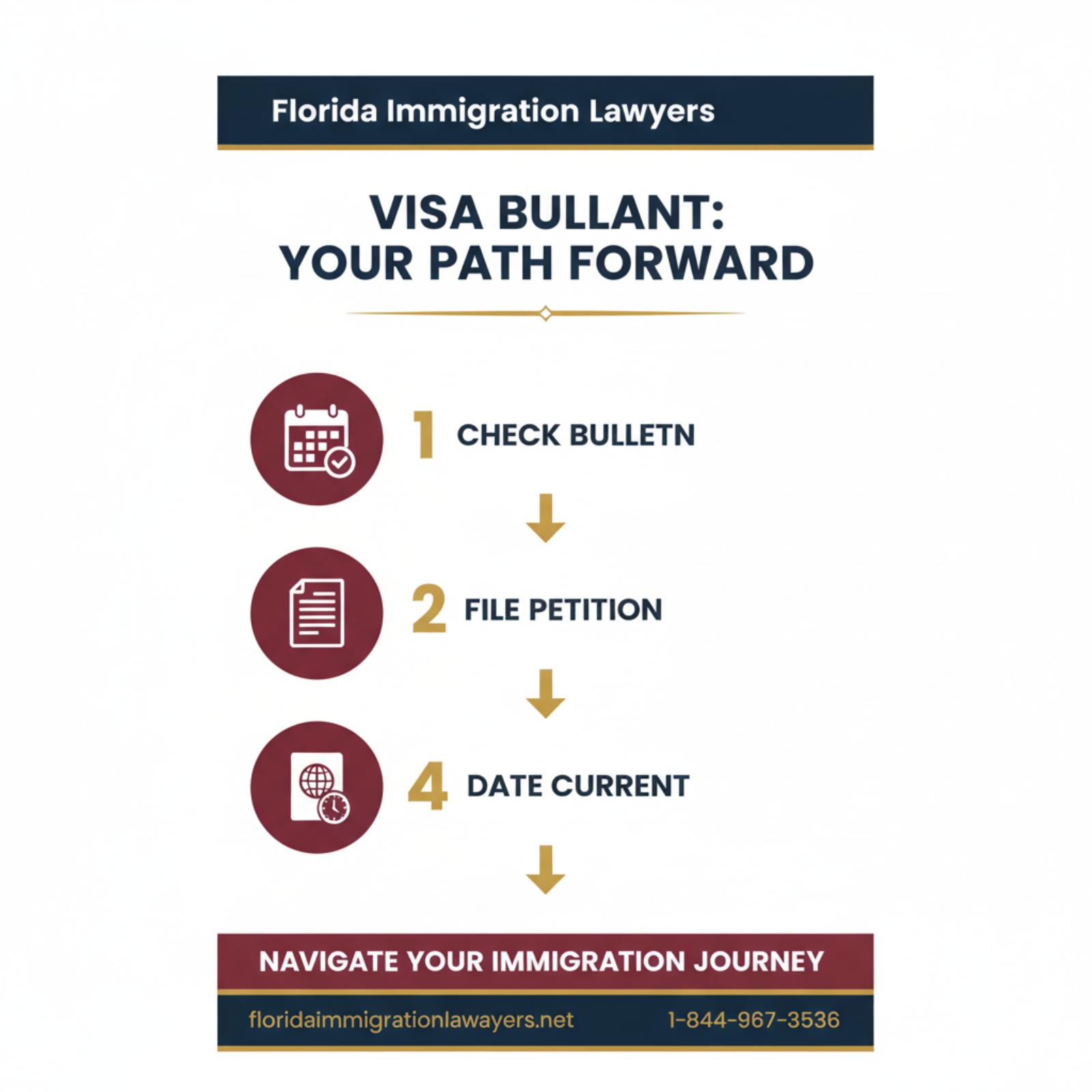
Understanding the visa bulletin october 2025 and how it applies to your specific case can be complex. Here's a simplified guide to help you interpret the information and determine your next steps, whether you are in Hollywood or anywhere else in Florida:
- Identify Your Visa Category: First, determine if your petition is family-sponsored (e.g., F1, F2A, F2B, F3, F4) or employment-based (e.g., EB-1, EB-2, EB-3, EB-4, EB-5). Your Form I-797, Approval Notice, for your Form I-130 or I-140 petition will clearly specify your category.
- Locate Your Priority Date: Find your priority date on the Form I-797, Approval Notice. This date represents when your petition was initially filed and is crucial for tracking your position in the visa queue. Without this date, you cannot accurately use the Visa Bulletin.
- Determine Your Country of Chargeability: This is typically your country of birth. Be aware that some countries, as noted previously, often have longer wait times due to high demand and per-country caps. Locate your country in the Visa Bulletin charts.
- Check the USCIS Website for Adjustment of Status Filing: Each month, USCIS announces whether applicants residing in the U.S. should use the "Final Action Dates" (Chart A) or "Dates for Filing Applications" (Chart B) for filing their Form I-485. This announcement is vital for Florida residents seeking to adjust their status. You can find this crucial information on the USCIS website: USCIS Visa Bulletin Charts.
- Compare Your Priority Date with the Relevant Chart:
- If your priority date is earlier than the date listed for your category and country: Your date is "current." This is excellent news! It means a visa number is available for you to either file your Adjustment of Status application (if USCIS allows Chart B) or proceed to the final stage of your green card process (interview at a USCIS office or consulate).
- If your priority date is later than the date listed: Your date is not yet current. You must continue to wait for your priority date to advance. The bulletin typically moves forward, but sometimes it can retrogress (move backward) if demand exceeds the available visas in a given month.
- Consult with an Immigration Attorney: Given the intricacies of the visa bulletin october 2025 and subsequent bulletins, consulting with an experienced immigration lawyer in Florida is highly recommended. Our team at Florida Immigration Lawyers can help you accurately interpret the bulletin, assess your eligibility, and prepare for the next steps in your journey. We ensure you understand your options and avoid critical errors.
Essential Documents for Your Immigrant Visa or Adjustment of Status Application
When your priority date becomes current, whether through the visa bulletin october 2025 or a later bulletin, you will need to gather a comprehensive set of documents. This preparation is critical for a smooth application process. While the exact requirements vary by case, here is a general checklist for common immigrant visas and Adjustment of Status applications:
- Forms:
- Form I-485, Application to Register Permanent Residence or Adjust Status (if adjusting status in the U.S.)
- Form I-864, Affidavit of Support (for family-sponsored visas, demonstrating financial sponsorship)
- Form I-765, Application for Employment Authorization (optional, for a work permit while I-485 is pending)
- Form I-131, Application for Travel Document (optional, for advance parole to travel internationally while I-485 is pending)
- Form I-693, Report of Medical Examination and Vaccination Record (completed by a USCIS-approved civil surgeon)
- Original approved Form I-130 or I-140 petition (or a certified copy)
- Personal Identification and Civil Documents:
- Birth Certificate (long-form version, if available)
- Valid Passport (valid for at least six months beyond your intended period of stay)
- Marriage Certificate (if applicable, for marital relationships)
- Divorce Decrees (if applicable, for all previous marriages)
- Police Certificates from all countries where you have lived for a certain period (typically 6-12 months, depending on age)
- Passport-style Photographs (usually two per application)
- Financial Documents:
- Tax Transcripts/Returns (for the sponsor, typically the last three years)
- Proof of Income and Assets (e.g., pay stubs, employment letters, bank statements for the sponsor)
- Educational and Employment Documents (for employment-based visas):
- Academic degrees and transcripts (proving qualifications)
- Letters of experience from previous employers (detailing job duties and tenure)
- Job offer letter (from the sponsoring U.S. employer)
Step-by-Step Process Guide - Other:
- Copies of all previous visa pages and I-94 records (arrival/departure records)
- Evidence of any previous immigration filings or status (e.g., previous visa petitions, asylum applications)
- Any other documents specifically requested by USCIS or the National Visa Center (NVC)
Ensuring all your documents are accurate, complete, and properly translated (if not in English) is paramount. Missing or incorrect documentation can lead to significant delays, Requests for Evidence (RFEs), or even denials in your application process, potentially setting you back even if your priority date is current.
Timeline and Processing Expectations for Florida Immigrants
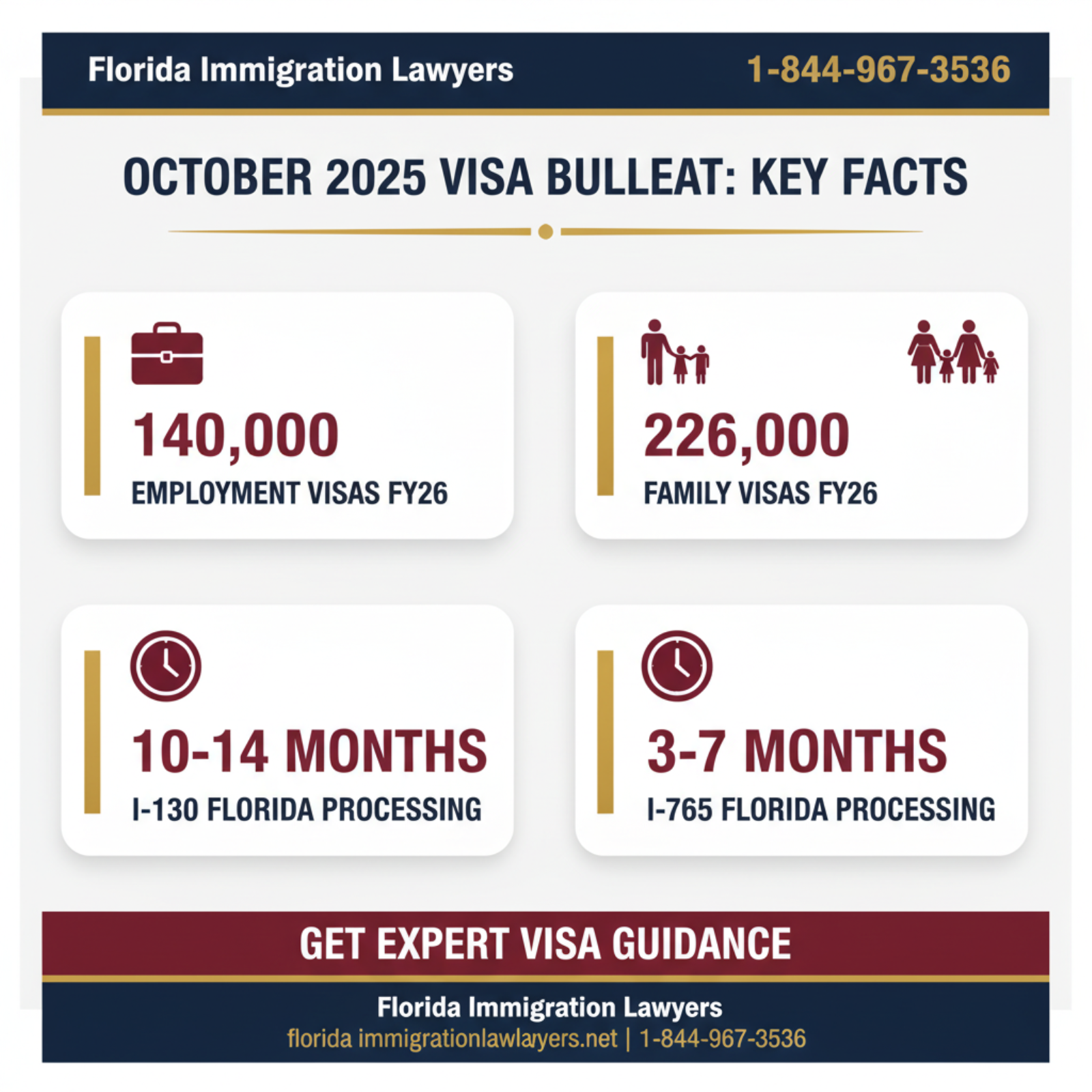
The immigration process, even after your priority date becomes current according to the visa bulletin october 2025 or a subsequent bulletin, involves several stages and can still take considerable time. Overall processing USCIS processing times can fluctuate significantly, influenced by various factors.
- National Visa Center (NVC) Processing: If you are undergoing consular processing abroad, once your priority date is current, your approved petition moves from USCIS to the NVC. The NVC will then collect all required civil documents, such as birth certificates, marriage certificates, and police certificates, as well as fees, through their online portal. After all documents are accepted, your case will be forwarded to a U.S. embassy or consulate for an interview. This stage can take several months, depending on how quickly you submit documents and the NVC's current workload.
- USCIS Adjustment of Status Processing: For those in Florida adjusting status within the U.S., after filing Form I-485, you will typically receive a receipt notice, followed by an appointment for biometrics (fingerprints and photos). USCIS may also schedule an interview at a local field office, such as the one in Miami, Orlando, or Jacksonville. The total processing time for Form I-485 can range from several months to over two years, varying by USCIS field office, the specific visa category, and individual case complexity. You can check estimated processing times on the USCIS website for your specific form and field office.
- Florida-Specific Considerations: While the Visa Bulletin is a national guide, the actual processing speed for Adjustment of Status applications can be influenced by the workload of the USCIS field office serving your area. For instance, the Miami Field Office handles a high volume of cases due to Florida's large immigrant population, which can sometimes lead to longer wait times compared to other regions. However, diligent preparation, a complete application, and prompt responses to any USCIS inquiries can help mitigate potential delays.
- Visa Bulletin Movement: It is important to remember that the dates in the Visa Bulletin can change monthly. While the visa bulletin october 2025 may have shown promising movement, subsequent bulletins can see dates remain stagnant or even retrogress (move backward). This often occurs for heavily oversubscribed categories or countries when demand suddenly exceeds the available visa numbers. This unpredictability underscores the need for ongoing vigilance and the strategic counsel of an experienced immigration attorney.
Cost Factors and Fee Breakdown for Immigrant Visa Applications
Pursuing an immigrant visa or Adjustment of Status involves various fees that are essential to budget for throughout your journey. While we cannot provide exact current amounts (as government fees are subject to change), here are the general cost categories you should anticipate:
- USCIS Filing Fees:
- Petition Filing Fee (Form I-130 or I-140): This fee is typically paid by the petitioner (the U.S. citizen or permanent resident family member, or the sponsoring employer).
- Adjustment of Status Application Fee (Form I-485): This significant fee is paid by the applicant seeking permanent residence. It often includes fees for biometrics services and, if filed concurrently, for work authorization (Form I-765) and travel authorization (Form I-131).
- Immigrant Visa Application Processing Fee: For those undergoing consular processing abroad, this fee is paid to the U.S. Department of State.
- USCIS Immigrant Fee: This fee is paid after your immigrant visa is approved and before your physical green card is produced and mailed.
- Medical Examination Fees: You will need to undergo a thorough medical examination by a USCIS-approved civil surgeon (if adjusting status in the U.S.) or a panel physician (for consular processing). The cost for this varies significantly by provider across Florida.
- Document Translation and Certification Fees: If any of your supporting documents are not in English, they must be translated by a certified translator, and the translation must be accompanied by a certificate of accuracy.
- Attorney Fees: Hiring an experienced immigration attorney from Florida Immigration Lawyers is a crucial investment in navigating the complex process correctly and efficiently. Our fees cover comprehensive legal guidance, meticulous document preparation, strategic representation, and expert advice tailored to your unique case. We offer a free consultation to discuss your specific situation and potential legal costs without obligation.
- Travel Costs: If you are undergoing consular processing, you will incur travel expenses to attend your interview at a U.S. embassy or consulate abroad. This can include airfare, accommodation, and local transportation.
It is important to remember that all government filing fees are generally non-refundable, regardless of the outcome of your application. Always verify the most current fees directly on the official USCIS and Department of State websites before submitting any forms or payments to ensure you have the correct amounts.
Do not navigate this process alone. The complexities of the visa bulletin october 2025 and subsequent immigration procedures require expert guidance. Contact Florida Immigration Lawyers today at 1-844-967-3536 to ensure your application is handled with precision and care, minimizing potential delays and maximizing your chances of success. You can also learn more about our services at our contact page.
Frequently Asked Questions (FAQs) About the Visa Bulletin and Immigration
Many individuals in Florida have pressing questions about the Visa Bulletin and general immigration processing. Here are answers to some common inquiries, addressing concerns frequently asked by applicants:
Is USCIS moving faster in 2025?
USCIS processing times are dynamic and can fluctuate significantly based on caseloads, staffing levels, and policy changes. While there might be periods of increased efficiency for certain forms or field offices, it is generally inaccurate to state definitively that USCIS is "moving faster" across all categories in any given year, including 2025. Processing times are often impacted by the volume of applications received and available resources. We strongly recommend checking the official USCIS website for the most current processing time estimates for your specific form and the field office or service center handling your application.
Is the US suspending immigrant visas?
Generally, the U.S. is not suspending immigrant visas. However, it is crucial to understand that presidential proclamations or policy changes can temporarily restrict certain visa categories or prioritize others, especially during national emergencies or public health crises. Additionally, high demand and annual numerical limits for certain countries and visa categories can result in extremely long wait times and backlogs, which, while not a "suspension," can feel similar to applicants. Always refer to official U.S. government sources like travel.state.gov and uscis.gov for the latest updates and policy changes.
Is the Visa Bulletin changed in November 2025?
Yes, the Visa Bulletin is a monthly publication issued by the U.S. Department of State. After the visa bulletin october 2025, a new bulletin for November 2025 would have been issued, followed by subsequent monthly bulletins. Each new bulletin updates the Final Action Dates and Dates for Filing Applications for the coming month, reflecting changes in visa availability based on demand and annual numerical limits. It is imperative to check the bulletin every month if your priority date is nearing current.
Why is the Visa Bulletin not moving?
The Visa Bulletin may not move, or even retrogress (move backward), for several reasons. These primarily include extremely high demand in a particular visa category or for nationals of certain countries, reaching the annual numerical limit for visas in a given fiscal year, or administrative processing delays. For example, if many applicants become eligible to file in one month due to forward movement, it can quickly exhaust the available visa numbers for the subsequent month, causing the dates to stall or move backward. This is a common occurrence in heavily oversubscribed categories.
Common Mistakes Florida Immigrants Should Avoid
The immigration process is complex and often unforgiving of errors. Even seemingly small mistakes can lead to significant delays, Requests for Evidence (RFEs), outright denials, or even more severe consequences. When dealing with the visa bulletin october 2025 or any immigration application in Florida, avoiding these common pitfalls is crucial:
- Ignoring the Visa Bulletin: Failing to regularly check the Visa Bulletin, particularly the visa bulletin october 2025 and subsequent months, can cause you to miss your crucial window to file your Adjustment of Status application or prepare for your immigrant visa interview. Missing this window means further delays, as you will have to wait for your date to become current again.
- Using the Wrong Filing Chart: USCIS explicitly states each month whether applicants for Adjustment of Status should use Chart A (Final Action Dates) or Chart B (Dates for Filing Applications). Using the incorrect chart will result in your application being rejected as improperly filed, wasting time and filing fees.
- Incomplete or Inaccurate Applications: Submitting an application with missing information, incorrect dates, or insufficient supporting documentation is a primary reason for RFEs or outright denials. These errors can significantly prolong your process and may even necessitate refiling. Always double-check every detail.
- Failure to Disclose Information: Omitting crucial information, such as prior arrests, immigration violations, previous marriages, or certain medical conditions, even if seemingly minor, can be considered misrepresentation. This can lead to severe penalties, including a permanent bar from the U.S. Always be truthful and transparent.
- Missing Deadlines: The immigration process is replete with strict deadlines for responding to RFEs, attending interview appointments, or filing applications when your priority date is current. Missing any of these deadlines can jeopardize your entire case, potentially leading to denial or even the termination of your petition.
- Poorly Prepared for Interviews: Whether with USCIS in Florida or at a consulate abroad, inadequate preparation for your interview can lead to misunderstandings or an inability to provide necessary information or clarify discrepancies. This can result in delays, a Request for Evidence, or even a denial of your application.
- Not Seeking Legal Counsel: Attempting to navigate complex immigration law, especially with fluctuating Visa Bulletin dates, intricate filing requirements, and potential legal pitfalls, without the guidance of an experienced attorney is a significant risk. An attorney can prevent costly errors, ensure compliance, and advocate effectively on your behalf.
When to Call Florida Immigration Lawyers for Expert Assistance
While general information about the visa bulletin october 2025 and the immigration process is helpful, your individual case is unique and complex. There are specific scenarios where professional legal assistance is not just beneficial, but often critical to the success of your immigration journey:
- Complex Priority Date Issues: If your priority date is close to being current, has retrogressed, or you have questions about porting priority dates from a previous petition, an attorney can provide clarity and strategic advice.
- Previous Denials or Immigration Issues: If you have had past visa denials, deportations, previous immigration violations, or have been subject to a removal order, you absolutely need legal counsel. These issues require expert navigation to avoid permanent bars or further complications.
- Criminal History: Any criminal record, even a minor one like a misdemeanor, can have serious immigration consequences, potentially affecting your admissibility. An attorney can assess the impact, advise on waivers, and represent you in court.
- Requests for Evidence (RFEs) or Notices of Intent to Deny (NOIDs): Receiving these from USCIS or the NVC indicates a problem with your application that requires a precise, well-documented, and timely response. An attorney can help you formulate the strongest possible reply.
- Unusual Family Situations: Cases involving stepchildren, adopted children, complex marital histories, or petitions for siblings often require careful legal navigation to ensure all requirements are met and relationships are properly documented. Our family immigration team can assist.
- Changes in Circumstances: If your employment, marital status, address, or other significant personal details change during the application process, an attorney can advise on how to update USCIS or the NVC correctly and promptly, preventing miscommunication or delays.
- General Confusion or Anxiety: The immigration system is designed to be complex and can be overwhelming. If you feel lost, unsure about any step, or simply need peace of mind, contacting Florida Immigration Lawyers can provide clear answers and expert guidance.
We serve clients across all of Florida, including Hollywood, Fort Lauderdale, Miami, Orlando, and Jacksonville, offering comprehensive services in all types of immigration matters, including family immigration, business immigration, deportation defense, asylum claims, and citizenship applications. Our experienced attorneys are here to help you understand your options and protect your rights effectively.
About Florida Immigration Lawyers
Florida Immigration Lawyers is a leading law firm dedicated to providing comprehensive, compassionate, and effective immigration services across the entire state of Florida. With years of experience and a deep understanding of U.S. immigration law, our firm is committed to guiding individuals, families, and businesses through every step of their immigration journey. We pride ourselves on offering personalized legal strategies tailored to your unique needs and circumstances, ensuring you receive the dedicated attention your case deserves.
Our services include assistance with all types of immigrant visas, non-immigrant visas, Adjustment of Status applications, deportation defense, asylum claims, citizenship applications, family immigration petitions, and business immigration solutions. We are available 24/7 to answer your urgent questions and offer free consultations to assess your case thoroughly, providing clear insights into your options and potential pathways.
Choose Florida Immigration Lawyers because we are more than just legal representatives; we are your dedicated advocates. We fight tirelessly for your rights and work diligently to achieve the best possible outcome for your case. Our commitment extends to serving all of Florida, including Hollywood, Miami, Orlando, Tampa, and every community in between. Our goal is to make your immigration experience as smooth and successful as possible.
Phone: 1-844-967-3536
Website: https://www.floridaimmigrationlawyers.net
Sources and References
- U.S. Department of State - Visa Bulletin
- U.S. Citizenship and Immigration Services (USCIS)
- USCIS - Visa Bulletin Charts for Adjustment of Status Filing
- 8 U.S.C. Chapter 12 - Immigration and Nationality Act (INA)
- INA § 203 - Numerical limitations on immigrant visas
- 8 CFR Part 245 - Adjustment of Status to that of Person Admitted for Permanent Residence
This article provides general legal information and is not intended as legal advice. Every case is unique, and outcomes depend on specific facts and circumstances. Contact an attorney for advice about your particular situation.
Navigating the nuances of the visa bulletin october 2025 and subsequent immigration processes can be daunting and filled with uncertainty. Do not leave your future to chance or risk critical errors that could jeopardize your eligibility. Let the experienced team at Florida Immigration Lawyers provide the clarity, strategic guidance, and unwavering support you need to pursue your American dream.
Call us today at 1-844-967-3536 for a free consultation. We are here to help you understand your options, prepare your application meticulously, and advocate fiercely on your behalf. Se Habla Español - Estamos aquí para ayudarle.
Frequently Asked Questions
Florida Immigration Lawyers
Legal Team
Our experienced attorneys at Florida Immigration Lawyers have been serving clients across Florida for over 20 years. We specialize in immigration, personal injury, criminal defense, workers compensation, and family law.