Immigration Bond Hearing Florida: Guide to Release from ICE Detention
Facing an immigration bond hearing in Florida can be a daunting experience, especially with increased ICE enforcement in areas like Hialeah and Miami. This comprehensive guide from Florida Immigration Lawyers explains the entire process, from initial detention and bond determination to preparing for your hearing and understanding cost factors. Learn about the crucial documents needed, common mistakes to avoid, and when to seek expert legal assistance. Our firm provides compassionate and effective representation for individuals navigating the complexities of ICE detention and bond hearings across Florida. We are committed to helping you understand your rights and working towards securing release for your loved ones. Contact us for a free consultation to discuss your specific situation and explore your options.
An immigration bond hearing in Florida is a crucial legal proceeding where an Immigration Judge determines if a detained individual can be released from ICE custody by paying a bond. This process assesses factors like flight risk and danger to the community. Securing a bond allows temporary release while the underlying immigration case proceeds.
- Purpose: To seek release from ICE detention.
- Eligibility: Not all detainees are eligible for a bond hearing.
- Factors: Ties to the community, criminal history, and flight risk are considered.
- Location: Hearings occur in Immigration Courts across Florida, including Miami and Orlando.
- Importance: Legal representation significantly improves outcomes.
Immigration Bond Hearing Florida: Guide to Release from ICE Detention
Imagine your loved one, a vital part of your family and community in Florida, is suddenly detained by Immigration and Customs Enforcement (ICE). The shock and uncertainty can be overwhelming. This is a reality for many families across our state, from Hialeah to Jacksonville, especially with increased immigration enforcement efforts.
When someone is held in an ICE detention center, such as Krome Service Processing Center or Glades County Detention Center, their immediate concern is often securing release. An immigration bond hearing offers a pathway to reunite with your family while your immigration case is pending. Understanding this process is not just helpful, it's essential for anyone facing detention in Florida.
This comprehensive guide from Florida Immigration Lawyers will walk you through the complexities of immigration bond hearings in Florida. We will explain eligibility, the hearing process, necessary documentation, and what you can expect. Our goal is to empower you with the knowledge needed to navigate this challenging time.
Do not face this daunting situation alone. For immediate assistance and to discuss your options, call Florida Immigration Lawyers at 1-844-967-3536 for a free consultation. We are here to help your family through every step.
Understanding Immigration Bond Hearings in Florida
An immigration bond is a sum of money paid to the Department of Homeland Security (DHS) to secure the release of an individual from ICE detention. This payment acts as a guarantee that the individual will appear for all future immigration court proceedings. It is a critical component for many seeking temporary freedom while their cases are resolved.
In Florida, like the rest of the U.S., individuals can be detained for various immigration violations. These can range from overstaying a visa to entering the country without inspection. Recent initiatives, such as Florida's involvement in 287(g) partnerships and operations like 'Operation Tidal Wave,' have led to increased ICE detention rates across the state, including in areas like Hialeah and Miami.
There are generally two types of bonds: an ICE bond and an Immigration Judge (IJ) bond. ICE may initially set a bond amount shortly after detention. If ICE does not set a bond, or if the amount is too high, the detained individual can request a bond hearing before an Immigration Judge to reassess their eligibility and the bond amount.
It is important to understand that not everyone is eligible for an immigration bond. Certain individuals, particularly those with serious criminal convictions or specific immigration violations, may be subject to mandatory detention under INA § 236(c). This means an Immigration Judge cannot set a bond for them, regardless of their ties to the community.
Navigating these eligibility requirements and understanding the nuances of bond types requires specialized legal knowledge. Our attorneys at Florida Immigration Lawyers are adept at analyzing individual circumstances to determine the best course of action. We serve clients throughout Florida, including those detained at facilities like the Broward Transitional Center.
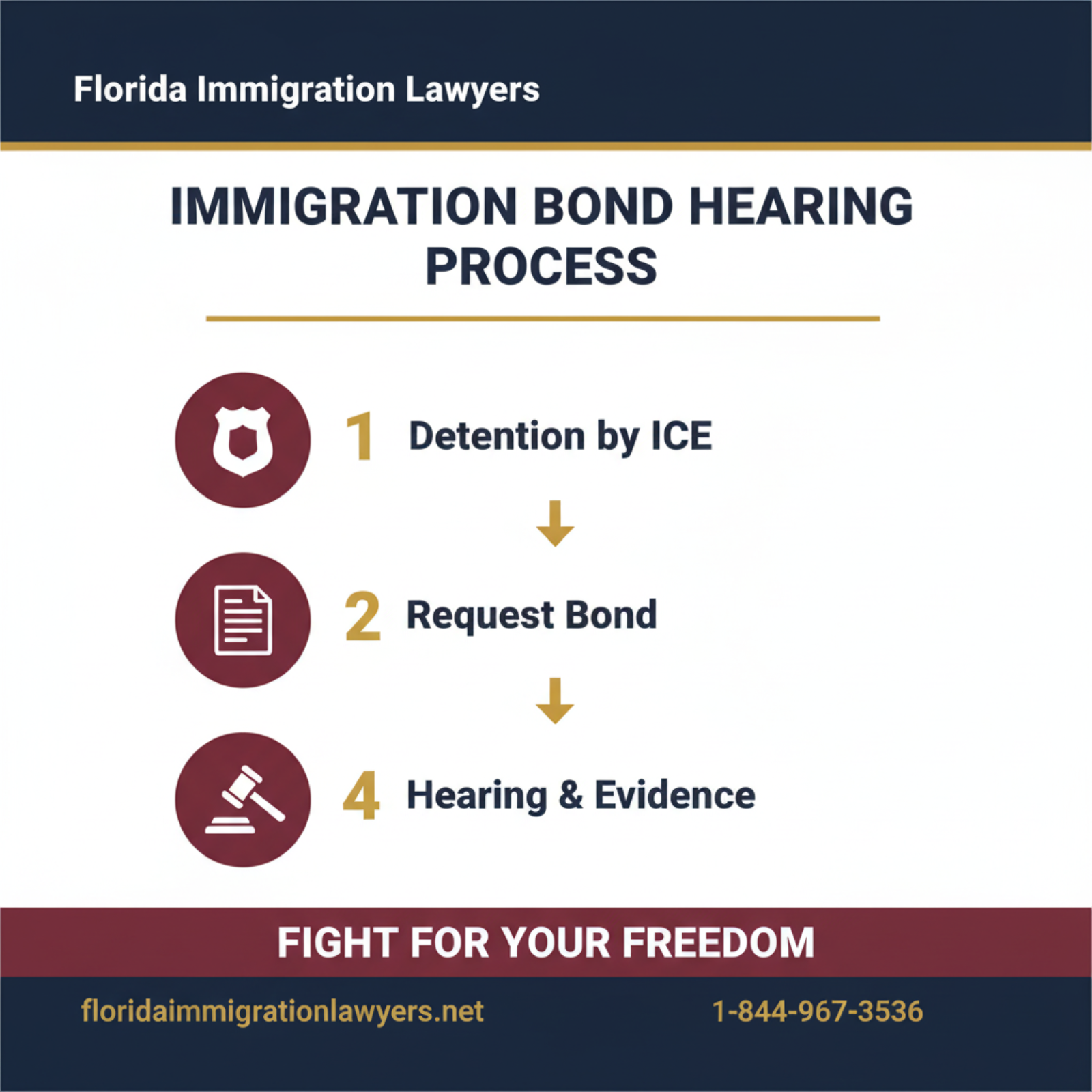
The Step-by-Step Process of an Immigration Bond Hearing in Florida
If you or a loved one is facing detention, understanding the procedural steps for an immigration bond hearing in Florida is crucial. This process can be complex, but knowing what to expect can alleviate some of the stress.
-
Initial Detention and ICE Bond Determination
The process begins with the individual's detention by ICE. Following arrest, ICE agents will typically process the individual and review their immigration history and criminal record. Based on this initial assessment, ICE may decide to release the person on their own recognizance, set an administrative bond (an ICE bond), or determine that the person is subject to mandatory detention and cannot be bonded out by ICE.
If an ICE bond is set, it can often be posted directly with ICE. However, these amounts can be high, and eligibility for an ICE bond is not always granted. Many individuals detained in Florida's facilities, such as the Krome Service Processing Center in Miami-Dade County, often require an Immigration Judge to intervene.
-
Requesting a Bond Hearing with an Immigration Judge
If ICE denies a bond, sets an unreasonably high bond, or claims mandatory detention, the detained individual has the right to request a bond hearing before an Immigration Judge (IJ). This request is typically made verbally or in writing to the Immigration Court. In Florida, these hearings occur at courts in cities like Miami and Orlando.
The Immigration Court will then schedule a hearing. This is a formal proceeding where the IJ will consider arguments and evidence presented by both the detainee's attorney and the government's attorney (Department of Homeland Security-DHS). The objective is to persuade the IJ that the individual is not a flight risk and does not pose a danger to the community.
-
Preparing for Your Bond Hearing
Thorough preparation is paramount for a successful bond hearing. This involves gathering compelling evidence and identifying potential witnesses. Your attorney will work closely with you and your family to compile a strong case demonstrating your ties to the community, good moral character, and financial stability.
Evidence can include proof of employment, family relationships, property ownership, and community involvement. Witnesses may include family members, employers, or community leaders who can attest to your character and reliability. The more evidence you have that you are not a flight risk and not a danger, the stronger your case will be.
-
The Bond Hearing Itself
During the hearing, the Immigration Judge will listen to arguments from both sides. Your attorney will present evidence and testimony to demonstrate why you should be released on bond. The DHS attorney will argue against release, often citing factors like criminal history, immigration violations, or perceived flight risk.
The IJ will consider various factors, including your ties to the U.S. (family, employment, property), your criminal record (if any), your immigration history, and whether you are likely to appear for future court dates. The burden of proof is generally on the detainee to show they are not a flight risk or danger. However, if mandatory detention is at issue, the government must prove it.
-
Immigration Judge's Decision and Bond Amount
After hearing all arguments and reviewing the evidence, the Immigration Judge will issue a decision. The IJ may grant a bond, deny a bond, or find that the individual is subject to mandatory detention. If a bond is granted, the IJ will set the bond amount, which must be at least $1,500 by law, but can be significantly higher based on individual circumstances.
The judge's decision is based on a holistic assessment of all factors presented. A favorable decision means the individual can be released upon payment of the set bond amount. In some cases, the judge might also impose conditions on release, such as electronic monitoring.
-
Posting the Bond and Release
Once a bond is set by the Immigration Judge, it must be paid to ICE to secure release. The bond can be paid by any U.S. citizen or lawful permanent resident. It can be paid in full or through an immigration bond company that charges a fee for their service.
After the bond is posted, ICE will process the release paperwork, which can take anywhere from a few hours to several days, depending on the detention facility and time of day. Your loved one will then be released from detention and must adhere to all conditions of their release and attend all scheduled court hearings.
Essential Documents and Evidence for Your Immigration Bond Hearing
Presenting a robust collection of documents and evidence is critical to demonstrating to the Immigration Judge that you are neither a flight risk nor a danger to the community. A well-prepared legal team, like ours at Florida Immigration Lawyers, will help you gather and organize these vital materials for your immigration bond hearing in Florida.
Here is a comprehensive checklist of documents and evidence that are typically helpful:
- Proof of Identity and Nationality: Passport, birth certificate, national ID card.
- Proof of Residence in the U.S. and Florida: Lease agreements, property deeds, utility bills (electricity, water, gas, phone) in your name, mail addressed to you.
- Proof of Family Ties in the U.S. and Florida: Marriage certificates (if married to a U.S. citizen or LPR), birth certificates of U.S. citizen or LPR children, letters from family members, photographs.
- Proof of Employment and Financial Stability: Employment verification letters, recent pay stubs, tax returns (W-2s, 1099s), bank statements, business licenses (if self-employed).
- Proof of Good Moral Character: Letters of support/affidavits from U.S. citizens or LPRs (family, friends, employers, community leaders) attesting to your character, community involvement, and reliability.
- Medical Records: If you have serious medical conditions that require ongoing treatment, especially if it's difficult to manage in detention.
- Evidence of Rehabilitation (if applicable): Certificates of completion for drug/alcohol treatment, anger management courses, or other rehabilitation programs if you have a past criminal record.
- Proof of Community Involvement: Church membership, volunteer work, school enrollment for children, club memberships.
- Court Documents: Any existing immigration court notices, prior orders, or documentation related to your current or past immigration proceedings.
- Financial Capacity of Bondsman: Evidence that the person offering to pay the bond has the financial means to do so.
Every piece of evidence contributes to painting a full picture of your life and your commitment to your community in Florida. Our team will meticulously review your situation to ensure all relevant documents are presented effectively at your bond hearing.
Navigating Timelines and Processing Expectations for an Immigration Bond
The timeline for an immigration bond hearing in Florida can vary significantly, leading to considerable anxiety for detainees and their families. While there are general expectations, individual circumstances, court backlogs, and the specific detention facility can all influence how quickly a bond hearing is scheduled and processed.
Typically, once a request for an Immigration Judge bond hearing is made, it can take anywhere from a few days to several weeks for the hearing to be scheduled. Immigration Courts in Florida, such as the Miami Immigration Court or the Orlando Immigration Court, handle a high volume of cases, which can sometimes lead to delays. The availability of judges and the caseload at the specific court will impact scheduling.
After the bond hearing, if a bond is granted, the process of posting the bond and securing release usually takes an additional 24 to 72 hours. This timeframe allows for the necessary administrative procedures to be completed by ICE and the detention facility. Factors like weekend processing or holidays can extend this period.
It is crucial to understand that these are general estimates. An experienced immigration attorney can help expedite certain aspects of the process by ensuring all paperwork is correctly filed and by communicating effectively with court officials and ICE. They can also provide more specific expectations based on current court dockets and facility procedures.
The legal landscape is always subject to change, and processing times can fluctuate due to new policies or increased enforcement. Remaining informed and having diligent legal representation, such as that offered by Florida Immigration Lawyers, is your best strategy for navigating these timelines effectively.
Understanding Cost Factors and Fees for Immigration Bonds
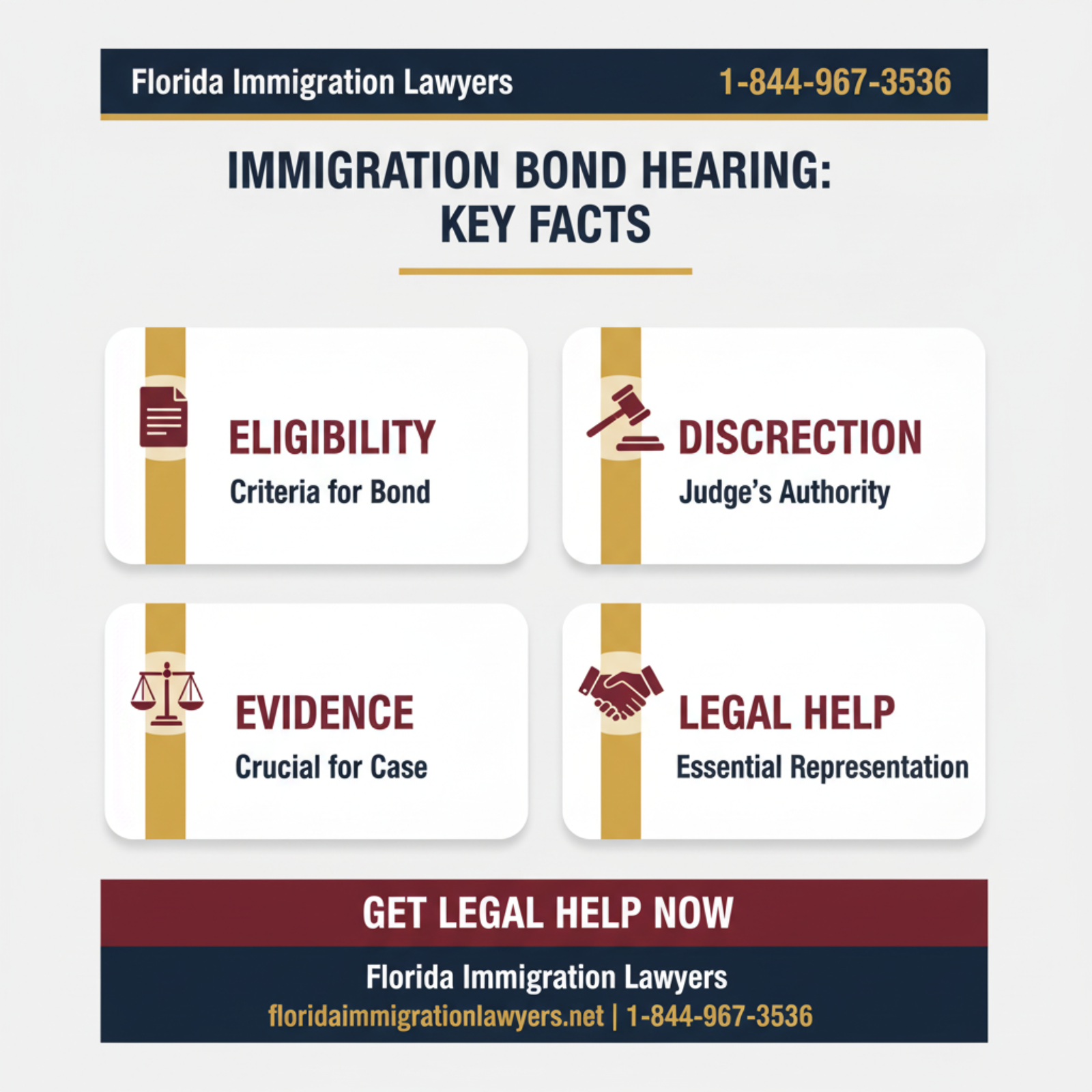
The financial aspect of an immigration bond is a significant concern for many families in Florida. It's important to differentiate between the bond amount set by the Immigration Judge and the legal fees associated with securing representation. While we cannot provide specific bond amounts, we can explain the general cost factors involved.
The bond amount itself, set by an Immigration Judge, must be at least $1,500. However, it can range from a few thousand dollars to tens of thousands, depending on the individual's circumstances, including their flight risk, criminal history, and ties to the community. This money is held by ICE and is returned once the individual's immigration case is concluded, provided all court appearances were made.
If you cannot pay the full bond amount yourself, you may consider using an immigration bond company. These companies typically charge a non-refundable premium, often around 10-20% of the total bond amount, as their fee. They then post the full bond on your behalf. This option can make release more accessible, but it's important to understand the terms and conditions.
In addition to the bond amount, there are legal fees for retaining an immigration attorney. These fees cover the attorney's time and expertise in preparing for the bond hearing, representing the client in court, and handling all necessary documentation. While this is an additional cost, investing in experienced legal counsel can significantly increase the likelihood of a favorable outcome, potentially leading to a lower bond amount or even release without bond.
At Florida Immigration Lawyers, we believe in transparent fee structures. During your free consultation, we can discuss our legal fees for bond hearings and other immigration services. We understand the financial strain these situations can cause and strive to provide cost-effective yet high-quality representation for our clients across Florida.
Do not navigate this process alone. The complexities of immigration law and the pressure of detention require expert guidance. Contact Florida Immigration Lawyers today to schedule your free consultation. Our dedicated team is ready to fight for your loved one's freedom and future.
Common Mistakes to Avoid During Your Immigration Bond Hearing
An immigration bond hearing is a critical juncture in the detention process. Avoiding common pitfalls can significantly improve the chances of a favorable outcome. Be aware of these mistakes:
- Failing to Request a Hearing: Some individuals or their families may not realize they have the right to request a bond hearing if ICE denies an administrative bond or sets an unfair amount. Missing this opportunity means remaining in detention unnecessarily.
- Attending Without Legal Representation: Facing an Immigration Judge and a DHS attorney without your own lawyer puts you at a severe disadvantage. An attorney understands legal arguments, evidence rules, and court procedures, which are crucial for success.
- Lying or Misrepresenting Facts: Providing false information, whether about your identity, criminal history, or ties to the community, can severely damage your credibility. It can lead to a bond denial and have negative repercussions for your entire immigration case.
- Lack of Sufficient Evidence: A weak case with insufficient documentation to prove ties to the community, good moral character, or financial stability will likely result in a bond denial or a very high bond amount. Thorough preparation is key.
- Not Understanding Mandatory Detention: Many immigrants are unaware of the categories that lead to mandatory detention under INA § 236(c), often due to past criminal convictions. Arguing for a bond when mandatorily detained is futile and wastes valuable time and resources. Your attorney can assess your eligibility.
- Failing to Appear for Future Hearings: If released on bond, failure to appear for any scheduled immigration court hearings will result in the forfeiture of the bond and likely lead to a new warrant for arrest and further detention. This also negatively impacts future immigration relief.
- Not Having a Clear Release Plan: The Immigration Judge wants assurance that upon release, you have a stable place to live and support system. Not being able to articulate a clear plan for housing, support, and legal compliance can raise concerns about flight risk.
- Missing Deadlines: Immigration court operates on strict deadlines. Missing a deadline for filing documents or requesting a hearing can lead to procedural denials or delays, prolonging detention.
- Not Disclosing All Relevant Information to Your Attorney: Withholding information, even if it seems negative, prevents your attorney from preparing the strongest defense. Full transparency allows your legal team to anticipate challenges and develop strategies.
- Ignoring Florida-Specific Court Rules: While federal law governs immigration, local court rules and judicial preferences in Florida's immigration courts (e.g., Miami, Orlando) can influence proceedings. An attorney familiar with these local nuances is invaluable.
When to Call Florida Immigration Lawyers for Your Bond Hearing
The decision to seek legal counsel for an immigration bond hearing in Florida is not merely a recommendation; it is often a necessity. The immigration system is complex, and the stakes are incredibly high. Having an experienced attorney from Florida Immigration Lawyers by your side can make all the difference, especially in challenging situations.
You should contact us immediately if:
- A loved one has been detained by ICE: Time is of the essence. The sooner we intervene, the sooner we can work towards release.
- ICE has denied a bond or set an unreasonably high amount: We can challenge these decisions before an Immigration Judge and argue for a fair bond.
- There is a question of mandatory detention: Our attorneys can assess whether your case truly falls under mandatory detention provisions (INA § 236(c)) or if there are arguments for bond eligibility.
- The detainee has a criminal history: Past convictions can complicate bond eligibility. We specialize in deportation defense and can navigate these complexities.
- You are unsure about what documents or evidence to present: We will guide you through the evidence-gathering process and ensure a compelling presentation.
- There are language barriers or communication difficulties: Our bilingual team ensures clear and effective communication throughout the process.
- You need to understand the immigration court process: We provide comprehensive explanations and prepare you for every step, including future immigration court appearances.
Florida Immigration Lawyers has a proven track record of helping families in Hialeah, Miami, Orlando, and across the state secure release from ICE detention. We understand the local courts, the judges, and the most effective strategies for bond hearings. Our commitment is to provide compassionate, aggressive, and effective legal representation.
About Florida Immigration Lawyers
Florida Immigration Lawyers is a leading immigration law firm dedicated to serving individuals and families throughout Florida. With a deep understanding of U.S. immigration laws and a passion for justice, our experienced attorneys provide comprehensive legal services to navigate the complexities of the immigration system.
We specialize in a wide range of immigration matters, including family-based petitions, business visas, asylum claims, citizenship applications, and aggressive deportation defense. Our firm is committed to protecting the rights and interests of immigrants in Florida, offering personalized attention and strategic legal solutions.
We pride ourselves on our empathetic approach and our unwavering dedication to our clients. When you choose Florida Immigration Lawyers, you choose a team that is available 24/7 to address your concerns, offers free consultations, and works tirelessly to achieve the best possible outcomes. Our goal is to provide peace of mind and effective legal representation, allowing you to focus on your family and future.
Contact us today at 1-844-967-3536 or visit our website at https://www.floridaimmigrationlawyers.net to learn how we can assist you. We are here to help.
Sources and References
- U.S. Citizenship and Immigration Services (USCIS)
- Executive Office for Immigration Review (EOIR)
- U.S. Immigration and Customs Enforcement (ICE)
- 8 U.S.C. Chapter 12 - Immigration and Nationality Act (INA)
- INA § 236 (8 U.S.C. § 1226) - Detention and Release of Aliens
- 8 CFR Part 236 - Apprehension and Detention of Aliens
This article provides general legal information and is not intended as legal advice. Every case is unique, and outcomes depend on specific facts and circumstances. Contact an attorney for advice about your particular situation.
If you or a loved one is facing detention and needs an immigration bond hearing in Florida, do not delay. The expertise of Florida Immigration Lawyers can make a significant difference in securing release and protecting your rights. We offer free, confidential consultations to discuss your case and outline a clear path forward.
Call us today at 1-844-967-3536 to schedule your free consultation. Se Habla Español - Estamos aquí para ayudarle.
Florida Immigration Lawyers
Legal Team
Our experienced attorneys at Florida Immigration Lawyers have been serving clients across Florida for over 20 years. We specialize in immigration, personal injury, criminal defense, workers compensation, and family law.