Green Card Holder ICE Detention in Florida: Your Rights & Defense
For green card holders in Florida, facing ICE detention can be a frightening reality, often triggered by criminal convictions or immigration violations. While a green card offers significant protections, it does not guarantee immunity from removal proceedings. This guide from Florida Immigration Lawyers details your rights, the detention process, and essential defense strategies. Understanding the legal grounds for detention, preparing necessary documents, and avoiding common mistakes are crucial steps. We outline the importance of legal counsel from the moment of arrest, through bond hearings and court proceedings, to protect your status and fight deportation. Our firm offers comprehensive support for individuals and families navigating these complex challenges across Florida.
A green card holder can be detained by ICE if they are deemed removable under immigration law, often due to criminal convictions or specific immigration violations. Detention can lead to removal proceedings. It is crucial to understand your rights, seek legal counsel immediately, and prepare a strong defense to challenge detention and avoid deportation in Florida.
- Green card holders are not immune to ICE detention.
- Criminal convictions are a common trigger for detention.
- You have rights, including the right to legal representation.
- Legal assistance is vital for challenging detention and removal.
Imagine building a life in Florida, contributing to your community, and then suddenly facing the terrifying prospect of detention by U.S. Immigration and Customs Enforcement (ICE). For many green card holders, this is a real and often unexpected fear. While holding a green card provides significant protections, it does not grant absolute immunity from immigration enforcement actions, especially in complex cases involving criminal history or specific violations.
This comprehensive guide from Florida Immigration Lawyers will clarify the circumstances under which a green card holder ICE detention might occur in Florida, explain your crucial rights, and outline the steps you can take to defend your status. We understand the immense stress and uncertainty such a situation brings to you and your family. If you or a loved one is facing green card holder ICE detention in Fort Lauderdale or anywhere in Florida, do not hesitate. Call Florida Immigration Lawyers at 1-844-967-3536 for a free consultation today. Our dedicated team is ready to assist you.
Understanding Green Card Holder ICE Detention in Florida
Many assume that once you have a green card, your immigration status is completely secure. While a Lawful Permanent Resident (LPR) enjoys many privileges, this status can be revoked, and an individual can be placed in ICE detention. The U.S. government retains the authority to remove green card holders who violate specific immigration laws.
The primary reasons for green card holder ICE detention often revolve around criminal convictions. Certain offenses, particularly “aggravated felonies” (as defined by INA Section 101(a)(43)) or crimes involving moral turpitude (CIMT), can trigger removal proceedings, even if the conviction occurred years ago. An aggravated felony encompasses a broad range of serious crimes. Even minor infractions, when combined with other factors, can sometimes lead to an immigration detainer.
Beyond criminal issues, other immigration violations can also lead to detention. These might include abandonment of permanent resident status, falsely claiming U.S. citizenship, or certain types of fraud committed during the immigration process. In Florida, with its diverse population and active ICE presence in areas like Fort Lauderdale, Miami, and Orlando, understanding these risks is paramount. ICE maintains several detention facilities across the state, including Krome Service Processing Center and Glades County Detention Center, where individuals facing removal proceedings are held.
It is critical to remember that if ICE believes you are removable under INA Section 237, they can issue a Notice to Appear (NTA), which formally begins removal proceedings before an immigration judge. This notice typically includes the specific charges that make you removable. During this time, you may be detained, especially if you are considered a flight risk or a danger to the community. Your green card does not automatically protect you from this process. We can help you understand your deportation defense options.
The ICE Detention Process: What to Expect
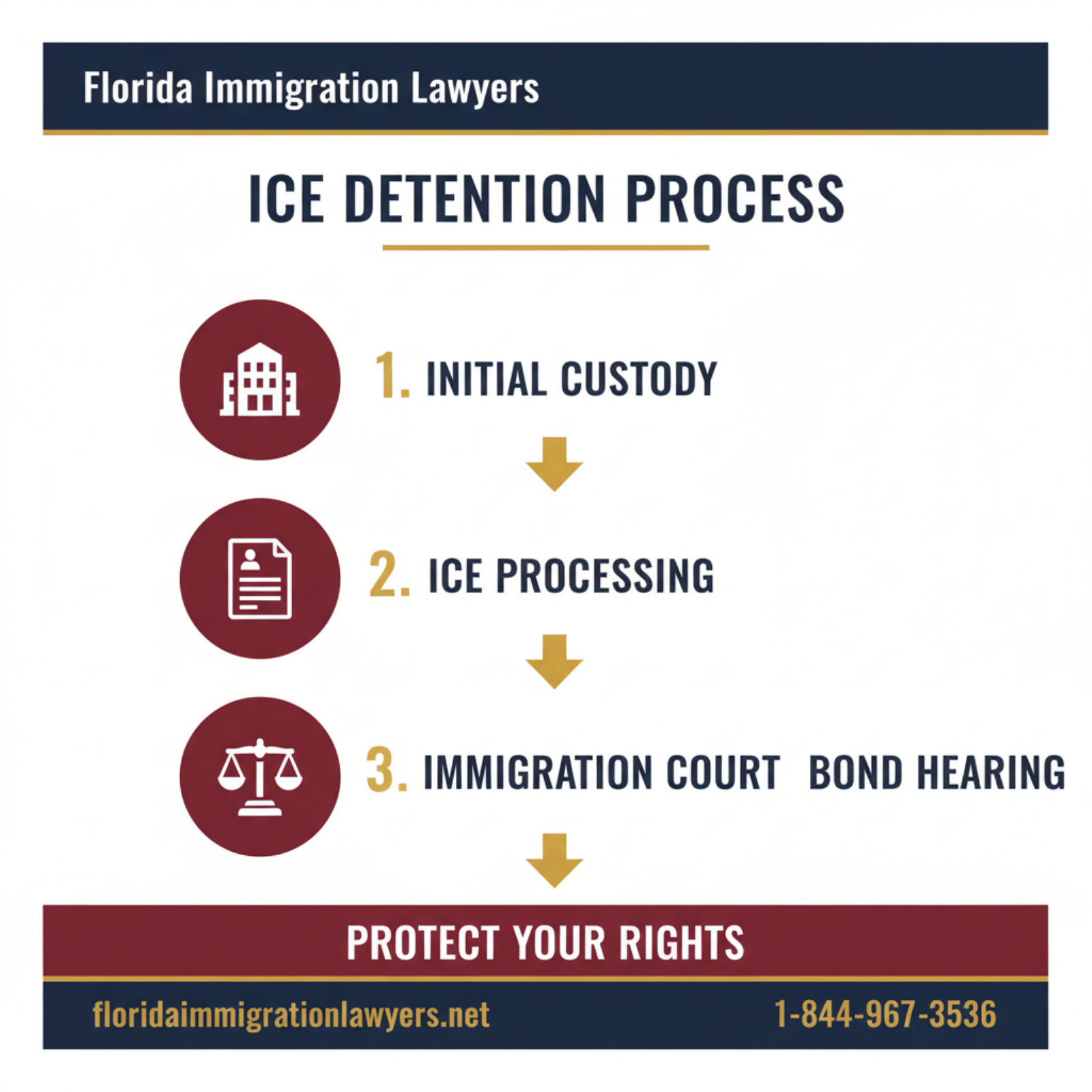
Facing an ICE detention can be a bewildering experience. Knowing the typical steps involved can help you prepare and react effectively. The process generally begins with an arrest, often following a criminal conviction or a referral from local law enforcement.
- Arrest and Initial Processing: If you are arrested by local law enforcement for a crime, or directly by ICE agents, you will be taken into custody. ICE may lodge an immigration detainer, requesting that local authorities hold you for up to 48 hours (excluding weekends and holidays) after your release from criminal custody so that ICE can take you into their custody. This is a critical period. You will be fingerprinted, photographed, and interviewed. It is vital to exercise your right to remain silent and request an attorney immediately. Do not sign any documents you do not understand.
- Transfer to an ICE Detention Facility: After initial processing, you will likely be transferred to an immigration detention center, such as the Krome Service Processing Center near Miami or the Glades County Detention Center in Moore Haven, Florida. These facilities are distinct from criminal jails, though conditions can be similar. Family members may struggle to locate you during this transfer phase.
- Bond Hearing (if eligible): Not all green card holders are eligible for bond under 8 U.S.C. Section 1226. If you are deemed eligible, an immigration judge will review your case to determine if you can be released on bond while your removal proceedings are pending. Factors considered include your ties to the community, criminal history, and flight risk. An attorney can present a strong argument for your release, providing evidence of your stability and good character.
- Issuance of a Notice to Appear (NTA): This document formally charges you with being removable from the U.S. and initiates your immigration court proceedings. The NTA will specify the legal grounds for your removal. You will receive a copy, and it is crucial to review it carefully with your attorney.
- Master Calendar Hearings: These are preliminary hearings before an immigration judge. During these hearings, you (or your attorney) will acknowledge receipt of the NTA, state whether you admit or deny the charges, and designate any forms of relief from removal you wish to pursue. Multiple master calendar hearings may be scheduled.
- Individual Hearing (Merits Hearing): This is the trial phase where you present your defense against deportation. Your attorney will submit evidence, call witnesses, and cross-examine government witnesses. The immigration judge will then make a decision based on the evidence presented and relevant immigration law.
- Decision and Appeals: If the immigration judge rules against you, you may have the option to appeal the decision to the Board of Immigration Appeals (BIA), and potentially further to a federal circuit court. The appeal process can be lengthy but offers another chance to argue your case.
Navigating these steps requires intricate knowledge of immigration law and courtroom procedures. An experienced immigration lawyer in Florida can make a significant difference in the outcome of your case, helping you understand each phase and strategizing your defense.
Key Documents for Your Defense Against ICE Detention
When facing green card holder ICE detention and removal proceedings, having the right documentation is paramount. These documents serve as proof of your identity, your legal status, and your ties to the U.S., all of which are crucial for building a strong defense and potentially securing a bond. Organize these materials diligently.
- Green Card (Form I-551): This is your primary proof of Lawful Permanent Resident status. Always carry it with you.
- Passport and Birth Certificate: These documents verify your identity and nationality.
- Marriage Certificate and Birth Certificates of U.S. Citizen Children: If applicable, these demonstrate strong family ties to the U.S.
- Proof of Residence in Florida: Lease agreements, utility bills, and property deeds showing continuous residence in Fort Lauderdale or other Florida locations.
- Employment Records: Pay stubs, employment verification letters, and tax returns (Form W-2, Form 1099) demonstrating your contribution to the U.S. economy.
- Educational Records: Diplomas, transcripts, or certificates if you have pursued education in the U.S.
- Financial Records: Bank statements, mortgage statements, or investment portfolios that show your financial stability.
- Medical Records: Proof of ongoing medical treatment or conditions for yourself or dependents.
- Criminal Records (if any): Certified copies of court dispositions for any arrests or convictions. Your attorney needs to review these thoroughly to assess their immigration consequences.
- Character Letters: Letters from employers, community leaders, family, and friends attesting to your good moral character and positive contributions to society.
- Evidence of Rehabilitation: If you have a criminal history, provide proof of rehabilitation, such as completion of probation, counseling, or community service.
- Previous Immigration Filings: Copies of any prior petitions, applications, or notices from USCIS or the immigration court.
Gathering these documents can be overwhelming, especially from detention. Our team at Florida Immigration Lawyers can guide your family in collecting and presenting these vital pieces of evidence effectively to the immigration court.
Timeline and Processing Expectations for ICE Detention Cases
The timeline for green card holder ICE detention cases can vary significantly, ranging from a few days for bond release to several months or even years for a final decision in removal proceedings. There is no fixed duration, as each case is unique and depends on numerous factors.
Factors influencing the timeline include the complexity of your case, the specific charges against you, the availability of an immigration judge, and the caseload of the immigration court in Florida. For instance, courts in busy areas like Miami or Orlando might have longer wait times than less populated regions.
- Initial Detention and Processing: This phase can last from a few days to a couple of weeks, during which ICE determines whether to release you or issue an NTA. The “immigration detainer 48 hour rule” applies here, but ICE might transfer you to a federal detention facility after that.
- Bond Hearing: If you are eligible for bond, a hearing might be scheduled within a few weeks of your detention. Securing a bond can dramatically shorten the time you spend in physical custody, allowing you to fight your case from outside detention.
- Master Calendar Hearings: These preliminary hearings can be scheduled anywhere from a few weeks to several months after the NTA is issued. Multiple master calendar hearings might occur before an individual hearing is set.
- Individual Hearing: The actual trial can be scheduled many months, sometimes over a year, after the initial NTA, depending on court dockets. This is where the core of your defense is presented.
- Appeals: If an appeal to the Board of Immigration Appeals (BIA) is filed, it can take anywhere from six months to two years for a decision. Further appeals to federal courts can extend the process even longer.
Throughout this protracted process, communication with your attorney is critical. They can provide realistic expectations based on current court backlogs and legal precedents relevant to your green card holder ICE detention case.
Cost Factors and Legal Fees in ICE Detention Cases
Understanding the financial implications of an ICE detention case is crucial for effective planning. The costs involved can include legal fees, bond amounts, and various administrative expenses. While it is impossible to provide exact figures without knowing the specifics of your case, we can outline the general cost factors.
- Attorney Fees: Legal representation is often the most significant expense but also the most critical investment. Fees vary widely depending on the attorney’s experience, the complexity of the case, and the services required (e.g., bond hearing, full removal defense, appeals). Many firms, including Florida Immigration Lawyers, offer free initial consultations to discuss your case and provide a fee structure.
- Immigration Bond: If a bond is granted, you or your family must pay the bond amount to ICE for your release. These amounts can range from a few thousand dollars to tens of thousands, depending on factors like flight risk and criminal history. The bond amount is typically returned (minus administrative fees) once your case is concluded, provided you have complied with all court orders.
- Filing Fees: While less common in detention cases specifically, some relief applications or appeals may require USCIS or EOIR filing fees. Your attorney will inform you of any applicable fees.
- Ancillary Costs: These can include costs for obtaining certified court documents, expert witness fees (if necessary), translation services for documents, and travel expenses for family members attending hearings or visiting detention centers.
Investing in experienced legal counsel is highly recommended. An attorney can help you navigate the complex legal system, identify potential defenses, and present the strongest possible case, potentially saving you from deportation and ensuring your future in Florida. The cost of not having an attorney often far outweighs the legal fees.
The intricacies of immigration law, especially when facing detention, can be overwhelming. Do not navigate this process alone. Contact Florida Immigration Lawyers today to ensure your rights are protected and your case is handled with the expertise it deserves.
Common Mistakes to Avoid During ICE Detention
Making errors during an ICE detention can severely jeopardize your case and lead to unfavorable outcomes, including deportation. Being aware of these common pitfalls can help you protect your rights and improve your chances of a positive resolution.
- Lying or Providing False Information: Any false statements to immigration officials can lead to serious consequences, including criminal charges, denial of immigration benefits, and a permanent bar from the U.S. Always be truthful, but you are not obligated to offer information beyond your identity.
- Signing Documents You Don't Understand: Never sign any document from ICE or other law enforcement without fully understanding its contents and implications. You could inadvertently waive your rights or agree to voluntary departure, which means you give up your right to a hearing.
- Not Carrying Your Green Card: Lawful Permanent Residents are required by law to carry their green card (Form I-551) at all times. Failure to do so can lead to detention and difficulties in proving your status, even if it’s eventually resolved. This is part of your green card holder rights ICE detention Florida.
- Failing to Inform ICE of Address Changes: Green card holders must inform USCIS of any change of address within 10 days. Failure to do so can result in an immigration judge issuing an order of removal in absentia if you miss a court hearing because you did not receive a notice.
- Delaying Legal Counsel: The moment you are approached by ICE or detained, your priority should be to contact an experienced immigration attorney. Delays can mean missed deadlines, lost opportunities for bond, and weakened defenses. This is crucial for anyone facing ICE deportation green card holder issues.
- Discussing Your Case with Others in Detention: Information shared with fellow detainees or even detention center staff can sometimes be used against you. Limit discussions about your case to your attorney only.
- Missing Court Dates: Failing to appear for any scheduled immigration court hearing can result in an automatic Order of Removal (deportation) being issued against you in absentia. Always confirm your court dates and locations with your attorney.
- Voluntarily Departing Without Legal Advice: Accepting “voluntary departure” may seem like an easy way out, but it can have long-term negative consequences, including bars to future re-entry. Always consult an attorney before agreeing to it. Seeking to remove ICE detainer without proper legal guidance can be risky.
- Assuming Your Criminal Defense Attorney Understands Immigration Law: Criminal law and immigration law are distinct. A criminal conviction can have severe immigration consequences that a criminal defense attorney might not fully appreciate. Ensure your legal team includes an immigration expert.
- Not Preparing for Your Bond Hearing: If eligible, a bond hearing is your best chance for release. Failing to gather evidence of ties to the community, good moral character, and financial stability can result in bond denial or a high bond amount.
When to Call a Lawyer for Green Card Holder ICE Detention
The decision to contact an immigration attorney should not be delayed when facing any interaction with ICE, particularly if it involves detention or the threat of removal. Early intervention by legal counsel can significantly alter the trajectory of your case.
You should immediately contact Florida Immigration Lawyers if:
- You or a loved one has been detained by ICE: This is the most urgent scenario. An attorney can work to locate the detained individual, assess their eligibility for bond, and begin preparing a defense against removal. This is especially true for green card holder ICE detention at facilities like those in Florida.
- You have received a Notice to Appear (NTA): An NTA means removal proceedings have officially begun. An attorney will help you understand the charges, prepare your response, and identify potential forms of relief.
- You have been arrested by local law enforcement and an ICE detainer has been lodged: Even if you are not yet in ICE custody, an immigration detainer is a serious red flag. An attorney can advise you on how to proceed once your criminal case is resolved and how to challenge the detainer to remove ICE detainer.
- You have a criminal record, even if it's old: Past convictions, especially those for aggravated felonies or crimes involving moral turpitude, can unexpectedly trigger ICE enforcement. An attorney can evaluate your criminal history and its potential immigration consequences.
- You are concerned about your green card status due to a past immigration violation: If you believe you may have violated immigration law in the past, consult with an attorney to understand your risks and explore proactive solutions.
- You are at an airport or port of entry and are being questioned extensively by Customs and Border Protection (CBP): While not directly ICE, CBP officers at ports of entry have broad authority and can refer individuals to ICE for detention if they believe there are grounds for inadmissibility or removability. This applies to potential ICE airport detention green card cases.
Our experienced attorneys at Florida Immigration Lawyers regularly handle complex green card holder ICE detention cases across Florida, including in Fort Lauderdale, Miami, and Orlando. We are dedicated to protecting your rights and fighting for your ability to remain in the U.S.
Frequently Asked Questions About Green Card Holder ICE Detention
We understand you may have many questions about ICE detention and your rights as a green card holder. Here are answers to some commonly asked questions, including those from “People Also Ask” searches.
- Can ICE legally detain a green card holder?
Yes, ICE can legally detain a green card holder if they have a basis to believe the individual is “removable” under U.S. immigration law (8 U.S.C. Section 1227). Common grounds for removability include certain criminal convictions (like aggravated felonies or crimes involving moral turpitude), immigration fraud, or abandonment of permanent resident status. Holding a green card provides significant protections, but it does not grant absolute immunity from detention and deportation proceedings. Knowing your green card holder rights ICE detention Florida is critical. - Can I sue ICE for detaining me if I am a U.S. citizen?
If a U.S. citizen is wrongly detained by ICE, they may have grounds to pursue legal action for civil rights violations. However, proving U.S. citizenship during detention can be challenging, especially without proper documentation. It is crucial to immediately assert your citizenship, demand to speak with an attorney, and provide proof if available. If you believe you were unlawfully detained as a U.S. citizen, contact an attorney experienced in civil rights and immigration law to understand your options. - Is ICE detaining green card holders without criminal record?
While criminal convictions are a primary trigger for green card holder ICE detention, it is possible for individuals without a criminal record to be detained. This can occur due to other alleged immigration violations, such as abandonment of permanent resident status (e.g., spending too much time outside the U.S.), falsely claiming U.S. citizenship, or certain types of immigration fraud committed during the application process. These cases are less common but underscore the importance of understanding all grounds of removability. - How long can ICE hold you before deportation?
There is no fixed time limit for how long ICE can hold an individual before deportation. Detention can last from a few days to several months or even years, depending on the complexity of the case, court backlogs, and whether appeals are filed. If an individual has a final order of removal, ICE is generally required to remove them within 90 days, but this period can be extended under specific circumstances, such as if travel documents are not available or if the individual is deemed a flight risk.
About Florida Immigration Lawyers
At Florida Immigration Lawyers, we are a leading immigration law firm dedicated to serving individuals and families across the entire state of Florida. With offices strategically located, we provide comprehensive legal services to immigrants navigating the complex U.S. immigration system. Our team of compassionate and knowledgeable attorneys specializes in a wide range of immigration matters, including green card holder ICE detention defense, deportation defense, asylum claims, family-based immigration, business immigration, and naturalization.
We understand the profound impact immigration issues have on your life and your loved ones. That is why we are committed to providing personalized, aggressive, and effective legal representation. Our attorneys are available 24/7 to address your urgent concerns, offering free consultations to assess your unique situation. We pride ourselves on our bilingual services, ensuring that every client, including our Spanish-speaking community, receives clear and empathetic communication. When your future in Florida is at stake, choose Florida Immigration Lawyers – your trusted advocates. Call us at 1-844-967-3536 or visit our website at https://www.floridaimmigrationlawyers.net.
Sources and References
- U.S. Citizenship and Immigration Services (USCIS)
- Executive Office for Immigration Review (EOIR)
- U.S. Immigration and Customs Enforcement (ICE)
- 8 U.S.C. Chapter 12 - Immigration and Nationality Act (INA)
- INA Section 101(a)(43) - Definition of Aggravated Felony
- INA Section 237 (8 U.S.C. Section 1227) - Deportable Aliens
- INA Section 212 (8 U.S.C. Section 1182) - Inadmissible Aliens
- 8 CFR Part 236 - Apprehension and Detention of Aliens
This article provides general legal information and is not intended as legal advice. Every case is unique, and outcomes depend on specific facts and circumstances. Contact an attorney for advice about your particular situation.
If you or a loved one is facing green card holder ICE detention in Florida, time is of the essence. Do not face this challenging situation alone. Florida Immigration Lawyers is here to provide the experienced and compassionate legal representation you deserve. Call us now for a free, confidential consultation at 1-844-967-3536. Se Habla Español - Estamos aquí para ayudarle.
Frequently Asked Questions
Florida Immigration Lawyers
Legal Team
Our experienced attorneys at Florida Immigration Lawyers have been serving clients across Florida for over 20 years. We specialize in immigration, personal injury, criminal defense, workers compensation, and family law.