Oxford Historian Faces Deportation: US Immigration Lessons for Florida
An Oxford historian's deportation case in the UK highlights critical visa compliance issues relevant to foreign nationals in the US. This blog post explores how similar situations can arise in Florida due to overstaying or violating visa terms. Learn about the US deportation process, essential documentation, timelines, and cost factors. Discover common mistakes to avoid and when to consult a Florida immigration lawyer for expert guidance. Florida Immigration Lawyers offers free consultations to help protect your immigration status.
While an Oxford historian's deportation case occurred in the UK, it highlights critical issues of visa compliance and duration of stay that are equally relevant to foreign nationals in the United States. In Florida, understanding and adhering to your visa terms, reporting changes, and seeking legal counsel are paramount to avoid similar immigration challenges. US immigration law is complex, and even minor infractions can lead to serious consequences, including removal proceedings.
- Visa compliance is crucial in the US, similar to the UK case.
- Overstaying or violating visa terms can lead to deportation in Florida.
- Understanding US immigration law is essential for foreign nationals.
- Proactive legal advice can prevent serious immigration issues.
- Florida Immigration Lawyers can help navigate complex cases.
Have you heard the news about the Oxford historian facing deportation? This widely reported case in the United Kingdom has sent ripples through the international academic community, highlighting the stringent requirements of immigration laws. While the specific details of that situation are unique to UK regulations, the core message resonates deeply with anyone navigating the complexities of immigration in the United States, especially here in Florida. Many foreign nationals, including students, researchers, and professionals, can face unexpected challenges if they inadvertently violate their visa terms or overstay their authorized period.
This comprehensive guide will explore the parallels between such high-profile cases and the realities of US immigration law, focusing on what you need to know to protect your status in Florida. We will delve into common pitfalls, the deportation process, and crucial steps to ensure compliance. Understanding your rights and responsibilities is the first step toward safeguarding your future. If you are concerned about your immigration status or facing a challenge, do not hesitate to call Florida Immigration Lawyers at 1-844-967-3536 for a free consultation. Our experienced team is ready to assist you.
Understanding US Visa Compliance: Lessons from the Oxford Historian's Case
The case of the Oxford historian, who reportedly faced deportation from the UK due to spending too much time outside the country while on a specific visa, underscores a universal truth in immigration law: visa compliance is non-negotiable. Every country sets specific conditions for temporary and permanent residents. Failure to meet these conditions, even inadvertently, can lead to severe penalties, including the loss of immigration status and forced removal.
In the United States, similar principles apply. Whether you hold a student visa (F-1), a work visa (H-1B), or any other nonimmigrant status, you are bound by strict rules regarding your authorized stay, permitted activities, and travel outside the US. For instance, an F-1 student must maintain full-time enrollment, and an H-1B worker must be employed in their sponsored position. Deviating from these terms can be considered a violation, potentially triggering a Notice to Appear (NTA) for removal proceedings. In Florida, with its diverse population of international students and professionals, understanding these nuances is particularly vital.
Navigating the US Deportation Process in Florida: A Step-by-Step Guide
If you or someone you know receives a Notice to Appear (NTA), it means the Department of Homeland Security (DHS) believes you are deportable and has initiated removal proceedings against you. This can be an incredibly daunting experience, but understanding the process is the first step toward building a strong defense. The US deportation process, formally known as removal proceedings, typically unfolds in several stages within the Executive Office for Immigration Review (EOIR) immigration courts, including those in Florida cities like Miami, Orlando, and Pompano Beach.
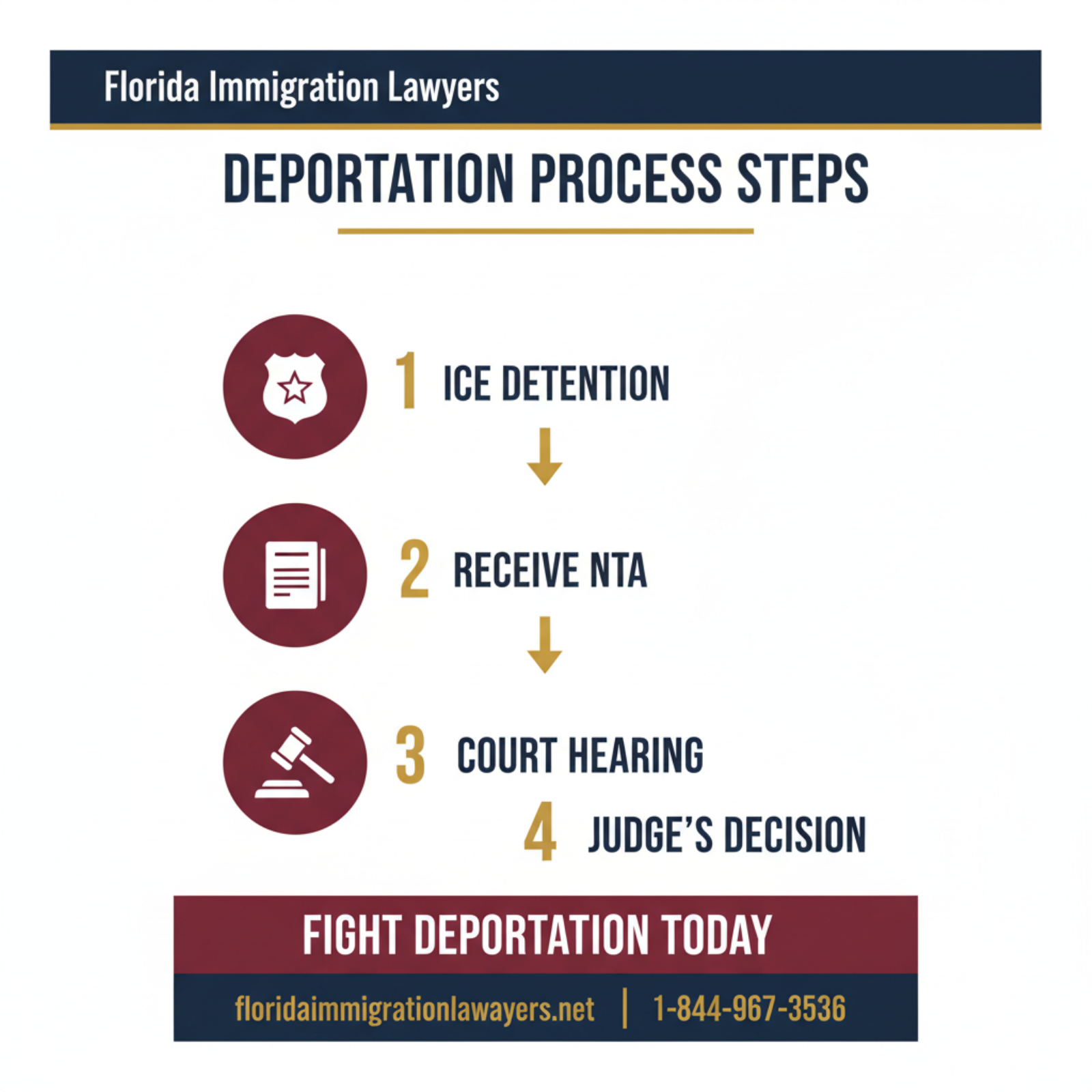
Here is a general step-by-step guide to what you can expect in the US deportation process:
- Issuance of a Notice to Appear (NTA): This document, issued by an agency like USCIS or ICE, formally charges you with being removable from the United States. It specifies the legal grounds for your alleged deportability, often citing sections of the Immigration and Nationality Act (INA). For example, INA § 237 (8 U.S.C. § 1227) outlines various grounds of deportability, such as conviction of certain crimes or remaining in the U.S. longer than permitted.
- Filing the NTA with the Immigration Court: Once issued, the NTA is filed with an immigration court. This officially places your case on the court's docket. You will receive a copy of the NTA, indicating the date and time of your first court appearance, known as the Master Calendar Hearing.
- Master Calendar Hearing (MCH): This is your initial appearance before an Immigration Judge (IJ). During the MCH, the judge will confirm your identity, ensure you understand the charges against you, and ask you to admit or deny the factual allegations and the legal grounds of deportability. This is also where you inform the court if you have legal representation and identify any forms of relief from removal you intend to pursue.
- Individual Hearing (Merits Hearing): If you contest your deportability or apply for relief, the judge will schedule an Individual Hearing. This is essentially a trial where you or your attorney present evidence, call witnesses, and cross-examine government witnesses. The government also presents its case. This hearing can be complex and requires thorough preparation.
- Decision by the Immigration Judge: After all evidence is presented, the Immigration Judge will issue a decision. The judge may rule that you are not deportable, grant your requested relief, or order you removed from the United States.
- Appeals Process: If either you or the government disagrees with the Immigration Judge's decision, you generally have the right to appeal to the Board of Immigration Appeals (BIA). Further appeals may be possible to a federal Circuit Court of Appeals. The process for appeals is strict, with short deadlines, as outlined in 8 CFR Part 1003.
Navigating these steps requires a deep understanding of immigration law and court procedures. An experienced Florida immigration lawyer can provide crucial guidance and representation throughout this challenging journey.
Essential Documentation for Immigration Cases and Deportation Defense
The success of any immigration case, especially deportation defense, hinges significantly on thorough and accurate documentation. Missing or incorrect documents can lead to delays, denials, or even strengthen the government's case against you. Therefore, assembling a comprehensive portfolio of evidence is critical.
Here is a general checklist of documents you may need for various immigration matters, particularly if you are facing removal proceedings:
- Personal Identification: Passport, birth certificate, national identity card, driver's license, or state ID.
- Immigration Documents: Visa stamp, I-94 Arrival/Departure Record, I-20 (for students), DS-2019 (for exchange visitors), Employment Authorization Document (EAD), Green Card (Form I-551), previous applications filed with USCIS.
- Proof of Legal Entry and Status: Records demonstrating how and when you entered the U.S. and maintained your status.
- Proof of Residence in Florida: Utility bills, lease agreements, property deeds, bank statements, or other documents showing your address in Coral Springs or elsewhere in Florida.
- Financial Records: Tax returns (Form 1040), W-2s, pay stubs, bank statements, and any evidence of financial support or assets. These can demonstrate self-sufficiency or eligibility for certain benefits.
- Family Records: Marriage certificates, birth certificates of children, divorce decrees, and other documents proving familial relationships, especially for family-based relief.
- Educational and Professional Records: Diplomas, transcripts, certifications, employment letters, and resumes. These can be crucial for demonstrating ties to the community or eligibility for specific visas, such as for business immigration.
- Criminal Records: Any arrest records, court dispositions, or police clearances. It is vital to be transparent about any past interactions with law enforcement, even if charges were dropped.
- Affidavits and Letters of Support: Statements from family, friends, employers, or community leaders attesting to your good moral character, contributions, or the hardship you would face if removed.
- Medical Records: Relevant medical documentation, especially if seeking asylum or humanitarian relief, or if you have a condition requiring specific care in the U.S.
Organizing these documents systematically and ensuring their authenticity is paramount. Your immigration lawyer will help you identify exactly which documents are needed for your specific case and how to obtain them.
Timeline and Processing Expectations for Immigration Cases
One of the most common questions clients ask is, "How long will my case take?" The truth is, immigration processing times vary significantly and can be frustratingly unpredictable. Factors such as the type of application, the specific USCIS field office or immigration court handling the case, current backlogs, and the complexity of your individual circumstances all play a role.
For instance, a simple visa extension might be processed within months, while a complex deportation defense case involving multiple hearings and appeals could span several years. USCIS provides estimated processing times on its website, which can offer a general idea, but these are just estimates and can change frequently. You can check current USCIS processing times here.
Deportation proceedings, particularly in busy immigration courts like those in Miami or Orlando, often face significant backlogs. A Master Calendar Hearing might be scheduled months after an NTA is issued, and Individual Hearings can be set a year or more in the future. Appeals to the Board of Immigration Appeals (BIA) also add several months to a year or more to the overall timeline.
While these timelines can be disheartening, it is crucial to remain patient and proactive. Your immigration attorney will keep you informed of any updates, help you prepare for upcoming stages, and advise you on strategies to keep your case moving forward. Proper preparation and prompt responses to requests for evidence can sometimes help expedite the process, but there are no guarantees.
Cost Factors and Fee Breakdown in Florida Immigration Matters
Understanding the financial aspects of an immigration case is essential for planning and preparation. Immigration costs typically involve two main components: government filing fees and legal fees. It is important to note that government filing fees are set by agencies like USCIS and are subject to change, so you should always verify the latest amounts directly on the official USCIS website.
Government filing fees apply to nearly all applications and petitions, such as visa applications, adjustment of status, work permits, and appeals. These fees are non-refundable, regardless of the outcome of your case. For example, filing an I-485 application for adjustment of status, an I-765 for employment authorization, or various waivers each incurs separate fees. In some limited circumstances, fee waivers may be available for individuals who can demonstrate extreme financial hardship.
Legal fees for immigration services in Florida can vary widely depending on the complexity of your case, the attorney's experience, and the services required. For straightforward applications, law firms might offer flat fees. For more complex cases, such as deportation defense, asylum claims, or intricate business immigration petitions, attorneys typically charge hourly rates.
Florida Immigration Lawyers believes in transparent fee structures. During your initial free consultation, we will discuss the anticipated costs associated with your case, including potential government fees and our legal service charges. We aim to provide clear information so you can make informed decisions about your representation. Investing in experienced legal counsel can be a critical step in protecting your future in the United States.
Do not navigate this complex and often overwhelming process alone. The stakes are incredibly high, and a single misstep can have lasting consequences on your life and future in Florida. Contact Florida Immigration Lawyers today to schedule a confidential discussion about your situation. Our dedicated team is here to provide the expert guidance and robust representation you need.
Common Mistakes Immigrants Make Leading to Deportation
Many foreign nationals find themselves in removal proceedings not because of malicious intent, but due to common, often avoidable, mistakes. Understanding these pitfalls can help you safeguard your immigration status in Florida.
- Overstaying Your Visa: This is one of the most direct routes to deportability. If you remain in the U.S. past the "Admit Until" date on your I-94 record, you accrue unlawful presence, which can lead to immediate removal and bars from future re-entry. Always monitor your authorized period of stay.
- Violating Visa Terms: Each visa category has specific rules. An F-1 student cannot work off-campus without authorization, and a B-2 visitor cannot enroll in school or work. Violating these terms can result in the revocation of your visa and initiation of removal proceedings.
- Failing to Update Your Address: Federal law requires non-citizens to inform USCIS of any change of address within 10 days. Failing to do so can lead to missed court notices or important communications, potentially resulting in an "in absentia" removal order, where you are ordered deported without even knowing it.
- Committing Criminal Offenses: Certain criminal convictions, even minor ones, can make a non-citizen deportable. This includes "crimes involving moral turpitude" (CIMTs) and aggravated felonies. Even a seemingly minor offense can have severe immigration consequences.
- Misrepresenting Facts on Applications: Providing false information or omitting material facts on any immigration application or during an interview can lead to a finding of "misrepresentation" or "fraud," making you permanently inadmissible or deportable. Honesty is always the best policy.
- Ignoring Immigration Notices: Whether it's a Request for Evidence (RFE), a Notice of Intent to Deny (NOID), or a Notice to Appear (NTA), ignoring official immigration correspondence can lead to automatic denials, missed court dates, and removal orders.
- Traveling Outside the U.S. Without Proper Authorization: Depending on your immigration status and the stage of your application, traveling internationally without an advance parole document or a valid visa can lead to being denied re-entry into the U.S. or abandoning your pending application.
- Not Seeking Legal Counsel Early Enough: Many issues could be resolved or mitigated if an immigration lawyer is consulted at the first sign of trouble, rather than waiting until removal proceedings have already begun. Proactive legal advice is invaluable.
Avoiding these common errors is crucial for maintaining your legal status in Florida.
When to Call a Florida Immigration Lawyer: Warning Signs and Support
The complexities of US immigration law mean that even seemingly minor issues can quickly escalate into significant problems. Knowing when to seek professional legal help can make all the difference in safeguarding your future in Florida. Florida Immigration Lawyers are here to provide the support and expertise you need.
You should consider contacting an attorney immediately if you encounter any of the following scenarios:
- You Receive a Notice to Appear (NTA): This is the most direct indication that you are facing deportation proceedings. Do not try to handle this alone; legal representation is critical from the outset.
- Your Visa Application or Petition is Denied: A denial often comes with specific reasons. An attorney can help you understand the denial, assess options for appeal, or advise on refiling.
- You Are Arrested or Charged with a Crime: Even minor criminal charges can have severe immigration consequences, including making you deportable. Consult an immigration attorney simultaneously with a criminal defense lawyer.
- You Have Overstayed Your Visa or Violated Its Terms: If you realize you have fallen out of status, an attorney can assess if you qualify for any relief or waivers to cure the violation.
- You Are Applying for a Complex Visa or Green Card: Cases involving waivers, past immigration violations, or specific family/employment circumstances benefit greatly from professional guidance.
- You Are Seeking Asylum or Refugee Status: These cases are highly sensitive and require strong evidence and articulate presentation. An attorney can help you build a compelling case for asylum.
- You Are Facing Interviews with USCIS or ICE: An attorney can prepare you for these interviews, explain potential questions, and in many cases, accompany you to ensure your rights are protected.
- You Need to Appeal an Adverse Decision: Appealing to the Board of Immigration Appeals (BIA) or federal courts requires specialized legal knowledge and strict adherence to procedural rules.
At Florida Immigration Lawyers, we understand the fear and uncertainty that immigration challenges can bring. Our dedicated attorneys serve clients across all of Florida, including Coral Springs and surrounding areas, providing personalized legal strategies for deportation defense, family immigration, business immigration, asylum claims, and citizenship applications. We are committed to protecting your rights and helping you achieve your immigration goals.
Frequently Asked Questions (FAQs)
Navigating immigration law often brings many questions. Here are answers to some common concerns, drawing parallels to the issues raised by cases like the Oxford historian's situation.
Who is Manikarnika Dutta and why did her case draw attention?
Manikarnika Dutta is an Indian historian at Oxford University who faced the threat of deportation from the UK. Her case gained significant media attention because the UK Home Office argued she spent too much time outside the UK conducting research in India, violating the terms of her Tier 2 (General) visa. This highlighted the strict compliance requirements for visa holders, even for highly qualified individuals contributing to academia.
Can US visa holders face similar deportation risks for extended stays abroad or visa violations?
Absolutely. While the specifics of UK and US immigration laws differ, the underlying principle of visa compliance is universal. In the US, foreign nationals on various nonimmigrant visas (e.g., F-1, H-1B, J-1) must adhere to the conditions of their status. Extended absences from the US can impact continuous residence requirements for green card applications, and violating visa terms (like working without authorization or failing to maintain student status) can lead to visa revocation and removal proceedings. It is crucial to understand and follow your specific US visa regulations.
What should I do if I receive a Notice to Appear for deportation in Florida?
If you receive a Notice to Appear (NTA) in Florida, your immediate priority should be to contact an experienced immigration lawyer. An NTA initiates formal removal proceedings against you, and representing yourself can lead to severe disadvantages. An attorney can review the charges, identify potential defenses or forms of relief, and represent you in immigration court. Do not ignore the NTA, as failing to appear can result in an "in absentia" removal order. Florida Immigration Lawyers are ready to provide an immediate free consultation to discuss your NTA.
Florida Immigration Lawyers is a leading law firm dedicated to providing comprehensive and compassionate immigration legal services across the entire state of Florida. With years of experience and a deep understanding of both federal immigration law and its application in Florida's diverse communities, we are committed to helping individuals, families, and businesses navigate the often-complex immigration system.
Our firm offers a wide range of services, including deportation defense, family-based immigration, business immigration solutions, asylum and refugee claims, naturalization and citizenship applications, and visa assistance. We pride ourselves on offering personalized strategies, clear communication, and unwavering advocacy for our clients. We understand that every case is unique, and we approach each one with the attention and dedication it deserves.
When you choose Florida Immigration Lawyers, you are choosing a team that is available 24/7 to address your urgent concerns. We offer free consultations to help you understand your options without financial obligation. Our attorneys are fluent in English and Spanish (Se Habla Español), ensuring effective communication and culturally sensitive representation. Let us be your trusted partner in achieving your immigration goals. Call us today at 1-844-967-3536 or visit our website at https://www.floridaimmigrationlawyers.net to learn more.
Sources and References
- U.S. Citizenship and Immigration Services (USCIS)
- USCIS Check Case Processing Times
- Executive Office for Immigration Review (EOIR)
- U.S. Department of State - Bureau of Consular Affairs (Visa Information)
- 8 U.S.C. Chapter 12 - Immigration and Nationality Act (INA)
- INA § 237 (8 U.S.C. § 1227) - Deportable Aliens
- INA § 240 (8 U.S.C. § 1229a) - Removal Proceedings
- 8 CFR Part 1003 - Executive Office for Immigration Review (Appeals)
This article provides general legal information and is not intended as legal advice. Every case is unique, and outcomes depend on specific facts and circumstances. Immigration laws are complex and subject to frequent change. Contact an attorney for advice about your particular situation and to ensure the most current information is applied to your case.
Your immigration journey in Florida deserves expert guidance and unwavering support. Do not leave your future to chance. Contact Florida Immigration Lawyers today for a free, confidential consultation to discuss your specific needs and develop a robust legal strategy. We are available 24/7 and committed to serving you with integrity and professionalism. Call us now at 1-844-967-3536. Se Habla Español - Estamos aquí para ayudarle.
Frequently Asked Questions
Florida Immigration Lawyers
Legal Team
Our experienced attorneys at Florida Immigration Lawyers have been serving clients across Florida for over 20 years. We specialize in immigration, personal injury, criminal defense, workers compensation, and family law.