DACA News 2026 Florida: Navigating Updates for Dreamers in Homestead
For DACA recipients in Florida, especially in areas like Homestead, understanding the latest DACA news 2026 is crucial. While new applications face legal hurdles, renewals remain vital for maintaining protection and work authorization. This guide from Florida Immigration Lawyers provides a comprehensive overview of the DACA renewal process, essential documents, processing times, and cost factors. We also highlight common mistakes to avoid and when to seek expert legal counsel. With evolving state and federal policies, navigating DACA requires vigilance and professional guidance. Our firm is dedicated to helping Dreamers secure their future in Florida.
DACA in Florida for 2026 remains a complex and evolving landscape. While new applications are generally not being processed, renewals continue to be accepted by USCIS. Dreamers in Florida, especially in areas like Homestead, must stay vigilant about legal updates and strict filing deadlines to maintain their deferred action status. Navigating these changes often requires expert legal guidance.
- New DACA applications are generally on hold, but renewals are still processed.
- Timely renewal is critical to avoid lapses in protection and work authorization.
- Florida's unique legal and political environment adds layers of complexity.
- Consulting an immigration lawyer is highly recommended for all DACA matters.
- Stay informed on USCIS updates and potential legislative changes for 2026.
DACA News 2026 Florida: Navigating Updates for Dreamers in Homestead
Are you a DACA recipient in Florida, particularly in the Homestead area, wondering about the latest DACA news 2026 and what it means for your future? The Deferred Action for Childhood Arrivals (DACA) program continues to be a critical lifeline for hundreds of thousands of young people across the United States. However, its legal standing and operational procedures are constantly subject to change, creating uncertainty for many.
For Dreamers in Florida, navigating these complexities requires careful attention and accurate information. The legal landscape surrounding DACA is dynamic, influenced by court decisions, policy shifts, and legislative efforts. Understanding these updates is crucial for maintaining your status and planning your life.
This comprehensive guide from Florida Immigration Lawyers provides essential insights into DACA in 2026. We will cover the current status of the program, the renewal process, potential challenges, and how our experienced team can help you. We understand the anxieties you face and are here to provide clarity and support.
Do not face this journey alone. For personalized advice and to ensure your DACA status is secure, we urge you to Call Florida Immigration Lawyers at 1-844-967-3536 for a free consultation. Our dedicated team is ready to assist you.
Understanding DACA in 2026: An Overview for Florida Dreamers
The Deferred Action for Childhood Arrivals (DACA) program was established in 2012 to provide temporary protection from deportation and work authorization to eligible young undocumented immigrants who arrived in the U.S. as children. While DACA does not grant lawful immigration status, it offers a crucial measure of stability.
In 2026, the DACA program continues to operate under significant legal scrutiny and court injunctions. Generally, U.S. Citizenship and Immigration Services (USCIS) is accepting and processing DACA renewal requests. However, new initial DACA applications are typically not being processed due to ongoing litigation, as outlined in recent court orders and USCIS policy guidance.
The situation in Florida adds another layer of complexity for DACA recipients. Florida has a substantial population of DACA-eligible individuals and recipients, many of whom reside in communities like Homestead, Orlando, and Miami. Recent state-level legislation and increased immigration enforcement efforts, such as Operation Tidal Wave, can create a more challenging environment for immigrants, including Dreamers. It is vital to understand how these local dynamics intersect with federal DACA policies.
The Legal Landscape of DACA in Florida
The legal challenges to DACA have been persistent, leading to a fragmented and uncertain future for the program. As of early 2026, court decisions, particularly from the Fifth Circuit Court of Appeals, have generally upheld rulings that deem DACA unlawful. These rulings have frozen the processing of new DACA applications while allowing renewals to continue.
The Department of Homeland Security (DHS) has issued a final rule on DACA, codified in the Code of Federal Regulations (8 CFR Part 236), attempting to fortify the program. However, this rule is also subject to ongoing litigation. The ultimate fate of DACA may rest with further judicial review, potentially even reaching the Supreme Court, or through legislative action by Congress. This ongoing legal battle means that DACA news 2026 will likely continue to bring important developments.
For DACA recipients in Florida, this legal uncertainty underscores the importance of staying informed and prepared. The ability to renew your DACA status remains crucial for maintaining work authorization and protection from removal. Our firm closely monitors these developments to provide the most current advice to our clients.
Impact of Recent Florida Immigration Policies
Florida has seen increased state-level involvement in immigration enforcement. Policies related to employer verification, transportation of undocumented individuals, and expanded 287(g) partnerships between local law enforcement and U.S. Immigration and Customs Enforcement (ICE) create a heightened sense of concern. These partnerships, which allow state and local officers to perform certain immigration enforcement functions, can lead to increased arrests and interactions with the immigration system.
While DACA provides protection from deportation, recipients are not immune to all immigration enforcement actions. If a DACA recipient is arrested for a criminal offense, even a minor one, it can jeopardize their DACA status and lead to potential removal proceedings. This is particularly relevant in areas with active enforcement, such as Homestead and surrounding communities.
Understanding your rights and responsibilities in this environment is paramount. Consulting with an experienced immigration lawyer is essential to navigate these complex interactions and protect your interests. Our firm is deeply familiar with the Florida-specific immigration context and can provide guidance tailored to your situation.
Navigating the DACA Renewal Process in Florida: A Step-by-Step Guide
For current DACA recipients in Florida, timely renewal is the most critical step to maintain your status. USCIS continues to accept and process DACA renewal requests. The process requires careful attention to detail and strict adherence to deadlines.
- Monitor Your Expiration Date: Always know your DACA and Employment Authorization Document (EAD) expiration dates. USCIS recommends filing your renewal request 120 to 150 days (approximately 4 to 5 months) before your current DACA expiration date. Filing too early may result in denial, and filing too late risks a lapse in your work authorization and protection.
- Gather Necessary Forms: You will need to complete and submit Form I-821D, Consideration for Deferred Action for Childhood Arrivals, and Form I-765, Application for Employment Authorization. If you need a fee waiver, you will also need to submit Form I-912, Request for Fee Waiver.
- Collect Supporting Documentation: Although you provided extensive documentation for your initial DACA application, renewals still require proof of continuous residence in the U.S. since your last DACA approval. This might include pay stubs, bank statements, school records, or utility bills. Ensure all documents are current and accurately reflect your situation.
- Prepare Your Fees: The DACA renewal application typically requires a combined fee for Form I-821D and Form I-765. These fees are subject to change. Do not send cash. USCIS generally accepts personal checks, money orders, or cashier's checks. If you qualify for a fee waiver, ensure your Form I-912 is meticulously prepared.
- Submit Your Application: Mail your completed forms and supporting documents to the correct USCIS lockbox facility. The specific address depends on your state of residence and the form you are filing. Always check the USCIS website for the most current mailing instructions.
- Attend Biometrics Appointment (If Required): After submitting your application, USCIS may send you a notice to attend a biometrics appointment at an Application Support Center (ASC). This appointment is for fingerprinting and photographs. It is mandatory, and failure to attend can lead to a denial of your application.
- Monitor Your Case Status: You can check the status of your DACA renewal application online using the receipt number provided by USCIS. Be sure to keep all notices and correspondence from USCIS.
Remember, any changes in your criminal history or residence since your last DACA approval must be reported truthfully. Failure to do so can have severe consequences for your DACA renewal and future immigration prospects.
Timely Filing and Avoiding Lapses
A lapse in DACA status can have serious repercussions. If your DACA expires before your renewal is processed, you will lose your work authorization and be subject to potential removal proceedings. This can disrupt employment, education, and overall stability.
To avoid a lapse, it is critical to file within the recommended timeframe. While USCIS aims to process renewals efficiently, delays can occur. Filing early provides a buffer against unexpected processing times. If you have any concerns about meeting deadlines or completing your application, seeking assistance from an immigration lawyer Florida is highly advisable.
Essential Documents for Your DACA Application or Renewal
Whether you are filing for an initial DACA application (if conditions change to allow it) or a renewal, having all necessary documentation is paramount. An incomplete application can lead to delays or even denial. Here is a general checklist of documents you will typically need:
- Form I-821D, Consideration for Deferred Action for Childhood Arrivals
- Form I-765, Application for Employment Authorization
- Form I-765 Worksheet (if applicable)
- Form I-912, Request for Fee Waiver (if applicable)
- Two passport-style photos (taken within 30 days of filing)
- Copy of your most recent EAD card (for renewals)
- Copy of your previous DACA approval notice (Form I-797) (for renewals)
- Proof of identity and nationality: Passport, birth certificate with photo ID, national identity document.
- Proof of continuous residence in the U.S. since June 15, 2007 (for initial applications) or since your last DACA approval (for renewals):
- School records (transcripts, report cards, diplomas)
- Employment records (pay stubs, W-2s, employment letters)
- Medical records (vaccination records, hospital bills)
- Rent receipts, utility bills, bank statements
- Tax returns
- Official organization records (e.g., from a religious institution)
- Proof of entry into the U.S. before age 16 (for initial applications): Passport with entry stamp, I-94 arrival/departure record.
- Proof of presence in the U.S. on June 15, 2012 (for initial applications): Bank statements, lease agreements, pay stubs, dated photos.
- Proof of enrollment in school, GED program, or high school diploma/GED certificate (for initial applications), or honorable discharge from U.S. Armed Forces/Coast Guard.
- Certified copies of any criminal records or court dispositions (if applicable).
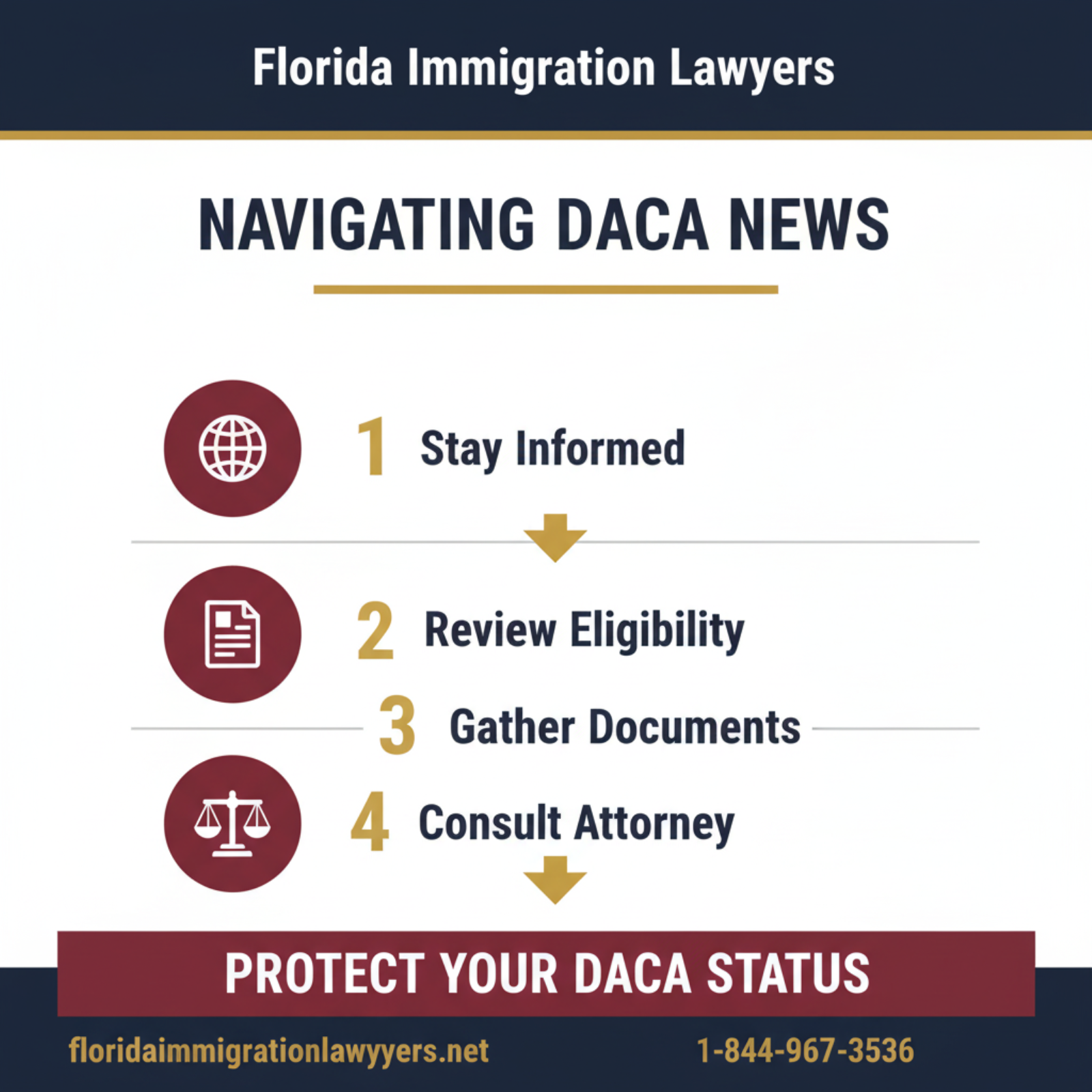
Ensure that all copies are clear and legible. If any documents are not in English, you must provide a certified English translation. Our firm can assist you in compiling and reviewing your documents to ensure completeness and accuracy.
DACA Processing Timelines and Expectations for 2026
The processing times for DACA renewals can vary significantly. While USCIS aims for efficiency, various factors can influence how long it takes to receive a decision. As of 2026, typical processing times for DACA renewals can range from a few weeks to several months. It is not uncommon for some cases to take longer, especially if additional evidence is requested.
Factors that can influence processing times include:
- Volume of Applications: High volumes of applications can naturally lead to longer processing times.
- Completeness of Application: Incomplete applications or those requiring additional evidence (RFE) will experience delays.
- USCIS Workload: General USCIS backlogs or policy shifts can impact all application types.
- Biometrics Appointment: Delays in scheduling or attending your biometrics appointment can hold up your case.
- Background Checks: Any issues or complexities during background checks can extend processing.
You can check your case status online using the receipt number provided by USCIS after they accept your application. It is crucial to monitor this status regularly. If your application is pending for an unusually long time, or if your DACA is nearing expiration, it may be beneficial to consult with an attorney. They can help inquire about your case status or identify potential issues.
Understanding DACA Application and Renewal Cost Factors
Applying for DACA, or renewing it, involves several costs that applicants should be prepared for. These fees are subject to change by USCIS and are non-refundable, even if your application is denied.
- USCIS Filing Fees: The primary cost is the combined fee for Form I-821D and Form I-765. This fee covers the cost of processing your application and the biometrics services. It is important to check the USCIS website for the most current fee schedule, as these amounts can be updated periodically.
- Legal Fees: While it is possible to file DACA applications yourself, many individuals choose to hire an immigration lawyer. Legal fees cover the attorney's expertise in preparing your application, reviewing documents, addressing potential issues, and representing you. This investment can significantly increase the likelihood of a smooth and successful process.
- Translation Costs: If any of your supporting documents are not in English, you will need to obtain certified English translations. These services incur additional costs.
- Document Retrieval Costs: You may incur costs to obtain official records such as birth certificates, school transcripts, or medical records if you do not already possess them.
- Passport Photos: You will need to budget for professional passport-style photographs.
USCIS does offer fee waivers for Form I-765 in certain limited circumstances, typically for individuals who meet specific poverty guidelines or are experiencing extreme financial hardship. However, fee waivers for the Form I-821D itself are generally not available. If you believe you may qualify for a fee waiver, you must submit Form I-912 with compelling evidence. An attorney can help you determine eligibility and prepare this request.
Do not navigate this process alone. Contact Florida Immigration Lawyers today for expert guidance on your DACA application or renewal.
Common Mistakes DACA Applicants Must Avoid in Florida
Even a minor error in your DACA application or renewal can lead to significant delays, a Request for Evidence (RFE), or even a denial. In Florida's current immigration climate, avoiding these common pitfalls is more critical than ever.
- Filing Late: Failing to submit your renewal application within the recommended 120-150 day window before expiration can lead to a lapse in your DACA status and EAD. This means you could lose your job and be vulnerable to deportation.
- Incomplete Forms: Leaving fields blank or failing to answer all questions truthfully on Form I-821D and Form I-765. USCIS will likely reject or deny incomplete applications.
- Incorrect Fees: Submitting the wrong fee amount, an expired check, or failing to include a payment can result in the return of your entire application packet. Always verify current fees on the USCIS website.
- Lack of Sufficient Supporting Documentation: Not providing enough evidence of continuous residence or other eligibility criteria. While renewals require less initial documentation, having proof readily available is essential.
- Failure to Disclose Criminal History: Omitting or misrepresenting any past arrests, citations, or convictions, even minor ones. This can lead to a finding of a lack of good moral character and a denial, potentially triggering removal proceedings. (Refer to INA § 212(a) for inadmissibility grounds).
- Incorrect Mailing Address: Sending your application to the wrong USCIS lockbox facility. Always double-check the USCIS website for the correct mailing address based on your form and state of residence.
- Ignoring Requests for Evidence (RFEs): Not responding promptly and thoroughly to an RFE from USCIS. Failure to provide requested information by the deadline will almost certainly result in a denial.
- Not Updating Address with USCIS: Failing to inform USCIS of a change of address within 10 days of moving. This can lead to missed notices and important correspondence, jeopardizing your case. (As per 8 CFR § 103.2(b)(19)).
- Traveling Without Advance Parole: DACA status does not automatically grant permission to travel outside the U.S. Doing so without approved Advance Parole (Form I-131) can result in being denied re-entry into the U.S. and the termination of your DACA.
- Assuming Eligibility Based on Past Approval: Eligibility criteria can change, and past approval does not guarantee future approval, especially if there have been significant life events or legal changes.
- Signing Forms Incorrectly: Forgetting to sign forms or signing in the wrong place. Unsigned forms are typically rejected immediately.
- Submitting Original Documents (Unless Requested): Generally, only send copies of supporting documents unless USCIS specifically requests originals. Originals may not be returned.
When to Seek Legal Counsel for Your DACA Case in Florida
While some DACA renewals may seem straightforward, the program's unstable legal status and Florida's unique enforcement environment make legal counsel invaluable. Florida Immigration Lawyers is here to provide the expert support you need.
You should strongly consider contacting our firm if any of the following apply to your situation:
- You are filing an initial DACA application: Although new applications are generally not accepted, if a court order or policy change opens the door, expert guidance is crucial.
- You have a criminal history: Even minor arrests or convictions can impact your DACA eligibility or renewal. Our deportation defense attorneys can assess your record and advise on potential risks.
- You have had a lapse in your DACA status: If your DACA expired and you are now trying to renew, the process becomes more complicated.
- You have traveled outside the U.S. without Advance Parole: This can have severe consequences for your DACA and re-entry.
- You have received a Request for Evidence (RFE) or Notice of Intent to Deny (NOID): These notices require a specific and timely response that an attorney can best prepare.
- You are unsure about any part of the application process or required documentation: It is better to seek clarification than to make a mistake.
- You are concerned about interactions with ICE or other law enforcement: Our attorneys can provide guidance on your rights and how to protect yourself.
- You are considering other immigration options: DACA recipients may be eligible for other forms of relief, such as family-based immigration or employment-based visas. We can explore these pathways.
Our attorneys regularly represent individuals in immigration courts located throughout Florida, including those serving the Homestead area. We are committed to protecting the rights and futures of Dreamers. Visit our attorneys page to learn more about our team.
About Florida Immigration Lawyers
Florida Immigration Lawyers is a leading immigration law firm dedicated to serving individuals and families across the entire state of Florida. With years of experience and a deep understanding of complex immigration laws, our firm provides compassionate, effective, and results-driven legal representation.
We specialize in a wide range of immigration matters, including DACA renewals, asylum, deportation defense, citizenship, family-based petitions, and business immigration solutions. Our team is committed to guiding our clients through every step of their immigration journey with integrity and professionalism.
Why choose Florida Immigration Lawyers? We pride ourselves on our client-focused approach, our unwavering dedication to justice, and our proven track record of success. We understand the profound impact immigration issues have on your life and your family, and we work tirelessly to achieve the best possible outcomes.
We offer free consultations to discuss your case and are available 24/7 to address your urgent legal needs. Serving all of Florida, including Homestead, Miami, Orlando, and Tampa, we are your trusted legal partners. Contact us today to begin your journey toward a secure future.
Phone: 1-844-967-3536
Website: https://www.floridaimmigrationlawyers.net
Sources and References
- U.S. Citizenship and Immigration Services (USCIS)
- USCIS Forms and Fees
- Form I-131, Application for Travel Document (Advance Parole)
- Executive Office for Immigration Review (EOIR)
- 8 U.S.C. Chapter 12 - Immigration and Nationality Act (INA)
- INA § 212(a) - General Classes of Aliens Ineligible for Visas and Admission
- 8 CFR Part 236 - Procedures for Asylum and Withholding of Removal
- 8 CFR § 103.2(b)(19) - Change of Address Reporting Requirements
This article provides general legal information and is not intended as legal advice. Every case is unique, and outcomes depend on specific facts and circumstances. Immigration laws are complex and subject to change. Contact an attorney for advice about your particular situation.
The future of DACA can be uncertain, but your path forward does not have to be. Let Florida Immigration Lawyers be your guide and advocate. Our team is committed to providing the legal support and peace of mind you deserve. Take the first step towards securing your future.
Call us today for a free consultation at 1-844-967-3536. Se Habla Español - Estamos aquí para ayudarle.
Frequently Asked Questions
Florida Immigration Lawyers
Legal Team
Our experienced attorneys at Florida Immigration Lawyers have been serving clients across Florida for over 20 years. We specialize in immigration, personal injury, criminal defense, workers compensation, and family law.