Oxford Historian Faces Deportation: Your Florida Immigration Guide
An Oxford historian's deportation case in Florida highlights the critical need for expert immigration defense. This guide covers the removal process, legal defenses, essential documents, timelines, and costs involved. Learn how a Florida immigration lawyer can protect your rights and help you navigate the complex USCIS process. Avoid common mistakes and understand when to seek legal help to secure your future in the U.S. Our firm offers comprehensive deportation defense services across Florida, including Gainesville. Contact Florida Immigration Lawyers for a free consultation.

Facing deportation, as in the case of an Oxford historian in Florida, involves complex legal proceedings. It requires understanding your rights and available defenses. Individuals in removal proceedings often have options like cancellation of removal, asylum, or various waivers. Seeking immediate legal counsel from an experienced immigration attorney is crucial to navigate the process effectively and protect your future in the U.S.
- Deportation cases are complex and require immediate legal action.
- Various defenses like asylum or cancellation of removal may be available.
- Gathering comprehensive documentation is essential for your defense.
- Timelines can be lengthy and vary based on court backlogs.
- Always consult a Florida immigration lawyer for personalized advice.
Imagine dedicating years to academic pursuits, building a life, and contributing to your community, only to face the daunting prospect of deportation. This is the challenging reality for many, including an Oxford historian reportedly facing removal proceedings here in Florida. The news highlights the profound impact that immigration enforcement can have on individuals and their families, regardless of their contributions.
Understanding the intricacies of deportation law is vital if you or a loved one find yourselves in a similar situation. The process can be overwhelming, filled with legal jargon and strict deadlines. However, you are not alone in this fight. This comprehensive guide will illuminate the path forward, explaining the deportation process, your potential defenses, and how expert legal assistance can make a critical difference. For immediate guidance and to discuss your unique circumstances, call Florida Immigration Lawyers at 1-844-967-3536 for a free consultation. Our dedicated team is ready to help you understand your options.
Understanding Deportation Proceedings in Florida
The term "deportation" refers to the formal removal of a non-citizen from the United States. This legal process, officially known as "removal proceedings," is initiated by the Department of Homeland Security (DHS) when they believe an individual is inadmissible or deportable under U.S. immigration law. Cases like that of an Oxford historian facing deportation underscore that anyone, even those with significant community ties, can find themselves in this challenging situation.
Florida, with its diverse population and numerous ports of entry, sees a substantial number of removal cases annually. Immigration courts across the state, including those in Miami, Orlando, and Pompano Beach, handle these proceedings. The specific reasons for removal can vary widely, from visa overstays and unlawful entry to criminal convictions. It is critical to grasp the legal grounds for deportation to build an effective defense.
Common Grounds for Deportation
Several factors can lead to removal proceedings. These often include remaining in the U.S. beyond an authorized period or violating the terms of a visa. Engaging in certain criminal activities, even minor ones, can also trigger deportation. Additionally, committing immigration fraud or misrepresentation can have severe consequences.
Other grounds may involve national security concerns or being deemed a public charge. Understanding the specific charge against you is the first step in formulating a defense strategy. An experienced Florida immigration lawyer can help you decipher the Notice to Appear (NTA) and explain the allegations.
The Role of Immigration Courts in Florida
Florida hosts several Executive Office for Immigration Review (EOIR) courts, which are part of the Department of Justice. These courts are where removal proceedings are heard by Immigration Judges. The decisions made in these courts significantly impact the lives of individuals and families across the state.
The sheer volume of cases means that dockets are often backlogged, leading to lengthy processing times. Navigating these courts requires a deep understanding of immigration law and courtroom procedures. Having a legal advocate familiar with the local court system in Gainesville and other Florida regions is a distinct advantage.
Navigating the Deportation Defense Process: A Step-by-Step Guide
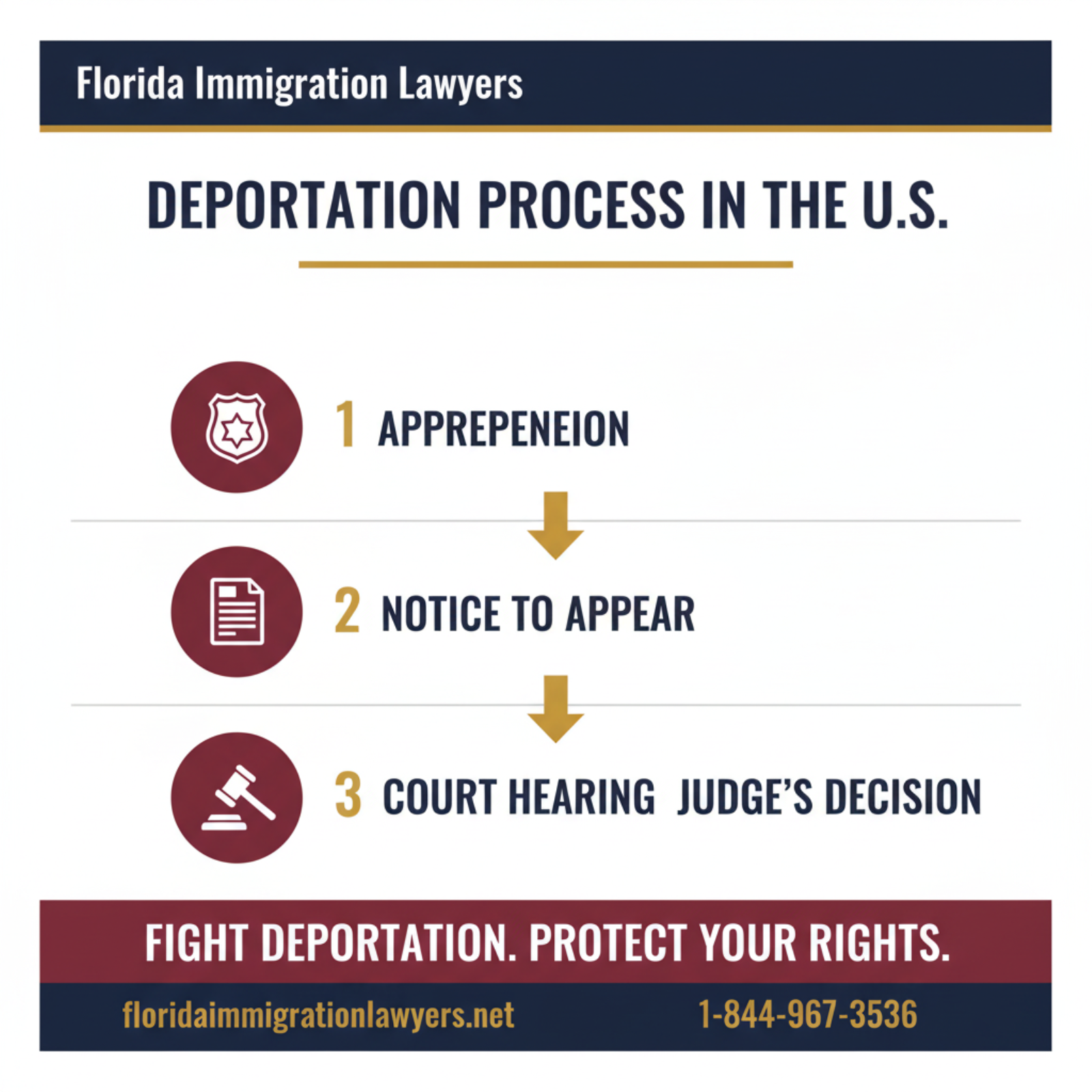
Facing removal proceedings can feel like an uphill battle, but a structured approach can help. The process typically begins with a Notice to Appear (NTA), which formally charges an individual with being removable from the U.S. This document outlines the legal reasons for the government's action.
Each step in the deportation defense Florida process presents opportunities to present your case and argue for relief. A knowledgeable attorney will guide you through each stage. They will help you understand your rights and develop a robust legal strategy.
- Receipt of the Notice to Appear (NTA): This official document from DHS initiates removal proceedings. It specifies the alleged violations of immigration law and the date for your first court appearance, known as the Master Calendar Hearing. It is crucial not to ignore this document and to seek legal advice immediately upon receipt.
- Master Calendar Hearing (MCH): This is your initial appearance before an Immigration Judge. During the MCH, you will formally admit or deny the allegations in the NTA and state whether you concede removability. This is also when you inform the court of your intent to seek any forms of relief from removal, such as asylum or cancellation of removal.
- Pleading to the Charges and Identifying Relief: Your attorney will advise you on how to plead to the charges of removability. If you admit the charges, the focus shifts entirely to seeking relief. If you deny them, the government must prove its case, which can lead to a more complex evidentiary hearing.
- Individual Hearing (Merits Hearing): If you are seeking relief from removal, an Individual Hearing will be scheduled. This is essentially a trial where you and your attorney present evidence, call witnesses, and provide testimony to support your application for relief. The government also presents its case and can cross-examine you and your witnesses.
- Decision by the Immigration Judge: After all evidence and arguments are presented, the Immigration Judge will issue a decision. They may grant your application for relief, allowing you to remain in the U.S., or deny it, ordering your removal. This decision is a critical juncture in your case.
- Appeals Process: If the Immigration Judge denies your case, you generally have the right to appeal the decision to the Board of Immigration Appeals (BIA). The BIA reviews the judge's decision for legal or factual errors. Further appeals may be possible to a federal Circuit Court of Appeals, though these are more complex and less common.
Available Defenses and Forms of Relief
There are various legal avenues to fight deportation. These include applying for asylum if you fear persecution in your home country. Another common defense is cancellation of removal, which may be available to long-term residents with qualifying relatives. Waivers of inadmissibility or deportability are also options in specific circumstances.
Each form of relief has stringent eligibility requirements. Your Gainesville immigration help lawyer will assess your situation to determine which defenses apply to your case. They will help you gather the necessary evidence and prepare a compelling argument.
Essential Documents for Your Deportation Case
A strong deportation defense hinges on thorough documentation. Organizing and presenting the correct documents is paramount to supporting your claims for relief. The specific documents required will depend on the type of relief you are seeking and the grounds for your removal.
Failing to provide comprehensive and accurate documentation can significantly weaken your case. Your legal team at Florida Immigration Lawyers will work with you to compile every necessary piece of evidence. This meticulous approach is vital for any successful USCIS process or immigration court proceeding.
- Personal Identification Documents: Passport, birth certificate, national ID, marriage certificate, divorce decrees.
- Immigration Documents: I-94 arrival/departure records, visas, previous immigration applications (I-130, I-485, etc.), notices from USCIS or immigration court (NTA, hearing notices).
- Proof of Residence and Ties to the U.S.: Lease agreements, utility bills, property deeds, tax returns (multiple years), school records for children, employment history, bank statements, affidavits from friends, family, and community leaders.
- Financial Documents: Pay stubs, employment letters, tax returns, bank statements, proof of health insurance.
- Medical Records: If seeking relief based on medical conditions or hardship, provide relevant medical evaluations, diagnoses, and treatment plans.
- Criminal Records: Certified copies of all arrest records, court dispositions, and sentencing documents, even for minor offenses. This is critical for assessing eligibility for certain waivers.
- Proof of Hardship: If applying for cancellation of removal or a waiver, gather evidence demonstrating extreme and unusual hardship to qualifying U.S. citizen or LPR relatives. This includes medical reports, psychological evaluations, school records, and financial dependency proof.
- Affidavits and Character Letters: Sworn statements from individuals attesting to your good moral character, community involvement, and the hardship they would face if you were deported.
- Police Clearances: Background checks from all places you have lived, both in the U.S. and abroad, if requested.
- Asylum-Specific Documents: If seeking asylum, provide detailed statements of persecution, corroborating evidence (news articles, human rights reports, medical records of abuse), and any documentation supporting your claim.
Timeline and Processing Expectations for Deportation Cases in Florida
The duration of a deportation case can vary dramatically, ranging from several months to several years. Factors such as the complexity of your case, the type of relief sought, and the caseload of the specific immigration court in Florida will all influence the timeline. The immigration courts in Miami, Orlando, and Pompano Beach often experience significant backlogs.
Understanding these potential delays is important for managing expectations. While some straightforward cases might resolve quicker, many individuals facing removal, like an Oxford historian facing deportation, should prepare for a prolonged legal battle. Your attorney can provide a more personalized estimate based on current court schedules.
Factors Affecting Case Duration
The length of your case can be influenced by several factors. These include the availability of court dates, the need for multiple hearings, and the time required to gather extensive evidence. The judge's schedule, government attorney availability, and any appeals also play a significant role.
Changes in immigration policy or judicial priorities can also impact processing times. Your Florida immigration lawyer will keep you informed of any relevant developments. They will also advise on strategies to potentially expedite certain aspects of your case where possible.
What to Expect During the Process
During your case, you will likely attend multiple hearings. These include Master Calendar Hearings and potentially one or more Individual Hearings. You may also need to attend interviews with USCIS if your defense involves an application adjudicated by them, such as asylum.
Patience is a virtue in immigration court. While the process can be slow and emotionally taxing, remaining compliant with all court orders and deadlines is crucial. Your legal team will ensure you are prepared for every step, providing Gainesville immigration help and support throughout.
Cost Factors and Legal Fees for Deportation Defense
The financial aspect of a deportation defense can be a significant concern for many individuals. Legal fees for immigration cases vary widely depending on the complexity of the case, the experience of the attorney, and the amount of work involved. It is important to remember that investing in quality legal representation can often be the difference between remaining in the U.S. and being deported.
Beyond attorney fees, there may be other costs involved. These can include government filing fees for various applications for relief, such as an application for cancellation of removal or asylum. While we cannot provide specific amounts here as they are subject to change, your attorney will outline all potential costs upfront.
Understanding Attorney Fees
Legal fees for deportation cases are typically structured as a flat fee for specific stages of the process or an hourly rate, especially for complex or prolonged cases. A reputable Florida immigration lawyer will provide a clear fee agreement outlining all services covered and associated costs. This ensures transparency and helps you plan financially.
Initial consultations, like the free one offered by Florida Immigration Lawyers, are an excellent opportunity to discuss fees. We believe in making quality legal representation accessible. Our team will explain all financial commitments clearly, allowing you to focus on your defense strategy.
Additional Costs to Consider
Beyond attorney fees and government filing fees, you might encounter other expenses. These can include costs for obtaining certified copies of documents, translation services for foreign language documents, or expert witness fees if specialized testimony is required. Travel expenses to court hearings, especially for those living outside of major metropolitan areas like Gainesville, should also be factored in.
It is wise to budget for these potential additional costs when planning your deportation defense. Your legal team will strive to minimize these expenses where possible, focusing on efficient and effective representation. We are committed to providing comprehensive deportation defense Florida services.
Do not navigate this complex process alone. The stakes are incredibly high when facing deportation, and expert legal guidance is indispensable. Contact Florida Immigration Lawyers today to schedule your free consultation and explore your defense options.
Common Mistakes to Avoid in Deportation Cases
Navigating a deportation case is fraught with potential pitfalls. Even a seemingly minor error can have severe consequences, jeopardizing your ability to remain in the U.S. Awareness of these common mistakes is the first step in avoiding them. Protecting your future requires diligence and careful adherence to legal advice.
- Ignoring a Notice to Appear (NTA): Failing to appear for your scheduled court hearing, or even acknowledging receipt of the NTA, can lead to an order of removal "in absentia." This means you could be deported without ever having the chance to present your case. Always respond promptly and seek legal counsel immediately.
- Misrepresenting Facts or Lying to Immigration Officials: Any false statements or misrepresentations made to USCIS, ICE, or an Immigration Judge can be deemed immigration fraud. This can lead to permanent bars from future immigration benefits and severely damage your credibility in court. Honesty is always the best policy, even if it means admitting uncomfortable truths.
- Missing Deadlines: Immigration law is strict about deadlines for filing applications, submitting evidence, and appealing decisions. Missing a deadline, even by a day, can result in the automatic denial of your case or the waiver of your right to appeal. A Florida immigration lawyer will help you track and meet all critical dates.
- Not Seeking Legal Counsel: Attempting to represent yourself in immigration court is a significant risk. Immigration law is incredibly complex, and the government will have experienced attorneys arguing against you. A lawyer brings expertise, strategic thinking, and advocacy that is nearly impossible for a layperson to replicate.
- Failing to Gather Sufficient Evidence: A strong case relies on compelling evidence. Not providing adequate documentation to support your claims for relief, hardship, or good moral character can lead to a denial. Start collecting every relevant document as early as possible.
- Voluntarily Departing Without Legal Advice: If you are in removal proceedings, agreeing to "voluntary departure" without fully understanding the implications can be a mistake. While it avoids a formal deportation order, it can still have negative consequences, including bars to re-entry, and may not be the best option for your long-term goals.
- Making Public Statements About Your Case: Discussing your case publicly, especially on social media, can inadvertently provide information that the government can use against you. It is best to keep details of your legal strategy private and communicate only through your attorney.
- Failing to Update Your Address with USCIS and EOIR: If you move, it is crucial to update your address with both USCIS and the Executive Office for Immigration Review (EOIR). Failure to do so means you might not receive important notices, including hearing dates, leading to missed appearances and potential "in absentia" orders.
- Committing New Crimes: Even minor infractions while your deportation case is pending can severely undermine your defense. Any new arrests or convictions can introduce new grounds of deportability and make it much harder to obtain relief.
- Not Understanding the Specific Charges Against You: The Notice to Appear (NTA) outlines the specific legal grounds for your removal. Not fully comprehending these charges means you cannot effectively counter them. Your attorney will meticulously review the NTA and explain every allegation.
- Ignoring the Possibility of Appeals: If an Immigration Judge denies your case, the fight is not necessarily over. Many individuals fail to appeal the decision to the Board of Immigration Appeals (BIA) within the strict timeframe, losing a critical opportunity for review.
When to Call a Florida Immigration Lawyer
The moment you suspect you might be in removal proceedings, or receive any notice from immigration authorities, is the moment to contact a lawyer. Proactive legal intervention is often the most effective way to protect your rights and explore all possible defenses. Do not wait until it's too late.
If you or a loved one are an Oxford historian facing deportation or any other individual in Florida dealing with immigration challenges, immediate legal action is paramount. Florida Immigration Lawyers are here to provide the expert Gainesville immigration help you need.
Specific Scenarios Requiring Legal Help
- Receipt of a Notice to Appear (NTA): This is the formal start of your deportation case. An attorney can help you understand the charges and prepare your defense from day one.
- Detention by ICE: If you or a family member are detained by Immigration and Customs Enforcement (ICE), an attorney can work to secure release on bond and begin building a defense.
- Denied Visa or Petition: If your visa application, green card petition, or any other immigration benefit has been denied, it could lead to further immigration issues, including removal proceedings.
- Criminal Charges: Even minor criminal charges can have severe immigration consequences for non-citizens. Consult an immigration lawyer alongside your criminal defense attorney.
- Complex Immigration History: If you have previous orders of removal, multiple entries, or other complicated immigration matters, navigating the system without legal help is extremely risky.
- Seeking Asylum or Other Relief: Applications for asylum, cancellation of removal, or waivers are highly complex and require extensive legal knowledge to prepare and present effectively.
Warning Signs and Red Flags
Any communication from USCIS or ICE that suggests a problem with your immigration status is a red flag. This includes notices of intent to deny, requests for evidence, or any document questioning your right to be in the U.S. Even a simple traffic stop can sometimes lead to immigration scrutiny if you are a non-citizen. Always consult an expert to understand the implications.
Our firm specializes in deportation defense Florida and is committed to providing compassionate yet aggressive representation. We understand the fear and uncertainty you face. Let us be your steadfast advocates, working tirelessly to secure the best possible outcome for your case.
About Florida Immigration Lawyers
Florida Immigration Lawyers is a leading law firm dedicated to providing comprehensive and compassionate immigration legal services across the entire state of Florida. Our team of experienced attorneys understands the complexities of U.S. immigration law and the profound impact it has on individuals and families. We are committed to protecting your rights and helping you achieve your immigration goals, whether you are in Gainesville, Miami, Orlando, or anywhere else in Florida.
We offer a wide range of immigration services, including deportation defense, family-based petitions, business immigration solutions, asylum claims, and citizenship applications. Our attorneys are known for their meticulous attention to detail, strategic thinking, and unwavering advocacy for our clients. We pride ourselves on clear communication and personalized legal strategies tailored to your unique circumstances.
Why Choose Florida Immigration Lawyers?
- Expertise: Our lawyers possess deep knowledge of immigration law, including the intricacies of the USCIS process and immigration court procedures.
- Client-Centered Approach: We prioritize your needs and provide empathetic, responsive legal support throughout your journey.
- Proven Track Record: We have a strong history of successfully representing clients in a variety of complex immigration cases.
- Accessibility: We are available 24/7 to answer your urgent questions and provide support.
- Free Consultations: We offer free initial consultations to discuss your case and outline your options without financial obligation.
Don't face your immigration challenges alone. Contact Florida Immigration Lawyers today.
Phone: 1-844-967-3536
Website: https://www.floridaimmigrationlawyers.net
Serving all of Florida with dedicated and experienced legal representation.
Sources and References
- U.S. Citizenship and Immigration Services (USCIS)
- Executive Office for Immigration Review (EOIR)
- U.S. Immigration and Customs Enforcement (ICE)
- 8 U.S.C. Chapter 12 - Immigration and Nationality Act (INA)
- INA Section 240 - Removal Proceedings
- 8 CFR Part 1240 - Proceedings to Determine Deportability of Aliens in the United States
This article provides general legal information and is not intended as legal advice. Every case is unique, and outcomes depend on specific facts and circumstances. Contact an attorney for advice about your particular situation.
If you are facing deportation or have questions about your immigration status in Florida, time is of the essence. Do not delay in seeking professional legal guidance. Contact Florida Immigration Lawyers today at 1-844-967-3536 for your free, confidential consultation. Our experienced team is here to fight for your rights and provide the robust defense you deserve. Se Habla Español - Estamos aquí para ayudarle.
Frequently Asked Questions
Florida Immigration Lawyers
Legal Team
Our experienced attorneys at Florida Immigration Lawyers have been serving clients across Florida for over 20 years. We specialize in immigration, personal injury, criminal defense, workers compensation, and family law.