Naturalization Ceremony ICE Concerns in Florida: Your Guide
For many aspiring U.S. citizens in Florida, anxieties about potential encounters with Immigration and Customs Enforcement (ICE) can overshadow the joy of a naturalization ceremony. This comprehensive guide addresses your naturalization ceremony ICE concerns directly, providing clear, actionable information to help you navigate the final steps of your citizenship journey. We cover eligibility, the application process, required documents, timelines, costs, and common mistakes to avoid. Learn about your rights and when to seek legal assistance from an experienced immigration lawyer. Florida Immigration Lawyers is dedicated to supporting you through the entire naturalization process, offering free consultations and expert guidance.
While U.S. Citizenship and Immigration Services (USCIS) conducts naturalization ceremonies, concerns about Immigration and Customs Enforcement (ICE) presence can be unsettling for applicants. It is crucial to understand your rights and the procedures governing these events, especially in Florida. Generally, ICE does not target individuals at naturalization ceremonies unless there is a specific, compelling reason, such as an outstanding warrant or a recent criminal conviction. Knowing your legal protections is vital for a smooth process.
- ICE presence at naturalization ceremonies is rare and typically requires specific grounds.
- Knowing your legal rights, including the right to remain silent, is essential.
- Consult an immigration attorney if you have prior immigration issues or criminal history.
- Florida Immigration Lawyers can provide guidance and representation throughout your naturalization journey.
Imagine the culmination of years of effort, the anticipation of becoming a U.S. citizen, only to be overshadowed by anxieties about immigration enforcement. For many aspiring citizens in Florida, including those in Tampa and surrounding areas, the joy of a naturalization ceremony can be mixed with genuine concerns about potential encounters with Immigration and Customs Enforcement (ICE). This apprehension is understandable given evolving immigration policies and past incidents.
Our goal with this comprehensive guide is to address your naturalization ceremony ICE concerns directly. We will provide clear, actionable information to help you navigate the final steps of your citizenship journey with confidence. Understanding your rights and the typical procedures at these ceremonies is key to alleviating stress.
Do not let fear deter you from achieving your American dream. If you have specific worries or a complex immigration history, call Florida Immigration Lawyers at 1-844-967-3536 for a free consultation today. We are here to support you every step of the way.
Understanding Naturalization Ceremony ICE Concerns in Florida
The path to U.S. citizenship through naturalization is a significant milestone. It represents years of dedication and adherence to U.S. laws. While the naturalization ceremony is a moment of celebration, some applicants understandably worry about the presence of ICE, especially given reports of ICE arrests at naturalization ceremony locations in other parts of the country.
It is important to differentiate between USCIS, which handles the naturalization process, and ICE, which enforces immigration laws. Generally, USCIS facilities and naturalization ceremonies are considered "sensitive locations." This policy typically limits enforcement actions by ICE unless there are exigent circumstances, such as immediate danger or a warrant for a serious criminal offense. However, this policy is subject to change and interpretation.
In Florida, USCIS Field Offices, like the one serving the Tampa area, strive to ensure a smooth and respectful process for all applicants. However, individual circumstances can sometimes lead to heightened concerns. If you have any doubts about your specific situation, particularly if you have a past immigration violation or criminal record, seeking legal advice is paramount.
Your journey to becoming a citizen should be one of triumph, not terror. Florida Immigration Lawyers are dedicated to helping you understand the legal landscape and protect your rights during your naturalization ceremony. We serve clients across all of Florida, offering experienced guidance.
The Naturalization Process: A Step-by-Step Guide for Florida Residents
Understanding the full USCIS naturalization process Florida can help alleviate anxiety, including any naturalization ceremony ICE concerns. The process is structured and requires careful attention to detail. Here is a general overview of the steps involved:
- Determine Eligibility: You must meet specific requirements, including age, continuous residency, physical presence, good moral character, English language proficiency, and knowledge of U.S. history and government. For most, this means being a lawful permanent resident for at least five years, or three years if married to a U.S. citizen.
- Prepare and File Form N-400: The Application for Naturalization, Form N-400, is the cornerstone of your application. Ensure all information is accurate and complete. Any discrepancies could cause delays or issues.
- Attend Biometrics Appointment: After filing, you will receive an appointment notice for biometrics. This involves fingerprinting, photographs, and a signature for background checks.
- Complete the Naturalization Interview: A USCIS officer will interview you to verify the information on your N-400, test your English reading, writing, and speaking abilities, and assess your knowledge of U.S. civics. Be truthful and prepared.
- Receive a Decision: Following the interview, USCIS will issue a decision. This could be an approval, a request for more evidence, or a denial. If approved, you will receive a notice for your Oath of Allegiance ceremony.
- Attend the Oath of Allegiance Ceremony: This is the final step where you take the Oath of Allegiance and officially become a U.S. citizen. You will surrender your Permanent Resident Card (Green Card) at this event. This is the stage where "naturalization ceremony ICE concerns" might arise, though as mentioned, direct enforcement actions are rare.
Each step is crucial, and missteps can lead to significant delays or complications. If you need assistance with any part of the USCIS naturalization process Florida, our experienced team at Florida Immigration Lawyers can provide comprehensive support. We help clients from initial application through to the naturalization ceremony.
Navigating Your Naturalization Interview in Tampa
For many Florida residents, the naturalization interview will take place at a USCIS Field Office, such as the one in Tampa. This interview is a critical juncture. Be sure to bring all requested documents and arrive on time. An attorney can accompany you to this interview, offering peace of mind and immediate counsel if unexpected questions arise.
During the interview, the officer will review your application and ask about your background, including any travel history, marital status, and criminal record. They will also administer the English and civics tests. Preparing thoroughly for this interview is essential for a successful outcome.
Essential Documents for Your Naturalization Interview and Ceremony
Proper documentation is vital for a successful naturalization application. Missing or incorrect documents can cause delays or even a denial. Always bring original documents, not just copies, unless specifically instructed otherwise. Here is a general document checklist:
- Your Appointment Notice for the interview or ceremony.
- Your Permanent Resident Card (Green Card).
- Your state-issued identification (e.g., Florida Driver's License or ID card).
- All passports and travel documents you have used since becoming a lawful permanent resident.
- Proof of marital status (e.g., marriage certificate, divorce decrees) if applicable.
- Birth certificates of your children (if applicable).
- Evidence of financial support for dependents (if applicable).
- Tax returns for the past five years (or three years if applying under the 3-year rule).
- Court disposition documents for any arrests, citations, or detentions, even if charges were dismissed or expunged. This is particularly important if you have naturalization ceremony ICE concerns due to past legal issues.
- Proof of selective service registration (for males who resided in the U.S. between ages 18-26).
- Any other documents specifically requested by USCIS in your appointment letter.
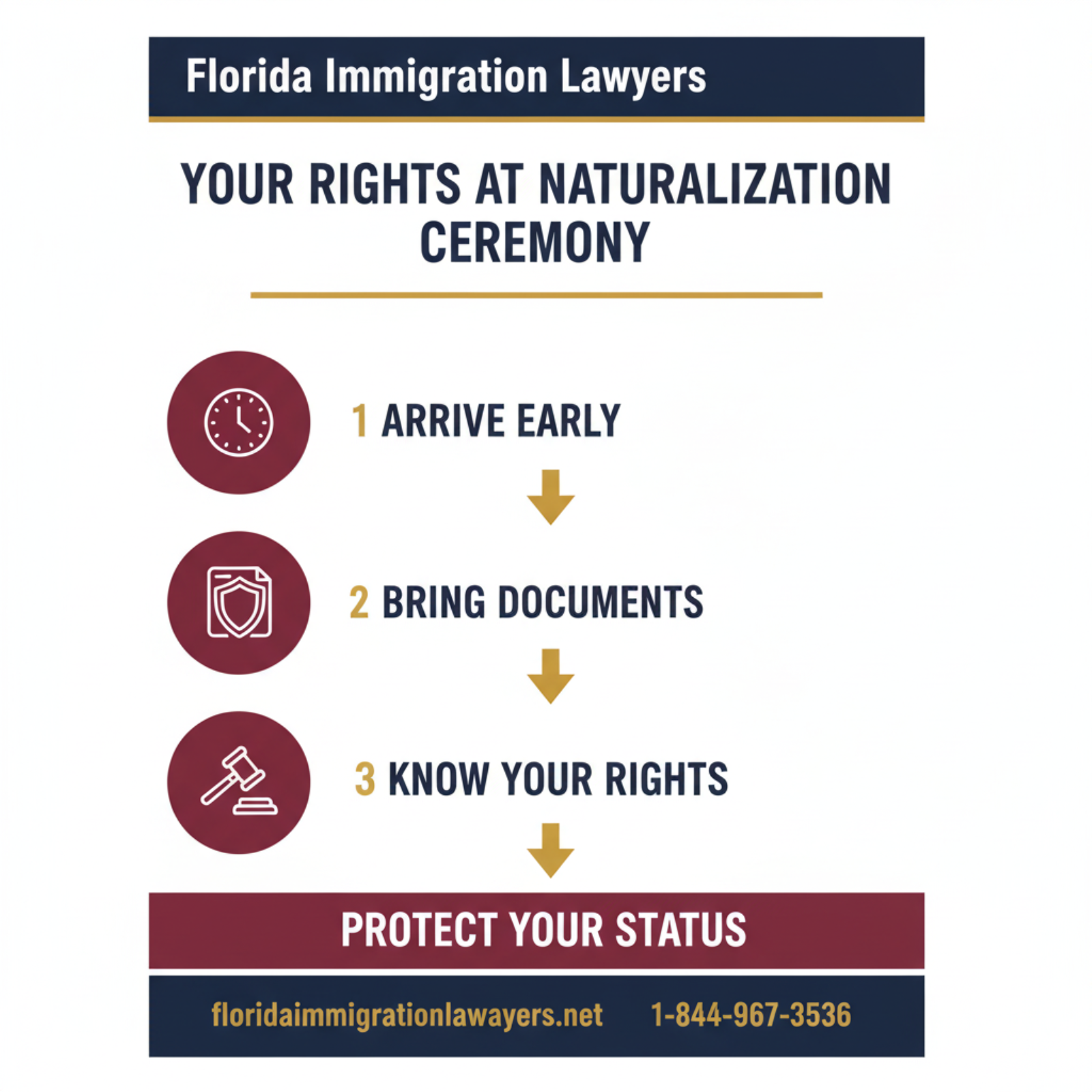
Organizing these documents meticulously will demonstrate your diligence and readiness for citizenship. If you are unsure about any required document, consult with an immigration lawyer Tampa or elsewhere in Florida. We can help you prepare your document portfolio.
Naturalization Timeline and Processing Expectations in Florida
The time it takes to become a U.S. citizen can vary significantly. Processing times are influenced by the specific USCIS Field Office, the complexity of your case, and current caseloads. While it is difficult to provide an exact timeline, here are some general expectations for the USCIS naturalization process Florida:
- Form N-400 Filing to Biometrics Appointment: Typically 3-5 weeks.
- Biometrics to Interview: This can vary widely, from a few months to over a year, depending on the USCIS office. For instance, processing times at the Tampa Field Office might differ from those in Miami or Orlando.
- Interview to Decision: Usually, you will receive a decision notice within 120 days of your interview.
- Decision to Oath Ceremony: If approved, the Oath of Allegiance ceremony can be scheduled anywhere from a few days to several weeks after your interview. Sometimes, it happens on the same day (same-day oath ceremony).
You can check current processing times on the USCIS website for your specific field office. Be aware that unforeseen delays can occur. Patience and thorough preparation are key. If your case experiences unusual delays, or if you have specific naturalization ceremony ICE concerns that might impact your timeline, an experienced immigration lawyer can investigate and advocate on your behalf.
Naturalization Application Costs and Fee Breakdown
Applying for naturalization involves several fees. It is crucial to budget for these costs, as they are non-refundable regardless of the outcome of your application. USCIS fees are subject to change, so always check the official USCIS website for the most current amounts. Generally, the costs include:
- Form N-400 Application Fee: This is the primary fee for processing your naturalization application.
- Biometrics Services Fee: This fee covers the cost of your fingerprint and background checks.
Some applicants may be eligible for a fee waiver or reduced fee if they meet specific income guidelines or receive certain public benefits. It is essential to determine your eligibility for these waivers before filing. Applying for a waiver without meeting the criteria can lead to delays.
Beyond USCIS fees, you might incur other costs. These could include fees for obtaining necessary documents (e.g., birth certificates, marriage licenses), translation services if documents are not in English, and legal fees if you choose to hire an immigration attorney. While legal fees are an additional expense, the expertise of a lawyer can save you time, stress, and potential pitfalls, especially when dealing with complex cases or naturalization ceremony ICE concerns.
The naturalization process is complex, and the stakes are incredibly high. Do not navigate this journey alone, especially with potential naturalization ceremony ICE concerns. Contact Florida Immigration Lawyers today to ensure your application is handled with precision and care. We are here to protect your rights.
Common Mistakes to Avoid During Your Naturalization Journey
Even minor errors can significantly impact your naturalization application, potentially leading to delays, requests for evidence, or even denial. Avoiding these common pitfalls is essential for a smooth process, especially if you have naturalization ceremony ICE concerns.
- Providing Inaccurate or Inconsistent Information: All information on your N-400 must be truthful and consistent with previous immigration applications. Discrepancies can raise red flags and lead to accusations of misrepresentation.
- Failing to Disclose All Arrests or Citations: Even minor incidents, traffic tickets, or expunged records must be disclosed. USCIS has access to extensive databases. Failure to disclose can be seen as a lack of good moral character.
- Not Meeting Residency Requirements: Ensure you meet the continuous residency and physical presence requirements. Extended trips outside the U.S. can break continuous residency.
- Poor Preparation for the Interview: Failing the English or civics test, or being unable to answer questions about your application, can lead to a re-interview or denial. Study thoroughly.
- Ignoring the "Good Moral Character" Requirement: Certain criminal offenses, tax evasion, or failure to pay child support can disqualify you from naturalization. Address these issues proactively.
- Missing Deadlines or Responding Late to RFEs: USCIS provides strict deadlines for submitting documents or responding to Requests for Evidence (RFEs). Missing these can lead to application denial.
- Attending the Ceremony with Unresolved Issues: If you have any pending legal issues or have been advised of potential naturalization ceremony ICE concerns, attending without legal counsel can be risky. Always consult with your attorney first.
These mistakes can be costly. An immigration lawyer Tampa can help you review your application, prepare for your interview, and address any potential issues proactively, minimizing risks and increasing your chances of success.
When to Seek Legal Assistance for Naturalization Concerns
While many naturalization cases proceed smoothly, certain situations warrant the expertise of an immigration lawyer Tampa. Do not hesitate to seek professional help from Florida Immigration Lawyers if you encounter any of these scenarios:
- Prior Criminal History: Even minor arrests or convictions can impact your good moral character assessment. An attorney can advise on how to present your case and mitigate potential issues.
- Past Immigration Violations: Overstays, previous deportations, or other immigration infractions can complicate your naturalization. Legal counsel is essential to understand your eligibility and potential waivers.
- Complex Residency Issues: If you have traveled extensively outside the U.S. or have questions about maintaining continuous residency, an attorney can help calculate your eligibility.
- Received a Request for Evidence (RFE) or Notice of Intent to Deny (NOID): These indicate that USCIS has concerns about your application. Responding correctly requires legal expertise.
- Concerns about "Naturalization Ceremony ICE Concerns": If you have specific reasons to fear an encounter with ICE at your ceremony, such as a pending removal order, an outstanding warrant, or a recent criminal conviction, consult an attorney immediately. They can assess your risk and advise on the safest course of action.
- Difficulty with English or Civics Test: While waivers exist for certain individuals, if you struggle with the tests, an attorney can explain your options and help you prepare.
Florida Immigration Lawyers offers comprehensive legal services for all aspects of the naturalization process. We are well-versed in the complexities of U.S. immigration law and the specific challenges faced by immigrants in Florida. Our team can represent you at interviews, help prepare documents, and provide strategic advice to ensure your rights are protected. We serve clients across Florida, including Tampa, Miami, Orlando, and Jacksonville, offering dedicated support for your journey to citizenship.
About Florida Immigration Lawyers
Florida Immigration Lawyers is a leading law firm dedicated to providing exceptional legal representation to individuals and families throughout Florida. With a deep understanding of U.S. immigration law, our experienced attorneys are committed to helping you achieve your immigration goals, from family petitions to complex deportation defense cases.
We believe in compassionate advocacy and personalized service. Our firm offers a wide range of immigration services, including citizenship and naturalization, family-based immigration, business immigration, asylum claims, and deportation defense. We understand the anxieties associated with the immigration process, including naturalization ceremony ICE concerns, and we are here to provide clarity and support.
Choose Florida Immigration Lawyers because we offer:
- Experienced Attorneys: Our team possesses extensive knowledge of immigration law.
- Client-Centered Approach: Your goals and concerns are our top priority.
- Bilingual Services: We offer services in English and Spanish to better serve our diverse community.
- Free Consultations: Discuss your case without financial commitment.
- 24/7 Availability: We are here when you need us most.
Visit our website at https://www.floridaimmigrationlawyers.net or call us anytime at 1-844-967-3536 to schedule your free consultation. Let us be your trusted partner in your immigration journey. You can also learn more about our team on our attorneys page.
Frequently Asked Questions (FAQs)
Many applicants have similar questions regarding their naturalization journey and potential encounters with immigration enforcement. Here are answers to some common inquiries, addressing naturalization ceremony ICE concerns and related topics:
Do naturalized citizens have to worry about ICE?
Once you are a naturalized U.S. citizen, you generally do not have to worry about ICE. Naturalized citizens have the same rights and protections as native-born citizens. You cannot be deported for acts committed before or after naturalization, except in very rare cases of denaturalization due to fraud or misrepresentation during the application process. This is exceedingly rare and requires a high legal burden of proof from the government. Concerns about deportation after naturalization are typically unfounded for legitimate citizens.
Can ICE deport you if you are a naturalized citizen?
No, ICE cannot deport you if you are a naturalized U.S. citizen. Citizenship is generally considered permanent. The only exception is if your naturalization was obtained illegally, for example, through fraud or willful misrepresentation of material facts. In such extreme cases, the government would have to go through a denaturalization process in federal court, which is a lengthy and difficult legal proceeding (8 U.S.C. § 1451). This is not a typical naturalization ceremony ICE concerns scenario.
What is the 3-3-3 rule for citizenship?
The "3-3-3 rule" is a common way to remember some of the key requirements for naturalization, though it's not an official rule. It typically refers to:
- 3 years of continuous residence if you are married to and living with a U.S. citizen and meet other eligibility requirements (INA Section 319).
- 3 months of residence in the state or USCIS district where you file your application. For example, if you live in Tampa, you must have resided in Florida for at least three months.
- 3 years of good moral character before filing, though USCIS typically reviews your character for five years (or three years if married to a U.S. citizen) prior to filing.
It is important to consult the official USCIS guidelines or an attorney to confirm all eligibility criteria (8 CFR Part 316).
What not to say during a citizenship interview?
During a citizenship interview, it is crucial to be truthful and respectful. However, you should avoid:
- Lying or misrepresenting facts: Any false statements can lead to a denial and potentially more serious immigration consequences.
- Providing unsolicited information: Answer the officer's questions directly and concisely. Do not volunteer extra details unless asked, as this can confuse the process.
- Expressing disloyalty to the U.S.: The Oath of Allegiance requires a commitment to the U.S. Constitution. Avoid statements that contradict this loyalty.
- Admitting to crimes you did not commit: If questioned about past incidents, state the facts truthfully. If you are unsure or have a complex legal history, you have the right to consult with your attorney during the interview.
Always remember that you have the right to legal counsel. If you are uncomfortable answering a question, you can state that you would like to speak with your attorney. This is especially important if you have naturalization ceremony ICE concerns due to a complex past.
Sources and References
- U.S. Citizenship and Immigration Services (USCIS)
- Executive Office for Immigration Review (EOIR)
- 8 U.S.C. Chapter 12 - Immigration and Nationality Act (INA)
- INA Section 316 - Requirements for Naturalization
- INA Section 319 - Spouses of U.S. Citizens
- 8 CFR Part 316 - General Requirements for Naturalization
- USCIS Policy Manual, Volume 12 - Citizenship and Naturalization
This article provides general legal information and is not intended as legal advice. Every case is unique, and outcomes depend on specific facts and circumstances. Contact an attorney for advice about your particular situation.
Your journey to U.S. citizenship is a momentous one. Do not let naturalization ceremony ICE concerns or the complexities of immigration law deter you. Florida Immigration Lawyers is here to provide the expert legal guidance and support you deserve. We are available 24/7 to answer your questions and offer a free consultation.
Call us today at 1-844-967-3536. Se Habla Español - Estamos aquí para ayudarle.
Need help with Immigration?
Our Florida immigration attorneys offer free consultations. Call today or schedule online.
Frequently Asked Questions
Florida Immigration Lawyers
Legal Team
Our experienced attorneys at Florida Immigration Lawyers have been serving clients across Florida for over 20 years. We specialize in immigration, personal injury, criminal defense, workers compensation, and family law.