Naturalization Ceremony Locations and Schedule 2026
The naturalization ceremony is the final, pivotal step to becoming a U.S. citizen. For those in Florida awaiting their Oath of Allegiance in 2026, understanding the locations, schedules, and preparation required is essential. USCIS provides individual notices (Form N-445) detailing specific ceremony information, typically held at federal courthouses or USCIS field offices in cities like Orlando, Miami, Tampa, and Jacksonville. This guide covers the step-by-step process, essential documents, typical timelines, and common mistakes to avoid. While there are no direct ceremony fees, applicants should be aware of overall naturalization costs and post-ceremony steps like applying for a U.S. passport and registering to vote. Florida Immigration Lawyers offers expert assistance to ensure a smooth and successful transition to U.S. citizenship.
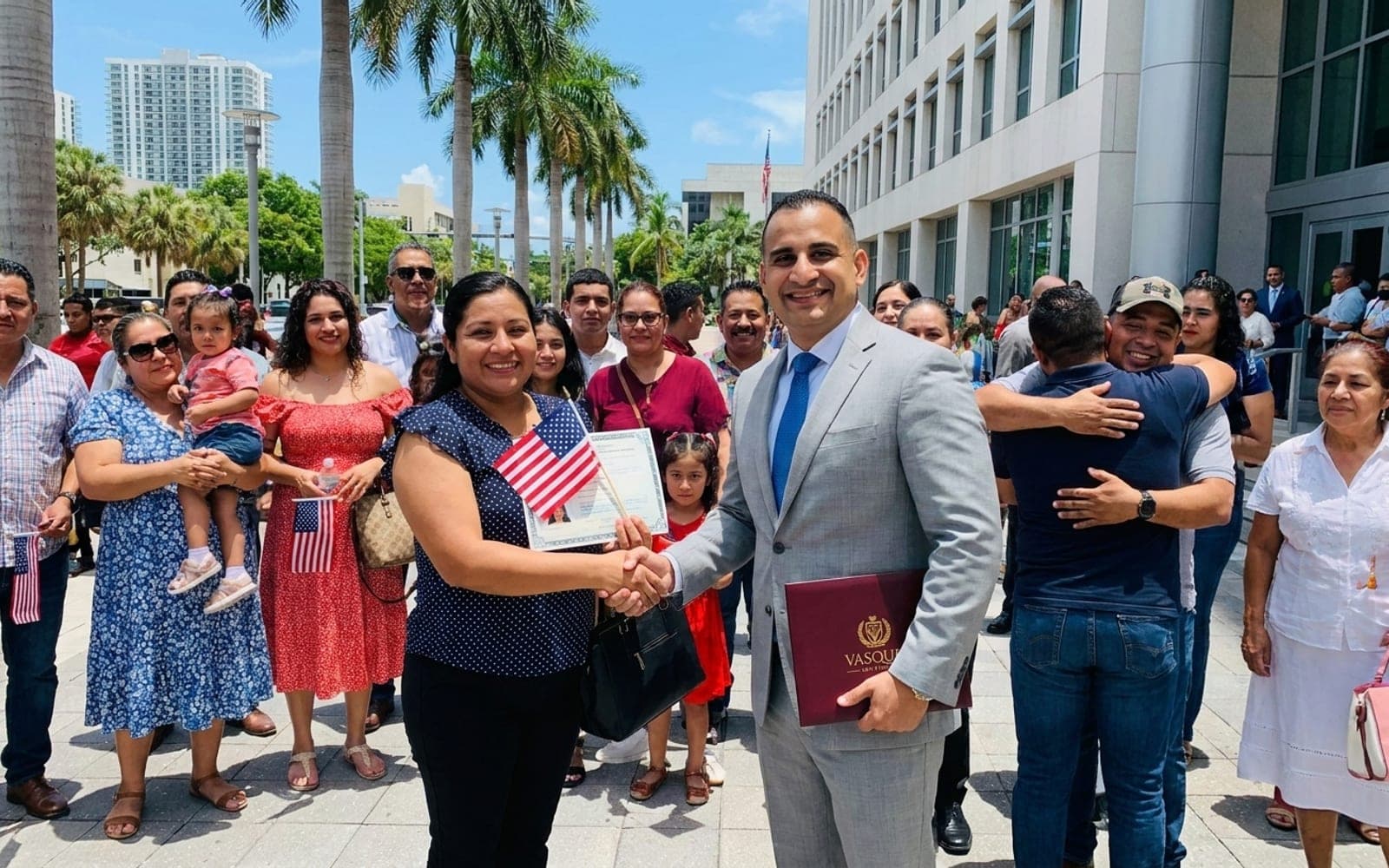
Naturalization ceremony locations and schedules for 2026 in Florida are primarily managed by U.S. Citizenship and Immigration Services (USCIS) field offices, with ceremonies often held at federal courthouses or designated USCIS facilities. Applicants receive an official notice (Form N-445, Notice of Naturalization Oath Ceremony) detailing the specific date, time, and location, typically within a few weeks of their naturalization interview approval. While specific schedules are not publicly posted due to varying processing times, ceremonies are held regularly across major Florida cities like Orlando, Miami, Tampa, and Jacksonville to accommodate new citizens.
- USCIS sends official ceremony notices (Form N-445) to approved applicants.
- Ceremonies occur regularly at federal courthouses or USCIS offices in Florida.
- Locations include Orlando, Miami, Tampa, and Jacksonville.
- Applicants must attend their scheduled ceremony to complete the naturalization process.
- Contact USCIS or an attorney if you need to reschedule or have questions.
Becoming a U.S. citizen is a profound milestone, representing the culmination of years of dedication and often, a long journey. For many, the naturalization ceremony, where you take the Oath of Allegiance, is the most anticipated moment. If you've reached this stage, you're likely eager to know the naturalization ceremony locations and schedule 2026 in Florida. Understanding when and where these ceremonies take place, what to expect, and how to prepare is crucial for a smooth transition to U.S. citizenship. This comprehensive guide from Florida Immigration Lawyers will walk you through everything you need to know about the final step in becoming an American citizen, focusing on the process within our vibrant state.
The path to citizenship can be complex, but arriving at the oath ceremony means you are just moments away from achieving your dream. Whether you reside in Orlando, Central Florida, or elsewhere in the state, preparing for this final event is key. Do not navigate this significant process alone. Call Florida Immigration Lawyers at 1-844-YO-PELEO for a free case review and expert guidance on your naturalization journey, ensuring you are fully prepared for this momentous occasion.
What is Naturalization and Why is the Oath Ceremony Important?
Naturalization is the process by which a foreign citizen or national voluntarily becomes a U.S. citizen. It represents the highest status of immigration, granting individuals full rights and responsibilities within the United States, including the right to vote, hold a U.S. passport, and petition for certain family members. The legal framework for naturalization is primarily found in the Immigration and Nationality Act (INA), specifically Title III of the INA (8 U.S.C. Chapter 12), which outlines eligibility requirements such as continuous residence, good moral character, and an understanding of U.S. history and government. As of 2026, these fundamental principles remain the bedrock of U.S. citizenship law.
The naturalization oath ceremony is not merely a formality; it is a legally required and symbolically significant event. During the ceremony, applicants take the Oath of Allegiance, publicly renouncing allegiance to any foreign state and pledging loyalty to the United States. This oath is the final step in the naturalization process, without which citizenship cannot be conferred. It’s a moment of profound personal significance and public commitment, often attended by family and friends. For many new citizens in Florida, particularly in diverse areas like Orlando, it's a powerful affirmation of their new identity and belonging within the community, marking the end of one journey and the beginning of another as a full member of American society. The ceremony reinforces the values of democracy and civic participation.
The ceremony also serves as an opportunity for USCIS to ensure all conditions for naturalization are still met. Before taking the oath, applicants typically confirm that they have not committed any acts that would disqualify them from citizenship since their interview. This final check is critical for maintaining the integrity of the naturalization process. Understanding the importance of this ceremony helps applicants approach it with the solemnity and preparation it deserves, ensuring a smooth and successful transition to U.S. citizenship.
How Do I Find Naturalization Ceremony Locations and Schedule 2026 in Florida?
Finding specific naturalization ceremony locations and schedules for 2026 in Florida is not done through a public, fixed calendar. Instead, USCIS directly notifies eligible applicants of their individual ceremony details. After your naturalization interview (Form N-400, Application for Naturalization), if approved, USCIS will mail you a Form N-445, Notice of Naturalization Oath Ceremony. This official notice will specify the exact date, time, and location of your ceremony. As of 2026, these notices are the definitive source of information for your ceremony.
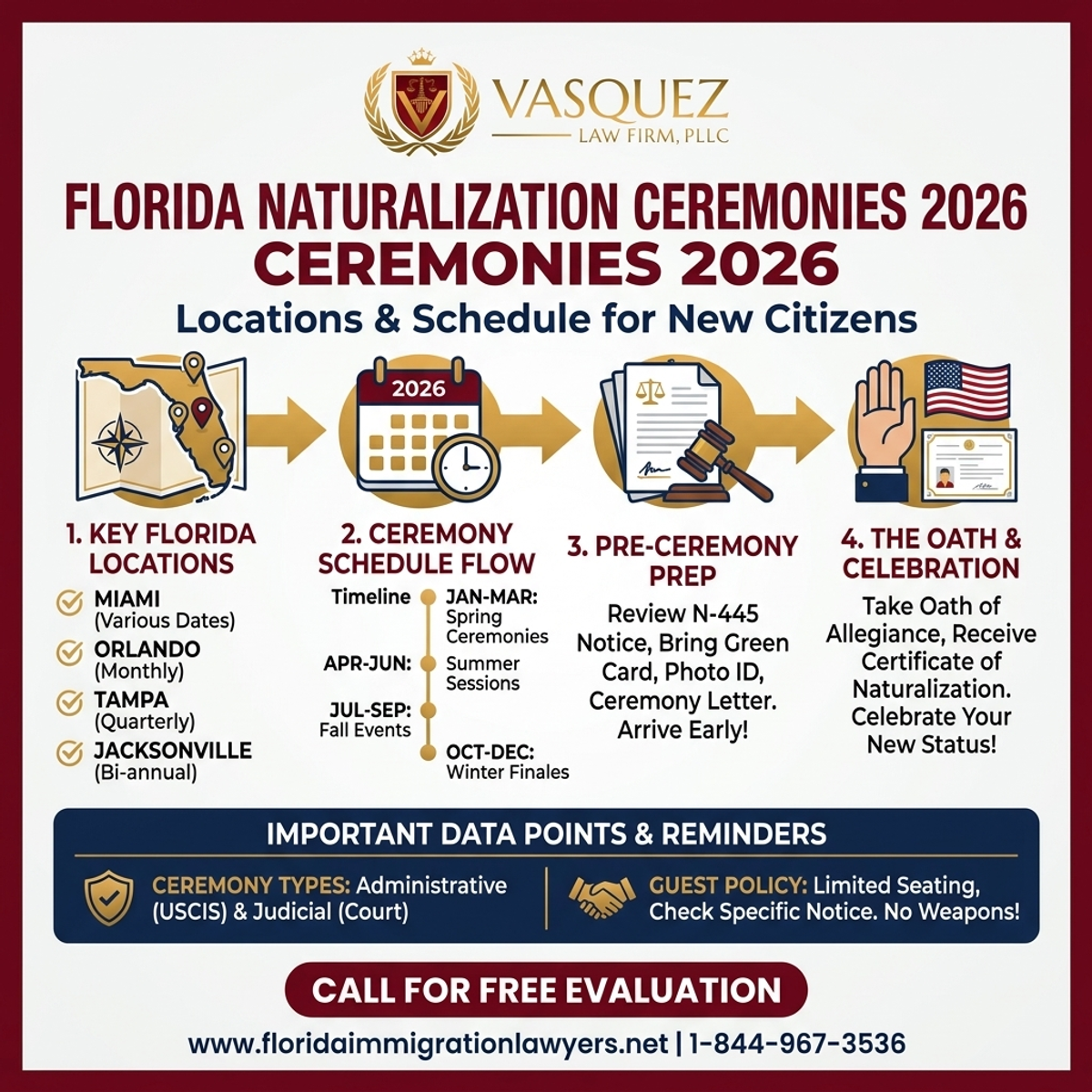
In Florida, naturalization ceremonies are typically held at USCIS field offices or federal courthouses. Key USCIS field offices that conduct ceremonies include:
- Orlando Field Office: Serving Central Florida, including applicants from Orlando, Kissimmee, and surrounding counties. Ceremonies may be held at the federal courthouse in Orlando or at the USCIS office itself.
- Miami Field Office: Serving South Florida, including Miami-Dade, Broward, and Palm Beach counties. Ceremonies are frequently held at the federal courthouse in Miami.
- Tampa Field Office: Serving the greater Tampa Bay area and Southwest Florida. Ceremonies often take place at the federal courthouse in Tampa.
- Jacksonville Field Office: Serving North Florida. Ceremonies may be held at the federal courthouse in Jacksonville.
The frequency of ceremonies depends on the volume of approved applications in each jurisdiction. USCIS aims to schedule ceremonies promptly after approval. If you have not received your N-445 within a few weeks of your interview approval, or if you need to reschedule due to an emergency, it is crucial to contact USCIS directly through their website or by calling their National Customer Service Center. Consulting with an experienced attorney from Florida Immigration Lawyers can also provide invaluable assistance in navigating any delays or issues with your ceremony notice, ensuring you don't miss this critical step.
What is the Naturalization Ceremony Process Step-by-Step?
The naturalization ceremony process is straightforward, but knowing the steps involved can help alleviate any anxiety and ensure you are fully prepared for this momentous occasion. As of 2026, the general steps remain consistent across all USCIS jurisdictions in Florida. Understanding each stage will help you anticipate what to expect on your special day. This process is designed to be efficient while upholding the solemnity and legal requirements of becoming a U.S. citizen.
-
Receive Form N-445, Notice of Naturalization Oath Ceremony: This is your official invitation. It specifies the date, time, and location. Read it carefully as it also contains instructions on what to bring and what forms to complete.
-
Complete Form N-445 Back Side: Before the ceremony, you must truthfully answer a series of questions on the back of Form N-445. These questions confirm that nothing has happened since your interview that would disqualify you from naturalization, such as committing a crime or leaving the U.S. for an extended period. Be honest and accurate.
-
Gather Required Documents: Bring your Form N-445, your Green Card (Permanent Resident Card), and any other immigration documents listed on your notice. You may also need to bring a state-issued ID. For a full list, refer to the next section.
-
Arrive Early: Plan to arrive at the ceremony location well in advance of the scheduled time. Security checks can take time, and latecomers may not be admitted, requiring rescheduling. Factor in Florida traffic, especially in busy areas like Orlando or Miami.
-
Check-In and Document Review: Upon arrival, you will check in with USCIS officials. They will review your Form N-445 and collect your Green Card. This is where they confirm your eligibility based on your responses on the N-445.
Step-by-Step Process — Naturalization Ceremony Locations and Schedule 2026 in Florida
-
Attend the Ceremony: The ceremony typically involves a welcoming address, a presentation of colors, and sometimes remarks from a federal judge or USCIS official. All applicants will then stand to take the Oath of Allegiance together.
-
Receive Your Certificate of Naturalization: After taking the oath, you will be presented with your Certificate of Naturalization. This is your official proof of U.S. citizenship. Review it immediately for any errors before leaving the ceremony.
-
Post-Ceremony Steps: Once you have your certificate, you can apply for a U.S. passport, register to vote, and update your Social Security records. These steps are crucial for exercising your new rights as a citizen.
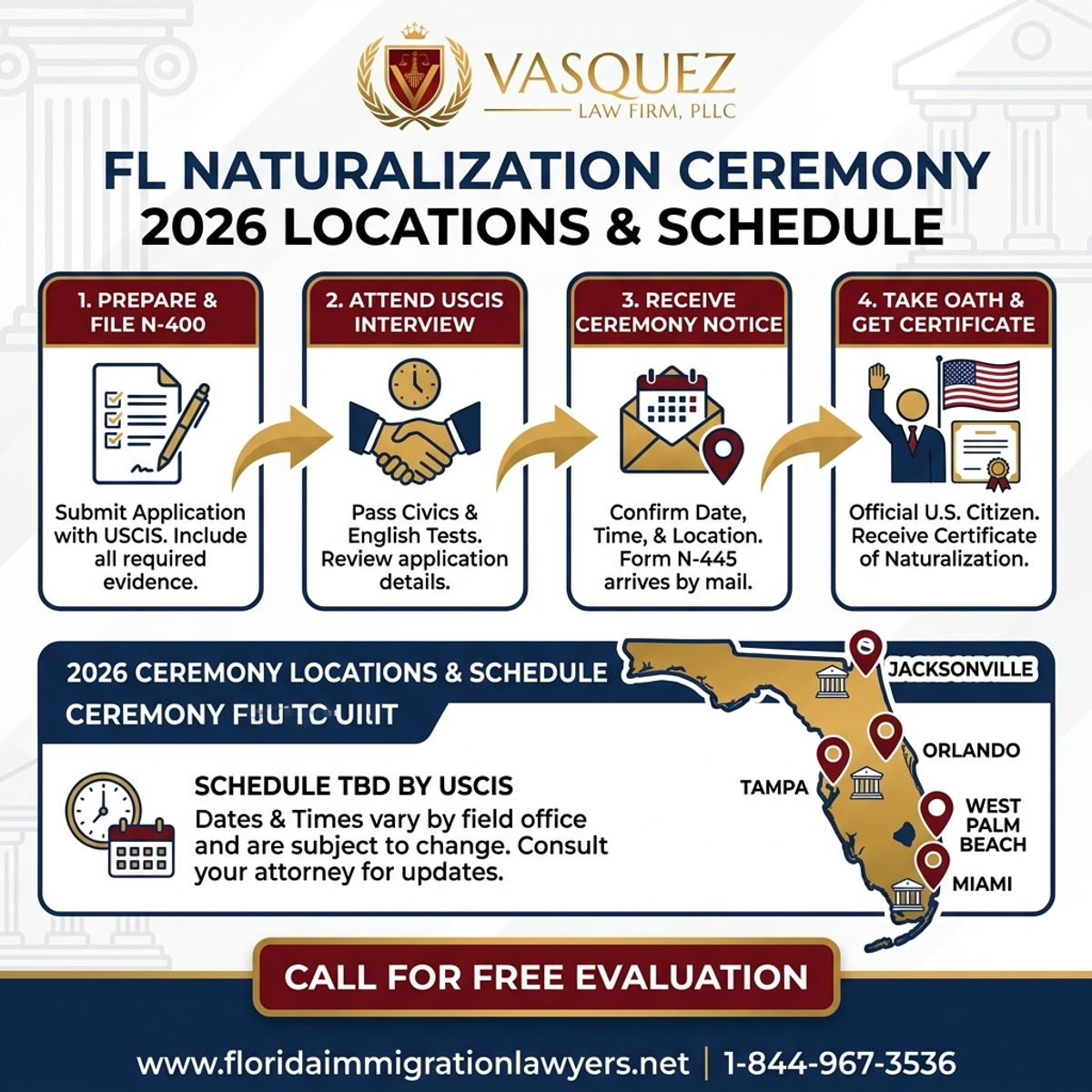
This structured process ensures that every new citizen understands the gravity of their commitment and receives the proper documentation. Should you have any concerns or need assistance at any point, particularly if there are discrepancies on your N-445 or Certificate, contacting an immigration attorney is highly recommended.
What Documents Should I Bring to My Naturalization Oath Ceremony?
Proper documentation is essential for a smooth naturalization oath ceremony. For applicants in Florida attending their ceremony in 2026, ensuring you have all necessary items as instructed by USCIS is paramount. Failing to bring the correct documents can lead to delays or even a rescheduling of your ceremony, which can be frustrating after such a long journey. Always refer to your Form N-445 for the most precise and up-to-date requirements, as these instructions are tailored to your specific case.
Typically, the following documents are required:
- Form N-445, Notice of Naturalization Oath Ceremony: This is your official invitation and includes crucial instructions. Do not forget to complete the questionnaire on the back truthfully.
- Your Permanent Resident Card (Green Card): You are required to surrender your Green Card at the ceremony. It ceases to be valid once you become a U.S. citizen.
- Reentry Permit or Refugee Travel Document (if applicable): If you hold either of these documents, you must also surrender them.
- Any other USCIS-issued documents: This could include employment authorization documents (EAD) or advance parole documents, if specifically requested on your N-445.
- Photo identification: A valid state-issued driver's license or ID card is often required for identification purposes.
- Dependent's Permanent Resident Card (if applicable): If your minor child is naturalizing with you and receiving their own Certificate of Citizenship, you may need to bring their Green Card as well.
- Photographs (if requested): While less common now with digital processing, some notices may still request passport-style photos. Check your N-445 carefully.
It is advisable to keep these documents in a secure folder and bring them with you. Do not bring large bags, weapons, or any prohibited items to the courthouse or USCIS facility. Family and friends are generally welcome to attend, but they may also be subject to security screening. Being well-prepared with your documents ensures that your path to citizenship is completed without any last-minute hitches, allowing you to fully enjoy this significant occasion.
Do not navigate this process alone. Contact Florida Immigration Lawyers today for unparalleled legal support, ensuring every step of your naturalization journey, including the ceremony, is handled with precision and care. Call 1-844-YO-PELEO for a free consultation.
What is the Typical Timeline for Naturalization Ceremonies in 2026?
The timeline for naturalization ceremonies in 2026 can vary, but generally, applicants can expect to receive their Form N-445 (Notice of Naturalization Oath Ceremony) within a few weeks, typically 2-6 weeks, after their N-400 application has been approved following the interview. The actual ceremony date itself is usually scheduled within 1-3 months of the interview approval, depending on the USCIS field office's backlog and the availability of ceremony venues in Florida. For instance, high-volume offices like Miami and Orlando may have slightly longer waits than smaller offices, though USCIS strives for efficiency across the board.
Here's a generalized timeline for the final stages leading up to the ceremony:
| Stage | Typical Timeframe (as of 2026) | Notes |
|---|---|---|
| N-400 Application Submission | 6-12 months prior | Initial filing and biometrics appointment. |
| Naturalization Interview | 3-9 months after biometrics | Interview with a USCIS officer; decision often made on the spot or shortly after. |
| Approval Notification | Immediately or within 1-2 weeks after interview | If approved, you may receive Form N-652, Notice of Decision, at the interview or by mail. |
| Receipt of Form N-445 | 2-6 weeks after approval | Official notice for your Oath of Allegiance ceremony. |
| Oath Ceremony Date | 1-3 months after N-445 receipt | The actual date you take the oath and become a citizen. |
| Certificate of Naturalization | Received immediately at ceremony | Your official proof of U.S. citizenship. |
Key Statistics — Naturalization Ceremony Locations and Schedule 2026 in Florida
It's important to note that these are typical timeframes and individual cases can vary based on complexity, security checks, and USCIS processing loads. If you experience significant delays beyond these estimates or if your N-445 notice has an error, it is advisable to contact USCIS or seek legal counsel. An immigration attorney can help inquire about your case status and address any potential issues. The goal is always to expedite your journey to citizenship, and a lawyer can be a valuable advocate.
Are There Any Costs Associated with the Naturalization Ceremony?
For individuals attending their naturalization oath ceremony in Florida in 2026, it's important to understand that there is no separate fee charged by USCIS for the ceremony itself. The ceremony is the final, celebratory step of the naturalization process, and the costs associated with becoming a U.S. citizen are primarily tied to the initial filing of Form N-400, Application for Naturalization, and any related legal fees. However, while there are no direct government fees for the ceremony, applicants should consider potential indirect costs and be aware of the overall financial commitment to naturalization.
Here's a breakdown of typical costs related to the naturalization process:
| Item | Typical Fee (as of 2026) | Notes |
|---|---|---|
| USCIS Form N-400 Filing Fee | Varies by year (check USCIS website) | This is the primary government fee for the naturalization application. |
| Biometrics Fee | Included in N-400 filing fee | Covers fingerprinting and background checks. |
| Naturalization Ceremony Fee | $0 | There is no direct government fee for attending the oath ceremony. |
| Legal Assistance Fees | Varies widely | If you hire an immigration attorney for guidance, application preparation, or representation at the interview. |
| Travel Expenses | Varies by distance | Cost of transportation to the USCIS office or courthouse for interview and ceremony. |
| Time Off Work | Lost wages (if applicable) | Potential income loss for taking time off for appointments and the ceremony. |
| Passport Application Fee | Varies by type (check State Department website) | Optional post-naturalization expense for a U.S. passport. |
It's crucial to budget for these potential costs, especially legal fees if your case is complex or if you prefer professional assistance. Florida Immigration Lawyers offers transparent fee structures and free case reviews to help you understand the financial aspects of your naturalization journey. While the ceremony itself is free, the journey to get there involves significant investment, both personal and financial. Ensuring you are well-prepared for all aspects, including financial planning, contributes to a less stressful and more successful experience.
What Happens After the Naturalization Ceremony?
The naturalization ceremony marks the official end of your journey to U.S. citizenship, but it also signals the beginning of new rights and responsibilities. Once you've taken the Oath of Allegiance and received your Certificate of Naturalization in Florida, there are several important steps you should take to fully embrace your new status as a U.S. citizen. These post-ceremony actions are crucial for exercising your rights and updating your official records.
-
Review Your Certificate of Naturalization: Immediately upon receiving your certificate, carefully check all information for accuracy. Ensure your name, date of birth, and other details are correct. If you find any errors, notify a USCIS official at the ceremony or contact USCIS within a reasonable timeframe to request a correction, typically by filing Form N-565, Application for Replacement Naturalization/Citizenship Document.
-
Apply for a U.S. Passport: Your Certificate of Naturalization is proof of citizenship, but a U.S. passport is the most convenient and universally accepted form of identification for international travel and often for domestic identification. You can apply for a passport through the U.S. Department of State. This is a vital step for international travel and can be done at many post offices or designated passport agencies across Florida.
-
Register to Vote: One of the most significant rights of U.S. citizenship is the right to vote. You can register to vote at the ceremony itself in many locations, through your local Supervisor of Elections office, or when applying for a driver's license. Exercising this right allows you to participate in the democratic process and have a voice in your community and country.
-
Update Your Social Security Records: Inform the Social Security Administration (SSA) of your new citizenship status. While not strictly required, updating your records ensures that your Social Security card accurately reflects your status and can prevent future issues with benefits or employment verification. You will need your Certificate of Naturalization to do this.
-
Petition for Family Members (if applicable): As a U.S. citizen, you may be eligible to petition for certain family members to immigrate to the United States who were not eligible before. This includes spouses, children, parents, and siblings. Consulting with an immigration attorney at Florida Immigration Lawyers can help you understand your options for family-based immigration.
-
Understand Your Responsibilities: Along with new rights come responsibilities, such as serving on a jury and remaining loyal to the United States. Familiarize yourself with these civic duties.
These post-naturalization steps are vital for fully integrating into American society and enjoying the benefits of your new status. Florida Immigration Lawyers can assist with any questions you have regarding these steps or other immigration matters.
Common Mistakes to Avoid During the Naturalization Ceremony Process
The naturalization ceremony is the final, celebratory step toward U.S. citizenship, but even at this late stage, certain missteps can cause delays or complications. Being aware of these common mistakes can help you ensure a smooth and successful experience as you become a U.S. citizen in Florida.
-
Failing to Complete Form N-445 Accurately: The questionnaire on the back of your N-445 notice must be completed truthfully and thoroughly. Any false statements or omissions can lead to serious consequences, including denial of citizenship or allegations of misrepresentation. Double-check your answers before submitting.
-
Forgetting or Losing Your Green Card: You are required to surrender your Permanent Resident Card (Green Card) at the ceremony. Forgetting it will prevent you from taking the oath and receiving your Certificate of Naturalization. Keep it safe and bring it with you.
-
Arriving Late to the Ceremony: Security procedures and check-in processes can be time-consuming, especially at federal courthouses in bustling areas like Orlando or Miami. Arriving late may result in you being turned away and having to reschedule, prolonging your wait for citizenship.
-
Bringing Prohibited Items: Like any federal building, courthouses and USCIS facilities have strict security rules. Avoid bringing weapons, large bags, or anything that could delay your entry through security. Check the specific instructions on your N-445 or the venue's website.
-
Not Reviewing Your Certificate of Naturalization for Errors: Your Certificate of Naturalization is your official proof of citizenship. It's critical to review it immediately for any typos or inaccuracies before leaving the ceremony. Correcting errors later can be a lengthy process requiring Form N-565.
-
Committing an Offense Between Interview and Ceremony: Maintaining good moral character is a continuous requirement until you take the Oath of Allegiance. Committing any crime or engaging in conduct that demonstrates a lack of good moral character between your interview and ceremony can result in your naturalization being denied, even at the last minute.
-
Not Updating USCIS of Address Changes: If your address changes after your interview but before your ceremony, you must update USCIS immediately. Failure to do so could result in you not receiving your N-445 notice or other important communications, causing significant delays.
-
Assuming Ceremony is Automatic if Interview is Approved: While an interview approval is a major step, it's not the final one. You must attend and successfully complete the oath ceremony. Non-attendance without proper rescheduling means you do not become a citizen.
-
Not Seeking Legal Advice for Complicated Situations: If you have any doubts about your eligibility, potential issues, or need to reschedule, attempting to handle it alone can be risky. An experienced immigration lawyer can provide crucial guidance and intervention.
When to Call a Florida Immigration Lawyer for Your Naturalization Ceremony
While the naturalization ceremony is generally a celebratory and straightforward event, there are specific situations where the expertise of a Florida immigration lawyer becomes invaluable. Florida Immigration Lawyers is here to provide dedicated support for residents in Orlando, Central Florida, and throughout the state, ensuring your path to citizenship is as smooth as possible. Don't hesitate to seek legal counsel if you encounter any of the following scenarios:
- Delayed N-445 Notice: If you've been approved for naturalization but have not received your Form N-445, Notice of Naturalization Oath Ceremony, within the expected timeframe (e.g., 6-8 weeks after approval), an attorney can help inquire about your case status with USCIS and address potential administrative delays.
- Need to Reschedule Your Ceremony: If an unforeseen emergency or critical obligation prevents you from attending your scheduled ceremony, an attorney can assist you in formally requesting a reschedule with USCIS. Improperly rescheduling can lead to significant delays or even denial.
- Errors on Your N-445 or Certificate: If you notice any incorrect information on your N-445 notice or, critically, on your Certificate of Naturalization at the ceremony, an attorney can guide you through the process of requesting corrections, which typically involves filing Form N-565.
- Changes in Eligibility After Interview: If, between your interview and the ceremony, circumstances change (e.g., an arrest, extended travel outside the U.S., or any event affecting your good moral character), it's imperative to consult an attorney immediately. These changes could impact your eligibility, and an attorney can advise on disclosure and potential consequences.
- Medical Accommodations Needed: If you require special accommodations due to a disability to attend the ceremony, an attorney can help you communicate these needs to USCIS to ensure they are met.
- Complex Case History: For individuals with a complex immigration history, prior denials, or criminal records, having legal representation ensures that any lingering issues are proactively addressed, preventing last-minute complications at the ceremony.
Florida Immigration Lawyers has extensive experience in citizenship and naturalization cases. Our team can offer peace of mind and expert advocacy, helping you overcome any obstacles to becoming a U.S. citizen. We are committed to protecting your rights and ensuring a successful outcome.
About Florida Immigration Lawyers
Florida Immigration Lawyers is a leading immigration law firm dedicated to serving individuals and families across the entire state of Florida. With a deep understanding of U.S. immigration law and a commitment to our clients, we provide comprehensive legal services designed to navigate the often-complex immigration system. Our firm is founded on principles of empathy, expertise, and unwavering advocacy, ensuring that every client receives personalized and effective legal representation.
Located in Orlando, we are strategically positioned to assist clients throughout Central Florida and beyond, offering guidance on a wide range of immigration matters, including naturalization, family-based petitions, business immigration, asylum claims, and deportation defense. Our team of experienced attorneys is fluent in both English and Spanish, providing accessible and culturally sensitive legal support. We pride ourselves on offering free case reviews and being available 24/7 to address your urgent immigration needs.
Choosing Florida Immigration Lawyers means partnering with a team that genuinely cares about your future. We understand the profound impact immigration decisions have on your life and your family's well-being. From the initial consultation to the successful resolution of your case, we stand by your side, offering clear communication, strategic advice, and vigorous representation. Let us be your trusted guide on your journey to U.S. citizenship and beyond. Visit our attorneys page to learn more about our dedicated team, or schedule a free consultation today.
Sources and References
- U.S. Citizenship and Immigration Services (USCIS)
- Executive Office for Immigration Review (EOIR)
- U.S. Department of State
- 8 U.S.C. Chapter 12 - Immigration and Nationality Act (INA)
- 8 CFR Part 337 - Oath of Allegiance
- USCIS Policy Manual - Citizenship and Naturalization
Related services: immigration practice areas, family immigration services, asylum protection.
This article provides general legal information and is not intended as legal advice. Every case is unique, and outcomes depend on specific facts and circumstances. Contact an attorney for advice about your particular situation.
Your journey to U.S. citizenship is a momentous one, and the naturalization ceremony is a moment to cherish. Ensure you are fully prepared and confident for this final step. For personalized legal guidance on naturalization ceremony locations and schedule 2026 in Florida, or any other immigration matter, contact Florida Immigration Lawyers today. Call us at 1-844-YO-PELEO for a free case review.
Se Habla Espanol - Estamos aqui para ayudarle.
If you need legal assistance, learn more about immigration lawyers in Florida, or call us at 1-844-967-3536 for a free case review.
Do Not Navigate This Process Alone
Our experienced immigration attorneys are ready to fight for you. Get a free, confidential case review today.
Se Habla Español
Or leave your details and we’ll call you:
Free Evaluation in 24 Hours
Or talk to us right now

AI voice assistant — available 24/7
FreeFrequently Asked Questions

William J. Vásquez
Founding Attorney · Vasquez Law Firm
U.S. Air Force veteran and immigration attorney with years of hands-on U.S. immigration experience. J.D., NCCU School of Law. AILA member. Admitted to the 4th, 5th, and 11th Circuit Courts.
Available 24/7 - Free Evaluations
Reviewed for legal accuracy by William J. Vásquez
Licensed in North Carolina; U.S. immigration is federal practice.
Related Legal Services
Our Florida immigration attorneys can help you with experienced immigration attorneys, asylum protection and citizenship and naturalization. Call today at 1-844-YO-PELEO for a free case review.
Related Links
Related Topics
Free Legal Case Review
Discuss your case with our experienced attorneys. We're available 24/7.
Se Habla Español - Estamos aquí para ayudarle.
Related Articles
EAD Advance Parole Combo Card in Florida: What You Need
An EAD advance parole combo card allows individuals with pending adjustment applications to both work and travel abroad without jeopardizing their green card application. Learn how to apply in Florida, what documents you need, and common mistakes to avoid.
PERM Labor Certification in Florida: A 2026 Guide
Learn all about the PERM labor certification process in Florida, essential for employers sponsoring green card applicants. Understand the steps, document requirements, and common mistakes to avoid in this 2026 guide.
Dual Citizenship Lawyer in Florida: What You Need to Know
For Florida residents, the concept of dual citizenship, or holding two passports, offers a compelling blend of opportunities and challenges. While the U.S. generally permits dual nationality, the path to achieving this status requires a meticulous understanding of both U.S. immigration laws and the citizenship policies of your country of origin. This guide explores the definition of dual citizenship, the detailed step-by-step process for U.S. naturalization, and the significant benefits and potential pitfalls involved. We cover essential documentation, typical timelines, and cost considerations for 2026, providing crucial insights for anyone in Orlando, Miami, or across Florida considering this important legal step. Learn about common mistakes to avoid and understand when to seek professional legal counsel to navigate this complex process successfully. Florida Immigration Lawyers is here to provide expert, bilingual support for your dual citizenship journey.
Immigration Lawyer Orlando Free Consultation in Florida
For individuals and families in Orlando, Florida, navigating the complexities of U.S. immigration law requires expert guidance. An immigration lawyer in Orlando offers crucial support for everything from visa applications and green card processes to naturalization and deportation defense. This comprehensive guide details what a free consultation covers, providing a step-by-step overview of immigration pathways, essential document checklists, and expected timelines in 2026. We also highlight common mistakes to avoid, discuss the critical role of legal counsel in deportation and asylum cases, and explain why choosing a local Orlando immigration attorney is beneficial. Florida Immigration Lawyers is dedicated to serving the diverse community of Orlando with compassionate, effective legal solutions, ensuring you receive personalized advice and robust representation for a successful immigration journey.