Japan Immigration News 2026: Florida Insights & Legal Help
Stay updated on Japan immigration news for 2026, specifically tailored for Florida residents. This comprehensive guide details the step-by-step visa application process, explains the crucial Certificate of Eligibility (COE), and provides an essential document checklist. Learn about typical processing times, cost factors, and common mistakes to avoid. We also address frequently asked questions about Japan's immigration policies and when to seek professional legal assistance. Florida Immigration Lawyers offers expert guidance for individuals and families navigating these complex international processes, ensuring you have the support needed for a successful outcome. Secure your future in Japan with knowledgeable legal representation.

Navigating Japan immigration news for 2026 requires understanding evolving visa policies and application procedures. For Florida residents, this involves specific consular guidelines and diligent preparation to ensure successful outcomes. While no drastic new rules are anticipated for 2026, staying updated on requirements for various visas, like work or family, is crucial for those planning to move or stay in Japan.
- Japan's immigration policies for 2026 are expected to refine existing visa categories.
- The Certificate of Eligibility (COE) remains a cornerstone for long-term stays.
- Florida residents apply through the Consulate-General of Japan in Miami.
- Early preparation and accurate documentation are key to a smooth application process.
- Consulting an immigration lawyer can clarify complex cases and avoid common pitfalls.
Japan Immigration News 2026: Florida Insights & Legal Help
Are you a Florida resident with dreams of living, working, or studying in Japan? Perhaps you're already there and need to understand the latest Japan immigration news for 2026. The journey to Japan, whether for a short visit or a long-term stay, can be complex, involving specific visa requirements and application processes.
Staying informed about immigration policy updates is essential. These changes can significantly impact your eligibility and the steps you need to take. This comprehensive guide will provide Florida-specific insights into Japan's immigration landscape for 2026, offering clarity on visas, the Certificate of Eligibility, and how our firm can assist you.
Don't navigate this intricate process alone. For personalized guidance and to discuss your unique situation, Call Florida Immigration Lawyers at 1-844-967-3536 for a free consultation. We are here to help you understand the latest Japan immigration news and secure your future.
Navigating Japan Immigration News in Florida for 2026
Florida's vibrant international community has strong ties with Japan, encompassing business, cultural exchange, and family connections. Many residents in Miami, Orlando, and across the state frequently seek information on Japanese immigration policies. As we look towards 2026, understanding the nuances of these policies is more important than ever.
Japan's immigration system is known for its structured approach. While significant overhauls are rare, regular adjustments to visa categories, eligibility criteria, and processing procedures occur. Our focus on Japan immigration news for 2026 ensures you have the most current information relevant to Florida applicants.
Why Florida Residents Care About Japan Immigration
Florida boasts a diverse population, including many individuals with Japanese heritage or strong personal and professional links to Japan. From business professionals exploring opportunities in Tokyo to families reuniting, the demand for clear immigration pathways is consistent. The Consulate-General of Japan in Miami serves as the primary point of contact for Florida residents seeking visas.
Our state's robust economy and international trade relations also foster significant movement between Florida and Japan. Understanding the latest Japan immigration news helps ensure that these vital connections can continue to thrive. We are committed to providing Florida residents with the expertise needed to manage their immigration goals effectively.
Step-by-Step Guide to Applying for a Japan Visa from Florida
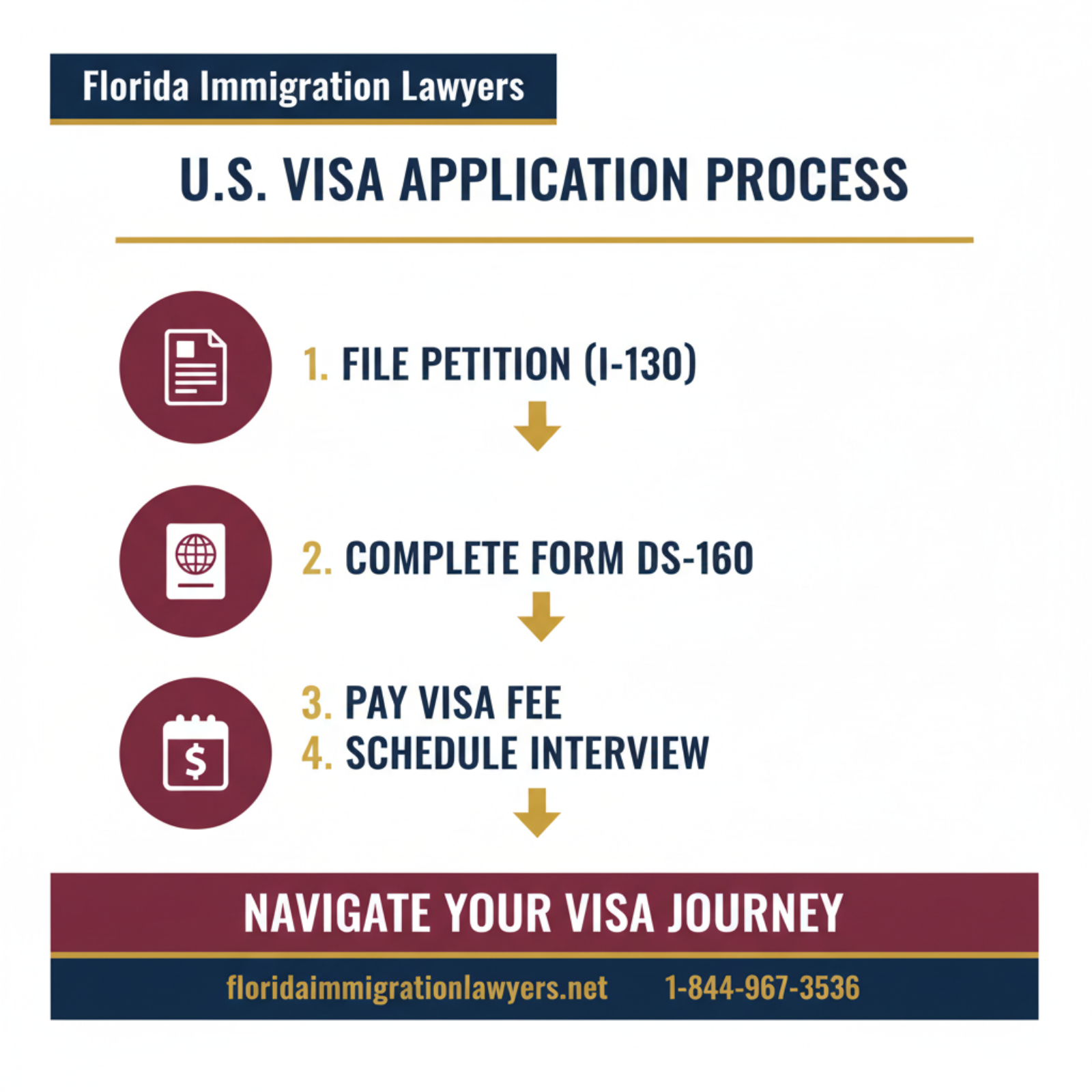
The process of applying for a Japan visa from Florida typically involves several key stages. While specific requirements vary by visa type, a general framework applies to most long-term applications. This guide provides a clear roadmap, helping you prepare for each step.
-
Determine Your Visa Category: Before anything else, identify the correct visa type for your purpose in Japan. Common categories include temporary visitor (for tourism or short business trips, often visa-exempt for U.S. citizens), work visas, student visas, dependent visas, and spouse visas. Each category has distinct requirements and eligibility criteria.
Researching the appropriate visa is crucial for a successful application. Incorrectly identifying your visa type can lead to delays or outright denial.
-
Obtain a Certificate of Eligibility (COE) (If Required): For most long-term visas (work, student, long-term family), you will first need a Certificate of Eligibility (COE). This document is typically applied for by a sponsor in Japan (e.g., your employer, school, or family member) through a regional immigration services bureau in Japan. The COE confirms that you meet the basic requirements for your intended stay and significantly streamlines the visa application process at the consulate.
The COE process can take several weeks to months, so plan accordingly. Once issued, it is valid for three months.
-
Gather Required Documents: Compile all necessary documents specific to your visa category and whether you have a COE. This typically includes your passport, visa application form, recent photographs, the original COE (if applicable), and supporting documents like invitation letters, employment contracts, bank statements, and educational certificates. Ensure all documents are current and meet the consulate's specifications.
Pay close attention to details like passport validity and photo size. Incomplete applications are a common reason for processing delays.
-
Complete the Visa Application Form: Fill out the Japan visa application form accurately and completely. You can usually find this form on the website of the Consulate-General of Japan in Miami. Be truthful and consistent with all information provided, as discrepancies can cause issues.
Double-check all entries before submission. Any errors, even minor ones, may necessitate reapplying.
-
Submit Your Application to the Consulate: Schedule an appointment, if required, and submit your completed application along with all supporting documents to the Consulate-General of Japan in Miami. Ensure you adhere to their specific submission guidelines, which may include in-person submission or mail-in options, depending on the visa type and current policies.
The consulate staff will review your application for completeness and may conduct an interview if deemed necessary. They will also collect the visa fee at this stage.
-
Await Visa Processing and Collection: After submission, the consulate will process your application. Processing times vary significantly based on the visa type, completeness of your application, and the volume of applications. Once approved, you will be notified to collect your passport with the new visa stamp.
Remain patient during this period and avoid making non-refundable travel arrangements until your visa is issued. Always verify the visa details upon collection to ensure accuracy.
Understanding the Certificate of Eligibility (COE)
The Certificate of Eligibility is a pivotal document for most long-term Japan visas. It acts as a pre-approval from the Japanese immigration authorities, confirming that the applicant meets the basic conditions for landing in Japan. Without a COE, the visa application process at the consulate level becomes significantly more challenging and time-consuming, if not impossible for certain categories.
Your sponsor in Japan, whether it's a university, an employer, or a family member, is responsible for applying for the COE on your behalf. They submit the application to a regional immigration services bureau in Japan, providing details about your purpose of stay and their guarantee. Once issued, the COE is sent to you, and you then include it with your visa application at the Consulate-General of Japan in Miami.
Essential Document Checklist for Japan Visa Applicants
Preparing a thorough set of documents is critical for any Japan visa application. Missing or incorrect documents are a primary cause of delays and denials. This checklist provides a general overview, but always verify specific requirements with the Consulate-General of Japan in Miami or travel.state.gov for the most up-to-date information.
- Valid passport (original and copy, with sufficient blank pages and validity)
- Completed visa application form (downloadable from consulate website)
- Recent passport-sized photographs (specific dimensions and background color)
- Certificate of Eligibility (COE) - original and copy (if applicable)
- Letter of invitation from Japan (if applicable, for business or specific visit types)
- Guarantor letter from Japan (if applicable, often for family or student visas)
- Proof of financial means (bank statements, tax returns, scholarship letters)
- Employment contract or offer letter (for work visas)
- Admission letter from an educational institution (for student visas)
- Marriage certificate or family registry (for dependent or spouse visas)
- Birth certificate (for dependent children)
- Itinerary of stay in Japan (for temporary visitor visas)
- Flight itinerary or reservation (for temporary visitor visas)
- Proof of accommodation in Japan (hotel booking, rental agreement)
- Previous visa stamps (if applicable)
Japan Visa Processing Times and Expectations for Florida Applicants
Understanding the typical processing times for Japan visas is crucial for planning your move or visit. For Florida residents, applications are handled by the Consulate-General of Japan in Miami. Processing times can vary widely based on several factors, including the type of visa, the completeness of your application, and the consulate's current workload.
Generally, short-term visas (e.g., temporary visitor visas for non-U.S. citizens) might be processed within 5-10 business days. However, long-term visas requiring a Certificate of Eligibility (COE) can take significantly longer. The COE itself can take anywhere from one to three months to be issued by the immigration authorities in Japan. Once you have the COE, the subsequent visa stamping at the consulate typically takes about one week.
Factors that can influence processing times include the complexity of your case, the need for additional documentation or interviews, and peak application periods. It is always advisable to apply well in advance of your intended travel date. Avoid making non-refundable travel arrangements until your visa has been officially issued and stamped in your passport. For the most accurate current estimates, consult the official website of the Consulate-General of Japan in Miami.
Cost Factors and Fees for Japan Immigration Applications
Applying for a Japan visa involves various costs, and Florida applicants should budget accordingly. While we cannot provide exact figures as fees are subject to change, understanding the categories of expenses will help you prepare. The primary fees are typically for the visa application itself, collected by the consulate.
Beyond the official visa fee, you may encounter other costs. These can include document translation services, especially if your supporting documents are not in English or Japanese. There might also be courier fees if you choose to mail your application or receive your passport back by mail. For those requiring a Certificate of Eligibility, while there isn't a direct fee for the COE application itself, your sponsor in Japan might incur administrative costs.
Legal fees for consulting an immigration attorney, like those at Florida Immigration Lawyers, also represent a significant investment but can save you time, stress, and potential denial costs. We offer transparent fee structures for our services. Always check the official consulate website for the latest fee schedule, as these amounts can be updated periodically. Planning for these various expenses will help ensure a smoother application process.
Do not navigate this process alone. The complexities of Japan immigration news and visa applications can be overwhelming. Contact Florida Immigration Lawyers today to ensure your application is handled with precision and expertise. We are dedicated to supporting Florida residents through every step of their immigration journey.
Common Mistakes to Avoid When Applying for Japan Immigration
-
Submitting an Incomplete Application: Many applications face delays or rejection because critical documents are missing or forms are not fully completed. Consequences include significant processing delays and the need to restart the entire application, wasting valuable time and resources.
-
Providing Inaccurate Information: Any false or misleading information on your application can lead to immediate denial and may result in future bars from applying for a Japanese visa. Always double-check all facts and figures for accuracy.
-
Failing to Meet Photo Specifications: Japanese consulates have strict requirements for passport photos, including size, background, and facial expression. Submitting non-compliant photos will cause delays as you'll be asked to provide new ones.
-
Not Having a Valid Certificate of Eligibility (COE) When Required: For most long-term visas, the COE is mandatory. Attempting to apply for a long-term visa without one will almost certainly result in rejection. Ensure your sponsor applies for and obtains this first.
-
Ignoring Passport Validity: Your passport must be valid for the entire duration of your intended stay in Japan, and often for an additional six months beyond that. Applying with an expiring passport can lead to issues upon entry or during your stay.
-
Underestimating Processing Times: Rushing the application process or booking non-refundable travel before your visa is approved is a common mistake. Always allow ample time, especially for COE applications and long-term visas, to avoid stress and financial loss.
-
Failing to Provide Proof of Financial Means: Applicants must demonstrate they have sufficient funds to support themselves in Japan without becoming a public charge. Insufficient proof can lead to visa denial, particularly for student or long-term visitor visas.
-
Not Adhering to Consulate-Specific Guidelines: Each consulate may have slightly different submission procedures (e.g., mail-in vs. in-person, appointment requirements). Failing to follow the specific instructions of the Consulate-General of Japan in Miami can cause your application to be returned or rejected.
-
Lack of a Clear Purpose of Stay: Your application must clearly articulate your reason for visiting or residing in Japan, backed by supporting documents. Ambiguity can raise red flags with immigration officials, leading to scrutiny or denial.
-
Not Seeking Legal Advice for Complex Cases: If your situation is unusual, you have a criminal record, or you've been denied a visa before, attempting to navigate the process alone can be detrimental. Legal counsel can identify potential issues and strategize solutions.
When to Call a Florida Immigration Lawyer for Japan-Related Matters
While some straightforward visa applications can be handled independently, many situations warrant the expertise of an experienced immigration lawyer. Florida Immigration Lawyers are here to provide the support you need, especially when dealing with the intricacies of Japan immigration news and policies. Our team understands the unique challenges faced by Florida residents.
You should consider contacting us if you encounter any of the following scenarios:
- Complex Visa Categories: If you are applying for a specialized work visa (business immigration), an investor visa, or a complex family reunification visa (family immigration), legal guidance can be invaluable. These applications often have stringent requirements and require detailed documentation.
- Previous Denials or Immigration Issues: If you have previously been denied a Japanese visa, or if you have any past immigration infractions in Japan or other countries, consulting an attorney is critical. We can help assess the reasons for denial and strategize a stronger reapplication.
- Unusual Personal Circumstances: Cases involving criminal records, significant health issues, or complex family structures require careful handling. An attorney can advise on how best to present your situation to minimize adverse impacts.
- Long Processing Delays: If your application is taking an unusually long time to process without clear communication, an attorney can help inquire about its status and potentially expedite the process, where possible.
- Confusing Requirements: The official guidelines can sometimes be difficult to interpret, especially with updates in Japan immigration news. We can clarify requirements and ensure all necessary documentation is correctly prepared.
- Need for Expedited Processing: In urgent situations, an attorney can explore whether any options for expedited processing are available and assist with the necessary justifications.
Florida Immigration Lawyers offers comprehensive services for individuals and businesses navigating international immigration. Our expertise can help you avoid common pitfalls and enhance your chances of a successful outcome. We serve clients across Florida, providing dedicated and knowledgeable legal representation in all immigration matters.
People Also Ask (PAA) About Japan Immigration
1. What are the new rules for Japan immigration 2026?
As of 2026, Japan's immigration policies are not expected to undergo drastic overhauls but rather continuous refinements. The focus remains on attracting skilled workers, supporting international students, and facilitating family reunification. Updates typically involve adjustments to specific visa categories, eligibility criteria for certain professions, and digital application processes. It's crucial to consult the official website of the Ministry of Foreign Affairs of Japan or the Consulate-General of Japan in Miami for the most current and specific details, as policies can evolve.
2. Is Japan paying foreigners to move there?
Japan is not generally paying foreigners to move there in a broad sense. However, there are specific initiatives aimed at revitalizing rural areas or attracting highly skilled professionals. Some municipalities offer relocation subsidies or support for starting businesses in less populated regions. Additionally, certain highly skilled professional visas offer preferential treatment. These are typically targeted programs, not a blanket offer to all foreigners. Research specific programs like the 'Regional Revitalization Co-operation Teams' for details.
3. How difficult is it to immigrate to Japan from the US?
Immigrating to Japan from the U.S. can be challenging, largely due to the structured nature of its immigration system. The difficulty depends significantly on your purpose of stay (e.g., work, study, marriage) and qualifications. Obtaining a Certificate of Eligibility (COE) is often the most time-consuming part. While not impossible, it requires meticulous preparation, adherence to strict documentation requirements, and often a sponsor in Japan. Consulting an immigration lawyer in Florida can significantly ease this process.
4. What is the latest news about Japan?
The latest news concerning Japan immigration for 2026 continues to focus on economic recovery and addressing demographic challenges. This includes efforts to streamline highly skilled professional visas and potential expansions of specified skilled worker categories to address labor shortages in sectors like healthcare and agriculture. Discussions also involve enhancing digital services for visa applications and improving support for foreign residents. For broader national news, reliable international news sources and the official websites of Japanese government ministries are the best resources.
About Florida Immigration Lawyers
Florida Immigration Lawyers is a leading immigration law firm dedicated to serving individuals, families, and businesses across the entire state of Florida. We understand the profound impact immigration matters have on your life and are committed to providing compassionate, effective, and results-driven legal representation.
Our experienced attorneys specialize in a wide range of immigration services, including family-based visas, employment-based visas (business immigration), naturalization and citizenship (citizenship), asylum (asylum), deportation defense, and general immigration matters. We pride ourselves on staying abreast of the latest legal developments and offering tailored strategies for each client's unique circumstances.
Why choose us? We offer personalized attention, clear communication, and a deep understanding of both U.S. and international immigration law. Our firm is available 24/7, and we provide free consultations to help you understand your options. We are passionate about helping our clients achieve their immigration goals in Florida and beyond. Visit our website at https://www.floridaimmigrationlawyers.net or contact us today.
Sources and References
- U.S. Citizenship and Immigration Services (USCIS)
- U.S. Department of State - Bureau of Consular Affairs
- U.S. Department of Justice
- Consulate-General of Japan in Miami
- 8 U.S.C. Chapter 12 - Immigration and Nationality Act (INA)
- 22 CFR Part 41 - Visas: Documentation of Nonimmigrants Under the Immigration and Nationality Act, as Amended
This article provides general legal information and is not intended as legal advice. Every case is unique, and outcomes depend on specific facts and circumstances. Contact an attorney for advice about your particular situation. Immigration laws are subject to change, and this content reflects information current as of March 2026.
Navigating the complexities of Japan immigration news and visa applications can be daunting, but you don't have to face it alone. Florida Immigration Lawyers is here to provide expert legal assistance and support throughout your journey. Whether you are in Miami, Orlando, or anywhere in Florida, our dedicated team is ready to help.
Don't delay your immigration goals. Contact Florida Immigration Lawyers today at 1-844-967-3536 for a free consultation. Se Habla Español - Estamos aquí para ayudarle.
Do Not Navigate This Process Alone
Our experienced immigration attorneys are ready to fight for you. Get a free, confidential consultation today.
Se Habla Español
Or leave your details and we’ll call you:
Free Evaluation in 24 Hours
Or talk to us right now

AI voice assistant — available 24/7
FreeFrequently Asked Questions

William J. Vásquez
Founding Attorney · Vasquez Law Firm
U.S. Air Force veteran and immigration attorney with years of hands-on U.S. immigration experience. J.D., NCCU School of Law. AILA member. Admitted to the 4th, 5th, and 11th Circuit Courts.
Available 24/7 - Free Evaluations
Reviewed for legal accuracy by William J. Vásquez
Licensed in North Carolina; U.S. immigration is federal practice.
Related Legal Services
Our Florida immigration attorneys can help you with citizenship and naturalization, family immigration services and immigration practice areas. Call today at 1-844-967-3536 for a free consultation.
Related Links
Related Topics
Free Legal Consultation
Discuss your case with our experienced attorneys. We're available 24/7.
Se Habla Español - Estamos aquí para ayudarle.
Related Articles
Stem OPT Immigration Lawyer: 2026 Florida Guide
For F-1 students in Florida, the STEM OPT extension offers a vital 24-month work authorization after their initial OPT. This guide, updated for 2026, covers eligibility, the step-by-step application process, required documents, and critical timelines. Graduates from Florida universities in STEM fields must navigate strict USCIS regulations, including the E-Verify employer requirement. Learn how to avoid common mistakes and when to seek professional legal assistance from a dedicated stem OPT immigration lawyer to ensure a successful application and continued career growth in the U.S. Florida Immigration Lawyers offers expert guidance for students across the state.
Dual Citizenship Lawyer: Navigating Delays in Florida
Facing citizenship delays in Florida can be challenging, but understanding the process and knowing your options is key. Learn how a dual citizenship lawyer can assist you in navigating N-400 processing and USCIS backlogs in Hialeah.
"ina § 208(a)(2)" One-Year Filing Deadline: Florida Asylum
Discover the importance of the "ina § 208(a)(2)" one-year filing deadline for asylum seekers in Florida. Learn about the steps, documents needed, and common mistakes to avoid in your asylum application process.
DV-2027 Registration Period: Your Green Card Lottery Guide
The DV-2027 Diversity Visa (DV) lottery offers a unique pathway to permanent residency for individuals from countries with historically low immigration rates to the U.S. Expected to open in Fall 2025, the registration period requires strict adherence to eligibility criteria, including country of birth and specific education or work experience. This guide from Florida Immigration Lawyers covers the step-by-step application process, essential documents, critical timelines, and associated costs. We highlight common mistakes to avoid and explain when legal counsel is indispensable, especially for residents in Florida. Understanding the nuances of the green card lottery is vital for a successful application. Contact us for expert guidance on your DV-2027 journey.