Immigration Rights Florida: Know Your Legal Protections with ICE
For immigrants in Florida, understanding your legal rights when encountering ICE is paramount. This detailed guide covers your constitutional protections, a step-by-step plan for interactions, essential documents to prepare, and critical mistakes to avoid. Learn about Florida-specific laws and how they impact your status. Florida Immigration Lawyers provides expert guidance and representation across the state, ensuring you are prepared and protected. Our comprehensive resource addresses common concerns and emphasizes the importance of legal counsel during any immigration encounter. We are dedicated to safeguarding your rights and providing peace of mind.
Knowing your immigration rights in Florida is crucial, especially when encountering immigration enforcement officers like ICE. All individuals in the U.S., regardless of status, possess certain constitutional protections, including the right to remain silent and refuse warrantless searches. Understanding these rights helps you protect yourself and your family during interactions with law enforcement.
- You have the right to remain silent.
- Do not open your door to ICE without a judicial warrant.
- Do not sign any documents without legal review.
- Always carry your attorney's contact information.
- Consult an immigration lawyer immediately if detained or questioned.
Immigration Rights Florida: Know Your Legal Protections with ICE
Imagine a knock at your door, unexpected and unsettling. You open it to find immigration officers, asking questions and demanding entry. For many in Florida, this scenario is a real and frightening possibility. Understanding your immigration rights in Florida is not just a recommendation; it's an essential shield against potential legal pitfalls.
Florida is a vibrant state, home to diverse communities. However, it also has a complex and often stringent immigration enforcement landscape. Recent legislative changes and increased federal operations mean that knowing your legal protections is more important than ever. This comprehensive guide will empower you with the knowledge needed to navigate interactions with immigration officials, particularly ICE.
We will cover your fundamental rights, provide a step-by-step guide on what to do during an encounter, highlight common mistakes to avoid, and explain when it is critical to seek legal counsel. Our goal is to ensure you feel prepared and protected. If you or a loved one needs immediate assistance or has questions about your specific situation, do not hesitate. Call Florida Immigration Lawyers at 1-844-967-3536 for a free consultation.
Understanding Your Immigration Rights in Florida
The U.S. Constitution provides certain fundamental rights to everyone within its borders, regardless of immigration status. These protections are not just for citizens; they extend to non-citizens as well. Knowing these rights is your first line of defense when interacting with immigration enforcement agents, such as those from U.S. Immigration and Customs Enforcement (ICE) or U.S. Customs and Border Protection (CBP).
Key among these are your Fourth and Fifth Amendment rights. The Fourth Amendment protects you from unreasonable searches and seizures, meaning officers generally need a warrant to enter your home or search your property. The Fifth Amendment grants you the right to remain silent, preventing self-incrimination. These rights are critical, especially in the context of civil immigration proceedings.
In Florida, the legal environment for immigrants can be particularly challenging. State laws, sometimes working in conjunction with federal enforcement, can create additional complexities. For example, recent state legislation has impacted how local law enforcement interacts with federal immigration authorities and has introduced new requirements for employers and healthcare providers. Staying informed about these changes is vital for protecting your immigrant legal rights.
Understanding the distinction between a judicial warrant and an administrative warrant is also paramount. A judicial warrant is issued by a judge and allows law enforcement to enter a specific location. An administrative warrant, often issued by ICE, does not grant officers the legal authority to enter your home without your permission. This distinction can determine whether you should open your door or not. For more information on immigration enforcement, you can visit the official ICE website.
At Florida Immigration Lawyers, we understand the nuances of these laws. Our firm is dedicated to helping individuals in St. Petersburg, Tampa, Orlando, Miami, and across all of Florida understand and assert their rights. We believe that informed individuals are empowered individuals, capable of making the best decisions for themselves and their families when facing immigration challenges. Knowing your rights is the first step in ensuring your safety and stability in Florida.
What to Do When ICE Approaches: A Step-by-Step Guide
An encounter with ICE can be intimidating, but knowing precisely what steps to take can make a significant difference in the outcome. This guide provides actionable advice for various scenarios, focusing on protecting your immigration rights in Florida.
-
Remain Calm and Silent: Your first and most important right is the right to remain silent. You are not obligated to answer questions about your immigration status, nationality, or how you entered the U.S. Politely state, "I wish to remain silent." Do not lie or present false documents, as this can lead to severe criminal penalties. Your silence cannot be used against you in court.
-
Do Not Open Your Door Without a Warrant: If ICE agents are at your home, do not open the door unless they present a judicial warrant signed by a judge. Ask them to slide the warrant under the door or hold it up to a window so you can inspect it. An administrative warrant (Form I-200 or I-205) is not sufficient for them to enter without your permission.
-
Verify the Warrant: A valid judicial warrant will specify your address and be signed by a judge. It should clearly state what they are authorized to search or who they are authorized to arrest. If they do not have a judicial warrant, you can keep your door closed and tell them you do not consent to their entry. Remember, a "warrant for arrest" (Form I-200) or "warrant of removal/deportation" (Form I-205) is not a search warrant.
-
Do Not Consent to Searches: Even if agents are lawfully inside your home with a warrant, they may ask to search areas not covered by the warrant. You have the right to refuse any search not explicitly authorized by the judicial warrant. Clearly state, "I do not consent to this search."
-
Do Not Sign Anything: Never sign any document presented by an immigration officer without first consulting with an attorney. Signing documents, even seemingly innocuous ones, could waive important rights or admit to deportability. This includes voluntary departure forms or waivers of rights.
-
Contact an Immigration Lawyer Immediately: As soon as possible, contact an experienced immigration attorney. If you are detained, you have the right to speak with a lawyer. Request to call your attorney and do not answer any further questions until your lawyer is present. It is crucial to have your attorney's contact information readily available. Visit our contact page to reach us.
-
Document the Encounter (if safe): If it is safe to do so, try to remember or write down details of the encounter: the agents' badge numbers, their names, the agency they represent, the time and date, what was said, and any documents they presented. If possible and safe, have a trusted person record the interaction from a distance.
These steps are designed to protect your rights during an ICE interaction in Florida. Remember, your cooperation is voluntary unless mandated by a judicial warrant. Exercising your rights is not an admission of guilt; it is a fundamental protection. For detailed guidance on your specific circumstances, a consultation with Florida Immigration Lawyers is invaluable.
Essential Documents and Information Checklist
Being prepared is a powerful defense. Having key documents and information readily accessible can significantly streamline any legal process and protect your immigrant legal rights during an immigration encounter. This checklist outlines what you should prepare and keep in a safe, yet accessible, place, ensuring your family knows where to find it.
-
Proof of Immigration Status: If you have legal immigration status, keep copies of your Green Card, visa, work permit (EAD), DACA approval, or any other official immigration documents. Do not carry original documents on your person, as they could be lost or confiscated. Keep originals in a secure location.
-
Attorney Contact Information: Memorize or keep a card with the phone number and name of your immigration attorney. If you do not have one, include the contact information for Florida Immigration Lawyers: 1-844-967-3536. This is crucial for immediate legal assistance.
-
Emergency Plan for Your Family: Develop a clear plan for what will happen to your children, property, and finances if you are detained. Designate a trusted individual (a "guardian") who can care for your children and manage your affairs. Ensure this person has all necessary contact information and legal authority (e.g., power of attorney for childcare).
-
Important Medical Information: Keep a record of any medical conditions, medications, and allergies for yourself and your family members. This information is vital if you or a family member is detained and requires medical attention.
-
Financial Records: Have copies of important financial documents, such as bank account information, property deeds, and employment records. This can help ensure your family's financial stability in your absence.
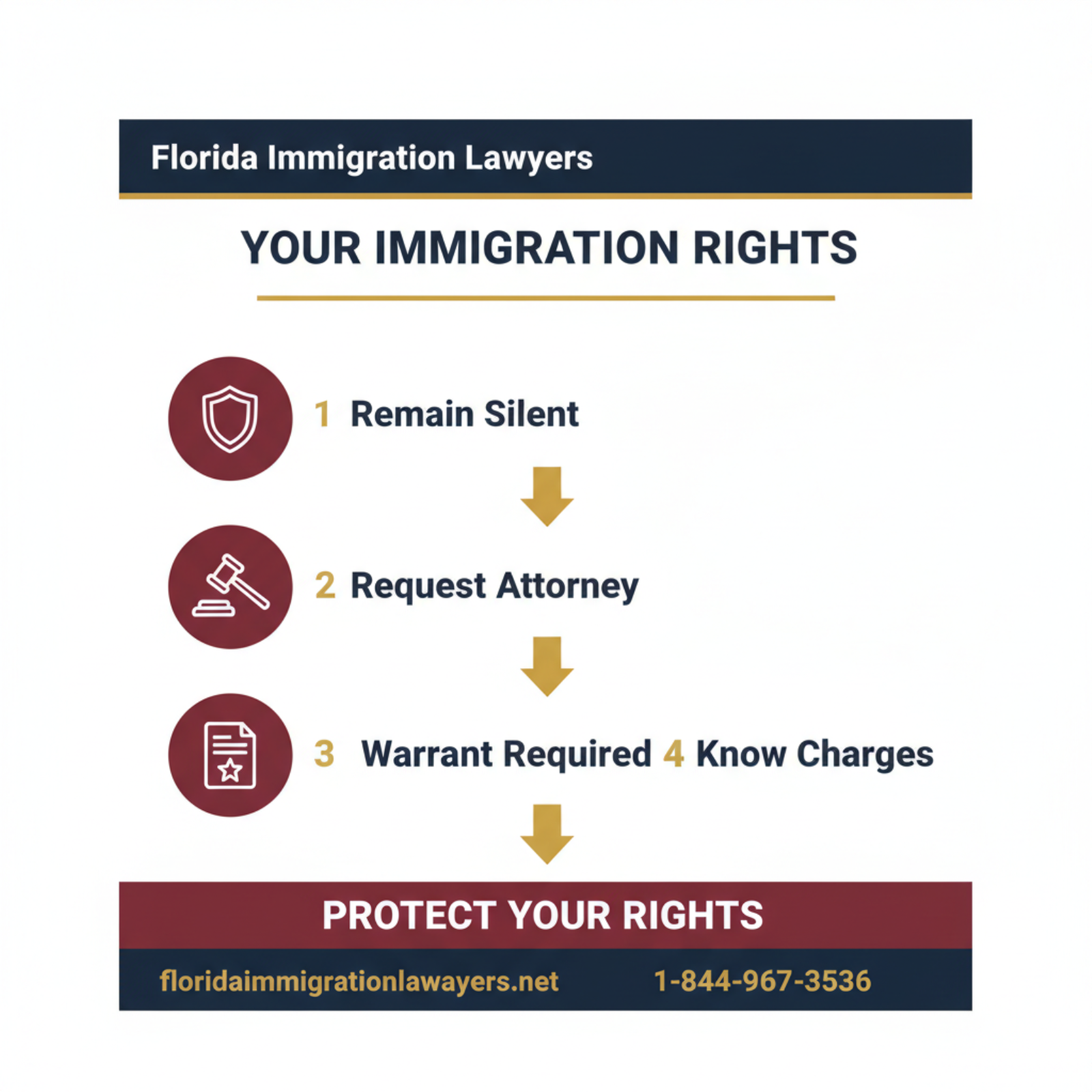
Step-by-Step Process Guide -
List of Witnesses or Contacts: If you are involved in a situation where you might need to prove your presence or activities, a list of trusted individuals who can vouch for you could be beneficial. Include their contact details.
-
"Know Your Rights" Card: Carry a small card with a statement in English and Spanish asserting your right to remain silent, your right to an attorney, and your refusal to consent to searches. Many advocacy groups provide these, or your attorney can provide one. This can be a helpful tool during an unexpected encounter.
Preparing these items in advance can greatly reduce stress and potential complications during an immigration encounter. It ensures that your rights are protected and that your family's well-being is considered. For assistance in creating a comprehensive family preparedness plan, consider reaching out to our team at Florida Immigration Lawyers.
Navigating Florida Immigration Law Updates and Enforcement
Florida's immigration landscape is dynamic, with frequent legislative changes and intensified enforcement efforts. Staying informed about these developments is a critical aspect of protecting your immigration rights in Florida. Recent years have seen the passage of laws that significantly impact immigrant communities across the state, from St. Petersburg to Miami.
One notable example is the Florida Senate Bill 1718, which became effective in 2023. This law introduced several provisions, including requiring businesses with 25 or more employees to use E-Verify, imposing penalties for transporting undocumented immigrants, invalidating out-of-state driver's licenses issued to undocumented individuals, and requiring hospitals to collect data on patients' immigration status. These changes have created new challenges and uncertainties for many residents and businesses.
Beyond state legislation, federal immigration enforcement operations are also a constant presence. Operations like "Operation Tidal Wave," which led to thousands of arrests in Florida, underscore the proactive approach of agencies like ICE in the region. These operations can occur in various settings, including workplaces, residential areas, and transportation hubs. Understanding the scope and potential impact of such operations is vital for personal and family safety.
The legal framework governing immigration in the U.S. is primarily found in the Immigration and Nationality Act (INA), codified in 8 U.S.C. Chapter 12. However, state laws, like those in Florida, can add layers of complexity to how these federal laws are applied and enforced locally. This interplay between state and federal regulations means that what might be permissible in one state could carry different implications in Florida.
It is important to remember that immigration laws and policies are subject to change, often influenced by political shifts and court decisions. For instance, interpretations of 8 CFR Part 287, which outlines the authority of immigration officers, can evolve. Therefore, seeking up-to-date information and legal guidance is always recommended. For the latest federal immigration news and policy updates, the U.S. Citizenship and Immigration Services (USCIS) website is a valuable resource.
Staying informed about these developments, from specific Florida laws to broader enforcement trends, is key to proactive protection. Florida Immigration Lawyers are constantly monitoring these changes to provide our clients with the most current and effective legal strategies. If you have questions about how a particular law or enforcement action might affect you, especially regarding a recent Florida immigration law update, we encourage you to seek professional legal advice.
Cost Factors and Fee Breakdown for Immigration Defense
When facing immigration challenges, one of the primary concerns for many individuals is the cost of legal representation. While it is true that legal fees can represent a significant investment, understanding the value and necessity of expert legal counsel can put these costs into perspective. Protecting your immigrant legal rights is an investment in your future and stability.
Legal fees for immigration defense vary widely depending on the complexity of your case, the specific services required, and the experience of the attorney. For instance, defending against deportation or removal proceedings typically involves more extensive legal work than, for example, a simple visa renewal. Cases involving asylum claims or complex waivers also require substantial legal effort and expertise.
At Florida Immigration Lawyers, we believe in transparent fee structures. During your initial consultation, which we offer for free, we will discuss the potential costs associated with your case. This allows you to understand the financial commitment upfront without any hidden surprises. We understand that legal fees can be a burden, and we strive to provide clear explanations of our billing practices.
Our services may be structured through various fee arrangements, including flat fees for certain types of cases or hourly rates for more complex litigation. We will always discuss the best approach for your unique situation. Investing in a knowledgeable attorney can often save you money in the long run by preventing costly mistakes, expediting processes, and increasing the likelihood of a favorable outcome.

Beyond attorney fees, there are also government filing fees associated with many immigration applications and petitions. These fees are set by agencies like USCIS and are subject to change. Your attorney will inform you of these separate fees as they apply to your case. While we cannot offer specific filing fee amounts (as they vary and change), we will ensure you are aware of all expected costs.
It is important to be wary of individuals or services offering "free immigration help Florida" that promise guaranteed results or unusually low prices without proper legal qualifications. Only licensed attorneys or accredited representatives can provide legal advice. Our team of experienced attorneys provides professional, ethical, and effective representation, ensuring your case is handled with the utmost care and expertise. We are here to guide you through every step, ensuring you understand the value you receive for your investment in your legal future.
Do not navigate this process alone. Contact Florida Immigration Lawyers today.
Common Mistakes to Avoid
Navigating immigration law can be fraught with peril, and even small errors can have significant consequences. Avoiding these common mistakes is crucial for protecting your immigration rights in Florida and ensuring a positive outcome.
-
Opening the Door Without a Judicial Warrant: This is one of the most frequent errors. As discussed, ICE needs a judicial warrant to enter your home without your permission. Opening the door voluntarily waives your Fourth Amendment rights, potentially allowing them to enter and search without legal grounds. Always ask for a warrant and inspect it carefully.
-
Lying or Providing False Information: Never lie to an immigration officer or present false documents. Doing so can lead to criminal charges, severe immigration consequences, and may even bar you from future immigration benefits. Honesty, or exercising your right to remain silent, is always the best policy.
-
Signing Documents Without Understanding: Many individuals sign documents presented by officers without fully comprehending their implications. These documents might waive your rights, admit to deportability, or agree to voluntary departure, which can prevent you from returning to the U.S. for many years. Always insist on speaking with your attorney before signing anything.
-
Failing to Have an Emergency Plan: Not having a plan for your children, pets, or finances in case of detention can lead to chaos and distress for your family. A well-thought-out emergency plan, including designated guardians and legal authorizations, is indispensable.
-
Not Knowing Your Rights: Ignorance of your rights is not a defense. If you don't know you have the right to remain silent or to refuse a warrantless search, you cannot exercise those rights. This article is a starting point, but ongoing education and legal consultation are vital.
-
Ignoring Legal Counsel: Attempting to navigate complex immigration proceedings, especially removal defense, without an attorney is highly risky. The immigration system is intricate, and a lawyer can identify defenses, present evidence effectively, and protect your due process rights. This is especially true for deportation defense cases.
-
Providing Too Much Information: Beyond identifying yourself (if requested in public), you are not required to provide additional personal details, explain your activities, or answer questions about your family or friends. Keep interactions brief and assert your right to remain silent.
-
Resisting Arrest: Even if you believe an arrest is unlawful, never physically resist. Resisting arrest can lead to criminal charges and complicate your immigration case significantly. Cooperate physically, but continue to assert your rights verbally, and seek legal counsel immediately.
-
Not Documenting the Encounter: If safe, failing to document the details of an encounter (officer names, badge numbers, agency, time, date, what was said) can make it harder to challenge unlawful actions or provide your attorney with necessary information later.
-
Assuming ICE Is Always Right: Immigration officers, like any law enforcement, can make mistakes or overstep their authority. Do not assume everything they say or do is legally correct. Always verify information and assert your rights.
-
Not Updating Contact Information: Failing to inform USCIS or the immigration court of a change of address can result in missed notices, including court dates, which can lead to an order of removal in absentia. Always keep your contact information current.
When to Call a Lawyer
While this guide provides general information, there are specific situations where the immediate involvement of a qualified immigration attorney is not just recommended, but absolutely essential. Trying to navigate these complex scenarios alone can have irreversible negative consequences for your immigration rights in Florida.
You should call Florida Immigration Lawyers immediately if:
-
You are detained by ICE or any law enforcement agency. Even if it seems like a minor issue, any detention could escalate into removal proceedings. You have the right to an attorney, and you should exercise it immediately.
-
You receive a Notice to Appear (NTA) in Immigration Court. This document officially begins your removal proceedings. Missing a court date or failing to properly respond can lead to a deportation order. An attorney can help you understand the charges and build a defense.
-
ICE agents are at your home or workplace. Before you open any doors or answer substantive questions, consult with an attorney to understand your rights and obligations.
-
You are considering applying for asylum or other forms of relief. Cases involving asylum, U visas, or T visas are highly complex and require expert legal guidance to ensure all requirements are met and your story is presented compellingly.
-
You have a prior deportation order or a criminal record. These factors significantly complicate any immigration case and often require waivers or specialized legal strategies that only an experienced attorney can provide. Our firm also handles family immigration cases and business immigration matters, both of which can be affected by past issues.
-
You are applying for citizenship and have concerns about your eligibility. Naturalization can be complex, especially with any past legal issues or extended absences from the U.S.
Red flags that signal a need for legal help include any official communication from immigration authorities, threats of deportation, or requests for interviews regarding your status. Florida Immigration Lawyers are available 24/7 to provide critical assistance and guidance. We serve all of Florida, including cities like St. Petersburg, Orlando, and Jacksonville. Our compassionate and experienced team is ready to protect your rights and advocate for your best interests.
About Florida Immigration Lawyers
Florida Immigration Lawyers is a leading immigration law firm dedicated to serving individuals and families throughout the entire state of Florida. With years of experience and a deep understanding of complex immigration laws, our firm provides compassionate, effective, and results-driven legal representation.
We specialize in a comprehensive range of immigration services, including family-based petitions, employment visas, deportation defense, asylum claims, naturalization, and DACA renewals. Our attorneys are committed to staying abreast of the latest legal developments and policy changes, particularly those impacting immigration rights in Florida, to ensure our clients receive the most current and strategic advice.
What sets Florida Immigration Lawyers apart is our unwavering commitment to our clients. We understand that each case represents a unique individual story and a profound impact on lives. Our approach is client-centered, ensuring clear communication, personalized strategies, and tireless advocacy. We pride ourselves on being accessible, available 24/7 to address urgent matters and provide peace of mind.
We offer free consultations, providing an opportunity for you to discuss your situation with an expert attorney without financial obligation. This initial meeting allows us to assess your case, explain your options, and outline a clear path forward. Our firm is proud to offer bilingual services, with a dedicated team ready to assist clients in both English and Spanish.
Whether you are in St. Petersburg, Miami, Orlando, or any other part of Florida, Florida Immigration Lawyers is your trusted partner for all immigration matters. We are here to protect your rights, guide you through the legal process, and help you achieve your immigration goals. Call us today at 1-844-967-3536 or visit our website at https://www.floridaimmigrationlawyers.net to learn more.
Sources and References
- U.S. Citizenship and Immigration Services (USCIS)
- U.S. Immigration and Customs Enforcement (ICE)
- Executive Office for Immigration Review (EOIR)
- Florida Senate Bill 1718 (2023)
- 8 U.S.C. Chapter 12 - Immigration and Nationality Act (INA)
- 8 CFR Part 287 - Field Operations
- U.S. Constitution, Fourth and Fifth Amendments
- Board of Immigration Appeals (BIA) Decisions
This article provides general legal information and is not intended as legal advice. Every case is unique, and outcomes depend on specific facts and circumstances. Contact an attorney for advice about your particular situation.
Protect your immigration rights in Florida. Don't face the complexities of immigration law alone. Call Florida Immigration Lawyers at 1-844-967-3536 for a free consultation. Se Habla Español - Estamos aquí para ayudarle.
Florida Immigration Lawyers
Legal Team
Our experienced attorneys at Florida Immigration Lawyers have been serving clients across Florida for over 20 years. We specialize in immigration, personal injury, criminal defense, workers compensation, and family law.