Immigration Rights Florida: Know Your Legal Protections...
Discover your essential immigration rights in Florida and learn how to protect yourself and your family. This guide covers interactions with ICE, critical legal protections, and common mistakes to avoid. Stay informed about Florida's immigration laws and understand when to seek legal counsel. Florida Immigration Lawyers offers expert assistance to ensure your rights are upheld. Get a free consultation today to discuss your unique situation and secure your future in Florida.

Knowing your immigration rights in Florida is crucial for protecting yourself and your family. Regardless of your immigration status, you have fundamental constitutional protections, including the right to remain silent and to speak with an attorney. Understanding how to interact with law enforcement, especially ICE, can prevent serious issues. Always carry a “Know Your Rights” card and avoid signing anything without legal review.
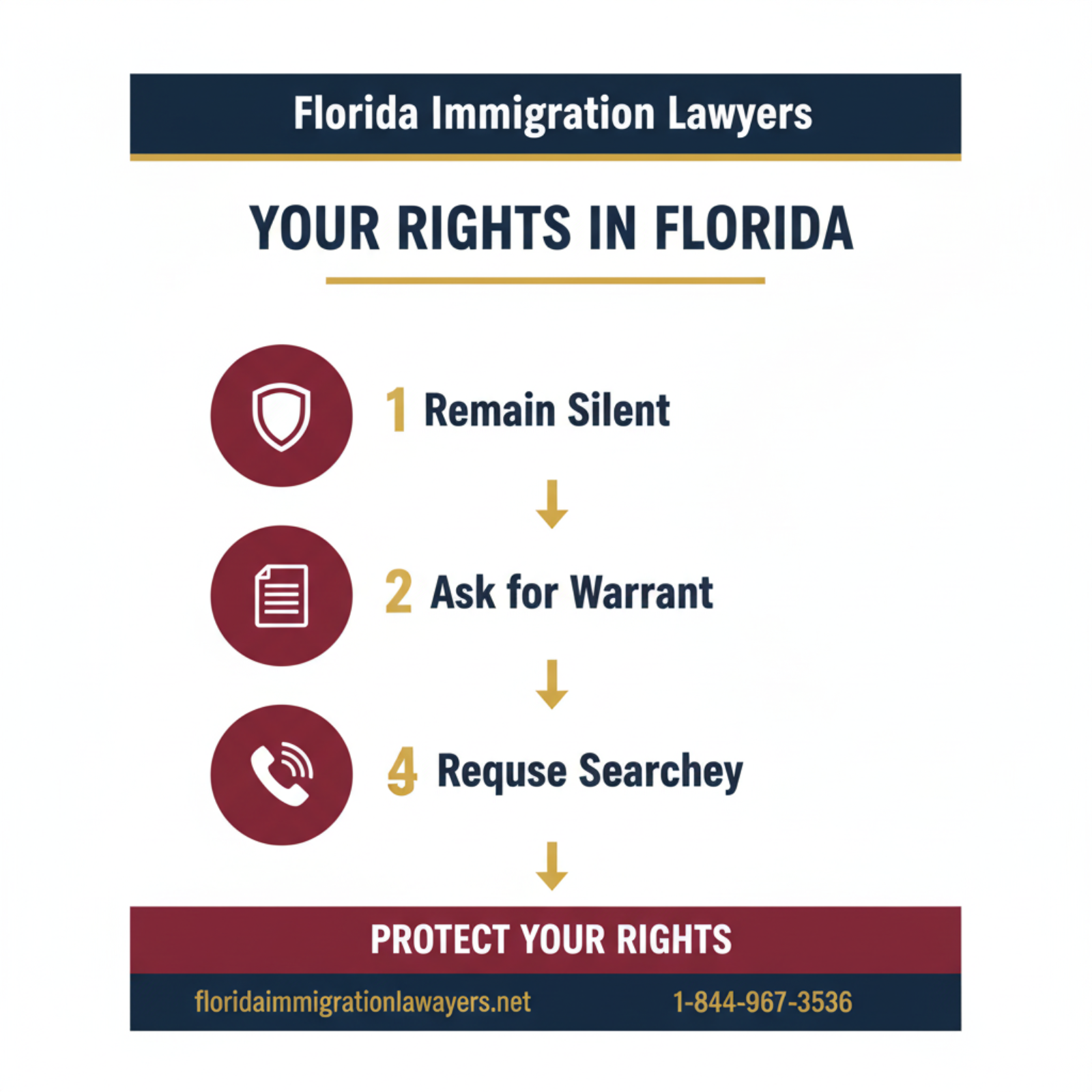
- You have the right to remain silent.
- Request to speak with an attorney immediately.
- Do not open your door to ICE without a warrant.
- Never sign documents you do not understand.
- Always be aware of your surroundings and your rights.
Immigration Rights Florida: Know Your Legal Protections in 2026
Navigating the complex landscape of U.S. immigration law can be daunting, especially when you reside in a state like Florida. Recent legislative changes and evolving enforcement policies mean that understanding your immigration rights in Florida is more critical than ever. Whether you are a long-term resident, a recent arrival, or visiting, knowing your legal protections is your first line of defense.
At Florida Immigration Lawyers, we understand the anxieties and uncertainties many individuals and families face. Our mission is to empower you with accurate, up-to-date information to safeguard your future. This comprehensive guide will walk you through your fundamental rights, explain how to interact with immigration enforcement agencies like ICE, and offer practical advice to help you navigate your legal journey in Gainesville and across Florida.
Do not face these challenges alone. For personalized guidance and to ensure your rights are protected, call Florida Immigration Lawyers at 1-844-967-3536 for a free consultation today. We are here to help you understand and assert your rights effectively.
Understanding Your Immigration Rights in Florida
In the United States, all individuals, regardless of their immigration status, possess certain constitutional rights. These fundamental protections are guaranteed by the U.S. Constitution and apply to everyone on U.S. soil. Knowing these legal rights immigrants have is crucial, especially when interacting with law enforcement or immigration officials.
Your rights include the right to remain silent, the right to speak with an attorney, and protections against unreasonable searches and seizures. These rights are not diminished by your immigration status. However, exercising them correctly requires awareness and preparation.
Recent legislative developments, such as specific Florida state laws, have added layers of complexity for immigrants in the state. For instance, laws concerning transportation of undocumented individuals or requirements for hospitals to inquire about immigration status can create confusion and fear. Staying informed about these changes is vital for all Florida residents.
Florida Immigration Lawyers is dedicated to keeping you informed about the latest Florida immigration law update. We strive to provide clear explanations of how these laws might impact your daily life and legal standing. Our goal is to ensure you feel secure and prepared.
Interacting with ICE: Know Your Rights in Florida
Interactions with U.S. Immigration and Customs Enforcement (ICE) can be intimidating. It is paramount to know your rights ICE agents cannot violate. Being prepared for such encounters can significantly affect the outcome of your situation.
What to Do if ICE Comes to Your Home
If ICE agents come to your home, you are not required to open your door unless they present a warrant signed by a judge. This warrant must specifically name you or the person they are looking for and be for a criminal matter. An administrative warrant (Form I-200 or I-205) is not sufficient to enter your home without your permission.
You can ask agents to slide the warrant under the door or hold it up to a window. If they do not have a judicial warrant, you can keep your door closed. Inform them you do not consent to a search and will not answer questions without your attorney present.
What to Do if ICE Stops You in Public or in a Vehicle
If ICE stops you in public, you have the right to remain silent. You are not required to answer questions about your immigration status, birthplace, or how you entered the U.S. State clearly that you wish to remain silent and want to speak with an attorney.
Do not lie or present false documents. If you are driving, pull over safely. You are generally not required to show your ID to ICE unless you are driving and asked for your driver's license, or if state law requires identification during a stop. However, you can refuse to answer questions about your immigration status.
Your Right to Remain Silent and Speak with an Attorney
This is arguably your most powerful right. Clearly state, "I wish to remain silent" and "I want to speak with my attorney." Repeat these statements if agents continue to question you. Do not sign anything without consulting an attorney first, as you may be waiving important rights.
Remember that anything you say can be used against you in immigration proceedings. It is always safer to exercise your right to silence and request legal counsel. Florida Immigration Lawyers are ready to assist you in these critical moments.
A Step-by-Step Guide to Protecting Your Rights
Proactive steps can make a significant difference in protecting your immigrant rights Florida. Here is a guide to help you prepare and respond effectively.
-
Educate Yourself and Your Family: Understand your fundamental rights under the U.S. Constitution. Teach your family members, especially children, what to do if approached by immigration officials. Knowledge is your strongest defense.
-
Prepare a "Know Your Rights" Card: Carry a card that states you are exercising your right to remain silent and your right to speak with an attorney, in both English and Spanish. This card can be handed to agents without speaking.
-
Create a Family Preparedness Plan: Designate guardians for minor children, arrange for access to funds, and ensure important documents are in a safe, accessible location. Discuss emergency contacts and communication methods.
-
Consult with an Immigration Attorney: Schedule a consultation with an experienced attorney, such as those at Florida Immigration Lawyers, to review your specific situation. Understand your immigration status and potential vulnerabilities. This is especially important given the latest Florida immigration law update.
Step-by-Step Process Guide -
Document Everything: If you interact with ICE, try to remember details like badge numbers, vehicle descriptions, and what was said. If safe, you can record the interaction (without interfering with officers).
-
Do Not Carry Foreign Passports or IDs if Undocumented: If you are undocumented, carrying a foreign passport or national ID could make it easier for ICE to determine your country of origin and facilitate deportation. Consult an attorney about what documents are safe to carry.
-
Know Your Local Resources: Be aware of local community organizations and legal aid groups in Gainesville or other Florida cities that offer support and resources for immigrants. These groups can provide valuable assistance and connect you with legal help.
Essential Documents for Immigrants in Florida
Having your essential documents organized and accessible is a critical aspect of protecting your immigration rights Florida. While you should not carry sensitive documents on your person if you are undocumented, you should know where they are stored securely.
- Birth Certificates: For yourself and any family members, especially U.S. citizen children.
- Marriage Certificates: If applicable, to prove familial relationships.
- Passports and Visas: If you have valid immigration documents.
- "Know Your Rights" Card: Always carry this.
- Attorney Contact Information: Keep your lawyer's number readily available.
- Proof of Residence: Utility bills, leases, or other documents showing you live in Florida.
- Medical Records: Especially for chronic conditions or ongoing treatments.
- School Records: For children, to ensure continuity of education.
- Financial Records: Bank statements, tax returns (if applicable).
- Emergency Contact List: For family and trusted friends.
It is advisable to keep original documents in a safe, secure location (e.g., a safe deposit box or with a trusted relative/attorney) and carry only copies, or a "Know Your Rights" card, if you are concerned about an ICE encounter. Consult with an attorney from Florida Immigration Lawyers to determine the best strategy for your specific situation.
Navigating Florida Immigration Law Updates
Florida has been at the forefront of state-level immigration legislation, leading to significant changes that impact residents. Staying informed about every Florida immigration law update is crucial for ensuring compliance and understanding your rights. These laws often have broad implications for employment, healthcare, and daily life.
For example, recent state laws have introduced new requirements for employers regarding E-Verify and penalties for hiring undocumented workers. Other provisions have affected the transportation of undocumented individuals within the state. These changes underscore the importance of ongoing vigilance and legal counsel.
Understanding the nuances of these state laws, alongside federal immigration regulations, can be complex. The legal team at Florida Immigration Lawyers closely monitors these legislative developments. We provide our clients in Gainesville and throughout Florida with timely and accurate information, helping them adapt to the evolving legal landscape.
Our firm is committed to helping you understand how these updates affect your status and your family's well-being. We can provide clear explanations and strategic advice to mitigate potential risks and protect your immigrant rights Florida.
Do not navigate this process alone. Contact Florida Immigration Lawyers today to discuss your situation and get the expert legal support you need.
Understanding Legal Costs: Investing in Your Protection
When seeking legal assistance for immigration rights Florida, understanding the potential costs involved is an important consideration. Legal fees for immigration cases can vary significantly depending on the complexity of your situation, the type of service required, and the attorney's experience.
At Florida Immigration Lawyers, we believe in transparent fee structures. During your free consultation, we will discuss the scope of services needed for your case and provide a clear explanation of our fees. We understand that legal expenses can be a concern, and we strive to offer reasonable and competitive rates for our expert representation.
Investing in qualified legal counsel is an investment in your future and your peace of mind. An experienced immigration attorney can help you avoid costly mistakes, navigate complex legal procedures, and advocate effectively on your behalf. This protection is invaluable, especially when dealing with critical matters concerning your status and rights.
Our firm offers various payment options to help make legal assistance accessible. We encourage you to discuss any financial concerns during your initial consultation. Our priority is to ensure you receive the highest quality legal representation without undue financial burden.
Common Mistakes Immigrants Make and How to Avoid Them
Protecting your immigration rights Florida often involves avoiding common pitfalls that can jeopardize your status or lead to deportation. Being aware of these mistakes is the first step toward preventing them.
-
Opening the Door to ICE Without a Judicial Warrant: This is a frequent mistake. Always remember you are not required to open your door to immigration agents unless they have a warrant signed by a judge. Opening the door without one can be seen as consent to enter.
-
Answering Questions About Immigration Status: You have the right to remain silent. Do not answer questions about your citizenship, how you entered the U.S., or your immigration status. Politely state you wish to remain silent and speak with an attorney.
-
Signing Documents You Do Not Understand: Never sign any document presented by an immigration officer without fully understanding its contents and implications, and ideally, without consulting an attorney. You could unknowingly waive crucial rights or agree to voluntary departure.
-
Lying to Immigration Officials: Providing false information or presenting fake documents can lead to severe penalties, including criminal charges, permanent bars from future immigration benefits, and immediate deportation. Always be truthful or exercise your right to remain silent.
-
Failing to Update Your Address with USCIS: If you move, you are legally required to inform USCIS of your new address within 10 days using Form AR-11. Failure to do so can result in missed notices, denial of applications, or even deportation proceedings. This is a critical aspect of maintaining your legal rights immigrants have.
-
Not Carrying a "Know Your Rights" Card: A simple card stating your rights in English and Spanish can be invaluable during an encounter. It allows you to assert your rights without speaking, reducing the risk of accidental self-incrimination.
-
Ignoring Court Dates or USCIS Notices: Missing an immigration court hearing can result in a deportation order in absentia. Failing to respond to USCIS requests for evidence or interviews can lead to application denials. Always respond promptly and seek legal advice if unsure.
-
Traveling Internationally Without Legal Advice: If you have an pending immigration application or a specific status, leaving the U.S. without proper authorization (like Advance Parole) can be considered abandonment of your application or status, making re-entry impossible. Consult with an attorney before any international travel.
-
Not Seeking Legal Counsel for Criminal Issues: Even minor criminal offenses can have significant immigration consequences, including deportation. Always consult an immigration attorney if you face any criminal charges, no matter how minor they seem.
-
Relying on Notarios or Unqualified Individuals: "Notarios públicos" in some Latin American countries are lawyers, but in the U.S., they are not. Many unqualified individuals pose as immigration experts, leading to incorrect advice, application errors, and potential fraud. Always seek advice from licensed attorneys.
When to Seek Legal Counsel for Your Immigrant Rights
While understanding your basic immigration rights Florida is essential, there are many situations where the guidance of an experienced immigration attorney is indispensable. Florida Immigration Lawyers is here to provide the expert support you need.
You should contact an attorney immediately if you or a family member:
- Are detained by ICE or other law enforcement agencies.
- Receive a Notice to Appear (NTA) in immigration court, indicating the start of deportation proceedings.
- Are facing criminal charges that could impact your immigration status.
- Have questions about your specific immigration status or eligibility for benefits, such as citizenship or family-based visas.
- Need assistance with asylum applications or other forms of relief.
- Are an employer concerned about business immigration compliance under new Florida laws.
- Are considering international travel and need advice on re-entry.
- Have been a victim of immigration fraud or abuse.
Our attorneys at Florida Immigration Lawyers are well-versed in both federal and state immigration laws. We can represent you in immigration court, assist with complex visa applications, and help you navigate the intricacies of the U.S. immigration system. Do not wait until it is too late; early intervention can make a crucial difference.
Frequently Asked Questions About Immigration Rights in Florida
We've compiled answers to some common questions regarding immigration rights Florida residents often ask, especially concerning interactions with ICE and identification requirements.
Do you have to show ICE your ID?
Generally, you are not required to show identification to ICE agents if you are not in a vehicle, unless a state law specifically requires it (which is rare for simple street encounters). If you are driving, you must show your driver's license upon request. However, you can still refuse to answer questions about your immigration status. Always be mindful of your right to remain silent.
Can you refuse to show ID in Florida?
In Florida, if you are lawfully detained by law enforcement (including ICE in certain circumstances), you may be required to provide identification if asked. However, this typically applies to criminal investigations or traffic stops. For casual encounters, you can generally refuse to answer questions about your identity or immigration status and assert your right to remain silent.
What to do if ICE stops you in Florida?
If ICE stops you in Florida, immediately state that you wish to remain silent and want to speak with an attorney. Do not answer questions about your immigration status, birthplace, or how you entered the U.S. Do not sign anything without consulting a lawyer. If you are detained, ask to call your attorney and family. Remember, you have constitutional protections, even if you are undocumented.
Can you sue ICE for detaining a U.S. citizen?
Yes, in certain circumstances, a U.S. citizen who is unlawfully detained by ICE may have grounds to sue for damages. Such cases are complex and often involve claims of false imprisonment, violations of constitutional rights, and other civil liberties infringements. If you are a U.S. citizen or have a loved one who is a citizen and was wrongfully detained by ICE, it is crucial to seek immediate legal counsel from an experienced civil rights or immigration attorney.
About Florida Immigration Lawyers
Florida Immigration Lawyers is a leading law firm dedicated to providing exceptional legal representation and compassionate support to immigrants across the state. With offices strategically located to serve all of Florida, including the Gainesville area, our team of experienced attorneys is committed to protecting your immigration rights Florida.
We offer a comprehensive range of immigration services, including visa applications, deportation defense, asylum claims, citizenship and naturalization, family-based petitions, and business immigration solutions. Our attorneys are passionate advocates who understand the nuances of immigration law and the profound impact it has on individuals and families.
Choosing Florida Immigration Lawyers means choosing a firm that prioritizes your needs, offers personalized strategies, and fights tirelessly for the best possible outcome in your case. We are available 24/7 to address your urgent concerns and provide free consultations to help you understand your options without financial commitment.
Visit our website at https://www.floridaimmigrationlawyers.net or call us at 1-844-967-3536 to schedule your free consultation. Let us be your trusted legal partners in navigating your immigration journey.
Sources and References
- U.S. Citizenship and Immigration Services (USCIS)
- Executive Office for Immigration Review (EOIR) - U.S. Department of Justice
- U.S. Immigration and Customs Enforcement (ICE)
- 8 U.S.C. Chapter 12 - Immigration and Nationality Act (INA)
- 8 U.S.C. § 1357 - Powers of immigration officers and employees
- 8 CFR (Code of Federal Regulations) - Aliens and Nationality
This article provides general legal information and is not intended as legal advice. Every case is unique, and outcomes depend on specific facts and circumstances. Contact an attorney for advice about your particular situation.
Your immigration rights Florida are worth protecting. Do not hesitate to seek professional legal assistance when your future is on the line. Our dedicated team at Florida Immigration Lawyers is ready to provide the guidance and representation you deserve. Call us today at 1-844-967-3536 for a free consultation. Se Habla Español - Estamos aquí para ayudarle.
Do Not Navigate This Process Alone
Our experienced immigration attorneys are ready to fight for you. Get a free, confidential consultation today.
Se Habla Español
Frequently Asked Questions
Florida Immigration Lawyers
Immigration Attorney | Founder, Vasquez Law Firm
U.S. Air Force veteran and immigration attorney with thousands of cases resolved. J.D., NCCU School of Law. AILA member. Admitted to the 4th, 5th, and 11th Circuit Courts.
Available 24/7 - Free Evaluations
Related Legal Services
Our Florida immigration attorneys can help you with free immigration consultation, experienced immigration attorneys and business immigration. Call today at 1-844-967-3536 for a free consultation.
Related Links
Related Topics
Free Legal Consultation
Discuss your case with our experienced attorneys. We're available 24/7.
Se Habla Español - Estamos aquí para ayudarle.
Related Articles
EB-5 Investor Green Card Opportunities in Florida | VLF Florida
Explore opportunities with the EB-5 investor green card in Florida. Learn about investment requirements, application steps, and how to avoid common pitfalls. Call now for a free consultation.
F-1 Reinstatement Process for Florida Students | VLF Florida
Explore the F-1 reinstatement process for students in Florida. Learn about eligibility, required documents, and common mistakes. Contact Florida Immigration Lawyers for expert help.
I-601 Waiver Guide for Florida Residents | VLF Florida
Facing inadmissibility issues in Florida? Our comprehensive guide on the I-601 waiver process offers insights into eligibility, documentation, and more. Call us for expert assistance.
Dual Citizenship in Florida: A Comprehensive Guide
Dual citizenship in Florida offers the ability to hold two passports and enjoy the benefits of both nations. Learn about eligibility, the naturalization process, and more. Contact Florida Immigration Lawyers for expert guidance.
