Immigration Lawyer Orlando Free Consultation: Your Rights
Navigating immigration law in Florida, especially around Orlando and Pembroke Pines, requires a clear understanding of your rights. This comprehensive guide details the legal protections immigrants have, what to do during an ICE encounter, and a step-by-step overview of the immigration process in 2026. We also cover essential documentation, typical timelines, and a breakdown of legal costs. Learn about common mistakes to avoid and when it's crucial to seek legal counsel. Florida Immigration Lawyers offers free consultations, providing expert guidance for your unique situation across the state.

Securing a free consultation with an immigration lawyer in Orlando is a critical first step for anyone navigating the complex U.S. immigration system, especially in Florida. These consultations provide an invaluable opportunity to understand your specific legal rights, assess your eligibility for various immigration benefits, and strategize your next steps without initial financial commitment. It allows you to gain clarity on processes like visa applications, green card petitions, or deportation defense, ensuring you are well-informed before making crucial decisions. Florida Immigration Lawyers offers free consultations to help you explore your options.
- Understand Your Rights: Learn fundamental legal protections under U.S. immigration law.
- Case Evaluation: Get a professional assessment of your unique immigration situation.
- Strategic Planning: Develop a clear roadmap for your immigration journey with expert guidance.
- Cost-Effective Start: Begin your legal process without upfront attorney fees.
Navigating the intricate landscape of U.S. immigration law can feel overwhelming, especially when your future and freedom are at stake. Whether you reside in Orlando, Pembroke Pines, or any other part of Florida, understanding your immigration rights is not just beneficial-it's essential. The legal system is complex, and missteps can have severe consequences, from delays in your application to potential deportation. This is where the expertise of an immigration lawyer in Orlando becomes invaluable. A free consultation offers a crucial opportunity to gain clarity, understand your options, and protect your interests.
At Florida Immigration Lawyers, we understand the anxieties and uncertainties you face. Our dedicated team is committed to providing compassionate, knowledgeable legal support to individuals and families throughout Florida. We believe that everyone deserves access to quality legal advice, which is why we offer free consultations to help you understand your situation and how we can assist. Don't face the immigration system alone. Call Florida Immigration Lawyers at 1-844-967-3536 for a free consultation today and take the first step towards securing your future.
What Legal Rights Do Immigrants Have in Florida?
As of 2026, immigrants in Florida, regardless of their status, possess fundamental legal rights under the U.S. Constitution and federal law. These rights are designed to ensure due process and fair treatment within the legal system. Knowing these protections is vital, particularly when interacting with law enforcement agencies like ICE or local police. These rights include the right to remain silent, the right to an attorney, and protection against unreasonable searches and seizures, as outlined by the Fourth, Fifth, and Sixth Amendments.
Every person in the United States, including non-citizens, is protected by certain constitutional rights. For instance, the Fourth Amendment protects against unreasonable searches and seizures, meaning law enforcement generally needs a warrant signed by a judge to enter your home. The Fifth Amendment grants you the right to remain silent and protects against self-incrimination, which is crucial during any questioning. Furthermore, the Sixth Amendment guarantees the right to an attorney in criminal proceedings, and while immigration proceedings are civil, you have the right to legal representation at your own expense. Understanding these core protections, as detailed in 8 U.S.C. Chapter 12 of the Immigration and Nationality Act (INA), empowers you to assert your rights effectively.
It is important to remember that these rights apply universally, whether you are in Orlando, Pembroke Pines, or elsewhere in Florida. Being aware of your legal standing can prevent common mistakes and ensure your case is handled properly. For example, if you are detained, you have the right to make a phone call to an attorney or family member. You also have the right to a hearing before an immigration judge before being deported, unless you are subject to expedited removal. These protections are in place to safeguard individuals from arbitrary action and ensure a fair process, even in the most challenging situations.
How Can an Orlando Immigration Lawyer Help with Your Case?
An immigration lawyer in Orlando can provide comprehensive legal assistance, from initial consultation to court representation, helping you navigate complex immigration processes. They clarify legal options, prepare necessary documentation, and advocate on your behalf, significantly improving your chances of a successful outcome.
The immigration system is notoriously complex, with constantly evolving laws and regulations. An experienced immigration lawyer from Florida Immigration Lawyers offers invaluable guidance through this maze. For individuals in Orlando and surrounding areas like Pembroke Pines, having local counsel familiar with the specific procedures of the Orlando Immigration Court or the Miami Immigration Court, as well as the USCIS Field Office in Orlando, can be a significant advantage. Our attorneys can assist with a wide array of services, including family-based petitions (family immigration), employment visas (business immigration), asylum applications, and deportation defense. We ensure that all forms are correctly filed, deadlines are met, and you are thoroughly prepared for interviews or court hearings.
Beyond paperwork, an attorney provides strategic advice tailored to your unique circumstances. For example, if you have a criminal record, an attorney can assess its impact on your immigration case and explore potential waivers or relief. They can also represent you in removal proceedings, arguing against deportation and presenting all available defenses. With the increasing complexity of immigration enforcement, as highlighted by recent news regarding ICE operations and deportations, having a skilled legal advocate is more crucial than ever. Our goal is to protect your rights, minimize risks, and work towards the best possible resolution for your immigration journey in Florida.
Know Your Rights When Encountering ICE in Florida
Encounters with U.S. Immigration and Customs Enforcement (ICE) can be intimidating and stressful. It is crucial for residents of Florida, including Pembroke Pines and Orlando, to understand their rights during such interactions. Recent reports, such as those indicating increased third-country deportations and changes in ICE traffic stop policies, underscore the importance of being prepared. Knowing what to do and what not to do can protect your legal standing and prevent unintended consequences.
Your rights during an ICE encounter are primarily derived from the Fourth and Fifth Amendments. The Fourth Amendment protects you from unreasonable searches and seizures, meaning ICE officers generally cannot enter your home without a warrant signed by a judge. This warrant must specifically name you and your address. If officers do not have such a warrant, you are not required to open your door. Similarly, the Fifth Amendment grants you the right to remain silent. You are not obligated to answer questions about your immigration status, nationality, or how you entered the U.S. It is always advisable to state clearly that you wish to remain silent and that you want to speak with an attorney.
Reports from organizations like the American Immigration Council highlight the dangers and complexities of mass deportations and ICE operations. These situations can quickly escalate, making legal counsel indispensable. Even if you are detained, you have the right to speak with a lawyer and should not sign any documents without understanding their contents and consulting with legal counsel. Remember, your legal rights apply regardless of where you are in Florida or your immigration status. Asserting these rights calmly and clearly is the best way to protect yourself.
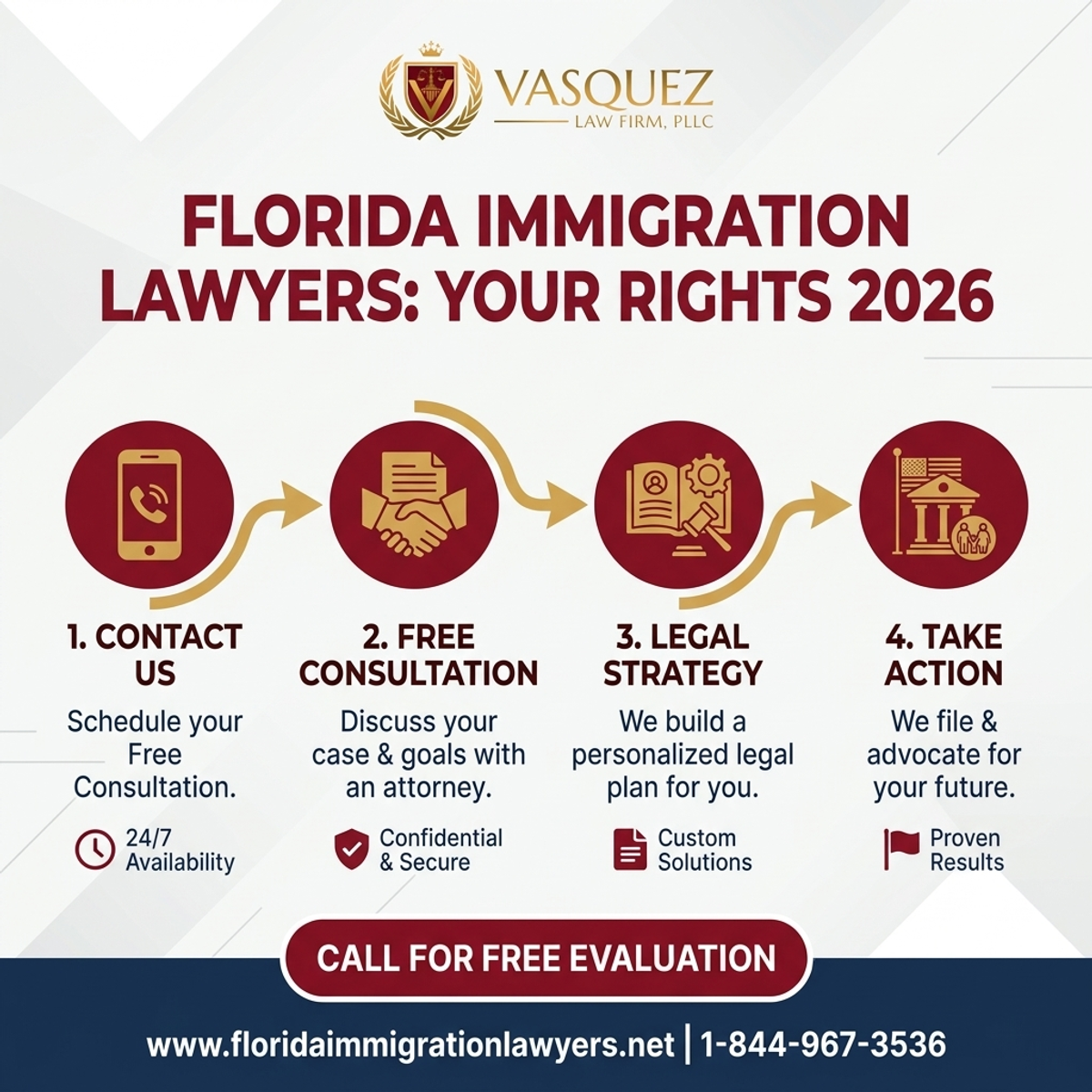
Step-by-Step Process — Immigration Lawyer Orlando Free Consultation: Your Rights 2026
What to Do During an ICE Encounter
- Remain Calm: It is natural to feel anxious, but staying calm helps you think clearly and assert your rights effectively.
- Do Not Open Your Door Without a Warrant: If ICE agents are at your home, ask them to slide a warrant under the door or hold it up to a window. A warrant for arrest (Form I-200) or a search warrant (signed by a judge) is generally required for them to enter.
- Exercise Your Right to Remain Silent: You have the right not to answer questions about your citizenship, immigration status, or how you entered the U.S. Say, "I want to remain silent."
- Do Not Sign Anything: Never sign any document presented by an ICE agent without first consulting with an attorney. You may be signing away your rights.
- State Your Desire for an Attorney: Clearly tell the officers, "I wish to speak with an attorney." Repeat this if they continue questioning.
- Document Everything: If possible, write down or remember details like the agents' badge numbers, vehicle descriptions, and what was said.
- Contact an Attorney Immediately: As soon as you are able, call an immigration lawyer. Florida Immigration Lawyers is available 24/7 to assist.
Navigating the Immigration Process: A Step-by-Step Guide
The immigration process in the United States is multifaceted, with different pathways depending on your goals, such as family reunification, employment, or seeking protection. While specific steps vary greatly by case type (e.g., green card, visa, citizenship), a general framework applies to most. Understanding this framework is crucial for anyone beginning their immigration journey in Florida, from Orlando to Pembroke Pines.
Each immigration pathway involves distinct forms, eligibility criteria, and evidence requirements. For instance, a family-based petition, such as an I-130, involves a U.S. citizen or lawful permanent resident sponsoring a family member. An employment-based petition, like an H-1B visa, requires employer sponsorship and specific qualifications. An asylum claim, on the other hand, involves demonstrating a well-founded fear of persecution. Regardless of the path, meticulous preparation and adherence to legal guidelines are paramount. Errors can lead to significant delays, Requests for Evidence (RFEs), or even denials, making professional legal guidance essential.
As of 2026, USCIS and EOIR continue to process a high volume of cases, and staying informed about current policies and procedures is critical. Florida Immigration Lawyers assists clients in preparing and submitting accurate applications, responding to any inquiries from immigration authorities, and representing them in interviews or court. Our goal is to streamline the process for you, minimizing stress and maximizing your chances of a favorable outcome. We handle cases across Florida, including those processed at the USCIS Lockbox facilities and local field offices.
Key Stages in Florida Immigration Cases
- Initial Consultation and Eligibility Assessment: Meet with an attorney to discuss your goals, review your background, and determine the most suitable immigration pathway.
- Petition Filing (e.g., I-130, I-140): The sponsor (family member or employer) files the initial petition with USCIS, establishing the relationship or employment offer.
- Application Filing (e.g., I-485, DS-260): Once the petition is approved and a visa is available (if applicable), the beneficiary files their application for adjustment of status (within the U.S.) or consular processing (abroad).
- Biometrics Appointment: Applicants attend an appointment to provide fingerprints, photographs, and signatures for background checks.
- Interview: Many immigration applications require an interview with a USCIS officer (for adjustment of status) or a consular officer (for consular processing).
- Decision and Card Issuance: Upon approval, the applicant receives their green card, visa, or naturalization certificate.
- Compliance and Maintenance: For permanent residents, maintaining residency and eventually applying for citizenship involves further steps and adherence to laws.
Essential Documents for Your Immigration Case
Preparing a comprehensive set of documents is a cornerstone of any successful immigration application. Missing or incorrect documentation is a common reason for delays or denials. While the exact list varies significantly based on the type of petition or application you are filing, there are common categories of documents that most immigrants in Florida will need to gather.
When working with an experienced immigration attorney at Florida Immigration Lawyers, you will receive a personalized checklist tailored to your specific case. Generally, documents fall into categories such as identity, civil status, financial support, and any specific evidence related to your eligibility for a particular benefit. For example, a family-based petition will require proof of relationship, while an employment-based petition will need evidence of qualifications and job offers. It's crucial that all documents are authentic, translated if necessary, and presented in the format requested by USCIS or the Department of State.
Organizing these documents efficiently from the outset can save considerable time and stress. Always keep original documents safe and provide only copies unless specifically requested. Understanding the requirements, such as those detailed in 8 CFR (Code of Federal Regulations) pertaining to immigration, helps ensure compliance. Our firm assists clients in Pembroke Pines, Orlando, and across Florida in meticulously preparing and reviewing all required documentation before submission, reducing the likelihood of RFEs or other issues.
Key Statistics — Immigration Lawyer Orlando Free Consultation: Your Rights 2026
Common Document Checklist Categories
- Identity Documents: Passport, birth certificate, national ID card.
- Civil Status Documents: Marriage certificates, divorce decrees, death certificates (for spouses).
- Financial Documents: Tax returns, employment letters, bank statements, affidavits of support (Form I-864).
- Educational/Professional Documents: Diplomas, transcripts, professional licenses, employment history.
- Police & Court Records: Any arrest records, court dispositions, or certificates of good conduct.
- Medical Examination Records: Form I-693 (Report of Medical Examination and Vaccination Record).
- Photographs: Passport-style photographs meeting USCIS specifications.
- Proof of Relationship: Birth certificates of children, marriage photos, joint bank accounts, utility bills (for family petitions).
- Travel Records: Previous visas, I-94 arrival/departure records, travel history.
Typical Timelines for Immigration Cases in Florida (2026)
As of 2026, immigration processing times vary significantly based on the type of application, the specific USCIS service center or field office, and the current backlogs. While there are general estimates, individual cases can experience longer or shorter durations. For example, a family-based green card might take anywhere from one to several years, depending on the visa category and country of origin, whereas naturalization applications generally process faster.
Factors influencing these timelines include the volume of applications received, staffing levels at USCIS and the Executive Office for Immigration Review (EOIR), policy changes, and the complexity of individual cases (e.g., criminal history, Requests for Evidence). For Florida residents, cases might be processed at the USCIS National Benefits Center, various service centers (e.g., California, Nebraska), and local field offices such as Orlando, Miami, or Tampa. The USCIS website provides updated average processing times, but these are only estimates.
Working with an experienced immigration lawyer can help you prepare a thorough application, potentially reducing delays caused by RFEs. Our firm helps clients in Pembroke Pines, Orlando, and across Florida set realistic expectations and understand the various stages of their case, from initial filing to final decision. We monitor official processing times and advise you on potential strategies to mitigate delays where possible, ensuring your application moves as efficiently as the system allows.
Immigration Processing Timeline Examples (2026)
| Stage | Typical Timeframe | Notes |
|---|---|---|
| I-130 Petition (Family-Based) | 10-24 months | Varies by relationship and USCIS service center. |
| I-485 Adjustment of Status | 12-36 months | Depends on USCIS field office (e.g., Orlando, Miami) and visa availability. |
| N-400 Naturalization | 6-18 months | Generally faster, but can vary by field office workload. |
| Asylum Interview Scheduling | 1-3 years (or more) | Asylum backlog is significant; 'last in, first out' policy for some cases. |
| Removal Proceedings (EOIR) | Months to several years | Highly dependent on court docket, judge, and case complexity. |
Understanding Immigration Lawyer Fees and Costs in Florida
The cost of an immigration lawyer in Florida, including Orlando and Pembroke Pines, varies based on the complexity of the case, the attorney's experience, and the specific services required. While some firms, like Florida Immigration Lawyers, offer free initial consultations, subsequent legal fees can range significantly. It's important to understand that legal fees are separate from government filing fees, which are paid directly to agencies like USCIS or the Department of State.
Legal fees are typically structured in one of two ways: flat fees for specific services (e.g., a green card application, a deportation defense case) or hourly rates for more complex or unpredictable cases. A flat fee provides predictability, while an hourly rate reflects the actual time spent on your case. During your free consultation, our attorneys will discuss the estimated costs for your specific situation, providing transparency and helping you budget for your immigration journey. We believe in clear communication regarding all financial aspects.
Government filing fees can also be substantial and are non-refundable. These fees are subject to change, so it's always best to check the official USCIS website for the most current amounts. Our firm will help you identify all required government fees and ensure they are paid correctly. Investing in professional legal representation, while an expense, often proves to be a cost-effective decision in the long run, preventing costly mistakes and improving the likelihood of a successful outcome.
Typical Immigration Case Cost Components
| Item | Typical Fee | Notes |
|---|---|---|
| Initial Consultation | Free (at our firm) | Essential for case assessment and understanding options. |
| Visa Petition (e.g., I-130) | Flat Fee Range | Attorney fees vary by firm and complexity. |
| Adjustment of Status (I-485) | Flat Fee Range | Includes associated forms like I-765 (EAD) and I-131 (Advance Parole). |
| Deportation Defense | Hourly or Flat Fee | Can be substantial due to court appearances and extensive legal work. |
| Naturalization (N-400) | Flat Fee Range | Typically less complex than other petitions. |
| USCIS Filing Fees | Varies by form | Paid directly to USCIS; subject to change. |
| Biometrics Fee | Separate, if applicable | Paid to USCIS for fingerprinting and background checks. |
Do not navigate this complex process alone. The stakes are high, and the legal landscape is constantly shifting. Contact Florida Immigration Lawyers today for a free consultation. Our experienced attorneys are ready to provide the guidance and representation you need to protect your rights and achieve your immigration goals.
Common Mistakes to Avoid in Immigration Cases
Navigating the immigration system is fraught with potential pitfalls. Even minor errors can lead to significant delays, denials, or even trigger removal proceedings. Avoiding these common mistakes is crucial for anyone seeking to secure their immigration status in Florida.
- Providing False Information: Lying or misrepresenting facts on any immigration form or during an interview can lead to severe penalties, including a permanent bar from the U.S. Always be truthful and accurate.
- Missing Deadlines: Immigration processes are time-sensitive. Failing to file applications, respond to RFEs, or attend appointments by their due dates can result in automatic denials or case closure.
- Not Seeking Legal Advice: Attempting to navigate complex immigration laws without an attorney often leads to errors in form selection, eligibility assessment, or strategy, costing more in the long run.
- Traveling Without Permission: Leaving the U.S. while an adjustment of status application is pending, or without advance parole, can be considered an abandonment of your application.
- Incorrectly Completing Forms: Errors, omissions, or using outdated versions of forms can result in rejection or significant delays. USCIS is very particular about form accuracy.
- Not Updating Your Address: Failing to inform USCIS and the immigration court (if applicable) of a change of address can lead to missed notices, interview appointments, or even a removal order issued in absentia.
- Ignoring Official Notices: USCIS or EOIR notices are critical. Ignoring them can mean missing crucial deadlines or opportunities to respond to issues in your case.
- Overstaying Your Visa: Remaining in the U.S. beyond your authorized period of stay can trigger bars to re-entry and make future visa applications extremely difficult.
- Having Undisclosed Criminal History: Any criminal arrests or convictions, even minor ones, must be disclosed. Failure to do so can be considered a misrepresentation and lead to denial.
- Not Preparing for Interviews: Appearing for an interview without understanding your application, potential questions, or required documents can jeopardize your case.
- Signing Documents Without Understanding: Never sign any document from ICE or other authorities if you don't fully comprehend its contents or implications. Always consult an attorney.
- Not Keeping Copies of Everything: Always keep a complete copy of every document you submit to or receive from immigration authorities for your records.
When to Call a Lawyer for Your Immigration Case
While some immigration processes may seem straightforward, many situations warrant the immediate attention of an experienced immigration lawyer. If you are facing any of the following scenarios in Florida, contacting Florida Immigration Lawyers is highly recommended to protect your rights and ensure the best possible outcome.
You should seek legal counsel if you are facing deportation or removal proceedings, as these cases are time-sensitive and incredibly complex, requiring expert defense. If you have a criminal record, even a seemingly minor one, it can significantly impact your immigration eligibility, and an attorney can assess potential waivers or relief. Individuals seeking asylum or refugee status also need legal guidance due to the high burden of proof and specific legal requirements. Furthermore, if your application has been denied, you've received a Request for Evidence (RFE) or a Notice of Intent to Deny (NOID), an attorney can help formulate a strong response or appeal.
Even for seemingly simple applications, a lawyer can provide peace of mind and ensure accuracy. This includes family-based petitions, adjustment of status, or naturalization applications. If you have previously been denied entry to the U.S., have a history of overstaying a visa, or have any other complex immigration history, legal representation is crucial. Our attorneys at Florida Immigration Lawyers are adept at handling these challenging situations, offering strategic advice and vigorous representation throughout your immigration journey in Florida.
About Florida Immigration Lawyers
Florida Immigration Lawyers is a leading law firm dedicated to providing comprehensive and compassionate immigration legal services across the entire state of Florida. With a deep understanding of U.S. immigration law and its impact on individuals and families, our experienced attorneys are committed to helping clients achieve their immigration goals. We serve diverse communities, including those in Orlando, Pembroke Pines, Miami, Tampa, and beyond, offering personalized attention and strategic legal solutions.
Our firm specializes in a broad range of immigration matters, including family-based immigration, employment visas, deportation defense, asylum, naturalization, and visa applications. We pride ourselves on our client-centered approach, ensuring that every individual receives tailored advice and vigorous representation. Available 24/7, we offer free consultations to discuss your case and provide clear guidance on your best path forward. Choose Florida Immigration Lawyers for a trusted partner in your immigration journey.
Sources and References
- U.S. Citizenship and Immigration Services (USCIS)
- Executive Office for Immigration Review (EOIR)
- U.S. Department of State
- 8 U.S.C. Chapter 12 - Immigration and Nationality Act (INA)
- 8 CFR - Code of Federal Regulations, Title 8, Aliens and Nationality
- U.S. Constitution: Fourth, Fifth, and Sixth Amendments
- USCIS Policy Manual
- American Immigration Council - Reports on ICE Operations
Related services: immigration waivers, humanitarian protection programs, DACA renewal and applications, temporary protected status (TPS).
This article provides general legal information and is not intended as legal advice. Every case is unique, and outcomes depend on specific facts and circumstances. Contact an attorney for advice about your particular situation.
Your immigration journey is too important to navigate without expert legal support. Whether you need an immigration lawyer in Orlando for a free consultation, or assistance anywhere else in Florida, our team is ready to help. Protect your rights and secure your future. Call Florida Immigration Lawyers today at 1-844-967-3536 for a free, confidential consultation. Se Habla Español - Estamos aqui para ayudarle.
Do Not Navigate This Process Alone
Our experienced immigration attorneys are ready to fight for you. Get a free, confidential consultation today.
Se Habla Español
Frequently Asked Questions

William J. Vásquez
Founding Attorney · Vasquez Law Firm
U.S. Air Force veteran and immigration attorney with years of hands-on U.S. immigration experience. J.D., NCCU School of Law. AILA member. Admitted to the 4th, 5th, and 11th Circuit Courts.
Available 24/7 - Free Evaluations
Reviewed for legal accuracy by William J. Vásquez
Licensed in North Carolina; U.S. immigration is federal practice.
Related Legal Services
Our Florida immigration attorneys can help you with immigration practice areas, free immigration consultation and experienced immigration attorneys. Call today at 1-844-967-3536 for a free consultation.
Related Links
Related Topics
Free Legal Consultation
Discuss your case with our experienced attorneys. We're available 24/7.
Se Habla Español - Estamos aquí para ayudarle.
Related Articles
Facing Visa Denial & Consular Return in Florida? 2026 Guide
A 221(g) visa refusal, often leading to a consular return, is a common but often misunderstood setback in the immigration process. It means your application requires further action, either by you submitting additional documents or by the consulate undergoing administrative processing. This article, tailored for individuals in Florida in 2026, provides a comprehensive guide to understanding 221(g) refusals, the administrative processing timeline, and the step-by-step actions required for resolution. We delve into common mistakes to avoid, potential costs, and crucial scenarios where legal counsel from Florida Immigration Lawyers becomes indispensable. Learn how to navigate these challenges effectively and increase your chances of a successful visa outcome.
Immigration Lawyer Orlando Free Consultation in 2026
Facing immigration issues in Florida can be daunting. This post explores how a free consultation with an immigration lawyer in Orlando can be your first step toward resolving challenges. Learn about preparation, common issues, mistakes to avoid, and when to seek legal help.
TPS to Green Card Pathway in Florida: 2026 Guide
Navigating the pathway from TPS to a green card in Florida can be complex. This guide covers the latest news for Hondurans in 2026 and offers a detailed overview of the adjustment of status process. Learn about eligibility, steps, costs, and common mistakes to avoid. Call Florida Immigration Lawyers for personalized legal assistance.
Dual Citizenship Lawyer: Understanding Your Options in
Considering dual citizenship while pursuing naturalization in Florida? The USCIS citizenship interview is a critical step, and understanding its intricacies is key to success. This guide provides comprehensive tips for preparing for your naturalization interview, covering everything from document checklists to common mistakes to avoid. Learn about the process, estimated timelines for 2026, and how an experienced dual citizenship lawyer in Florida can provide invaluable assistance. Florida Immigration Lawyers offers expert guidance for residents across the state, ensuring you are well-prepared for every stage of your journey to U.S. citizenship.