Dual Citizenship Lawyer: Understanding Your Options in
Considering dual citizenship while pursuing naturalization in Florida? The USCIS citizenship interview is a critical step, and understanding its intricacies is key to success. This guide provides comprehensive tips for preparing for your naturalization interview, covering everything from document checklists to common mistakes to avoid. Learn about the process, estimated timelines for 2026, and how an experienced dual citizenship lawyer in Florida can provide invaluable assistance. Florida Immigration Lawyers offers expert guidance for residents across the state, ensuring you are well-prepared for every stage of your journey to U.S. citizenship.

Navigating the path to U.S. citizenship, especially when considering dual nationality, can be complex. While U.S. law generally permits dual citizenship, the naturalization process, which includes a critical interview, requires meticulous preparation. A knowledgeable dual citizenship lawyer in Florida can offer invaluable support, ensuring you understand the implications of dual nationality and are fully prepared for your citizenship interview with USCIS. They can help gather necessary documents, anticipate potential challenges, and provide specific guidance tailored to your situation, increasing your chances of a successful outcome.
- Understand the U.S. stance on dual citizenship and its implications.
- Prepare thoroughly for the USCIS naturalization interview, a key step to U.S. citizenship.
- Gather all required documents, including personal records and immigration forms.
- Anticipate common interview questions and potential legal challenges.
- Seek legal counsel from a Florida immigration attorney specializing in naturalization and dual citizenship.
Many individuals in Florida dream of becoming U.S. citizens, a significant milestone that offers numerous benefits and responsibilities. For some, this journey also involves questions about maintaining their original nationality, leading to considerations of dual citizenship. While the United States generally permits dual nationality, the path to becoming a U.S. citizen, known as naturalization, is rigorous and culminates in a crucial citizenship interview with U.S. Citizenship and Immigration Services (USCIS).
Preparing for this interview is paramount, as it is your opportunity to demonstrate your eligibility and commitment to the United States. From understanding the nuances of U.S. law regarding dual citizenship to meticulously gathering documents and practicing for the civics and English tests, every step matters. This comprehensive guide will equip you with essential tips and insights for your naturalization interview, focusing on the specific context of Florida, including cities like Naples. We will also touch upon how a dual citizenship lawyer can be an indispensable ally throughout this process.
Do not navigate this complex process alone. For personalized guidance and to ensure you are fully prepared for your citizenship interview, call Florida Immigration Lawyers at 1-844-967-3536 for a free consultation. Our experienced team is ready to assist you.
Preparing for Your USCIS Citizenship Interview in Florida
The USCIS citizenship interview is a pivotal moment in your journey toward becoming a U.S. citizen. It's designed to confirm your eligibility, verify the information on your Form N-400, Application for Naturalization, and assess your English proficiency and knowledge of U.S. history and government (civics). For Florida residents, USCIS field offices in locations such as Miami, Orlando, and Tampa conduct these interviews. The atmosphere is generally professional, but it can be intimidating without proper preparation.
Effective preparation involves several key aspects. Firstly, you must thoroughly review your N-400 application. Ensure all information is accurate and up-to-date. Any changes since filing must be disclosed to the USCIS officer. Secondly, dedicate significant time to studying for the English and civics tests. The English test comprises reading, writing, and speaking components, while the civics test requires you to answer a certain number of questions correctly out of a possible 100. Many resources are available on the USCIS website to aid your study. Finally, understand the importance of your demeanor; be polite, honest, and respectful. Your confidence stems from thorough preparation, which is crucial for a successful outcome in your naturalization interview.
Understanding the Naturalization Oath of Allegiance
Beyond the interview itself, future citizens must be prepared to take the Oath of Allegiance. This oath involves renouncing allegiance to any foreign state or sovereignty, supporting the U.S. Constitution and laws, and performing work of national importance when required. While this sounds like it prohibits dual citizenship, U.S. courts have generally interpreted this as an expression of primary loyalty, not an absolute prohibition on holding another nationality. A dual citizenship lawyer can clarify these nuances.
What is the Naturalization Interview Process in Florida?
The naturalization interview process in Florida involves several key stages designed to assess an applicant's eligibility for U.S. citizenship. As of 2026, after you file Form N-400 and attend your biometrics appointment, USCIS will schedule your interview at a local field office, such as the one serving Naples residents. During the interview, an immigration officer will review your application, test your English and civics knowledge, and ask questions about your background.
The interview typically begins with the officer placing you under oath, swearing to tell the truth. They will then proceed to verify your identity and review your N-400 application section by section. This includes questions about your personal history, family, residences, employment, trips outside the U.S., and your moral character. You will then undertake the English test, which involves reading one sentence, writing one sentence, and conversing with the officer. Following this is the civics test, where you must correctly answer 6 out of 10 questions from the 100 civics questions list. If you pass, the officer will conclude the interview and inform you of the next steps, which may include a request for additional documents or an immediate decision. The entire process aims to ensure you meet all statutory requirements under the Immigration and Nationality Act (INA), specifically INA Section 316 and 319, which govern general naturalization requirements.
Step-by-Step Guide to Your Naturalization Interview
- Arrival and Check-in: Arrive at the USCIS field office (e.g., Miami, Orlando, or Tampa) at least 15-30 minutes before your scheduled time. You will go through security and check in at the reception desk.
- Waiting Area: You will wait in a designated area until an immigration officer calls your name. This is a good time to review your documents and mentally prepare.
- Oath and Identity Verification: The officer will escort you to their office, ask you to take an oath to tell the truth, and verify your identity using your biometrics and identification documents.
- N-400 Application Review: The officer will go through your N-400 application, asking questions to confirm the information and clarify any discrepancies. Be honest and provide clear answers.
- English Language Test: This part assesses your ability to read, write, and speak basic English. You will read a sentence aloud, write a dictated sentence, and converse with the officer in English.
- Civics Test: You will be asked up to 10 questions from the list of 100 civics questions. You must answer at least 6 correctly to pass.
- Final Review and Decision: The officer will review all information, ask if you have any additional documents, and inform you of the next steps. They may issue a decision immediately, continue your case, or request more evidence.
- Oath Ceremony: If approved, you will be scheduled for an Oath of Allegiance ceremony, where you officially become a U.S. citizen.
What Documents Do I Need for My Citizenship Interview in Naples?
For your citizenship interview in Naples (or any Florida USCIS office), you must bring a comprehensive set of original documents and copies. While USCIS provides a general checklist, specific circumstances may require additional evidence. Being well-organized and having all necessary paperwork readily accessible can significantly streamline the interview process and prevent delays. This preparation demonstrates your thoroughness and commitment to the naturalization process, making a positive impression on the interviewing officer.
Even if you submitted copies with your N-400, bringing the originals for verification is crucial. The officer will compare the copies to the originals and return them to you. Failing to provide requested documents can lead to a Request for Evidence (RFE) or a continuation of your interview, prolonging your journey to citizenship. Always err on the side of bringing more documentation than you think you might need. If you have any doubts about what to bring, consulting with a Florida immigration attorney can provide clarity and ensure you are fully prepared.
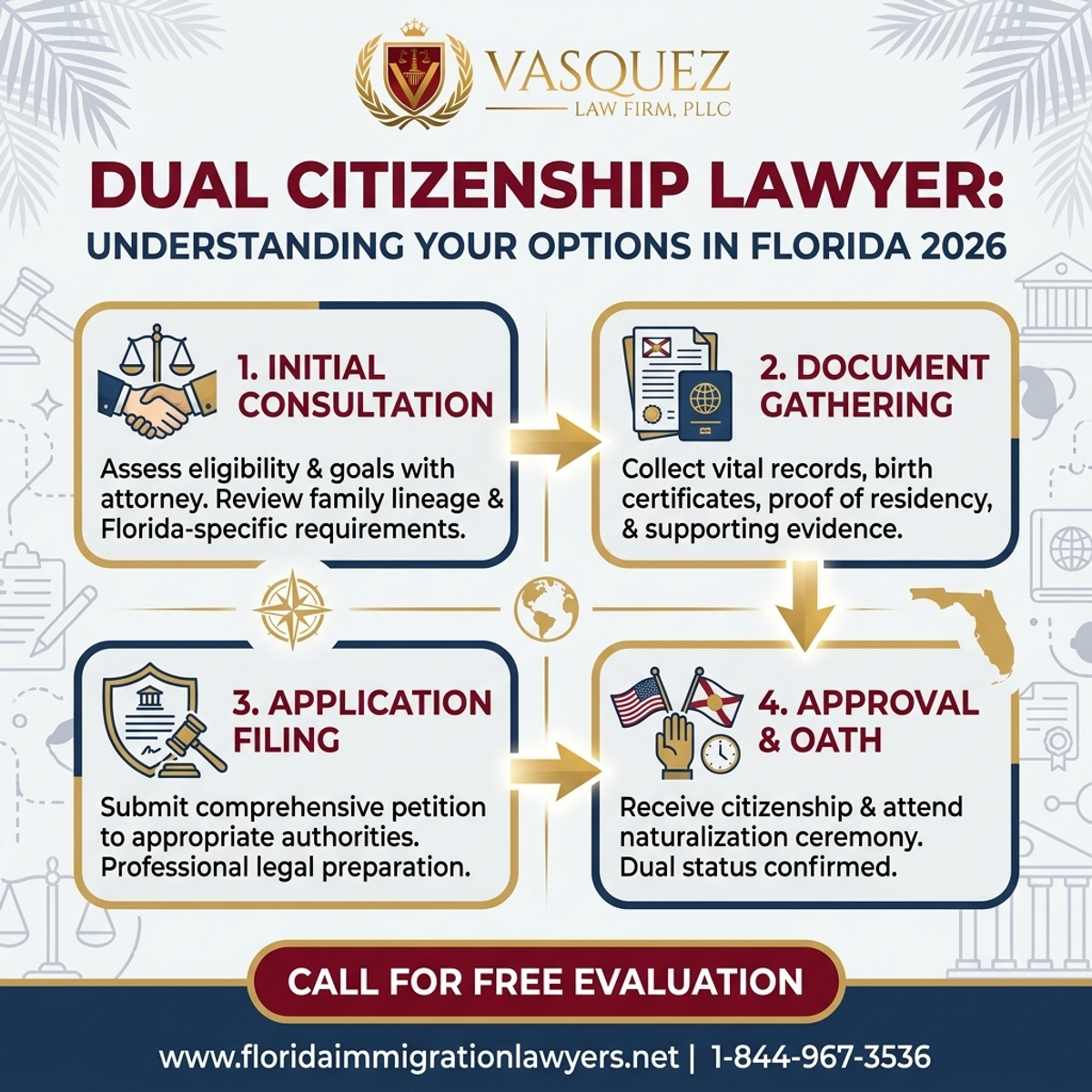
Step-by-Step Process — Dual Citizenship Lawyer: Understanding Your Options in Florida 2026
Essential Document Checklist for Your Interview
- Your Appointment Notice (Form I-797C, Notice of Action)
- Your Green Card (Permanent Resident Card, Form I-551)
- Your State-Issued Identification (e.g., Florida Driver's License or ID card)
- All passports (current and expired)
- Travel history documentation (entry/exit stamps, itineraries)
- Marriage Certificate (if applicable and applying based on marriage to a U.S. citizen)
- Divorce Decrees or Annulment Certificates (if applicable)
- Birth Certificates of your children (if applicable)
- Proof of selective service registration (for males 18-26)
- Tax returns for the past 5 years (or 3 years if applying based on marriage to a U.S. citizen)
- Court disposition documents for any arrests, citations, or detentions, even if charges were dropped or dismissed.
- Evidence of good moral character (e.g., proof of community involvement, volunteer work)
- Any other documents USCIS specifically requested in your appointment letter.
How Long Does the Naturalization Interview Process Take in 2026?
As of 2026, the overall naturalization interview process timeframe can vary significantly based on factors such as the USCIS field office workload, the complexity of your case, and how quickly you respond to any requests for additional information. While the interview itself typically lasts between 20 to 45 minutes, the time from filing your N-400 application to taking the Oath of Allegiance can range from several months to over a year. Applicants in Florida, including those from Naples, might experience different processing times compared to other states due to regional office backlogs.
It is important to regularly check the USCIS website for the most current processing times for the specific field office handling your application. These times are estimates and can fluctuate. For instance, a straightforward case with all documentation in order might move faster than a case with criminal history, multiple international trips, or periods of non-residency. Patience is key, but proactive follow-up and ensuring all information is accurate and complete can help prevent unnecessary delays. Many applicants often wonder if they should seek assistance from a dual citizenship lawyer to navigate these timelines more efficiently.
Typical Naturalization Timeline in Florida (2026 Estimates)
| Stage | Typical Timeframe | Notes |
|---|---|---|
| File Form N-400 | Day 1 | Application submission marks the start of the process. |
| Biometrics Appointment | 3-5 weeks after filing | Fingerprints, photograph, and signature collected for background checks. |
| Interview Scheduling | 6-12 months after filing | USCIS sends an interview notice (Form I-797C). |
| Naturalization Interview | 6-15 months after filing | Conducted at a local USCIS field office in Florida. |
| Decision Notification | Immediately to 120 days after interview | Officer may issue decision on the spot or mail it later. |
| Oath Ceremony Scheduling | 2-8 weeks after approval | Can be same day as interview or a separate ceremony. |
| Oath of Allegiance Ceremony | 7-18 months total | Official swearing-in as a U.S. citizen. |
Understanding the Costs Associated with Your Citizenship Interview
The costs associated with your citizenship interview are primarily the USCIS filing fees for Form N-400, Application for Naturalization. These fees are non-refundable and are set by USCIS, subject to change. As of 2026, applicants must pay a filing fee and a biometrics fee, unless they qualify for a fee waiver or are exempt. It's crucial to check the most current fee schedule on the USCIS website or consult with an attorney, as fees can be updated periodically. These fees cover the administrative processing of your application, including background checks, interviews, and the issuance of your Certificate of Naturalization.
Beyond the direct USCIS fees, other potential costs might include legal fees if you choose to hire an immigration attorney, translation costs for foreign documents, and travel expenses to your biometrics appointment and interview. While hiring a lawyer adds to the overall expense, the expertise and peace of mind they provide can be invaluable, especially for complex cases or if you are considering the implications of dual citizenship. A dual citizenship lawyer can help you understand all potential costs and ensure your application is processed efficiently.
Typical Fee Breakdown for Naturalization (2026 Estimates)
| Item | Typical Fee | Notes |
|---|---|---|
| Form N-400 Filing Fee | Varies (check USCIS website) | Required for processing your naturalization application. |
| Biometrics Services Fee | Varies (check USCIS website) | Covers fingerprinting and background checks. |
| Attorney Legal Fees | Varies by case complexity and firm | Optional, but highly recommended for complex cases or peace of mind. |
| Document Translation Fees | Varies by document and language | If foreign documents need certified English translations. |
| Travel Expenses | Varies by location | Cost to travel to biometrics and interview appointments. |
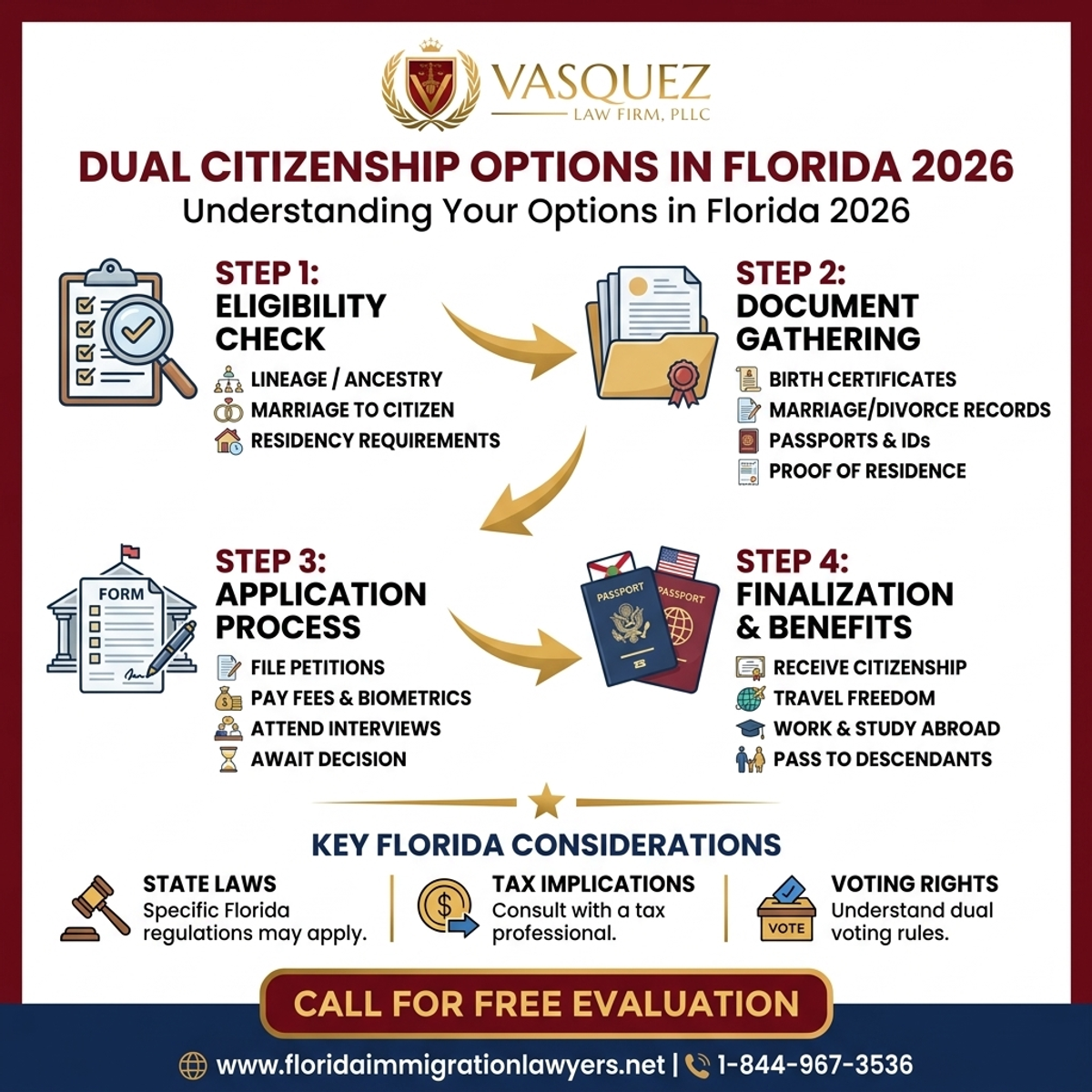
Key Statistics — Dual Citizenship Lawyer: Understanding Your Options in Florida 2026
Do not navigate this process alone. Contact Florida Immigration Lawyers today at 1-844-967-3536 for a free consultation. Our dedicated team is here to help you achieve your American dream, offering expert guidance every step of the way.
How Can a Dual Citizenship Lawyer Assist with Naturalization in Florida?
For many individuals in Florida, the prospect of U.S. naturalization raises questions about maintaining their original nationality. This is where a dual citizenship lawyer becomes an invaluable resource. While the U.S. does not officially endorse or prohibit dual citizenship, navigating the legal complexities requires expert guidance. A lawyer specializing in dual nationality can explain how U.S. law interacts with the laws of your home country, helping you understand the potential benefits and drawbacks, and ensuring your naturalization process aligns with your long-term goals. They can clarify the Oath of Allegiance and its implications, which is often a source of confusion for those seeking to retain dual status.
Beyond advising on dual citizenship, an experienced immigration attorney, particularly one with expertise in naturalization, can significantly enhance your chances of a successful citizenship interview. They can review your N-400 application for accuracy, identify potential issues before they arise, and help you gather all necessary documentation. For residents of Naples and other Florida cities, having local legal representation means personalized advice tailored to regional USCIS office practices. They can also represent you at the interview if needed, provide mock interview sessions, and prepare you for challenging questions, especially if you have a complex immigration history, criminal record, or extended absences from the U.S. Their knowledge of immigration law, including 8 U.S.C. Chapter 12 and relevant CFR provisions, ensures you meet all legal requirements.
Common Mistakes to Avoid During Your Citizenship Interview
- Failing to Update Your N-400: Not informing USCIS of changes in your address, marital status, or criminal history since filing can lead to serious issues, including denial.
- Lack of Preparation for English and Civics Tests: Underestimating these tests is common. Without adequate study, you risk failing and having your case continued or denied.
- Not Bringing All Required Documents: Forgetting original documents or copies requested by USCIS will cause delays and potentially require a second interview.
- Providing Dishonest or Inconsistent Answers: Lying or giving answers inconsistent with your application or previous statements can result in a finding of a lack of good moral character, leading to denial and even potential deportation.
- Misunderstanding the Good Moral Character Requirement: Certain actions, even minor ones like unpaid taxes or traffic tickets, can impact your good moral character assessment if not properly addressed.
- Ignoring Travel History Discrepancies: Any discrepancies between your actual travel history and what is reported on your N-400 can raise red flags and lead to intense scrutiny.
- Not Disclosing All Arrests/Detentions: Even if charges were dropped, expunged, or occurred long ago, you must disclose all arrests, citations, and detentions. Failure to do so is a serious misrepresentation.
- Arriving Late to Your Interview: Punctuality is critical. Arriving late can lead to your interview being rescheduled or even your application being denied for failure to appear.
- Poor Demeanor or Lack of Respect: Being argumentative, disrespectful, or overly casual with the USCIS officer can negatively impact their assessment of your suitability for citizenship.
- Failing to Understand Dual Citizenship Implications: If you intend to pursue dual citizenship, not understanding the laws of both countries can lead to unintended consequences, such as losing your original nationality.
When to Call a Lawyer for Your Naturalization Process
While some naturalization cases are straightforward, many individuals benefit significantly from legal counsel, especially when facing specific challenges or considering dual citizenship. You should consider calling Florida Immigration Lawyers if any of the following scenarios apply to your situation:
- Complex Immigration History: If you have previous denials, deportations, or a history of multiple visa applications.
- Criminal Record: Any arrests, charges, or convictions, no matter how minor or old, can affect your good moral character and require expert legal analysis.
- Extended Absences from the U.S.: If you have taken long trips outside the U.S. that might impact your continuous residency requirement.
- Questions about Dual Citizenship: If you wish to maintain your original nationality and need guidance on the legal implications and process for both countries.
- Difficulty with English or Civics: If you require accommodations or additional support for the English or civics tests, a lawyer can advise on waivers or exceptions.
- Previous Denials: If your N-400 application has been denied in the past, an attorney can help identify the reasons and strategize for a successful reapplication.
- Concerns about the Interview: If you feel anxious or unprepared, mock interviews and personalized advice from an attorney can boost your confidence.
- USCIS Request for Evidence (RFE): If USCIS requests additional documents or information, a lawyer can help you respond accurately and comprehensively.
Our firm, Florida Immigration Lawyers, is well-versed in all aspects of naturalization law, including the intricacies of dual citizenship. We provide comprehensive support, from initial application review to interview preparation and representation, ensuring your journey to U.S. citizenship is as smooth as possible.
About Florida Immigration Lawyers
Florida Immigration Lawyers is a leading immigration law firm dedicated to serving individuals and families across the entire state of Florida. With a deep understanding of U.S. immigration laws and a commitment to our clients, we provide compassionate yet aggressive legal representation. Our experienced attorneys specialize in a wide range of immigration matters, including naturalization, family immigration, asylum, deportation defense, and citizenship. We pride ourselves on offering personalized strategies tailored to each client's unique situation, ensuring the best possible outcomes.
Our firm understands the profound impact immigration decisions have on individuals' lives. We are available 24/7 to answer your questions and offer free consultations to discuss your case. With offices strategically located and a commitment to serving all of Florida, we are your trusted partners in navigating the complexities of U.S. immigration law. Let us put our expertise to work for you. Visit our attorneys page to learn more about our dedicated legal team.
Sources and References
- U.S. Citizenship and Immigration Services (USCIS)
- Executive Office for Immigration Review (EOIR)
- U.S. Department of State - Bureau of Consular Affairs
- 8 U.S.C. Chapter 12 - Immigration and Nationality Act (INA), specifically Sections 316 and 319
- 8 CFR Part 316 - General Requirements for Naturalization
- USCIS Policy Manual - Citizenship and Naturalization
Related services: citizenship test preparation, dual citizenship guidance, citizenship test resources.
This article provides general legal information and is not intended as legal advice. Every case is unique, and outcomes depend on specific facts and circumstances. Contact an attorney for advice about your particular situation.
Your journey to U.S. citizenship is a significant step, and proper preparation for your citizenship interview is crucial. Do not leave your future to chance. Contact Florida Immigration Lawyers today at 1-844-967-3536 for a free consultation. Our experienced team is ready to provide the guidance and support you need. Se Habla Espanol - Estamos aqui para ayudarle.
Do Not Navigate This Process Alone
Our experienced immigration attorneys are ready to fight for you. Get a free, confidential consultation today.
Se Habla Español
Frequently Asked Questions

William J. Vásquez
Founding Attorney · Vasquez Law Firm
U.S. Air Force veteran and immigration attorney with thousands of cases resolved. J.D., NCCU School of Law. AILA member. Admitted to the 4th, 5th, and 11th Circuit Courts.
Available 24/7 - Free Evaluations
Reviewed for legal accuracy by William J. Vásquez
Licensed in North Carolina; U.S. immigration is federal practice.
Related Legal Services
Our Florida immigration attorneys can help you with family immigration services, immigration practice areas and free immigration consultation. Call today at 1-844-967-3536 for a free consultation.
Related Links
Related Topics
Free Legal Consultation
Discuss your case with our experienced attorneys. We're available 24/7.
Se Habla Español - Estamos aquí para ayudarle.
Related Articles
TPS to Green Card Pathway in Florida: 2026 Guide
Navigating the pathway from TPS to a green card in Florida can be complex. This guide covers the latest news for Hondurans in 2026 and offers a detailed overview of the adjustment of status process. Learn about eligibility, steps, costs, and common mistakes to avoid. Call Florida Immigration Lawyers for personalized legal assistance.
Green Card Holders Issued New Warning: Renewal in Florida
Green card holders in Florida must renew their cards timely to avoid complications. Learn about the renewal process, including form I-90, processing times, and common pitfalls.
Immigration Lawyer Orlando Free Consultation: 2026 Guide
For those seeking an immigration lawyer in Orlando, navigating the U.S. immigration system can be daunting. Florida Immigration Lawyers offers free consultations to help you understand your options for family visas, employment petitions, deportation defense, and naturalization. This comprehensive guide details common immigration services, provides a step-by-step process, outlines essential documents, and explains typical timelines and costs for 2026. Learn how to avoid common mistakes and when to seek professional legal help to protect your future in Florida. Our firm serves clients across Orlando, Gainesville, Miami, and throughout the state, providing expert, bilingual support.
I-601 Waiver Lawyer Florida: Your 2026 Inadmissibility Guide
Facing inadmissibility to the U.S. can be daunting, but an I-601 waiver offers a pathway forward for many individuals in Florida. This comprehensive guide, updated for 2026, delves into the intricacies of the I-601 waiver, explaining who qualifies, the critical requirement of proving "extreme hardship" to a U.S. citizen or LPR relative, and the step-by-step application process. We cover essential documentation, typical processing timelines, and cost considerations, highlighting the importance of avoiding common mistakes. Florida Immigration Lawyers provides expert legal assistance across the state, from Tampa to Miami, ensuring your application is meticulously prepared and strategically presented. Discover how our experienced attorneys can help you overcome inadmissibility and achieve your immigration goals.