Facing Visa Denial & Consular Return in Florida? 2026 Guide
A 221(g) visa refusal, often leading to a consular return, is a common but often misunderstood setback in the immigration process. It means your application requires further action, either by you submitting additional documents or by the consulate undergoing administrative processing. This article, tailored for individuals in Florida in 2026, provides a comprehensive guide to understanding 221(g) refusals, the administrative processing timeline, and the step-by-step actions required for resolution. We delve into common mistakes to avoid, potential costs, and crucial scenarios where legal counsel from Florida Immigration Lawyers becomes indispensable. Learn how to navigate these challenges effectively and increase your chances of a successful visa outcome.

If your visa application is refused under 221(g), it means the consular officer needs more information or further administrative processing before a final decision can be made. This is not a permanent visa denial but requires additional steps, often involving a consular return of documents or waiting for security checks to conclude. In Florida, understanding this process is crucial for timely resolution. It typically involves submitting requested documents or patiently awaiting the outcome of background checks, which can vary significantly in duration. Seeking legal guidance can help navigate these complexities effectively.
- A 221(g) refusal is a temporary hold, not a permanent denial.
- It usually requires submitting additional documents or undergoing administrative processing.
- Processing times vary, from weeks to several months, depending on the case.
- Regularly check your application status online.
- Consulting an immigration lawyer can significantly aid in resolving the issue.
Experiencing a visa denial can be a deeply frustrating and confusing ordeal, especially when you have planned your future around a successful application. For many individuals in Florida, receiving a 221(g) visa denial or being subject to a consular return means their immigration journey has hit an unexpected roadblock. This temporary refusal, often requiring additional documentation or administrative processing, leaves many feeling uncertain about their next steps. Understanding the nuances of a 221(g) refusal is critical to navigating this challenging period and moving forward.
At Florida Immigration Lawyers, we understand the anxieties and complexities that arise from such situations. Our dedicated team is here to provide clarity and expert legal assistance, helping you understand why your visa was refused and what actions you can take to resolve it. We guide you through every stage, from gathering necessary documents to communicating with consular offices. Don't face this process alone. Call Florida Immigration Lawyers at 1-844-967-3536 for a free consultation and let us help you explore your options.
What is a 221(g) Visa Refusal and Consular Return in Florida?
A 221(g) visa refusal signifies that your visa application has been temporarily denied because the consular officer requires more information or further processing before making a final decision. This is distinct from a permanent visa denial and is often referred to as a "consular return" because the application effectively returns to you for further action or to the consulate for additional review. As of 2026, the reasons for a 221(g) refusal typically fall into two main categories: missing documents or information, or the need for administrative processing.
When a consular officer issues a 221(g) refusal, they will provide a refusal letter or slip indicating the reason. This might be a request for specific documents that were not submitted during the interview, such as additional financial records, proof of ties to your home country, or further details about your travel history. Alternatively, the refusal may state that your case requires "administrative processing," which involves extensive background checks and security clearances. This can be particularly common for applicants from certain countries, or those with specific educational backgrounds or work experiences that trigger additional scrutiny. Understanding the precise reason for your 221(g) is the first crucial step toward resolution. For more information on visa categories, you can visit travel.state.gov.
How Does Administrative Processing Work After a Visa Denial?
Administrative processing is a mandatory security review that often follows a 221(g) visa refusal, particularly when the consular officer indicates that your case requires further checks beyond the initial interview. This process involves a comprehensive evaluation of your background, including security clearances, name checks, and sometimes inter-agency consultations. It is not an indication of wrongdoing but rather a standard procedure for certain applicants or circumstances. As of 2026, administrative processing can be triggered by various factors, such as specific fields of study, prior travel history to certain regions, or information that arose during the interview.
Applicants subject to administrative processing are typically advised that there is no specific timeframe for its completion, and it can range from a few weeks to several months, or even longer in complex cases. During this period, the U.S. Embassy or Consulate usually provides instructions on how to check the status of your application online using the Consular Electronic Application Center (CEAC) status tracker. It is important to monitor this status regularly but avoid excessive inquiries, as they generally do not expedite the process. For individuals in Gainesville, Florida, awaiting the outcome of administrative processing, the uncertainty can be particularly stressful, impacting travel plans, job offers, or family reunification efforts. Patience and adherence to all instructions are vital.
What are the Steps to Resolve a Consular Return After a 221(g) Refusal?
Resolving a consular return after a 221(g) refusal requires a methodical approach, focusing on understanding the specific reason for the refusal and providing the requested information accurately and promptly. The process can seem daunting, but by following a clear set of steps, you can significantly improve your chances of a positive outcome. It is essential to remember that a 221(g) is often a request for more information rather than a permanent rejection, meaning there is usually a path forward if you act diligently.
Here are the typical steps to resolve a 221(g) refusal:
- Understand the Refusal Letter: Carefully read the 221(g) refusal letter provided by the consular officer. It will specify whether you need to submit additional documents or if your case is undergoing administrative processing. If documents are requested, the letter will list them precisely.
- Gather Required Documents: If documents are requested, collect all specified items. Ensure they are complete, accurate, and in the correct format. This might include updated financial statements, employment letters, educational transcripts, police certificates, or medical examination results.
- Submit Documents Promptly: Follow the instructions on how to submit the documents. This usually involves submitting them electronically through the consulate's designated portal or physically at a drop-off location. Timeliness is crucial; delays can prolong the process.
- Monitor Application Status: Regularly check your visa application status using the barcode on your DS-160 form and the case number on the CEAC website. This will indicate any updates on administrative processing or document review.
- Respond to Further Inquiries: Be prepared to respond to any additional requests for information or follow-up interviews. Some cases may require further clarification or an in-person meeting.
- Seek Legal Counsel: If the reasons for the 221(g) are unclear, the administrative processing is taking an unusually long time, or you believe there might be a more complex issue, consult an experienced immigration attorney. They can help interpret the refusal, communicate with the consulate, and strategize the best course of action.
Document Checklist (Commonly Requested):
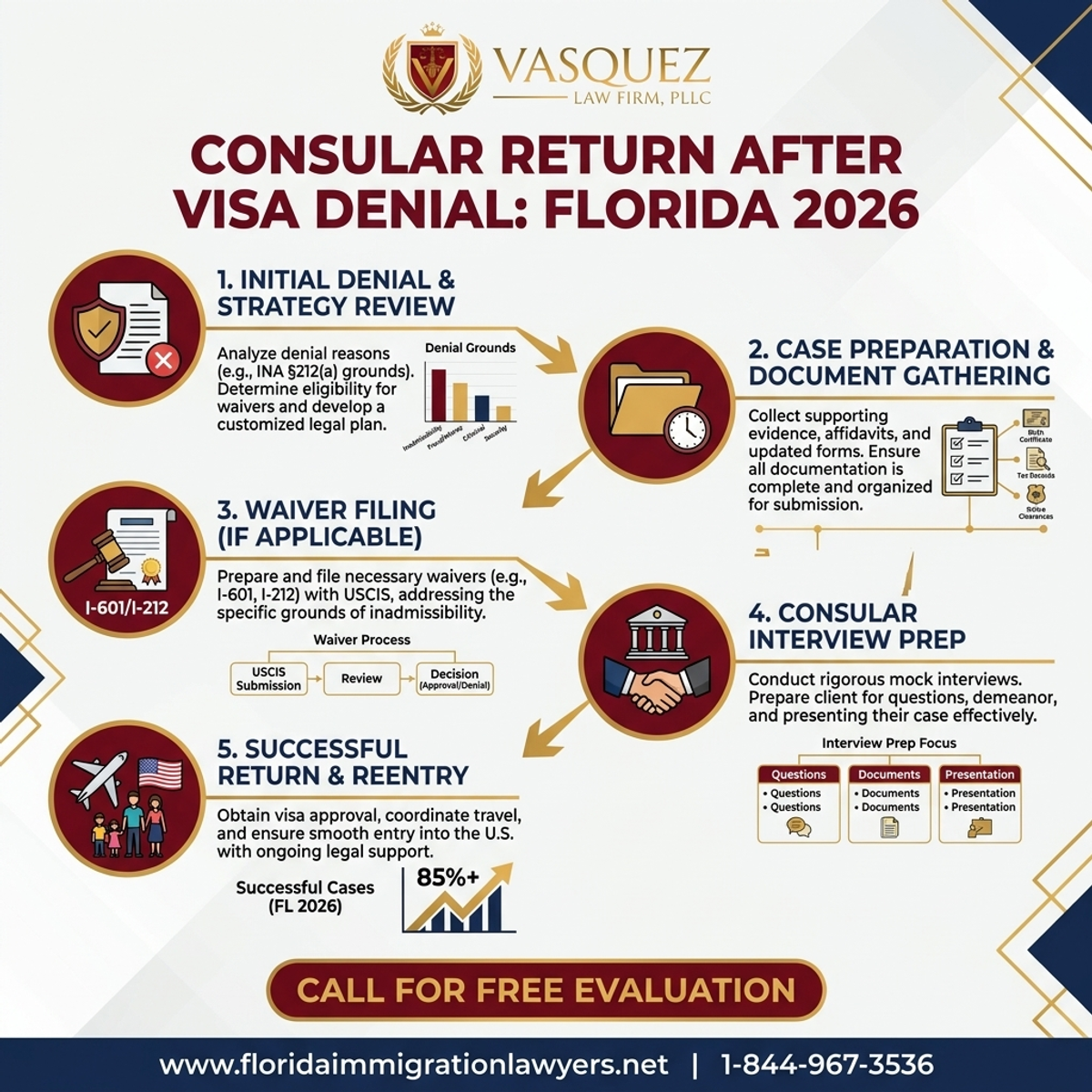
Step-by-Step Process — Consular Return After Visa Denial: Florida 2026
- Original birth certificates and marriage certificates
- Police certificates from all countries of residence
- Financial support documents (e.g., I-864 Affidavit of Support, bank statements)
- Employment letters, tax returns, and pay stubs
- Educational transcripts and diplomas
- Medical examination results
- Proof of relationship for family-based visas
- Detailed itinerary or business plans for non-immigrant visas
For complex family immigration matters that might lead to a 221(g), consider visiting our Family Immigration page for specialized assistance.
Do not navigate this process alone. Contact Florida Immigration Lawyers today to get the guidance you need.
What is the Typical Timeline for 221(g) Administrative Processing in 2026?
As of 2026, the typical timeline for 221(g) administrative processing can vary significantly, ranging from a few weeks to several months, and in some rare cases, even longer than a year. The U.S. Department of State emphasizes that there is no standard timeframe, as each case is unique and depends on the specific circumstances, the complexity of the security checks required, and the workload of the consular post. Factors such as the applicant's nationality, previous travel history, field of study, employment, and any potential security concerns can all influence the duration of administrative processing.
While the uncertainty can be challenging, it is important to avoid making irreversible travel plans or financial commitments until your visa is approved and issued. In Gainesville, Florida, many individuals and families rely on timely visa processing, and delays can cause considerable disruption. Consular posts generally advise applicants to check the CEAC website regularly for updates, as direct inquiries typically do not expedite the process. If no update appears after a reasonable period (e.g., 60 days), an inquiry can be made through the consulate's official channels, but often the advice remains to wait. For more detailed information, please refer to the official USCIS website.
Timeline and Processing Expectations (as of 2026)
| Stage | Typical Timeframe | Notes |
|---|---|---|
| Document Submission (if requested) | 1-2 weeks for initial review | Consulate reviews submitted documents for completeness. |
| Administrative Processing | 2 weeks - 6+ months | Highly variable; includes background checks, security clearances. Some cases may exceed a year. |
| Final Decision/Visa Issuance | 1-3 days after processing concludes | Once administrative processing is complete, a final decision is usually made quickly. |
What Are the Potential Costs Associated with a Consular Return and Visa Reapplication?
Navigating a consular return or a 221(g) visa refusal can involve various financial considerations beyond just the initial visa application fees. While a 221(g) itself usually doesn't incur new government fees unless a completely new application is required, there are several potential costs that applicants in Florida should be aware of. These costs can accumulate, especially if the process takes an extended period or if additional steps are necessary. Understanding these financial implications is crucial for proper planning and avoiding unexpected burdens.
One primary consideration is the potential for new filing fees if your initial application is eventually denied and you need to reapply for a visa. While 221(g) is not a denial, a failure to provide requested information or clear administrative processing can lead to a formal refusal, necessitating a fresh application with new fees. Additionally, travel expenses for attending subsequent interviews at a U.S. consulate, especially if you are traveling internationally, can be significant. This includes airfare, accommodation, and local transportation. For some individuals, the need for expedited travel arrangements due to delays can further increase these costs. Legal fees for expert guidance from an immigration attorney are also a valuable investment, especially in complex cases, as they can help streamline the process and prevent costly mistakes.
Furthermore, there may be costs associated with gathering and translating required documents. Official translations of foreign-language documents, obtaining new police certificates, or securing updated financial records often come with their own fees. These seemingly small expenses can add up. It's important to budget for these possibilities when facing a consular return situation. While exact fee amounts are subject to change, understanding the categories of potential expenses can help you prepare financially. For details on visa fees, refer to 8 CFR Part 103, which outlines general fee structures for immigration benefits, though specific consular fees are managed by the Department of State.
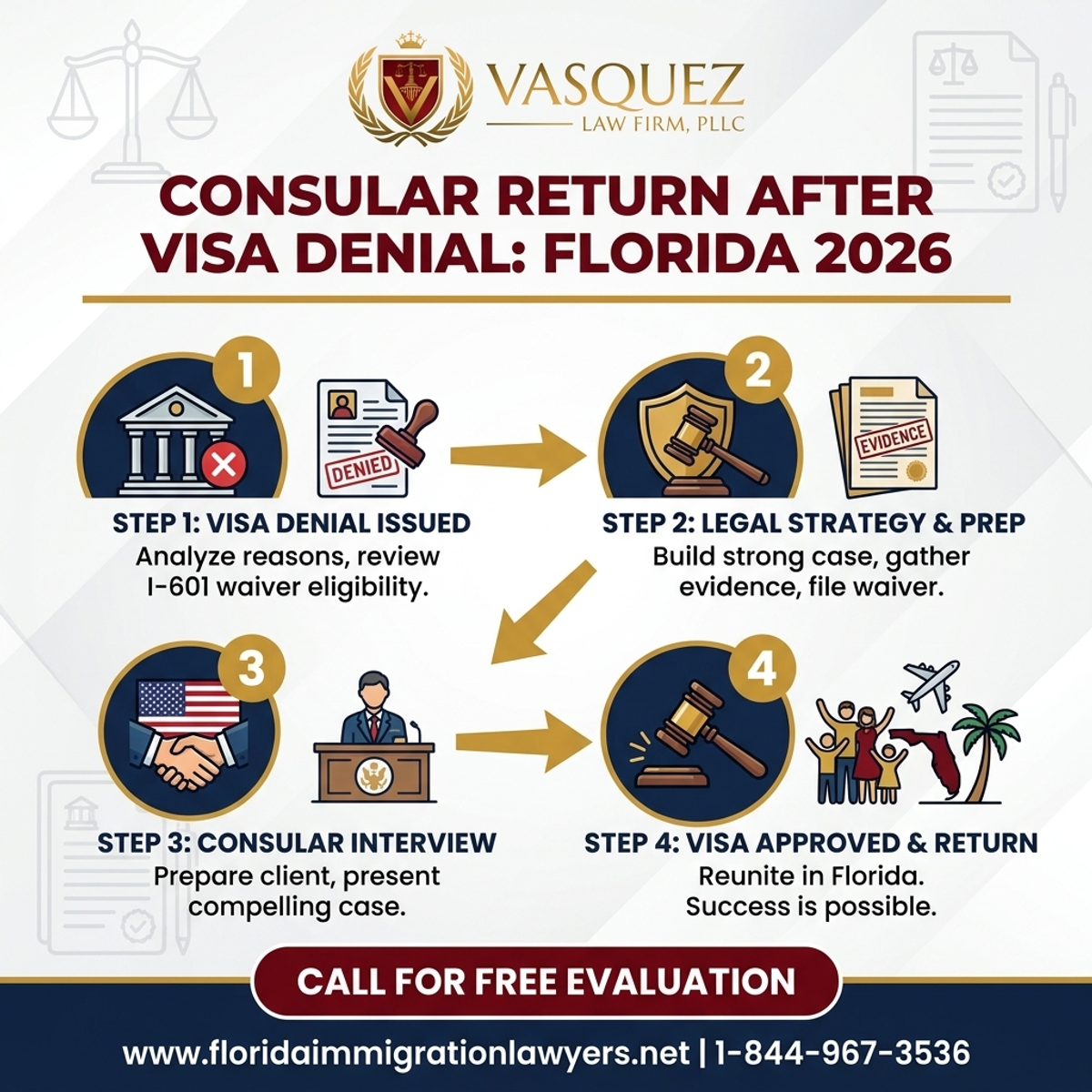
Key Statistics — Consular Return After Visa Denial: Florida 2026
Cost Factors and Fee Breakdown
| Item | Typical Fee | Notes |
|---|---|---|
| USCIS Filing Fees (if reapplication needed) | Varies by visa type | Required for new petitions; fees are subject to change by USCIS. |
| Consular Interview Fees (if reapplication needed) | Varies by visa type | Paid to the U.S. Embassy/Consulate for visa processing. |
| Attorney Fees | Varies based on complexity | For legal representation, advice, and assistance with document preparation. |
| Document Translation & Certification | Varies by document volume | Required for non-English documents; must be certified. |
| Travel & Accommodation | Varies by location | Costs for attending interviews, especially if traveling internationally. |
| Medical Exam Fees (if expired/re-requested) | Varies by provider | If your original medical exam expires or is re-requested. |
If you're concerned about the costs or the complexity of your case, don't hesitate to reach out. Visit our Contact Us page for assistance.
Common Mistakes to Avoid After a 221(g) Visa Refusal
Navigating a 221(g) visa refusal can be tricky, and making certain mistakes can prolong the process or even lead to a permanent denial. Being aware of these common pitfalls can help you avoid unnecessary delays and frustrations.
- Failing to Understand the Reason for Refusal: Many applicants panic without fully understanding why their visa was refused. The 221(g) letter is crucial; it explicitly states what is needed. Misinterpreting it can lead to submitting incorrect documents or taking inappropriate actions.
- Submitting Incomplete or Incorrect Documents: When additional documents are requested, providing only some of them, or submitting ones that are incorrect or poorly translated, will only delay the process further. Each request must be met precisely.
- Delaying Document Submission: Procrastinating on submitting requested documents can be detrimental. Consular offices often have deadlines, and missing them can lead to your case being closed or requiring a new application.
- Making Repeated, Unnecessary Inquiries: While it's natural to be anxious, constantly calling or emailing the consulate about your administrative processing status is generally unhelpful. It can clog communication channels and does not expedite your case.
- Providing False Information or Misrepresenting Facts: Any attempt to provide fraudulent documents or misrepresent facts during the resolution process can lead to severe consequences, including permanent ineligibility for a U.S. visa under INA Section 212(a)(6)(C)(i).
- Traveling Prematurely: Assuming your visa will be approved quickly after submitting additional documents and making travel plans can result in significant financial losses if the process takes longer than expected. Always wait for official approval.
- Assuming a 221(g) is a Permanent Denial: A 221(g) is a temporary refusal, not a permanent denial. Panicking and giving up without pursuing the necessary steps to resolve it means missing a genuine opportunity to obtain your visa.
- Not Seeking Legal Advice for Complex Cases: If your 221(g) involves complex legal issues, a criminal history, or if you've been in administrative processing for an extended period, attempting to resolve it alone can be a significant mistake. An experienced immigration attorney can provide invaluable guidance.
When to Call a Lawyer for a 221(g) Visa Refusal in Florida
While some 221(g) visa refusals are straightforward and can be resolved by simply submitting missing documents, many situations warrant the expertise of an experienced immigration attorney. If you are in Gainesville, Florida, or anywhere else in the state, and facing a consular return, knowing when to seek legal counsel can be the difference between a successful resolution and prolonged uncertainty.
You should consider calling Florida Immigration Lawyers if:
- The Reason for 221(g) is Unclear: If the refusal letter is vague or you don't understand why specific documents are being requested, an attorney can help interpret the consulate's demands and advise on the best response.
- Your Case Involves Complex Issues: This includes past visa denials, a criminal record, previous immigration violations, or allegations of misrepresentation. These complexities often require detailed legal arguments and evidence.
- Administrative Processing is Excessively Long: While there's no fixed timeline, if your case has been in administrative processing for many months without any updates, an attorney can make appropriate inquiries on your behalf and explore potential avenues for resolution.
- You Need to Reapply: If your 221(g) ultimately leads to a formal denial, an attorney can help you understand the reasons for denial and guide you through the process of reapplying, ensuring all issues are addressed.
- You Are Required to Attend a Second Interview: Preparing for a subsequent interview, especially if there are underlying issues, benefits greatly from legal counsel.
Our attorneys at Florida Immigration Lawyers are adept at handling complex visa refusal cases, including those involving deportation defense and asylum claims, which can sometimes intersect with visa issues. We are here to advocate for you.
About Florida Immigration Lawyers
Florida Immigration Lawyers is a leading immigration law firm dedicated to serving individuals and families across the entire state of Florida. With a deep understanding of U.S. immigration law and a commitment to our clients, we provide comprehensive legal services for a wide range of immigration matters, including visa applications, green cards, citizenship, deportation defense, and asylum. Our experienced attorneys are passionate about helping immigrants achieve their American dreams, offering personalized attention and strategic solutions tailored to each unique case.
We pride ourselves on our empathetic approach, ensuring that every client feels heard, understood, and supported throughout their legal journey. Our firm is available 24/7, offering free consultations to discuss your specific needs and outline a clear path forward. Whether you are in Gainesville, Miami, Orlando, or anywhere in between, Florida Immigration Lawyers is your trusted partner for navigating the complexities of immigration law. Visit our website at floridaimmigrationlawyers.net or call us directly at 1-844-967-3536 to schedule your free consultation today.
Sources and References
- U.S. Citizenship and Immigration Services (USCIS)
- U.S. Department of State (Travel.State.Gov)
- Executive Office for Immigration Review (EOIR)
- Immigration and Nationality Act (INA) Section 212(a)(6)(C)(i) - Misrepresentation
- Immigration and Nationality Act (INA) Section 221(g) (8 U.S.C. § 1201(g)) - Refusal of Visas
- 8 Code of Federal Regulations (CFR) Part 103 - Adjudication of Applications and Petitions
Related services: immigration practice areas, citizenship and naturalization, business immigration, experienced immigration attorneys.
This article provides general legal information and is not intended as legal advice. Every case is unique, and outcomes depend on specific facts and circumstances. Contact an attorney for advice about your particular situation.
Don't let a 221(g) visa refusal or consular return deter you from your immigration goals. The experienced team at Florida Immigration Lawyers is ready to help you navigate these challenges. Contact us for a free consultation and personalized legal strategy. Call 1-844-967-3536 today. Se Habla Espanol - Estamos aqui para ayudarle.
If you need legal assistance, learn more about get immigration legal help today, or call us at 1-844-967-3536 for a free consultation.
Do Not Navigate This Process Alone
Our experienced immigration attorneys are ready to fight for you. Get a free, confidential consultation today.
Se Habla Español
Frequently Asked Questions

William J. Vásquez
Founding Attorney · Vasquez Law Firm
U.S. Air Force veteran and immigration attorney with years of hands-on U.S. immigration experience. J.D., NCCU School of Law. AILA member. Admitted to the 4th, 5th, and 11th Circuit Courts.
Available 24/7 - Free Evaluations
Reviewed for legal accuracy by William J. Vásquez
Licensed in North Carolina; U.S. immigration is federal practice.
Related Legal Services
Our Florida immigration attorneys can help you with citizenship and naturalization, family immigration services and immigration practice areas. Call today at 1-844-967-3536 for a free consultation.
Related Links
Related Topics
Free Legal Consultation
Discuss your case with our experienced attorneys. We're available 24/7.
Se Habla Español - Estamos aquí para ayudarle.
Related Articles
Immigration Lawyer Orlando Free Consultation: Your Rights
Navigating immigration law in Florida, especially around Orlando and Pembroke Pines, requires a clear understanding of your rights. This comprehensive guide details the legal protections immigrants have, what to do during an ICE encounter, and a step-by-step overview of the immigration process in 2026. We also cover essential documentation, typical timelines, and a breakdown of legal costs. Learn about common mistakes to avoid and when it's crucial to seek legal counsel. Florida Immigration Lawyers offers free consultations, providing expert guidance for your unique situation across the state.
Immigration Lawyer Orlando Free Consultation in 2026
Facing immigration issues in Florida can be daunting. This post explores how a free consultation with an immigration lawyer in Orlando can be your first step toward resolving challenges. Learn about preparation, common issues, mistakes to avoid, and when to seek legal help.
TPS to Green Card Pathway in Florida: 2026 Guide
Navigating the pathway from TPS to a green card in Florida can be complex. This guide covers the latest news for Hondurans in 2026 and offers a detailed overview of the adjustment of status process. Learn about eligibility, steps, costs, and common mistakes to avoid. Call Florida Immigration Lawyers for personalized legal assistance.
Dual Citizenship Lawyer: Understanding Your Options in
Considering dual citizenship while pursuing naturalization in Florida? The USCIS citizenship interview is a critical step, and understanding its intricacies is key to success. This guide provides comprehensive tips for preparing for your naturalization interview, covering everything from document checklists to common mistakes to avoid. Learn about the process, estimated timelines for 2026, and how an experienced dual citizenship lawyer in Florida can provide invaluable assistance. Florida Immigration Lawyers offers expert guidance for residents across the state, ensuring you are well-prepared for every stage of your journey to U.S. citizenship.