Immigration Documents Checklist Florida: Your 2026 Guide
Navigating the immigration process in Florida requires a precise understanding of required documents and procedures. This comprehensive guide for 2026 provides an essential checklist, detailing the forms, personal identification, financial records, and medical reports needed for common USCIS applications. Learn how to meticulously prepare your paperwork, understand typical processing timelines, and anticipate associated fees. We highlight Florida-specific considerations, including local USCIS offices and immigration courts, and outline critical mistakes to avoid that could jeopardize your application. Discover when legal assistance from Florida Immigration Lawyers is indispensable to ensure accuracy and maximize your chances of success. Get a free case review today.
To successfully navigate the immigration process in Florida in 2026, you will need a meticulously prepared set of immigration documents. This includes various USCIS forms, identity proofs like passports and birth certificates, financial records, medical examination results, and supporting evidence specific to your application type. Accuracy, completeness, and timely submission are paramount to avoid delays or rejections. Consulting an experienced immigration attorney in Florida is highly recommended to ensure all requirements are met and to navigate the complexities of federal immigration law and local procedures effectively.
- Gather all personal identification and civil documents (birth certificates, marriage licenses, passports).
- Complete all required USCIS forms accurately and sign them.
- Obtain necessary financial, medical, and police clearance records.
- Prepare supporting evidence relevant to your specific immigration path (e.g., family relationships, employment offers).
- Seek legal guidance from Florida Immigration Lawyers to review your checklist and application before submission.
Embarking on the journey to live, work, or become a citizen in the United States is a significant step, and for many in Florida, it begins with understanding a complex array of immigration documents. The Sunshine State, with its diverse population and bustling economy, is a common destination for immigrants, making the need for clear guidance on paperwork more critical than ever. Whether you are applying for a green card, a work visa, or naturalization, having a comprehensive checklist of required documents is essential to avoid delays and ensure a smooth process. This guide will walk you through the crucial documents, forms, and procedures you need to know, specifically tailored for those navigating immigration in Florida in 2026.
The immigration landscape is constantly evolving, with new policies and procedures frequently introduced by agencies like USCIS. Staying informed and meticulously preparing your application package can make all the difference. Don't let the daunting task of gathering immigration documents overwhelm you. Understanding each requirement is the first step toward a successful outcome. For personalized assistance and to ensure your application is flawless, do not hesitate to call Florida Immigration Lawyers at 1-844-YO-PELEO for a free case review.
What Immigration Documents Do I Need in Florida for 2026?
As of 2026, the specific immigration documents you need in Florida depend entirely on the type of application you are filing with USCIS. Generally, all applications require proof of identity, civil documents, and forms. For example, family-based petitions will require proof of relationship, while employment-based petitions will need employer sponsorship documents. Naturalization applications demand proof of continuous residency and good moral character.
Navigating the various immigration pathways, from family-based visas to employment green cards or asylum applications, each comes with its unique set of document requirements. In Florida, where many different applications are processed through local USCIS field offices, understanding these specifics is crucial. Common foundational documents include your passport, birth certificate, marriage certificate (if applicable), and any previous immigration paperwork. Beyond these basics, you will also need to provide evidence directly supporting your eligibility for the specific benefit you are seeking. This might include proof of financial support, educational credentials, employment history, or detailed affidavits. The U.S. Citizenship and Immigration Services (USCIS) website is an invaluable resource for specific form instructions and document requirements for each petition type, and it should be consulted regularly for the most up-to-date information. Ensuring that every document is accurate, complete, and properly translated, if necessary, is a critical step in avoiding processing delays. We recommend reviewing the official USCIS website for detailed instructions relevant to your specific case.
How Do I Prepare My Immigration Paperwork in Orlando, Florida?
To prepare your immigration paperwork in Orlando, Florida, begin by identifying the correct USCIS forms for your application and gathering all supporting documents as specified in the form instructions. Organize your documents meticulously, make copies of everything, and ensure all forms are completed accurately and signed where required. Seek legal review before submission.
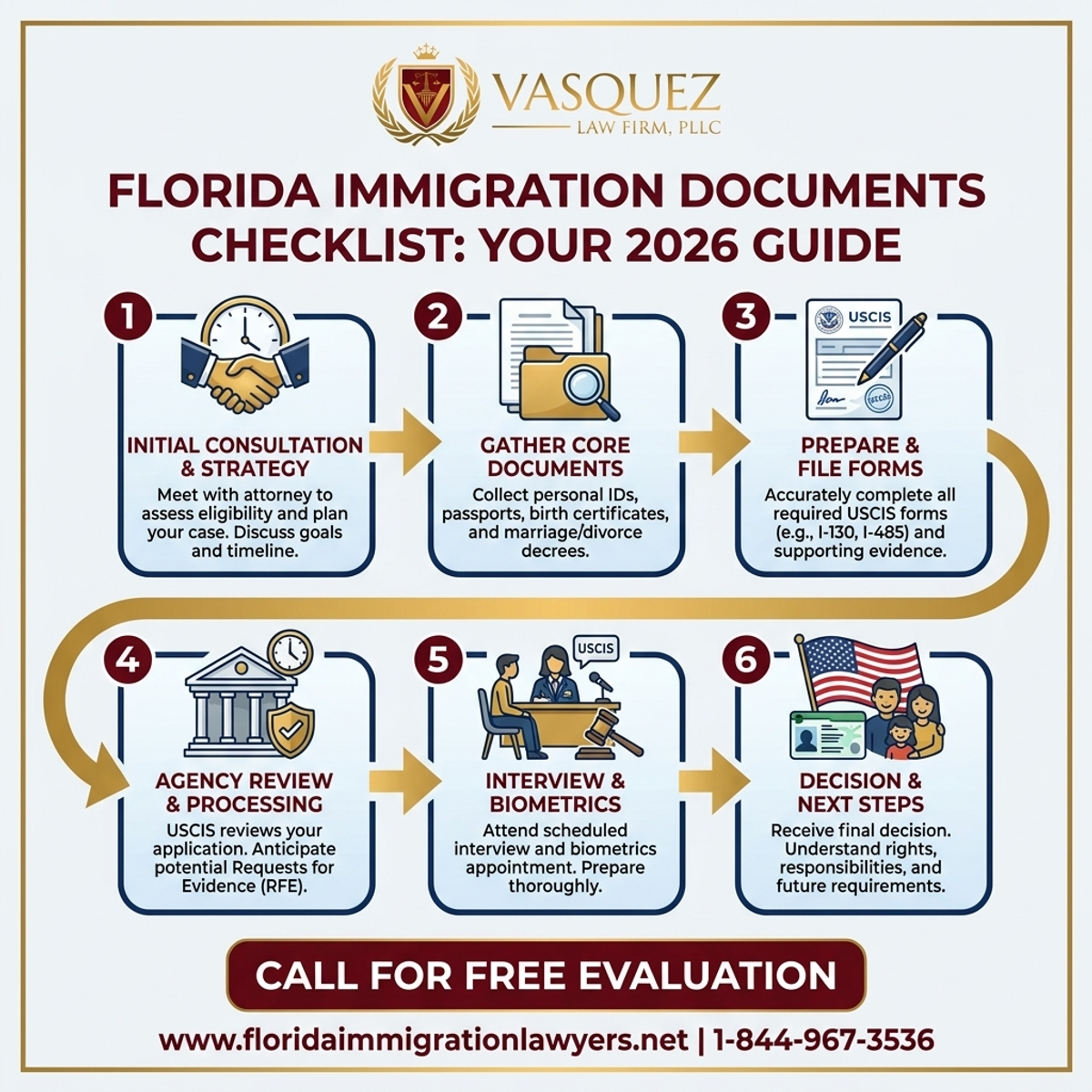
Preparing immigration paperwork in Orlando, or anywhere in Central Florida, demands meticulous attention to detail. The process typically involves several key stages, each requiring careful execution. Here is a step-by-step guide to help you organize your application package effectively:
- Identify the Correct Forms and Instructions: Begin by determining the specific USCIS form(s) required for your immigration goal. For instance, if you are applying for a green card through a family member, you might need Form I-130, Petition for Alien Relative, and Form I-485, Application to Register Permanent Residence or Adjust Status. Download the latest versions directly from the USCIS website. Carefully read all instructions, as they contain critical information about required documents, filing fees, and submission procedures.
- Gather All Supporting Documents: This is often the most time-consuming part. Collect all civil documents (birth certificates, marriage licenses, divorce decrees), identity documents (passports, national IDs), financial records (tax returns, employment letters), medical examination results (Form I-693), police clearance certificates, and any other evidence unique to your case. Ensure all foreign language documents are accompanied by certified English translations.
- Complete Forms Accurately: Fill out all forms completely and truthfully. Incomplete or inaccurate information can lead to significant delays or even denial. Use black ink if completing by hand, or type the information. Pay close attention to questions about criminal history, past immigration violations, and any other sensitive topics. If a question does not apply, write "N/A" (not applicable) or "None" as appropriate.
- Organize Your Application Package: Arrange your documents in the order specified by USCIS instructions. Typically, this involves placing the form on top, followed by supporting evidence grouped by category. Use fasteners (like paper clips or binder clips) rather than staples, unless stapling is specifically requested. Make a complete copy of the entire application package for your records before mailing.
- Calculate and Prepare Filing Fees: Verify the current filing fees for each form. As of 2026, fees can change, so always check the USCIS website for the most current amounts. Fees must be paid by money order, personal check, cashier's check, or by credit card using Form G-1450, Authorization for Credit Card Transactions. Ensure the check or money order is made payable to "U.S. Department of Homeland Security."
- Mail Your Application: Send your complete application package to the correct USCIS Lockbox facility. The mailing address varies depending on the form and your current state of residence. Use a reliable mail service that provides tracking and delivery confirmation. For those in Florida, the address often directs to a lockbox facility in a different state, which then forwards the application to the appropriate service center or field office, such as the USCIS Orlando Field Office for interviews.
Essential Document Checklist for Common USCIS Applications
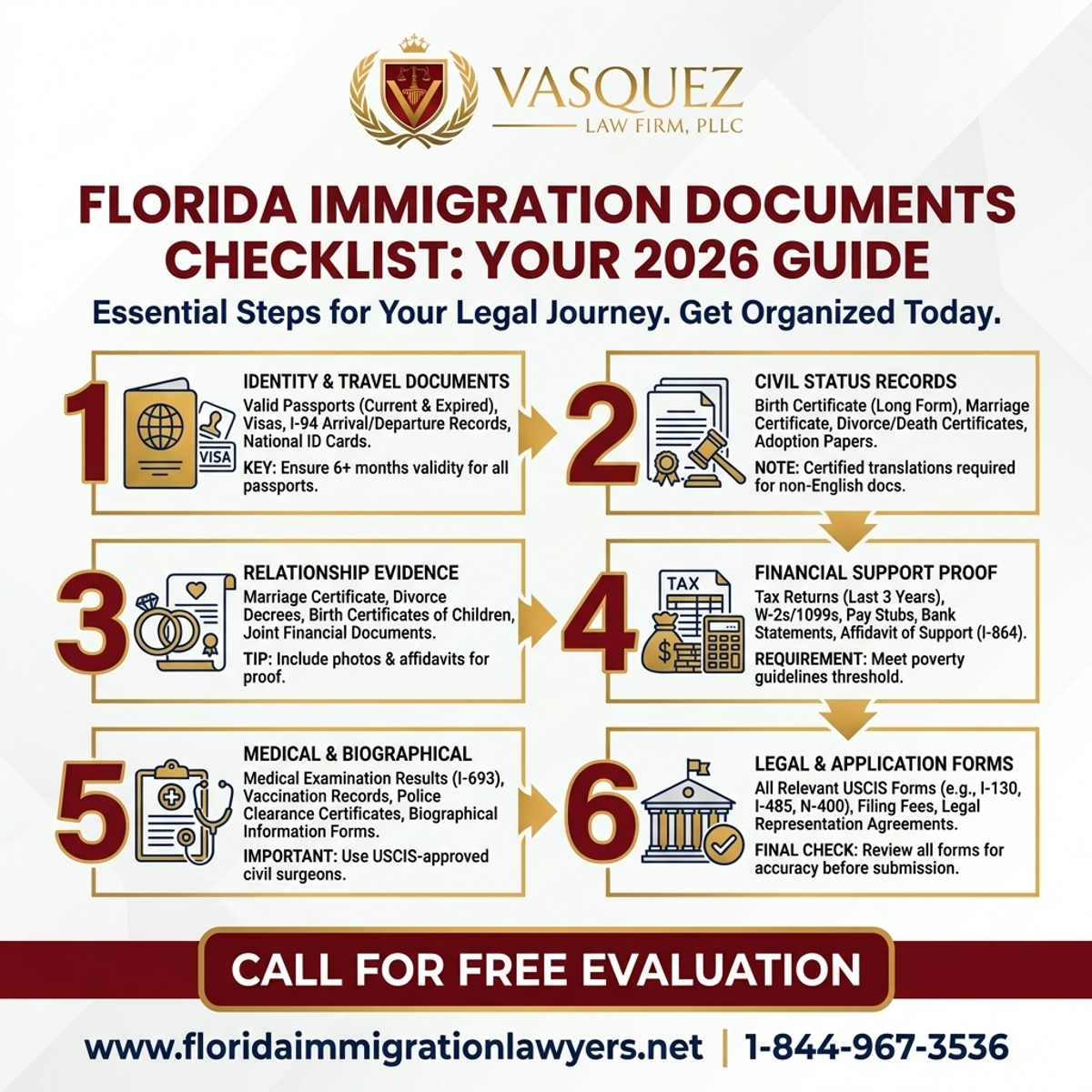
A thorough document checklist is critical for any immigration application. While specific needs vary, certain categories of documents are almost universally required across different application types. This general checklist provides a robust foundation for most common USCIS filings, helping you organize your evidence effectively. Remember that each item must be accurate and, if in a foreign language, accompanied by a certified English translation. For specific guidance, always refer to the instructions for the form you are filing.
- Personal Identification Documents:
- Valid passport (biographic page, visa pages, entry stamps)
- Birth certificate (original or certified copy)
- National identity card (if applicable)
- Driver's license or state ID (especially for Florida residents)
- Previous immigration documents (e.g., I-94 arrival/departure record, previous visas, EAD cards)
- Civil Documents:
- Marriage certificate (if married)
- Divorce decrees or death certificates for any previous marriages
- Children's birth certificates (if including dependents)
- Adoption decrees (if applicable)
- Financial Documents:
- Affidavit of Support (Form I-864) from sponsor, if required
- Sponsor's tax returns (most recent 3 years), W-2s, and pay stubs
- Employment verification letters
- Bank statements and asset documentation
- Medical and Police Records:
- Report of Medical Examination and Vaccination Record (Form I-693) completed by a USCIS-approved civil surgeon in Florida
- Police clearance certificates from countries where you have lived for 6+ months since age 16
- Court and prison records (if any arrests or convictions)
Step-by-Step Process — Immigration Documents Checklist Florida: Your 2026 Guide
- Photographs:
- Recent passport-style photographs (typically 2x2 inches) meeting USCIS specifications
- Application-Specific Evidence:
- For family-based petitions: Proof of bona fide relationship (e.g., joint bank accounts, photos, utility bills, lease agreements)
- For employment-based petitions: Job offer letter, labor certification (ETA Form 9089), educational degrees, professional licenses
- For naturalization: Proof of continuous residency (e.g., utility bills, tax records, lease agreements), selective service registration (if applicable)
- For asylum/refugee: Detailed personal statement, evidence of persecution
What is the Typical Timeline for Immigration Document Processing in Florida?
The typical timeline for immigration document processing in Florida can range from several months to several years, heavily depending on the application type, USCIS workload, and individual case complexities. As of 2026, family-based petitions often take longer than employment-based ones, and certain categories, like adjustment of status, can have varying processing times even within the same field office, such as the one in Orlando.
Understanding the processing timeline for your immigration documents is essential for setting realistic expectations. While USCIS provides estimated processing times, these are subject to change and can vary based on the specific service center or field office handling your case. The Orlando Field Office, for example, handles interviews for many applicants residing in Central Florida. Below is a general overview of typical timeframes as of 2026:
| Stage | Typical Timeframe (As of 2026) | Notes |
|---|---|---|
| Form I-130 (Family Petition) | 10-24 months | Varies significantly based on petitioner's status and beneficiary's relationship. |
| Form I-485 (Adjustment of Status) | 12-36 months | Highly dependent on category, service center, and interview backlog at local field offices like Orlando. |
| Form I-765 (Employment Authorization) | 3-12 months | Often filed concurrently with I-485; processing can be faster for initial applications. |
| Form I-131 (Advance Parole) | 3-12 months | Allows travel outside the U.S. while I-485 is pending. |
| Form N-400 (Naturalization) | 8-24 months | Includes biometrics, interview, and oath ceremony. Varies by field office (e.g., Miami, Orlando). |
| Biometrics Appointment | 3-8 weeks after filing | Scheduled at an Application Support Center (ASC), such as the one in Jacksonville or Orlando. |
It's important to remember that these are general estimates. Factors such as RFE (Request for Evidence) issuance, background checks, and interview scheduling can extend these timelines. For the most precise and current information regarding your specific case, always refer to the official USCIS processing times tool. Staying proactive and ensuring all documents are correctly submitted from the outset can help minimize potential delays.
Understanding Immigration Document Fees and Costs in Florida
The costs associated with immigration documents in Florida primarily consist of USCIS filing fees, which vary by application type. As of 2026, these fees can range from a few hundred to over a thousand dollars per application. Additionally, applicants should budget for expenses like medical exams, translation services, and attorney fees.
Immigration application fees are a significant component of the overall cost of the process. These fees are set by USCIS and are subject to change, so it is crucial to verify the most current amounts directly on the USCIS website or through an experienced immigration attorney. Beyond government filing fees, there are other potential costs that applicants in Florida should anticipate. Here is a breakdown of typical fee categories as of 2026:
| Item | Typical Fee (As of 2026) | Notes |
|---|---|---|
| Form I-130 (Petition for Alien Relative) | $535 | Paid by the U.S. citizen or green card holder petitioner. |
| Form I-485 (Adjustment of Status) | $1,225 (includes biometrics) | Varies slightly if filed without I-765 or I-131 concurrently. |
| Form N-400 (Application for Naturalization) | $725 (includes biometrics) | Certain low-income applicants may qualify for a fee waiver. |
| Biometrics Services Fee | $85 (often included in main form fee) | Required for most applications, covers fingerprinting and photo. |
| Medical Examination (Form I-693) | $200 - $500 | Paid directly to a USCIS-approved civil surgeon in Florida. Price varies by provider. |
| Translation Services | Varies by document/provider | Required for all foreign language documents. |
| Attorney Fees | Varies significantly by case complexity | Highly recommended for guidance and application preparation. |
Key Statistics — Immigration Documents Checklist Florida: Your 2026 Guide
It is important to budget for these expenses and to understand that fees are generally non-refundable, even if your application is denied. Some applicants may be eligible for fee waivers for certain forms based on their income or receipt of public benefits. Detailed information on fee waivers and eligibility criteria can be found on the USCIS website. Planning financially for the immigration process is as crucial as gathering your documents, and a Florida immigration lawyer can provide guidance on potential costs and payment strategies.
Florida-Specific Considerations for Your Immigration Case
Florida presents unique considerations for immigration cases due to its diverse population, geographic location, and specific USCIS and Executive Office for Immigration Review (EOIR) facilities. Understanding these local nuances can significantly impact the success and efficiency of your immigration journey. From the vibrant communities of Miami to the growing populations in Orlando and Tampa, immigrants face distinct challenges and opportunities.
One primary consideration is the presence of several key immigration offices and courts within the state. Florida hosts multiple USCIS Field Offices, including those in Orlando, Miami, and Tampa, which handle interviews for various applications like adjustment of status and naturalization. The state also has Application Support Centers (ASCs) for biometrics appointments. Furthermore, Florida is home to several immigration courts under the Executive Office for Immigration Review (EOIR), such as those in Miami and Orlando. These courts handle deportation defense, asylum claims, and other removal proceedings. The caseloads at these courts can be substantial, influencing processing times and the availability of court dates. For more information on immigration courts, you can visit the EOIR website.
The cultural diversity of Florida also means that applications often involve documents from a wide range of countries, necessitating careful attention to translation and authentication requirements. The state's large immigrant population, particularly from Latin American and Caribbean countries, means that many local attorneys and organizations offer bilingual services, which can be a significant advantage. Additionally, Florida's geographic location as a coastal state sometimes impacts immigration policy and enforcement, especially concerning maritime arrivals. Navigating these local intricacies requires not only a deep understanding of federal immigration law but also familiarity with the specific practices and resources available in Florida. Engaging with a local Florida immigration lawyer who is accustomed to the specific environment of the Orlando USCIS office or the Miami Immigration Court can provide invaluable insight and strategic advantage.
Do not navigate this process alone. Contact Florida Immigration Lawyers today.
Common Mistakes to Avoid When Preparing Immigration Documents
Preparing immigration documents is a detailed process where even minor errors can lead to significant setbacks. Avoiding common pitfalls is crucial for a successful application. Here are some frequent mistakes and their potential consequences:
- Incomplete Forms: Failing to answer every question or leaving required fields blank. Consequences: USCIS will likely reject your application or issue a Request for Evidence (RFE), causing significant delays.
- Inaccurate Information: Providing false or incorrect details, even unintentionally. Consequences: This can lead to a finding of misrepresentation, which may result in a denial, future inadmissibility, or even accusations of fraud.
- Missing Supporting Documents: Not including all required evidence as specified in the form instructions. Consequences: Your application will be delayed or denied, requiring you to refile or respond to an RFE.
- Incorrect Filing Fees: Submitting the wrong fee amount or an expired payment method. Consequences: USCIS will return your application package, delaying your case until the correct payment is received.
- Unsigned Forms: Forgetting to sign the application forms in all designated places. Consequences: An unsigned form is invalid and will be rejected by USCIS, requiring resubmission.
- Poorly Organized Documents: Submitting a disorganized pile of documents without proper labeling or order. Consequences: This can frustrate adjudicators, potentially leading to delays or overlooking critical evidence.
- Untranslated Foreign Documents: Failing to provide certified English translations for all foreign language documents. Consequences: USCIS will not accept untranslated documents, leading to an RFE or rejection.
- Not Keeping Copies: Failing to make and keep copies of your entire application package. Consequences: If your original application is lost or you need to reference specific details, you will lack a crucial record.
- Missing Deadlines: Failing to file within specific deadlines for responses to RFEs or certain applications. Consequences: Your application may be denied, or you could lose eligibility for a specific benefit.
- Ignoring Instructions: Not thoroughly reading and following the specific instructions for each form. Consequences: This often leads to a combination of the above mistakes, resulting in delays or denials.
When to Call a Lawyer for Your Immigration Documents in Florida
While some immigration processes appear straightforward, the reality is that federal immigration law is incredibly complex and constantly changing. Knowing when to seek professional legal assistance can save you time, money, and significant stress, especially when dealing with critical immigration documents in Florida. Florida Immigration Lawyers are here to help you navigate these intricate processes.
You should call an immigration lawyer if you:
- Have a complex immigration history, including previous denials, deportations, or criminal records.
- Are unsure which forms to file or what supporting documents are required for your specific situation.
- Have received a Request for Evidence (RFE) or a Notice of Intent to Deny (NOID) from USCIS.
- Are applying for asylum, waivers, or other discretionary forms of relief, which often require extensive legal arguments.
- Need help preparing for an interview at the USCIS Orlando Field Office or other locations.
- Are concerned about potential misrepresentation or fraud issues in your application.
- Face deportation or removal proceedings in an immigration court.
- Wish to ensure your application is meticulously prepared and submitted correctly the first time, minimizing risks and delays.
Our attorneys at Florida Immigration Lawyers focus on various immigration practice areas, including family immigration, business immigration, deportation defense, and citizenship. We can provide the guidance needed to avoid common mistakes and present the strongest possible case.
About Florida Immigration Lawyers
Florida Immigration Lawyers is a leading law firm dedicated to providing comprehensive and compassionate immigration legal services across the entire state of Florida. With a deep understanding of both federal immigration laws and the unique challenges faced by immigrants in Central Florida and beyond, our experienced attorneys are committed to achieving the strongest possible outcomes for our clients.
We offer a wide range of services, including assistance with family-based visas, employment-based green cards, naturalization applications, asylum claims, and robust deportation defense. Our team is known for its meticulous attention to detail, strategic legal advice, and unwavering advocacy. We pride ourselves on being accessible and responsive, offering bilingual services (English and Spanish) to effectively communicate with our diverse clientele.
Choosing Florida Immigration Lawyers means partnering with a team that genuinely cares about your future. We offer free case reviews and are available 24/7 to address your urgent immigration needs. Let us put our experience to work for you. Schedule a free consultation today to discuss your immigration options.
Phone: 1-844-YO-PELEO
Sources and References
- U.S. Citizenship and Immigration Services (USCIS)
- Executive Office for Immigration Review (EOIR)
- U.S. Department of State
- 8 U.S.C. Chapter 12 - Immigration and Nationality Act (INA)
- 8 CFR (Code of Federal Regulations) - Aliens and Nationality
- USCIS Policy Manual
Related services: asylum protection, experienced immigration attorneys, immigration lawyer cost in Florida.
This article provides general legal information and is not intended as legal advice. Every case is unique, and outcomes depend on specific facts and circumstances. Contact an attorney for advice about your particular situation.
Don't leave your immigration future to chance. Secure peace of mind by partnering with Florida Immigration Lawyers. Call us today at 1-844-YO-PELEO for your free case review. Se Habla Español - ¡Estamos aquí para ayudarle!
If you need legal assistance, learn more about learn about our immigration practice, or call us at 1-844-967-3536 for a free case review.
Do Not Navigate This Process Alone
Our experienced immigration attorneys are ready to fight for you. Get a free, confidential case review today.
Se Habla Español
Or leave your details and we’ll call you:
Free Evaluation in 24 Hours
Or talk to us right now

AI voice assistant — available 24/7
FreeFrequently Asked Questions

William J. Vásquez
Founding Attorney · Vasquez Law Firm
U.S. Air Force veteran and immigration attorney with years of hands-on U.S. immigration experience. J.D., NCCU School of Law. AILA member. Admitted to the 4th, 5th, and 11th Circuit Courts.
Available 24/7 - Free Evaluations
Reviewed for legal accuracy by William J. Vásquez
Licensed in North Carolina; U.S. immigration is federal practice.
Related Legal Services
Our Florida immigration attorneys can help you with family immigration services, immigration lawyer cost in Florida and experienced immigration attorneys. Call today at 1-844-YO-PELEO for a free case review.
Related Links
Related Topics
Free Legal Case Review
Discuss your case with our experienced attorneys. We're available 24/7.
Se Habla Español - Estamos aquí para ayudarle.
Related Articles
DUI Immigration Consequences in Florida 2026
A DUI conviction in Florida can have severe immigration consequences, potentially leading to inadmissibility, deportation, or denial of immigration benefits. For non-citizens, a DUI is not just a traffic offense but a serious criminal matter that federal immigration law scrutinizes closely. Factors like multiple offenses, injury, or property damage can escalate a simple DUI to a Crime Involving Moral Turpitude (CIMT) or even an aggravated felony, triggering mandatory detention and removal proceedings. Understanding the specific nature of your Florida conviction and its interpretation under the Immigration and Nationality Act (INA) is crucial. This article outlines how DUIs impact immigration status, the grounds for inadmissibility and deportation, a step-by-step guide to navigating the process, essential documentation, and expected timelines for 2026. We also highlight common mistakes to avoid and when to seek legal counsel from an experienced immigration attorney. Florida Immigration Lawyers offers comprehensive support for individuals facing these challenging situations, providing expert guidance through complex legal landscapes.
Dual Citizenship Lawyer in Florida: What You Need to Know
For Florida residents, the concept of dual citizenship, or holding two passports, offers a compelling blend of opportunities and challenges. While the U.S. generally permits dual nationality, the path to achieving this status requires a meticulous understanding of both U.S. immigration laws and the citizenship policies of your country of origin. This guide explores the definition of dual citizenship, the detailed step-by-step process for U.S. naturalization, and the significant benefits and potential pitfalls involved. We cover essential documentation, typical timelines, and cost considerations for 2026, providing crucial insights for anyone in Orlando, Miami, or across Florida considering this important legal step. Learn about common mistakes to avoid and understand when to seek professional legal counsel to navigate this complex process successfully. Florida Immigration Lawyers is here to provide expert, bilingual support for your dual citizenship journey.
Immigration Lawyer Orlando Free Consultation in Florida
For individuals and families in Orlando, Florida, navigating the complexities of U.S. immigration law requires expert guidance. An immigration lawyer in Orlando offers crucial support for everything from visa applications and green card processes to naturalization and deportation defense. This comprehensive guide details what a free consultation covers, providing a step-by-step overview of immigration pathways, essential document checklists, and expected timelines in 2026. We also highlight common mistakes to avoid, discuss the critical role of legal counsel in deportation and asylum cases, and explain why choosing a local Orlando immigration attorney is beneficial. Florida Immigration Lawyers is dedicated to serving the diverse community of Orlando with compassionate, effective legal solutions, ensuring you receive personalized advice and robust representation for a successful immigration journey.
EAD Advance Parole Combo Card in Florida: What You Need
An EAD advance parole combo card allows individuals with pending adjustment applications to both work and travel abroad without jeopardizing their green card application. Learn how to apply in Florida, what documents you need, and common mistakes to avoid.