Green Card Holder ICE Detention in Florida: Your Rights & Defense
Discover your rights if you're a green card holder facing ICE detention in Florida. This guide covers the legal framework, step-by-step actions to take if detained, essential documents for your defense, and what to expect regarding timelines and costs. Learn about common mistakes to avoid and when to seek immediate legal counsel. Florida Immigration Lawyers offers expert legal assistance for green card holders in Tampa and throughout Florida facing ICE detention and removal proceedings. Protect your status and future by understanding your options and acting quickly.
Yes, Immigration and Customs Enforcement (ICE) can legally detain a green card holder in Florida under specific circumstances, often related to certain criminal convictions or immigration violations. While permanent residents have significant protections, they are not immune to detention or deportation proceedings. Understanding your rights and acting quickly is crucial to challenging such a detention and protecting your status.
- ICE can detain green card holders for specific legal reasons.
- You have rights, including the right to remain silent and to an attorney.
- Immediate legal counsel is vital if you or a loved one is detained.
- Detention can lead to removal proceedings, making defense critical.
- Florida Immigration Lawyers offers experienced representation for ICE detention cases.
Imagine living your life, building a home, and contributing to your community in Florida as a lawful permanent resident. Then, unexpectedly, you or a loved one faces an encounter with Immigration and Customs Enforcement (ICE) that leads to detention. This scenario can be terrifying and confusing, leaving you wondering about your rights and what steps to take next.
Many green card holders believe their status offers complete immunity from immigration enforcement. While permanent residents enjoy more protections than undocumented individuals, they are not entirely exempt from detention or deportation. Certain actions, especially criminal convictions or violations of immigration law, can put your green card at risk.
This comprehensive guide from Florida Immigration Lawyers will demystify the complex process of green card holder ICE detention in Florida. We will cover your essential rights, outline the detention process, explain critical documents, and provide a roadmap for navigating this challenging situation. Understanding these details is your first line of defense.
If you or someone you know is facing green card holder ICE detention in Florida, immediate action is paramount. Do not delay in seeking expert legal guidance. Call Florida Immigration Lawyers at 1-844-967-3536 for a free consultation to protect your future.
Understanding Green Card Holder ICE Detention in Florida
The possibility of a green card holder detained by ICE is a serious concern for many permanent residents in Florida. While a green card grants you permanent residency, it does not provide absolute protection against immigration enforcement actions. ICE has the authority to detain individuals who are deemed removable under U.S. immigration law.
In Florida, recent initiatives like Operation Tidal Wave, announced by Governor Ron DeSantis, have seen increased immigration enforcement actions. These operations, sometimes in conjunction with local law enforcement through 287(g) partnerships, can lead to more frequent encounters with ICE. Such encounters can escalate to detention for green card holders if certain grounds for removability are present.
The Legal Framework for Detention
ICE's authority to detain lawful permanent residents stems from the Immigration and Nationality Act (INA). Specifically, INA Section 236 (8 U.S.C. § 1226) outlines the general provisions for the apprehension and detention of aliens. For green card holders, detention often occurs when they are deemed inadmissible or deportable due to specific legal grounds.
Common reasons for a green card holder ICE detention include certain criminal convictions, such as aggravated felonies, crimes involving moral turpitude, or drug offenses. Even minor offenses can sometimes trigger a review of your immigration status. Violations of immigration law, like misrepresentation on an application or abandonment of residency, can also lead to detention.
ICE's Authority in Florida
Florida's stance on immigration enforcement often involves collaboration between state and federal agencies. This means that an arrest by local police in Tampa, Orlando, or Miami for a seemingly minor offense could potentially lead to an ICE detainer if your immigration status is discovered. ICE may then take you into custody after you complete your sentence or are released from local jail.
It is critical to understand that even if you have lived in the U.S. for many years as a green card holder, certain actions can still place you in removal proceedings. Your green card is a privilege, and maintaining good standing is essential to protecting it. Facing green card holder ICE detention is a clear sign that your status is under scrutiny.
What to Do if a Green Card Holder is Detained by ICE: A Step-by-Step Guide
If you or a family member who is a green card holder detained by ICE in Florida, knowing the immediate steps to take can significantly impact the outcome of your case. This is a critical time when every decision matters. Do not panic, but act decisively.
-
Remain Silent and Do Not Sign Anything: You have the right to remain silent. Do not answer questions about your immigration status, birthplace, or how you entered the U.S. without legal counsel present. Do not sign any documents, especially those waiving your rights or agreeing to voluntary departure, until an attorney has reviewed them.
Signing documents without understanding them can have severe, permanent consequences for your immigration status. Politely state that you wish to speak with an attorney.
-
Contact an Immigration Attorney Immediately: This is the single most important step. An experienced immigration lawyer in Florida, like those at Florida Immigration Lawyers, can advise you on your rights, assess your situation, and begin building a defense. They can also help locate you if you are unsure where the detention occurred.
Attorneys can intervene early, potentially preventing deportation proceedings or securing a bond for your release. They understand the nuances of green card holder ICE detention cases.
-
Gather Information About the Detention: Try to remember or write down as many details as possible: the date, time, and location of the arrest; the names or badge numbers of the officers; the agency involved (ICE, local police); and any documents received. This information is crucial for your attorney.
If you are a family member, try to get this information from the detainee or by contacting ICE directly once legal counsel is involved.
-
Notify Family Members and Provide Attorney Contact: Inform trusted family members about your detention and provide them with your attorney's contact information. They can assist in gathering necessary documents and supporting your case from outside the detention facility.
Ensure your family knows not to speak with ICE without legal advice, especially regarding your case details.
-
Prepare for an Immigration Court Hearing: If ICE initiates removal proceedings, you will appear before an immigration judge. Your attorney will represent you, present evidence, and argue your case. This process can be lengthy and complex.
Working closely with your legal team is essential to preparing a strong defense against deportation.
First Steps After Detention
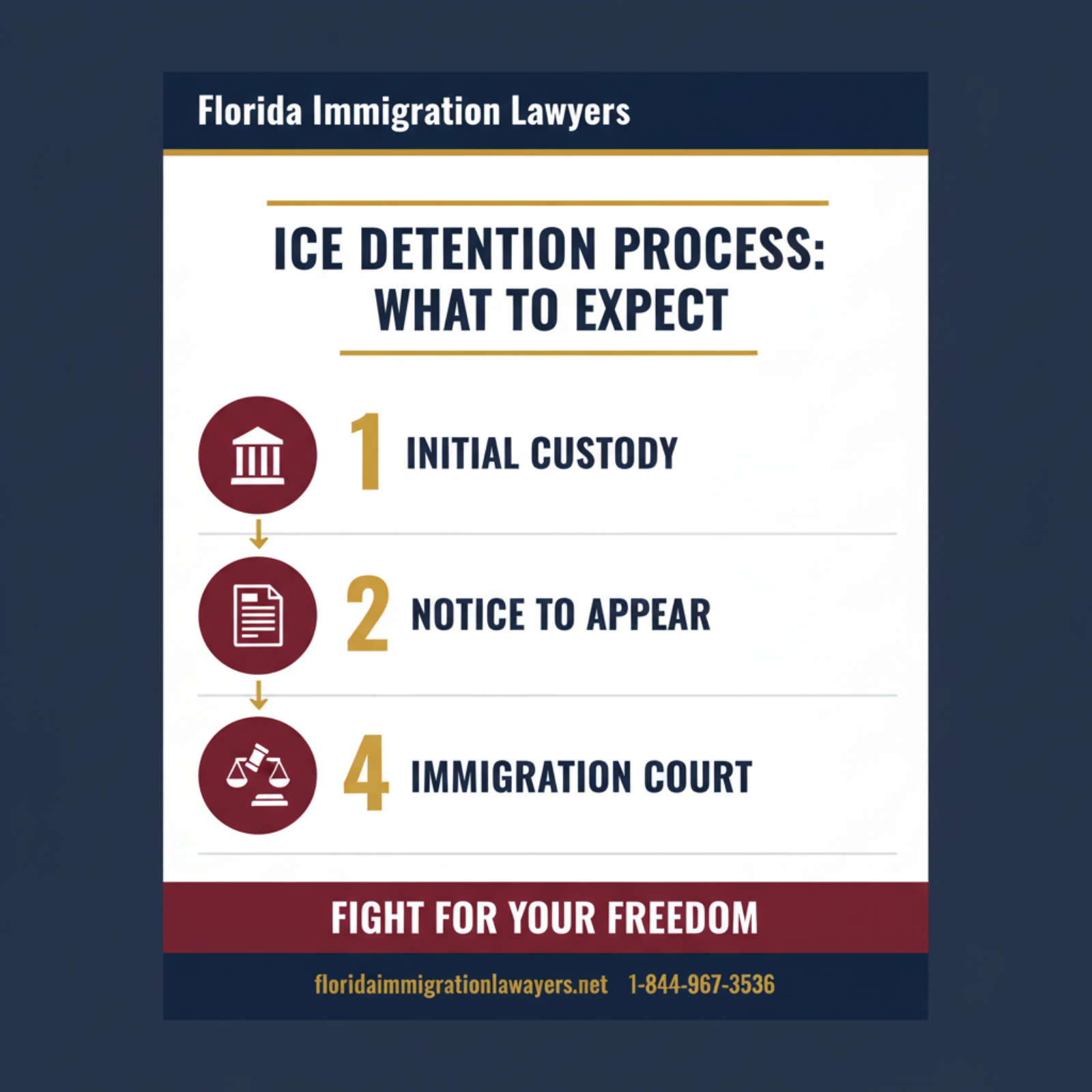
Upon detention, ICE should provide you with a Notice to Appear (NTA) which outlines the reasons for your potential deportation. This document is critical. Ensure you receive it and share it immediately with your attorney.
You may also be eligible for a bond hearing, where an immigration judge determines if you can be released on bail while your case proceeds. An attorney can argue for a reasonable bond amount or even for release without bond.
Essential Documents for Your ICE Detention Case
Having the correct documentation readily available can significantly strengthen your defense against removal and help expedite the process if you are a green card holder detained by ICE. If you are detained, your family or attorney will need to gather these on your behalf.
- Your Green Card (Form I-551): Proof of your lawful permanent resident status.
- Passport and Visa (if applicable): Any travel documents.
- Notice to Appear (NTA) or Warrant of Arrest: Any official documents provided by ICE.
- Criminal Records: Certified court dispositions for ALL arrests and convictions, even if expunged or sealed. This is crucial for assessing grounds of removability.
- Marriage Certificate and Birth Certificates of U.S. Citizen Children: Proof of family ties in the U.S.
- Tax Returns and Employment Records: Evidence of continuous residence and contributions to the U.S. economy.
- Utility Bills, Lease Agreements, Property Deeds: Proof of physical presence and establishment in Florida.
- Medical Records: Especially if you have serious health conditions that require ongoing care.
- Letters of Support: From family, friends, employers, or community leaders attesting to your good character and ties to the U.S.
- Any Previous Immigration Applications or Petitions: Forms I-130, I-485, etc., and their approval notices.
Organizing these documents beforehand, or having a trusted family member who knows where they are, can save precious time during a detention. Your attorney will use these to build your case and demonstrate your eligibility for relief from removal.
Navigating the ICE Detention Timeline and Processing Expectations
One of the most common questions from detainees and their families is, "How long can ICE hold you before deportation?" The answer is complex and varies greatly depending on the specifics of each case. There is no fixed timeline for ICE detention, especially for green card holders facing removal proceedings.
Detention can range from a few days to several months, or even longer, particularly if there are complex legal issues or appeals involved. The process typically involves several stages, each with its own potential delays.
- Initial Detention and Processing: After arrest, you will be processed at an ICE facility. This includes fingerprinting, interviews, and background checks. This stage can take a few days.
- Bond Hearing: If eligible, you may have a bond hearing before an immigration judge. This is where your attorney argues for your release on bond. The judge considers factors like flight risk and danger to the community.
- Immigration Court Proceedings: If a bond is not granted or you cannot pay it, you remain in detention while your removal case proceeds. Hearings are held at immigration courts, such as the Krome Service Processing Center Immigration Court or the Orlando Immigration Court in Florida.
- Appeals: If the immigration judge orders your removal, your attorney may file an appeal with the Board of Immigration Appeals (BIA), which can add significant time to the process.
The average time for an immigration case to be resolved can be extensive, particularly in busy courts like those in Florida. Having a dedicated legal team is essential to expedite the process where possible and ensure all deadlines are met.
Cost Factors and Legal Fees in ICE Detention Cases
Facing green card holder ICE detention involves several potential costs. Understanding these financial aspects can help you prepare and make informed decisions, especially regarding legal representation. These costs generally fall into two categories: bond amounts and legal fees.
-
Immigration Bond: If an immigration judge grants bond, you or your family will need to pay a specified amount to ICE for your release. Bond amounts can vary widely, from a few thousand dollars to tens of thousands, depending on the severity of the alleged offense and your ties to the community. This money is typically returned if you attend all your court hearings.
An attorney can argue for a lower bond amount during your hearing, potentially saving you a significant sum.
-
Legal Fees: Expert legal representation is an investment in your future and your freedom. Immigration attorneys charge fees for their services, which can include consultations, preparing and filing documents, representing you in court, and appeals. Fees vary based on the complexity of your case and the attorney's experience.
While legal fees can seem substantial, the cost of not having qualified representation – potentially leading to deportation and separation from your family – is far greater. Many firms, including Florida Immigration Lawyers, offer payment plans or flexible arrangements.
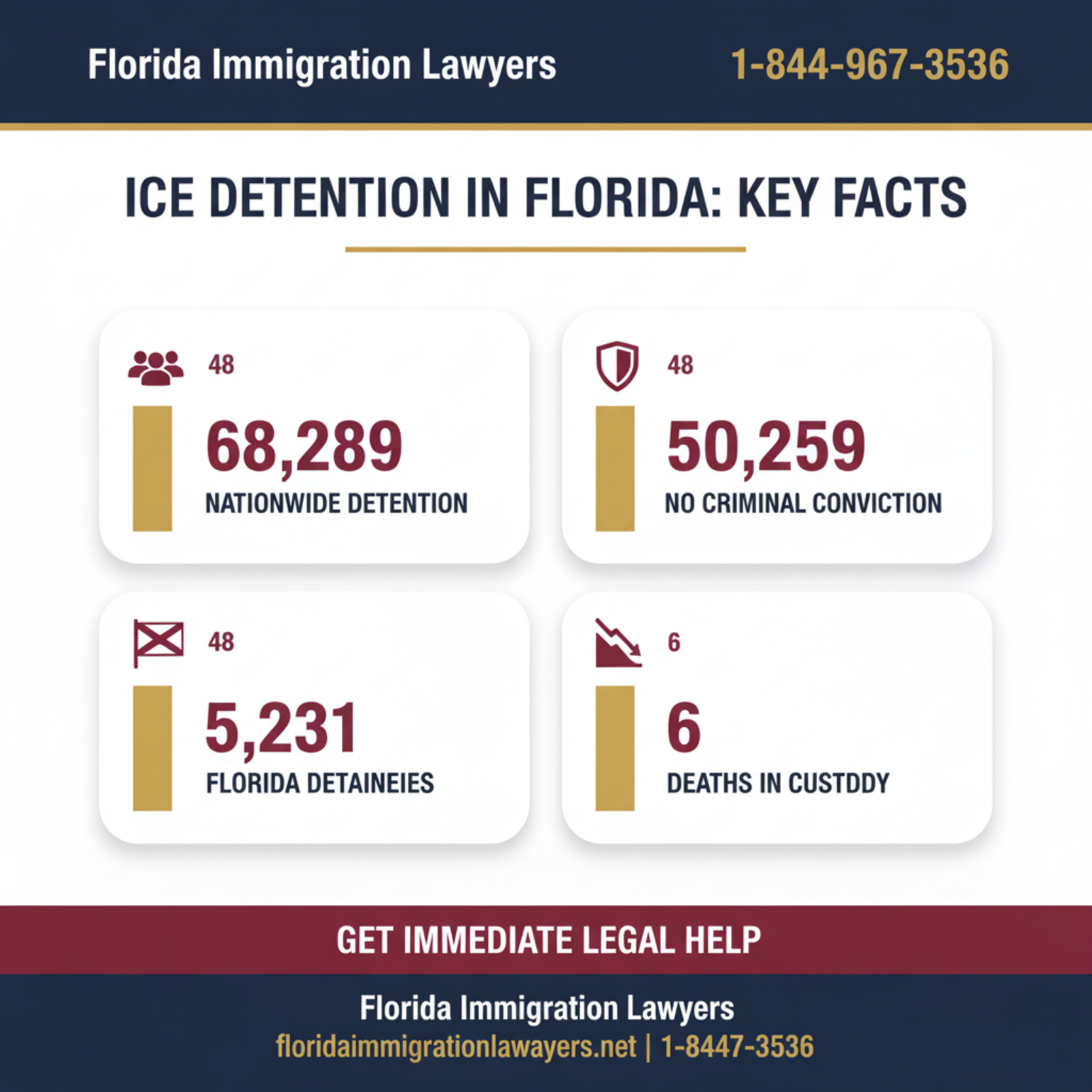
Key Statistics & Data
Do not let concerns about costs prevent you from seeking legal help. A free consultation can help you understand the potential fees and the value of professional advocacy. Navigating the immigration system alone, especially from detention, is extremely difficult and risky.
Do not navigate this process alone. Contact Florida Immigration Lawyers today for dedicated legal support and to discuss your options. We are here to help you fight for your rights and your future in Florida.
Common Mistakes to Avoid
When dealing with green card holder ICE detention, even seemingly minor missteps can have profound negative consequences. Being aware of these common mistakes can help you protect your rights and improve your chances of a favorable outcome.
-
Lying or Providing False Information to ICE: This is a serious offense that can lead to criminal charges and make you permanently inadmissible or deportable. Always be truthful, but exercise your right to remain silent until you have legal counsel.
Consequences: Perjury charges, permanent bars to immigration benefits, immediate deportation.
-
Signing Documents Without Understanding Them: ICE agents may present documents for your signature, including waivers of rights or voluntary departure agreements. Never sign anything without a full understanding and review by an attorney.
Consequences: Waiving your right to a hearing, agreeing to deportation, losing the chance to apply for relief.
-
Not Contacting an Attorney Immediately: Delaying legal counsel can severely limit your options. An attorney can intervene early, help locate you, and advise on your next steps.
Consequences: Missed deadlines, inability to challenge detention, uninformed decisions, higher likelihood of deportation.
-
Resisting Arrest or Obstructing Justice: While you have rights, actively resisting an officer can lead to additional criminal charges, which further complicates your immigration case.
Consequences: New criminal convictions, increased bond amount, stronger grounds for deportation.
-
Failing to Disclose Past Criminal History: Even if a crime seems minor or happened years ago, it can be relevant. Attempting to hide past arrests or convictions from your attorney can severely undermine your defense.
Consequences: Loss of trust with your attorney, unpreparedness for ICE/court questions, potential for misrepresentation charges.
-
Failing to Inform Family of Detention: Your family can be a crucial support system. If they don't know you're detained, they cannot help secure an attorney or gather necessary documents.
Consequences: Isolation, delayed legal intervention, difficulty in gathering evidence.
-
Not Preparing for Court Hearings: Immigration court is a formal legal setting. Failing to prepare with your attorney, gather evidence, or appear on time can jeopardize your case.
Consequences: Order of removal in absentia, inability to present a strong defense, loss of eligibility for relief.
-
Assuming Your Green Card Protects You Completely: While a green card offers significant protections, it does not make you immune to deportation, especially if you have certain criminal convictions or immigration violations.
Consequences: Complacency, failure to seek legal advice when needed, unexpected detention or removal.
-
Ignoring an ICE Detainer: If you or a family member receives an ICE detainer notice while in local custody, it means ICE intends to take you into federal custody. Ignoring it will not make it go away.
Consequences: Automatic transfer to ICE custody, prolonged detention, initiation of removal proceedings.
-
Not Knowing How to Find a Detainee in ICE Custody: If a family member is detained, knowing how to locate them is crucial for providing legal and emotional support.
Consequences: Prolonged uncertainty for family, delayed access to legal counsel for the detainee.
When to Call a Lawyer
The complexities of immigration law, especially concerning green card holder ICE detention, demand professional legal expertise. Knowing when to seek legal counsel can be the difference between retaining your status and facing deportation. We strongly advise you to contact Florida Immigration Lawyers if any of the following situations apply to you or a loved one:
- You or a family member who is a green card holder has been detained by ICE. This is the most urgent scenario requiring immediate legal intervention.
- You have received a Notice to Appear (NTA) in immigration court. This means removal proceedings have officially begun against you.
- You have been arrested for any criminal offense, even a minor one. Certain criminal convictions can trigger grounds for deportation, even for green card holders.
- You are facing an ICE detainer after an arrest by local law enforcement in Florida. This indicates ICE intends to take you into custody.
- You are unsure about your rights during an encounter with immigration officials. It is always safer to consult with an attorney to understand your protections.
- Your bond request has been denied, or the bond amount is unreasonably high. An attorney can appeal bond decisions or argue for a lower amount.
- You have a past deportation order or a history of immigration violations. These factors significantly complicate your case and require specialized legal strategies.
- You wish to understand how to remove an ICE detainer. An attorney can advise on the legal avenues available.
Florida Immigration Lawyers has extensive experience in defending green card holders against ICE detention and deportation in Florida. We understand the local courts, the nuances of federal immigration law, and the impact these cases have on families. Our team is ready to provide the aggressive and compassionate representation you deserve.
About Florida Immigration Lawyers
Florida Immigration Lawyers is a leading immigration law firm dedicated to serving individuals and families across all of Florida. With a deep understanding of the complexities of U.S. immigration law, our experienced attorneys provide comprehensive legal services to help our clients achieve their immigration goals and protect their rights.
We specialize in a wide range of immigration matters, including general immigration, asylum, deportation defense, citizenship, family immigration, and business immigration. Our firm is committed to providing personalized attention and strategic advocacy tailored to each client's unique situation.
Why choose Florida Immigration Lawyers? We pride ourselves on our unwavering commitment to our clients, our profound legal expertise, and our empathetic approach. We understand the stress and uncertainty that immigration challenges can bring, and we are dedicated to guiding you through every step of the legal process with clarity and confidence.
Our team is available 24/7 to address urgent matters and offers free consultations to discuss your case. We serve clients throughout Florida, from Tampa to Miami, Orlando to Jacksonville. When your future and freedom are on the line, trust the dedicated legal professionals at Florida Immigration Lawyers.
Visit our website at https://www.floridaimmigrationlawyers.net or call us directly at 1-844-967-3536 to schedule your free consultation with one of our attorneys. We are here to help.
Sources and References
- U.S. Citizenship and Immigration Services (USCIS)
- Executive Office for Immigration Review (EOIR)
- U.S. Immigration and Customs Enforcement (ICE)
- 8 U.S.C. Chapter 12 - Immigration and Nationality Act (INA)
- 8 U.S.C. § 1226 - Apprehension and Detention of Aliens
- 8 CFR Part 236 - Apprehension and Detention of Inadmissible and Deportable Aliens; Removal of Aliens Ordered Removed
- USCIS Policy Manual
This article provides general legal information and is not intended as legal advice. Every case is unique, and outcomes depend on specific facts and circumstances. Contact an attorney for advice about your particular situation. Immigration laws are subject to change, and this content reflects the general understanding as of 2026-03-07.
If you or a loved one is facing green card holder ICE detention in Florida, the time to act is now. Do not compromise your rights or your future by attempting to navigate this complex legal landscape alone. Our experienced team is ready to provide the robust defense you need.
Contact Florida Immigration Lawyers today for a free, confidential consultation. Call us at 1-844-967-3536. Se Habla Español - Estamos aquí para ayudarle.
Frequently Asked Questions
Florida Immigration Lawyers
Legal Team
Our experienced attorneys at Florida Immigration Lawyers have been serving clients across Florida for over 20 years. We specialize in immigration, personal injury, criminal defense, workers compensation, and family law.