Asylum Annual Fee Florida: What You Need to Know for 2026
For those seeking asylum in Florida, understanding the potential for an asylum annual fee in 2026 is critical. This comprehensive guide from Florida Immigration Lawyers details who might need to pay, how to manage the payment process, and what implications these fees could have on your application. We cover the necessary documentation, expected timelines, and common pitfalls to avoid. With evolving regulations and legal challenges, staying informed is paramount for asylum seekers. Our firm provides expert legal guidance to ensure your application is strong and compliant. Contact us for a free consultation to discuss your asylum case and any associated fees.
The concept of an asylum annual fee in Florida, while subject to legal changes and specific implementation details for 2026, typically involves a payment required from asylum applicants with pending cases. This fee, if active, aims to cover processing costs and is crucial for maintaining your application's status. It's vital to stay informed about USCIS and EOIR updates to avoid delays or denials.
- An annual asylum fee may apply to certain pending asylum applications.
- Payment methods typically involve online portals like myUSCIS or the EOIR payment system.
- Eligibility and specific amounts are subject to current regulations and court decisions.
- Failing to pay a required fee can lead to adverse immigration consequences.
- Consulting an immigration lawyer is recommended to navigate these complex requirements.
Asylum Annual Fee Florida: What You Need to Know for 2026
Navigating the U.S. asylum system can be a complex and often overwhelming process. For individuals seeking protection in Florida, understanding all requirements, including potential fees, is absolutely critical. In recent years, discussions and regulations surrounding an asylum annual fee have added another layer of complexity for many applicants.
As we look towards 2026, it's essential for you to be aware of the potential for an asylum annual fee and how it might impact your case. While specific fee structures are subject to change and legal challenges, staying informed is your best defense. This comprehensive guide from Florida Immigration Lawyers will break down everything you need to know about the asylum annual fee, its implications for those in Florida, and how our firm can help.
Do you have questions about the asylum annual fee or your asylum application in Florida? Do not face these challenges alone. Call Florida Immigration Lawyers at 1-844-967-3536 for a free consultation today. Our experienced team is ready to provide the guidance you need.
Understanding the Asylum Annual Fee: An Overview for Florida Applicants
The idea of an annual fee for asylum applications first emerged as part of efforts to cover the costs associated with processing these complex cases. Historically, asylum applications (Form I-589) did not require a filing fee. However, legislative proposals and regulatory changes have sought to introduce various fees, including an asylum annual fee.
For individuals in Florida, whether your case is pending with USCIS or before an Immigration Judge at the Executive Office for Immigration Review (EOIR), understanding the status of such a fee is paramount. The specifics of who must pay, how much, and when are often outlined in federal regulations and USCIS policy manuals. These details are subject to ongoing legal scrutiny and governmental updates.
It's important to differentiate between general filing fees for other immigration benefits and a specific annual asylum fee. The latter is typically designed to be paid annually while an asylum application remains pending. This is a crucial distinction that can often confuse applicants.
The legal basis for such fees often stems from congressional mandates or administrative rulemaking processes. These processes are guided by statutes like the Immigration and Nationality Act (INA), specifically INA 208, which governs asylum eligibility. Any fee implementation must comply with these foundational laws.
In Florida, with our significant immigrant population and bustling immigration courts in cities like Miami and Orlando, these fee changes can have widespread effects. Our firm closely monitors all federal announcements and court decisions that impact asylum seekers. We ensure our clients receive the most current and accurate information available.
Who is Required to Pay the Annual Asylum Fee?
The requirements for paying an asylum annual fee depend heavily on the specific regulations in effect. Generally, if such a fee is mandated, it applies to applicants whose Form I-589, Application for Asylum and for Withholding of Removal, has been pending for a certain period. This often means individuals who have been waiting for their asylum decision for over a year.
The fee is typically applied per application, not per individual. This means a principal applicant and their eligible derivatives (spouse and children) included on the same Form I-589 would generally be covered by a single annual fee. However, this detail is always subject to the precise language of the regulation.
Exemptions may exist for certain vulnerable populations or those demonstrating an inability to pay. While fee waivers are common for many USCIS forms, the possibility of an asylum annual fee waiver is often a point of contention and specific legal guidance. It is critical to review official guidance from USCIS or EOIR regarding any potential exemptions or waiver processes.
For those residing in Gainesville, Jacksonville, or other parts of Florida, it is imperative to verify your specific situation. The eligibility criteria can be nuanced, and misinterpreting them could lead to serious consequences for your asylum claim. Our attorneys can help you determine if you are subject to any current or proposed annual asylum fees.
Step-by-Step Guide: Navigating the Asylum Annual Fee (If Applicable)
If an asylum annual fee becomes applicable for 2026, understanding the payment process will be crucial. This guide outlines the typical steps involved, based on past proposals and general immigration fee procedures. Always refer to official USCIS and EOIR instructions for the most up-to-date and specific guidance.
-
Determine Your Eligibility: First, you must confirm if you are required to pay the annual fee. This involves checking the effective dates of any fee regulations and the status of your asylum application. USCIS or EOIR will usually issue notices or publish guidelines specifying who is subject to the fee.
This often applies to individuals whose I-589 has been pending beyond a certain threshold, such as one year. Check your case status online through the USCIS website or the EOIR Courts & Appeals System (ECAS) if your case is in immigration court.
-
Locate Official Payment Instructions: Once you confirm you are subject to the fee, seek out the official payment instructions. For USCIS-related fees, this is typically done through your myUSCIS online account. For cases before an immigration judge, the EOIR may have a specific payment portal or instructions.
Avoid third-party websites offering to process payments, as these can be fraudulent or charge excessive fees. Always use official government channels for any immigration-related payments. The government will never ask you to pay via gift cards or wire transfers to individuals.
-
Prepare Necessary Information: You will generally need your Alien Registration Number (A-Number), case receipt number, and personal identifying information. Ensure all details match your immigration records precisely to avoid payment processing errors. Having your Form I-589 receipt notice handy is often helpful.
Gathering this information beforehand will streamline the payment process. Double-check all entries before final submission to prevent any discrepancies that could delay your case. Accuracy is paramount in all immigration filings.
-
Make the Payment Online: Most immigration fees, including potential asylum annual fees, are processed online. You will typically use a credit/debit card or a bank account (ACH payment). Follow the prompts carefully on the official government website.
Once payment is submitted, save or print a confirmation receipt for your records. This receipt serves as proof of payment and may be required in future interactions with USCIS or EOIR. Keep it with your other important immigration documents.
-
Monitor Your Case Status: After paying the fee, continue to monitor your asylum case status regularly. Sometimes, it takes a few days for the payment to be reflected in the system. If you notice any issues or delays, contact the appropriate agency immediately.
Maintaining clear communication and keeping thorough records are vital components of a successful immigration process. Our firm can assist you with monitoring your case and addressing any payment-related concerns that arise.
Essential Document Checklist for Asylum Applications in Florida
While the annual asylum fee is a payment, the success of your asylum application hinges on a robust collection of supporting documents. This checklist outlines critical documents you should prepare for your Form I-589, whether you're in Gainesville, Miami, or anywhere else in Florida. A well-organized application significantly strengthens your case.
- Form I-589, Application for Asylum and for Withholding of Removal: This is the foundational document. Ensure it is accurately completed, signed, and dated. Attach all required supplementary sheets.
- Proof of Identity and Nationality: Include copies of your passport, birth certificate, national ID card, and any other government-issued identification. Ensure these documents are current and clearly legible.
- Proof of Entry into the U.S.: Provide copies of your I-94 Arrival/Departure Record, visa, entry stamp, or other evidence of how and when you entered the United States. This helps establish your legal presence or method of entry.
- Evidence of Persecution or Well-Founded Fear: This is the core of your asylum claim. Include detailed affidavits or personal statements describing the persecution you suffered or fear. Provide corroborating evidence such as police reports, medical records, news articles, human rights reports specific to your country, or letters from witnesses.
- Marriage Certificate and Birth Certificates of Dependents: If you are including your spouse and/or children in your application, provide certified copies of your marriage certificate and their birth certificates. These establish family relationships.
- Photographs: Typically, two passport-style photos for yourself and each family member included in your application are required. Ensure they meet USCIS specifications.
- Any Previous Immigration Filings: Include copies of any prior immigration applications, petitions, or notices you have received from USCIS or EOIR. This provides a complete history of your interactions with immigration authorities.
- Translated Documents: If any of your documents are not in English, you must provide a complete and certified English translation. The translator must certify that they are competent to translate and that the translation is accurate.
Timeline and Processing Expectations for Asylum in Florida (2026)
Asylum processing times, especially in Florida, can vary significantly. Factors such as the volume of applications, the specific USCIS asylum office (e.g., Miami Asylum Office), or the caseload of the immigration court in Gainesville or Orlando can influence the timeline. For 2026, applicants should anticipate potentially lengthy waits, particularly for interviews or court hearings.
USCIS aims to prioritize recently filed asylum applications, often referred to as the 'last in, first out' policy. However, this policy has seen various adjustments. Individuals with pending applications from prior years may still face substantial delays, sometimes extending for several years. This makes the possibility of an EOIR annual asylum fee particularly relevant for long-pending cases.
After filing Form I-589 with USCIS, you will typically receive a receipt notice, followed by a biometric services appointment. The interview scheduling can be the longest wait. If your case is referred to an immigration judge, the court process can also extend for years, involving multiple hearings.
Work authorization eligibility (EAD) for asylum seekers usually begins 150 days after a complete asylum application is filed and remains pending. This is a critical benefit for many applicants in Florida seeking to support themselves and their families while their case is being adjudicated. Understanding the immigration process for EADs is crucial.
It is essential to continue to reside in Florida and notify USCIS or EOIR of any change of address. Missing notices due to an outdated address can lead to significant problems, including missed interviews or court dates. Our firm emphasizes the importance of maintaining up-to-date contact information with immigration authorities.
Cost Factors and Fee Breakdown for Asylum Seekers
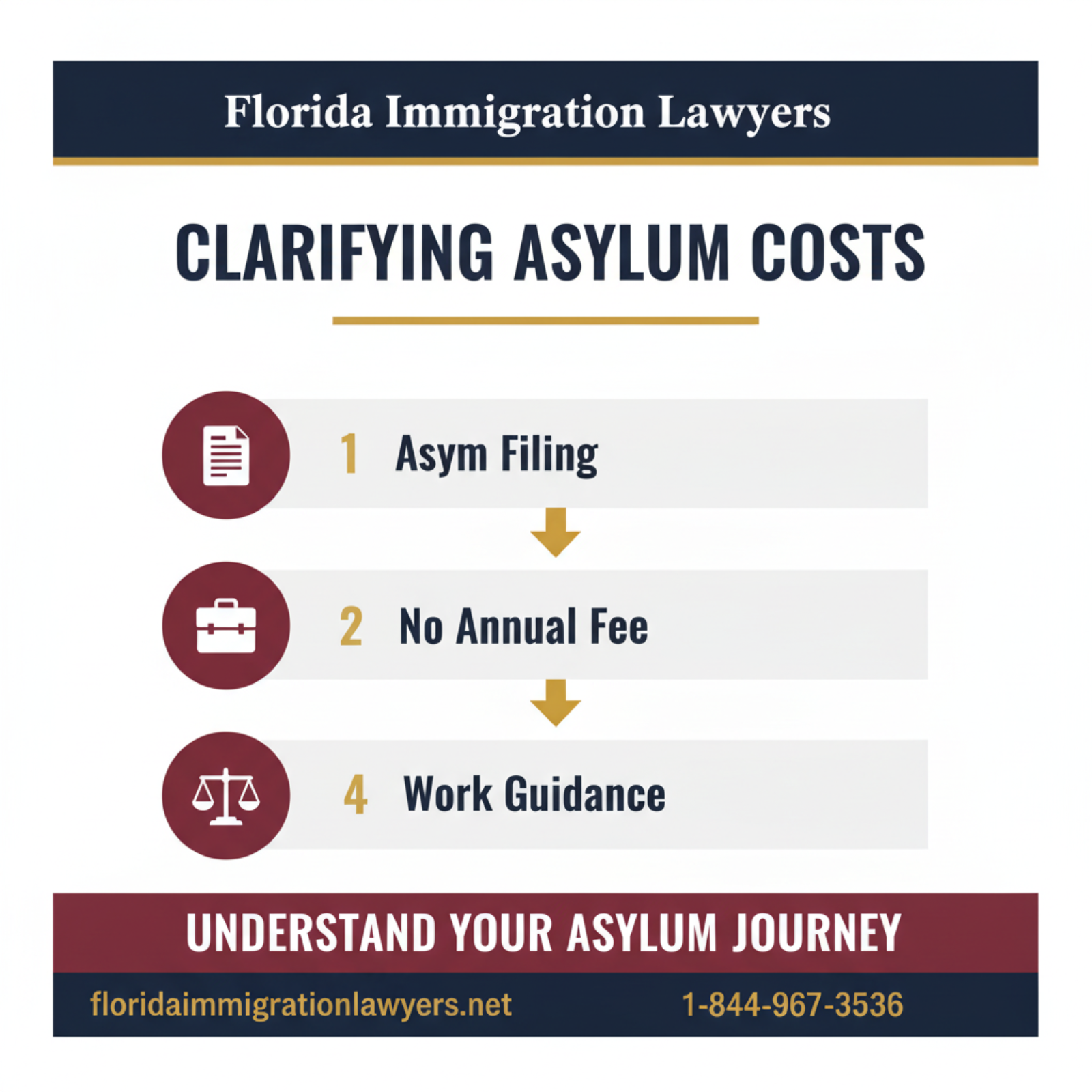
While the primary focus of this article is the potential asylum annual fee, it's important to understand the broader financial landscape for asylum seekers. Historically, filing Form I-589 itself has been free. However, other costs can accrue throughout the process, even without an annual fee.
For 2026, USCIS has implemented new fee rules for many forms, and while the asylum application itself generally remains free, related applications may incur costs. For example, applying for an Employment Authorization Document (EAD or work permit) often carries a fee. This is a separate charge from any potential annual asylum fee. Always check the USCIS website for the most current fee schedule.
Legal fees for hiring an experienced immigration attorney represent another significant cost factor. While not mandatory, legal representation can dramatically improve your chances of success. Attorneys assist with preparing your application, gathering evidence, representing you at interviews or court hearings, and navigating complex legal arguments. This investment can be invaluable for the security of your future in Florida.
Other potential costs include fees for medical examinations (if required for adjustment of status later), translation services for documents not in English, and travel expenses for interviews or court appearances. These various expenses can accumulate, so planning ahead is important for asylum seekers.
The specific amount of any USCIS asylum fees or an EOIR annual asylum fee will be published by the respective agencies. These fees are subject to change based on congressional action, regulatory updates, and court decisions. Always consult the official government websites for the most accurate and current fee information.
Do not navigate the complexities of the asylum annual fee or your asylum application alone. Contact Florida Immigration Lawyers today to schedule a consultation. Our dedicated team is here to support you every step of the way.
Common Mistakes to Avoid with the Asylum Annual Fee and Application
-
Missing Payment Deadlines: If an asylum annual fee is required, failing to pay it by the specified deadline can lead to serious consequences, including the denial of your application or even removal proceedings. Always mark your calendar and pay promptly.
Consequence: Potential denial of asylum application or issuance of a Notice to Appear for removal proceedings.
-
Paying the Wrong Amount: Fee amounts are subject to change. Paying less than the required amount will result in your payment being rejected and potentially missing a deadline. Paying too much may result in delays in processing your case, though typically overpayments are eventually refunded.
Consequence: Rejection of payment, delays in case processing, or potential denial for non-payment.
-
Using Unofficial Payment Channels: Only use the official USCIS or EOIR payment portals. Scam websites or individuals purporting to collect fees can steal your money and compromise your personal information.
Consequence: Financial loss, identity theft, and your fee remaining unpaid with immigration authorities.
-
Not Understanding Eligibility for the Fee: Assuming you are or are not required to pay without verifying official guidance. The rules for who pays can be specific and change frequently.
Consequence: Unnecessary payment or, more severely, failure to pay a required fee leading to adverse action.
-
Failing to Update Contact Information: USCIS and EOIR send important notices, including fee reminders or requests for information, via mail. If your address is not current, you could miss critical communications.
Consequence: Missing deadlines, missed interviews or court dates, and potential case denial or order of removal.
-
Submitting an Incomplete Asylum Application (Form I-589): While separate from the annual fee, an incomplete I-589 can lead to delays, rejections, or even a bar to asylum if not corrected promptly. Ensure all sections are filled out and necessary supporting documents are attached.
Consequence: Application rejection, significant delays, or a negative impact on your eligibility for asylum.
-
Not Seeking Legal Counsel: Attempting to navigate the complex asylum system, including fee requirements, without legal assistance is a common mistake. An attorney can provide accurate advice and ensure compliance.
Consequence: Increased risk of errors, missed opportunities, and potential denial of your asylum claim.
-
Failing to Keep Records of Payment: Always retain copies of your payment confirmation, receipts, and any correspondence related to the fee. This serves as crucial proof in case of discrepancies.
Consequence: Difficulty proving payment if there is a dispute, leading to further delays or complications.
-
Confusing the Annual Fee with Other Immigration Fees: Distinguish between the annual asylum fee, the EAD fee, and other USCIS filing fees. Each has its own rules and payment requirements.
Consequence: Incorrect payments, missing required fees for other benefits, or confusion about your financial obligations.
-
Ignoring Legal Challenges or Stays on the Fee: Sometimes, proposed fees are subject to court injunctions or legal challenges. It is crucial to be aware of the current legal status of any fee requirement, as it might be temporarily or permanently stayed.
Consequence: Paying a fee that is not currently required, or conversely, failing to pay if a stay is lifted, leading to adverse outcomes.
When to Call a Florida Immigration Lawyer for Asylum Help
The complexities of the U.S. asylum system, coupled with evolving fee structures like the potential asylum annual fee, make professional legal guidance indispensable. Knowing when to seek legal help can significantly impact the outcome of your case in Florida.
You should contact Florida Immigration Lawyers immediately if you:
- Receive a notice from USCIS or EOIR regarding an annual asylum fee and are unsure if it applies to you or how to pay.
- Are preparing to file your initial Form I-589 and need assistance ensuring it is complete and compelling.
- Have an asylum application pending and face delays, requests for evidence, or receive a notice for an interview or hearing.
- Are concerned about meeting the one-year filing deadline for asylum or believe you may qualify for an exception.
- Have a complex case involving criminal history, previous immigration violations, or other factors that could complicate your asylum claim or lead to deportation defense.
- Received a denial of your asylum application and need to explore options for appeal or reconsideration.
- Are seeking to adjust your status to permanent resident after being granted asylum, or exploring citizenship options.
- Need help navigating the process for an Employment Authorization Document (EAD) while your asylum case is pending.
Our firm, Florida Immigration Lawyers, specializes in protecting the rights and futures of asylum seekers across Florida. We understand the unique challenges faced by individuals fleeing persecution and are committed to providing compassionate, effective legal representation. From family immigration to business immigration, our expertise covers a broad spectrum of immigration law, always with a focus on your success.
About Florida Immigration Lawyers
Florida Immigration Lawyers is a leading immigration law firm dedicated to serving individuals and families throughout Florida. With years of experience and a deep understanding of U.S. immigration law, our attorneys are committed to providing exceptional legal counsel and compassionate support to every client.
We offer a comprehensive range of immigration services, including asylum applications, deportation defense, family-based petitions, employment visas, citizenship, and more. Our firm prides itself on its client-centered approach, ensuring that your unique story and needs are heard and addressed with the utmost care and professionalism.
Why choose Florida Immigration Lawyers? We offer personalized strategies, aggressive advocacy, and transparent communication. Our team is available 24/7, providing accessible and reliable legal assistance when you need it most. We believe everyone deserves high-quality legal representation, which is why we offer free consultations to help you understand your options without financial pressure.
Serving all of Florida, from Gainesville to Miami, our firm is ready to stand by your side. Let us be your trusted partners in navigating the complexities of the immigration system. Visit our website at https://www.floridaimmigrationlawyers.net or call us at 1-844-967-3536 to schedule your free consultation today.
Sources and References
- U.S. Citizenship and Immigration Services (USCIS)
- USCIS Fee Schedule
- Executive Office for Immigration Review (EOIR)
- Immigration and Nationality Act (INA) - 8 U.S.C. Chapter 12
- 8 U.S.C. § 1158 (INA 208) - Asylum
- 8 CFR Part 208 - Asylum and Withholding of Removal
This article provides general legal information and is not intended as legal advice. Every case is unique, and outcomes depend on specific facts and circumstances. Contact an attorney for advice about your particular situation.
The journey to asylum in the United States, especially with the intricate details surrounding an asylum annual fee, requires expert guidance. Don't leave your future to chance. Call Florida Immigration Lawyers at 1-844-967-3536 for a free consultation. We are here to help you understand your rights and navigate every step of the process. Se Habla Español - Estamos aquí para ayudarle.
Frequently Asked Questions
Florida Immigration Lawyers
Legal Team
Our experienced attorneys at Florida Immigration Lawyers have been serving clients across Florida for over 20 years. We specialize in immigration, personal injury, criminal defense, workers compensation, and family law.