Florida Immigration Court Proceedings: Your Guide for
Navigating immigration court proceedings in Florida, especially in Kissimmee, can be overwhelming. This guide from Florida Immigration Lawyers breaks down the complex process, from receiving a Notice to Appear (NTA) to understanding Master Calendar and Individual Hearings. We cover the role of an immigration judge, Executive Office for Immigration Review (EOIR) procedures, and crucial steps in removal proceedings. Learn about essential documents, timelines, and common mistakes to avoid. Discover why experienced legal counsel is vital to protect your rights and future in the U.S. Contact us for a free consultation to discuss your specific immigration court case.

Immigration court proceedings in Florida involve a formal legal process overseen by an immigration judge under the Executive Office for Immigration Review (EOIR). These proceedings, often called removal proceedings, determine if an individual may remain in the U.S. or will be deported. For Kissimmee residents, this typically means navigating the Orlando Immigration Court.
- **Master Calendar Hearings** are initial appearances to set the stage for your case.
- **Individual Hearings** are where evidence is presented to an immigration judge.
- **Removal proceedings** are the legal pathway that can lead to deportation.
- Always seek legal counsel to understand your rights and options in immigration court.
Florida Immigration Court Proceedings: Your Essential Guide for Kissimmee Residents
Receiving a Notice to Appear (NTA) can be a frightening and confusing experience. Suddenly, you are facing the complex world of **immigration court proceedings** in **Florida**, with your future in the United States hanging in the balance. For residents of Kissimmee and surrounding Central Florida, understanding this process is not just helpful, it is absolutely critical.
At Florida Immigration Lawyers, we understand the immense stress and uncertainty that comes with facing an **immigration judge** or navigating **removal proceedings**. This comprehensive guide is designed to demystify the **immigration court** system in **Florida**, offering clarity on everything from initial hearings to potential outcomes in 2026. We aim to equip you with the knowledge needed to face these challenges.
Do not attempt to navigate the intricate legal landscape of **immigration court proceedings** alone. The stakes are too high. For immediate assistance and a clear path forward, call Florida Immigration Lawyers at 1-844-967-3536 for a free consultation. Our experienced team is ready to help you.
Understanding Immigration Court Proceedings in Florida
Immigration court proceedings are administrative legal processes where an **immigration judge** determines whether a non-citizen should be allowed to remain in the United States or be removed. These proceedings are managed by the Executive Office for Immigration Review (**EOIR**), an agency within the U.S. Department of Justice.
In **Florida**, there are several **immigration court** locations, including Orlando, Miami, and the Krome Service Processing Center. For individuals residing in Kissimmee, your case will most likely be heard at the Orlando Immigration Court. These courts operate under federal law, primarily the Immigration and Nationality Act (INA).
Often, when people refer to **immigration court**, they are talking about **removal proceedings**. These proceedings are initiated when the Department of Homeland Security (DHS) believes an individual is deportable or inadmissible under U.S. immigration law. The goal is to determine if grounds for removal exist and if any forms of relief from removal are available.
It is important to note that **removal proceedings** are distinct from criminal court proceedings. While criminal convictions can lead to **removal proceedings**, the immigration court focuses solely on an individual's right to remain in the U.S. based on immigration law. An **immigration judge** acts as the arbiter, hearing evidence and applying relevant statutes and regulations.
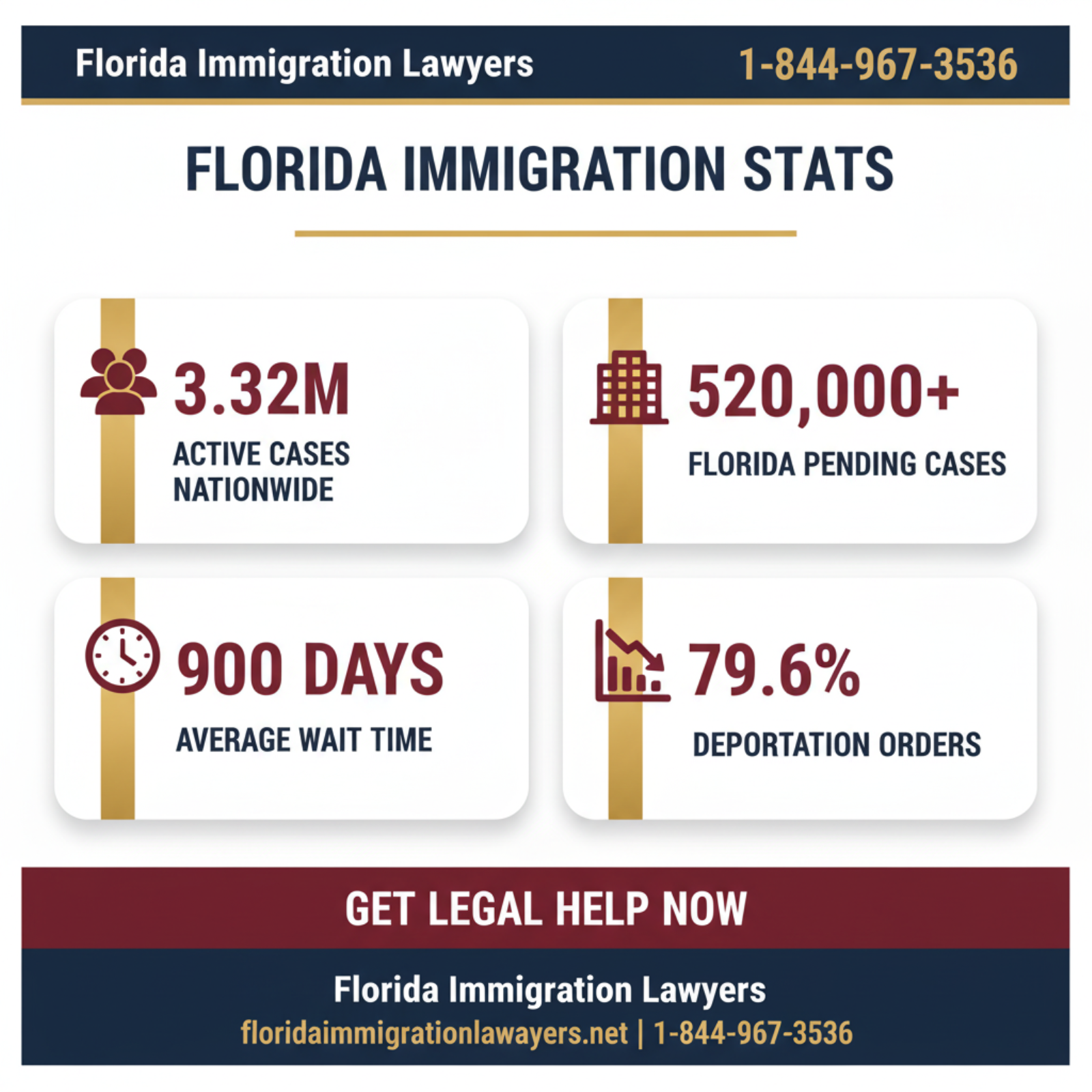
What's happening with immigration in Florida? Like many states, Florida's immigration courts face significant backlogs. This means cases can take a considerable amount of time to resolve, making it even more crucial to have skilled legal representation to navigate the delays and complexities effectively. Our firm stays updated on all current trends and challenges specific to **Florida**.
The Step-by-Step Immigration Court Process
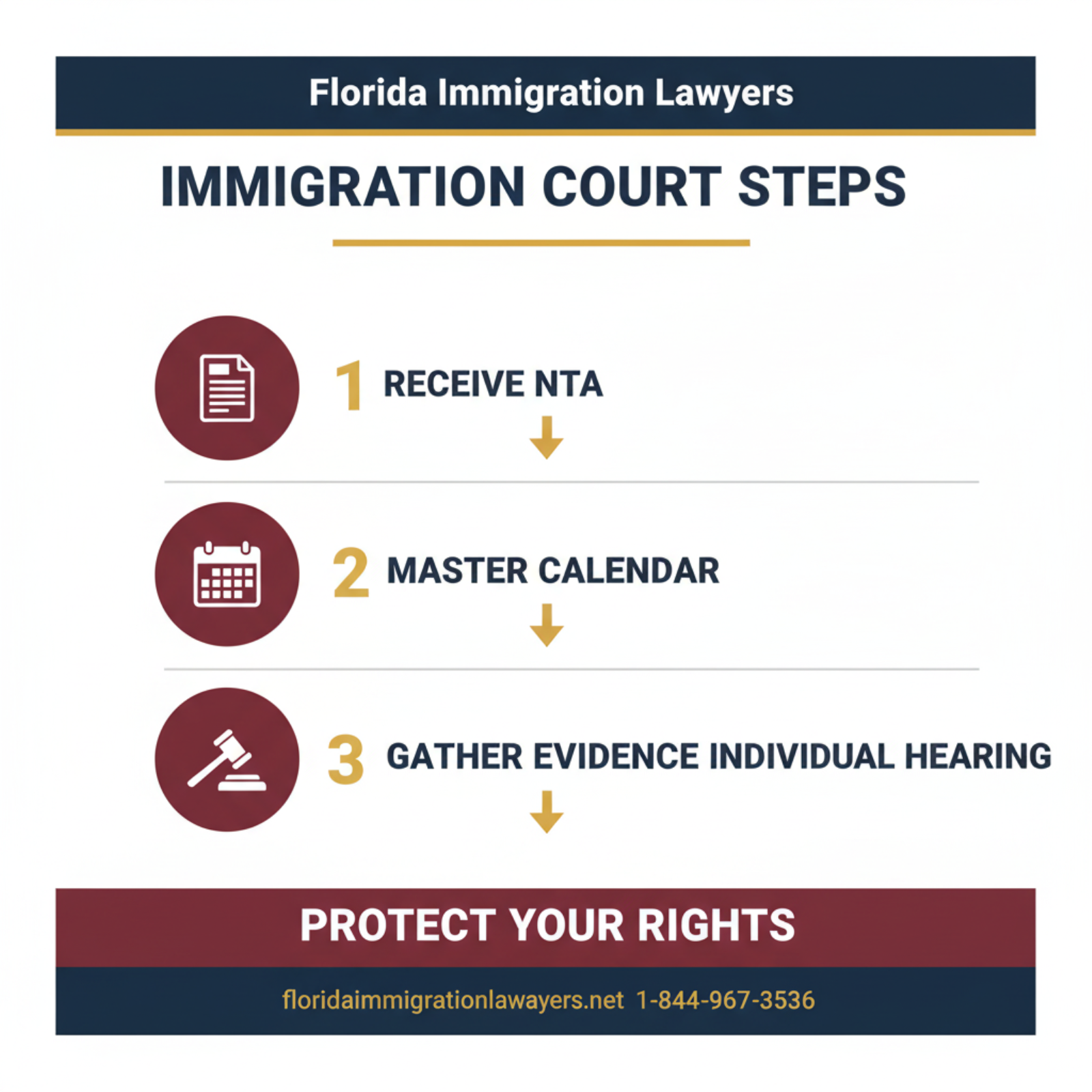
Understanding the stages of **immigration court proceedings** can help you prepare mentally and strategically. Here is a typical step-by-step guide to the process you might encounter in a **Florida immigration court**:
-
Receiving the Notice to Appear (NTA)
The process begins when you receive a Notice to Appear (Form I-862) from the Department of Homeland Security (DHS). This document formally charges you with being removable from the United States and specifies the legal grounds for removal. It also provides the date and location for your first court hearing. Reviewing your NTA carefully with an attorney is the first crucial step.
-
The Master Calendar Hearing (MCH)
Your first appearance before an **immigration judge** is typically a Master Calendar Hearing. This is a preliminary hearing where the judge confirms your identity, ensures you understand the charges, and asks you to state whether you admit or deny the allegations in the NTA. You will also inform the judge if you plan to seek any forms of relief from removal. This hearing often sets the schedule for future filings and hearings.
-
Filing Applications for Relief from Removal
If you are eligible for a form of relief, such as asylum, cancellation of removal, adjustment of status, or a waiver, you must file the appropriate application with the **immigration court** by the judge's deadline. Each form of relief has specific eligibility requirements outlined in the Immigration and Nationality Act. For example, asylum claims are governed by INA 208, and cancellation of removal is found in INA 240A.
-
The Individual Hearing (Merits Hearing)
This is the main evidentiary hearing where you present your case to the **immigration judge**. You and your attorney will offer testimony, call witnesses, and submit documents to support your application for relief. The DHS attorney will also present their case and cross-examine you and your witnesses. This hearing can be lengthy and complex, requiring thorough preparation.
-
Decision by the Immigration Judge
After considering all the evidence and testimony, the **immigration judge** will issue a decision. The judge may grant your application for relief, allowing you to remain in the U.S., or deny it, ordering you removed (deported). The decision is typically delivered orally in court, followed by a written order. Understanding the judge's reasoning is vital for any potential next steps.
-
The Appeals Process
If either you or the DHS attorney disagrees with the **immigration judge's** decision, you have the right to appeal to the Board of Immigration Appeals (BIA). The BIA is the highest administrative body for interpreting and applying immigration laws. Further appeals can be made to a U.S. Circuit Court of Appeals. An appeal is a complex legal process that must be initiated within 30 days of the judge's decision, as per 8 CFR § 1003.38.
Essential Documents for Your Immigration Court Case
Preparing and organizing your documents is a cornerstone of a strong defense in **immigration court proceedings**. Missing or incomplete documentation can significantly harm your case. Here's a general checklist of documents you might need:
- Copy of your Notice to Appear (NTA).
- Proof of identity and nationality (passport, birth certificate).
- Marriage certificates, birth certificates of family members (for family-based relief).
- Financial records (tax returns, pay stubs, bank statements).
- Affidavits or sworn statements from witnesses who can attest to your character or the facts of your case.
- Evidence supporting your claim for relief, such as medical records for asylum claims, or proof of hardship for cancellation of removal.
- Any criminal records, even minor ones, along with certified dispositions.
- Proof of continuous physical presence in the U.S. and good moral character.
- Educational records, employment history, and community involvement.
- Any previous immigration applications or filings with USCIS.
- Proof of residence in **Florida**, such as utility bills or lease agreements.
Having an experienced attorney review your documents ensures that you present the most compelling evidence. They can also help you identify any gaps and advise on how to obtain necessary records.
Immigration Court Timelines and Processing Expectations in Florida
The **immigration court** system, especially in **Florida**, is known for its significant backlogs. The average time it takes to resolve an **immigration court** case can vary widely, from a few months to several years. This uncertainty can be one of the most challenging aspects for individuals and families in Kissimmee.
Factors influencing your case timeline include the specific **immigration court** (Orlando, Miami), the individual **immigration judge's** caseload, the complexity of your case, and the type of relief you are seeking. Simple cases with straightforward eligibility might proceed faster, while complex **removal proceedings** involving multiple forms of relief or appeals can take much longer.
To look up **immigration court hearings** or check your **immigration court case status**, you can use the Executive Office for Immigration Review's (EOIR) Automated Case Information System. This system allows you to check your case status online or by phone using your A-Number. It's a crucial tool for staying informed about your next court date and any changes to your schedule. You can access the **EOIR** system via their website at justice.gov/eoir.
While specific wait times are unpredictable, it's not uncommon for an Individual Hearing to be scheduled more than a year after the Master Calendar Hearing. The current climate of increased enforcement and policy changes can also contribute to longer processing times. Staying organized and having an attorney who proactively manages your case is essential.
Cost Factors Associated with Immigration Court Cases
Understanding the potential costs involved in **immigration court proceedings** is important for planning. These costs generally fall into a few categories:
- **Government Filing Fees:** Many applications for relief from removal, such as adjustment of status or certain waivers, require a filing fee payable to USCIS or DHS. These fees can change, so it's best to check the most current fee schedule on USCIS.gov. Fee waivers may be available for eligible individuals based on financial hardship.
- **Legal Fees:** Attorney fees are a significant component. They vary based on the complexity of your case, the attorney's experience, and the services required. Some attorneys charge hourly, while others offer flat fees for specific stages of the process. Investing in experienced legal counsel is often critical for a successful outcome in **removal proceedings**
- **Document Preparation and Translation Costs:** You may incur costs for obtaining official documents, certified translations, medical examinations, or expert evaluations. These are often necessary to support your case effectively.
- **Travel and Miscellaneous Expenses:** Attending court hearings, especially if they are in Orlando, will involve travel costs. Other miscellaneous expenses can include postage, copying, and notary services.
Do not let concerns about costs prevent you from seeking legal guidance. Many firms, including Florida Immigration Lawyers, offer free initial consultations to discuss your case and provide an estimate of potential legal fees. We believe in transparent pricing and will discuss all costs upfront.
Do not navigate this process alone. The complexities of **immigration court proceedings** demand professional insight. Contact Florida Immigration Lawyers today to schedule your free consultation and protect your future.
Common Mistakes to Avoid in Immigration Court Proceedings
Making even a small error in **immigration court** can have severe consequences, potentially leading to a deportation order. Here are some common mistakes to avoid during your **removal proceedings** in **Florida**:
-
Missing Court Dates: Failing to appear for a Master Calendar Hearing or Individual Hearing can result in an automatic order of removal (deportation) in absentia. This is one of the most critical errors you can make, as it is difficult to reverse.
-
Failing to Update Your Address: If you move, you must notify **EOIR** of your new address within five business days. Failure to do so means you might not receive important court notices, leading to missed hearings and potential removal orders. This is a common pitfall for individuals in **Florida**.
-
Not Filing Applications for Relief on Time: Each application for relief has strict filing deadlines set by the **immigration judge**. Missing these deadlines can mean you lose your opportunity to apply for a pathway to legal status or protection from deportation.
-
Representing Yourself Without Legal Knowledge: While you have the right to represent yourself, **immigration court proceedings** are highly complex. Without legal training, you may fail to understand legal arguments, present evidence correctly, or identify available forms of relief, greatly diminishing your chances of success.
-
Providing Inconsistent Testimony or False Information: Lying or providing inconsistent statements to the **immigration judge** or DHS can severely damage your credibility. It can also lead to charges of fraud, which carry their own severe penalties and can permanently bar you from immigration benefits. Honesty is paramount.
-
Ignoring Advice from Your Attorney: Your attorney is your guide through this difficult process. Disregarding their advice on strategy, evidence, or courtroom conduct can undermine your case and lead to unfavorable outcomes. Trust your legal counsel.
-
Failing to Gather Sufficient Evidence: A strong case relies on compelling evidence. Not providing enough supporting documents, witness statements, or expert reports can weaken your claims and make it difficult for the **immigration judge** to rule in your favor.
-
Not Understanding the Charges in Your NTA: The Notice to Appear outlines the specific legal reasons DHS believes you are removable. If you do not understand these charges, you cannot effectively defend against them. Your attorney can fully explain the allegations.
-
Traveling Without Permission: If you are in **removal proceedings**, leaving the U.S. without proper authorization (e.g., advance parole) can be considered a self-deportation and may prevent you from re-entering the country. Always consult your attorney before any international travel.
-
Failing to Prepare for Cross-Examination: During an Individual Hearing, you will be cross-examined by the DHS attorney. Being unprepared for difficult questions or inconsistencies in your story can severely harm your case. Your attorney will help you prepare thoroughly.
-
Overlooking the Importance of Good Moral Character: Many forms of relief require you to demonstrate good moral character. Engaging in certain criminal activities or fraudulent behavior during your time in the U.S. can make you ineligible for relief and lead to a negative decision from the **immigration judge**.
-
Believing Misinformation from Non-Attorneys: Seeking advice from friends, family, or unqualified notaries (notarios) instead of a licensed immigration attorney can lead to critical errors based on incorrect or outdated information. Only a qualified attorney can provide reliable legal advice for your specific situation.
When to Seek Legal Counsel for Your Immigration Court Case
The moment you receive a Notice to Appear or become aware that you are in **removal proceedings**, it is time to contact an immigration attorney. Early intervention can significantly impact the outcome of your case. Here are specific scenarios where legal help is indispensable:
- **You've Received a Notice to Appear (NTA):** This is the official start of your **immigration court proceedings**. An attorney can review the charges, identify potential defenses, and begin preparing your case immediately.
- **You're Facing Deportation or Removal:** If you are at risk of being deported from **Florida** or the U.S., an attorney specializing in deportation defense is crucial. They can explore all available avenues for relief, such as asylum, cancellation of removal, or waivers.
- **You Have a Criminal History:** Criminal convictions, even minor ones, can have severe immigration consequences. An attorney can assess how your criminal record affects your case and advise on possible waivers or strategies to mitigate the impact.
- **You're Detained by ICE:** If you or a loved one is detained by Immigration and Customs Enforcement (ICE), an attorney can work to secure release on bond, represent you in detention hearings, and ensure your rights are protected.
- **You Don't Understand the Legal Process or Speak English Fluently:** The **immigration court** system is complex, and legal terminology can be difficult to grasp. A bilingual attorney can explain everything clearly and ensure there are no communication barriers.
- **You Need to File an Appeal:** If an **immigration judge** has issued an unfavorable decision, an attorney is essential for navigating the intricate appeals process to the Board of Immigration Appeals (BIA) or federal courts.
Florida Immigration Lawyers has extensive experience representing individuals in **immigration court proceedings** across **Florida**, including those in Kissimmee. We are dedicated to protecting your rights and fighting for the best possible outcome. Our attorneys are well-versed in the nuances of **EOIR** procedures and can provide the robust defense you need.
About Florida Immigration Lawyers
Florida Immigration Lawyers is a leading law firm dedicated to providing comprehensive and compassionate immigration legal services throughout all of **Florida**. Our team of skilled attorneys understands the unique challenges faced by immigrants and their families, especially those in Kissimmee and surrounding communities.
We specialize in a wide range of immigration matters, including deportation defense, asylum claims, citizenship applications, family-based visas, and business immigration solutions. Our commitment is to offer personalized attention and strategic legal advice tailored to your specific situation. We pride ourselves on our empathetic approach and our unwavering dedication to our clients.
Choosing Florida Immigration Lawyers means partnering with a team that is available 24/7 to address your concerns. We offer free consultations to help you understand your options without financial pressure. Our attorneys are fluent in English and Spanish, ensuring effective communication and culturally sensitive representation. Let us be your trusted advocates in the complex world of immigration law. Visit us at https://www.floridaimmigrationlawyers.net or call us anytime.
Sources and References
- U.S. Citizenship and Immigration Services (USCIS)
- Executive Office for Immigration Review (EOIR)
- 8 U.S.C. Chapter 12 - Immigration and Nationality Act (INA)
- INA 208 - Asylum
- INA 240 - Removal Proceedings
- INA 240A - Cancellation of Removal
- 8 CFR § 1003.38 - Appeals to the Board of Immigration Appeals
This article provides general legal information and is not intended as legal advice. Every case is unique, and outcomes depend on specific facts and circumstances. Contact an attorney for advice about your particular situation.
Facing **immigration court proceedings** can be one of the most challenging periods of your life. With Florida Immigration Lawyers, you do not have to face it alone. Our dedicated team is here to provide the expert legal guidance and support you need to navigate the **immigration court** system in **Florida** successfully.
Do not delay in securing robust legal representation. Your future depends on it. Call Florida Immigration Lawyers today at 1-844-967-3536 for your free, confidential consultation. Se Habla Español - Estamos aquí para ayudarle.
Do Not Navigate This Process Alone
Our experienced immigration attorneys are ready to fight for you. Get a free, confidential consultation today.
Se Habla Español
Frequently Asked Questions
Florida Immigration Lawyers
Immigration Attorney | Founder, Vasquez Law Firm
U.S. Air Force veteran and immigration attorney with thousands of cases resolved. J.D., NCCU School of Law. AILA member. Admitted to the 4th, 5th, and 11th Circuit Courts.
Available 24/7 - Free Evaluations
Related Legal Services
Our Florida immigration attorneys can help you with deportation defense, citizenship and naturalization and family immigration services. Call today at 1-844-967-3536 for a free consultation.
Related Links
Related Topics
Free Legal Consultation
Discuss your case with our experienced attorneys. We're available 24/7.
Se Habla Español - Estamos aquí para ayudarle.
Related Articles
NIW National Interest Waiver for Florida Professionals
Explore the National Interest Waiver (NIW) process for Florida professionals. Learn about the eligibility criteria, application steps, and common mistakes to avoid. Contact Florida Immigration Lawyers for expert guidance and a free consultation.
H-2A Visa Florida Growers: Guide for Agricultural Workers
Discover a comprehensive guide to the H-2A visa program for Florida agricultural workers and growers. Learn about eligibility, the step-by-step application process, essential documents, and critical timelines. This article also covers the associated costs, crucial rights and protections for H-2A workers, and common mistakes to avoid. Florida Immigration Lawyers offers expert legal assistance for H-2A petitions, ensuring compliance and smooth processing for temporary farm labor needs in Kissimmee and across Florida. Contact us for a free consultation to navigate this complex immigration pathway successfully.
TPS Re-Registration Deadlines in Florida 2026 | VLF Florida
Stay informed on TPS re-registration deadlines in Florida for 2026. Discover key steps and mistakes to avoid. Call Florida Immigration Lawyers at 1-844-967-3536 for a free consultation.
U Visa for Crime Victims in Florida: A Guide | VLF Florida
Discover how crime victims in Florida can benefit from the U visa, providing a pathway to safety and legal status. Learn about eligibility, the application process, and common pitfalls to avoid.