Florida Immigration Backlog Solutions: Navigating USCIS...
Florida's immigration backlog presents significant challenges for thousands of individuals and families. With USCIS delays and lengthy processing times, navigating the system can be daunting. This comprehensive guide for 2026 explores the causes of these backlogs, offers practical solutions, and outlines proactive steps you can take. Learn about essential documents, processing expectations, and common mistakes to avoid. Discover when legal representation can be critical to your case's success. Florida Immigration Lawyers is dedicated to providing expert guidance and support to help you achieve your immigration goals.
The immigration backlog in Florida refers to significant delays in processing cases by USCIS and immigration courts. These delays, often extending for years, impact individuals seeking legal status or protection. Solutions involve proactive case management, seeking legal counsel, and understanding current processing times to navigate the system effectively.
- Immigration cases in Florida face substantial processing delays.
- USCIS and court backlogs impact various application types.
- Proactive steps and legal guidance are crucial for resolution.
- Understanding current timelines helps manage expectations.
- Advocacy and legal intervention can help expedite some cases.
Are you an immigrant in Florida facing agonizing waits for your immigration case? You are not alone. The immigration backlog is a formidable obstacle for thousands across the Sunshine State. Navigating USCIS delays and lengthy processing times can feel overwhelming, with your future hanging in the balance.
In 2026, understanding the current landscape and identifying viable solutions is critical. This guide will equip you with essential information, explaining delays and outlining proactive strategies. If you need personalized guidance, Call Florida Immigration Lawyers at 1-844-967-3536 for a free consultation today. Our experienced team helps you navigate these challenges effectively.
Understanding Florida's Immigration Backlog and USCIS Delays in 2026
The immigration backlog in Florida and nationwide has reached unprecedented levels. This refers to the massive number of pending applications, petitions, and court cases awaiting adjudication by USCIS and EOIR. These delays significantly impact individuals seeking various legal statuses.
Several factors contribute to persistent USCIS delays and court backlogs, including insufficient staffing, increased application volumes, and policy changes. The COVID-19 pandemic further exacerbated these issues. For residents of Tallahassee and other Florida communities, these delays mean prolonged uncertainty.
The impact of extended processing times is profound. Individuals face difficulties renewing work permits or traveling. Families remain separated, and businesses struggle. Florida Immigration Lawyers understands this pressure and helps you find effective solutions.
Key Factors Contributing to Delays
One factor is the sheer volume of annual applications. USCIS receives millions, each requiring careful review. Resource allocation is another contributor; agencies operate with limited budgets and staffing. Policy shifts also play a role, necessitating new procedures that temporarily slow the system.
Navigating the Immigration Backlog: A Step-by-Step Guide for Florida Residents
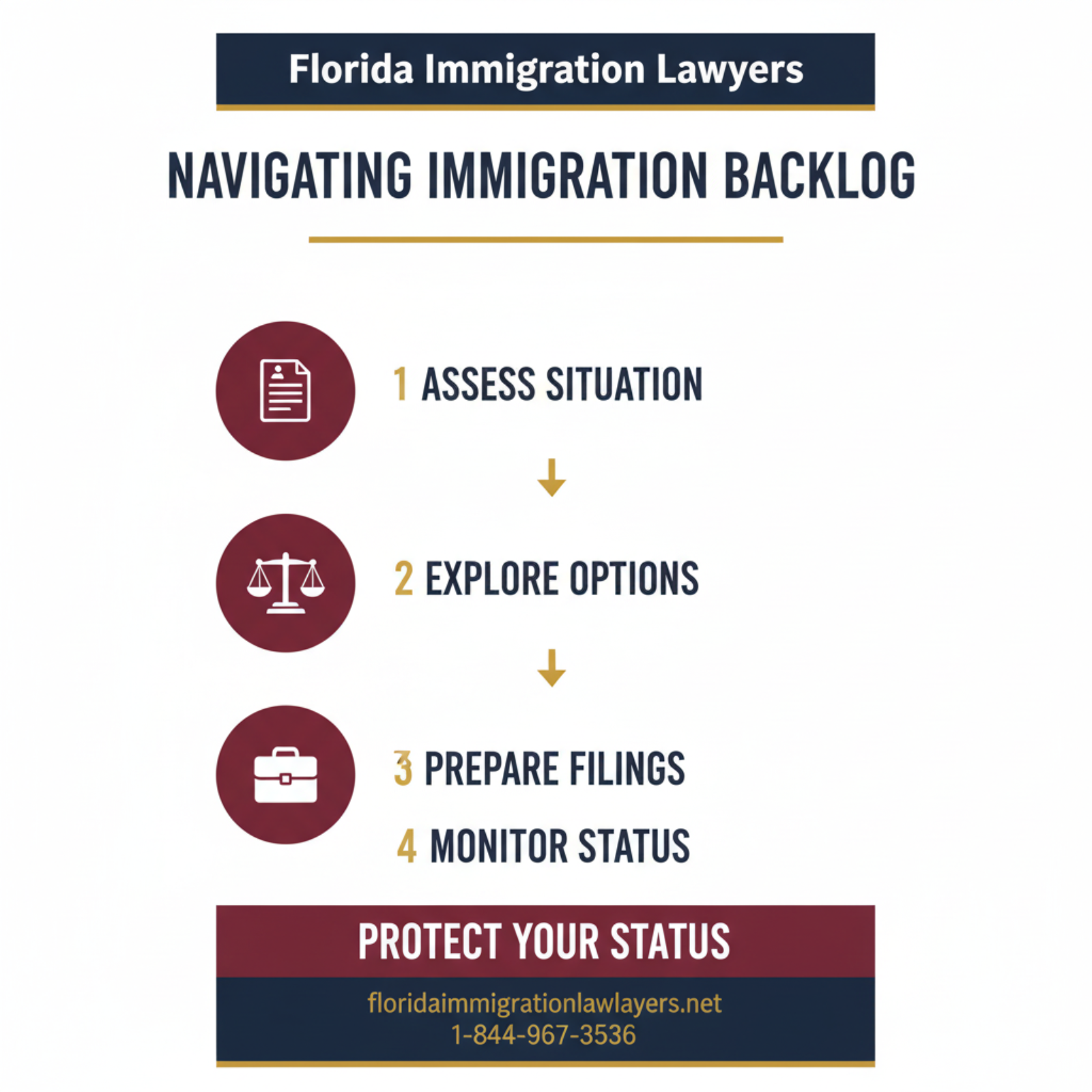
Addressing the immigration backlog requires a strategic and informed approach. While you cannot control government processing speed, you can take proactive steps. This guide focuses on practical solutions for those experiencing USCIS delays in Florida.
- Monitor Case Status: Use the USCIS online case status tool with your receipt number for real-time updates. Check frequently for changes.
- Understand Normal Processing Times: Visit the USCIS website for published processing times for your specific form and service center. Compare your timeline to determine if your delay is outside the norm.
- Submit E-Request: If your case exceeds posted processing times, submit an online "e-request" inquiry. This flags your case for review.
- Contact USCIS Contact Center: For complex inquiries, call the USCIS Contact Center. Agents can sometimes escalate issues.
- Congressional Representative: For significant delays, contact your U.S. Representative or Senator's office. Their staff can make inquiries.
- Consult Attorney: For persistent delays, legal guidance is invaluable. An attorney assesses your situation, identifies issues, and advocates. They can explore actions like a Writ of Mandamus.
- Prepare for Interviews/RFEs: Always be ready to respond promptly to any USCIS requests. Gather all necessary documents. Timely responses prevent further delays.
Proactive engagement and careful documentation are key in managing processing times. An attorney is a vital partner, offering strategic advice and direct advocacy.
Essential Document Checklist for Expediting Your Florida Immigration Case
When dealing with the immigration backlog and trying to expedite your case, having all necessary documentation is crucial. Being prepared prevents further USCIS delays and demonstrates diligence. This checklist offers a general overview; specific requirements vary by case type.
- Personal ID: Valid passport, birth certificate, national ID, previous visa stamps.
- Legal Entry/Status: I-94 record, previous visa approvals, relevant immigration forms.
- Application Forms: Copies of all submitted forms (e.g., I-130, I-485, N-400), with receipt notices.
- Supporting Evidence: Marriage/birth certificates of dependents, employment letters, diplomas, financial statements.
- Proof of Relationship: For family petitions, include marriage/birth certificates, photos, joint accounts.
- Medical Exam: Form I-693, completed by a USCIS-approved civil surgeon.
- Police/Court Records: Provide certified copies of court dispositions for any arrests/convictions.
- Financial Support: Affidavit of Support (Form I-864), with tax returns, W-2s, employment verification.
- USCIS Correspondence: Keep an organized file of all notices, RFEs, and letters from USCIS.
- Legal Representation: If you have an attorney, keep a copy of your signed G-28.
Organizing these documents systematically assists your attorney and streamlines interactions. It is a critical component of finding solutions to your immigration backlog challenges.
Digital vs. Physical Documentation
Maintaining physical and digital copies of all submitted documents and correspondence is highly recommended. Digital backups are essential for security and accessibility. Always retain certified copies of original documents.
Timeline and Processing Expectations for Florida Immigration Cases in 2026
Understanding current processing times is vital for managing expectations in Florida. The immigration backlog means many cases experience significant USCIS delays. These timelines are dynamic, influenced by volume, resources, and policy.
For common forms like I-130, I-485, or N-400, processing can range from months to several years. Family-based petitions often face the longest waits. Employment-based petitions generally have shorter, but still substantial, wait times.
USCIS provides an online tool to check processing times by form type and service center. A Form I-485 at the Tampa Field Office might differ from one in Miami. Always consult the official USCIS website for current data.
Solutions for extended processing times involve patience and proactive engagement. If your case is well outside normal ranges, or you need urgent travel, expedited processing may be an option. These are granted only in specific, compelling circumstances. An attorney can help determine eligibility.
Cost Factors and Fee Breakdown for Immigration Cases in Florida
Navigating the immigration backlog and seeking solutions involves understanding associated costs. These expenses go beyond government filing fees, including legal fees, medical exams, and administrative charges. Being aware of the full financial picture helps you plan, especially with potential USCIS delays.
Government filing fees are set by USCIS and are subject to change. Fees vary significantly by form. Always check the most current fee schedule on the official USCIS website before submitting. Fees are generally non-refundable.
Other significant costs include:
- Medical Examination Fees: Mandatory for adjustment of status applicants by a USCIS-approved civil surgeon.
- Biometrics Fees: Most applications require biometrics for background checks.
- Translation Fees: Required for non-English supporting documents.
- Attorney Fees: Invaluable investment, especially with immigration backlog issues. Florida Immigration Lawyers offers payment plans.
- Travel Costs: For interviews or biometrics, you may incur expenses, particularly if traveling from Tallahassee.
While the financial burden can be substantial, investing in proper legal guidance saves time, reduces stress, and prevents costly mistakes. Our firm offers a free consultation to discuss your case and potential costs.
The journey through the U.S. immigration system, particularly with the current immigration backlog and USCIS delays, can be daunting. Do not navigate this process alone. Contact Florida Immigration Lawyers today for expert legal assistance. Our dedicated team is ready to provide the guidance and advocacy you need to pursue the best possible solutions for your case.
Common Mistakes to Avoid
Navigating the immigration system, especially with current USCIS delays and the immigration backlog, requires precision. Even minor errors can lead to significant setbacks, prolonging processing times and jeopardizing your case. Here are common mistakes to avoid:
- Failing to Disclose All Information: Omitting details about your immigration history or criminal record can lead to misrepresentation and severe penalties.
- Submitting Incomplete/Incorrect Forms: Improperly filled forms, missing signatures, or lacking documents are common reasons for rejection or RFEs, extending processing times. Double-check everything.
- Missing Deadlines: USCIS provides specific deadlines. Failing to respond on time will almost certainly lead to a denial.
- Not Keeping Copies: Maintain a complete, organized copy of every form, document, and correspondence sent to or received from USCIS.
- Inconsistent Information: Discrepancies between different applications or during interviews raise red flags. Ensure all information is consistent.
- Not Updating Address: Notify USCIS of a new address within 10 days using Form AR-11. Failure can result in missed notices.
- Overlooking Public Charge: For adjustment of status, demonstrating you will not become a "public charge" is crucial. Inadequate financial support can lead to denial.
- Traveling Without Advance Parole: If adjusting status (Form I-485) and leaving the U.S. without approved Advance Parole, your application may be considered abandoned.
- Ignoring Minor Criminal Offenses: Even minor arrests/convictions can have significant immigration consequences. Always disclose these and seek legal advice.
- Assuming Delays are Normal: While delays are common, assuming your case will resolve itself without intervention is a mistake. Proactive inquiries or legal action may be necessary.
- If ICE Stops You in Florida: Remember your rights. You have the right to remain silent and speak with an attorney. Do not sign anything without legal counsel. Do not resist arrest, but state you do not consent to searches. Contact an immigration lawyer immediately.
When to Call a Lawyer
Given the persistent immigration backlog and significant USCIS delays throughout Florida, knowing when to seek professional legal help is paramount. While some navigate the system independently, many situations demand an experienced immigration attorney. Florida Immigration Lawyers is here to assist you.
You should consider calling an attorney if:
- Your Case is Significantly Delayed: If your processing times are well beyond published USCIS estimates, and inquiries have not yielded results, an attorney can investigate and explore options.
- You Receive an RFE or NOID: These notices are critical. An attorney helps gather documentation and craft a compelling reply.
- You Have a Complex Immigration History: Previous deportations, criminal convictions, or multiple visa applications complicate cases. An attorney assesses impact and identifies potential waivers or solutions.
- You Are Facing Removal/Deportation: If you receive a Notice to Appear (NTA), immediate legal representation is essential. Our firm specializes in deportation defense.
- You Need to Expedite Your Case: An attorney can help prepare a compelling request for expedited processing if you meet strict criteria.
- Applying for Asylum/Refugee Status: These cases are highly complex, requiring strong legal arguments and evidence. Our firm provides expert asylum assistance.
- Questions About Eligibility: Before filing, an attorney assesses your eligibility for various immigration benefits, including family-based visas, business immigration, or citizenship.
- Unsure About Your Rights: Especially if stopped by immigration officials like ICE in Florida, knowing your rights is crucial. An attorney can advise you.
Do not let the immigration backlog deter you. The experienced attorneys at Florida Immigration Lawyers provide personalized and effective solutions. Our team is well-versed in current immigration laws, offering strategic guidance to clients across Florida, including Tallahassee. We are available to help you.
About Florida Immigration Lawyers
Florida Immigration Lawyers is a leading firm serving individuals and families across the entire state. We understand the profound impact immigration matters have, especially with USCIS delays and the persistent immigration backlog. Our mission is to provide compassionate, effective, and results-driven legal representation.
We offer comprehensive services, including family-based immigration, employment visas, deportation defense, asylum, naturalization, and complex waivers. Our attorneys stay current with legal developments, providing strategic advice. We have a strong track record of successful solutions.
Why choose us? We are client-focused, communicate clearly, and advocate fiercely. We offer free consultations and are available 24/7. Our bilingual team ensures language is never a barrier.
Contact us today:
Phone: 1-844-967-3536
Website: https://www.floridaimmigrationlawyers.net
Serving all of Florida, including Tallahassee.
Sources and References
- U.S. Citizenship and Immigration Services (USCIS)
- Executive Office for Immigration Review (EOIR)
- 8 U.S.C. Chapter 12 - Immigration and Nationality Act (INA)
- INA § 203 - Preference Categories for Immigrants
- INA § 245 - Adjustment of Status of Nonimmigrant to That of Person Admitted for Permanent Residence
- 8 CFR Part 245 - Adjustment of Status
This article provides general legal information and is not intended as legal advice. Every case is unique, and outcomes depend on specific facts and circumstances. Contact an attorney for advice about your particular situation.
Do not let the complexities and USCIS delays of the immigration backlog overwhelm you. Florida Immigration Lawyers is here to offer the compassionate and effective legal solutions you deserve. Our team is ready to provide a free consultation to evaluate your case and discuss your best path forward. Call us today at 1-844-967-3536. Se Habla Español - Estamos aquí para ayudarle.
Do Not Navigate This Process Alone
Our experienced immigration attorneys are ready to fight for you. Get a free, confidential consultation today.
Se Habla Español
Or leave your details and we’ll call you:
Free Evaluation in 24 Hours
Or talk to us right now
AI voice assistant — available 24/7
FreeFrequently Asked Questions

William J. Vásquez
Founding Attorney · Vasquez Law Firm
U.S. Air Force veteran and immigration attorney with years of hands-on U.S. immigration experience. J.D., NCCU School of Law. AILA member. Admitted to the 4th, 5th, and 11th Circuit Courts.
Available 24/7 - Free Evaluations
Reviewed for legal accuracy by William J. Vásquez
Licensed in North Carolina; U.S. immigration is federal practice.
Related Legal Services
Our Florida immigration attorneys can help you with family immigration services, immigration practice areas and free immigration consultation. Call today at 1-844-967-3536 for a free consultation.
Related Links
Related Topics
Free Legal Consultation
Discuss your case with our experienced attorneys. We're available 24/7.
Se Habla Español - Estamos aquí para ayudarle.
Related Articles
Military Naturalization Expedited in Florida Bases
Explore military naturalization options for families at Florida bases, including parole in place benefits in Miami. Learn how to expedite your application with expert guidance from Florida Immigration Lawyers.
Immigration Lawyer Orlando Free Consultation 2026
Discover how to find an immigration lawyer in Orlando offering a free consultation. Understand the services available and why choosing Florida Immigration Lawyers can make a difference in your case.
F-1 to H-4 Change of Status Texas Processing Time 2026
Considering an F-1 to H-4 visa status change at the Texas Service Center in 2026? Discover processing timelines, document requirements, and expert tips to navigate the immigration process effectively. Call Florida Immigration Lawyers for a free consultation today.
Immigration Lawyer Orlando: Free Consultation and Solutions
Dealing with USCIS delays and immigration backlogs can be frustrating. Learn how Florida Immigration Lawyers can help you navigate these challenges effectively. Call us at 1-844-967-3536 for a free consultation.