Fiance Visa Lawyer in Florida: K-1 Visa Process
Navigating the K-1 visa process in Florida can be challenging. Learn about the requirements, timeline, and common mistakes to avoid. Call Florida Immigration Lawyers for a free consultation.

- Understanding eligibility requirements
- Gathering necessary documentation
- Following the correct application process
- Knowing typical processing times
- Preparing for the interview
Introduction
Imagine you're in Pembroke Pines, Florida, eagerly planning to bring your loved one from abroad to start your life together. Navigating the K-1 fiance visa process can be daunting, but with the right guidance, it becomes manageable. This article covers everything you need to know about the fiance visa, including the steps involved, required documentation, common mistakes, and when to seek legal assistance. Call Florida Immigration Lawyers at 1-844-967-3536 for a free consultation to discuss your specific situation.
The journey of love crossing international borders is a beautiful one, but the legal pathway to unite in the United States can often feel like a labyrinth. For couples in Florida, dreaming of a future together with a partner from another country, the K-1 fiance visa is the primary route. This visa not only brings your loved one to the U.S. but also sets the stage for your marriage and their subsequent path to permanent residency. Understanding each step, from initial petition to the final interview, is crucial for a smooth process. That's where expert guidance becomes invaluable, offering peace of mind and ensuring every detail is meticulously handled. Whether you're in Miami, Orlando, or any other part of the Sunshine State, preparing for this significant life event requires careful planning and adherence to strict immigration regulations.
What is a Fiance Visa and How Does It Work?
A fiance visa, officially known as a K-1 visa, allows a U.S. citizen to bring their foreign fiance to the United States to marry within 90 days. As of 2026, this visa is a popular pathway for couples waiting to unite in the U.S.
The K-1 visa requires the petitioner to be a U.S. citizen, both parties must be legally free to marry, and the couple must have met in person at least once within two years before filing the petition. This visa facilitates the transition to a green card, provided the marriage occurs within the stipulated timeframe.
The K-1 visa is specifically designed for U.S. citizens who wish to bring their foreign fiance(e) to the United States with the express purpose of marrying within 90 days of their arrival. It's important to differentiate this from a spouse visa (IR-1/CR-1), which is for couples already married. The K-1 serves as a bridge, allowing the couple to unite, marry, and then apply for adjustment of status to become a lawful permanent resident (green card holder).
The eligibility criteria are stringent. Beyond the petitioner being a U.S. citizen, both individuals must be legally free to marry – meaning any previous marriages must have been legally terminated through divorce or death. Furthermore, a fundamental requirement is that the couple must have met in person at least once within the two years immediately preceding the filing of the Form I-129F petition. This requirement underscores the genuine nature of the relationship, though rare exceptions can be made in cases of extreme hardship or cultural practices where meeting before marriage is forbidden. The K-1 visa is a non-immigrant visa with immigrant intent, meaning the foreign national intends to become a permanent resident after marriage, making compliance with all rules paramount.
How to Apply for a K-1 Visa in Florida?
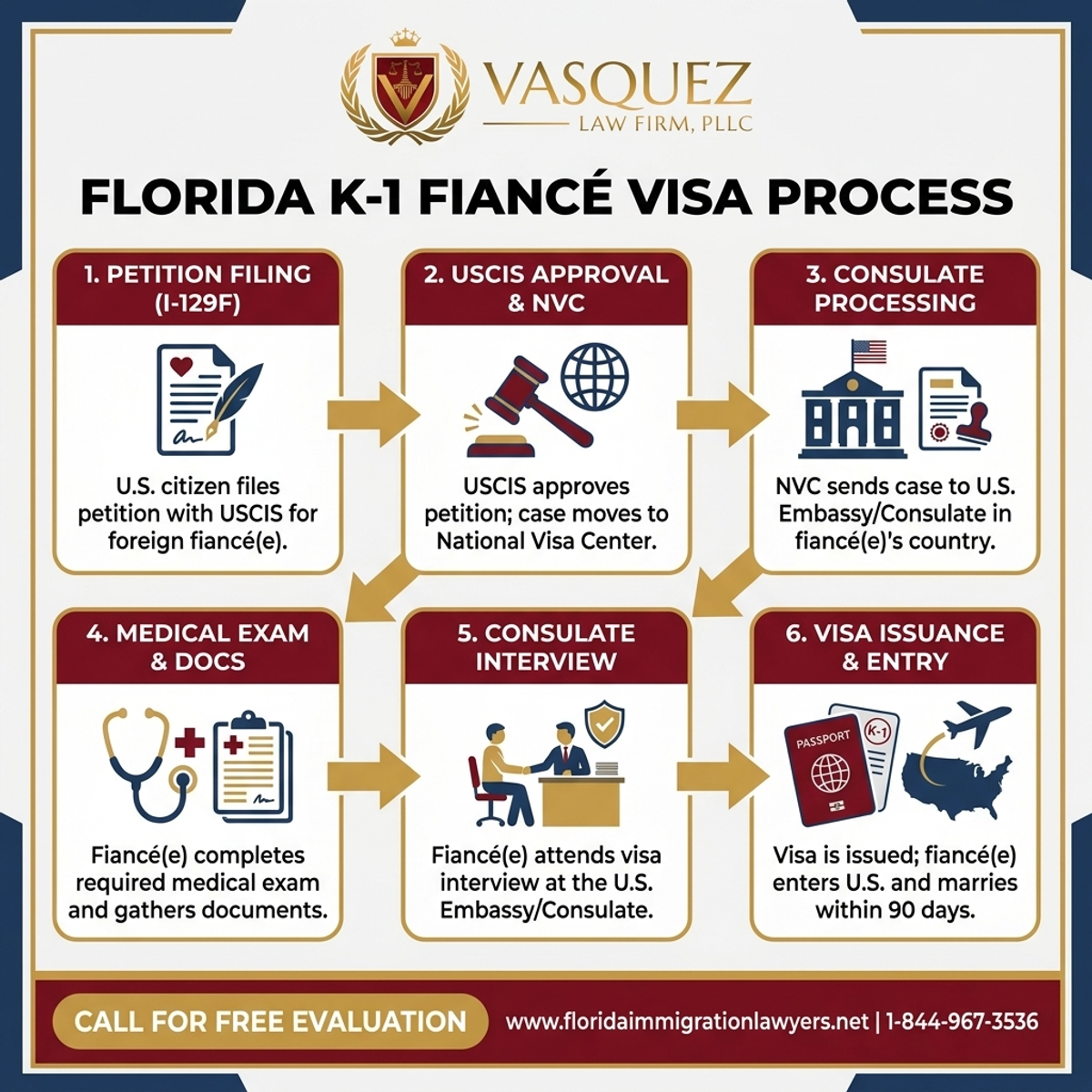
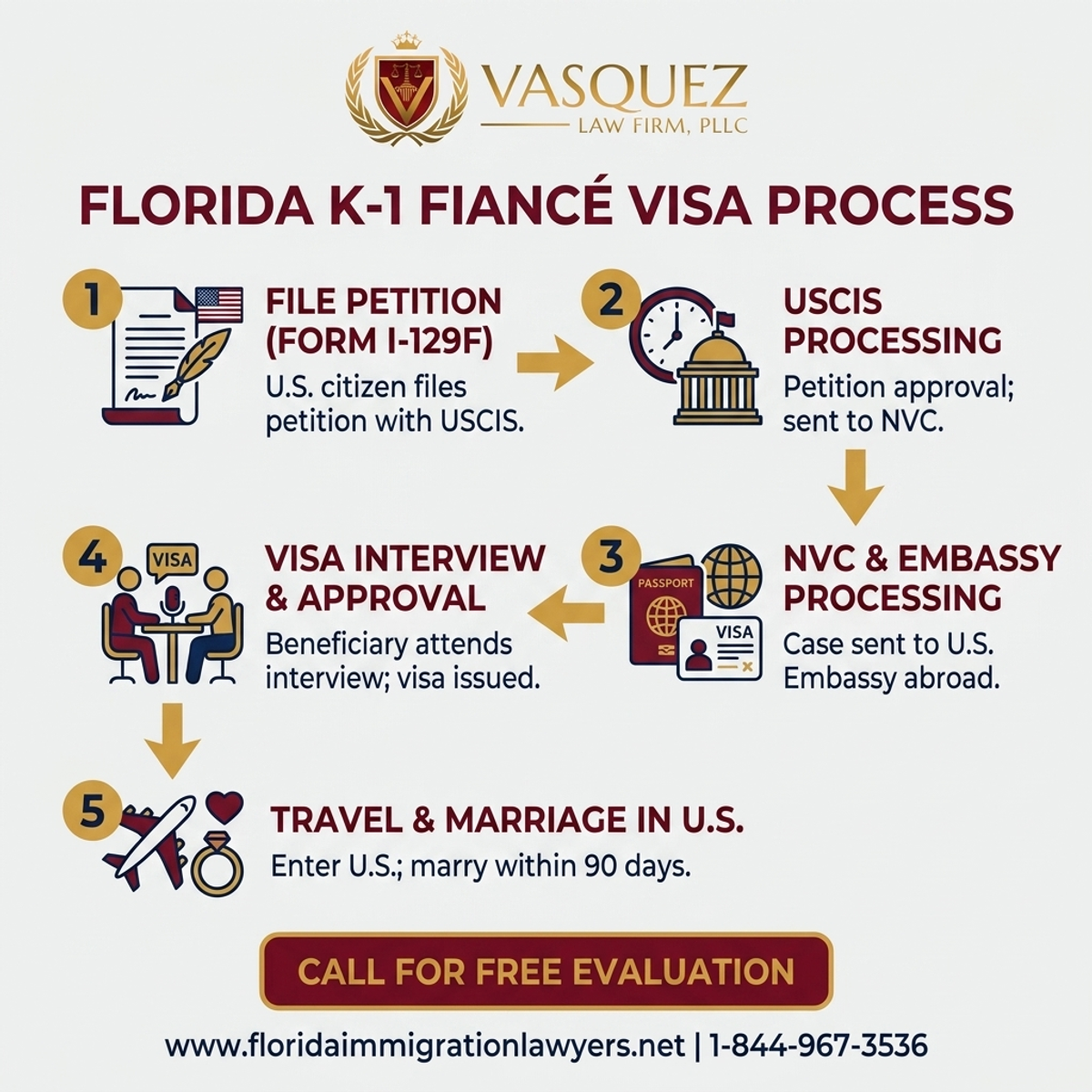
Applying for a K-1 visa in Florida involves several steps. Here’s a direct answer: As of 2026, you begin by filing Form I-129F, Petition for Alien Fiance, with the USCIS.
- File Form I-129F: This form establishes your relationship with your fiance. It must include evidence of your U.S. citizenship and proof of the relationship. This initial step is critical. Form I-129F, Petition for Alien Fiance(e), must be meticulously completed and submitted to the USCIS. Along with the form, you must include compelling evidence of your U.S. citizenship, such as a birth certificate or passport, and robust proof of your genuine relationship. This includes photographs of you together, correspondence (emails, chat logs, call records), travel itineraries, and affidavits from friends and family. The more comprehensive and convincing your evidence, the stronger your petition. Florida Immigration Lawyers can help you compile and organize this extensive documentation to present a clear and compelling case.
- Receive USCIS Approval: Once approved, the petition is sent to the National Visa Center (NVC). Once USCIS reviews your petition and determines that all initial requirements are met, they will issue an I-797C Notice of Action, signifying approval. This approval is a significant milestone, indicating that USCIS acknowledges the validity of your relationship and your eligibility as a petitioner. The approved petition is then forwarded to the National Visa Center (NVC), which acts as an intermediary before it reaches the embassy or consulate in your fiance’s home country.
- Consular Processing: The NVC forwards the petition to the U.S. Embassy or Consulate in your fiance’s country. The NVC plays a crucial administrative role, assigning a case number and ensuring the approved petition is sent to the correct U.S. Embassy or Consulate. Your fiance will then receive instructions directly from the NVC or the consulate on how to proceed with consular processing. This typically involves completing the DS-160 online nonimmigrant visa application, paying the necessary fees, and gathering all required civil documents, such as birth certificates, police certificates, and medical examination results, which must be obtained from an authorized panel physician.
- Attend the Interview: Your fiance will attend a visa interview where they must provide documentation and answer questions about your relationship. This is often the most nerve-wracking part of the process for the foreign fiance. The interview, conducted by a consular officer, aims to verify the authenticity of your relationship and ensure your fiance meets all eligibility requirements and is not inadmissible to the U.S. Your fiance must be prepared to answer detailed questions about your relationship, future plans, and personal background. Providing consistent, honest answers supported by the submitted documentation is paramount. A lawyer from Florida Immigration Lawyers can provide invaluable interview preparation, helping your fiance feel confident and ready.
- Enter the U.S.: After approval, your fiance can travel to the U.S. You must marry within 90 days of their arrival. Upon successful completion of the interview and visa approval, your fiance will receive the K-1 visa in their passport. They can then travel to the United States. It is imperative to remember the 90-day rule: you and your fiance must marry within 90 days of their entry into the U.S. Failure to do so will result in the K-1 visa expiring, and your fiance will be required to leave the country. After marriage, the next step is to file Form I-485, Application to Adjust Status, to apply for a green card, initiating the path to permanent residency.
Required Documents for the K-1 Visa Application
Gathering the correct and complete documentation is one of the most critical aspects of a successful K-1 visa application. Any missing or incorrect documents can lead to significant delays or even denial. It is essential to be organized and meticulous from the outset. Below is a comprehensive list of documents typically required, but remember that specific consulates may request additional items.
- Form I-129F
- Evidence of U.S. citizenship
- Proof of a genuine relationship (photos, correspondence, etc.)
- Proof of meeting in person within the last two years
- Affidavit of Support
- Medical examination report
- Police clearance certificates
The Affidavit of Support (Form I-864) is a crucial component, demonstrating that the U.S. citizen petitioner has the financial means to support their foreign fiance(e) and prevent them from becoming a 'public charge' in the United States. This involves providing tax returns, employment letters, and other financial evidence. If the petitioner's income is insufficient, a joint sponsor may be required. Florida Immigration Lawyers can guide you through the complexities of this requirement, ensuring all financial criteria are met.
Beyond this list, ensure you have original birth certificates, any previous marriage dissolution decrees (divorce certificates or death certificates), and valid passports for both parties. All foreign language documents must be accompanied by certified English translations. Organizing these documents thoroughly before submission will significantly streamline the process and reduce the likelihood of requests for evidence (RFEs) from USCIS or the consulate.
Step-by-Step Process — Fiance Visa Lawyer in Florida: K-1 Visa Process
How Long Does the K-1 Visa Process Take in Florida?
The K-1 visa process timeline can vary. As of 2026, expect the following stages:
| Stage | Typical Timeframe | Notes |
|---|---|---|
| USCIS Processing | 6-8 months | Initial petition review |
| NVC Processing | 4-6 weeks | Transfer to the consulate |
| Consular Processing | 1-2 months | Interview and final approval |
It's important to understand that the K-1 visa process is not a quick one, and the timelines provided are estimates that can fluctuate significantly. Several factors can influence the overall duration, including the current workload at USCIS service centers, the specific U.S. Embassy or Consulate handling the case, the country of origin of the foreign fiance, and the completeness of the initial application. Applications that require a Request for Evidence (RFE) due to missing information or insufficient proof will inevitably face longer processing times.
While the table offers a general guide, it’s not uncommon for the entire process to extend beyond a year, especially with unforeseen administrative delays or increased demand. Staying informed about current USCIS processing times on their official website is advisable, but these are averages and your specific case may vary. Florida Immigration Lawyers can help monitor your application status and proactively address any issues that arise, aiming to keep your process as efficient as possible.
Cost of Obtaining a K-1 Visa
While costs can change, here is a general breakdown as of 2026:
| Item | Typical Fee | Notes |
|---|---|---|
| Form I-129F | Check USCIS fee schedule | Filing fee |
| Medical Examination | Varies by country | Required before interview |
| Visa Interview | Consular fee applies | Paid at the embassy/consulate |
Beyond the standard government filing fees, couples should budget for several other potential expenses that arise during the K-1 visa journey. These can include attorney fees for legal guidance and representation, which vary based on the complexity of the case and the services provided. Other costs might encompass travel expenses for the U.S. citizen to meet their fiance in person (if not already done), the foreign fiance's travel to the U.S. for the interview, and eventually to the U.S. itself. Additionally, costs for obtaining police certificates, birth certificates, certified translations of foreign documents, and courier services can add up.
It's wise to plan financially for these various stages. While the K-1 visa itself has specific fees, the subsequent Adjustment of Status application after marriage will incur additional USCIS filing fees, biometrics fees, and potentially more legal costs. Understanding the full financial picture upfront can help couples prepare adequately and avoid unexpected burdens. Florida Immigration Lawyers can provide a clear breakdown of legal fees and help you anticipate other costs involved in the entire immigration process.
Key Statistics — Fiance Visa Lawyer in Florida: K-1 Visa Process
Do not navigate this process alone. Contact Florida Immigration Lawyers today.
Common Mistakes to Avoid
Navigating the K-1 visa process is complex, and even minor errors can lead to significant setbacks, from lengthy delays to outright denials. Being aware of the most common pitfalls can help you avoid them and ensure a smoother application journey. Here are some critical mistakes that couples often make:
- Incomplete Forms: Missing information can lead to delays or denials.
- Lack of Evidence: Insufficient proof of relationship can result in a denial. This is perhaps the most frequent reason for Requests for Evidence (RFEs) or denials. USCIS and consular officers need concrete proof that your relationship is genuine and not solely for immigration purposes. Generic photos, sparse communication records, or a lack of shared experiences can raise suspicions. You need to demonstrate an ongoing, bona fide relationship through a variety of evidence, including detailed chat logs, call records, travel itineraries showing visits, joint financial accounts (if applicable), and sworn affidavits from friends and family who know your relationship.
- Not Meeting In Person: Failure to meet the in-person requirement can invalidate the application. The requirement to have met in person at least once within the two years prior to filing is non-negotiable, with only extremely rare exceptions for severe hardship or cultural restrictions. Failing to provide sufficient evidence of this meeting will result in an immediate denial. Ensure you have clear documentation such as passport stamps, plane tickets, hotel receipts, and dated photos together.
- Incorrect Fee Payment: Paying the wrong amount can result in application rejection.
- Ignoring Deadlines: Missing interview or filing deadlines can end the process.
- Poor Interview Preparation: Inadequate preparation can lead to a negative outcome.
- Overlooking Medical Exams: Failing to complete the medical exam before the interview can cause delays.
- Providing Inconsistent Information: Inconsistencies can raise red flags and lead to denial.
- Not Seeking Legal Help: Complex cases can benefit from professional advice.
Avoiding these mistakes requires diligence, attention to detail, and a thorough understanding of immigration requirements. Engaging with an experienced legal team like Florida Immigration Lawyers can significantly reduce the risk of these common errors, as they meticulously review all documentation and guide you through each step of the process.
When to Call a Lawyer
Navigating the K-1 visa process can be complicated. Consider hiring an immigration lawyer if:
- You have a criminal history or prior immigration violations.
- Your case involves complex family dynamics.
- You need assistance with gathering evidence.
- You face unexpected delays or complications.
While some K-1 visa cases may appear straightforward, the reality is that immigration law is intricate and constantly evolving. Many couples find immense value in securing professional legal assistance, especially when faced with specific challenges or uncertainties. Knowing when to consult an immigration lawyer can be the difference between a smooth approval and a frustrating denial.
Our team is available to help you achieve a successful outcome.
Even seemingly minor offenses, or past issues like overstaying a previous visa, can have severe implications for K-1 visa eligibility. A lawyer can assess the severity of the issue, determine if a waiver is available, and prepare a strong case to mitigate potential inadmissibility concerns. Trying to navigate these complex legal waters alone can lead to irreversible mistakes.
Situations involving previous marriages, children from prior relationships (especially if they will also be seeking K-2 visas), or unique cultural considerations can add layers of complexity to the application. An attorney can help ensure all family members are properly accounted for, all necessary documentation from previous relationships is in order, and potential issues are addressed proactively.
Beyond these specific scenarios, a lawyer can offer peace of mind by ensuring accuracy, completeness, and adherence to all legal requirements. From preparing forms to advising on interview strategies, Florida Immigration Lawyers provides comprehensive support, acting as your advocate throughout the entire K-1 visa process. Don't hesitate to reach out for a free consultation at 1-844-967-3536 to discuss your unique circumstances.
Frequently Asked Questions (FAQs) About the K-1 Fiance Visa
Q: Can a Green Card holder petition for a K-1 Fiance Visa?
A: No, only U.S. citizens are eligible to petition for a K-1 Fiance Visa. If you are a lawful permanent resident (Green Card holder), you cannot file Form I-129F for your fiance. Green Card holders can only petition for their spouses (through Form I-130) or unmarried children. To bring your fiance to the U.S. via the K-1 route, you must first become a U.S. citizen. Florida Immigration Lawyers can advise on your eligibility and explore alternative immigration pathways.
Q: What happens if we do not marry within the 90-day period after my fiance enters the U.S.?
A: If you and your fiance do not marry within 90 days of their entry into the U.S. on a K-1 visa, the visa automatically expires. Your fiance will then be considered out of status and must depart the United States. Failure to leave can result in serious immigration consequences, including future bars to re-entry. It is crucial to adhere strictly to this 90-day requirement to avoid complications and ensure a smooth path to adjustment of status after marriage. Consult Florida Immigration Lawyers if you have concerns about meeting this deadline.
Q: Can my fiance's children come to the U.S. with them on a K-2 visa?
A: Yes, if your fiance has unmarried children under the age of 21, they may be eligible to accompany or follow their parent to the U.S. on a K-2 visa. The children must be listed on the initial Form I-129F petition. Once in the U.S., the K-2 visa holders can also apply for adjustment of status to become lawful permanent residents after your marriage. It is important to include all eligible children in the petition from the outset to ensure their immigration path is properly managed.
Q: What if my fiance has a criminal record or previous immigration violations?
A: A criminal record or prior immigration violations (such as overstaying a visa or illegal entry) for your foreign fiance can significantly complicate the K-1 visa process. Depending on the nature and severity of the offense, your fiance may be deemed "inadmissible" to the U.S. In some cases, it might be possible to apply for a waiver of inadmissibility, but this is a complex legal process. It is highly advisable to consult with an experienced immigration attorney like Florida Immigration Lawyers immediately to assess the situation.
About Florida Immigration Lawyers
Florida Immigration Lawyers is dedicated to assisting clients with all immigration needs. We offer services in family and business immigration, deportation defense, and more. Our experienced attorneys provide personalized assistance to clients across Florida. Call us at 1-844-967-3536 or visit our website for a free consultation. We are available 24/7.
Our firm is built on a foundation of empathy, expertise, and unwavering dedication to our clients. We understand that immigration matters are deeply personal and often life-changing. Whether you are seeking to unite with a loved one, pursue career opportunities in the U.S., or defend against deportation, our team of highly skilled attorneys is here to champion your cause. We pride ourselves on providing clear, honest communication and crafting personalized strategies tailored to each client's specific needs and goals. Our commitment extends to staying abreast of the latest immigration laws and policies, ensuring our advice is always current and effective.
At Florida Immigration Lawyers, we believe everyone deserves access to high-quality legal representation. We offer comprehensive services, from the initial consultation to final resolution, guiding you through every step with professionalism and care. Our extensive experience across various immigration categories, including family-based petitions, employment visas, and humanitarian relief, positions us as a trusted resource for individuals and families throughout Florida and beyond. Contact us today at 1-844-967-3536
Sources and References
- U.S. Citizenship and Immigration Services (USCIS)
- Executive Office for Immigration Review (EOIR)
- U.S. Department of State - Bureau of Consular Affairs
- Immigration and Nationality Act (INA), 8 U.S.C. Chapter 12
Do Not Navigate This Process Alone
Our experienced immigration attorneys are ready to fight for you. Get a free, confidential consultation today.
Se Habla Español
Frequently Asked Questions

William J. Vásquez
Founding Attorney · Vasquez Law Firm
U.S. Air Force veteran and immigration attorney with years of hands-on U.S. immigration experience. J.D., NCCU School of Law. AILA member. Admitted to the 4th, 5th, and 11th Circuit Courts.
Available 24/7 - Free Evaluations
Reviewed for legal accuracy by William J. Vásquez
Licensed in North Carolina; U.S. immigration is federal practice.
Related Legal Services
Our Florida immigration attorneys can help you with business immigration, asylum protection and deportation defense. Call today at 1-844-967-3536 for a free consultation.
Related Links
Related Topics
Free Legal Consultation
Discuss your case with our experienced attorneys. We're available 24/7.
Se Habla Español - Estamos aquí para ayudarle.
Related Articles
I-360 Widow Self-Petition Guide in Coral Springs
This comprehensive guide on the I-360 widow self-petition in Coral Springs, Florida, covers eligibility, filing steps, required documents, common mistakes, and when to seek legal help. Discover the process and understand your options with Florida Immigration Lawyers.
H-2A Visa for Florida Farmers: A 2026 Guide to Farm Labor
Florida's agricultural sector relies heavily on a consistent workforce. The H-2A visa program offers a vital solution for farmers facing temporary labor shortages, allowing them to bring foreign nationals for seasonal agricultural work. This comprehensive guide, updated for 2026, details the multi-step application process, from obtaining labor certification from the Department of Labor to filing petitions with USCIS and consular processing. We cover key employer requirements, including temporary need, U.S. worker recruitment efforts, and the obligation to provide fair wages, housing, and transportation. Additionally, the article breaks down typical processing timelines and the various costs involved, helping Florida growers budget effectively. We also highlight common pitfalls to avoid, such as late filings, non-compliant housing, and wage violations, emphasizing the importance of ongoing compliance. For personalized legal guidance, Florida Immigration Lawyers offers expert assistance to navigate the H-2A program, ensuring your farm secures the necessary workforce efficiently and legally. Call us for a free consultation.
Deportation Defense Attorney Florida: Expert Guidance in
Facing deportation in Florida? Learn how a deportation defense attorney can help protect your rights during removal proceedings. Call Florida Immigration Lawyers at 1-844-967-3536 for a free consultation.
How to Choose Immigration Attorney in Florida: 2026 Guide
Choosing the right immigration attorney in Florida is a crucial step for anyone navigating the complexities of U.S. immigration law. This comprehensive guide, updated for 2026, offers essential insights into how to choose an immigration attorney, covering everything from verifying credentials and assessing specialization to understanding fee structures and preparing for initial consultations. Whether you are in Hialeah, Miami, or anywhere across the Sunshine State, finding a knowledgeable and trustworthy legal professional is paramount. Learn how to identify qualified counsel, avoid common mistakes, and understand when to seek legal help for visas, green cards, citizenship, or deportation defense. Florida Immigration Lawyers provides expert guidance and compassionate support throughout your immigration journey.