Family Petition Immigration Lawyer Miami: Your Florida...
Navigating the complex world of family-based immigration in Florida requires expert guidance. This comprehensive guide, specifically for 2026, explores the I-130 family petition process, detailing eligibility, required documents, timelines, and potential costs. Whether you are in Miami, Jacksonville, or elsewhere in Florida, understanding the nuances of family reunification is crucial. We provide essential insights and highlight when a skilled family petition immigration lawyer can make all the difference, helping you avoid common pitfalls and secure your family's future in the United States.

A family petition allows U.S. citizens or lawful permanent residents to sponsor eligible relatives for immigration to the United States. This process typically begins with filing Form I-130, Petition for Alien Relative, with USCIS. Navigating the requirements, documentation, and various processing stages, especially in Florida, often necessitates the expertise of an experienced immigration lawyer to ensure success.
- The I-130 petition is the first step for family-based immigration.
- Eligibility depends on your relationship to the U.S. citizen or LPR.
- Processing times vary significantly by visa category.
- Seeking a qualified family petition immigration lawyer in Miami or Jacksonville is highly recommended.
- Proper documentation and adherence to guidelines are critical.
Are you a U.S. citizen or lawful permanent resident in Florida, dreaming of reuniting with your loved ones? The journey to bring your family to the United States can seem overwhelming, filled with complex forms and strict deadlines. Many families in Miami, Jacksonville, and across Florida face these challenges.
Understanding the family petition process, starting with the crucial Form I-130, is the first step toward achieving family reunification. This guide will walk you through every aspect of family-based immigration in 2026. We cover eligibility, the application process, required documentation, timelines, and potential costs.
Our goal is to demystify this intricate process. We want to empower you to make informed decisions for your family's future in Florida. For personalized guidance and to begin your journey with confidence, call Florida Immigration Lawyers at 1-844-967-3536 for a free consultation today.
Understanding the Family Petition Process for Florida Residents
The family petition process is a cornerstone of U.S. immigration law, designed to keep families together. It allows U.S. citizens and lawful permanent residents (LPRs) to sponsor certain family members for green cards. This critical first step involves filing Form I-130, Petition for Alien Relative.
This section provides an essential overview for anyone seeking a family petition immigration lawyer in Miami, Jacksonville, or any part of Florida. We will clarify who can be sponsored and the different visa categories available. Understanding these fundamentals is vital for a successful application.
Who Can Be Sponsored?
Eligibility for family-based immigration depends on the petitioner's status and the relationship with the beneficiary. U.S. citizens can petition for a broader range of relatives compared to lawful permanent residents. This distinction significantly impacts processing times and visa availability.
U.S. Citizens may petition for:
- Spouses, unmarried children under 21, and parents (if U.S. citizen is 21+).
- Unmarried sons and daughters 21+, married sons and daughters of any age.
- Brothers and sisters (if the U.S. citizen is 21+).
Lawful Permanent Residents (Green Card holders) may petition for:
- Spouses, unmarried children under 21, and unmarried sons and daughters 21+.
These categories are defined under the Immigration and Nationality Act (INA), specifically INA Section 201 and 203. The type of relationship determines the "preference category" for visa availability.
Immediate Relatives vs. Family Preference Categories
The U.S. immigration system prioritizes certain relationships. Immediate relatives of U.S. citizens receive special treatment, as there are an unlimited number of visas available for them. This means they do not have to wait for a visa number, significantly shortening their processing time.
Immediate relatives include spouses, unmarried children under 21, and parents of U.S. citizens (if the U.S. citizen is 21 or older). All other family-based categories fall under the "family preference" system, which is subject to annual numerical limits. This often results in long waiting periods, sometimes many years, depending on the category and the beneficiary's country of origin. Your family petition immigration lawyer in Miami or Jacksonville can help you understand these wait times.
Step-by-Step Guide to the I-130 Family Petition Process in Florida
The journey to family reunification through an I-130 petition involves several critical steps. Each stage requires careful attention to detail and adherence to specific guidelines. Missing a step or providing incorrect information can lead to significant delays or even denial.
Working with an experienced family petition immigration lawyer in Miami or across Florida can streamline this process. They ensure all forms are correctly filed and all evidence is properly submitted. Here is a general overview of the steps involved in the I-130 petition Florida process.
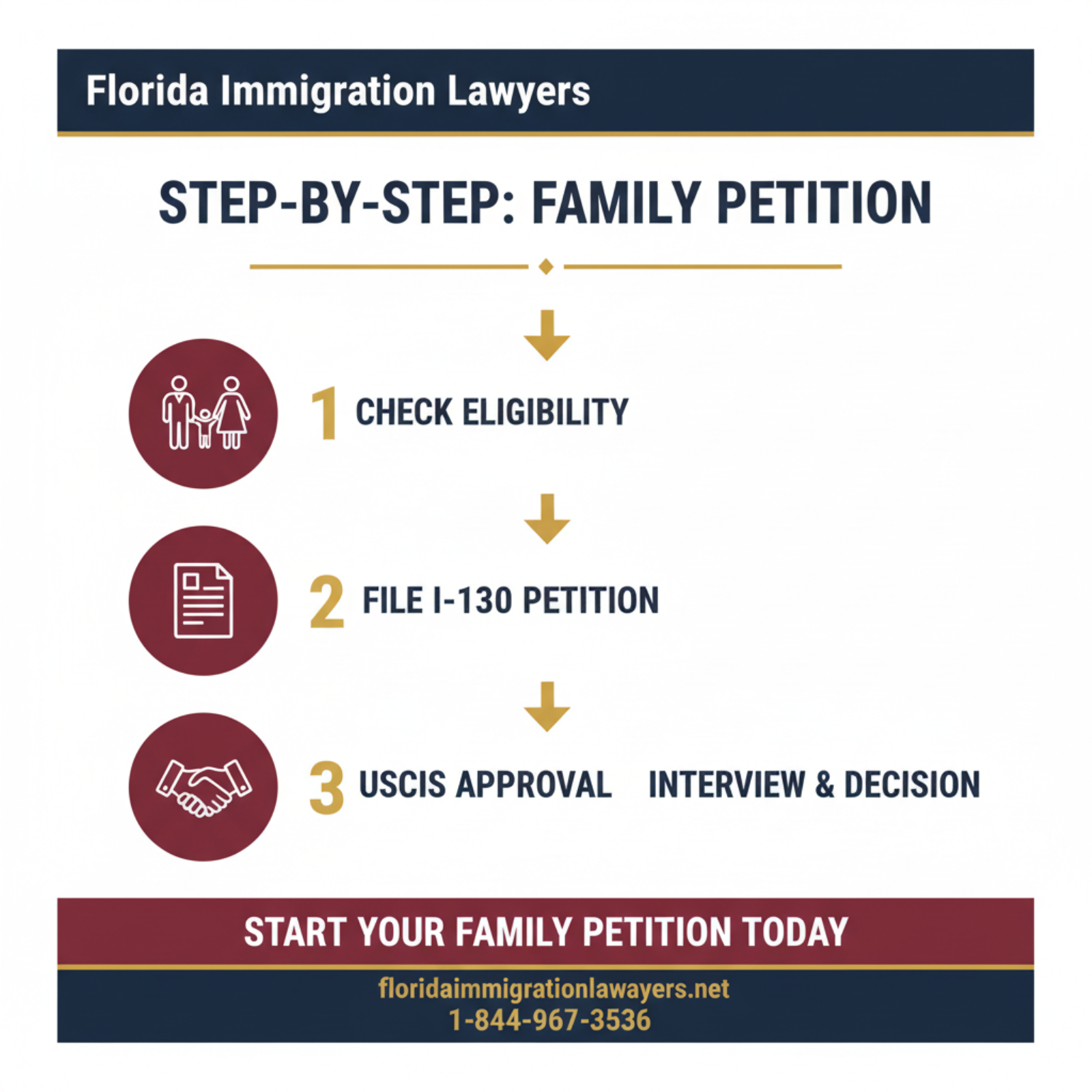
- File Form I-130, Petition for Alien Relative: The U.S. citizen or LPR petitioner files Form I-130 with U.S. Citizenship and Immigration Services (USCIS). This form establishes the qualifying relationship. You need to provide evidence like marriage certificates, birth certificates, and photos.
- USCIS Processing and Approval: USCIS reviews the I-130 petition. If approved, USCIS sends an approval notice. For immediate relatives, the process moves forward quickly. For preference categories, the petition is sent to the National Visa Center (NVC) to await visa availability.
- National Visa Center (NVC) Processing (if applicable): If a visa number is not immediately available, the approved petition goes to the NVC. The NVC collects additional documents, including the Affidavit of Support (Form I-864) and civil documents. This stage can be lengthy.
- Visa Interview Scheduling: Once a visa number is available and NVC processing is complete, the NVC schedules an immigrant visa interview. This occurs at a U.S. embassy or consulate abroad. For beneficiaries already in the U.S. and eligible to adjust status, the interview takes place at a local USCIS field office, such as in Miami or Jacksonville.
- Medical Examination: Before the interview, the beneficiary must undergo a medical examination by an authorized physician. This is a mandatory step for public health and safety.
- Interview and Decision: During the interview, a Consular Officer or USCIS Officer reviews the application and documents. They determine eligibility and admissibility. If approved, the immigrant visa is issued or adjustment of status granted.
- Entry to the U.S. or Green Card Receipt: For those granted an immigrant visa abroad, they can enter the U.S. as a lawful permanent resident. For those adjusting status, they will receive their green card by mail.
Each step requires careful preparation. A dedicated family petition immigration lawyer in Miami can offer invaluable support through this complex journey.
Essential Document Checklist for Your Family Petition
Gathering the correct documentation is paramount for a successful family petition. Incomplete or incorrect submissions are common reasons for delays or denials. Ensure you have all necessary original documents and their certified translations, if applicable.
This checklist will help you prepare the essential items required for your I-130 petition and subsequent steps. Your family petition immigration lawyer in Miami can provide a tailored list based on your specific case.
- Form I-130, Petition for Alien Relative: Completed and signed by the petitioner.
- Proof of U.S. Citizenship or Lawful Permanent Residency: U.S. passport, birth certificate, Certificate of Naturalization for citizens; Green Card (Form I-551) for LPRs.
- Proof of Qualifying Relationship: Marriage certificate, birth certificates, and evidence of bona fide marriage (e.g., joint accounts, photos).
- Passport-Style Photos: For both petitioner and beneficiary.
- Form I-864, Affidavit of Support: Demonstrates the petitioner's financial ability to support the beneficiary.
- Beneficiary's Birth Certificate and Passport: Required for consular processing or adjustment of status.
- Police Certificates: From countries where the beneficiary has resided for certain periods.
- Marriage Termination Documents: If either party was previously married (e.g., divorce decrees, death certificates).
- Medical Examination Report: Completed by an authorized civil surgeon.
Organizing these documents thoroughly from the outset will save time and prevent potential issues. Your family petition immigration lawyer in Miami can assist with this crucial organizational step.
Timeline and Processing Expectations for Family Petitions in Florida
Understanding the timeline for a family petition is crucial for planning your future. Processing times vary significantly based on relationship category, country of origin, and the workload of USCIS and the National Visa Center. Florida-based petitions generally follow national processing times, but local USCIS offices like Miami or Jacksonville may have minor variations.
Factors Affecting Processing Times
- Visa Category: Immediate relatives typically have the shortest wait times. Family preference categories face longer waits due to annual numerical limits. Monitor the Visa Bulletin for current priority dates.
- Country of Origin: High demand from certain countries can lead to longer backlogs in preference categories.
- USCIS Workload: Processing times at USCIS service centers fluctuate. Check current times on the USCIS website.
- Completeness of Application: Requests for Evidence (RFEs) or missing documents will inevitably delay your case.
General Timeline Estimates (2026, subject to change)
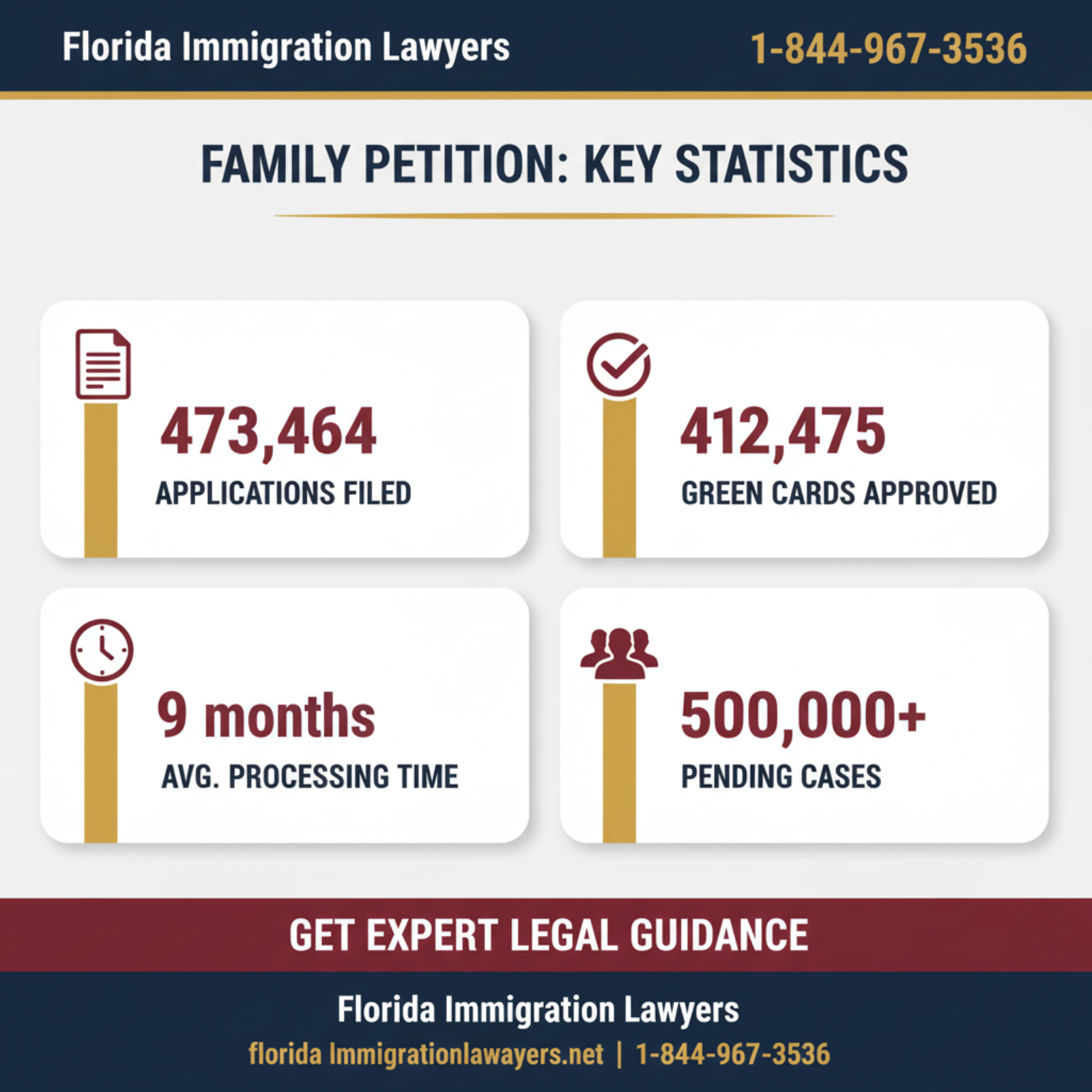
- Form I-130 Processing: Typically 6 months to 2 years, depending on the USCIS service center and relationship type.
- NVC Processing: Several months to a year, depending on document submission and visa availability.
- Consular Processing (Interview Abroad): A few weeks to several months after NVC processing.
- Adjustment of Status (Interview in U.S.): 1-2 years, including the interview at a local USCIS office in Florida.
Given these variables, consulting a family petition immigration lawyer in Miami or Jacksonville is crucial. They can provide more accurate expectations based on the current Visa Bulletin and processing trends. For more on visa categories, visit travel.state.gov.
Cost Factors and Fee Breakdown for Your Family Petition
The cost of a family petition involves more than just government filing fees. Understanding all potential expenses is important for financial planning. While we cannot provide exact figures (as fees change), we outline typical cost components. Always refer to the official USCIS website for the most current fee schedule.
Government Filing Fees
- Form I-130, Petition for Alien Relative: Initial fee paid to USCIS.
- Immigrant Visa Application Processing Fee (DS-260): For beneficiaries undergoing consular processing.
- Affidavit of Support Fee (I-864): Often included in NVC fees.
- USCIS Immigrant Fee: Paid after immigrant visa issuance and before U.S. entry or green card receipt.
- Form I-485, Application to Register Permanent Residence or Adjust Status: If adjusting status within the U.S. Includes biometrics.
These fees are non-refundable.
Ancillary Costs
Budget for other necessary expenses:
- Medical Examination Fees: Paid directly to the authorized civil surgeon in Florida.
- Document Translation Fees: For certified translations of non-English documents.
- Postage and Courier Fees: For secure document submission.
- Travel Expenses: For interviews or gathering documents.
Legal Fees for a Family Petition Immigration Lawyer in Miami
Hiring an immigration attorney is an investment that can save you time, stress, and potential costly mistakes. Legal fees vary based on case complexity, services required, and attorney experience.
At Florida Immigration Lawyers, we offer transparent fee structures. A free consultation allows us to assess your case and discuss our fees without obligation. The guidance of a skilled family petition immigration lawyer in Miami or Jacksonville can be invaluable. They help navigate the process efficiently, ensuring all requirements are met and increasing your chances of success.
Do not navigate this process alone. Contact Florida Immigration Lawyers today to discuss your family petition and how we can assist you.
Common Mistakes to Avoid in Your Family Petition
The family petition process is rife with potential pitfalls that can delay your application or even lead to denial. Avoiding these common mistakes is crucial for a smooth and successful outcome. Many individuals seeking a family petition immigration lawyer in Miami do so after encountering one of these issues.
- Incomplete or Incorrect Forms: Failing to fill out all sections, providing inaccurate information, or forgetting to sign forms are common errors. This can lead to Requests for Evidence (RFEs) or denial.
- Insufficient Supporting Documentation: Not providing enough evidence to prove a bona fide relationship (especially for spouses) or failing to submit required civil documents can be detrimental. USCIS requires robust evidence.
- Failure to Meet Financial Requirements (Affidavit of Support): The petitioner must demonstrate financial ability to support the immigrant. Insufficient income or assets without a joint sponsor will result in denial.
- Missing Deadlines: Ignoring deadlines for RFEs, NVC document submissions, or interview appointments can lead to case closure. Timeliness is critical.
- Prior Immigration Violations or Criminal History: Undisclosed or unaddressed immigration violations or criminal records for either party can lead to inadmissibility. Disclose everything to your attorney upfront.
- Inconsistent Information: Providing conflicting information across different forms or during interviews raises red flags for immigration officers. Consistency is key.
- Not Updating Address Changes: Failing to notify USCIS of an address change (Form AR-11) can result in missed notices or appointments. This is vital for Florida residents.
- Assuming Automatic Approval: Even if you meet basic requirements, approval is not guaranteed. Each case is reviewed individually.
- Not Preparing for Interviews: Underestimating interview importance and failing to prepare thoroughly can lead to misunderstandings that harm your case.
When to Call a Family Petition Immigration Lawyer in Miami, Jacksonville, or Florida
While some straightforward cases might be managed independently, many family petitions benefit immensely from professional legal guidance. An experienced family petition immigration lawyer in Miami, Jacksonville, or across Florida can offer invaluable assistance, especially in complex situations. Knowing when to seek legal help can save you time and stress, ensuring a higher chance of success.
Consider contacting Florida Immigration Lawyers if any of these scenarios apply to you:
- Complex Relationship Dynamics: Involving previous marriages, adoption, or other unique circumstances.
- Previous Denials or Immigration Issues: If you or your beneficiary have had prior applications denied or a history of overstaying visas.
- Criminal History or Inadmissibility Concerns: Any criminal record or other grounds of inadmissibility (like unlawful presence) can complicate a case. A lawyer can help determine if waivers are available. See 8 U.S.C. § 1182 for grounds of inadmissibility.
- Requests for Evidence (RFEs) or Notices of Intent to Deny (NOIDs): A lawyer can help you respond comprehensively and persuasively to USCIS concerns.
- Long Delays in Processing: If your case is stuck beyond typical timelines, an attorney can inquire with USCIS or the NVC.
- Deportation or Removal Proceedings: If your beneficiary is in removal proceedings, a family petition may be a form of relief. An attorney specializing in deportation defense can assist.
- Seeking Adjustment of Status in the U.S.: A lawyer ensures eligibility and proper filing to avoid issues for family members already in the U.S.
Florida Immigration Lawyers are dedicated to helping families throughout Florida, including Miami, Jacksonville, Tampa, and Orlando. We have extensive experience with all types of family immigration matters and are ready to provide the compassionate and effective legal representation you deserve. Visit our attorneys page to learn more about our team.
About Florida Immigration Lawyers
Florida Immigration Lawyers is a leading law firm dedicated to providing exceptional immigration legal services across the entire state of Florida. With a deep understanding of U.S. immigration law and a commitment to our clients, we strive to make the complex immigration process as smooth and stress-free as possible for families and individuals. Our experienced team serves communities from Miami to Jacksonville, Tampa to Orlando, and beyond.
Our Services
We offer a comprehensive range of immigration services, including:
- Family-Based Immigration (I-130 petitions, fiancé visas, spousal visas)
- Asylum and Refugee Protection
- Deportation Defense
- Citizenship and Naturalization
- Green Card Applications
- Visa Processing (Employment-based, Visitor, etc.)
- Waivers of Inadmissibility
Why Choose Us?
- Experienced Attorneys: Our team comprises skilled immigration lawyers with a proven track record of success.
- Client-Centered Approach: We prioritize your needs and goals, offering personalized strategies and empathetic support.
- Florida-Wide Service: No matter where you are in Florida, our firm is equipped to assist you.
- Bilingual Support: Se Habla Español – our team is fluent in both English and Spanish to serve a diverse clientele.
- Free Consultations: We offer free initial consultations to discuss your case and provide clear next steps.
- Available 24/7: We understand immigration matters can arise at any time, and we are here to help.
Let Florida Immigration Lawyers be your trusted partner in navigating the immigration system. We are committed to protecting your rights and helping you achieve your American dream. Contact us today at 1-844-967-3536 or visit https://www.floridaimmigrationlawyers.net to learn more.
Sources and References
- U.S. Citizenship and Immigration Services (USCIS)
- USCIS Form I-130, Petition for Alien Relative
- USCIS Check Case Processing Times
- U.S. Department of State - Family-Based Immigrant Visas
- U.S. Department of State - Visa Bulletin
- Executive Office for Immigration Review (EOIR)
- 8 U.S.C. Chapter 12 - Immigration and Nationality Act (INA)
- INA Section 201 - Worldwide level of immigration
- INA Section 203 - Allocation of immigrant visas
- 8 U.S.C. § 1182 - Inadmissible aliens
- 8 CFR Part 204 - Petitions for Alien Relatives
This article provides general legal information and is not intended as legal advice. Every case is unique, and outcomes depend on specific facts and circumstances. Contact an attorney for advice about your particular situation.
Navigating the complexities of family-based immigration in Florida requires expert knowledge and dedicated support. Don't leave your family's future to chance. Let Florida Immigration Lawyers provide the guidance you need. Call us today at 1-844-967-3536 for a free, confidential consultation. Se Habla Español - Estamos aquí para ayudarle.
Do Not Navigate This Process Alone
Our experienced immigration attorneys are ready to fight for you. Get a free, confidential consultation today.
Se Habla Español
Frequently Asked Questions
Florida Immigration Lawyers
Immigration Attorney | Founder, Vasquez Law Firm
U.S. Air Force veteran and immigration attorney with thousands of cases resolved. J.D., NCCU School of Law. AILA member. Admitted to the 4th, 5th, and 11th Circuit Courts.
Available 24/7 - Free Evaluations
Related Legal Services
Our Florida immigration attorneys can help you with free immigration consultation, experienced immigration attorneys and business immigration. Call today at 1-844-967-3536 for a free consultation.
Related Links
Related Topics
Free Legal Consultation
Discuss your case with our experienced attorneys. We're available 24/7.
Se Habla Español - Estamos aquí para ayudarle.
Related Articles
Family Petition Immigration Lawyer Miami: Your Florida Guide
For families in Miami, Kissimmee, and across Florida, securing a family petition is often the first step towards reuniting with loved ones in the U.S. This process, which typically begins with filing Form I-130, Petition for Alien Relative, requires meticulous attention to detail and a thorough understanding of U.S. immigration law. From proving a legitimate family relationship to navigating extensive documentation and often lengthy processing times, the journey can be complex. An experienced family petition immigration lawyer can provide invaluable guidance, helping to avoid common pitfalls, respond to USCIS requests, and ensure a smooth application process. Florida Immigration Lawyers offers dedicated legal support to families statewide, helping them achieve their dreams of reunification.
Immigration Interview Preparation Florida: Your Guide
Preparing for your immigration interview in Florida is a pivotal step towards securing your future. This comprehensive guide provides essential tips, a detailed step-by-step preparation plan, and a crucial document checklist to ensure you are fully ready for your USCIS interview. Learn about common mistakes to avoid, understand processing timelines, and identify when legal assistance from experienced Florida immigration lawyers is vital. Whether you are in Hialeah, Miami, or Orlando, navigating your green card, naturalization, or asylum interview requires meticulous attention to detail and professional guidance. Florida Immigration Lawyers offers free consultations to help you prepare effectively and confidently.
DACA Renewal Florida 2026 Guide for Dreamers | VLF Florida
For DACA recipients in Florida, understanding the DACA renewal process for 2026 is vital. This comprehensive guide details eligibility, step-by-step procedures, essential documents, timelines, and costs. Learn how to file your Form I-821D and I-765, avoid common mistakes, and ensure continuous residence. We cover specific considerations for Dreamers in St. Petersburg and across Florida, emphasizing the importance of timely and accurate submissions to USCIS. Discover when legal assistance from Florida Immigration Lawyers can be crucial, especially for complex cases involving criminal history or travel outside the U.S. Get expert advice to protect your deferred action status and employment authorization.
DACA Renewal Florida 2026 Guide for Dreamers | VLF Florida
Learn how to renew your DACA in Florida for 2026. This guide provides essential steps, common pitfalls, and resources available to Dreamers in Hialeah and beyond. Call Florida Immigration Lawyers at 1-844-967-3536 for a free consultation.