Expungement's Effect on Immigration in Florida
Expungement can affect your immigration status in Florida. Learn how a sealed record influences immigration consequences and why consulting a lawyer is essential for navigating these complex issues.
- Expungement might not erase criminal history for immigration purposes.
- Immigration authorities can still access sealed records.
- Consulting a lawyer can help navigate these complexities.
Introduction
Imagine living in Hialeah, Florida, with a criminal record hanging over your head, even after you've turned your life around. For many immigrants, expunging or sealing these records seems like a fresh start. However, when it comes to immigration in Florida, the reality is far more complex. This article delves into the effects of expungement on immigration status, especially in light of recent policy shifts. Call Florida Immigration Lawyers at 1-844-967-3536 for a free consultation and personalized guidance.
Understanding Expungement and Sealed Records
Expungement is the process of legally erasing a criminal record, while sealing means it is hidden from public view. In Florida, expungement can be a powerful tool for individuals seeking a clean slate. Yet, its impact on immigration status is complicated. Although a record may be expunged or sealed, immigration authorities, such as USCIS, may still access it during their evaluations. According to the USCIS, criminal records, even if expunged, can influence deportability and admissibility.
Step-by-Step Guide to Expungement
- Determine Eligibility: Not all offenses are eligible for expungement in Florida. Typically, you must not have any prior expungements.
- File a Petition: Submit a formal request to the court for expungement or sealing of records.
- Background Check: Undergo a criminal background check to ensure compliance with eligibility criteria.
- Attend a Hearing: Present your case in court, where a judge will decide based on your circumstances.
- Receive Decision: If approved, your record will be expunged or sealed, but be aware of its limitations regarding immigration.
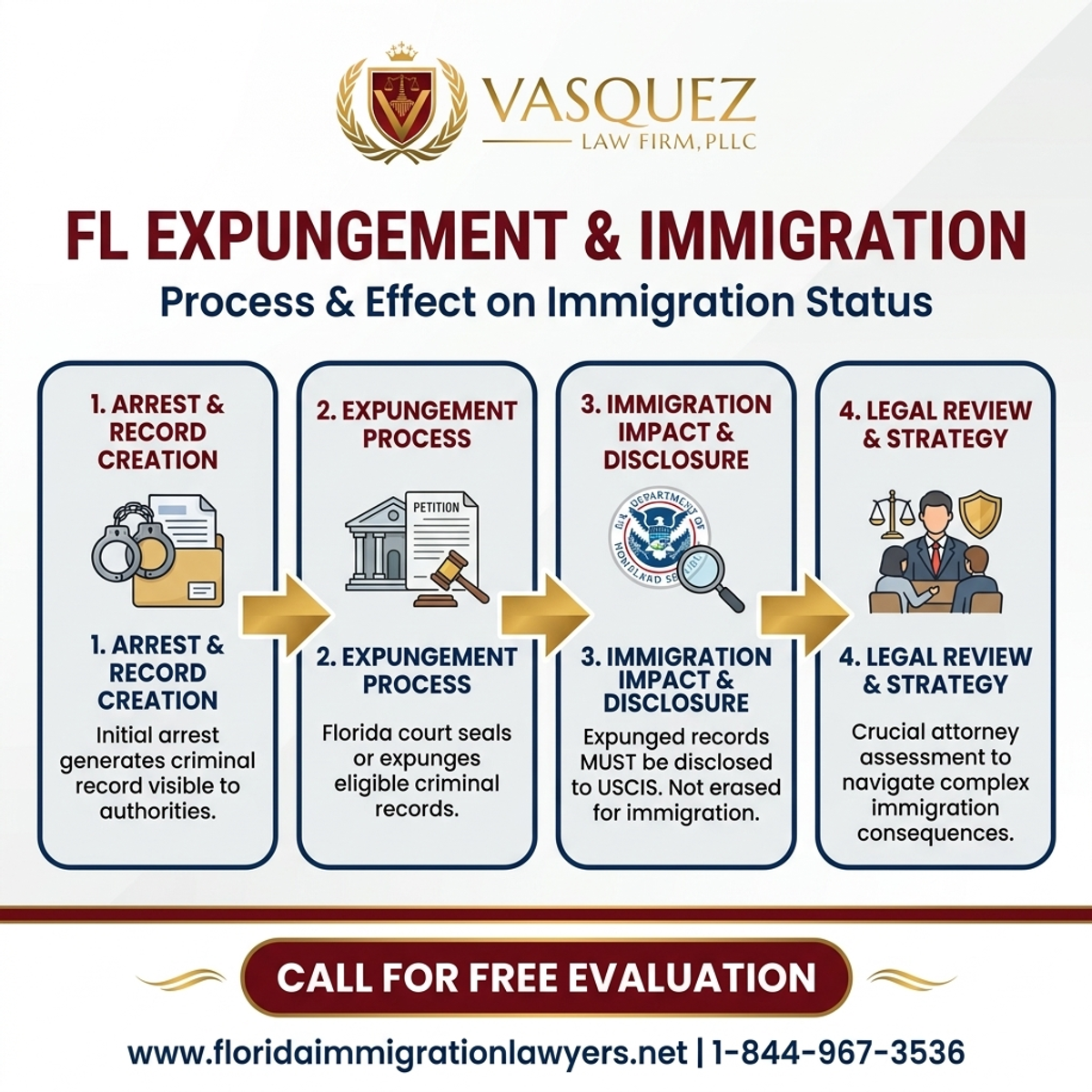
Step-by-Step Process — Expungement's Effect on Immigration in Florida
Document Checklist for Expungement
- Certified copy of the final disposition of the case
- Completed and notarized application for Certificate of Eligibility
- Fingerprint card for background check
- Processing fee (subject to change)
Timeline and Processing Expectations
In Florida, expungement can take several months. The exact timeline depends on the complexity of your case and the backlog of the court system. Typically, it can take six months to a year. During this time, it's crucial to remain informed about how this process may affect your immigration status.
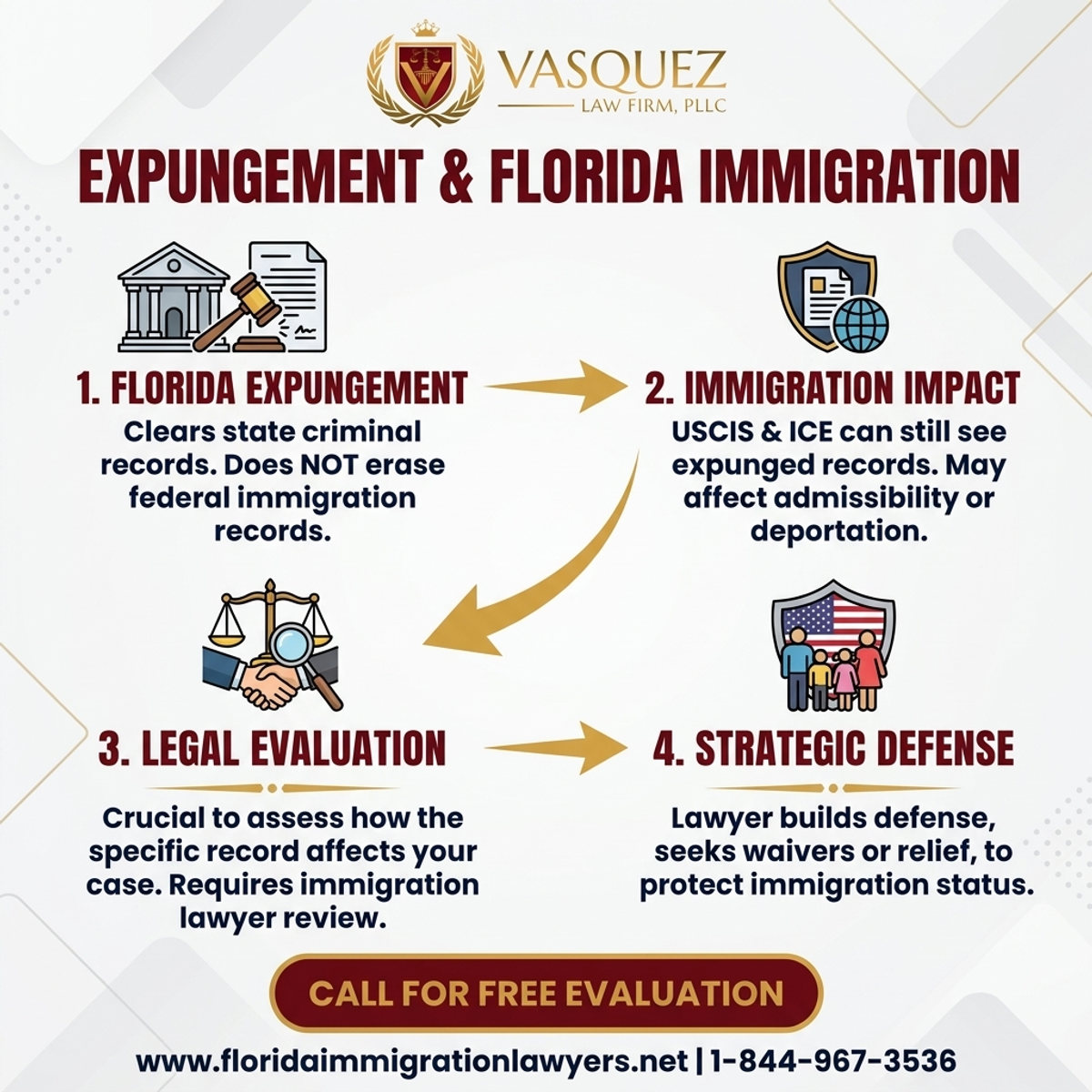
Key Statistics — Expungement's Effect on Immigration in Florida
Cost Factors and Fee Breakdown
The cost of expungement varies based on legal fees, court costs, and processing fees. While the state of Florida sets certain fees, additional costs may arise from hiring an attorney to navigate the complexities of your case, especially considering the immigration implications.
Common Mistakes to Avoid
- Assuming expungement equals immigration forgiveness: Immigration authorities may still consider expunged records.
- Failing to consult an attorney: Legal guidance is crucial to understand the immigration impact.
- Misunderstanding eligibility: Not all crimes are eligible for expungement in Florida.
- Incomplete documentation: Missing paperwork can delay or prevent expungement.
- Ignoring immigration timelines: Immigration processes may continue irrespective of expungement status.
- Overlooking state-specific laws: Florida laws on expungement may differ from federal immigration laws.
- Relying on outdated information: Laws and policies change; always verify current regulations.
- Underestimating consequences: Criminal history can have long-lasting effects beyond expungement.
- Skipping court hearings: Attendance is mandatory unless otherwise directed by the court.
- Not preparing for a potential denial: Have a plan in case your expungement is denied.
When to Call a Lawyer
If you're facing immigration issues related to a criminal record in Florida, consulting a lawyer is essential. Indicators for seeking legal help include complex criminal histories, uncertainty about eligibility, and navigating both state and federal regulations. Florida Immigration Lawyers offer expert guidance to help you understand and mitigate the immigration consequences of your criminal record. Our team is ready to assist you with a free consultation.
About Florida Immigration Lawyers
Florida Immigration Lawyers is dedicated to providing comprehensive immigration services across Florida. Our experienced attorneys specialize in a wide range of immigration matters, from family immigration to deportation defense. We pride ourselves on our personalized approach, ensuring every client receives the attention they deserve. Call us at 1-844-967-3536 or visit our website at www.floridaimmigrationlawyers.net for a free consultation. We are available 24/7 and serve clients in Hialeah and throughout Florida.
Sources and References
- U.S. Citizenship and Immigration Services (USCIS)
- Executive Office for Immigration Review (EOIR)
- 8 U.S.C. Chapter 12 - Immigration and Nationality Act
- U.S. Department of State
Related services: immigration practice areas, family immigration services, citizenship and naturalization.
This article provides general legal information and is not intended as legal advice. Every case is unique, and outcomes depend on specific facts and circumstances. Contact an attorney for advice about your particular situation.
For a strong closing CTA, remember that legal processes can be daunting. Reach out to Florida Immigration Lawyers at 1-844-967-3536 for a free consultation. Se Habla Español - Estamos aquí para ayudarle.
If you need legal assistance, learn more about learn about our immigration practice, or call us at 1-844-967-3536 for a free consultation.
Do Not Navigate This Process Alone
Our experienced immigration attorneys are ready to fight for you. Get a free, confidential consultation today.
Se Habla Español
Frequently Asked Questions

William J. Vásquez
Founding Attorney · Vasquez Law Firm
U.S. Air Force veteran and immigration attorney with thousands of cases resolved. J.D., NCCU School of Law. AILA member. Admitted to the 4th, 5th, and 11th Circuit Courts.
Available 24/7 - Free Evaluations
Related Legal Services
Our Florida immigration attorneys can help you with family immigration services, immigration practice areas and free immigration consultation. Call today at 1-844-967-3536 for a free consultation.
Related Links
Related Topics
Free Legal Consultation
Discuss your case with our experienced attorneys. We're available 24/7.
Se Habla Español - Estamos aquí para ayudarle.
Related Articles
Biometrics Appointment in Florida: What to Expect in 2026
Navigating a biometrics appointment in Florida is crucial for your USCIS process. Learn what to expect, how to prepare, and common pitfalls to avoid. Florida Immigration Lawyers are here to help with personalized guidance and support.
Withholding of Removal Explained: Florida Defense in 2026
For those in Florida facing deportation and fearing persecution or torture in their home country, understanding withholding of removal is critical. This form of protection prevents removal to a dangerous country, though it differs significantly from asylum in its eligibility criteria and benefits. It requires proving a "more likely than not" chance of persecution based on protected grounds or torture, a higher standard than asylum's "well-founded fear." While withholding of removal does not lead to a Green Card, it offers mandatory protection if the stringent criteria are met, even for some individuals barred from asylum. The process involves complex legal proceedings before an immigration judge, often in Miami or Orlando immigration courts. A comprehensive application, detailed testimony, and robust supporting evidence, including country conditions reports and affidavits, are essential. Given the high stakes and intricate legal requirements, securing the expertise of a Florida immigration lawyer is paramount to building a strong defense and navigating the path to safety.
US Visa Policy Changes July 2026: What Students in Florida
As of July 2026, international students in Florida seeking a change of status to an F-1 student visa must prepare for potential adjustments to U.S. visa policies. This comprehensive guide from Florida Immigration Lawyers explores the anticipated policy changes, detailing their potential impact on application requirements, processing times, and eligibility criteria. We provide a step-by-step overview of the change of status process, including a document checklist, expected timelines, and cost considerations. Understanding these complexities and avoiding common mistakes is crucial for a successful application. With potential changes approaching, proactive planning and expert legal guidance are more important than ever. Our firm is dedicated to helping students in Tampa and across Florida navigate these challenges, offering tailored advice and robust representation. Learn how to protect your academic future and ensure a smooth transition to F-1 student status.
Dual Citizenship Lawyer: Your 2026 Guide to Naturalization
Achieving U.S. citizenship is a profound milestone, but the path to naturalization, especially with dual citizenship in mind, is fraught with legal intricacies and a critical interview process. This comprehensive guide from Florida Immigration Lawyers demystifies the journey, offering essential citizenship interview tips and highlighting the invaluable role of a dual citizenship lawyer. We cover eligibility, document preparation, timelines, and common pitfalls, all tailored for Florida residents in areas like Pembroke Pines. Discover how expert legal counsel can prepare you for your naturalization interview, address dual nationality concerns, and ensure a smooth, successful application. From initial assessment to interview representation, we provide the support needed to navigate USCIS requirements confidently. Call Florida Immigration Lawyers for a free consultation to start your journey.
