Dual Citizenship Lawyer: Navigating Naturalization in
For many immigrants in Hialeah, Florida, dual citizenship offers both opportunity and security. Navigating this process involves understanding eligibility, legal requirements, and the benefits of consulting a dual citizenship lawyer. This guide provides comprehensive insights into obtaining dual citizenship, from eligibility to documentation and when to seek legal advice. Call Florida Immigration Lawyers at 1-844-967-3536 for a free consultation.

Seeking a dual citizenship lawyer can help navigate the complex process of obtaining dual citizenship, especially in a diverse state like Florida. Key takeaways include:
- Understanding eligibility criteria for dual citizenship
- Navigating the legal requirements for naturalization
- Managing documentation for two passports
- Consulting with a lawyer for personalized guidance
Introduction
For many immigrants in Hialeah, Florida, the dream of holding dual citizenship represents both opportunity and security. Navigating the complexities of dual citizenship can be challenging, with legal requirements and paperwork that seem overwhelming. This comprehensive guide will cover everything you need to know about dual citizenship, from eligibility to documentation, and when it's crucial to consult a lawyer. Call Florida Immigration Lawyers at 1-844-967-3536 for a free consultation.
In an increasingly interconnected world, the ability to hold citizenship in two nations offers unparalleled flexibility and a deeper connection to one's heritage. Whether for economic opportunities, family reunification, or simply the desire to maintain cultural ties, dual citizenship can profoundly impact an individual's life. However, the path to achieving this status is paved with intricate legal details and potential pitfalls that demand careful attention.
Understanding the specific nuances of both U.S. immigration law and the laws of the second country is paramount. Florida, with its rich tapestry of immigrant communities, presents a unique environment where the demand for dual nationality is particularly high. This guide aims to demystify the process, providing clear, actionable insights to help you embark on this significant journey with confidence, highlighting how expert legal assistance from Florida Immigration Lawyers can make all the difference.
What is Dual Citizenship and How Can You Obtain It?
Dual citizenship, also known as dual nationality, allows an individual to be a citizen of two countries simultaneously. As of 2026, obtaining dual citizenship in Florida involves meeting specific legal criteria, including maintaining allegiance to both countries.
To obtain dual citizenship, you typically need to apply for naturalization in the second country while maintaining your original citizenship. This process often involves residency requirements, knowledge of the country's language and culture, and an understanding of the legal implications of dual nationality.
In Florida, the process can be influenced by unique state demographics and immigration patterns, particularly in areas like Hialeah. Engaging with a dual citizenship lawyer ensures you navigate these complexities effectively.
The benefits of dual citizenship extend far beyond mere legal status. It can grant individuals greater travel freedom, allowing entry to both countries without visa restrictions, and often simplifies property ownership, inheritance, and business operations across borders. Dual citizens may also enjoy expanded political rights, such as voting or holding office in both nations, and access to social services or educational benefits unique to each country. For many, it's about solidifying a sense of belonging and securing a future for their families in multiple homelands.
There are several pathways to dual citizenship, with naturalization being the most common for those already residing in the U.S. Other avenues include birthright citizenship (being born in a country where your parents are citizens of another), citizenship by descent (inheriting citizenship from parents or grandparents), or marriage to a foreign national. Each path has its own set of requirements and considerations, and understanding which applies to your situation is the first critical step. Florida Immigration Lawyers possess the expertise to assess your unique circumstances and guide you toward the most viable option.
How Does the Naturalization Process Work in Florida?
Naturalization is the process through which a non-citizen acquires citizenship of another country. In Florida, it involves several key steps as outlined by the USCIS.
- File Form N-400, Application for Naturalization.
- Complete a biometrics appointment to verify identity.
- Attend an interview with a USCIS officer.
- Pass the English and civics tests, unless exempt.
- Receive a decision on your application.
- Participate in a naturalization ceremony to take the Oath of Allegiance.
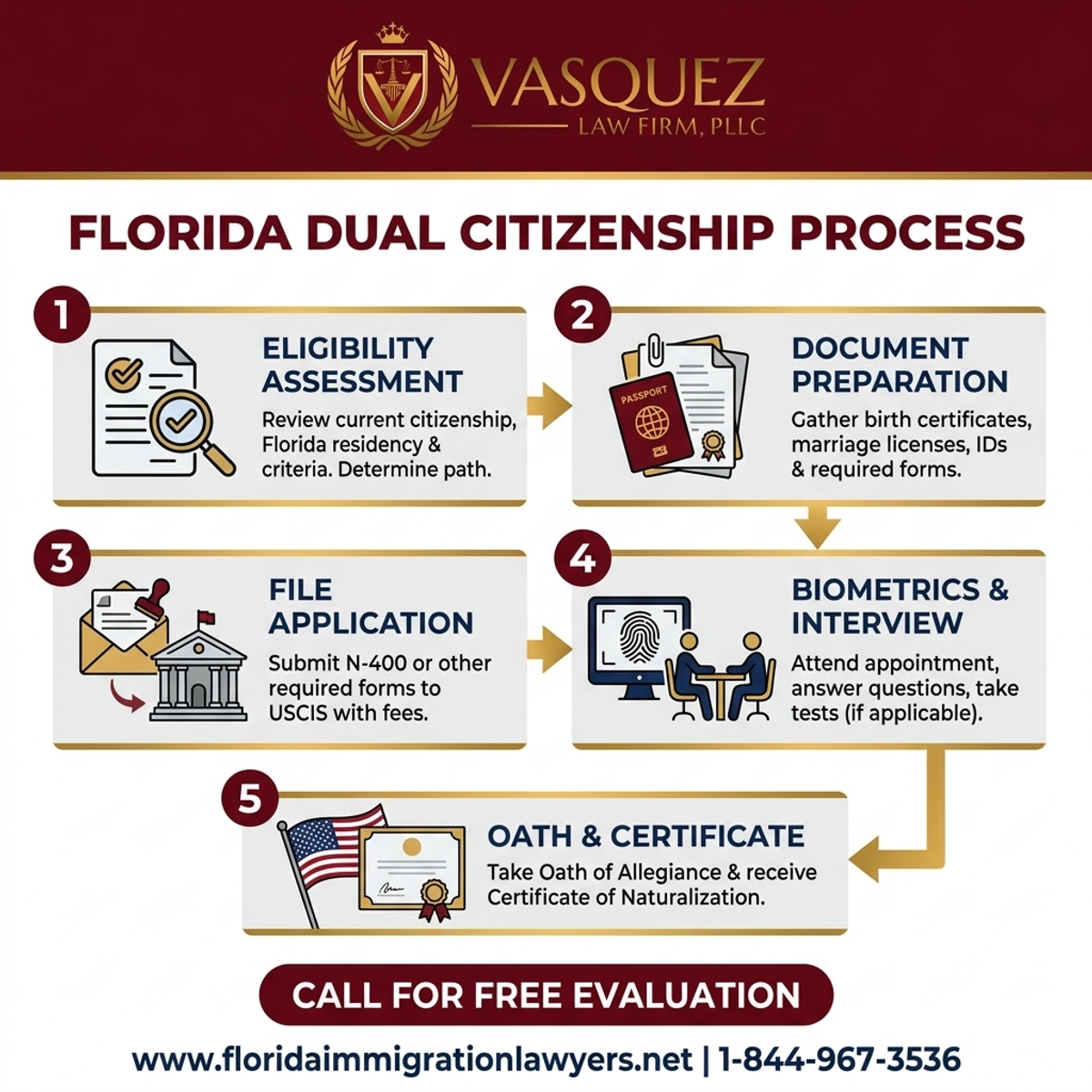
Step-by-Step Process — Dual Citizenship Lawyer: Navigating Naturalization in Florida
Each step involves specific documentation and eligibility criteria, which a dual citizenship lawyer can help you prepare and understand.
The journey begins with Form N-400, the Application for Naturalization. This extensive form requires detailed personal information, residency history, marital status, employment history, and a declaration of good moral character. Accuracy and completeness are paramount, as even minor errors can lead to significant delays or a Request for Evidence (RFE) from USCIS. A lawyer from Florida Immigration Lawyers can meticulously review your application to ensure it meets all requirements before submission, significantly streamlining the initial phase.
Following the N-400 submission, applicants attend a biometrics appointment where fingerprints, photographs, and signatures are collected for background checks. This crucial step verifies your identity and ensures you meet the moral character requirements for U.S. citizenship. The subsequent interview with a USCIS officer is a comprehensive assessment of your application, English language proficiency, and knowledge of U.S. history and government. Preparing thoroughly for this interview, often with the guidance of a dual citizenship lawyer, is key to a successful outcome. Our attorneys can conduct mock interviews and provide you with study materials, including for citizenship test preparation, to boost your confidence and readiness.
Document Checklist for Dual Citizenship
- Proof of identity (e.g., passport, driver's license)
- Current visa or residency status
- Birth certificate or equivalent
- Marriage certificate, if applicable
- Naturalization certificate from original country
- Form N-400 submission receipt
- Biometrics appointment notice
- Interview appointment notice
Ensuring all documents are complete and accurate is crucial for a smooth application process.
Beyond the basic list, applicants often need to provide additional supporting documents such as tax returns for the past five years (or three years if married to a U.S. citizen), selective service registration proof for male applicants aged 18-26, and certified copies of any arrest records or court dispositions, even if charges were dismissed or expunged. For those who have traveled extensively, a detailed travel history with entry and exit dates is also vital. Organizing these documents meticulously and ensuring they are all certified translations, if not in English, can prevent significant delays and RFEs from USCIS.
It's also essential to gather documents related to any name changes, divorce decrees, or proof of financial support for dependents. For individuals applying based on marriage to a U.S. citizen, evidence of a bona fide marriage, such as joint bank accounts, utility bills, and photographs, is critical. A dual citizenship lawyer from Florida Immigration Lawyers can help you compile a comprehensive and accurate checklist tailored to your specific situation, ensuring no crucial piece of evidence is overlooked and that all documents meet USCIS standards.
How Long Does the Dual Citizenship Process Take in 2026?
The timeframe for obtaining dual citizenship in Florida can vary, but typically involves several stages.
| Stage | Typical Timeframe | Notes |
|---|---|---|
| Filing Form N-400 | 6-12 months | Depends on USCIS processing times |
| Biometrics Appointment | 1-2 months after filing | Varies by USCIS office location |
| Interview Scheduling | 6-8 months after biometrics | Subject to USCIS backlog |
| Naturalization Ceremony | 1-2 months after approval | Final step in the process |
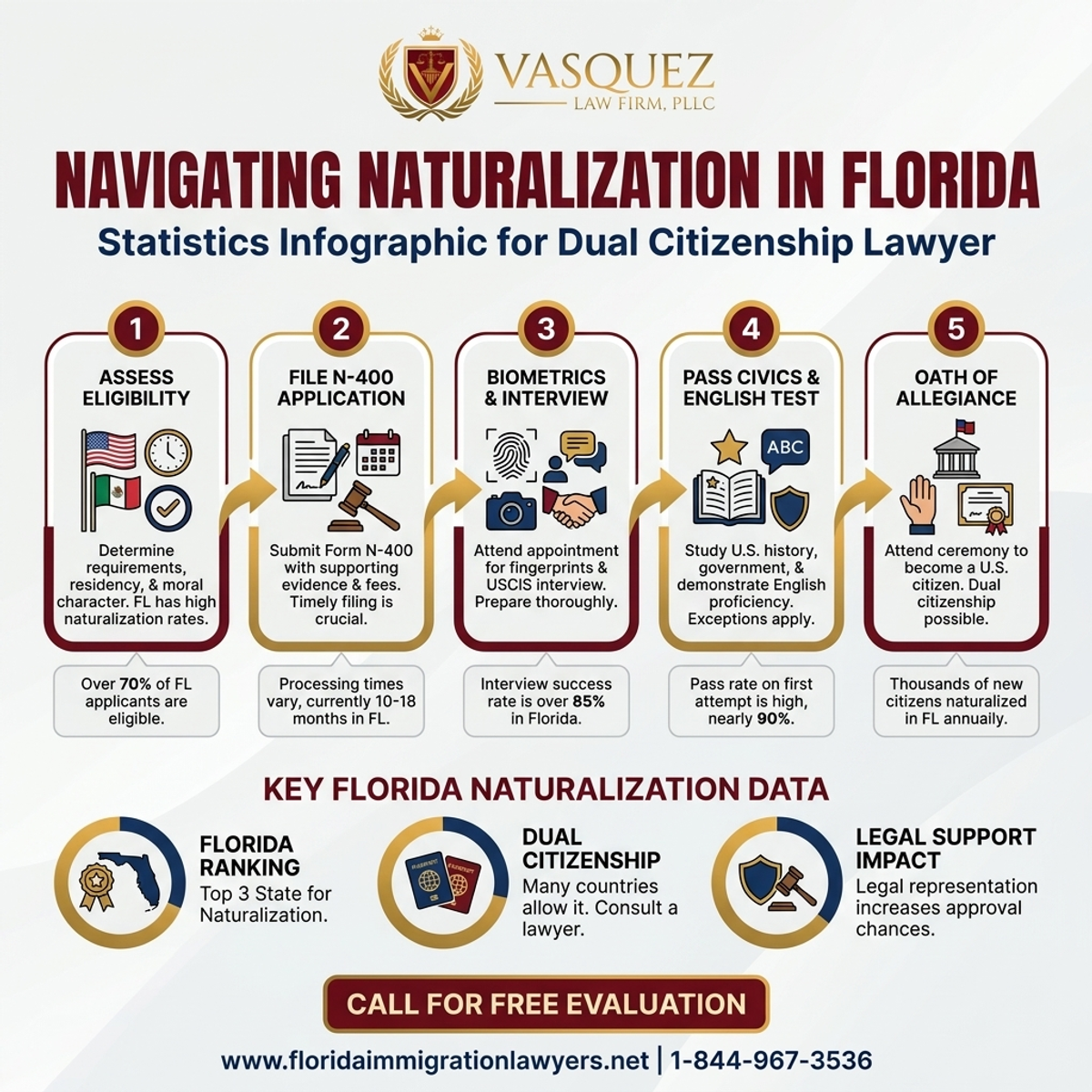
Key Statistics — Dual Citizenship Lawyer: Navigating Naturalization in Florida
Consulting a lawyer can help manage expectations and ensure timely submission of all necessary documents.
Several factors can influence the overall processing time, including the specific USCIS field office handling your case, the volume of applications, and any changes in immigration policy. For instance, an application with a complex background, such as a criminal record or extensive travel history, may require additional scrutiny and thus extend the processing period. Conversely, a straightforward application with all documents in order and no complications can sometimes move through the system more quickly.
To help manage expectations, it's advisable to regularly check the USCIS website for current processing times for your specific field office. While the provided table offers a general estimate, individual cases can deviate. Promptly responding to any Requests for Evidence (RFEs) or notices from USCIS is crucial to avoid further delays. A dual citizenship lawyer from Florida Immigration Lawyers can monitor your case status, communicate with USCIS on your behalf, and provide strategic advice to address any unforeseen complications, striving to keep your application on track and minimize waiting times.
What are the Costs Associated with Dual Citizenship?
Costs for obtaining dual citizenship in Florida can include several components.
| Item | Typical Fee | Notes |
|---|---|---|
| Filing Fee for Form N-400 | Varies | Check the latest fees on the USCIS website |
| Biometrics Fee | Varies | Included with filing fee |
| Legal Fees | Varies | Depends on the complexity of the case |
| Translation Services | Varies | If documents need translation |
Legal fees can vary widely, so consulting with a lawyer for a detailed cost breakdown is advisable.
The USCIS filing fee for Form N-400 covers both the application processing and the biometrics appointment. It's important to note that these fees are subject to change, so always verify the latest amounts directly on the USCIS website or consult with a legal professional. In some cases, individuals with very low incomes may be eligible for a fee waiver, which can significantly reduce the financial burden of the application process. Determining eligibility for such waivers requires careful review of financial documentation, a service Florida Immigration Lawyers can assist with.
Legal fees constitute another significant portion of the cost, but they represent an investment in expertise and peace of mind. These fees typically cover a wide range of services, including initial consultations, comprehensive review of eligibility, meticulous preparation and submission of Form N-400 and all supporting documents, preparation for the naturalization interview, and representation at the interview if necessary. Additional costs might include obtaining certified copies of foreign documents, travel expenses for appointments, and postage. Florida Immigration Lawyers are transparent about their fee structures and can provide a clear, itemized breakdown during your free consultation at 1-844-967-3536, helping you budget effectively for your dual citizenship journey.
Do not navigate this process alone. Contact Florida Immigration Lawyers today.
Common Mistakes to Avoid in Dual Citizenship Applications
- Incomplete Documentation: Missing documents can lead to delays or denials. Submitting an application with even a single missing document, or documents that are not properly certified or translated, is a leading cause of delays and outright denials. USCIS will issue a Request for Evidence (RFE), which adds months to the process, or simply reject the application, forcing you to restart and incur additional fees. A thorough review by Florida Immigration Lawyers can prevent these costly oversights.
- Ignoring Residency Requirements: Failing to meet residency criteria can invalidate your application. Naturalization requires continuous residency in the U.S. for a specific period (typically five years, or three if married to a U.S. citizen) and physical presence. Extended absences from the U.S. can break continuous residency, making one ineligible. Understanding how travel impacts your residency is crucial, and a lawyer can help assess your eligibility based on your travel history.
- Mistakes on Form N-400: Errors can lead to application returns. Any inaccuracies, inconsistencies, or omissions on Form N-400, no matter how minor, can trigger an RFE, a denial, or even accusations of misrepresentation. It's vital to be completely honest and accurate in every detail. Professional guidance ensures the form is completed flawlessly, reflecting your true eligibility.
- Missing Deadlines: Late submissions can result in starting the process over. Whether it's responding to an RFE, attending an interview, or submitting additional information, missing USCIS deadlines can lead to the closure or denial of your application. Staying organized and having a lawyer track these dates is indispensable.
- Overlooking Citizenship Laws: Not understanding the laws of both countries can lead to complications. Some countries automatically revoke citizenship upon naturalization in another, while others require formal renunciation. Failing to understand these laws can lead to unintended loss of original citizenship or legal complications in your birth country.
- Skipping Legal Advice: Not consulting a lawyer can result in costly mistakes. The intricacies of immigration law, especially concerning dual citizenship, are vast. Without expert guidance, applicants risk making fundamental errors that can lead to denials, wasted time, and financial loss. A lawyer provides personalized strategies and helps navigate complex scenarios.
- Failure to Prepare for Interview: Poor preparation can negatively impact your application. The naturalization interview assesses your English proficiency and knowledge of U.S. civics. Lack of preparation can lead to failing these tests or struggling to answer questions about your application, potentially resulting in a continuance or denial.
- Inadequate Language Skills: Failing language tests can lead to application denial. Unless exempt due to age or disability, applicants must demonstrate an ability to read, write, and speak basic English. If language skills are a concern, seeking assistance with test preparation, such as that offered by Florida Immigration Lawyers, is highly recommended.
- Not Understanding Dual Citizenship Implications: Dual citizenship comes with responsibilities and rights that need to be understood. This includes potential military service obligations, restrictions on holding certain government positions, and the requirement to always use your U.S. passport when entering or exiting the U.S.
- Ignoring Tax Implications: Dual citizenship can have tax consequences in both countries. U.S. citizens, regardless of where they live, are generally subject to U.S. income tax on their worldwide income. Understanding these obligations and potential reporting requirements is crucial to avoid legal and financial penalties.
When to Call a Lawyer
Engaging a lawyer is crucial if you face complex legal issues, need detailed guidance on documentation, or have been denied in the past. Warning signs include receiving a request for additional evidence or an unexpected delay in processing. Florida Immigration Lawyers offer comprehensive services to help navigate these challenges.
Beyond these warning signs, proactively consulting an immigration lawyer at the outset of your dual citizenship journey offers significant advantages. An attorney can conduct a thorough eligibility assessment, identifying any potential red flags or areas of concern before you even file your application. This early intervention can save you considerable time, stress, and money by preventing common mistakes and ensuring your application is as strong as possible from day one.
Situations that particularly warrant legal expertise include having a criminal record (even minor offenses), previous immigration violations, extensive periods spent outside the U.S., or if you are applying under special circumstances such as military service. A dual citizenship lawyer can analyze your specific situation, advise on the best course of action, and represent you effectively throughout the entire process. Don't hesitate to contact Florida Immigration Lawyers at 1-844-967-3536 for a free consultation to discuss your unique needs and how our naturalization attorneys can help.
About Florida Immigration Lawyers
Florida Immigration Lawyers is a dedicated firm serving all of Florida, offering expert guidance in immigration law. Our experienced attorneys specialize in dual citizenship, naturalization, and more. Contact us at 1-844-967-3536 or visit our website. We provide bilingual services and are available 24/7 for free consultations.
With a deep understanding of both federal immigration statutes and the unique demographic landscape of Florida, our firm is uniquely positioned to assist clients from diverse backgrounds, including the vibrant communities of Hialeah. We pride ourselves on a client-centered approach, offering personalized legal strategies tailored to each individual's circumstances and goals. Our commitment extends beyond just filing paperwork; we are your advocates, guiding you through every step, from initial eligibility checks to the final naturalization ceremony.
Our team of highly skilled naturalization attorneys has a proven track record of success in helping individuals achieve their dream of dual citizenship. We understand the profound impact this status can have on your life and are dedicated to making the process as smooth and stress-free as possible. Whether you have questions about complex residency requirements, need assistance with challenging interview questions, or require support for a previously denied application, Florida Immigration Lawyers are here to provide compassionate, expert, and effective legal representation. Reach out today for your free consultation and let us help you secure your future.
Sources and References
- U.S. Citizenship and Immigration Services (USCIS)
- Executive Office for Immigration Review (EOIR)
- 8 U.S.C. Chapter 12 - Immigration and Nationality Act
- State Department
Related services: citizenship test preparation, dual citizenship guidance.
This article provides general legal information and is not intended as legal advice. Every case is unique, and outcomes depend on specific facts and circumstances. Contact an attorney for advice about your particular situation.
Call Florida Immigration Lawyers at 1-844-967-3536 for a free consultation. Se Habla Español - Estamos aquí para ayudarle.
If you need legal assistance, learn more about how our naturalization attorneys can help, or call us at 1-844-967-3536 for a free consultation.
Do Not Navigate This Process Alone
Our experienced immigration attorneys are ready to fight for you. Get a free, confidential consultation today.
Se Habla Español
Or leave your details and we’ll call you:
Free Evaluation in 24 Hours
Or talk to us right now
AI voice assistant — available 24/7
FreeFrequently Asked Questions

William J. Vásquez
Founding Attorney · Vasquez Law Firm
U.S. Air Force veteran and immigration attorney with years of hands-on U.S. immigration experience. J.D., NCCU School of Law. AILA member. Admitted to the 4th, 5th, and 11th Circuit Courts.
Available 24/7 - Free Evaluations
Reviewed for legal accuracy by William J. Vásquez
Licensed in North Carolina; U.S. immigration is federal practice.
Related Legal Services
Our Florida immigration attorneys can help you with citizenship and naturalization, family immigration services and immigration practice areas. Call today at 1-844-967-3536 for a free consultation.
Related Links
Related Topics
Free Legal Consultation
Discuss your case with our experienced attorneys. We're available 24/7.
Se Habla Español - Estamos aquí para ayudarle.
Related Articles
Military Naturalization Expedited in Florida Bases
Explore military naturalization options for families at Florida bases, including parole in place benefits in Miami. Learn how to expedite your application with expert guidance from Florida Immigration Lawyers.
Immigration Lawyer Orlando Free Consultation 2026
Discover how an immigration lawyer in Orlando can help you through a free consultation. Learn about the services offered, costs, and recent immigration policy updates affecting your case.
Green Card Holders Issued New Warning: Renewal Process in
Green card holders in Florida face new warnings and considerations for their 2026 renewal process. This comprehensive guide from Florida Immigration Lawyers details the Form I-90 application, necessary documents, processing timelines, and associated costs. Learn how to avoid common mistakes, understand the importance of timely filing, and protect your permanent resident status amidst evolving immigration policies. We provide specific advice for residents in Kissimmee and throughout Florida, emphasizing the critical need for accurate information and, when necessary, expert legal counsel. Ensure your green card remains valid and secure your future in the U.S. with our expert guidance.
Immigration Lawyer Orlando Free Consultation: Protect
Immigration scams pose serious threats to immigrants in Florida. Learn how to protect yourself from notario fraud and find legitimate legal help. Discover steps to verify credentials and avoid common pitfalls. Contact Florida Immigration Lawyers for expert assistance and a free consultation.