DACA News 2026 Florida: Updates for Dreamers & Legal Pathways
For thousands of Dreamers in Florida, staying informed about DACA news 2026 is critical. The Deferred Action for Childhood Arrivals (DACA) program faces ongoing legal challenges, creating uncertainty for recipients. This comprehensive guide provides the latest updates, explains the renewal process, and highlights the importance of expert legal counsel in navigating these complex immigration laws. Protect your future and understand your rights.
In 2026, DACA continues to face legal uncertainty, with new applications generally halted. However, DACA renewals are still being processed, allowing eligible recipients in Florida to maintain their protected status. Staying informed about DACA news 2026 is crucial, as policy shifts and court decisions can impact Dreamers. Legal guidance is highly recommended to navigate the complexities and ensure your application is accurate and timely.
- New DACA applications are generally not accepted.
- Eligible DACA recipients can still apply for renewal.
- Florida DACA recipients face unique state-level challenges.
- Legal counsel is vital for navigating ongoing DACA complexities.
- Stay updated on court rulings and policy changes affecting DACA.
Imagine living in Florida, building a life, pursuing education, and contributing to your community, all while facing constant uncertainty about your immigration status. This is the reality for thousands of Deferred Action for Childhood Arrivals (DACA) recipients, often known as Dreamers. The legal landscape surrounding DACA is continuously evolving, and staying informed about DACA news 2026 is more critical than ever.
For those in West Palm Beach and across Florida, understanding these changes is paramount to protecting your future. This comprehensive guide will walk you through the latest developments, the DACA renewal process, potential challenges, and how expert legal assistance can make a significant difference. We are here to help you understand your options and navigate this complex journey.
Do not face these challenges alone. For personalized guidance and to discuss your specific situation, call Florida Immigration Lawyers at 1-844-967-3536 for a free consultation today.
Understanding DACA in 2026: An Overview for Florida Dreamers
The Deferred Action for Childhood Arrivals (DACA) program was established in 2012. It provides certain undocumented young people who came to the United States as children with protection from deportation and a work permit. DACA recipients have built lives, pursued education, and contributed significantly to Florida's economy and society.
What is DACA and Its Current Status?
DACA offers a form of temporary relief, not a path to citizenship. While it provides stability, its future has been marked by continuous legal battles. As of 2026, new initial DACA applications are generally not being processed by U.S. Citizenship and Immigration Services (USCIS) due to ongoing court orders. However, eligible individuals who previously held DACA status can still apply for renewal.
The program's existence remains subject to judicial review and potential legislative action. This creates significant anxiety for Dreamers and their families across Florida. Understanding these legal nuances is key to maintaining your status.
DACA in Florida: Unique Challenges and Demographics
Is DACA allowed in Florida? Yes, DACA is a federal program, and renewals are allowed for eligible individuals in Florida. However, DACA recipients in Florida operate within a unique state-level environment. Florida has seen increased state-led immigration enforcement efforts, such as "Operation Tidal Wave" and expanded 287(g) partnerships with ICE.
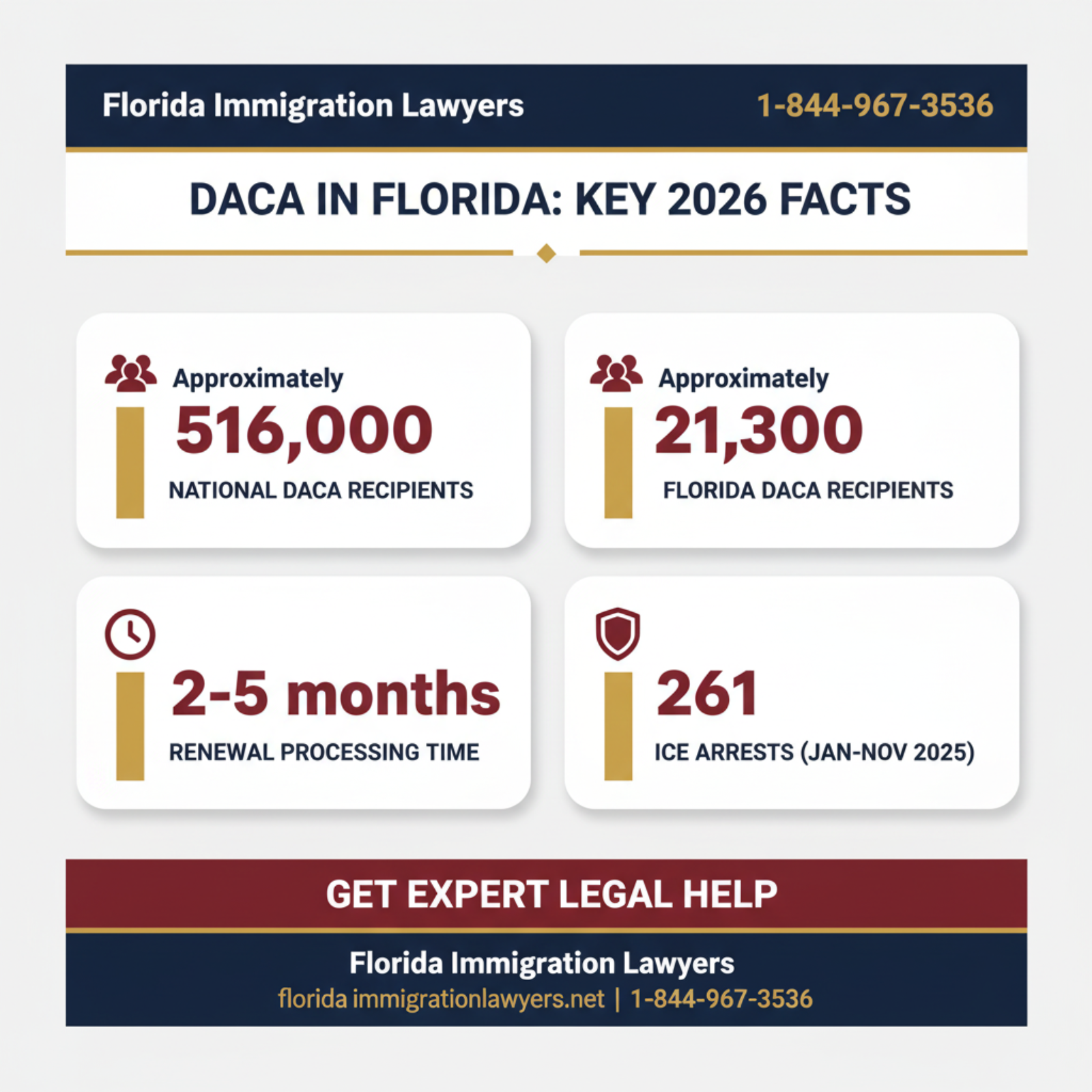
These initiatives can create a heightened sense of vulnerability for undocumented individuals, including DACA recipients who might interact with local law enforcement. It is crucial to be aware of your rights and the potential implications of these state policies. Florida is home to a significant number of DACA recipients, with estimates placing the number at over 20,000 individuals, contributing substantially to the state's workforce and economy.
Navigating the DACA Renewal Process in Florida
For current DACA recipients, renewing your status is vital to maintain protection from deportation and employment authorization. Staying on top of the renewal timeline and requirements is essential. Missing deadlines can lead to a lapse in your DACA status, putting your future at risk.
Eligibility for DACA Renewal
To be eligible for DACA renewal, you must meet several criteria. You must have continuously resided in the United States since you submitted your most recent DACA request that was approved. Additionally, you must not have departed the United States on or after August 15, 2012, without advance parole.
You must also not have been convicted of a felony, a significant misdemeanor, or three or more other misdemeanors. Any public safety or national security threat will also disqualify you. USCIS reviews each case individually, so it is important to be thorough and honest in your application.
When to Submit Your DACA Renewal Application
USCIS recommends filing your DACA renewal application between 120 and 150 days before your current DACA and Employment Authorization Document (EAD) expire. This timeframe allows for adequate processing time and helps prevent a lapse in your status. Filing too early may result in a denial, while filing too late risks an expired EAD.
If your DACA has already expired, you may still be able to renew. If your DACA expired less than one year ago, you can generally file Form I-821D as a renewal. If it expired more than one year ago, or if your DACA was terminated, you might need to file a new initial DACA request, which, as mentioned, is generally not being processed.
Step-by-Step Guide to DACA Renewal
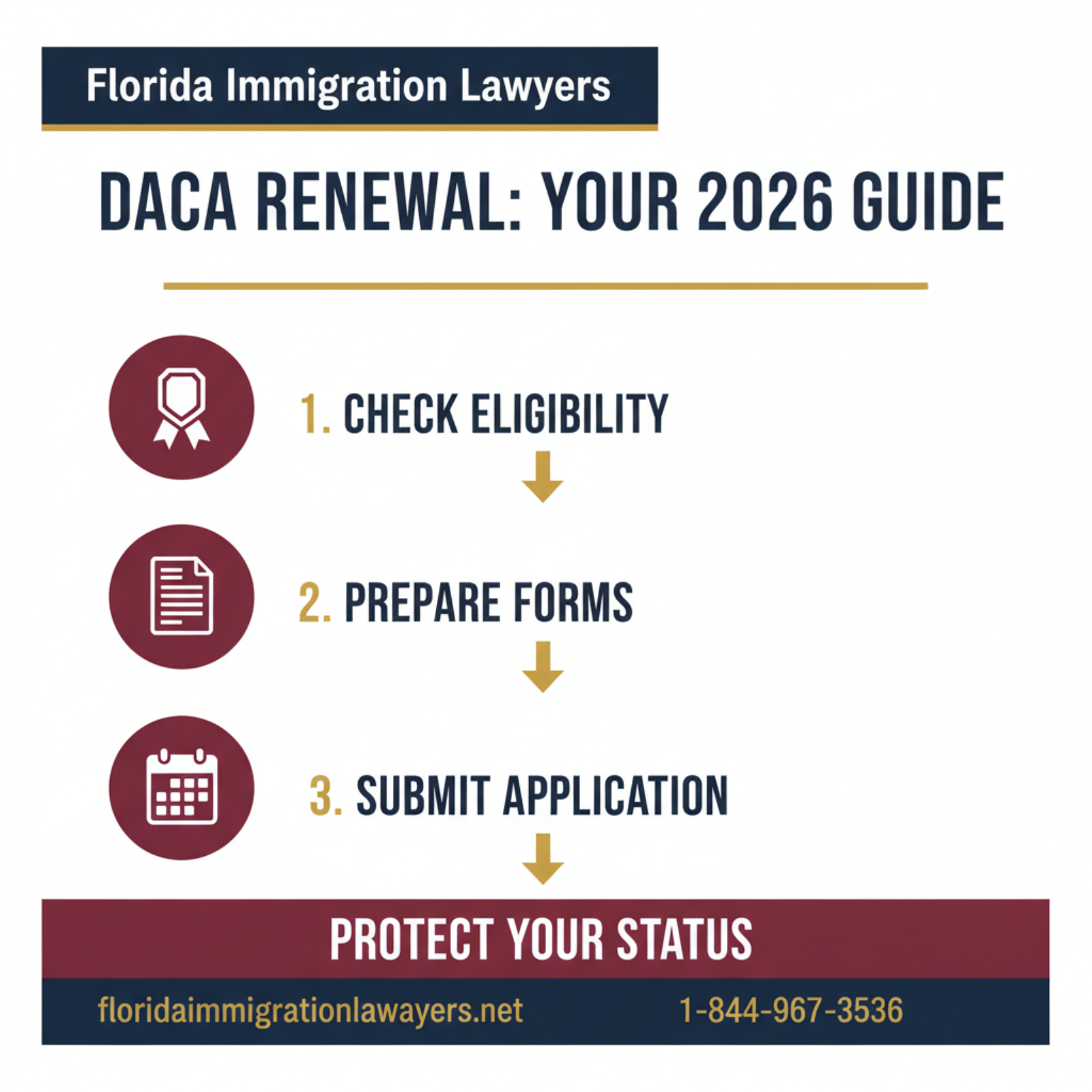
The DACA renewal process, while familiar to many, requires careful attention to detail. Here is a step-by-step guide to help you through the application:
- Gather Necessary Documents: Collect all required documents, including previous DACA approval notices, identification, and any new supporting evidence. This step is critical for a complete application.
- Complete Forms I-821D, I-765, and I-765 Worksheet: Fill out Form I-821D (Consideration of Deferred Action for Childhood Arrivals), Form I-765 (Application for Employment Authorization), and the I-765 Worksheet carefully. Ensure all sections are accurate and complete.
- Prepare Your Filing Fees: The application requires a specific filing fee, which includes the biometrics fee. Ensure you have the correct amount and payment method (check or money order) made out to "U.S. Department of Homeland Security." Do not send cash.
- Compile Your Application Package: Organize all forms, supporting documents, and fee payments into a single, neat package. Make sure to follow USCIS filing instructions regarding order and attachments.
- Mail Your Application: Send your complete application package to the correct USCIS lockbox facility. The address depends on your state of residence, so verify the correct address on the USCIS website. We recommend sending it via certified mail with a return receipt.
- Attend Biometrics Appointment: After USCIS receives your application, you will typically receive a notice for a biometrics appointment at an Application Support Center (ASC). It is mandatory to attend this appointment to provide your fingerprints, photograph, and signature.
- Monitor Your Case Status: You can monitor the status of your application online using the receipt number provided by USCIS. Be prepared for potential requests for additional evidence (RFEs) or notices of intent to deny.
Essential Documents for Your DACA Renewal Application
A complete and accurate application package is crucial for a smooth DACA renewal process. Missing documents or incorrect information can lead to delays or even a denial. Gather these items well in advance of your filing deadline.
- Copy of your most recent DACA approval notice (Form I-797).
- Copy of your most recent Employment Authorization Document (EAD).
- Two passport-style photos taken within 30 days of filing.
- Copy of your birth certificate with a certified English translation (if applicable).
- Copy of your passport or national identity document from your country of origin.
- Proof of continuous residence in the U.S. since your last DACA approval (e.g., utility bills, school records, employment records).
- Any new criminal history records, regardless of how minor, along with certified court dispositions.
- Marriage certificate (if married since last renewal) or divorce decree.
- Any documents related to previous advance parole requests.
- Proof of payment for USCIS filing fees.
DACA Processing Timelines and Expectations for 2026
Understanding the typical processing times for DACA renewals can help manage expectations. However, these times can fluctuate significantly due to various factors, including USCIS workload, policy changes, and ongoing legal challenges. It is always wise to anticipate potential delays.
General Processing Times for DACA Renewals
Typically, DACA renewal applications can take anywhere from 3 to 6 months for USCIS to process. This includes the time from when you submit your application until you receive your new EAD card. However, some cases may be processed faster, while others can take longer. USCIS provides estimated processing times on its website, which are updated regularly.
It is important to remember that these are estimates. Your individual processing time may vary. Monitoring your case status online is the best way to stay informed about your specific application.
Factors Affecting DACA Renewal Timelines
Several factors can influence how long your DACA renewal takes. These include the volume of applications USCIS receives, staffing levels, the complexity of your individual case, and whether you have a criminal history that requires additional review. Responding promptly to any Requests for Evidence (RFEs) from USCIS is crucial to avoid further delays.
Will DACA be approved again? For eligible individuals seeking renewal, DACA applications are generally being approved, assuming all criteria are met and the application is complete. The ongoing legal challenges primarily affect new initial applications, not renewals. However, the program's overall future remains uncertain, underscoring the importance of staying informed and seeking legal counsel.
Understanding DACA Renewal Costs and Fees
Renewing your DACA status involves a financial commitment, primarily consisting of government filing fees. Being prepared for these costs is an important part of the application process. These fees are subject to change, so always check the official USCIS website for the most current amounts.
Government Filing Fees
The total government filing fee for a DACA renewal application includes the fee for Form I-765, Application for Employment Authorization, and the biometrics services fee. There is no separate fee for Form I-821D. These fees are non-refundable, even if your application is denied or withdrawn. USCIS does not typically offer fee waivers for DACA applications.
Ensure your payment method is correct and made out to "U.S. Department of Homeland Security." Incorrect payment amounts or methods can lead to your application being rejected. Always double-check the current fee schedule on the USCIS website before submitting your application.
Legal Service Fees
While you can file a DACA renewal application on your own, many individuals choose to hire an experienced immigration attorney. Legal fees cover the attorney's time, expertise, and assistance in preparing your application, gathering documents, and ensuring accuracy. This investment can be invaluable in avoiding common mistakes and navigating complex situations.
Florida Immigration Lawyers offers transparent fee structures for DACA renewal assistance. We understand the financial concerns and strive to provide high-quality legal services at reasonable rates. A free consultation can help you understand the potential costs involved and the benefits of legal representation.
Navigating the complexities of DACA, especially with ongoing legal challenges and specific Florida enforcement measures, can be overwhelming. Ensuring your application is complete, accurate, and submitted on time is crucial for maintaining your status. Do not navigate this process alone. Contact Florida Immigration Lawyers today for dedicated support and expert legal advice tailored to your needs.
Common Mistakes DACA Recipients Should Avoid in 2026
The DACA renewal process, while seemingly straightforward, is fraught with potential pitfalls. Avoiding these common mistakes can save you time, stress, and most importantly, prevent a lapse in your protected status.
- Filing Late: Submitting your renewal application outside the recommended 120-150 day window before expiration can lead to a lapse in your DACA and EAD. This means you could lose your work authorization and be at risk of deportation during the processing period.
- Incomplete or Inaccurate Information: Any missing fields, inconsistent answers, or errors on your forms can cause significant delays or even a denial. USCIS will typically issue a Request for Evidence (RFE) or a Notice of Intent to Deny (NOID), prolonging the process.
- Failing to Disclose Arrests or Convictions: Even minor arrests or charges that were dismissed must be disclosed. Failing to provide complete criminal history information can be considered misrepresentation and lead to denial or even accusations of fraud.
- Not Updating Your Address with USCIS: If you move, you must notify USCIS within 10 days using Form AR-11. Failure to do so can result in missed notices, RFEs, or appointment letters, leading to application abandonment or denial.
- Traveling Without Advance Parole: DACA does not grant permission to travel internationally unless you obtain Advance Parole (Form I-131) in advance. Traveling outside the U.S. without it could result in you being unable to re-enter the country and losing your DACA status.
- Ignoring Legal Advice or Misinformation: Relying on rumors or incorrect information from non-legal sources can be detrimental. Immigration law is complex and constantly changing, especially concerning DACA. Always consult with a qualified immigration attorney.
- Not Keeping Copies of Applications and Evidence: Always make and keep copies of everything you submit to USCIS, including forms, supporting documents, and proof of mailing. These copies are vital for your records and if USCIS requests additional information or you need to appeal a decision.
- Missing Biometrics Appointments: Failing to attend your scheduled biometrics appointment without proper rescheduling can lead to the denial of your application. USCIS considers this a failure to prosecute your case.
- Assuming DACA Protects Against All Deportation: Can DACA recipients get deported by ICE? Yes, DACA provides deferred action, but it is not permanent immunity. If you commit certain crimes, violate terms of your deferred action, or your DACA expires, you can become subject to deportation by ICE. This is especially relevant in Florida with increased enforcement.
- Not Seeking Higher Education or Career Opportunities: While not a direct mistake in the application process, some DACA recipients limit their aspirations due to uncertainty. Utilize your DACA status to pursue education and career growth; an attorney can help explore long-term options beyond DACA.
When to Call a Florida Immigration Lawyer
While the DACA renewal process has a standard procedure, certain situations warrant immediate legal consultation. An experienced immigration lawyer can provide invaluable guidance and protection.
- You Have a Criminal Record: Any arrest, charge, or conviction, no matter how minor, can jeopardize your DACA eligibility. An attorney can assess your record and advise on its impact, potentially assisting with deportation defense if necessary.
- Your DACA Has Lapsed for More Than a Year: If your DACA expired more than 365 days ago, your situation becomes more complex. You might need to file a new initial DACA request, which is currently not being processed, or explore other avenues.
- You Have Traveled Outside the U.S. Without Advance Parole: This can be a serious issue, potentially leading to denial of re-entry or loss of DACA status. An attorney can help evaluate your options.
- You Received an RFE or NOID: If USCIS sends you a Request for Evidence or a Notice of Intent to Deny, it means there are issues with your application. A lawyer can help you prepare a strong and timely response.
- You Are Considering Other Immigration Options: DACA is temporary. An attorney can help you explore potential paths to citizenship or other family-based immigration options that may be available to you.
- You Fear Interaction with Law Enforcement: Given Florida's strict immigration enforcement, knowing your rights is crucial. An attorney can advise you on how to respond to questions from ICE or local law enforcement operating under 287(g) agreements.
Florida Immigration Lawyers is dedicated to serving Dreamers across Florida, including West Palm Beach, Miami, Orlando, and Tampa. Our experienced attorneys stay abreast of the latest DACA news 2026 and legal developments to provide the most current and effective advice.
About Florida Immigration Lawyers
Florida Immigration Lawyers is a leading immigration law firm serving individuals and families across the entire state of Florida. We understand the profound impact immigration issues have on your life, and we are committed to providing compassionate, effective, and results-driven legal representation.
Our firm specializes in a comprehensive range of immigration services, including DACA renewals, family-based petitions, deportation defense, asylum claims, and naturalization. We are dedicated to protecting your rights and helping you achieve your immigration goals, offering personalized strategies for each unique case.
Why choose Florida Immigration Lawyers? Our team of highly skilled attorneys brings extensive experience and a deep understanding of U.S. immigration law. We pride ourselves on clear communication, transparent processes, and unwavering advocacy for our clients. We offer free consultations and are available 24/7 to address your urgent concerns.
Your future in Florida is our priority. Let us be your trusted legal partners in navigating the complexities of immigration law. Visit our website at https://www.floridaimmigrationlawyers.net or call us directly at 1-844-967-3536.
Sources and References
- U.S. Citizenship and Immigration Services (USCIS)
- Executive Office for Immigration Review (EOIR)
- 8 U.S.C. Chapter 12 - Immigration and Nationality Act (INA)
- 8 CFR Part 274a - Control of Employment of Aliens
- INA § 237(a)(2)(A)(iii) - Deportability for aggravated felony conviction
- U.S. Department of State - Bureau of Consular Affairs
This article provides general legal information and is not intended as legal advice. Every case is unique, and outcomes depend on specific facts and circumstances. Contact an attorney for advice about your particular situation.
The landscape of immigration law, particularly concerning DACA, is constantly shifting. Staying informed and acting proactively are your best defenses against potential challenges. Let Florida Immigration Lawyers be your guide and advocate.
For a comprehensive review of your DACA status or to explore other immigration pathways, do not hesitate to reach out. We offer free, confidential consultations to discuss your specific needs. Call us today at 1-844-967-3536. Se Habla Español - Estamos aquí para ayudarle.
Frequently Asked Questions
Florida Immigration Lawyers
Legal Team
Our experienced attorneys at Florida Immigration Lawyers have been serving clients across Florida for over 20 years. We specialize in immigration, personal injury, criminal defense, workers compensation, and family law.