Citizenship Delay in Florida: Navigating N-400 Processing in 2026
Facing a citizenship delay in Florida, particularly with your N-400 naturalization application? Many applicants in Jacksonville and across the state are experiencing extended processing times and USCIS backlogs in 2026. This guide from Florida Immigration Lawyers explains the common reasons for these delays, such as extensive background checks and high application volumes. We provide a step-by-step approach to navigating a delayed case, from checking your status to considering a Writ of Mandamus. Learn about essential documents, expected timelines, and cost factors. Discover critical mistakes to avoid and understand when legal counsel is indispensable. Florida Immigration Lawyers offers expert guidance and support to help you overcome these challenges and achieve your dream of U.S. citizenship.
A citizenship delay in Florida typically refers to an N-400 naturalization application taking longer than the standard processing times published by USCIS, which can extend beyond 12-18 months. These delays often stem from USCIS backlogs, complex background checks, or requests for additional evidence. Understanding the process and knowing when to seek legal counsel is crucial for applicants in Jacksonville and across Florida.
- USCIS processing times are estimates and can vary significantly.
- Common reasons for delays include background checks and high application volumes.
- Applicants can check their case status online and submit inquiries.
- Legal intervention, such as a Mandamus action, may be necessary for unreasonable delays.
- Consulting an experienced immigration attorney can help navigate complex situations.
Citizenship Delay in Florida: Navigating N-400 Processing in 2026
Are you an aspiring U.S. citizen in Florida, perhaps in Jacksonville or a surrounding area, patiently waiting for your naturalization application to be processed? The dream of becoming a U.S. citizen is significant for many, offering stability, rights, and a sense of belonging. However, a citizenship delay can turn that dream into a frustrating waiting game.
In 2026, many applicants are still facing extended N-400 processing times, often due to USCIS backlogs and various administrative hurdles. Understanding why these delays occur and what steps you can take is crucial for managing your expectations and protecting your rights.
This comprehensive guide from Florida Immigration Lawyers will walk you through the complexities of naturalization delays, offering insights into the process, common challenges, and actionable strategies. We are here to help you understand your options and provide the guidance you need. Don't let a prolonged wait diminish your hopes. Call Florida Immigration Lawyers at 1-844-967-3536 for a free consultation to discuss your specific situation today.
Understanding Citizenship Application Delays in Florida
The path to U.S. citizenship, known as naturalization, is a detailed process managed by U.S. Citizenship and Immigration Services (USCIS). While USCIS strives for efficiency, various factors can lead to a significant citizenship delay, especially in high-volume regions like Florida.
Applicants in cities such as Jacksonville, Miami, Orlando, and Tampa often experience processing times that can fluctuate widely. It is not uncommon for the N-400 application process to extend well beyond the initial estimates provided by USCIS.
Common Reasons for N-400 Processing Backlogs
Several factors contribute to the current USCIS backlog and prolonged N-400 processing times. Understanding these reasons can help you anticipate potential delays and prepare accordingly.
- High Volume of Applications: USCIS receives millions of applications annually, and the sheer volume can overwhelm processing centers, leading to delays.
- Background and Security Checks: Every naturalization applicant undergoes thorough background and security checks by multiple government agencies. If any information requires further investigation, it can significantly prolong the process.
- Requests for Evidence (RFE) or Further Information: If your N-400 application is incomplete or USCIS requires additional documentation, they will issue an RFE. Responding promptly and thoroughly is essential to avoid further delays.
- Interview Scheduling Delays: USCIS field offices, including the one serving Jacksonville, may experience backlogs in scheduling interviews due to staffing shortages or high demand.
- Administrative Processing: Some cases may enter administrative processing if complex issues arise during the review, such as past immigration violations or criminal history.
- Policy Changes and Resource Allocation: Shifts in immigration policy or changes in how USCIS allocates its resources can impact processing times across the board.
These factors collectively contribute to the challenges faced by many aspiring citizens. For those living in Florida, the specific processing center handling your case will also influence your waiting period.
Navigating a Delayed N-400 Application: A Step-by-Step Guide
If you find your N-400 naturalization application experiencing a significant citizenship delay, there are proactive steps you can take. These actions may help clarify your case status or even expedite the process.
-
Check Your Case Status Online: Your first step should always be to check the official USCIS website. Use your receipt number to access the online case status tool, which provides the most up-to-date information on your application. This can often resolve simple questions about your USCIS case not moving.
-
Submit an E-Request for Outside Normal Processing Times: If your case has been pending longer than the published processing times for your specific USCIS field office (e.g., Jacksonville) or service center, you can submit an online inquiry. USCIS will typically respond within 15-30 days.
-
Contact USCIS Customer Service: For more detailed inquiries or if you have not received a satisfactory response from an E-Request, you can call the USCIS Contact Center. Be prepared to provide your receipt number and personal details. This is often the first step for an immigration inquiry.
-
Request an InfoPass Appointment: While USCIS has largely transitioned to online and phone services, some complex issues may warrant an in-person appointment at your local field office. Check the USCIS website for current policies on scheduling InfoPass appointments.
-
Contact the USCIS Ombudsman: If you have exhausted all other avenues and your case remains unreasonably delayed, you can seek assistance from the USCIS Ombudsman's Office. This independent office helps resolve problems with USCIS that are not being addressed through normal channels. They can often provide insights into why your case is experiencing a particular USCIS backlog.
-
Consider a Writ of Mandamus Lawsuit: For extreme and unreasonable delays (often exceeding 2 years beyond normal processing times without a valid explanation), you may be able to file a lawsuit in federal court. This is known as a Writ of Mandamus action and compels USCIS to make a decision on your application. This legal action is typically pursued when all administrative remedies have failed. See Executive Office for Immigration Review (EOIR) for related judicial processes.
Essential Documents for Your Naturalization Application
A complete and accurate application package is vital to avoid a citizenship delay. While USCIS may issue Requests for Evidence (RFEs), having everything prepared upfront can significantly streamline your N-400 processing.
Here is a general checklist of documents often required for naturalization. Always refer to the official USCIS instructions for the most current and specific requirements for your application.
- Form N-400, Application for Naturalization
- Copy of your Permanent Resident Card (Green Card)
- Copies of all passports (U.S. and foreign) held during the statutory period
- Copies of marriage certificates (if applicable)
- Copies of divorce decrees (if applicable)
- Copies of birth certificates for your children (if applicable)
- Tax returns for the past five years (or three years if married to a U.S. citizen)
- Proof of selective service registration (for males 18-26)
- Court disposition records for any arrests or citations (even if dismissed)
- Evidence of continuous residence and physical presence in the U.S.
- Two passport-style photos (if filing a paper application)
- Payment for the application fee (or fee waiver application)
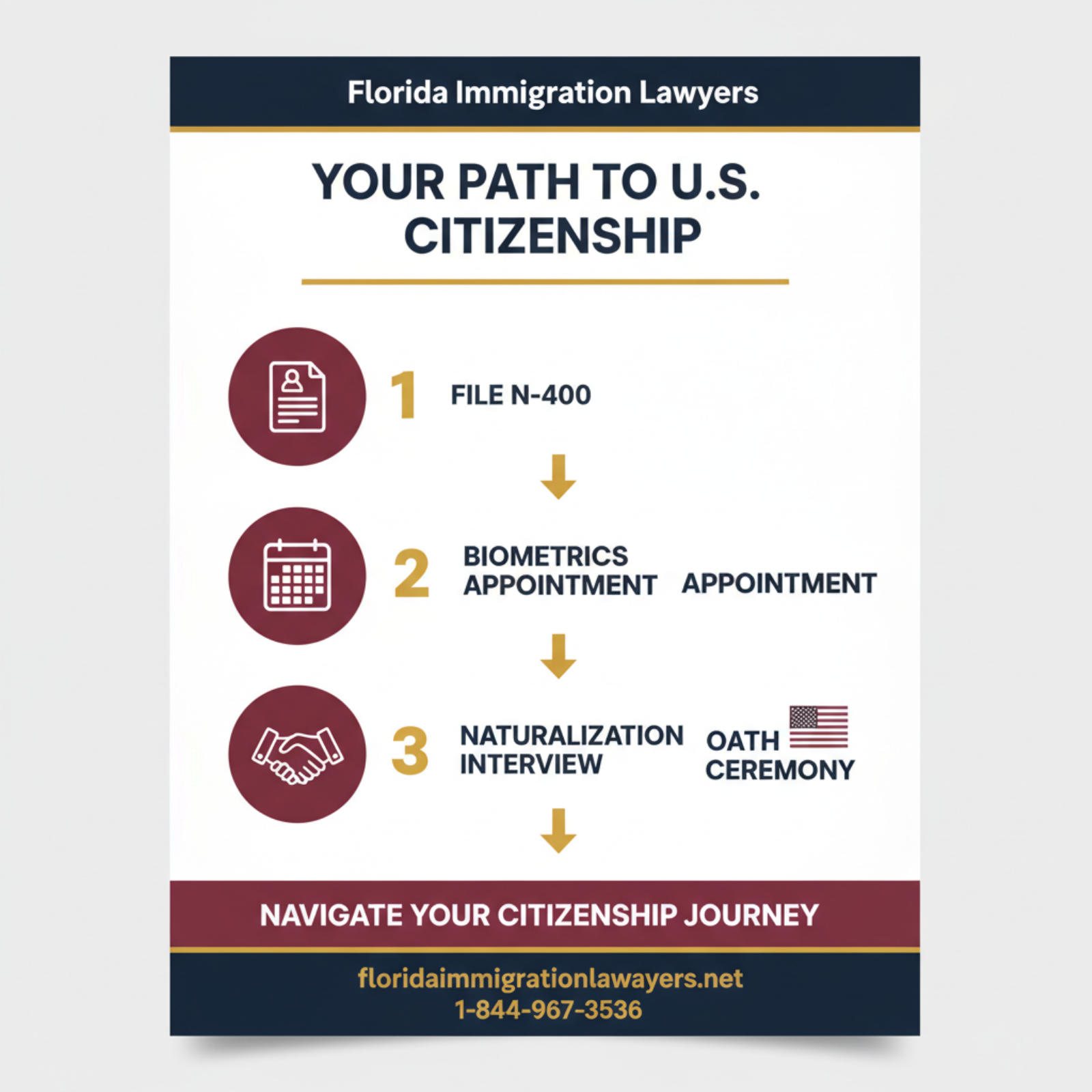
Organizing these documents thoroughly before submission will help ensure a smoother N-400 processing experience and reduce the likelihood of requests for additional information.
Expected Timelines and Processing Expectations in 2026
The question, "How long does the citizenship process take in Florida?" is common, and unfortunately, the answer is not always straightforward. USCIS processing times are dynamic and depend on several factors, including the specific field office and the complexity of your case.
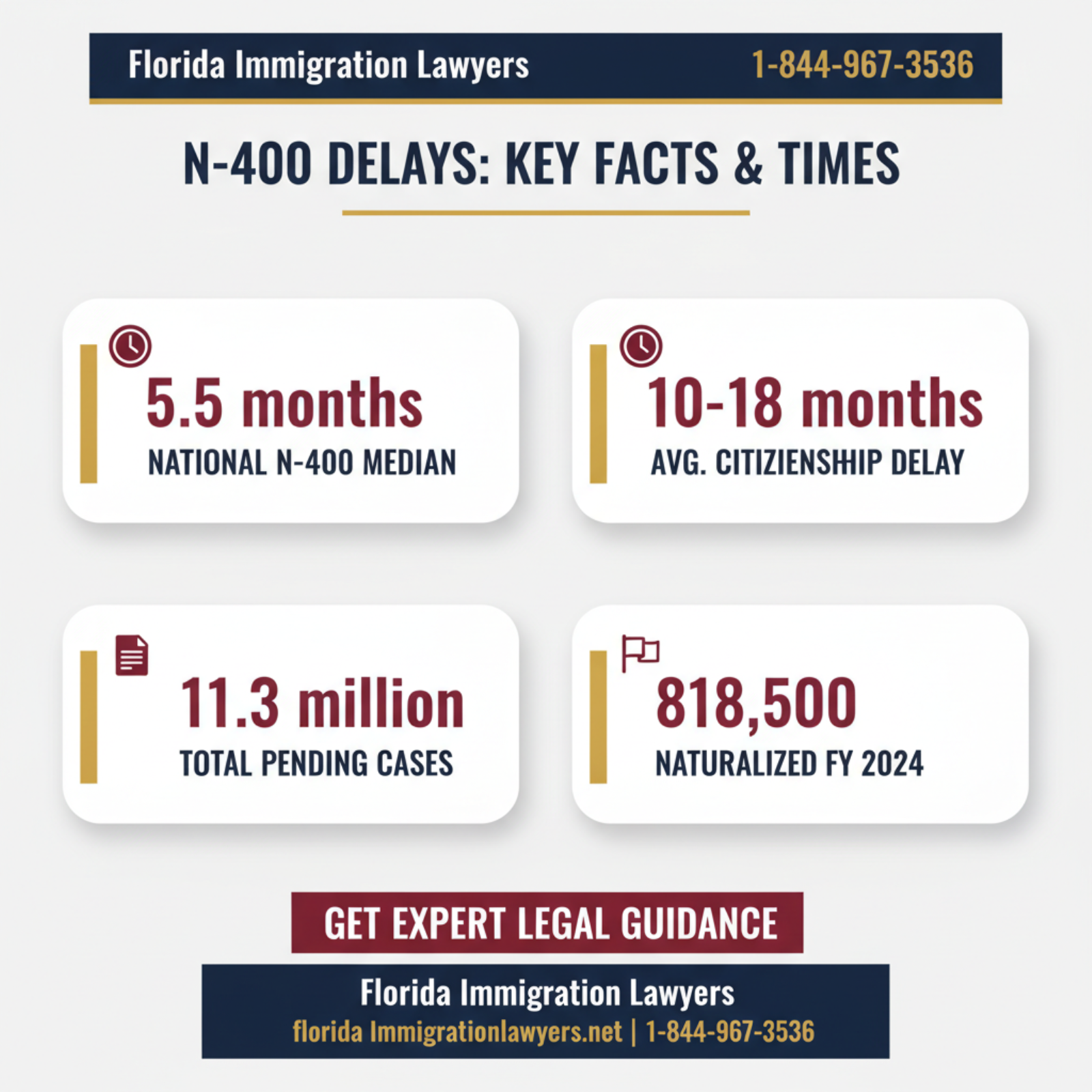
In 2026, while USCIS aims to reduce backlogs, applicants should still anticipate variable waiting periods. The average processing time for an N-400 application can range from 8 to 18 months, but some cases, particularly those with complications or extensive background checks, may take longer.
Florida-Specific USCIS Processing Times
Florida is home to several USCIS field offices, including major ones in Jacksonville, Miami, Orlando, and Tampa. Each office may have slightly different processing times based on local demand and staffing levels. You can check the USCIS Processing Times webpage for the most current estimates specific to your jurisdiction.
For example, if you reside in Jacksonville, your application will likely be processed by the Jacksonville Field Office after initial intake at a service center. Monitoring these localized times is crucial for setting realistic expectations. A naturalization application that appears to be outside these published times may indicate a potential delay.
Cost Factors and Fee Breakdown for Naturalization
Applying for U.S. citizenship involves certain costs, which are important to budget for. These typically include government filing fees and, if you choose to hire one, attorney fees.
-
USCIS Filing Fee: The fee for Form N-400 is set by USCIS and is subject to change. This fee covers the cost of processing your application and typically includes the biometric services fee. Always refer to the official USCIS website for the most current fee schedule.
-
Attorney Fees: Hiring an experienced immigration attorney, like those at Florida Immigration Lawyers, involves legal fees. These fees cover professional guidance, preparation of your application, representation during interviews, and assistance in addressing any delays or complex issues that arise. While an additional cost, legal representation can be invaluable in navigating the complexities of the immigration system.
-
Fee Waivers: USCIS offers fee waivers for certain low-income applicants who meet specific eligibility criteria. If you believe you qualify, you can submit Form I-912, Request for Fee Waiver, along with your N-400 application. This can significantly reduce the financial burden of applying for citizenship.
Key Statistics & Data
Understanding these costs upfront helps you plan financially for your naturalization journey and ensures you are prepared for all aspects of the application process.
Do not navigate this process alone. The complexities of a citizenship delay, especially with the current USCIS backlog, can be overwhelming. Contact Florida Immigration Lawyers today to ensure your application is handled with precision and care, and to explore all available avenues to resolve your delay.
Common Mistakes to Avoid During Your Naturalization Process
Avoiding common pitfalls can significantly reduce the risk of a citizenship delay or even a denial. Pay close attention to these areas:
-
Incomplete or Inaccurate Application: Submitting an N-400 form with missing information or errors is a primary cause of RFEs and delays. USCIS will send it back or request more details, pushing back your processing timeline. Ensure every question is answered accurately and completely.
-
Failing to Disclose All Information: Omitting details about arrests, citations, or past immigration issues, even minor ones, can lead to serious problems. USCIS conducts thorough background checks, and any discrepancies can result in delays, accusations of misrepresentation, or even denial. Be transparent and provide all relevant documentation.
-
Not Meeting Continuous Residence Requirements: Applicants must demonstrate continuous residence and physical presence in the U.S. for the statutory period (typically 5 years, or 3 if married to a U.S. citizen). Extended trips outside the U.S. can break this continuity, leading to delays or a need to refile. Understand the rules for absences.
-
Lack of Good Moral Character: USCIS requires applicants to demonstrate good moral character. Certain criminal offenses, immigration violations, or tax issues can prevent you from meeting this requirement. Addressing these issues proactively with an attorney is vital before filing.
-
Missing Deadlines for RFEs or Appointments: Failing to respond to an RFE by the specified deadline or missing an interview appointment can lead to your application being denied or abandoned. Always keep track of all correspondence from USCIS and respond promptly.
-
Poor Preparation for the Interview: The naturalization interview is a critical step where you will be tested on English and U.S. civics. Inadequate preparation can lead to a failed interview, requiring a retest and prolonging your naturalization journey. Practice your English and study for the civics test thoroughly.
-
Not Seeking Legal Counsel for Complex Cases: If you have a criminal record, past immigration issues, or a complicated travel history, attempting to navigate the naturalization process alone is risky. An experienced attorney can identify potential problems and help you present the strongest possible case, preventing a USCIS backlog from turning into a denial.
When to Call a Lawyer for Your Citizenship Delay
While many N-400 applications proceed smoothly, certain situations warrant the expertise of an immigration attorney. Facing a citizenship delay can be stressful, and knowing when to seek professional help is key.
You should consider contacting Florida Immigration Lawyers if:
-
Your N-400 Processing Time Exceeds Normal: If your application has been pending significantly longer than the published processing times for your local USCIS office in Florida, it's time to investigate further. A lawyer can help you submit an effective immigration inquiry and follow up on the status.
-
You Receive a Request for Evidence (RFE) or Notice of Intent to Deny (NOID): These notices indicate that USCIS has concerns about your application. An attorney can help you understand the request, gather the necessary documentation, and formulate a strong response to prevent a denial.
-
You Have a Complex Case History: This includes past arrests, convictions, extensive travel abroad, or previous immigration violations. These factors can complicate your naturalization and often require expert legal guidance to navigate successfully.
-
You Are Facing an Interview with Complicating Factors: If you anticipate difficult questions during your naturalization interview due to your background, having an attorney prepare you or even accompany you can be invaluable.
-
Your Case is Stalled Without Explanation: If your USCIS case not moving for an extended period, and you haven't received any communication despite inquiries, a Mandamus action might be necessary. This is a complex legal strategy best handled by an attorney.
-
You Are Unsure About Any Aspect of the Application: Even for seemingly straightforward cases, the peace of mind and assurance that comes from professional legal review can be priceless. Attorneys ensure your application is error-free and complete, minimizing the chances of a USCIS missing notice or other administrative issues.
Florida Immigration Lawyers has extensive experience assisting individuals across Florida, from Jacksonville to the Keys, with their naturalization applications. We understand the nuances of immigration law and are committed to helping you achieve your citizenship goals.
About Florida Immigration Lawyers
Florida Immigration Lawyers is a premier law firm dedicated to providing exceptional immigration legal services across the entire state of Florida. Our team of experienced attorneys is passionate about helping individuals and families navigate the complexities of U.S. immigration law, offering compassionate and effective representation.
We specialize in a wide range of immigration matters, including general immigration, citizenship and naturalization, family-based petitions, business immigration, asylum, and deportation defense. Our commitment to our clients is unwavering, and we strive to provide personalized attention and strategic solutions tailored to your unique needs.
Why choose Florida Immigration Lawyers? We pride ourselves on our deep legal knowledge, our client-centered approach, and our proven track record of success. We understand the profound impact immigration matters have on your life, and we are dedicated to achieving the best possible outcomes for you and your loved ones.
We offer free consultations to help you understand your options and develop a clear legal strategy. Our firm is available 24/7, ensuring you have access to legal support when you need it most. Let us be your trusted partner on your journey to U.S. citizenship.
Contact us today: 1-844-967-3536 or visit our website: https://www.floridaimmigrationlawyers.net. Our attorneys are ready to assist you.
Sources and References
- U.S. Citizenship and Immigration Services (USCIS)
- USCIS Policy Manual, Volume 12, Part E, Chapter 3 - Interviews
- Executive Office for Immigration Review (EOIR)
- 8 U.S.C. Chapter 12 - Immigration and Nationality Act (INA)
- INA Section 336(b) - 8 U.S.C. § 1447(b) (Judicial review of naturalization denials/delays)
- 8 CFR § 335.3 - Examinations (USCIS regulations on naturalization interviews)
This article provides general legal information and is not intended as legal advice. Every case is unique, and outcomes depend on specific facts and circumstances. Contact an attorney for advice about your particular situation.
Ready to discuss your citizenship delay? Don't let uncertainty prolong your wait. The experienced team at Florida Immigration Lawyers is here to provide clarity and effective legal representation for your naturalization process. We serve clients throughout Florida, including Jacksonville, and understand the intricacies of USCIS procedures in 2026.
Call Florida Immigration Lawyers at 1-844-967-3536 for a free consultation. Se Habla Español - Estamos aquí para ayudarle.
Florida Immigration Lawyers
Legal Team
Our experienced attorneys at Florida Immigration Lawyers have been serving clients across Florida for over 20 years. We specialize in immigration, personal injury, criminal defense, workers compensation, and family law.