Citizenship Delay in Florida: What to Know
Experiencing delays in your citizenship application in Florida? Learn about N-400 processing and USCIS backlog issues, and when to seek legal help. Call us for a free consultation.

Experiencing a delay in your citizenship application in Coral Springs, Florida, can be frustrating. Various factors contribute to these delays, including USCIS backlogs and increased application volumes. It is essential to understand the naturalization process and know your rights. Here are key points to consider:
- Check the current USCIS processing times.
- Ensure all documents are complete and accurate.
- Consider contacting a legal professional for guidance.
Introduction
Applying for U.S. citizenship is a significant step for many immigrants in Coral Springs, Florida. However, delays in processing the N-400 form can cause uncertainty and stress. This article explores the reasons behind these delays, offers guidance on navigating the process, and highlights when to seek legal assistance. Call Florida Immigration Lawyers at 1-844-967-3536 for a free consultation.
The dream of becoming a U.S. citizen represents stability, opportunity, and full participation in American society. When this journey is prolonged by unexpected delays, it can lead to significant emotional and practical challenges for applicants and their families. Understanding the potential roadblocks and having a clear strategy to address them is crucial for a smoother path to naturalization.
Understanding Citizenship Delays in Florida
The citizenship application process, particularly in Florida, can encounter several delays. Factors such as USCIS backlogs, increased application volumes, and administrative changes contribute to these issues. The USCIS is the primary agency handling these applications, and understanding their processes is crucial. Recent policy changes, such as requiring green card applications from abroad, have also impacted processing times.
Delving deeper into USCIS backlogs, these are often systemic, stemming from fluctuating budgets, staffing shortages, and a surge in applications, especially following periods of policy uncertainty or increased immigration enforcement. For residents of Coral Springs, this means that even a perfectly submitted application can get caught in a broader bureaucratic slowdown. Understanding that these delays are often beyond an individual's control can help manage expectations, though it doesn't lessen the frustration.
Administrative changes and enhanced security checks also play a significant role. USCIS continually updates its procedures, sometimes leading to new layers of review or more stringent background checks that extend processing times. These changes, while aimed at maintaining national security and process integrity, can inadvertently create bottlenecks. For instance, if a background check requires additional verification from other agencies, your application might be paused indefinitely until that information is received. This is where proactive follow-up, often best handled by experienced legal professionals like Florida Immigration Lawyers, becomes invaluable.
Furthermore, the impact of local field office workloads cannot be overstated. While national trends affect all applicants, local field office workloads in areas like Coral Springs and surrounding South Florida can significantly influence individual processing times. High population density and diverse immigrant communities in Florida often translate to a higher volume of applications, straining local resources. This localized pressure can add weeks or even months to the standard processing estimates, making it crucial to monitor not just national but also specific field office processing times on the USCIS website.
Step-by-Step Guide to the N-400 Process
- Complete and submit the N-400 form with all required documents.
- Receive a notice for biometrics appointment from USCIS.
- Attend the biometrics appointment as scheduled.
- Prepare for your naturalization interview and test.
- Attend the interview and take the citizenship test.
- Receive a decision from USCIS regarding your application.
- If approved, attend the citizenship ceremony.
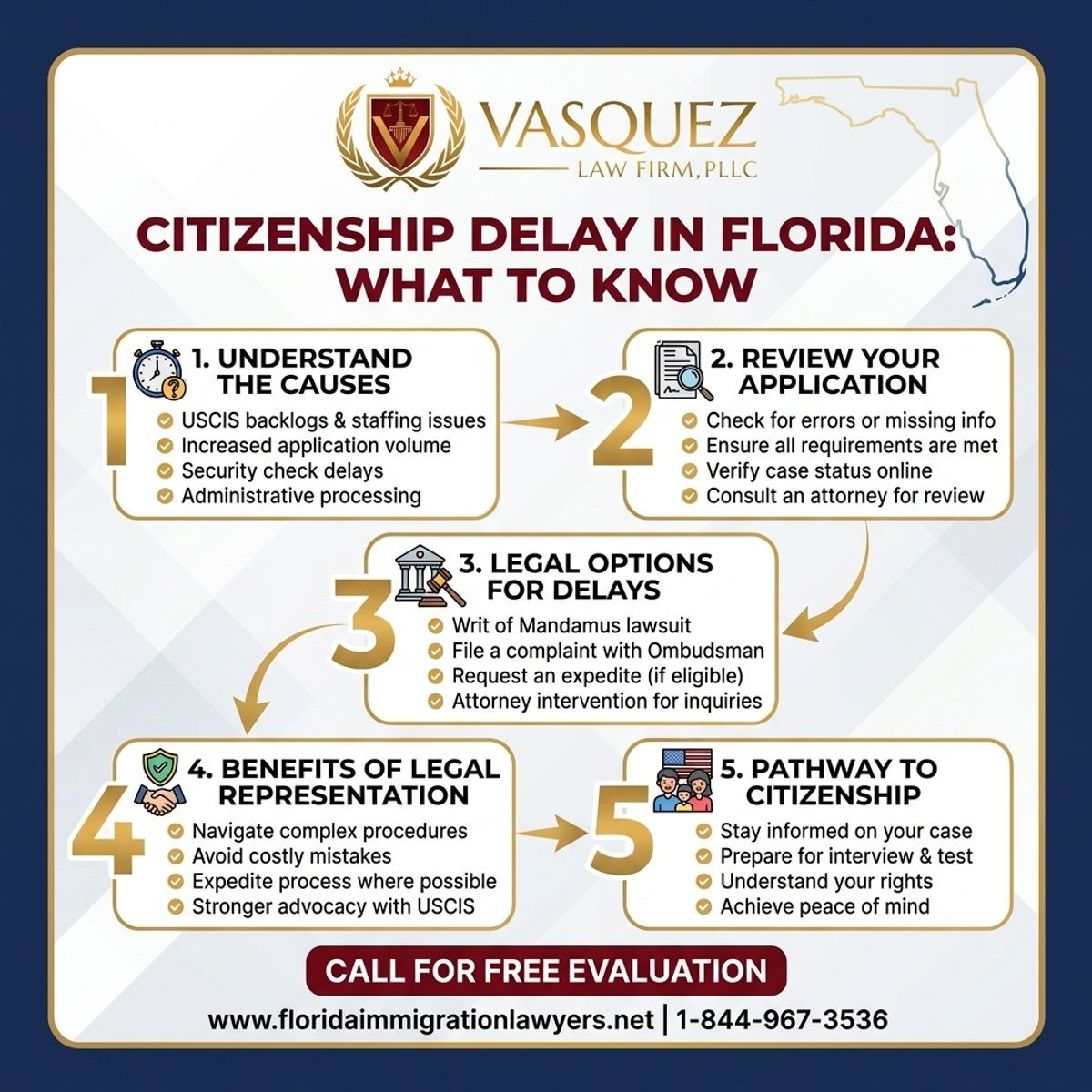
Step-by-Step Process — Citizenship Delay in Florida: What to Know
The initial step of completing and submitting the N-400 form is critical. Any omission or inaccuracy here can trigger immediate delays or even a Request for Evidence (RFE), pushing your timeline back significantly. It's not just about filling out the boxes; it's about ensuring every piece of information aligns with your supporting documents and immigration history. Many applicants underestimate the importance of meticulous preparation, leading to avoidable setbacks.
Following submission, the biometrics appointment is a mandatory step for background checks. Missing this appointment without proper rescheduling can lead to application denial. It’s essential to attend promptly and ensure your identity is correctly recorded. Preparing for your naturalization interview and test is equally vital; this is where your knowledge of U.S. history, government, and English language proficiency is assessed. Failing to prepare adequately can result in a second interview, further extending your path to citizenship.
Finally, receiving a decision and attending the citizenship ceremony are the culmination of this long journey. While the process can be lengthy, each step is designed to ensure applicants meet the stringent requirements for U.S. citizenship. Should you face any unexpected hurdles or receive a complex request from USCIS, remember that legal guidance from Florida Immigration Lawyers can provide clarity and strategic support, helping you navigate these critical stages successfully.
Document Checklist for Citizenship Application
- Completed N-400 form
- Two passport-style photographs
- Copy of green card
- Proof of residence in the U.S.
- Filing fee (check current fees on USCIS)
- Supporting documents for any special circumstances (e.g., marriage, military service)
Beyond merely listing documents, understanding why each document is required is key. For example, your green card copy verifies your lawful permanent resident status, while proof of residence establishes your continuous physical presence in the U.S. for the required period. For any documents not in English, certified translations are not merely helpful but mandatory, and failure to provide them will cause significant delays.
It's also crucial to maintain organized copies of everything you submit, as well as any correspondence from USCIS. This meticulous record-keeping can be invaluable if USCIS requests additional information or if there's a discrepancy in your application. Furthermore, special circumstances, such as a marriage to a U.S. citizen or military service, often come with their own unique documentation requirements that can significantly impact eligibility and processing times. Consulting with an attorney from Florida Immigration Lawyers can help ensure you don't miss any critical supporting evidence for your specific situation.
Timeline and Processing Expectations
Typically, the N-400 processing time can range from 8 to 14 months. However, in Florida, particularly Coral Springs, this can extend due to local USCIS office backlogs. Monitoring the USCIS processing times regularly can provide a more accurate timeframe for your application.
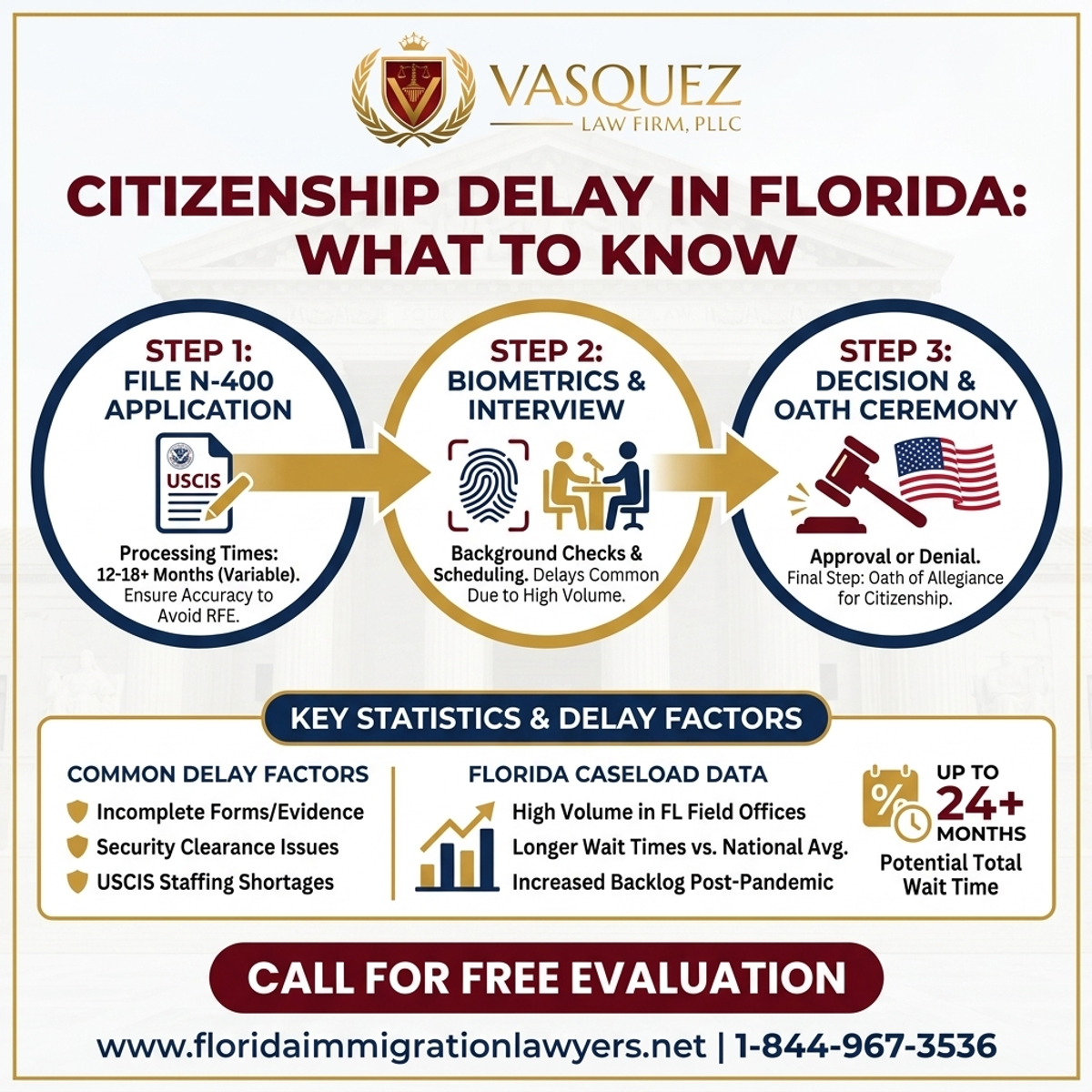
Key Statistics — Citizenship Delay in Florida: What to Know
While the 8 to 14-month estimate serves as a general guideline, it's essential to recognize that individual cases can vary wildly. Factors such as the complexity of your application (e.g., criminal history, extensive travel), the volume of applications at your specific field office, and even the current political climate can influence how quickly your case moves forward. For residents in Coral Springs, checking the processing times for the Miami or Oakland Park Field Office (depending on jurisdiction) will offer the most relevant insights.
If your application has been pending significantly longer than the posted processing times for your field office, it's a clear signal that proactive steps may be necessary. This could involve submitting an online "e-request" to USCIS or, for more persistent delays, initiating an inquiry through your congressional representative. However, these steps often yield generic responses. When delays become excessive, especially without a clear explanation, contacting Florida Immigration Lawyers at 1-844-967-3536 is highly recommended.
In severe cases of unreasonable delay, an immigration attorney might explore the option of filing a Writ of Mandamus in federal court. This legal action compels a government agency, like USCIS, to perform its duty and adjudicate an application within a reasonable timeframe. While this is a more advanced legal strategy, it underscores the importance of having experienced legal counsel who understands all available avenues to address prolonged delays and protect your rights.
Cost Factors and Fee Breakdown
While the primary cost associated with the N-400 application is the filing fee, additional expenses can arise. These may include costs for obtaining legal assistance, document preparation, and travel to USCIS appointments. It's important to budget for these potential expenses as part of your citizenship journey.
The N-400 filing fee is a significant upfront cost, and it's crucial to always verify the current fee directly on the USCIS website, as it can change periodically. Beyond this, consider the cost of obtaining certified copies of documents, official translations, passport-style photos, and even postage for mailing your application. For some applicants, the cost of travel to biometrics appointments or interviews, especially if they reside far from the USCIS field office, can add up.
An often-overlooked cost factor is the potential need for professional legal assistance. While not mandatory for all, those with complex cases—such as a criminal record, previous immigration violations, or extensive periods of absence from the U.S.—will find legal counsel an invaluable investment. An attorney can help prepare your application meticulously, represent you at interviews, and address any legal challenges that arise, potentially saving you from costly denials or further delays. Florida Immigration Lawyers offers free consultations to discuss your specific needs and provide a clear understanding of potential legal costs.
Do not navigate this process alone. Contact Florida Immigration Lawyers today.
Common Mistakes to Avoid
- Incomplete application forms can lead to immediate rejections.
- Failing to attend scheduled USCIS appointments without notification.
- Submitting incorrect or outdated filing fees.
- Not providing translations for non-English documents.
- Neglecting to update USCIS about changes in personal information.
- Misunderstanding residency requirements for naturalization.
- Overlooking the need for legal representation when facing complex cases.
- Submitting insufficient evidence of required physical presence in the U.S.
- Ignoring deadlines for responding to USCIS requests for more information.
- Failing to prepare adequately for the citizenship test and interview.
Many of these common mistakes stem from a lack of thoroughness or an incomplete understanding of USCIS requirements. For instance, an incomplete application form or outdated filing fees can lead to immediate rejection, forcing you to restart the entire process and incur additional costs and delays. Similarly, failing to update USCIS about a change of address can result in missed appointments or crucial correspondence, jeopardizing your application.
The naturalization interview and test are often a source of anxiety, and inadequate preparation is a frequent pitfall. Applicants must be ready to answer questions about their application, demonstrate English proficiency, and pass the civics test. Furthermore, misunderstanding residency requirements, such as continuous residence and physical presence, can lead to denial. These seemingly minor errors can have major consequences, making it clear why meticulous attention to detail and, for complex cases, professional legal guidance from Florida Immigration Lawyers is so important.
When to Call a Lawyer
If you encounter delays beyond the typical processing times, or if your case involves complex legal issues, it is advisable to consult with an immigration lawyer. Warning signs include receiving a Request for Evidence (RFE) or a Notice of Intent to Deny (NOID). Our experienced attorneys at Florida Immigration Lawyers are here to assist you with any challenges you face during the citizenship process.
Beyond RFEs and NOIDs, several other scenarios warrant immediate legal consultation. These include having any criminal history, even minor offenses; previous immigration violations or deportations; extensive travel outside the U.S. that might impact continuous residence; or issues with child support or taxes. Any of these complexities can raise red flags with USCIS and significantly increase the risk of denial, making professional legal guidance not just advisable, but often essential.
An immigration lawyer can provide invaluable assistance by thoroughly reviewing your application for potential issues before submission, helping you gather and organize necessary documentation, and preparing you for the naturalization interview. If you've already received an RFE or NOID, an attorney can craft a comprehensive and legally sound response, significantly improving your chances of approval. Don't face the daunting prospect of navigating a complex immigration system alone; the dedicated team at Florida Immigration Lawyers is ready to offer expert support and advocate on your behalf. Call 1-844-967-3536 for a free consultation.
About Florida Immigration Lawyers
Florida Immigration Lawyers is dedicated to serving the immigrant community throughout Florida. Our team specializes in a wide range of immigration services, including citizenship, asylum, and deportation defense. We offer free consultations and are available 24/7 to help guide you through the immigration process. Call us at 1-844-967-3536 or visit our website at floridaimmigrationlawyers.net.
Our commitment extends to every corner of the Sunshine State, including the vibrant community of Coral Springs. We understand the unique challenges faced by immigrants in Florida and strive to provide compassionate, effective, and results-driven legal representation. Whether you're just beginning your citizenship journey or facing unexpected obstacles, our attorneys bring a wealth of experience and a client-focused approach to every case.
Sources and References
- U.S. Citizenship and Immigration Services (USCIS)
- Executive Office for Immigration Review (EOIR)
- 8 U.S.C. Chapter 12 - Immigration and Nationality Act
Related services: immigration practice areas, family immigration services, asylum protection.
This article provides general legal information and is not intended as legal advice. Every case is unique, and outcomes depend on specific facts and circumstances. Contact an attorney for advice about your particular situation.
For personalized assistance with your citizenship application, contact Florida Immigration Lawyers at 1-844-967-3536 for a free consultation. Se Habla Espanol - Estamos aqui para ayudarle.
If you need legal assistance, learn more about our citizenship and naturalization services, or call us at 1-844-967-3536 for a free consultation.
Do Not Navigate This Process Alone
Our experienced immigration attorneys are ready to fight for you. Get a free, confidential consultation today.
Se Habla Español
Frequently Asked Questions

William J. Vásquez
Founding Attorney · Vasquez Law Firm
U.S. Air Force veteran and immigration attorney with thousands of cases resolved. J.D., NCCU School of Law. AILA member. Admitted to the 4th, 5th, and 11th Circuit Courts.
Available 24/7 - Free Evaluations
Related Legal Services
Our Florida immigration attorneys can help you with citizenship and naturalization, family immigration services and immigration practice areas. Call today at 1-844-967-3536 for a free consultation.
Related Links
Related Topics
Free Legal Consultation
Discuss your case with our experienced attorneys. We're available 24/7.
Se Habla Español - Estamos aquí para ayudarle.
Related Articles
Biometrics Appointment in Florida: What to Expect in 2026
Navigating a biometrics appointment in Florida is crucial for your USCIS process. Learn what to expect, how to prepare, and common pitfalls to avoid. Florida Immigration Lawyers are here to help with personalized guidance and support.
Withholding of Removal Explained: Florida Defense in 2026
For those in Florida facing deportation and fearing persecution or torture in their home country, understanding withholding of removal is critical. This form of protection prevents removal to a dangerous country, though it differs significantly from asylum in its eligibility criteria and benefits. It requires proving a "more likely than not" chance of persecution based on protected grounds or torture, a higher standard than asylum's "well-founded fear." While withholding of removal does not lead to a Green Card, it offers mandatory protection if the stringent criteria are met, even for some individuals barred from asylum. The process involves complex legal proceedings before an immigration judge, often in Miami or Orlando immigration courts. A comprehensive application, detailed testimony, and robust supporting evidence, including country conditions reports and affidavits, are essential. Given the high stakes and intricate legal requirements, securing the expertise of a Florida immigration lawyer is paramount to building a strong defense and navigating the path to safety.
US Visa Policy Changes July 2026: What Students in Florida
As of July 2026, international students in Florida seeking a change of status to an F-1 student visa must prepare for potential adjustments to U.S. visa policies. This comprehensive guide from Florida Immigration Lawyers explores the anticipated policy changes, detailing their potential impact on application requirements, processing times, and eligibility criteria. We provide a step-by-step overview of the change of status process, including a document checklist, expected timelines, and cost considerations. Understanding these complexities and avoiding common mistakes is crucial for a successful application. With potential changes approaching, proactive planning and expert legal guidance are more important than ever. Our firm is dedicated to helping students in Tampa and across Florida navigate these challenges, offering tailored advice and robust representation. Learn how to protect your academic future and ensure a smooth transition to F-1 student status.
Dual Citizenship Lawyer: Your 2026 Guide to Naturalization
Achieving U.S. citizenship is a profound milestone, but the path to naturalization, especially with dual citizenship in mind, is fraught with legal intricacies and a critical interview process. This comprehensive guide from Florida Immigration Lawyers demystifies the journey, offering essential citizenship interview tips and highlighting the invaluable role of a dual citizenship lawyer. We cover eligibility, document preparation, timelines, and common pitfalls, all tailored for Florida residents in areas like Pembroke Pines. Discover how expert legal counsel can prepare you for your naturalization interview, address dual nationality concerns, and ensure a smooth, successful application. From initial assessment to interview representation, we provide the support needed to navigate USCIS requirements confidently. Call Florida Immigration Lawyers for a free consultation to start your journey.