"Narrative of Fear" Asylum I-589 Preparation in Florida
Facing an asylum interview in Florida? Learn how to prepare your "narrative of fear" effectively. This guide covers essential steps, common mistakes, and when to seek legal help. Contact Florida Immigration Lawyers for expert advice.

- Providing a clear, consistent story
- Including relevant dates and events
- Explaining why you fear persecution
Introduction
Facing an asylum interview can be daunting, especially when your future depends on the outcome. Preparing your "narrative of fear" for the asylum I-589 interview is crucial for applicants in Florida, including Fort Lauderdale. This guide provides an overview of the preparation process, common mistakes to avoid, and when to seek legal assistance. Call Florida Immigration Lawyers at 1-844-967-3536 for a free consultation and personalized guidance.
The asylum process is not merely a bureaucratic hurdle; it is often a deeply personal and emotionally taxing journey. For individuals seeking refuge in Florida, understanding the intricacies of U.S. asylum law and presenting a compelling case is paramount. Your narrative of fear is the heart of your application, serving as the primary evidence of your need for protection.
This comprehensive guide aims to demystify the preparation process, offering practical advice and insights to help you build a robust asylum claim. We understand the stakes involved, and our goal is to empower you with the knowledge needed to approach your interview with confidence. Remember, you don't have to navigate this complex path alone; expert legal support is available to ensure your story is heard effectively.
What is the "Narrative of Fear" in Asylum I-589?
The "narrative of fear" is a personal account required as part of the asylum I-589 application. It explains why an applicant fears returning to their home country. As of 2026, it is crucial to provide detailed and consistent information to support your claim.
Your narrative should cover specific incidents, dates, and locations of persecution or threats. This personal story forms the foundation of your asylum claim, and inconsistencies can lead to denial.
Beyond merely recounting events, your narrative must articulate a well-founded fear of persecution based on one of five protected grounds: race, religion, nationality, membership in a particular social group, or political opinion. It's not enough to fear general violence or hardship in your home country; your fear must be specific and directly linked to one of these protected characteristics. For instance, if you fear persecution due to your political activism, your narrative should clearly detail specific threats, arrests, or attacks you've endured or witnessed because of your political opinion.
Developing a compelling narrative involves more than just listing facts; it requires painting a vivid and credible picture of your experiences. This includes detailing not only what happened, but also *how* it impacted you emotionally and psychologically. Asylum officers are trained to look for authenticity and consistency, so every detail, no matter how small, can contribute to the strength of your claim. Florida Immigration Lawyers can help you structure your narrative to highlight these crucial legal elements.
How to Prepare for Your Asylum Interview in Florida?
Preparing for an asylum interview involves several critical steps. Here’s a step-by-step guide:
- Gather Documentation: Collect all relevant documents such as police reports, medical records, and affidavits from witnesses.
- Prepare Your Narrative: Write a clear, chronological account of your experiences.
- Practice Your Interview: Conduct mock interviews to become comfortable with the process.
- Consult a Lawyer: Seek legal advice to ensure your narrative is comprehensive and accurate.
Preparation involves understanding the types of questions that may be asked and how to answer them confidently.
When gathering documentation, think broadly about anything that corroborates your story. This could include news articles about the political or social conditions in your home country, human rights reports from reputable organizations like Amnesty International or Human Rights Watch, social media posts threatening you, or even letters from family members detailing the ongoing danger. The more objective evidence you can provide to support your personal account, the stronger your case will be.
Practicing your interview is a vital step often overlooked. This isn't just about memorizing your story, but about becoming comfortable articulating your experiences under pressure. A mock interview with an attorney from Florida Immigration Lawyers can simulate the actual experience, helping you anticipate difficult questions, refine your answers, and manage your emotions. This practice can make a significant difference in your ability to present a calm and credible testimony on the day of your official interview.
Finally, consulting with a knowledgeable asylum lawyer is perhaps the most critical step. An attorney can help you identify the legal nexus of your fear, ensure your narrative aligns with U.S. asylum law, and review all your documentation for completeness and accuracy. They can also advise you on how to address potential inconsistencies or gaps in your story, ensuring that your application for asylum, Form I-589, is as robust as possible. Don't hesitate to call Florida Immigration Lawyers at 1-844-967-3536 for expert guidance.
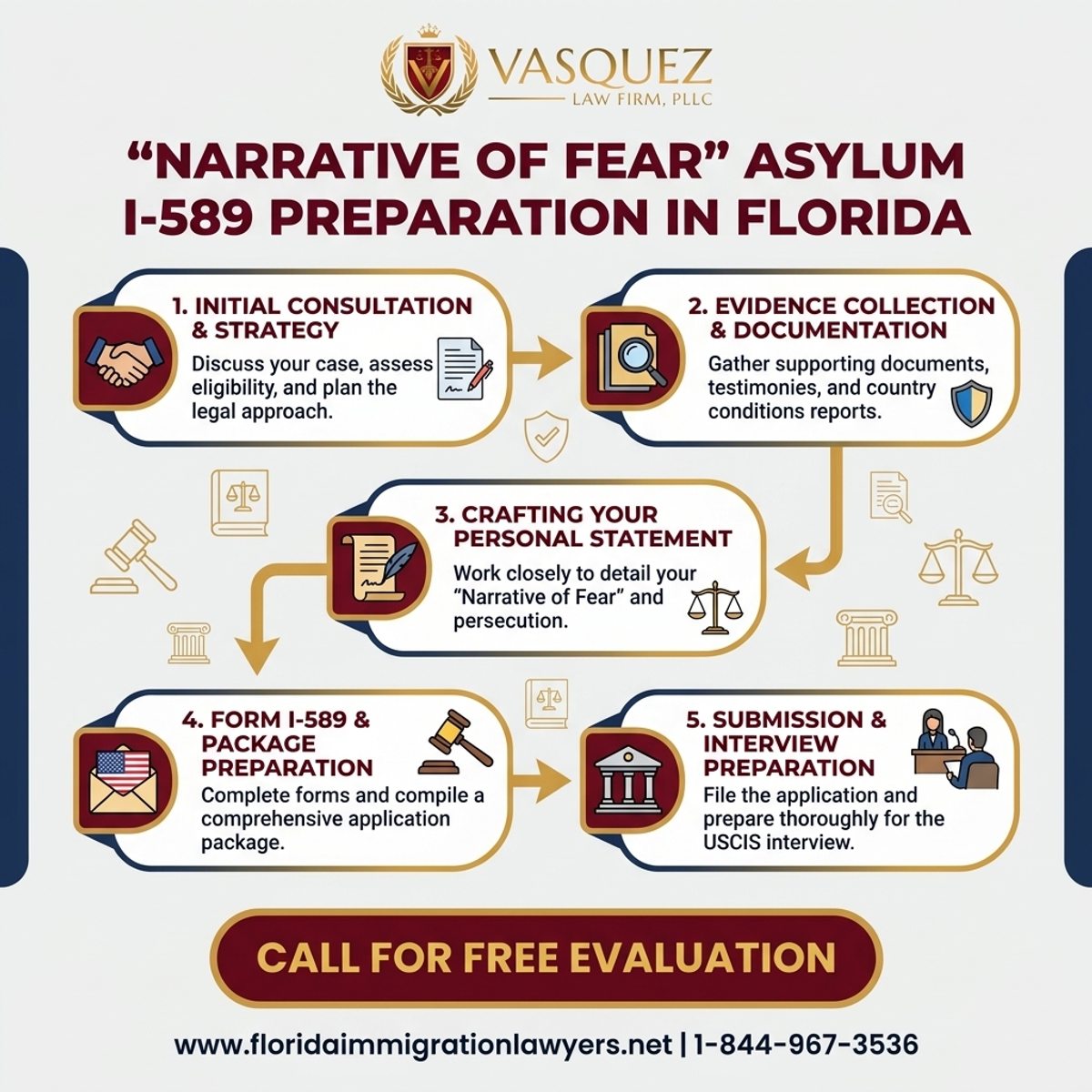
Step-by-Step Process — "Narrative of Fear" Asylum I-589 Preparation in Florida
Document Checklist for Asylum Interview Preparation
- Completed Form I-589
- Passport and travel documents
- Evidence of persecution (photos, news articles)
- Personal identification documents
- Witness statements and affidavits
A meticulously organized and comprehensive set of documents is a cornerstone of a successful asylum application. Each piece of evidence serves to corroborate your narrative, adding credibility and factual weight to your personal testimony. Think of your documents as the objective proof that supports your subjective fear.
Beyond the listed items, consider including expert witness statements from academics or country specialists who can attest to the conditions in your home country, or psychological evaluations that document the trauma you've experienced. If you are claiming persecution based on your membership in a particular social group, gather evidence of your affiliation with that group. For example, if you are LGBTQ+, collect evidence of your identity and any discrimination or threats you faced. Always ensure all non-English documents are accompanied by certified English translations.
Organizing your documents logically, perhaps in a binder with tabs, will not only make a good impression on the asylum officer but also allow you to quickly access specific evidence during your interview. This preparedness demonstrates your seriousness and attention to detail, which can positively influence the officer's perception of your case. Florida Immigration Lawyers can assist you in compiling and organizing this crucial documentation.
Timeline and Processing Expectations for Asylum Interviews
| Stage | Typical Timeframe | Notes |
|---|---|---|
| Submission of I-589 | 1-2 weeks | Receipt notice received |
| Biometrics Appointment | 3-5 weeks | Fingerprinting required |
| Interview Scheduling | 6-9 months | Depends on case load |
| Interview Outcome | 2-4 weeks | Notification of decision |
Understanding the timeline for asylum processing is essential for managing expectations and planning your future, though it's important to remember that these timeframes can vary significantly. The U.S. asylum system has experienced considerable backlogs, meaning actual wait times can sometimes extend beyond the typical estimates, especially for interview scheduling.
After submitting your Form I-589, you will typically receive a receipt notice within a couple of weeks. This confirms USCIS has received your application. The biometrics appointment, where your fingerprints and photograph are taken, usually follows within a month or so. This data is used for background checks. The longest wait is often for the interview scheduling, which can be influenced by the specific USCIS field office workload and current processing priorities. Some cases may be prioritized based on factors like age or recent arrival.
Once your interview is complete, the decision notification typically arrives within a few weeks. However, in complex cases or those requiring further review, the wait can be longer. It's crucial to stay informed about your case status and be prepared for potential delays. Maintaining contact with Florida Immigration Lawyers can help you monitor your application's progress and respond promptly to any USCIS requests.
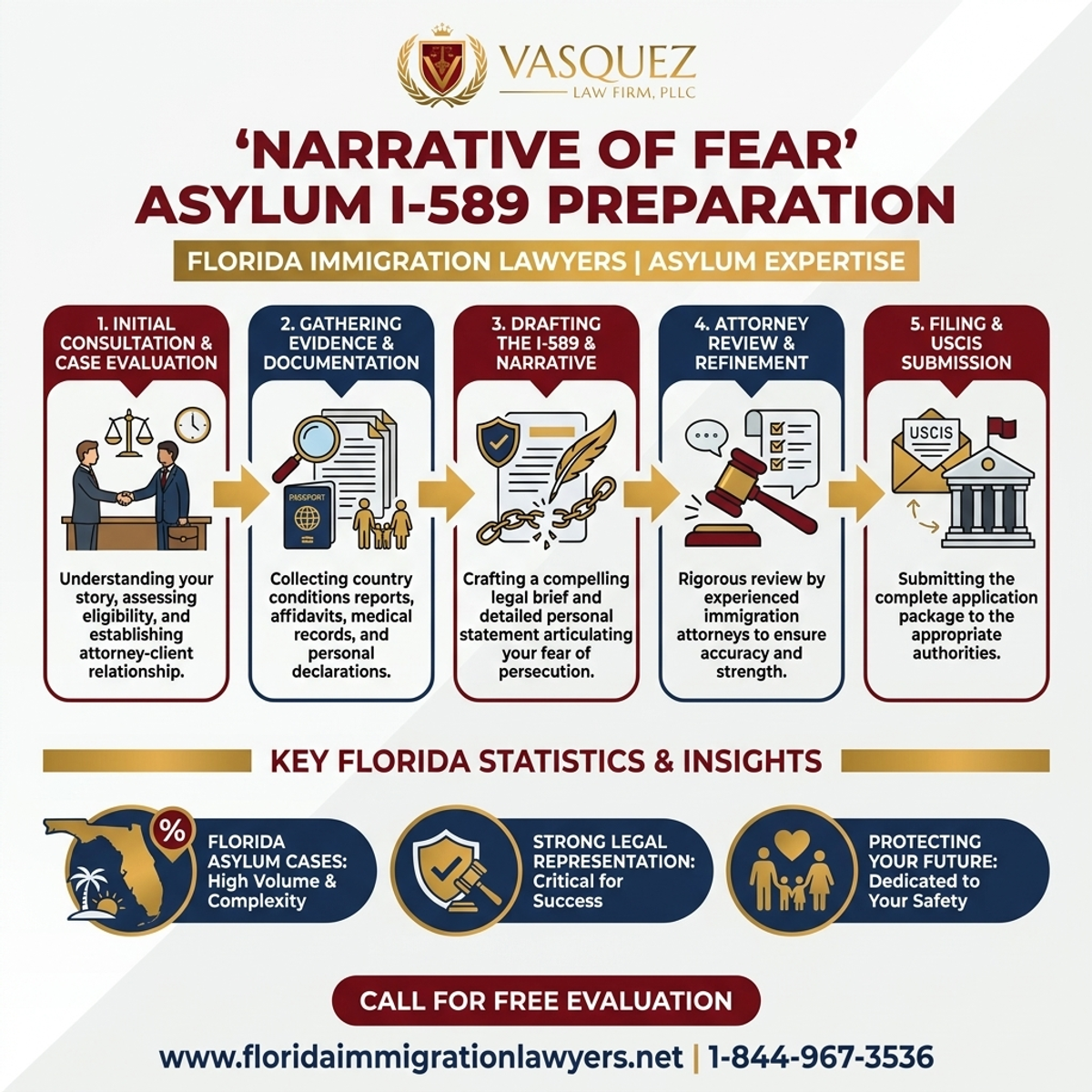
Key Statistics — "Narrative of Fear" Asylum I-589 Preparation in Florida
Cost Factors and Fee Breakdown
| Item | Typical Fee | Notes |
|---|---|---|
| Application Fee | Varies | Check USCIS website |
| Legal Fees | Varies | Depends on attorney |
| Translation Services | Varies | Necessary for non-English documents |
Navigating the asylum process also involves understanding the potential financial commitments. While the Form I-589 itself does not typically require a filing fee, other associated costs can arise, making it important to budget and plan accordingly. Being aware of these expenses upfront helps prevent unexpected financial burdens during an already stressful time.
Regarding application fees, while the I-589 is often free, you might encounter fees for other related immigration benefits or processes. For instance, if you apply for an Employment Authorization Document (EAD) while your asylum application is pending, there is a separate fee for that. Always verify the most current fee schedule on the USCIS website. Legal fees, as noted, vary significantly based on the attorney's experience, the complexity of your case, and the services provided. Many firms, including Florida Immigration Lawyers, offer free initial consultations to discuss your case and provide an estimate of costs.
Translation services are a critical, often underestimated, expense. All documents submitted to USCIS that are not in English must be accompanied by a certified English translation. This includes birth certificates, marriage licenses, police reports, and any other evidence. The cost for these services can accumulate quickly, depending on the volume and complexity of your documents. Additionally, if you require an interpreter for your interview, while USCIS provides one, having your own trusted interpreter for preparation or even during the interview (with permission) can be an added cost but may offer greater comfort and accuracy. Planning for these costs ensures all aspects of your application are professionally handled.
Common Mistakes to Avoid in Asylum Interviews
- Inconsistent Stories: Discrepancies in your narrative can lead to a denial.
- Lack of Documentation: Failing to provide supporting documents weakens your case.
- Not Preparing for Questions: Unpreparedness can lead to poor responses.
- Ignoring Legal Advice: Not consulting a lawyer can lead to errors in your application.
- Overlooking Deadlines: Missing submission deadlines can delay or deny your application.
- Failing to Update Information: Not updating changes in personal circumstances can affect your case.
- Submitting False Information: Providing inaccurate information can lead to legal consequences.
Avoiding common pitfalls is just as important as proactive preparation. The asylum interview is a high-stakes environment where even minor missteps can have significant consequences for your application. By being aware of these frequent mistakes, you can take deliberate steps to ensure your case is presented in the strongest possible light.
Many of these errors stem from a lack of understanding of the legal requirements or insufficient preparation. For example, an inconsistent story might arise not from dishonesty, but from trauma or a failure to organize thoughts chronologically. This is where the guidance of an experienced immigration attorney becomes invaluable. They can help you identify potential weaknesses in your narrative or documentation before your interview, providing an opportunity to strengthen your claim.
Remember, the goal is to present a clear, credible, and legally sound case. Taking the time to meticulously review your application, gather all supporting evidence, and practice your testimony can mitigate the risk of these common mistakes. If you have any concerns about these issues, contacting Florida Immigration Lawyers at 1-844-967-3536 for a free consultation can provide the clarity and support you need.
When to Call a Lawyer
Consider contacting a lawyer if you face complex issues such as missing documentation, changes in personal circumstances, or previous asylum denials. Legal expertise is invaluable in navigating the complexities of asylum law and ensuring that your application stands the best chance of success. Contact Florida Immigration Lawyers for expert guidance.
The decision to seek legal counsel is a critical one that can profoundly impact the outcome of your asylum case. While it's not legally mandated, having an attorney by your side significantly increases your chances of success, especially when your situation presents unique challenges. For instance, if your claim relies on a nuanced interpretation of "membership in a particular social group," or if you have a criminal record that could complicate your eligibility, an attorney can provide the necessary legal strategy.
Furthermore, if you have already been denied asylum and are considering an appeal, or if you are facing removal proceedings, legal representation becomes absolutely essential. An attorney can analyze the reasons for denial, identify grounds for appeal, and represent you in immigration court. They can also help you understand the long-term implications of your asylum application on your immigration status and future in the United States. Don't leave your future to chance; Florida Immigration Lawyers offers comprehensive support for all stages of the asylum process.
About Florida Immigration Lawyers
Florida Immigration Lawyers is a dedicated firm serving clients across Florida, including Fort Lauderdale. We specialize in immigration law, offering services for asylum, deportation defense, and family immigration. Our experienced attorneys provide personalized assistance to ensure the best possible outcomes for our clients. Call us at 1-844-967-3536 or visit our website for a free consultation.
Sources and References
- U.S. Citizenship and Immigration Services (USCIS)
- Executive Office for Immigration Review (EOIR)
- 8 U.S.C. Chapter 12 - Immigration and Nationality Act
Related services: asylum application process, refugee status and resettlement, withholding of removal.
This article provides general legal information and is not intended as legal advice. Every case is unique, and outcomes depend on specific facts and circumstances. Contact an attorney for advice about your particular situation.
Final Thoughts
Preparing for your asylum interview in Florida requires careful planning and detailed documentation. Ensure your "narrative of fear" is clear and consistent. For personalized support, contact Florida Immigration Lawyers at 1-844-967-3536 for a free consultation. Se Habla Español - Estamos aquí para ayudarle.
The journey to asylum can be long and challenging, but with thorough preparation and the right legal guidance, you can significantly enhance your chances of a positive outcome. Your story is your most powerful tool, and presenting it effectively is key to securing safety and a new beginning in the United States. Remember to be honest, consistent, and resilient throughout the process.
We understand the immense pressure you face, and our team is dedicated to providing compassionate and expert legal assistance. Let Florida Immigration Lawyers be your trusted partner in navigating the complexities of asylum law. Reach out today to discuss your case and take the first step towards a secure future.
If you need legal assistance, learn more about asylum case consultation, or call us at 1-844-967-3536 for a free consultation.
Do Not Navigate This Process Alone
Our experienced immigration attorneys are ready to fight for you. Get a free, confidential consultation today.
Se Habla Español
Or leave your details and we’ll call you:
Free Evaluation in 24 Hours
Or talk to us right now

AI voice assistant — available 24/7
FreeFrequently Asked Questions

William J. Vásquez
Founding Attorney · Vasquez Law Firm
U.S. Air Force veteran and immigration attorney with years of hands-on U.S. immigration experience. J.D., NCCU School of Law. AILA member. Admitted to the 4th, 5th, and 11th Circuit Courts.
Available 24/7 - Free Evaluations
Reviewed for legal accuracy by William J. Vásquez
Licensed in North Carolina; U.S. immigration is federal practice.
Related Legal Services
Our Florida immigration attorneys can help you with deportation defense, citizenship and naturalization and family immigration services. Call today at 1-844-967-3536 for a free consultation.
Related Links
Related Topics
Free Legal Consultation
Discuss your case with our experienced attorneys. We're available 24/7.
Se Habla Español - Estamos aquí para ayudarle.
Related Articles
Military Naturalization Expedited in Florida Bases
Explore military naturalization options for families at Florida bases, including parole in place benefits in Miami. Learn how to expedite your application with expert guidance from Florida Immigration Lawyers.
Immigration Lawyer Orlando Free Consultation 2026
Explore the cost of an immigration lawyer in Orlando in 2026. Understand attorney fees, what to expect during a consultation, and how to make the best choice for your immigration needs.
Immigration Lawyer Orlando Free Consultation Solutions
Facing immigration backlogs in Florida? Discover solutions and learn how immigration lawyers in Orlando can assist you through free consultations. Understand USCIS processing times and explore legal options.
Why is Form N-600 Taking So Long in Florida?
Form N-600 delays in Florida can be caused by incomplete applications, background checks, and USCIS backlogs. Learn how to address these issues and when to seek legal help.