Adjustment of Status Florida Guide 2026: Your Green Card Path
Navigating the adjustment of status process in Florida can be complex, but it's a direct path to obtaining your green card without leaving the U.S. This comprehensive 2026 guide from Florida Immigration Lawyers details the Form I-485 application, eligibility requirements, essential documents, and what to expect regarding processing times and fees. Learn how to avoid common mistakes and understand when legal counsel is crucial for your success. We serve individuals and families throughout Florida, including Hollywood, offering expert guidance and support.
Adjustment of Status (AOS) allows eligible individuals already present in the U.S. to obtain a green card without leaving the country. This process typically involves filing Form I-485 after an immigrant petition has been approved or concurrently. It requires specific documentation, a medical exam, and often an interview. Understanding the detailed steps is crucial for a successful outcome.
- Eligibility: You must meet specific criteria based on your immigration category.
- Form I-485: This is the primary application for adjusting your status.
- Required Documents: Gather all personal, financial, and immigration-related paperwork.
- Timelines: Processing times vary significantly based on your case and USCIS workload.
- Legal Help: Consulting an experienced immigration attorney is highly recommended.
Adjustment of Status Florida Guide 2026: Your Green Card Path
Are you living in Florida, perhaps in the vibrant community of Hollywood, and dreaming of making the United States your permanent home? The path to a green card can seem complex, but for many, adjustment of status offers a direct route without needing to leave the country. This process is a vital opportunity for individuals and families across the Sunshine State.
At Florida Immigration Lawyers, we understand the aspirations and challenges faced by immigrants. This comprehensive guide will demystify the **adjustment of status** process, focusing on what you need to know to successfully navigate Form I-485 and secure your green card in Florida. For personalized guidance tailored to your unique situation, call Florida Immigration Lawyers at 1-844-967-3536 for a free consultation.
Understanding Adjustment of Status in Florida
Adjustment of status is a legal procedure that allows an eligible noncitizen to apply for lawful permanent resident status (a green card) while remaining in the United States. This means you can transition from a temporary visa holder or parolee to a permanent resident without having to go through consular processing abroad.
The primary benefit of adjusting status is convenience and continuity. You can generally remain in the U.S. with your family and continue working, often with interim employment authorization and travel permission, while your application is pending. This offers significant peace of mind for many in Florida, a state with a large and diverse immigrant population.
Eligibility for adjustment of status is typically based on having an approved immigrant petition (like an I-130 for family or I-140 for employment), being physically present in the U.S., and maintaining a lawful immigration status or qualifying for an exception. Understanding these initial requirements is fundamental to your success.
Florida is home to numerous USCIS field offices, including those serving the Hollywood area, Miami, Orlando, and Tampa. These offices play a crucial role in processing local applications and conducting interviews. Our firm, Florida Immigration Lawyers, is deeply familiar with the nuances of **immigration** law as it applies throughout Florida.
The Step-by-Step I-485 Application Process
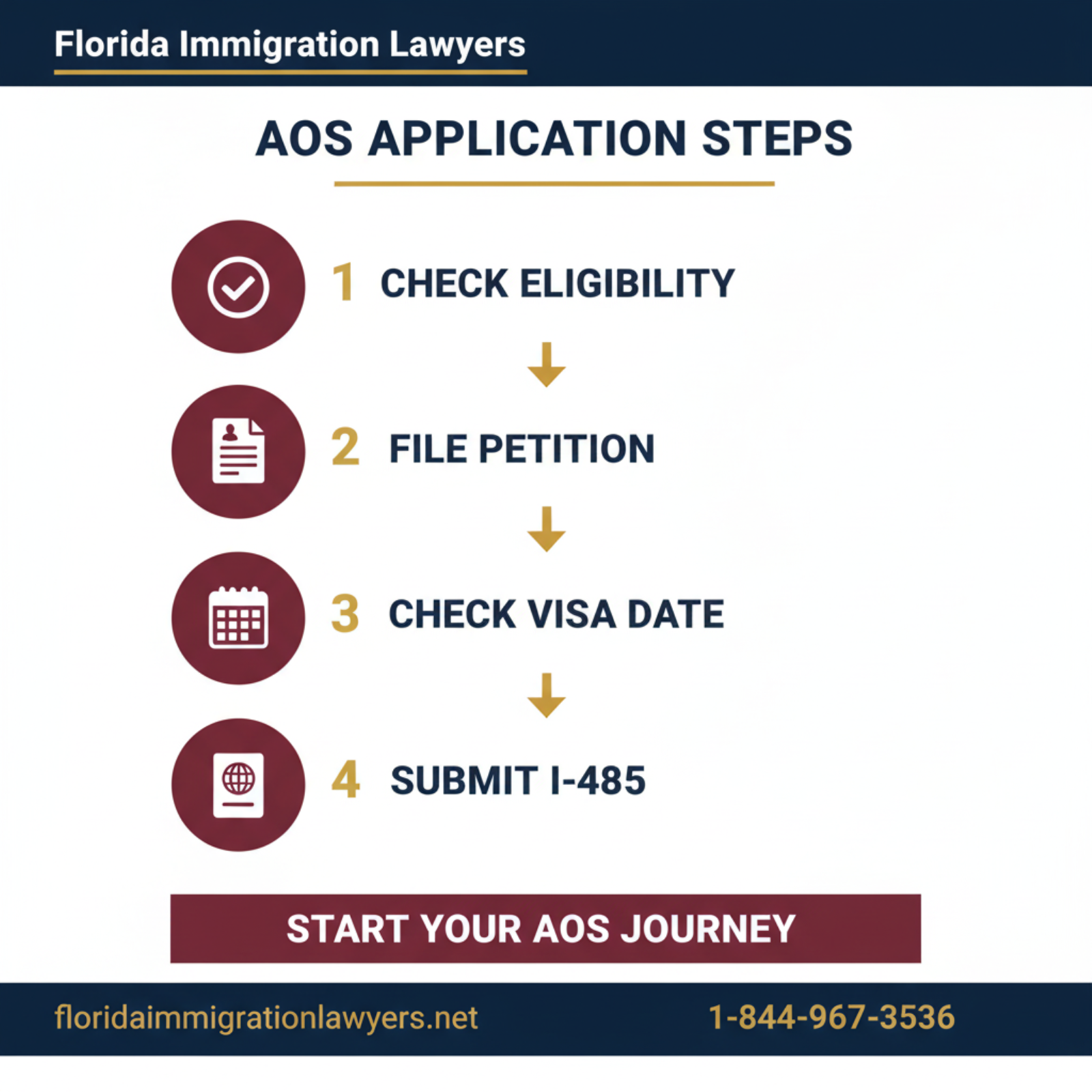
Navigating the adjustment of status process requires careful attention to detail and adherence to specific steps. Here is a general overview of what you can expect when filing Form I-485:
-
Determine Eligibility
Before anything else, you must confirm your eligibility for a green card. This typically involves a qualifying relationship (family-based) or a job offer (employment-based). Your eligibility is established through an approved immigrant petition filed on your behalf.
Factors like your entry into the U.S., any previous immigration violations, or criminal history will impact your eligibility. We can help you assess your unique circumstances.
-
File the Immigrant Petition
For most applicants, the process begins with an immigrant petition filed by a U.S. citizen or lawful permanent resident relative (Form I-130, Petition for Alien Relative) or an employer (Form I-140, Immigrant Petition for Alien Worker). This petition establishes the basis for your eligibility for an immigrant visa.
In some cases, such as for immediate relatives of U.S. citizens, you may be able to file the immigrant petition concurrently with your Form I-485 application. This is governed by sections of the Immigration and Nationality Act (INA), specifically INA Section 201-205 for immigrant visa classifications.
-
File Form I-485, Application to Register Permanent Residence or Adjust Status
Once your immigrant petition is approved, or if concurrent filing is allowed, you will prepare and submit Form I-485. This is the core application for adjustment of status. Along with Form I-485, you will typically file several supporting forms.
These often include Form I-765 (Application for Employment Authorization) to get a work permit, and Form I-131 (Application for Travel Document) for advance parole, which allows you to travel internationally while your adjustment of status application is pending. Filing these concurrently can provide you with essential benefits during the processing period.
Our team at Florida Immigration Lawyers can assist with preparing and filing all necessary forms accurately. We help ensure your application aligns with 8 CFR Part 245, which outlines the regulations for adjustment of status.
-
Attend Biometrics Appointment
After filing your application, you will receive a notice to attend a biometrics appointment at a local USCIS Application Support Center (ASC). During this appointment, your fingerprints, photograph, and signature will be collected. This information is used for background checks and identity verification.
It is crucial to attend this appointment as scheduled. Missing it without proper rescheduling can lead to delays or even denial of your application.
-
Attend the Interview
Most **adjustment of status** applicants are required to attend an interview with a USCIS officer. This interview typically takes place at a USCIS field office, such as those in Miami, Orlando, Hialeah, or Tampa, depending on your residency in Florida.
During the interview, the officer will review your application, ask questions about your eligibility, and verify the information you provided. For **adjustment of status after marriage**, both spouses are usually required to attend, and the interview focuses on the legitimacy of the marriage. Our attorneys can prepare you thoroughly for this critical step.
-
Receive a Decision
Following your interview, USCIS will make a decision on your application. If approved, you will receive a welcome notice, and your green card will be mailed to you shortly thereafter. If USCIS requires more information, they may issue a Request for Evidence (RFE) or a Notice of Intent to Deny (NOID).
Receiving an RFE or NOID means your case is still pending but requires immediate attention and a strong response. Our firm is adept at responding to such notices to protect your application.
Essential Documents for Your Adjustment of Status Application
A complete and well-organized submission of supporting documents is paramount for a successful adjustment of status application. Missing or incorrect documents are common reasons for delays or denials. Here is a general checklist:
-
Personal and Biographical Documents
- Birth certificate (original and translation, if applicable).
- Passport(s) and visa(s) from your home country.
- Marriage certificate (if applicable, especially for adjustment of status after marriage).
- Two passport-style photographs.
- Copy of your I-94 Arrival/Departure Record.
-
Immigration Forms and Petitions
- Approved Form I-130 or I-140 (if filed separately).
- Completed Form I-485, Application to Register Permanent Residence or Adjust Status.
- Form I-765, Application for Employment Authorization (optional, but recommended).
- Form I-131, Application for Travel Document (optional, but recommended).
- Form G-325A, Biographic Information (if required by your specific application type).
-
Financial Evidence
- Form I-864, Affidavit of Support, from your petitioner/sponsor. This form confirms that you will not become a public charge. It is a legally binding contract under 8 U.S.C. § 1183a.
- Supporting documents for Form I-864, such as federal income tax returns, W-2s, and employment verification letters for the sponsor.
Step-by-Step Process Guide -
Medical Examination
- Form I-693, Report of Medical Examination and Vaccination Record, completed by a USCIS-approved civil surgeon. This form must be submitted in a sealed envelope.
- It is crucial that this examination is performed by a doctor authorized by USCIS. You can find a list of approved civil surgeons on the USCIS website.
-
Police Clearances and Background Information
- Certified copies of court and police records for any arrests or convictions, regardless of how minor.
- Evidence of any prior immigration proceedings or violations.
I-485 Processing Times and Expectations in Florida
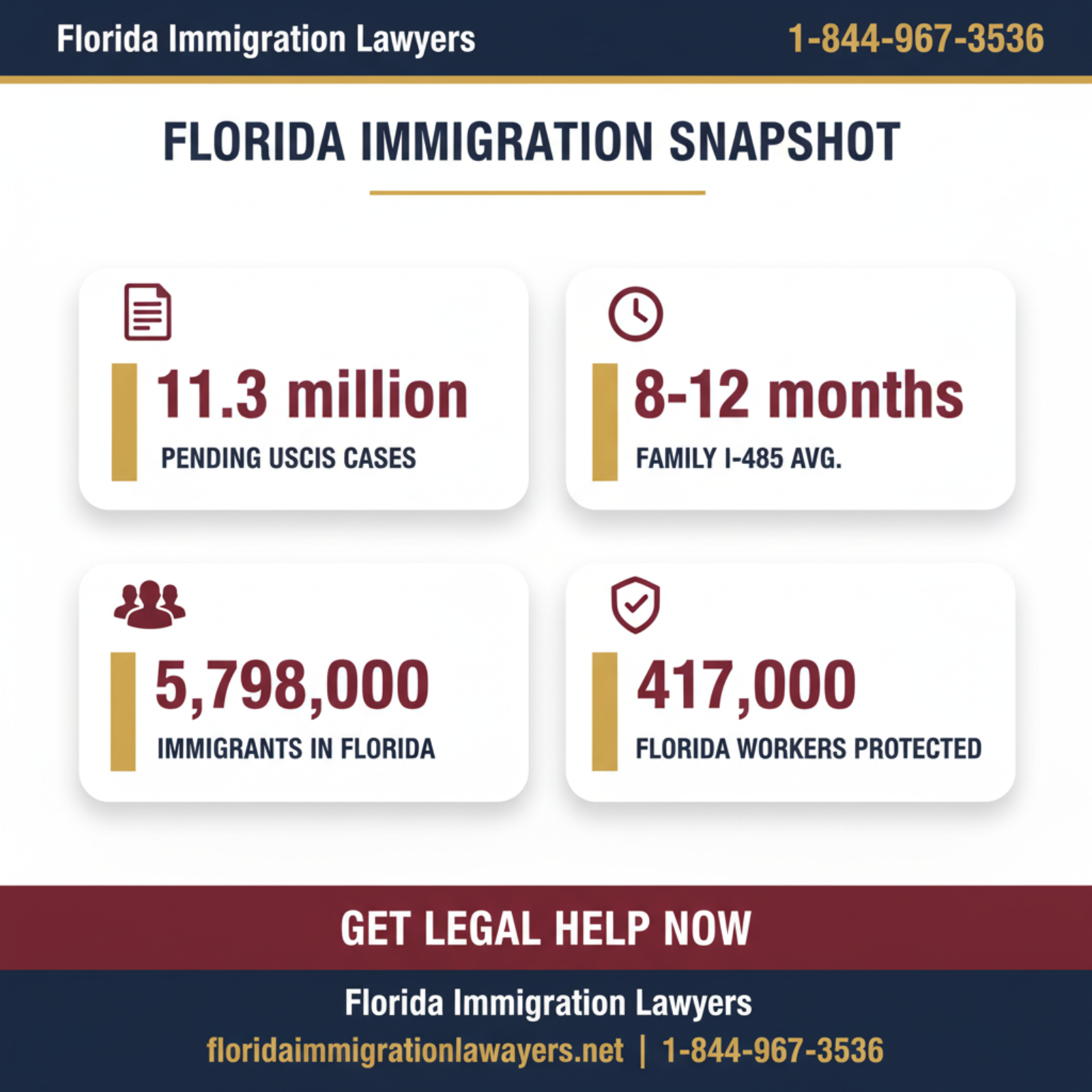
The adjustment of status processing time can vary significantly. It is one of the most common questions we receive from clients in Hollywood and across Florida. Several factors influence how long it takes for USCIS to process your Form I-485 application.
These factors include the specific USCIS field office handling your case (e.g., Miami, Orlando), the particular immigrant visa category you are applying under, the completeness and accuracy of your application, and the current USCIS workload. Generally, processing can range from several months to over a year, or even longer in complex cases.
You can check the estimated processing times for your specific USCIS field office and form type on the official USCIS website. Remember, these are estimates, and individual cases may take more or less time. Staying informed but patient is key.
During the waiting period, your work authorization (EAD) and advance parole (travel document) can provide crucial flexibility. Ensuring these are renewed in a timely manner is part of managing your application effectively.
Understanding the Costs: Adjustment of Status Fees
Applying for adjustment of status involves several fees that applicants must consider. These fees are set by USCIS and are subject to change, so it is always important to verify the most current amounts on the official USCIS website before filing. Do not send incorrect fees, as this will cause delays.
- Form I-485 Filing Fee: This is the primary fee for the adjustment of status application itself.
- Biometrics Services Fee: A separate fee is typically required for the collection of your fingerprints and photograph.
- Medical Examination Fee: This fee is paid directly to the civil surgeon who conducts your Form I-693 medical exam. This cost can vary by provider.
- Attorney Fees: While not a government fee, legal fees for an experienced immigration attorney are a worthwhile investment. They ensure your application is accurate, complete, and strategically presented, significantly increasing your chances of success.
Always consult the USCIS website for the latest fee schedule. Filing an application with incorrect fees is a common mistake that leads to delays or rejection of your submission.
Do not navigate this complex adjustment of status process alone. Contact Florida Immigration Lawyers today to ensure your application is complete and accurate, helping you avoid costly delays and potential denials. We are committed to guiding you every step of the way.
Common Mistakes to Avoid During Adjustment of Status
The adjustment of status process is intricate, and even small errors can lead to significant setbacks. Being aware of common pitfalls can help you avoid them:
-
Failing to Disclose All Arrests or Immigration Violations: Any past legal issues or immigration infractions, no matter how minor or old, must be fully disclosed. Hiding information can lead to allegations of misrepresentation, which can result in permanent bars from immigration benefits and even deportation. Transparency is always the best policy.
-
Submitting Incomplete or Incorrect Forms: This is one of the most frequent errors. Missing signatures, unanswered questions, or outdated forms will lead to your application being rejected or receiving a Request for Evidence (RFE). Ensure every field is addressed and use the latest versions of forms from the USCIS website.
-
Missing Deadlines: Immigration processes are time-sensitive. Failing to respond to an RFE or interview notice by the deadline can lead to denial of your application. Keep track of all correspondence and deadlines diligently.
-
Not Attending Biometrics or Interviews: Your biometrics appointment and interview are mandatory. Missing them without proper rescheduling can be interpreted as abandonment of your application, leading to denial. Always prioritize these appointments.
-
Traveling Internationally Without Proper Advance Parole: If you leave the U.S. while your I-485 is pending without an approved advance parole document, USCIS may consider your adjustment of status application abandoned. Always consult with an attorney before making travel plans.
-
Lying or Misrepresenting Facts: Providing false information or misrepresenting facts on your application can have severe consequences, including accusations of fraud and permanent inadmissibility to the U.S. Integrity is crucial throughout the process.
-
Failing the Medical Exam or Not Submitting Form I-693 Correctly: The medical examination is a critical component. Ensure it is conducted by a USCIS-approved civil surgeon, and the sealed envelope is submitted correctly. Errors here can cause significant delays.
-
Not Updating USCIS of Address Changes: If you move, you must notify USCIS of your new address promptly. Failure to do so can result in missed notices, interview appointments, or RFEs, potentially leading to a denial without your knowledge.
-
Which gets approved first, I-130 or I-485? Typically, the Form I-130 (immigrant petition) must be approved before or concurrently filed with the Form I-485. For immediate relatives of U.S. citizens, concurrent filing is often possible. For other categories, the I-130 must generally be approved first to establish a visa number's availability. This sequence is vital for a smooth adjustment of status.
-
What are common I-485 mistakes? As highlighted above, common mistakes include incomplete forms, failure to disclose information, missing deadlines, and improper travel. These errors can significantly jeopardize your green card application.
When to Call a Florida Immigration Lawyer
While this guide provides general information, every immigration case is unique. There are specific scenarios where the expertise of a Florida immigration lawyer becomes invaluable. Florida Immigration Lawyers are here to provide the dedicated support you need.
You should consider contacting us if you:
- Have a complex immigration history, including prior visa overstays, deportations, or criminal records that might affect your eligibility. Navigating deportation defense and inadmissibility waivers requires expert legal counsel.
- Are unsure about your eligibility for adjustment of status or which forms apply to your situation.
- Received a Request for Evidence (RFE) or a Notice of Intent to Deny (NOID) from USCIS. These require a timely and comprehensive legal response.
- Are applying for adjustment of status after marriage and need to ensure your marriage is proven legitimate to USCIS.
- Need assistance gathering complex documentation or understanding financial sponsorship requirements.
- Wish to ensure your application is meticulously prepared, accurately filed, and strategically presented to minimize delays and maximize your chances of securing a green card.
Our experienced attorneys at Florida Immigration Lawyers specialize in all aspects of immigration law, including family-based immigration and pathways to citizenship. We serve clients throughout Florida, from Hollywood to Miami, Orlando, and across the state. Do not leave your future to chance.
Frequently Asked Questions About Adjustment of Status
Here are answers to some of the most common questions regarding the adjustment of status process:
-
What are the steps for adjustment of status? The process generally involves determining eligibility, filing an immigrant petition (if applicable), submitting Form I-485, attending biometrics, undergoing an interview, and finally receiving a decision. Each step requires careful attention and adherence to USCIS guidelines.
-
How long is adjustment of status taking right now? The **adjustment of status processing time** varies widely based on USCIS workload, the specific field office, and your individual case circumstances. While it can range from several months to over a year, you should always check the official USCIS processing times page for the most current estimates. Factors like RFEs can also extend the timeline.
About Florida Immigration Lawyers
Florida Immigration Lawyers is a leading immigration law firm dedicated to serving individuals and families across all of Florida. Our team of compassionate and experienced attorneys understands the complexities of U.S. immigration law and is committed to providing exceptional legal representation.
We specialize in a broad range of immigration services, including family-based immigration, business immigration, asylum, deportation defense, and naturalization. Our mission is to help you achieve your American dream, offering clear guidance and strong advocacy every step of the way.
When you choose Florida Immigration Lawyers, you gain a partner committed to your success. We offer personalized attention, strategic legal advice, and a deep understanding of Florida's immigration landscape. Our firm is available 24/7, offering free consultations to discuss your case.
Contact us today at 1-844-967-3536 or visit our website at https://www.floridaimmigrationlawyers.net to learn how we can assist you. We serve all Florida communities, including Hollywood, Miami, Orlando, Tampa, and Jacksonville.
Sources and References
- U.S. Citizenship and Immigration Services (USCIS)
- Executive Office for Immigration Review (EOIR) - U.S. Department of Justice
- 8 U.S.C. Chapter 12 - Immigration and Nationality Act (INA)
- INA Section 201-205 - Immigrant Visa Classifications
- INA Section 245 - Adjustment of Status of Nonimmigrant to That of Person Admitted for Permanent Residence
- 8 CFR Part 245 - Adjustment of Status to That of Person Admitted for Permanent Residence
- 8 U.S.C. § 1183a - Requirements for Sponsor's Affidavit of Support
This article provides general legal information and is not intended as legal advice. Every case is unique, and outcomes depend on specific facts and circumstances. Contact an attorney for advice about your particular situation. Immigration laws are subject to change, and this content reflects information current as of its publication date.
Ready to take the next step towards your green card in Florida? Don't leave your future to chance. Contact Florida Immigration Lawyers today for a free, confidential consultation. Call us at 1-844-967-3536. Se Habla Español - Estamos aquí para ayudarle.
Need help with Immigration?
Our Florida immigration attorneys offer free consultations. Call today or schedule online.
Frequently Asked Questions
Florida Immigration Lawyers
Legal Team
Our experienced attorneys at Florida Immigration Lawyers have been serving clients across Florida for over 20 years. We specialize in immigration, personal injury, criminal defense, workers compensation, and family law.