EXCELLENCE SINCE 1995•60+ YEARS COLLECTIVE EXPERIENCE•SERVING ALL FLORIDA & NATIONWIDE•YO PELEO™ - WE FIGHT•ORLANDO OFFICE•24/7 AVAILABILITY•SE HABLA ESPAÑOL•
EXCELLENCE SINCE 1995•60+ YEARS COLLECTIVE EXPERIENCE•SERVING ALL FLORIDA & NATIONWIDE•YO PELEO™ - WE FIGHT•ORLANDO OFFICE•24/7 AVAILABILITY•SE HABLA ESPAÑOL•
Family Petition Immigration Lawyer Miami: Your 2026 Guide
Navigating the family petition process in Florida can be complex, but with the right guidance, family reunification is possible. This guide from Florida Immigration Lawyers covers the I-130 petition, eligibility, required documents, timelines, and costs. Learn about the distinctions between Immediate Relatives and Family Preference Categories, and discover common mistakes to avoid. Whether you are in Miami, Naples, or elsewhere in Florida, understanding these steps is crucial. Our expert immigration lawyers are ready to assist you through every stage, ensuring accurate filing and compliance with USCIS regulations for your family visa.
Vasquez Law FirmPublished on March 12, 2026
0 views
A family petition in Miami or anywhere in Florida is the initial step for U.S. citizens and lawful permanent residents to help eligible relatives immigrate to the United States. This process, primarily involving Form I-130, Petition for Alien Relative, is complex and requires meticulous attention to detail. An experienced family petition immigration lawyer Miami can provide essential guidance, ensuring compliance with USCIS regulations and optimizing your chances for a successful outcome in 2026.
Eligibility: Only U.S. citizens and lawful permanent residents can file a family petition.
Form I-130: This is the foundational document for establishing the qualifying family relationship.
Timelines: Processing times vary significantly based on the relationship category and visa availability.
Legal Help: A qualified family petition immigration lawyer Miami is crucial for navigating complexities.
The dream of reuniting with loved ones in the United States is a powerful motivator for many families in Florida. However, navigating the intricate U.S. immigration system to bring family members to Miami, Naples, or any part of the Sunshine State can feel overwhelming. From understanding visa categories to preparing complex documentation, the process requires careful attention to detail and a thorough understanding of immigration law.
This comprehensive guide, brought to you by Florida Immigration Lawyers, aims to demystify the family petition process for residents of Florida. We will cover everything from eligibility requirements and the step-by-step application process to common pitfalls and when expert legal assistance is essential. Our goal is to empower you with the knowledge needed for a successful family reunification in 2026.
Do not attempt to navigate this critical journey alone. For personalized guidance and to discuss your specific situation, call Florida Immigration Lawyers at 1-844-967-3536 for a free consultation. Our dedicated team is ready to assist you.
Understanding the Family Petition Process in Florida
A family petition is the cornerstone of family-based immigration to the United States. It is the formal request filed by an eligible U.S. citizen or lawful permanent resident (LPR) to establish a qualifying relationship with an eligible foreign national relative. This initial step, typically involving Form I-130, Petition for Alien Relative, is crucial for beginning the immigration journey.
The U.S. immigration system categorizes family relationships into two main groups: Immediate Relatives and Family Preference Categories. Understanding these distinctions is vital as they significantly impact processing times and visa availability. Immediate Relatives, as defined by the Immigration and Nationality Act (INA) Section 201(b), include spouses of U.S. citizens, unmarried children under 21 of U.S. citizens, and parents of U.S. citizens (if the citizen is 21 or older). These categories do not have numerical limits on visas, meaning they generally experience faster processing.
Family Preference Categories, outlined in INA Section 203(a), are subject to annual numerical limits, leading to potential waiting lists based on a priority date. These categories include unmarried sons and daughters (21 or older) of U.S. citizens (F1), spouses and children of LPRs (F2A), unmarried sons and daughters (21 or older) of LPRs (F2B), married sons and daughters of U.S. citizens (F3), and brothers and sisters of U.S. citizens (F4). For families in Florida, particularly in diverse areas like Miami and Naples, these distinctions are critical for managing expectations.
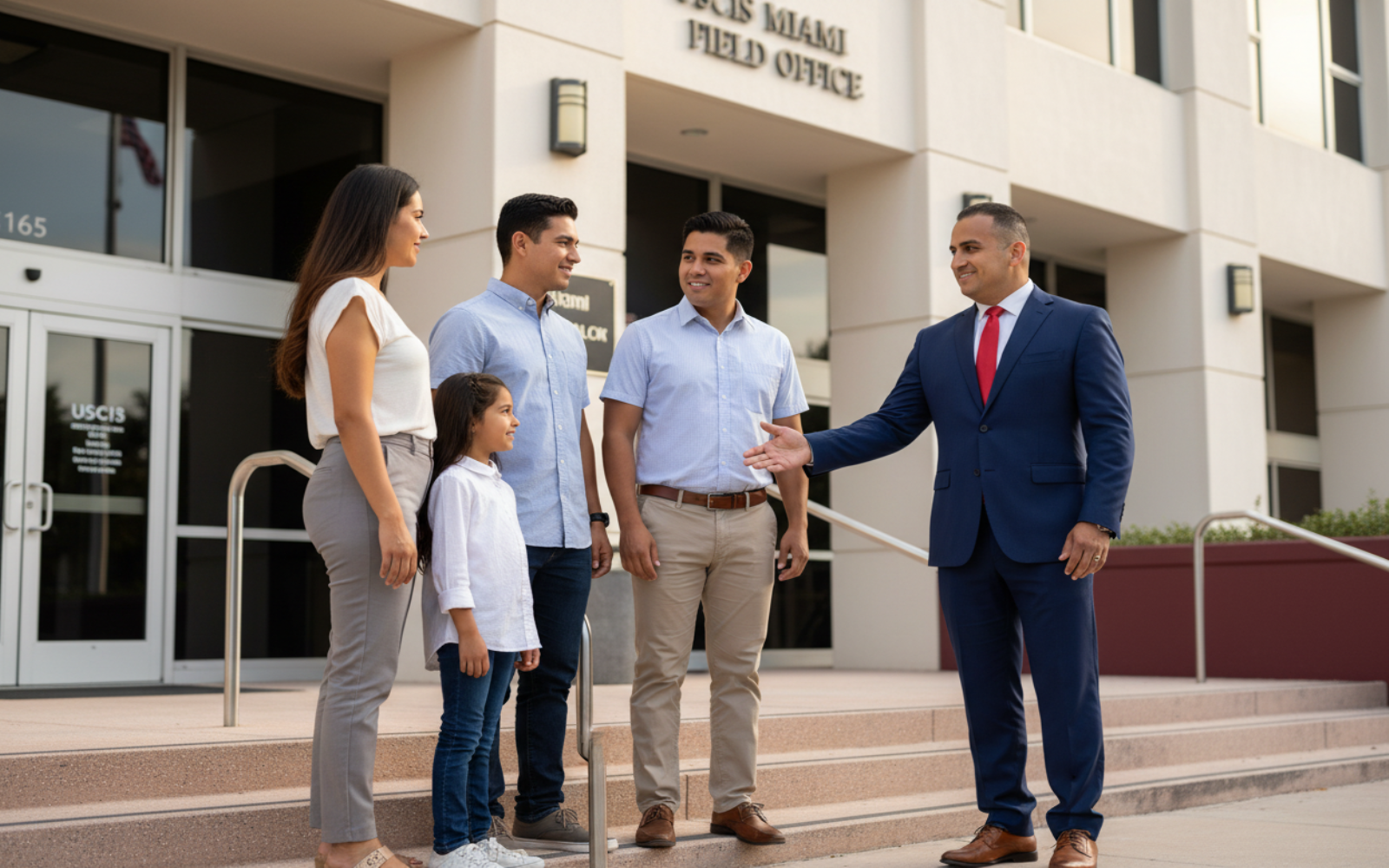
Featured: Family Petition Immigration Lawyer Miami: Your 2026 Guide
The filing of an I-130 family petition in Florida requires precise documentation and adherence to USCIS guidelines. Errors or omissions can lead to delays, requests for evidence (RFEs), or even denial. This is where the expertise of a family petition immigration lawyer Miami becomes invaluable. Our attorneys at Florida Immigration Lawyers understand the nuances of these regulations and can help you avoid common pitfalls.
Florida's vibrant immigrant communities, especially in South Florida, mean that family reunification is a constant priority. Whether you are in Miami, Orlando, Tampa, or Naples, understanding this foundational process is your first step towards bringing your family together. A dedicated immigration lawyer Miami can provide the clarity and support needed to navigate this complex legal landscape effectively.
Navigating the I-130 Family Petition Process in 2026
The process of filing a family petition can be complex, but breaking it down into manageable steps can help. Here is a detailed guide to the I-130 family petition process, relevant for applicants in Florida in 2026.
Step 1: Determine Eligibility and Gather Initial Information.
Before filing, confirm that you, the petitioner, are either a U.S. citizen or a lawful permanent resident. Identify your relationship to the beneficiary (the relative you wish to bring to the U.S.) and ensure it falls within an eligible category. This initial assessment is crucial for understanding the path ahead and whether you qualify for an immediate relative or family preference visa. Your family petition immigration lawyer Miami can help confirm eligibility.
Step 2: File Form I-130, Petition for Alien Relative.
The Form I-130 is the official document used to establish the family relationship. You must accurately complete this form, providing detailed information about yourself (the petitioner) and your relative (the beneficiary). The form, along with the required filing fee, must be submitted to the appropriate USCIS Lockbox facility or online, if eligible. Ensure all questions are answered truthfully and completely to avoid delays. For residents of Florida, USCIS often directs filings to specific service centers.
Step 3: USCIS Processing and Receipt Notice.
Once USCIS receives your I-130 petition, you will receive a Form I-797C, Notice of Action, confirming receipt. This notice will include your case number and priority date (if applicable). USCIS will then review your petition. During this stage, you may receive a Request for Evidence (RFE) if they need more information or clarification. Responding promptly and thoroughly to RFEs is critical. USCIS field offices in Florida, such as those in Miami, Orlando, and Tampa, handle follow-up inquiries and interviews.
Step 4: Visa Bulletin and Priority Dates (for Preference Categories).
If your relative falls into a family preference category, their immigration journey will be subject to visa availability as indicated by the monthly Visa Bulletin, published by the U.S. Department of State (travel.state.gov). Your relative's priority date must become current before they can proceed. Immediate relatives are exempt from this waiting period. Understanding the Visa Bulletin is complex, and a family petition immigration lawyer Miami can help interpret it for your specific case.
Step 5: Adjustment of Status (AOS) or Consular Processing.
Once the I-130 is approved and a visa is available (if applicable), your relative will either adjust their status or undergo consular processing. Adjustment of Status applies if the relative is already in the U.S. and eligible to apply for a green card without leaving. This involves filing Form I-485, Application to Register Permanent Residence or Adjust Status, with USCIS. The USCIS Miami Field Office is a common location for such interviews for South Florida residents. Consular Processing is for relatives residing outside the U.S. or those ineligible for AOS. Their case is transferred to the National Visa Center (NVC), which then coordinates with a U.S. embassy or consulate in their home country for an interview. This is a common path for many seeking a family visa.
Step 6: Interview and Decision.
Both AOS and consular processing typically conclude with an interview. During this interview, an immigration officer will verify the information provided in your petition and application, as well as the authenticity of your relationship. For AOS cases in Florida, interviews are often held at local USCIS field offices. For consular processing, the interview takes place at a U.S. embassy or consulate abroad. Thorough preparation for this interview is essential, and an immigration lawyer Miami can provide invaluable assistance.
Step 7: Green Card Issuance.
If the interview is successful and all requirements are met, the beneficiary will be granted lawful permanent resident status. For AOS cases, the green card will be mailed to the address provided. For consular processing, the beneficiary will receive an immigrant visa stamp in their passport, allowing them to enter the U.S. as a lawful permanent resident, and the physical green card will be mailed shortly after their arrival. This culminates the family petition process.
Essential Documents for Your Family Petition
Preparing a complete and accurate set of supporting documents is paramount for a successful family petition. Missing or incorrect documentation is a leading cause of delays and RFEs. Here is a general checklist of documents typically required for an I-130 petition and subsequent steps:
Proof of U.S. Citizenship or Lawful Permanent Resident Status: This includes a copy of your birth certificate, naturalization certificate, passport, or green card.
Proof of Qualifying Relationship:
For spouses: Marriage certificate, joint financial documents (bank statements, tax returns), joint leases/mortgages, birth certificates of children born to the marriage, photos, affidavits from friends/family.
For children: Child's birth certificate showing the petitioner as a parent, marriage certificate of parents (if applicable).
For parents: Petitioner's birth certificate showing the beneficiary as a parent.
For siblings: Birth certificates of both petitioner and beneficiary, showing at least one common parent, and parents' marriage certificate if applicable.
Proof of Name Changes: If you or your relative have legally changed names (e.g., marriage, divorce, court order), provide documentation.
Passport-style Photos: For both the petitioner and beneficiary, as required by USCIS.
Form I-864, Affidavit of Support: This is a legally binding document where the petitioner agrees to financially support the immigrant. It requires proof of income and assets.
Medical Examination Report: Required for adjustment of status applicants (Form I-693) and for consular processing applicants, completed by a USCIS-approved civil surgeon.
Police Clearances: Often required for consular processing from any country where the beneficiary has lived for a certain period.
Certified Translations: Any document not in English must be accompanied by a certified English translation.
Organizing these documents can be daunting. A skilled family petition immigration lawyer Miami can help you compile, review, and organize all necessary paperwork, ensuring everything is submitted correctly and efficiently. This meticulous approach significantly improves your chances of a smooth process for your family visa.
Family Petition Timelines and Current Expectations for Florida Applicants
One of the most common questions clients ask is, "How long will it take?" The truth is, family petition timelines vary significantly, influenced by several factors. These include the specific relationship category, the volume of petitions being processed by USCIS, and the availability of visas in the preference categories.
For Immediate Relatives (spouses, unmarried children under 21, and parents of U.S. citizens), the process is generally faster because there are no annual visa limits. Once the I-130 is approved, and if the beneficiary is eligible for adjustment of status, the green card application (I-485) can often be filed concurrently or soon after. Typical processing for these cases, from I-130 filing to green card, can range from 10-24 months, though this is subject to change. For consular processing, the timeline also depends on the efficiency of the NVC and the specific U.S. consulate abroad.
For Family Preference Categories, the timeline is considerably longer due to numerical limitations and backlogs. After I-130 approval, beneficiaries must wait for their priority date to become current on the Visa Bulletin. This wait can span several years, or even decades, depending on the category and the country of origin. For example, some F4 (brothers and sisters of U.S. citizens) categories for certain countries have historically had very long waits.
USCIS processing times for Form I-130 can be checked on the official USCIS website (uscis.gov/processing-times). These times are estimates and can fluctuate. Factors like requests for evidence (RFEs), interview backlogs at USCIS field offices in Florida (e.g., Miami, Orlando), and even global events can impact the overall timeline. A knowledgeable immigration lawyer Miami stays updated on these trends and can provide more realistic expectations based on current data for your specific family visa application.
Understanding the Costs of a Family Petition and Immigration Fees
The financial aspect of a family petition is an important consideration for many families in Florida. There are various fees associated with the immigration process, which can add up. It is crucial to budget for these expenses to avoid unexpected financial burdens that could delay your case. Please note that filing fees are subject to change, and specific amounts should always be verified on the official USCIS website.
Key fees typically include:
Form I-130, Petition for Alien Relative: The initial filing fee for the family petition itself.
Form I-485, Application to Register Permanent Residence or Adjust Status: If your relative is adjusting status within the U.S., this fee is required. It often includes the biometrics fee.
Biometrics Services Fee: For fingerprinting and background checks, sometimes included with I-485.
Form I-864, Affidavit of Support: There is typically no separate filing fee for this form, but it is a critical part of the financial sponsorship.
Medical Examination: The cost of the required medical exam by a USCIS-approved civil surgeon is paid directly to the doctor and can vary.
Immigrant Visa Application Processing Fee: For beneficiaries undergoing consular processing, this fee is paid to the U.S. Department of State.
USCIS Immigrant Fee: A fee paid to USCIS after an immigrant visa is issued and before the green card is produced.
Beyond government fees, you may also incur costs for document translation, obtaining certified copies of records, and travel expenses for interviews. While these costs can be substantial, the investment in a qualified family petition immigration lawyer Miami often proves to be cost-effective in the long run. Legal fees cover expert guidance, meticulous preparation, and representation, which can prevent costly errors and delays.
At Florida Immigration Lawyers, we believe in transparent fee structures and will discuss all potential costs with you upfront during your free consultation. We understand the financial pressures families face and strive to provide exceptional legal services at a reasonable cost. We help families in Naples, Miami, and across Florida navigate these financial considerations while pursuing their dream of family reunification.
Do not navigate this process alone. Contact Florida Immigration Lawyers today to ensure your family petition is handled with the expertise and care it deserves.
Common Mistakes to Avoid in Your Family Petition
Navigating the family petition process without expert guidance can lead to costly and time-consuming errors. Avoiding these common mistakes is crucial for a smooth and successful outcome:
1. Incomplete or Inaccurate Forms: Submitting forms with blank fields, incorrect information, or outdated data is a frequent error. USCIS will issue a Request for Evidence (RFE) or, worse, deny your petition, causing significant delays and additional expenses. Ensure every question is answered accurately and completely.
2. Insufficient Supporting Documentation: Failing to provide all required evidence to prove your relationship or eligibility can derail your case. This includes birth certificates, marriage licenses, financial records, and other crucial documents. Always provide clear, legible copies and certified translations where necessary.
3. Failing to Update USCIS on Address Changes: If you or your beneficiary move, you must notify USCIS immediately using Form AR-11. Failure to do so can result in missed notices, interview appointments, or RFEs, potentially leading to the denial of your petition.
4. Misunderstanding Visa Categories or Priority Dates: Many petitioners misunderstand whether their relative is an immediate relative or falls into a preference category, or misinterpret the Visa Bulletin. This leads to unrealistic expectations about processing times and can cause frustration. A family petition immigration lawyer Miami can clarify these complex rules.
5. Not Disclosing All Immigration History: Attempting to conceal past immigration violations, criminal history, or previous denials can be detrimental. USCIS conducts thorough background checks, and any undisclosed information can lead to allegations of misrepresentation, which carries severe consequences, including permanent bars from the U.S.
6. Issues with the Affidavit of Support (Form I-864): The Affidavit of Support is a critical component, requiring the petitioner to demonstrate sufficient income to support the immigrant. Common mistakes include insufficient income, incorrect household size calculations, or failure to provide adequate supporting financial documentation. Without a valid I-864, the petition cannot proceed.
7. Entering the U.S. with Intent to Immigrate on a Non-Immigrant Visa: This is considered visa fraud. If a foreign national enters the U.S. on a tourist visa (B-2) with the preconceived intent to immediately adjust status based on a family petition, it can lead to denial and future inadmissibility. This is a complex area where legal advice is essential.
8. Not Preparing for the Interview: Whether it's an adjustment of status interview at a USCIS field office in Florida or a consular interview abroad, preparation is key. Failure to answer questions consistently, provide requested documents, or demonstrate the bona fides of your relationship can result in delays or denial. Your immigration lawyer Miami can help you prepare thoroughly.
9. Ignoring Legal Advice or Trying to "Do It Yourself" with Complex Cases: While some straightforward cases might be manageable without an attorney, complex situations involving criminal records, prior deportations, or complicated family histories almost always benefit from legal expertise. Attempting to handle these alone drastically increases the risk of denial.
10. Failure to Respond to RFEs in Time: USCIS provides a specific deadline for responding to Requests for Evidence. Missing this deadline will almost certainly lead to the denial of your petition, forcing you to start the entire process over and lose valuable time and money.
11. Criminal History Issues Not Addressed: Any criminal record, even minor offenses, can impact admissibility. Failing to understand the implications of a criminal history or not addressing it properly can lead to denial. It's crucial to consult with a family petition immigration lawyer Miami immediately if there is any criminal background.
12. Not Consulting a Qualified Family Petition Immigration Lawyer Miami: The most significant mistake is often not seeking professional legal counsel early enough. An experienced attorney can identify potential issues, strategize the best approach, and ensure meticulous preparation, significantly increasing the chances of a successful outcome.
When to Call a Lawyer for Your Family Petition
While some immigration forms appear straightforward, the underlying laws and policies are incredibly complex. Deciding when to consult a lawyer for your family petition can be the most critical decision you make. While not every case requires an attorney, certain scenarios strongly indicate that legal expertise is essential to protect your interests and ensure a successful outcome.
You should consider contacting Florida Immigration Lawyers if any of the following situations apply to your family petition:
Complex Family Relationships: If your family structure is unusual, involves step-children, adoptions, or previous marriages, proving the relationship can be challenging.
Previous Immigration Violations: If either the petitioner or beneficiary has a history of overstaying visas, illegal entry, or previous deportations, the case becomes significantly more complicated.
Criminal History: Any criminal record for either party, regardless of how minor it seems, can lead to inadmissibility and requires a thorough legal analysis.
Prior Denials: If a previous family petition or immigration application for your relative was denied, understanding the reasons for denial and strategizing a new approach is crucial.
Requests for Evidence (RFEs) or Notices of Intent to Deny (NOIDs): Receiving these from USCIS indicates a problem with your application. A lawyer can help you formulate a comprehensive and timely response.
Deportation or Removal Concerns: If your relative is currently in removal proceedings or has been ordered deported, immediate legal intervention is necessary. Our firm offers robust deportation defense services.
Age-Out Issues: If a child beneficiary is approaching 21, careful planning is needed to ensure they do not "age out" of eligibility, potentially requiring application of the Child Status Protection Act (CSPA).
Concerns about the Affidavit of Support: If the petitioner's income is borderline or if there are complexities with the financial sponsorship, a lawyer can help explore options like joint sponsors.
At Florida Immigration Lawyers, we specialize in family-based immigration cases throughout Florida, including Miami, Naples, Orlando, and Tampa. Our experienced immigration lawyers Miami understand the nuances of the law and the complexities that often arise. We provide peace of mind by handling all aspects of your petition, from document preparation to interview representation. We are committed to helping you navigate the system effectively and efficiently, ensuring your family's future in the U.S. is secure.
About Florida Immigration Lawyers
Florida Immigration Lawyers is a leading immigration law firm dedicated to serving individuals and families across the entire state of Florida. With years of experience and a deep understanding of U.S. immigration law, our firm is committed to providing compassionate, effective, and results-driven legal representation.
Our comprehensive range of services includes family-based immigration, employment visas, asylum, deportation defense, citizenship, and more. We understand that every immigration journey is unique, and we pride ourselves on crafting personalized strategies tailored to meet the specific needs and goals of each client. Our attorneys are passionate advocates for immigrant rights and work tirelessly to achieve favorable outcomes.
Why choose Florida Immigration Lawyers? We offer a client-centered approach, ensuring you are informed and supported at every stage of your case. Our team is highly knowledgeable about the latest immigration policies and procedures, providing you with up-to-date and accurate advice. We serve clients in all Florida cities, including Miami, Naples, Orlando, Tampa, Jacksonville, and beyond. Your family's future is our priority.
Contact us today for a free consultation to discuss your immigration needs. We are available 24/7 to answer your questions and provide the expert legal guidance you deserve. Visit our website at https://www.floridaimmigrationlawyers.net or call us directly at 1-844-967-3536.
For immigrants in Florida, understanding USCIS processing times in 2026 is essential for planning their journey. This de...
This article provides general legal information and is not intended as legal advice. Every case is unique, and outcomes depend on specific facts and circumstances. Contact an attorney for advice about your particular situation. Immigration laws are subject to change, and this information is current as of the publication date.
Ready to start your family petition or need assistance with a complex immigration matter in Florida? Do not delay your family's future. Contact Florida Immigration Lawyers for a free consultation today. Call 1-844-967-3536. Se Habla Español - Estamos aquí para ayudarle.
A family petition, officially known as Form I-130, Petition for Alien Relative, is the crucial first step in helping eligible family members immigrate to the United States. Filed by a U.S. citizen or lawful permanent resident (LPR) on behalf of a qualifying relative, this petition establishes the familial relationship with U.S. Citizenship and Immigration Services (USCIS). Approval of the I-130 is a prerequisite for the beneficiary to apply for an immigrant visa (if abroad) or adjustment of status (if in the U.S.) to obtain a green card. It's essential to accurately complete this form and provide robust supporting documentation to avoid delays or denials. Our experienced <a href="/practice-areas/immigration">immigration lawyers</a> specialize in guiding families through this complex initial phase.
Only U.S. citizens and lawful permanent residents (Green Card holders) can file a family petition. U.S. citizens can petition for their spouses, children (unmarried, married, minor, or adult), parents, and siblings. Lawful permanent residents can petition for their spouses and unmarried children (minor or adult). The specific relationship determines the visa category and potential wait times. It's critical to understand these eligibility requirements before filing, as an incorrect petition can lead to significant delays and wasted resources. Consulting with an <a href="/practice-areas/immigration">immigration attorney</a> can help you determine your eligibility and the best path forward for your loved ones.
USCIS categorizes family-sponsored immigrants into "immediate relatives" and "family preference" categories. Immediate relatives (spouses, unmarried children under 21, and parents of U.S. citizens) have visas immediately available. Family preference categories, however, are subject to annual numerical limits, meaning there are often significant wait times. These include F1 (unmarried adult children of U.S. citizens), F2A (spouses and minor children of LPRs), F2B (unmarried adult children of LPRs), F3 (married children of U.S. citizens), and F4 (siblings of U.S. citizens). Understanding these categories is vital for setting realistic expectations regarding processing times. An <a href="/practice-areas/immigration">immigration lawyer</a> can explain the current visa bulletin and how it impacts your specific case.
The processing time for a family petition varies significantly based on several factors, including the relationship between the petitioner and beneficiary, the beneficiary's country of origin, and the current USCIS workload. Immediate relatives generally have shorter processing times once the I-130 is approved, as visas are always available. For family preference categories, wait times can range from a few years to over a decade due to annual visa limits. These wait times are tracked by the Visa Bulletin published by the Department of State. An experienced <a href="/practice-areas/immigration">immigration lawyer</a> can provide a more accurate estimate based on your specific circumstances and help you navigate potential delays.
Filing an I-130 petition requires a comprehensive set of documents to prove the familial relationship and the petitioner's status. Typically, this includes proof of U.S. citizenship or LPR status for the petitioner (e.g., birth certificate, passport, green card), proof of relationship to the beneficiary (e.g., marriage certificate, birth certificate), and identity documents for both parties. Depending on the specific relationship, additional evidence such as divorce decrees, adoption papers, or proof of bona fide marriage (for spouses) may be required. Submitting an incomplete or incorrectly documented petition can lead to Requests for Evidence (RFEs) or even denial. Our <a href="/attorneys">attorneys</a> can help you meticulously prepare and organize all necessary documentation.
Yes, if you are already in the U.S. and are an "immediate relative" of a U.S. citizen (spouse, unmarried child under 21, or parent), you may be eligible to "adjust your status" to a lawful permanent resident concurrently with or after the approval of your I-130 petition. This process involves filing Form I-485. For those in family preference categories, you must typically have a visa number immediately available according to the Visa Bulletin to adjust status. However, if you have violated immigration laws (e.g., overstayed a visa, entered without inspection), your eligibility might be restricted. It's crucial to consult with an <a href="/practice-areas/immigration">immigration lawyer</a> to assess your specific situation, especially if you have complex immigration history or potential issues like <a href="/practice-areas/deportation-defense">deportation defense</a> concerns.
If your family member is outside the U.S., the process involves "consular processing" after the I-130 petition is approved by USCIS. Once approved, the case is sent to the National Visa Center (NVC), which collects additional documents and fees. Subsequently, the beneficiary will attend an interview at a U.S. embassy or consulate in their home country. This pathway requires careful coordination and adherence to specific consular requirements, which can vary by post. Our firm can assist both the petitioner in the U.S. and the beneficiary abroad, ensuring all steps are followed correctly to facilitate a smooth interview process and successful visa issuance.
A denial of an I-130 petition can be disheartening, but it's not always the end of the road. Common reasons for denial include insufficient evidence of relationship, failure to prove the petitioner's status, or issues with the bona fides of a marriage. If your petition is denied, you may have options such as filing a motion to reopen or reconsider, or in some cases, filing a new petition with stronger evidence. It's critical to understand the specific reasons for the denial. An experienced <a href="/practice-areas/immigration">immigration lawyer</a> can review the denial letter, assess the grounds for denial, and advise you on the best course of action, potentially helping you appeal or re-file successfully.
While it is possible to file a family petition independently, the process is often complex and fraught with potential pitfalls. Immigration law is constantly evolving, and even minor errors or omissions on forms or in supporting documentation can lead to significant delays, Requests for Evidence (RFEs), or even denial. An experienced <a href="/practice-areas/immigration">immigration lawyer</a> can provide invaluable guidance, ensuring all forms are correctly filled out, all necessary evidence is submitted, and deadlines are met. They can also represent you in communications with USCIS and navigate any unexpected challenges, increasing the likelihood of a successful outcome for your family. For personalized assistance, please <a href="/contact">contact us</a> for a consultation.
A dedicated Miami immigration lawyer can provide comprehensive support throughout your family petition journey. This includes assessing eligibility, preparing and filing Form I-130 and all supporting documentation, responding to Requests for Evidence (RFEs), and guiding you through subsequent steps like adjustment of status or consular processing. Our local expertise means we understand the specific nuances of filing in Florida and dealing with local USCIS offices. We are committed to protecting your family's future and navigating the complexities of U.S. immigration law on your behalf, whether it's a straightforward case or involves challenges like <a href="/practice-areas/asylum">asylum</a> claims or <a href="/practice-areas/deportation-defense">deportation defense</a>. Our goal is to make the process as smooth and stress-free as possible.
VLF
Florida Immigration Lawyers
Legal Team
Our experienced attorneys at Florida Immigration Lawyers have been serving clients across Florida for over 20 years. We specialize in immigration, personal injury, criminal defense, workers compensation, and family law.