Abrego Garcia Deportation Florida: Protecting Your Rights
The Abrego Garcia deportation case highlights the critical need for due process in U.S. immigration law. For Florida residents facing similar deportation challenges, understanding your rights and navigating complex removal proceedings is essential. This comprehensive guide from Florida Immigration Lawyers provides a step-by-step overview of deportation defense, essential documents, timelines, and common mistakes to avoid. We emphasize the importance of experienced legal representation to protect your future. Learn how our dedicated team can assist you with your immigration case in Florida. Contact us today for a free consultation.

The Abrego Garcia deportation case highlights the critical importance of due process and robust legal defense in U.S. immigration law. For individuals in Florida facing similar challenges, understanding your rights and navigating complex removal proceedings is paramount. An experienced immigration lawyer can provide essential guidance, challenge improper procedures, and advocate for your continued residency in the United States.
- Deportation cases require immediate legal attention.
- Due process rights are fundamental in removal proceedings.
- Florida immigration courts handle a high volume of cases.
- Legal representation significantly improves defense outcomes.
- Understanding the process can help protect your future.
The journey to a stable life in the United States can be fraught with uncertainty, especially when facing the threat of deportation. Stories like the Abrego Garcia deportation case serve as powerful reminders of the complexities and potential pitfalls within the immigration system. For individuals and families across Florida, from Tallahassee to Miami, understanding your rights and the legal pathways available is not just important—it is essential for your future.
At Florida Immigration Lawyers, we understand the fear and confusion that can accompany a notice of deportation. Our firm is dedicated to providing compassionate, expert legal counsel to those navigating these challenging times. This comprehensive guide will explore the intricacies of deportation defense, drawing lessons from high-profile cases and offering practical advice for Florida residents. Call Florida Immigration Lawyers at 1-844-967-3536 for a free consultation and let us help you understand your options.
Understanding Abrego Garcia Deportation and Due Process in Florida
The case of Kilmar Abrego Garcia underscored a critical aspect of U.S. immigration law: the right to due process. This fundamental principle ensures that individuals facing removal proceedings have a fair opportunity to present their case and challenge the government's allegations. In Florida, where a significant and diverse immigrant population resides, these rights are constantly tested within the immigration court system.
Due process in deportation cases typically involves receiving proper notice of charges, the right to legal counsel (though not always at government expense), the opportunity to present evidence, cross-examine witnesses, and appeal adverse decisions. Any deviation from these procedures can lead to a wrongful deportation, as highlighted by the complexities surrounding the Abrego Garcia deportation scenario.
Florida hosts several key immigration institutions, including U.S. Citizenship and Immigration Services (USCIS) field offices and immigration courts in cities like Miami and Orlando. These courts operate under the Executive Office for Immigration Review (EOIR) within the Department of Justice. Understanding the specific jurisdiction and procedures of these local courts is vital for an effective defense.
Our firm, Florida Immigration Lawyers, regularly assists clients in Tallahassee and throughout Florida with complex deportation defense strategies. We meticulously examine every detail of your case to ensure your due process rights are upheld. This includes scrutinizing the Notice to Appear (NTA) and challenging any procedural errors made by immigration authorities.
The Role of Immigration Courts in Florida
Florida's immigration courts are busy venues, handling thousands of removal cases annually. These courts determine whether an individual is removable from the United States and whether they are eligible for any forms of relief from deportation. The outcome of your case often depends on the strength of your legal arguments and the evidence presented.
Navigating these courts without experienced legal representation can be overwhelming. Judges and prosecutors operate within strict legal frameworks, and missteps can have severe consequences. An immigration lawyer understands the nuances of immigration law and court procedures, providing you with a significant advantage.
Navigating Deportation Proceedings: A Step-by-Step Guide for Florida Residents
Facing deportation can be one of the most stressful experiences an individual can endure. Understanding the general steps involved in removal proceedings can help demystify the process and prepare you for what lies ahead. While every case is unique, the following outline provides a typical progression in Florida immigration courts.
-
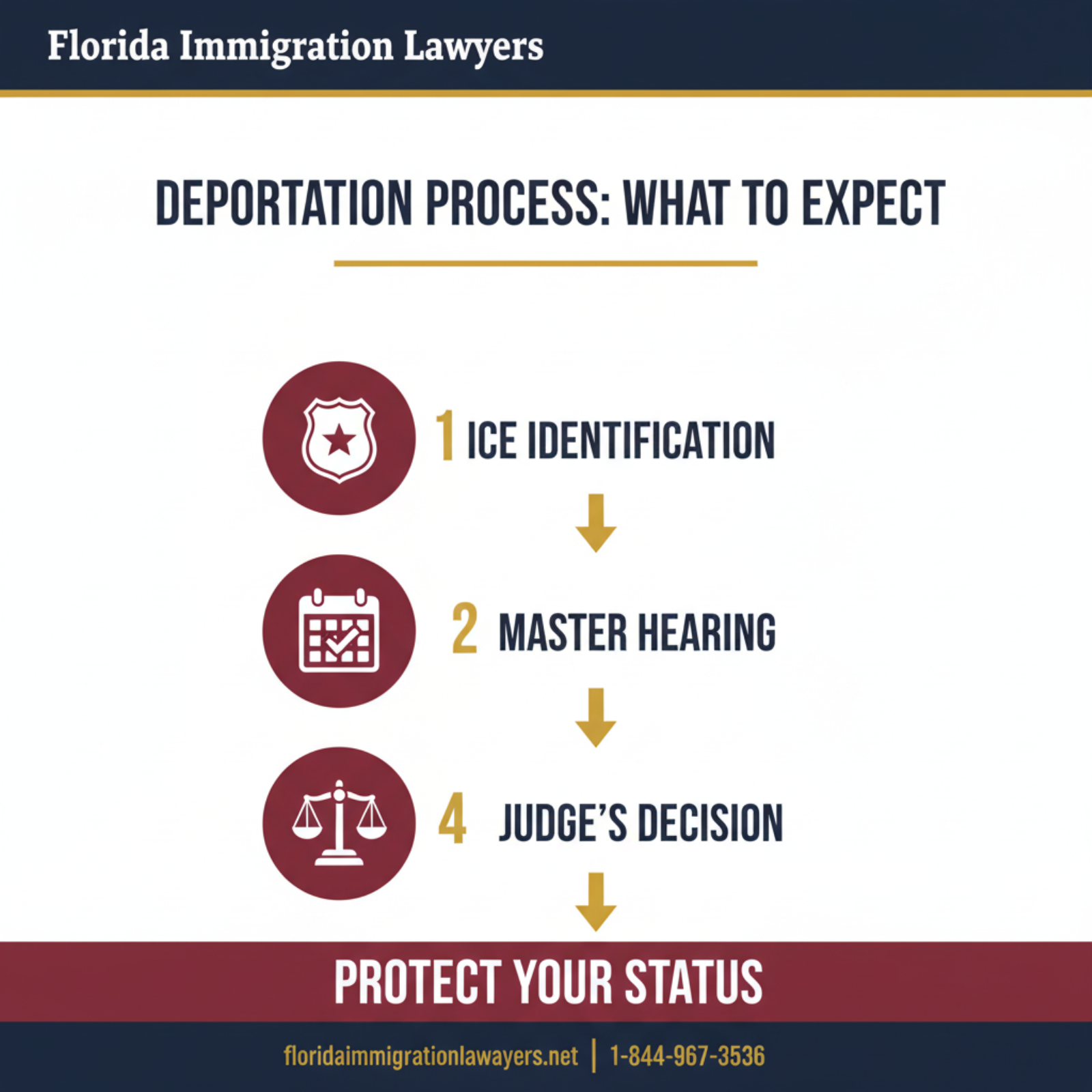
Issuance of a Notice to Appear (NTA): This document, formally known as Form I-862, initiates removal proceedings. It specifies the alleged violations of immigration law and the charges against you. It also lists the date and location of your first hearing before an immigration judge. Receiving an NTA is a clear signal that you need immediate legal assistance.
-
Master Calendar Hearing (MCH): This is the initial court appearance where you, or your attorney, formally respond to the charges in the NTA. The judge will confirm your identity, ensure you understand the charges, and inquire about any forms of relief from removal you might be seeking. This is often a procedural hearing, but crucial decisions about future hearings and filing deadlines are made here.
-
Filing Applications for Relief: If you are eligible for relief from deportation, such as asylum, cancellation of removal, adjustment of status, or a waiver, your attorney will file the necessary applications and supporting documentation. The specific forms and evidence required vary greatly depending on the type of relief sought. For example, individuals seeking asylum would file Form I-589.
-
Individual Hearing (Merits Hearing): This is the trial phase of your deportation case. During this hearing, you will present your testimony and evidence to the immigration judge. Witnesses may be called, and the government attorney will have an opportunity to cross-examine you and your witnesses. Your attorney will make legal arguments on your behalf, explaining why you should be granted relief from removal.
-
Judge's Decision: After considering all the evidence and arguments, the immigration judge will issue a decision. This decision can be to grant relief, order voluntary departure, or order your removal from the United States. If the judge orders removal, they will also determine the country to which you will be deported.
-
Appeals Process: If either you or the government disagree with the immigration judge's decision, you may have the option to appeal to the Board of Immigration Appeals (BIA). The BIA reviews decisions made by immigration judges. Further appeals can be pursued in federal circuit courts, and in rare cases, even to the U.S. Supreme Court. This appellate process can be lengthy and requires specialized legal knowledge.
Essential Documents for Your Florida Deportation Defense Case
A strong deportation defense relies heavily on comprehensive and well-organized documentation. Gathering the right evidence can make a significant difference in the outcome of your case. Your Florida immigration lawyer will help you identify and collect all necessary papers, but here is a general list of documents often required:
- Identity documents: Passports, birth certificates, national ID cards.
- Proof of entry and lawful presence: I-94 records, visa stamps, previous immigration petitions.
- Marriage certificates, divorce decrees, birth certificates of children.
- Financial records: Tax returns, pay stubs, bank statements, property deeds or leases.
- Evidence of community ties: Letters from community leaders, church members, employers, school records.
- Medical records: Especially if you or a family member has a serious illness requiring U.S. treatment.
- Criminal records: Certified disposition of any arrests or convictions, even if minor or expunged.
- Affidavits from witnesses: Family members, friends, or employers who can attest to your good character, ties to the U.S., or hardship if deported.
- Proof of hardship: Evidence demonstrating the severe impact your deportation would have on U.S. citizen or lawful permanent resident family members.
- Any previous immigration applications or correspondence with USCIS, ICE, or EOIR.
Timeline and Processing Expectations for Deportation Cases in Florida
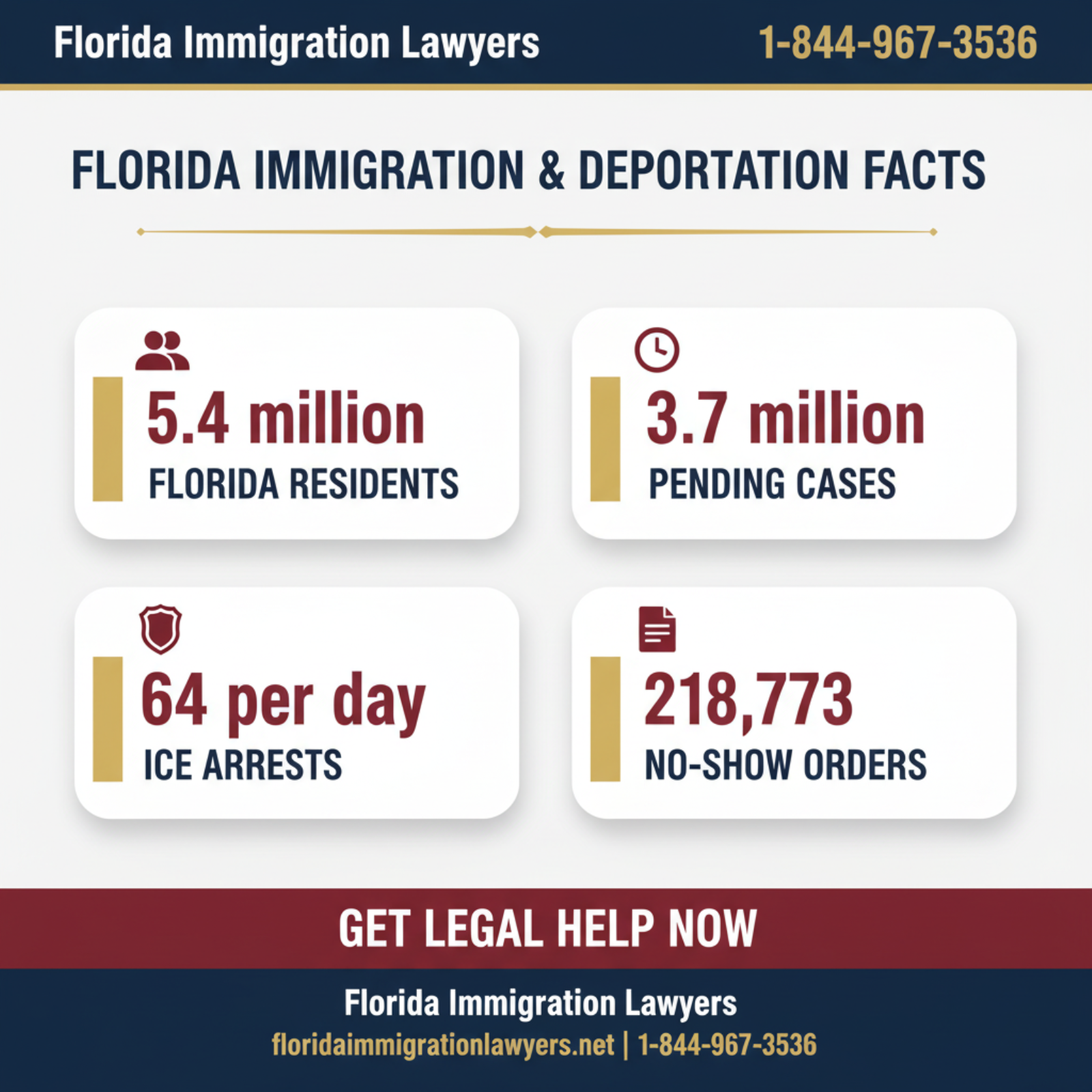
Deportation proceedings are rarely swift. The timeline for a removal case in Florida can vary significantly, ranging from several months to several years. This variability depends on numerous factors, including the complexity of your case, the volume of cases in the specific immigration court, and the availability of judges.
Generally, an initial Master Calendar Hearing may be scheduled within a few weeks to several months after receiving an NTA. Individual Hearings, which are more extensive, often take place many months, or even over a year, after the MCH. Appeals to the BIA can add another one to two years to the overall process.
Current backlogs in Florida immigration courts, particularly in Miami and Orlando, contribute to these extended timelines. While delays can be frustrating, they can also sometimes provide an opportunity for your legal team to gather more evidence or explore new avenues for relief. Your Florida Immigration Lawyers attorney will keep you informed of all developments and manage expectations regarding your case timeline.
Cost Factors and Fee Breakdown in Florida Immigration Defense
The cost of defending against deportation in Florida involves several components. These typically include attorney fees, government filing fees, and potential costs for expert witnesses or document translation. While we cannot provide specific fee amounts here as they are subject to change and vary by case complexity, it is crucial to understand these factors.
Attorney fees reflect the expertise and time invested by your legal counsel. Complex cases, like those involving criminal history or multiple forms of relief, generally require more extensive legal work. Filing fees are paid directly to government agencies like USCIS or EOIR for processing applications for relief (e.g., Form I-589 for asylum, Form I-485 for adjustment of status).
Investing in skilled legal representation is an investment in your future. Attempting to navigate removal proceedings without a lawyer can lead to critical errors and a higher risk of deportation. Florida Immigration Lawyers offers transparent fee structures and will discuss all anticipated costs during your free consultation. We believe everyone deserves a robust defense.
Do not navigate this process alone. Contact Florida Immigration Lawyers today. Our experienced team is ready to provide the dedicated legal support you need.
Common Mistakes to Avoid in Florida Deportation Cases
Navigating deportation proceedings is fraught with potential pitfalls. Avoiding common mistakes can significantly improve your chances of a positive outcome. Be aware of these errors:
-
Missing Deadlines: Immigration courts and agencies have strict deadlines for filing documents and applications. Missing a deadline, even by a day, can result in the denial of your application or even an order of removal. Consequences can be severe, potentially leading to immediate deportation.
-
Failing to Appear in Court: If you receive a Notice to Appear (NTA) and fail to show up for your scheduled court hearing, the immigration judge may issue an in absentia order of removal against you. This means you are ordered deported without having had the chance to present your case, making it very difficult to reopen. This is a critical error.
-
Misrepresenting Facts or Lying: Providing false information or misrepresenting facts to immigration authorities or the court can lead to severe penalties, including a finding of fraud or misrepresentation. This can permanently bar you from obtaining future immigration benefits and even lead to criminal charges. Honesty is always the best policy.
-
Not Gathering Sufficient Evidence: A weak case often stems from a lack of compelling evidence. Failing to collect all necessary documents, affidavits, and supporting materials can undermine your claims for relief. The burden of proof is typically on the applicant.
-
Speaking to ICE or CBP Without an Attorney: Any statements you make to Immigration and Customs Enforcement (ICE) or Customs and Border Protection (CBP) can be used against you in court. You have the right to remain silent and to request an attorney. Exercising these rights is crucial to protect your interests.
-
Traveling Outside the U.S. During Proceedings: If you are in removal proceedings, traveling internationally without explicit permission from the immigration court or USCIS can have dire consequences. It may be seen as an abandonment of your case or lead to complications upon re-entry, including detention. Always consult your attorney before making travel plans.
-
Not Disclosing Criminal History: Even minor arrests or convictions, including those that were expunged or occurred many years ago, must be fully disclosed to your immigration attorney. Failing to do so can lead to an unexpected disqualification for relief or a finding of misrepresentation. These issues are central to many deportation cases.
-
Attempting to Self-Represent: Immigration law is incredibly complex and constantly evolving. While you have the right to represent yourself, doing so significantly reduces your chances of success. An experienced immigration lawyer understands the nuances of the law, court procedures, and how to effectively present your case. This is one of the most common and damaging mistakes.
-
Ignoring Legal Advice: Once you retain an attorney, it is vital to follow their advice regarding court appearances, document submission, and conduct. Ignoring professional guidance can jeopardize your case, as your attorney's strategy is built on their expertise and understanding of the law.
-
Relying on Unofficial Information: The internet is full of misinformation. Relying on advice from non-lawyers, online forums, or outdated sources can lead you down the wrong path. Always seek information from credible legal professionals and official government websites like uscis.gov.
When to Call a Florida Immigration Lawyer
If you or a loved one in Florida is facing any immigration challenge, especially one involving potential deportation, seeking legal counsel immediately is paramount. The sooner you engage an attorney, the better prepared you will be to protect your rights and explore all available options. Here are specific scenarios that warrant contacting Florida Immigration Lawyers:
- You Received a Notice to Appear (NTA): This is the most direct indication that you are in removal proceedings. Do not delay; contact an attorney immediately upon receiving this document.
- You or a Family Member Was Detained by ICE: If ICE has detained you or a family member, swift legal action is necessary to understand the detention grounds and explore options for release, such as bond hearings.
- You Have a Criminal Record: Even minor criminal offenses can have significant immigration consequences, potentially making you deportable or inadmissible. An attorney can assess your specific situation and strategize defenses.
- Your Green Card or Visa Application Was Denied: A denial can sometimes lead to removal proceedings. An attorney can help you understand the denial, appeal the decision, or explore alternative pathways.
- You Are Seeking Asylum or Other Forms of Relief: Applying for complex forms of relief like asylum or cancellation of removal requires intricate legal knowledge and substantial evidence.
- You Are Considering Citizenship But Have Concerns: If you have any issues that might affect your naturalization application, such as past arrests or extended absences, consult an attorney first.
- You Are a Victim of a Crime or Domestic Violence: Special visas (U-Visa, T-Visa, VAWA) exist for victims, but applying for them requires careful legal guidance.
- You Need Help with Family Immigration or Business Immigration: While not directly related to deportation, problems with these applications can sometimes lead to removal proceedings.
Any interaction with immigration authorities, whether USCIS or ICE, can have significant implications. Do not face these challenges alone. Our firm, Florida Immigration Lawyers, specializes in deportation defense and other complex immigration matters across Florida.
About Florida Immigration Lawyers
Florida Immigration Lawyers is a leading immigration law firm dedicated to serving individuals and families across the entire state of Florida. With a deep understanding of U.S. immigration law and a commitment to our clients, we provide strategic and compassionate legal representation for a wide range of immigration challenges.
Our experienced attorneys offer comprehensive services, including deportation defense, asylum applications, family-based petitions, employment visas, naturalization, and more. We pride ourselves on our client-centered approach, ensuring that each individual receives personalized attention and a tailored legal strategy designed to achieve the best possible outcome.
We understand the profound impact immigration issues have on lives and families. That's why we are available 24/7 to address your urgent concerns and offer free, no-obligation consultations. When you choose Florida Immigration Lawyers, you gain a dedicated advocate committed to protecting your rights and securing your future in the United States. Visit our website at https://www.floridaimmigrationlawyers.net or call us at 1-844-967-3536.
Sources and References
- U.S. Citizenship and Immigration Services (USCIS)
- Executive Office for Immigration Review (EOIR)
- 8 U.S.C. Chapter 12 - Immigration and Nationality Act (INA)
- INA § 240, 8 U.S.C. § 1229a - Removal Proceedings
- 8 CFR Part 1240 - Proceedings to Determine Removability of Aliens
This article provides general legal information and is not intended as legal advice. Every case is unique, and outcomes depend on specific facts and circumstances. Contact an attorney for advice about your particular situation.
Do not let the fear of deportation define your future. Take control by seeking expert legal counsel today. Call Florida Immigration Lawyers at 1-844-967-3536 for a free consultation. Se Habla Español - Estamos aquí para ayudarle.
Do Not Navigate This Process Alone
Our experienced immigration attorneys are ready to fight for you. Get a free, confidential consultation today.
Se Habla Español
Frequently Asked Questions
Florida Immigration Lawyers
Immigration Attorney | Founder, Vasquez Law Firm
U.S. Air Force veteran and immigration attorney with thousands of cases resolved. J.D., NCCU School of Law. AILA member. Admitted to the 4th, 5th, and 11th Circuit Courts.
Available 24/7 - Free Evaluations
Related Legal Services
Our Florida immigration attorneys can help you with business immigration, asylum protection and deportation defense. Call today at 1-844-967-3536 for a free consultation.
Related Links
Related Topics
Free Legal Consultation
Discuss your case with our experienced attorneys. We're available 24/7.
Se Habla Español - Estamos aquí para ayudarle.
Related Articles
TPS Re-Registration Deadlines in Florida 2026 | VLF Florida
Stay informed on TPS re-registration deadlines in Florida for 2026. Discover key steps and mistakes to avoid. Call Florida Immigration Lawyers at 1-844-967-3536 for a free consultation.
U Visa for Crime Victims in Florida: A Guide | VLF Florida
Discover how crime victims in Florida can benefit from the U visa, providing a pathway to safety and legal status. Learn about eligibility, the application process, and common pitfalls to avoid.
Immediate Relative Petition Florida: A Comprehensive Guide
Learn about the Immediate Relative Petition in Florida, a crucial step for U.S. citizens to sponsor family members. This guide covers eligibility, documentation, and timelines to help you navigate the process successfully.
Change of Status: Navigating Student Visas in Florida
Navigating a change of status for a student visa in Florida can be complex. This guide covers essential steps, common pitfalls, and when to seek legal help. Call Florida Immigration Lawyers for a free consultation.