2026 Winter Olympics Ice Hockey: Florida Immigration
The 2026 Winter Olympics in Italy create unique immigration considerations for individuals connected to ice hockey who may come to Florida. Athletes, coaches, media, and fans require specific visas and an understanding of U.S. immigration law for legal entry and stay. This guide details key visa pathways like P-1 and O-1, outlines application steps, and highlights common mistakes to avoid. Florida's role as a sports hub means many Olympic-related individuals might need expert legal advice. Florida Immigration Lawyers offers comprehensive support for these complex processes, ensuring compliance and peace of mind.

The 2026 Winter Olympics, while hosted in Italy, have significant immigration implications for Florida. Athletes, coaches, support staff, media, and even fans with connections to Olympic ice hockey may require specific visas or immigration assistance if they plan to train, reside, or conduct business in Florida. Understanding these pathways is crucial for legal entry and stay.
- Athletes, coaches, and support staff often need P-1 or O-1 visas.
- Journalists and media personnel may utilize I visas.
- Fans and short-term visitors typically use B-1/B-2 visas.
- Florida's robust sports infrastructure makes it a key location for Olympic-related immigration.
- Consulting an experienced Florida immigration lawyer is vital for navigating complex requirements.
The anticipation for the 2026 Winter Olympics ice hockey tournament is building, even here in sunny Florida. While the games will be held in Milan and Cortina d'Ampezzo, Italy, the global reach of such an event extends far beyond its host cities. Florida, with its vibrant international communities, world-class training facilities, and prominent NHL teams like the Florida Panthers and Tampa Bay Lightning, often serves as a crucial hub for athletes, coaches, support staff, media, and even dedicated fans.
Many individuals connected to the upcoming Olympic ice hockey events may find themselves needing to understand U.S. immigration law, particularly if their journey or professional commitments bring them to the Sunshine State. Whether you are an elite athlete seeking training opportunities, a coach preparing a team, or a journalist covering the stories, navigating the complexities of immigration can be challenging. This comprehensive guide will explore the various immigration pathways and considerations for those with ties to the 2026 Winter Olympics ice hockey events and Florida.
Understanding the correct visa classification and application process is essential for a smooth and legal stay in the United States. Our firm, Florida Immigration Lawyers, is dedicated to assisting individuals, families, and organizations with their immigration needs across the state. Do not leave your immigration status to chance. Call Florida Immigration Lawyers at 1-844-967-3536 for a free consultation to discuss your specific situation.
Navigating Immigration for 2026 Winter Olympics Ice Hockey Connections in Florida
Florida plays a significant role in the world of international sports, including ice hockey. Many professional and amateur athletes train in Florida, and the state attracts a diverse array of individuals involved in global sporting events. For those connected to the 2026 Winter Olympics ice hockey, understanding the specific immigration requirements is paramount.
The interaction between international sporting events and U.S. immigration law is intricate. Individuals arriving in the U.S. must meet specific criteria for entry and must secure the appropriate visa for their intended activities. Without proper documentation, individuals risk denial of entry, visa overstays, or even deportation from the U.S.
Who Might Need Immigration Assistance?
A broad spectrum of individuals associated with the Olympics might require immigration guidance in Florida. This includes the athletes themselves, who often spend significant time training in various locations prior to the games. Coaches, trainers, and support staff accompanying these athletes also fall into this category, requiring specific work-authorized visas.
Journalists and media personnel covering the Olympic lead-up or specific athletes may need particular media visas. Business professionals involved in sponsorships, equipment, or logistics for the Olympic teams might also require business-related visas. Even family members of athletes or staff often need assistance securing visitor visas to be with their loved ones.
Florida's Unique Role in Global Sports Immigration
Florida is not just a tourist destination; it is a significant hub for international sports. Its favorable climate, state-of-the-art training facilities, and strategic geographical location make it an ideal base for athletes from around the world. The presence of two major NHL teams, the Florida Panthers in Sunrise and the Tampa Bay Lightning, further cements Florida's status as a key location for ice hockey talent.
These factors mean that West Palm Beach and other Florida cities frequently host individuals who are directly or indirectly involved in major international competitions like the Winter Olympics. Consequently, the demand for specialized immigration legal services in Florida, particularly for athletes and related personnel, remains consistently high. Our firm understands the unique needs of this population.
Key Visa Pathways for Olympic-Related Individuals in Florida
For those involved with the 2026 Winter Olympics ice hockey, several nonimmigrant visa categories are relevant. The most common for athletes and performers are the P and O visas, designed for individuals with extraordinary abilities or who are internationally recognized.
The P-1 visa is specifically for internationally recognized athletes, individually or as part of a team, coming to the U.S. to participate in a specific athletic competition. This visa is highly relevant for Olympic ice hockey players and their teams. The O-1 visa is for individuals with extraordinary ability in the sciences, arts, education, business, or athletics, which could also apply to highly distinguished coaches or trainers.
Step-by-Step Guide: Applying for a P-1 Visa for Athletes
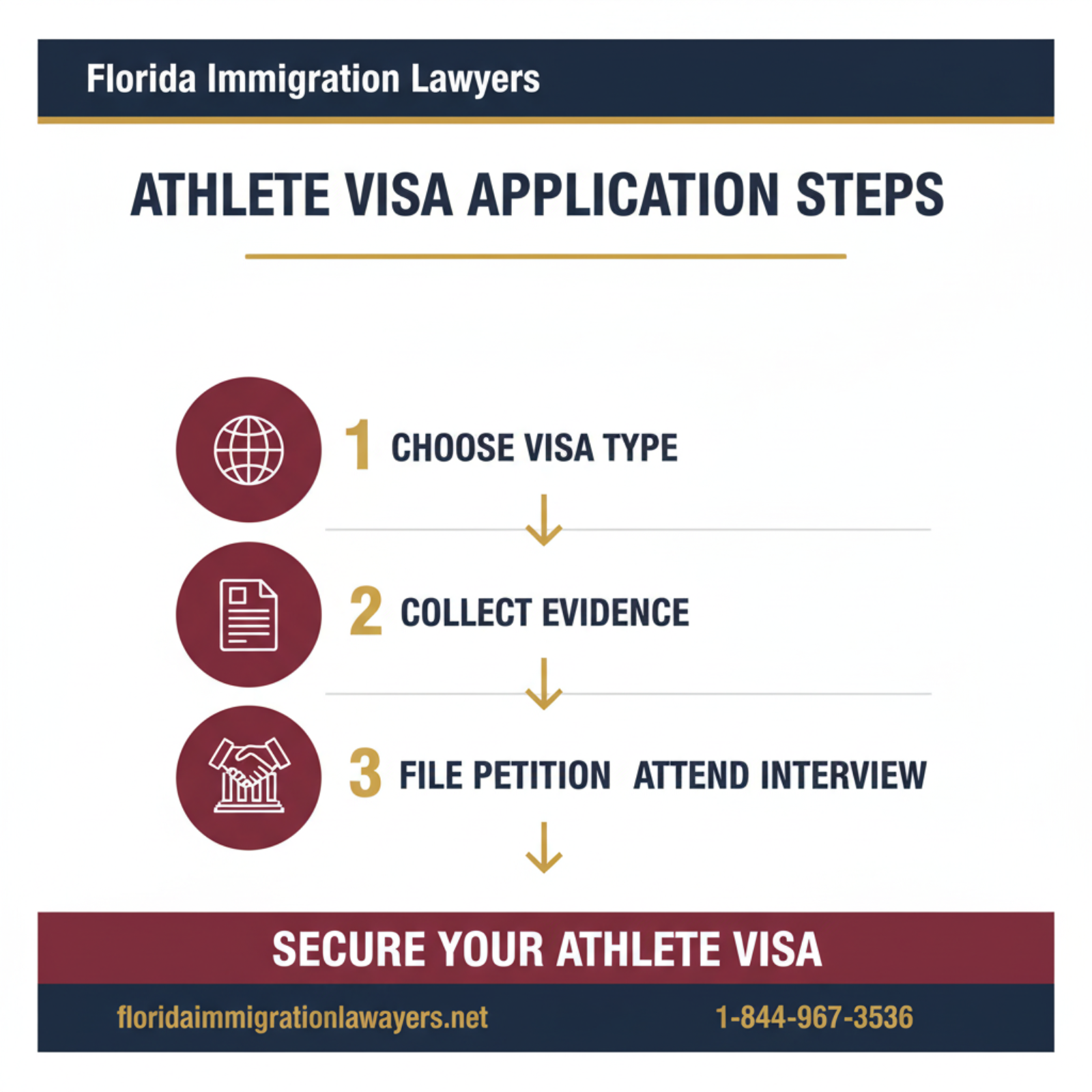
The P-1 visa process, while structured, requires careful attention to detail. Here is a general outline of the steps involved for an athlete or athletic team seeking to come to Florida for Olympic-related activities:
- Petition Filing (Form I-129): The U.S. employer, agent, or sponsoring organization must file Form I-129, Petition for a Nonimmigrant Worker, with U.S. Citizenship and Immigration Services (USCIS). This petition must include evidence of the athlete's or team's international recognition and the nature of the event.
- Consultation Requirement: Generally, a written consultation from an appropriate labor organization (such as a relevant sports league or union) is required. This provides an advisory opinion on the athletic endeavor.
- USCIS Petition Adjudication: USCIS reviews the petition and supporting documentation. If approved, USCIS sends an approval notice (Form I-797). Premium processing is often available for an additional fee, expediting the review to 15 calendar days.
- Visa Application at U.S. Embassy/Consulate: Once the I-129 petition is approved, the athlete (if outside the U.S.) applies for the P-1 visa stamp at a U.S. Embassy or Consulate in their home country. This involves completing the online Nonimmigrant Visa Application, Form DS-160.
- Interview and Fingerprinting: The applicant typically attends an interview with a consular officer and provides biometric data (fingerprints). The consular officer determines if the applicant is eligible for the visa.
- Visa Issuance and Entry to U.S.: If approved, the visa is stamped in the applicant's passport. Upon arrival at a U.S. port of entry (like Miami International Airport or Palm Beach International Airport), a Customs and Border Protection (CBP) officer makes the final determination on admission and length of stay.
Document Checklist for P-1 Visa Applicants
Preparing a thorough set of documents is critical for a successful P-1 visa application. Missing or incomplete documentation can cause significant delays or even lead to a denial. Here is a general list of documents typically required:
- Approved Form I-129 Petition and I-797 approval notice.
- Valid passport (valid for at least six months beyond your intended period of stay).
- Nonimmigrant Visa Application, Form DS-160 confirmation page.
- Appointment confirmation page from the embassy/consulate.
- One 2x2 inch photograph meeting U.S. visa requirements.
- Evidence of international recognition (e.g., contracts, awards, testimonials, press clippings, league standings, statistical data).
- Copies of any previous U.S. visas or entry stamps.
- Letter from the U.S. employer or agent detailing the event, itinerary, and terms of employment.
- Written advisory opinion from a labor organization (if applicable).
- Any other documents requested by USCIS or the consular officer.
Understanding B-1/B-2 Visitor Visas for Fans and Short-Term Stays
For individuals visiting Florida to spectate the 2026 Winter Olympics ice hockey events, or for short-term business meetings unrelated to direct athletic performance, a B-1 (business visitor) or B-2 (tourism/pleasure visitor) visa is generally appropriate. These visas do not permit employment in the U.S.
A B-1 visa might be suitable for individuals attending business conferences or negotiating contracts related to sports events. A B-2 visa is for tourism, visiting family, or participating in recreational activities. It is crucial to understand that engaging in unauthorized employment while on a B visa can lead to severe immigration consequences, including future visa denials and removal proceedings.
Timelines and Processing Expectations for Immigration Applications
The processing times for immigration petitions and visa applications can vary significantly. Factors such as the specific visa category, the USCIS service center processing the petition, the workload of the U.S. embassy or consulate, and the completeness of your application all play a role.
For P-1 petitions, standard processing can take several months. However, as mentioned, premium processing is available for an additional fee, guaranteeing a response from USCIS within 15 calendar days. This can be invaluable for athletes with tight schedules leading up to the 2026 Winter Olympics.
B-1/B-2 visa applications generally have shorter processing times, but these can still range from a few weeks to several months depending on the consulate. It is always advisable to apply well in advance of your intended travel date to avoid any last-minute complications. Checking the current processing times on the USCIS and Department of State websites is always recommended.
Cost Factors and Fee Breakdown in Immigration Cases
Understanding the financial aspects of immigration is an important part of the planning process. There are several categories of costs associated with applying for U.S. visas and petitions. These fees are subject to change, and it is crucial to consult official USCIS and Department of State resources for the most current amounts.
The primary costs include government filing fees. For petitions like the I-129 (for P-1 visas), USCIS charges a base filing fee. If premium processing is elected, an additional significant fee is incurred. Visa application fees (DS-160) are paid to the Department of State at the time of the consular interview.
Beyond government fees, applicants should account for other potential expenses. These may include legal fees for retaining an experienced Florida immigration lawyer, which vary based on the complexity of the case. Other costs can include translation services for foreign documents, courier fees, and travel expenses for consular interviews, especially if traveling to a consulate outside of Florida.
Do not navigate this complex process alone. The stakes are high, especially when your ability to participate in or attend an event like the 2026 Winter Olympics ice hockey depends on your immigration status. Contact Florida Immigration Lawyers today to ensure your application is handled professionally and efficiently.
Common Mistakes to Avoid in Florida Immigration for Olympic Visitors
Navigating U.S. immigration law can be fraught with potential pitfalls. Making even a seemingly minor error can lead to significant delays, denials, or even long-term bars from the United States. For those connected to the 2026 Winter Olympics ice hockey, avoiding these common mistakes is crucial:
- Overstaying Your Visa: Remaining in the U.S. beyond your authorized period of stay, even by a single day, can lead to severe consequences, including visa cancellation, future visa denials, and a potential bar from re-entering the U.S. for several years.
- Misrepresenting Information: Providing false or misleading information on visa applications or during interviews is considered fraud. This can result in a permanent bar from the U.S. and is one of the most serious immigration violations.
- Failing to Disclose Criminal History: Any past arrests or convictions, no matter how minor or old, must be disclosed. Failure to do so can be considered misrepresentation and lead to serious immigration penalties.
- Not Understanding Visa Limitations: Each visa category has specific rules about what activities are permitted. For example, working on a tourist visa is strictly prohibited and can lead to immediate removal proceedings.
- Entering on the Wrong Visa Type: Attempting to enter the U.S. on a B-2 tourist visa with the intention of working or training professionally is a violation. It is crucial to apply for the correct visa category, such as a P-1 or O-1 for athletes.
- Submitting Incomplete Documentation: Applications with missing forms, insufficient evidence, or improperly formatted documents will likely be delayed or denied. Always double-check all requirements.
- Missing Deadlines: Failing to respond to Requests for Evidence (RFEs) or missing application submission deadlines can lead to the denial of your petition or application. Immigration processes are time-sensitive.
- Not Seeking Legal Advice: Trying to navigate complex immigration laws without the guidance of an experienced attorney often leads to errors. A lawyer can help identify the correct visa, prepare documentation, and represent your interests.
- Ignoring Changes in Immigration Law: Immigration laws and policies can change frequently. What was true last year may not be true today. Staying informed, ideally through legal counsel, is essential.
- Assuming Previous Approvals Guarantee Future Ones: A prior visa approval does not guarantee approval for future applications. Each application is reviewed independently based on current laws and your present circumstances.
- Lack of Proof of Intent to Depart: For nonimmigrant visas, applicants must generally demonstrate strong ties to their home country and an intent to depart the U.S. after their authorized stay. Lack of such proof can lead to denial.
When to Call a Florida Immigration Lawyer
While some immigration processes appear straightforward, the reality is often far more complex, especially for individuals with unique circumstances like those involved in international sports. Knowing when to seek professional legal assistance can save you time, money, and significant stress. Florida Immigration Lawyers are here to help you.
You should consider calling a Florida immigration lawyer if you:
- Have been previously denied a visa or had an immigration petition rejected.
- Have a criminal record, even a minor one, that could impact your admissibility to the U.S.
- Are unsure which visa category is most appropriate for your specific Olympic-related activities in Florida.
- Need to expedite your application process due to tight deadlines related to the 2026 Winter Olympics.
- Are an employer or agent sponsoring multiple athletes or personnel and need assistance with compliance.
- Are facing deportation defense proceedings or have received a Notice to Appear (NTA) in immigration court.
- Are a family member of an athlete seeking to join them in the U.S. and need guidance on family-based visas.
- Are a high-net-worth individual looking to invest in Florida businesses related to sports or international events and need business immigration guidance.
Our experienced team at Florida Immigration Lawyers is well-versed in the nuances of U.S. immigration law. We can provide personalized advice, assist with document preparation, represent you in interactions with USCIS or consular offices, and advocate for your rights. We serve clients throughout Florida, including West Palm Beach, Miami, Orlando, and Tampa.
About Florida Immigration Lawyers
Florida Immigration Lawyers is a leading immigration law firm dedicated to serving individuals, families, and businesses across the entire state of Florida. Our mission is to provide compassionate, effective, and results-driven legal representation in all areas of immigration law. We understand the profound impact immigration matters have on our clients' lives and are committed to guiding them through every step of their journey.
Our team of highly skilled and experienced attorneys offers a comprehensive range of immigration services, including visa applications, green card petitions, asylum claims, deportation defense, citizenship and naturalization, family-based immigration, and business immigration. We pride ourselves on our client-focused approach, ensuring that each case receives the attention and expertise it deserves.
Why choose Florida Immigration Lawyers? We offer personalized strategies tailored to your unique situation, clear communication, and unwavering support. Our firm is available 24/7 to address your urgent needs and provide peace of mind. We offer free consultations, allowing you to discuss your case without financial obligation. With a deep understanding of both federal immigration law and the specific needs of Florida's diverse population, we are your trusted partners in immigration.
Contact us today to learn more about how we can assist you. Visit our website at https://www.floridaimmigrationlawyers.net or call us directly at 1-844-967-3536.
Sources and References
- U.S. Citizenship and Immigration Services (USCIS)
- U.S. Department of State - Bureau of Consular Affairs
- Executive Office for Immigration Review (EOIR)
- 8 U.S.C. Chapter 12 - Immigration and Nationality Act (INA)
- INA Section 101(a)(15)(P) - Definition of P Nonimmigrants
- 8 CFR 214.2(p) - Regulations for P Nonimmigrants
This article provides general legal information and is not intended as legal advice. Every case is unique, and outcomes depend on specific facts and circumstances. Contact an attorney for advice about your particular situation.
The journey through U.S. immigration can be complex, but you don't have to face it alone. Whether your connection to the 2026 Winter Olympics ice hockey brings you to Florida for training, business, or simply to visit, Florida Immigration Lawyers is here to provide expert guidance and support. We are dedicated to helping you achieve your immigration goals with confidence and clarity. Schedule your free consultation today by calling 1-844-967-3536. Se Habla Español - Estamos aquí para ayudarle.
Do Not Navigate This Process Alone
Our experienced immigration attorneys are ready to fight for you. Get a free, confidential consultation today.
Se Habla Español
Frequently Asked Questions
Florida Immigration Lawyers
Immigration Attorney | Founder, Vasquez Law Firm
U.S. Air Force veteran and immigration attorney with thousands of cases resolved. J.D., NCCU School of Law. AILA member. Admitted to the 4th, 5th, and 11th Circuit Courts.
Available 24/7 - Free Evaluations
Related Legal Services
Our Florida immigration attorneys can help you with family immigration services, immigration practice areas and free immigration consultation. Call today at 1-844-967-3536 for a free consultation.
Related Links
Related Topics
Free Legal Consultation
Discuss your case with our experienced attorneys. We're available 24/7.
Se Habla Español - Estamos aquí para ayudarle.
Related Articles
Fraud Waiver Immigration in Florida: What You Need to Know
Navigating the I-601 fraud waiver process in Florida can be complex. Learn about eligibility, documentation, and how to avoid common mistakes. Contact Florida Immigration Lawyers for expert guidance.
Asylum Interview Preparation in Florida: Key Steps
Preparing for your asylum interview in Florida can make the difference in securing protection. Learn the essential steps and tips to succeed. Call Florida Immigration Lawyers for a free consultation.
Understanding the Naturalization Process Timeline in Florida
Navigating the naturalization process in Florida is crucial for those aspiring to become U.S. citizens. This guide outlines the timeline, steps, and common mistakes, ensuring you're well-prepared. Call Florida Immigration Lawyers at 1-844-967-3536 for personalized assistance and a free consultation.
Immigration Services in Jacksonville, Florida | VLF Florida
Explore comprehensive immigration services in Jacksonville, Florida. Navigate your immigration journey with expert legal guidance from Florida Immigration Lawyers. Call us for a free consultation today!
