What Salazar's Immigration Ad Means for Miami Immigrant Families
October 10, 2026
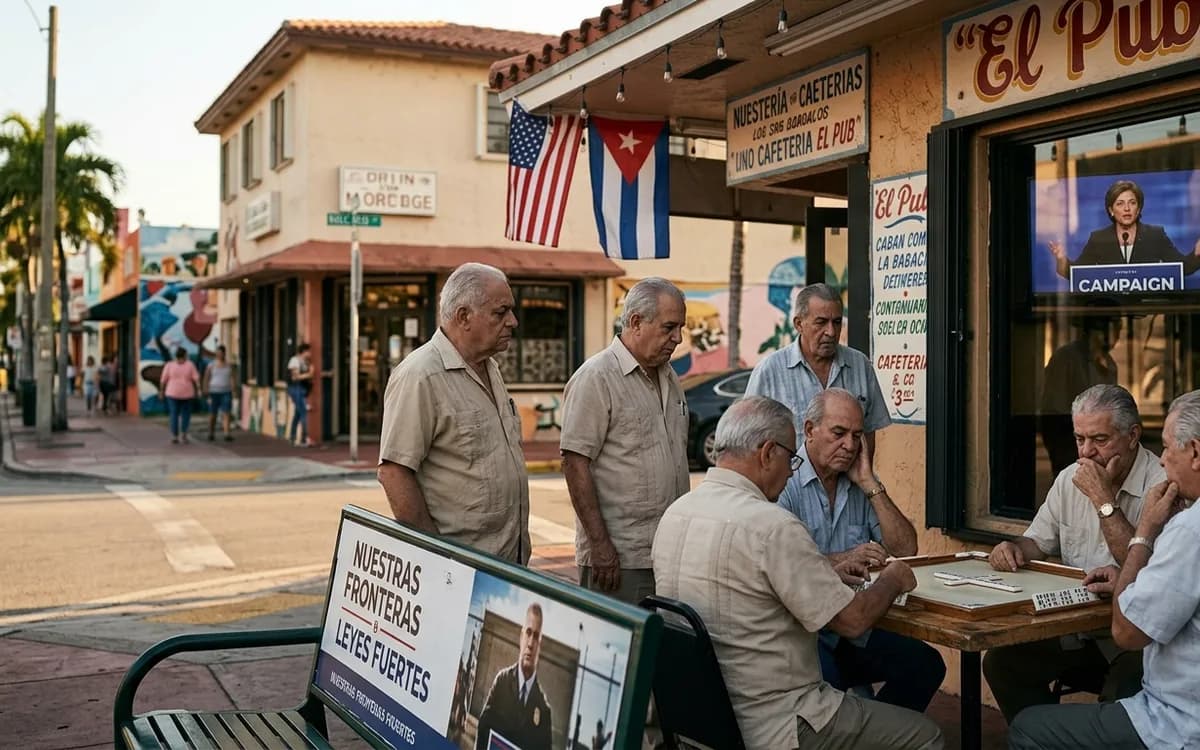
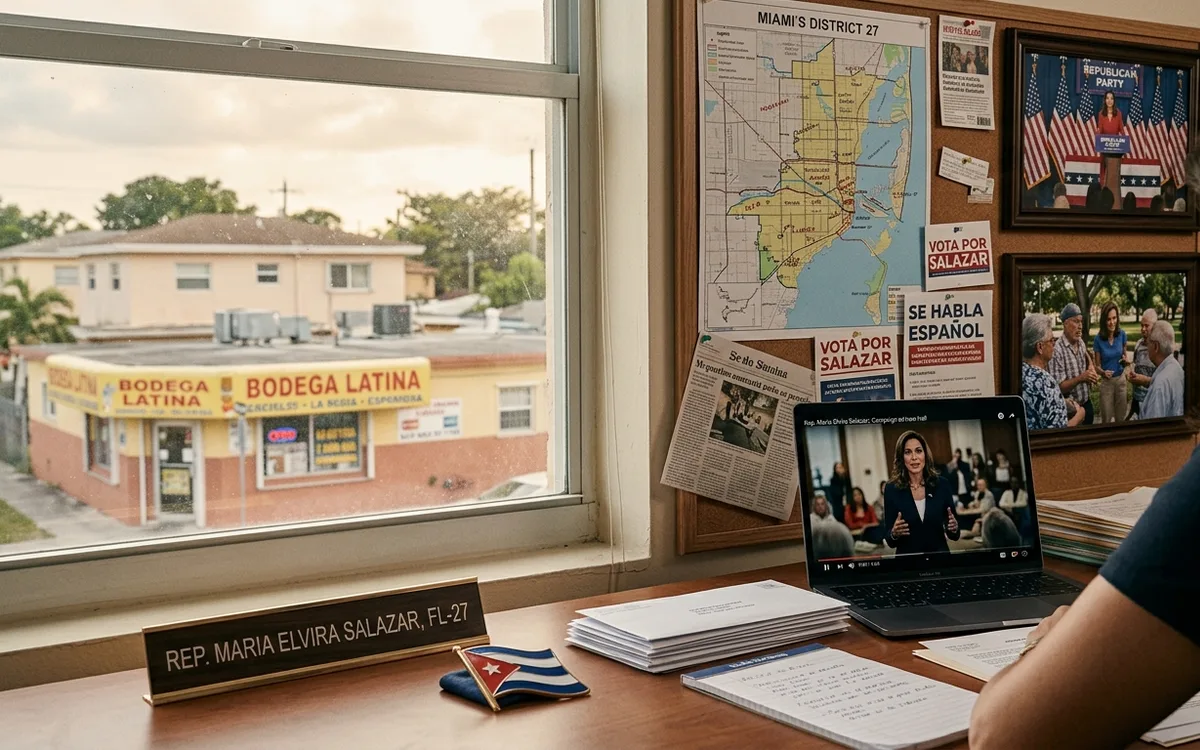
You saw the ad. Rep. María Elvira Salazar, the three-term Republican representing Florida's 27th Congressional District, says President Trump's immigration crackdown has 'gone too far' (per CBS News, cbsnews.com/news/maria-elvira-salazar-trump-immigration-ad-gone-too-far). A neighbor in Westchester or Coral Gables may have shown you the clip. You may be wondering what any of it actually changes for your pending case, your detained relative, or your next scheduled check-in.
Nothing about that ad rewrites a statute or reschedules a docket. Salazar says she was not breaking with the president, only warning him about what she sees ahead (per The New York Times, nytimes.com/2026/10/03/us/politics/how-a-provocative-ad-on-trump-and-immigration-stirred-a-florida-house-race). Her challenger, Cuban American former broadcast journalist Eliott Rodriguez, is running in a district Trump carried with about 57% of the vote in 2024 (per CBS News, cbsnews.com/miami/news/maria-elvira-salazar-trump-immigration-ad-rare-move-gop-congresswoman). None of that political back-and-forth pauses a Notice to Appear, a detention clock at Krome, or a USCIS interview date.
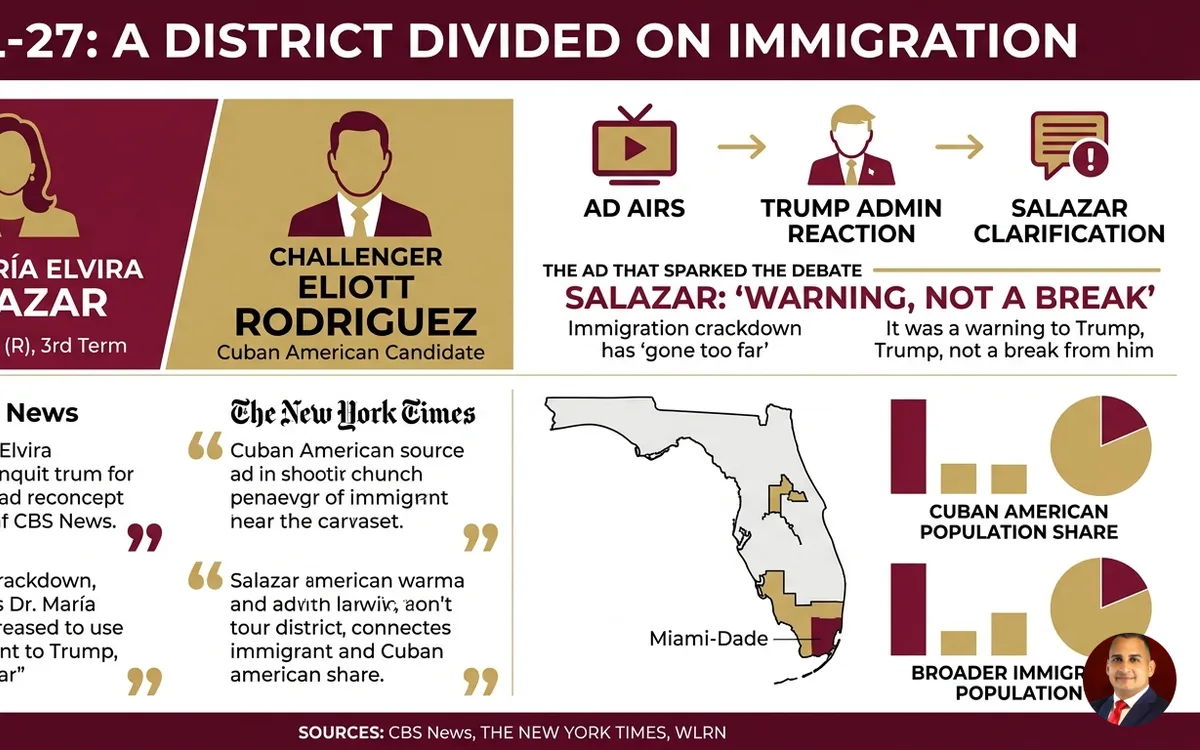
Rep. María Elvira Salazar, a three-term Republican representing Florida's 27th Congressional District, ran a campaign ad saying President Trump's immigration crackdown had 'gone too far' (per CBS News). Salazar says she was warning Trump, not breaking with him (per The New York Times), while Cuban American challenger Eliott Rodriguez contests the seat (per WLRN).
The Hard Truth
A campaign ad is not law. Salazar won her 2024 reelection by about 20 points in a district Trump carried with roughly 57% of the vote (per The New York Times), a gap that shows real division inside Miami-Dade over immigration enforcement. Her ad, and her later clarification that she was 'warning' rather than opposing President Trump (per The New York Times), show a member of Congress testing how far she can go before her own voters push back.
None of that changes how ICE sets its enforcement priorities, how an immigration judge applies 8 U.S.C. § 1229a, or when USCIS schedules your interview. Congress does not decide individual removal cases, and a representative's public statement carries no weight inside Miami Immigration Court at 333 S. Miami Ave. If you are waiting for the political mood to settle before dealing with a pending Notice to Appear, that wait has no legal basis and no fixed end date.
What Happens If You Wait
Enforcement schedules move faster than political coverage does. While cable news debates a 30-second ad, ICE's Enforcement and Removal Operations Miami Field Office keeps its scheduled check-ins, and Miami Immigration Court keeps issuing hearing notices on its existing calendar. A missed check-in or an unanswered hearing notice does not wait on the outcome of a House race.
If you have a pending asylum application, a DACA renewal, or an adjustment of status interview at the USCIS Miami Field Office in Kendall, a shifting political conversation can create a false sense of safety or a false sense of doom. Both are wrong, and both are expensive. A renewal filed late because a family assumed enforcement would ease up can mean a lapse in work authorization. A Notice to Appear left unanswered because a family assumed the political climate had made enforcement impossible can end in an in absentia removal order under 8 U.S.C. § 1229a(b)(5).
Step-by-Step Process
Step one: confirm your own hearing date and location through the EOIR automated case information line, 1-800-898-7180, or directly with the Miami Immigration Court at 333 S. Miami Ave. Do not rely on a relative's memory of a hearing date mentioned months ago.
Step two: if a family member is held at Krome North Service Processing Center, confirm current attorney visitation hours directly with the facility before traveling there, and ask whether a bond hearing is available given that person's specific immigration history.
Step three: have an attorney review any Notice to Appear for a missing date or time. Under Pereira v. Sessions, 585 U.S. 198 (2018), an NTA that omits the hearing date and time does not trigger the 'stop-time rule' used to calculate continuous presence for cancellation of removal.
Step four: file any required response by the deadline stated in your notice, following the service and filing rules in the EOIR Immigration Court Practice Manual, Chapter 3. A late filing is treated the same whether the week's news was about a campaign ad or nothing at all.
Step five: if you have a pending matter with USCIS, such as adjustment of status or a DACA renewal, track it through the USCIS Miami Field Office in Kendall and respond to any request for evidence by its stated deadline.
Step six: discuss voluntary departure versus contesting removal with an attorney before any hearing. The two options carry different consequences for whether you can legally return to the United States later.
A Real-World Example
Consider a composite example, not a real client: a Honduran family in Westchester, inside Florida's 27th Congressional District, has lived in Miami-Dade for eleven years. The father has a pending asylum application. The mother renews her DACA grant every two years. After the ad aired, a neighbor tells them ICE activity is about to surge nationwide, so they stop opening mail from USCIS, worried it is a trap.
Three weeks pass. An attorney review of their file starts with confirming receipt of the asylum interview notice, checking whether the Notice to Appear filed years earlier lists a date and time as required under Pereira v. Sessions, and verifying the DACA renewal window against USCIS's published processing times. None of those steps depend on how the FL-27 race turns out. The file then proceeds toward a scheduled master calendar hearing, on a timeline set by the court, not by the next campaign ad.
William J. Vasquez is admitted to the North Carolina State Bar and to the 4th, 5th, and 11th Circuit Courts of Appeals. He is not licensed by the Florida Bar. Immigration proceedings, including removal hearings before the Miami Immigration Court, USCIS adjudications, and appeals to the Board of Immigration Appeals, are federal matters; under 8 C.F.R. § 1292.1, an attorney in good standing with any U.S. state bar can represent clients in these proceedings nationwide, regardless of which state issued the license.
That federal scope is what allows Vasquez to handle removal defense, asylum filings, and USCIS matters for Miami-Dade clients without a Florida state-bar license. It does not extend to Florida state-court matters. Our team's work centers on the federal immigration system, EOIR, USCIS, and ICE ERO, the agencies that actually control the deadlines readers are asking about, not the political news cycle.
Key Terms Explained
Notice to Appear (NTA): The charging document that starts removal proceedings under 8 U.S.C. § 1229a. It must include specific information, including a hearing date and time; a missing date or time can affect certain forms of relief under Pereira v. Sessions, 585 U.S. 198 (2018).
Master Calendar Hearing: A short initial hearing before an immigration judge, typically 5 to 15 minutes, where the judge confirms identity, takes pleadings, and sets deadlines. It is not the trial.
Individual Hearing (Merits Hearing): The full hearing where an immigration judge takes testimony and evidence and decides whether relief, such as asylum or cancellation of removal, can be granted.
Voluntary Departure: A form of relief in which a person agrees to leave the United States by a set date at their own expense, avoiding a formal removal order, on terms set by the immigration judge.
Stop-Time Rule: The rule that stops the clock on continuous physical presence once a Notice to Appear is properly served. Pereira v. Sessions held that an NTA missing the date and time does not trigger this rule.
EOIR: The Executive Office for Immigration Review, the Department of Justice agency that runs immigration courts, including the Miami Immigration Court.
ICE ERO: U.S. Immigration and Customs Enforcement's Enforcement and Removal Operations division, which manages detention, check-ins, and removals, including at Krome North Service Processing Center.
Adjustment of Status: The process by which an eligible noncitizen already in the United States applies to become a lawful permanent resident through USCIS, instead of through consular processing abroad.
Frequently Asked Questions
Q: Did Rep. Salazar's ad change immigration law or enforcement policy? A: No. Salazar's ad said President Trump's immigration crackdown has 'gone too far' (per CBS News), and she later said she was warning the president rather than opposing him (per The New York Times). Neither statement is legislation, a regulation, or a court order, so neither changes EOIR, USCIS, or ICE procedure.
Q: Who is running against Salazar in Florida's 27th Congressional District? A: Eliott Rodriguez, a Cuban American former broadcast journalist, is challenging Salazar (per WLRN). Trump carried the district with about 57% of the vote in 2024, while Salazar won her own reelection by roughly 20 points the same year (per CBS News and The New York Times).
Q: What should I do if ICE activity increases in Miami-Dade while this race plays out? A: Confirm your own case status directly with EOIR's case status line or the Miami Immigration Court rather than relying on news coverage. If a family member is held at Krome North Service Processing Center, confirm attorney visitation hours directly with the facility and ask about bond hearing eligibility.
Q: Can I find attorney visitation hours for Krome North Service Processing Center on my own? A: Yes. Krome's intake and visitation information is available through ICE's detention facility locator, and an attorney of record can also confirm current hours directly with the facility before traveling there.
Q: Does a Notice to Appear without a date or time affect eligibility for cancellation of removal? A: It depends on the facts of your filing. Pereira v. Sessions, 585 U.S. 198 (2018), held that an NTA missing the hearing date and time does not trigger the stop-time rule used to calculate continuous presence, which can matter for cancellation of removal under 8 U.S.C. § 1229a.
Clients describe our team's communication and follow-through on federal immigration filings, not courtroom guarantees, since no attorney can promise how a judge or a USCIS officer will rule. Reviews consistently mention direct answers about filing deadlines and clear explanations of what a hearing notice actually requires. We do not publish outcome statistics, because immigration results are never objectively guaranteed, and a case count says nothing about your specific file.
Political ads come and go with the news cycle. Your Notice to Appear, your DACA renewal date, and your USCIS interview do not. Before the next ad airs, it is worth knowing exactly where your own file stands.
Schedule a consultation with our immigration team to review your Notice to Appear, a pending USCIS filing, or a family member's detention status at Krome North Service Processing Center. We will walk through the actual deadlines on your case, not the ones implied by a campaign ad.