Proposed I-130 Changes: What Florida Immigrant Families Should Know
October 10, 2026
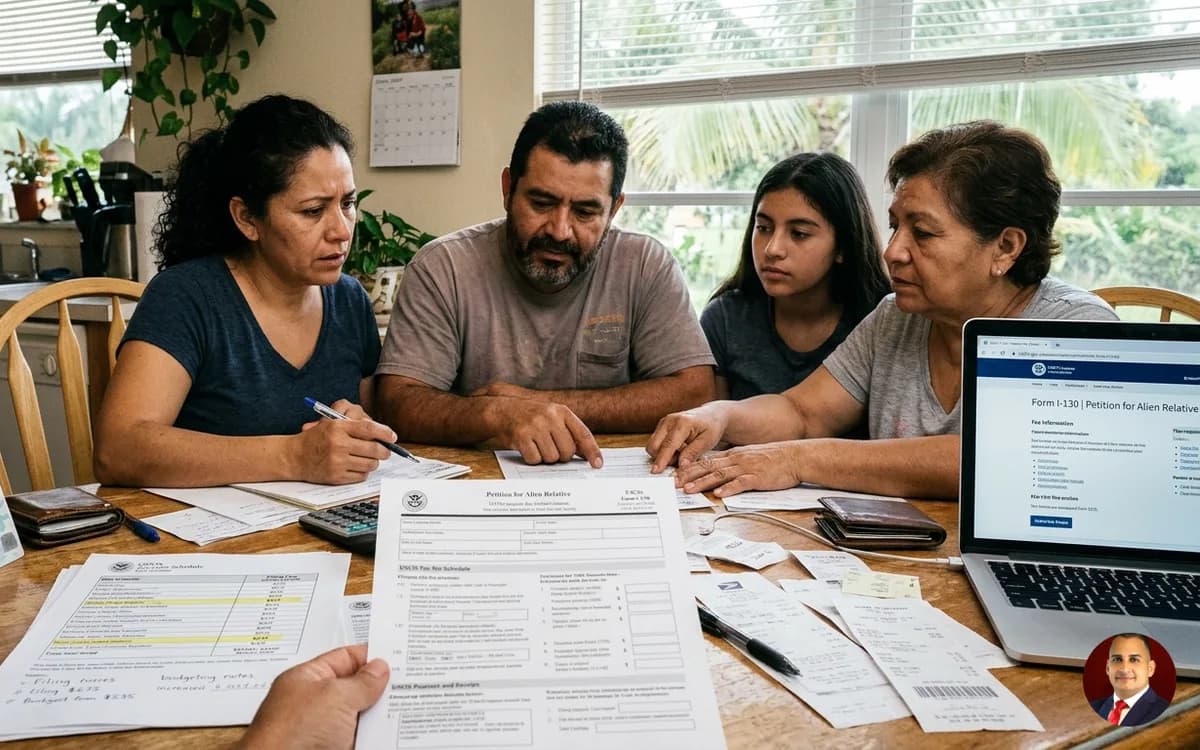
A letter arrives from USCIS, and the first thing you look for is a decision. Instead you find a request for more documents, or a fee receipt higher than you remembered, with no explanation of what it means for the timeline you have been counting on.
If you are sponsoring a spouse, parent, or child through Form I-130, a federal regulatory proposal now sits between you and that reunion. Understanding what has already changed, and what is still only proposed, is the first step you can take today.
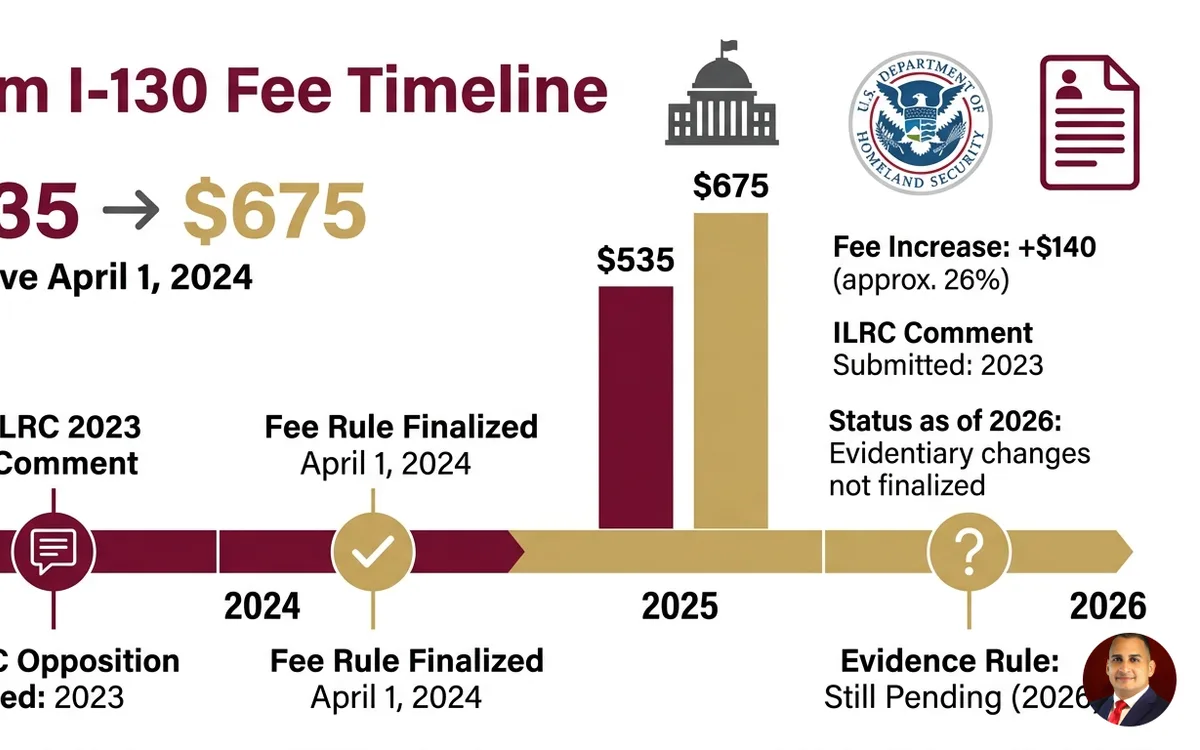
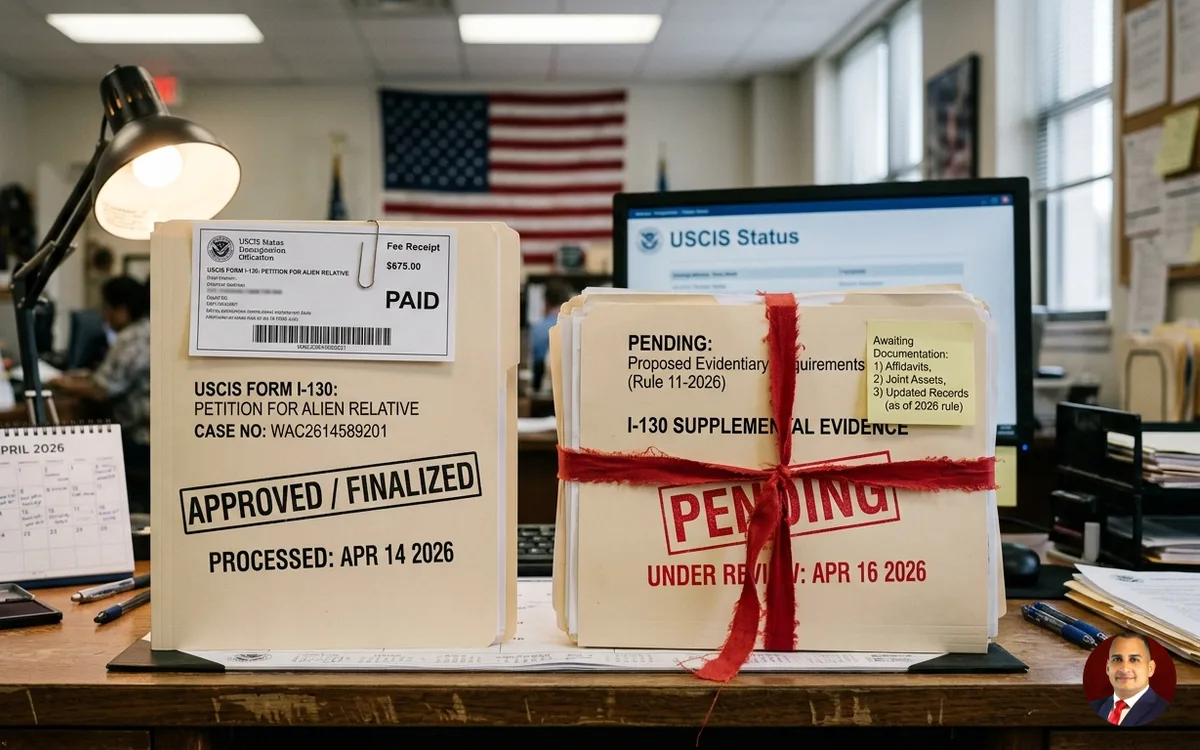
USCIS's proposed Form I-130 fee and evidence changes, opposed by the Immigrant Legal Resource Center (ILRC) in a 2023 comment to USCIS, remain partly unresolved as of 2026. The agency's final rule already raised the I-130 fee from $535 to $675, effective April 1, 2024, per USCIS. Proposed evidentiary changes have not been finalized.
The Hard Truth
What Did USCIS Actually Propose, and What's Already Final?
The I-130 petition fee rose from $535 to $675 for online filing, or $710 on paper, on April 1, 2024, under USCIS's final fee rule, 89 Fed. Reg. 6194 (Jan. 31, 2024). That increase is final and in effect now, in 2026.
The evidentiary and procedural changes the ILRC opposed in its 2023 comment, covering how petitioners prove a bona fide marriage or parent-child relationship, have not been finalized as a formal rule as of this writing. That does not mean the standard a USCIS officer applies at your interview is fixed in place. Field office practice shifts even without a published regulation.
Miami, Orlando, and Tampa officers have discretion in what evidence they find persuasive under 8 C.F.R. § 204.2. The honest number: processing time for an immediate relative petition at the Miami Field Office still runs roughly 14.5 to 19 months, per USCIS's Check Case Processing Times tool. That figure does not move faster because your family is ready to move forward.
What Happens If You Wait
What Happens If You Miss a Deadline or Wait Too Long?
A missed RFE deadline is the single most preventable way an I-130 petition is lost. USCIS typically allows up to 87 days to respond to a Request for Evidence, per the USCIS Policy Manual, Volume 1, Part E, and a late or absent response is treated as abandonment, which is harder to reopen than to answer on time.
Delay carries a second cost that is easy to miss. If your child's 21st birthday arrives before a visa number becomes available, the Supreme Court's decision in Scialabba v. Cuellar de Osorio, 573 U.S. 41 (2014), limits which preference categories get automatic age-out protection under the Child Status Protection Act. A petition sitting in backlog an extra 6 to 12 months because of a late RFE response or a missing document can push a case past that line.
For petitioners whose spouse or parent is abroad, every added month of Florida-side processing also delays the case's arrival at the National Visa Center and the scheduling of a consular interview. That time does not come back once it is gone.
Step-by-Step Process
How Does the I-130 Process Work Right Now in Florida?
File Form I-130 with supporting evidence (marriage certificate, birth certificate, or equivalent) and the current fee, $675 online or $710 by paper, per USCIS's fee schedule effective April 1, 2024.
USCIS issues a receipt notice, Form I-797C, typically within several weeks of filing.
If the file lacks sufficient proof of a bona fide relationship under 8 C.F.R. § 204.2, USCIS issues a Request for Evidence, with a response window of up to 87 days. See our RFE response guidance for what qualifies as sufficient proof.
USCIS adjudicates the petition. At the Miami Field Office, the median processing time for an immediate relative I-130, defined under INA § 201(b)(2)(A)(i), runs roughly 14.5 to 19 months; Orlando and Tampa currently run closer to 11 to 16 months, per USCIS's Check Case Processing Times tool.
If approved, a petition for a beneficiary abroad moves to the National Visa Center for document collection (Form DS-260) and consular interview scheduling. A beneficiary already in the U.S. with an immediate relative petition can often file Form I-485 concurrently.
If a case stalls well beyond the posted processing time with no RFE pending, a mandamus action in the U.S. District Court for the Southern District of Florida is one option to compel a decision. This does not force a particular result; it only compels USCIS to act. Read more about mandamus litigation for delayed immigration cases.
For beneficiaries approaching age 21, CSPA calculations under Scialabba v. Cuellar de Osorio should be checked at each stage. See our CSPA age-out explainer.
A Real-World Example
What Does Responding to an RFE Look Like in Practice?
This is a composite scenario built from common patterns our office sees, not an account of any real client.
A U.S. citizen in Hialeah files Form I-130 for his spouse, who lives abroad. He pays the $675 online filing fee and submits a marriage certificate, a joint lease, and photographs. Eight months later, USCIS issues an RFE under 8 C.F.R. § 204.2 asking for additional proof of a bona fide marriage: joint bank statements, communication records, and affidavits from people who know the couple.
He has 87 days to respond, per USCIS Policy Manual guidance. His attorney helps him gather notarized affidavits that meet the verification requirements of Florida Statute § 92.525 and organizes the financial records by date. The response is filed 11 days before the deadline.
The petition remains pending at the time of this writing, now awaiting a decision from the Miami Field Office. There is no way to predict the outcome of any individual petition; the RFE response only ensures the file is complete when an officer reviews it.
Who Reviews This Content, and What Can He Actually Do?
William J. Vasquez is admitted to the North Carolina State Bar and to the Fourth, Fifth, and Eleventh Circuit Courts of Appeals. Immigration proceedings before USCIS, the Executive Office for Immigration Review, and the Board of Immigration Appeals are federal matters. Federal immigration-bar standing, not a Florida state law license, governs who may appear in them.
Attorney Vasquez's work on Florida-based I-130 petitions and related federal immigration filings is handled under that federal authority. He is not admitted to the Florida Bar, and this content does not represent state-court authority in Florida. For a full list of credentials and practice areas, see his attorney profile.
Key Terms Explained
What Do These I-130 Terms Mean?
Form I-130 (Petition for Alien Relative): The USCIS form a U.S. citizen or lawful permanent resident files to establish a qualifying family relationship with a relative seeking an immigrant visa or adjustment of status.
Immediate Relative: Under INA § 201(b)(2)(A)(i), the spouse, unmarried child under 21, or parent of a U.S. citizen. These petitions are not subject to the annual numerical visa caps that apply to preference categories.
Preference Category: Family relationships, such as siblings of citizens or relatives of lawful permanent residents, subject to annual visa number limits, which creates the multi-year backlogs reported in the Department of State's monthly Visa Bulletin.
Request for Evidence (RFE): A USCIS notice asking a petitioner to submit additional documentation before the agency adjudicates the case. Response deadlines typically run up to 87 days, per the USCIS Policy Manual.
Priority Date: The date USCIS received a properly filed I-130, used to determine a beneficiary's place in line for preference-category cases.
National Visa Center (NVC): The State Department office that collects civil documents and fees after I-130 approval, before scheduling a consular interview abroad.
Child Status Protection Act (CSPA): A law that can preserve a beneficiary's status as a 'child' past age 21 under specific formulas, as interpreted in Scialabba v. Cuellar de Osorio, 573 U.S. 41 (2014).
Mandamus Action: A lawsuit filed in federal district court, such as the U.S. District Court for the Southern District of Florida, asking a judge to compel a federal agency to act on an unreasonably delayed case.
Frequently Asked Questions
Q: What did the ILRC say about the proposed Form I-130 changes? A: The Immigrant Legal Resource Center filed a comment opposing USCIS's proposed fee rule, 88 Fed. Reg. 402 (Jan. 4, 2023), arguing the changes would raise costs and documentation burdens for low-income petitioners. The fee portion was finalized in 2024; the evidentiary changes the ILRC specifically opposed have not been issued as a final rule as of 2026.
Q: How much does it cost to file Form I-130 in 2026? A: The current fee is $675 if filed online or $710 on paper, per USCIS's fee schedule effective April 1, 2024. This is up from the prior $535 fee.
Q: How long does an I-130 petition take to process in Florida? A: Immediate relative petitions at the Miami Field Office currently run roughly 14.5 to 19 months, and Orlando and Tampa run closer to 11 to 16 months, per USCIS's Check Case Processing Times tool. Preference-category petitions take longer because of annual visa number limits reported in the Department of State's Visa Bulletin.
Q: What happens if I miss the deadline to respond to an RFE? A: USCIS treats a late or absent response to a Request for Evidence as abandonment of the petition in most cases, per the USCIS Policy Manual, Volume 1, Part E. Refiling means paying the fee again and, in preference categories, losing the earlier priority date.
Q: When does it make sense to consider a mandamus action? A: A mandamus action, filed in federal court such as the U.S. District Court for the Southern District of Florida, asks a judge to compel USCIS to decide a case that has sat well beyond the agency's own published processing times with no RFE pending. It compels a decision, not a particular result, and is generally considered only after the posted processing time has clearly passed.
Q: Can a notario help me file Form I-130? A: In Florida, a notario publico does not carry the legal authority it does in many Latin American countries, and a notary public is not authorized to give immigration legal advice or represent you before USCIS. Filing an I-130 based on inaccurate advice from someone who is not a licensed attorney is a common cause of RFEs and denials that are costly to fix later.
Q: How do I check the status of my I-130 petition? A: Use the receipt number from your Form I-797C notice at USCIS's online case status tool (uscis.gov/casestatus), or compare your filing date against current field office medians using USCIS's Check Case Processing Times tool.
Clients contacting our office about a Form I-130 petition are usually already partway through the process: holding a receipt notice, an RFE, or a confusing fee statement. Our review includes direct attorney review of the filing itself, processing-time expectations drawn from USCIS's own published data rather than guesses, and a plain-language explanation of each procedural step before it happens. Star ratings and review counts are not something we publish as a marketing claim; judge the firm instead by how clearly we explain your specific filing status on a consultation call.
If you already have a receipt notice or an RFE in hand, the clock on your case is already running. Reading about the process is useful; having someone check your specific filing date, deadline, and field office against your actual documents is a different kind of useful.
Our office reviews Form I-130 petitions, RFE responses, and NVC follow-up filings for Florida-based families petitioning through the Miami, Orlando, and Tampa Field Offices. Schedule a consultation to have your petition, deadline, and documentation reviewed before you file your next response.
- RFE Response Services
- CSPA and Child Age-Out Protection
- Mandamus Litigation for Delayed USCIS Cases
- Attorney William J. Vasquez: Full Profile
- Family-Based Immigration Petitions