Naturalized? How to Register to Vote and Respond to a Citizenship Verification Letter
October 10, 2026
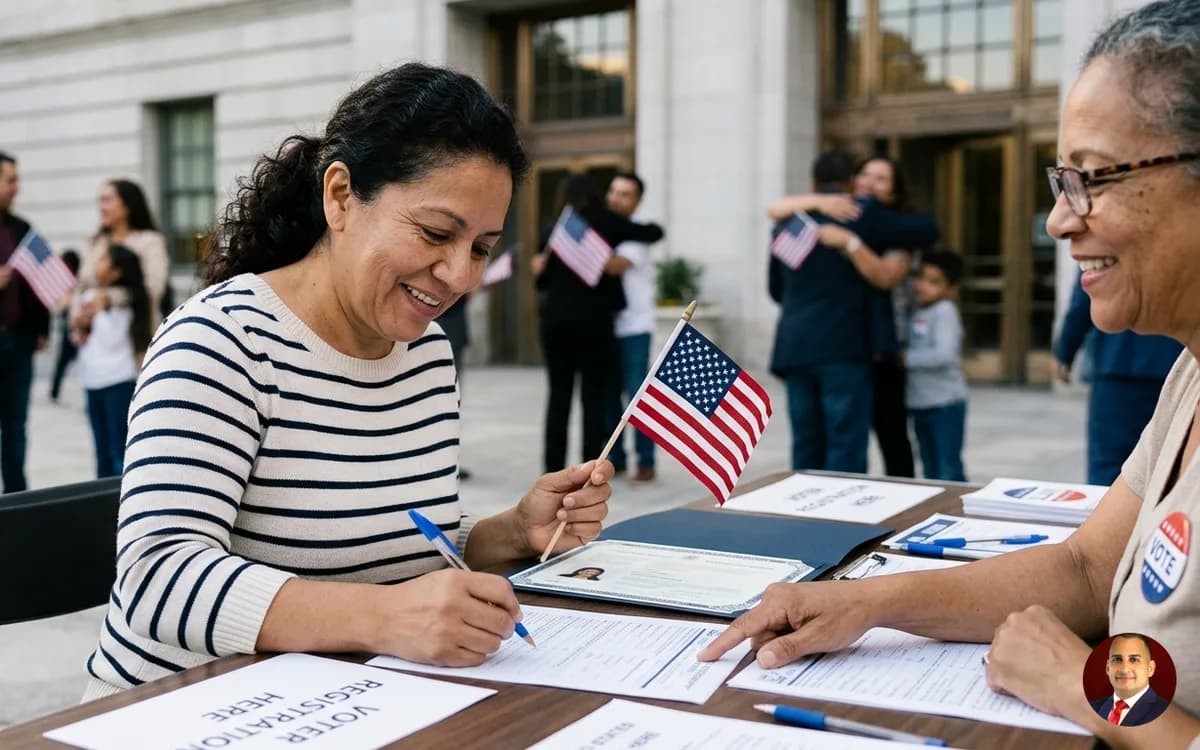
You took the oath. You have the certificate in your hand, the one that says, in federal language, that you are now a United States citizen. Registering to vote should be the easy part. For some newly naturalized citizens in Miami-Dade and Broward County, it is not: a letter arrives from the county Supervisor of Elections asking you to confirm your citizenship again, or your file shows up flagged in a routine SAVE Program check, and the ceremony that was supposed to settle the question suddenly feels unsettled.
That fear is common, and it does not mean something went wrong with your naturalization. It usually means a database did not update in time, or a form asked for information your Certificate of Naturalization does not display the way the agency expects. You have a right to respond, and a short window to do it in.
This page walks through what actually happens after the oath, step by step, and what to do if a letter shows up instead of a ballot.
After your naturalization oath ceremony, you can register to vote that same day. Your Certificate of Naturalization (Form N-550) serves as proof of citizenship under the National Voter Registration Act, 52 U.S.C. § 20507. If the USCIS SAVE Program flags your registration for review, you have a right to respond before any removal from the voter rolls.
The Hard Truth
Naturalization does not automatically update every government database overnight. USCIS transmits citizenship status to the Department of Homeland Security's SAVE Program, which county election offices can query, but the two systems do not sync in real time. A newly naturalized citizen can pass the oath ceremony on a Tuesday and still get flagged on a voter roll the following week.
Arizona v. Inter Tribal Council of Arizona, Inc., 570 U.S. 1 (2013), settled that a state cannot demand documentary proof of citizenship beyond the federal voter registration form for federal elections. That ruling protects you legally. It does not stop a county clerk's software from generating a mismatch letter, and it does not extend your registration deadline if that letter goes unanswered.
If your registration is flagged, nobody is accusing you of fraud — the county is simply asking you to confirm something the system already has on file. The problem is almost always paperwork, not your immigration status.
What Happens If You Wait
Florida's voter rolls close before an election, not on election day itself. Per the Florida Division of Elections, registration and correction deadlines fall roughly four weeks ahead of most elections; after that date, nothing new gets processed in time for that particular vote, naturalized citizen or not.
A SAVE Program flag that sits unanswered can lead to removal from the active voter roll under the county's list-maintenance procedures, which operate under the National Voter Registration Act, 52 U.S.C. § 20507. Once removed, you have to re-register from scratch, and if that happens inside the pre-election window, you miss that election entirely.
The same clock runs if your Certificate of Naturalization is lost, stolen, or damaged. Form N-565, the application to replace it, is a separate USCIS filing with its own processing time, and that time is rarely short. Waiting until the week before an election to discover you need a new certificate leaves no room to fix it.
Step-by-Step Process
Attend your oath ceremony. USCIS schedules the Oath of Allegiance ceremony as the final step of Form N-400 processing; you receive your Certificate of Naturalization, Form N-550, the same day, at locations including the USCIS Miami Field Office in Kendall and the USCIS Orlando Field Office.
Register that same day if you want to. Many ceremonies in Miami-Dade and Broward County include a voter registration table staffed by the county Supervisor of Elections. You can also register later online through the Florida Division of Elections or in person at the Miami-Dade County Supervisor of Elections Office or the Broward County Supervisor of Elections Office.
Present your Certificate of Naturalization as proof of citizenship if asked. Most registrations go through without any extra document request, under the protections set out in Arizona v. Inter Tribal Council.
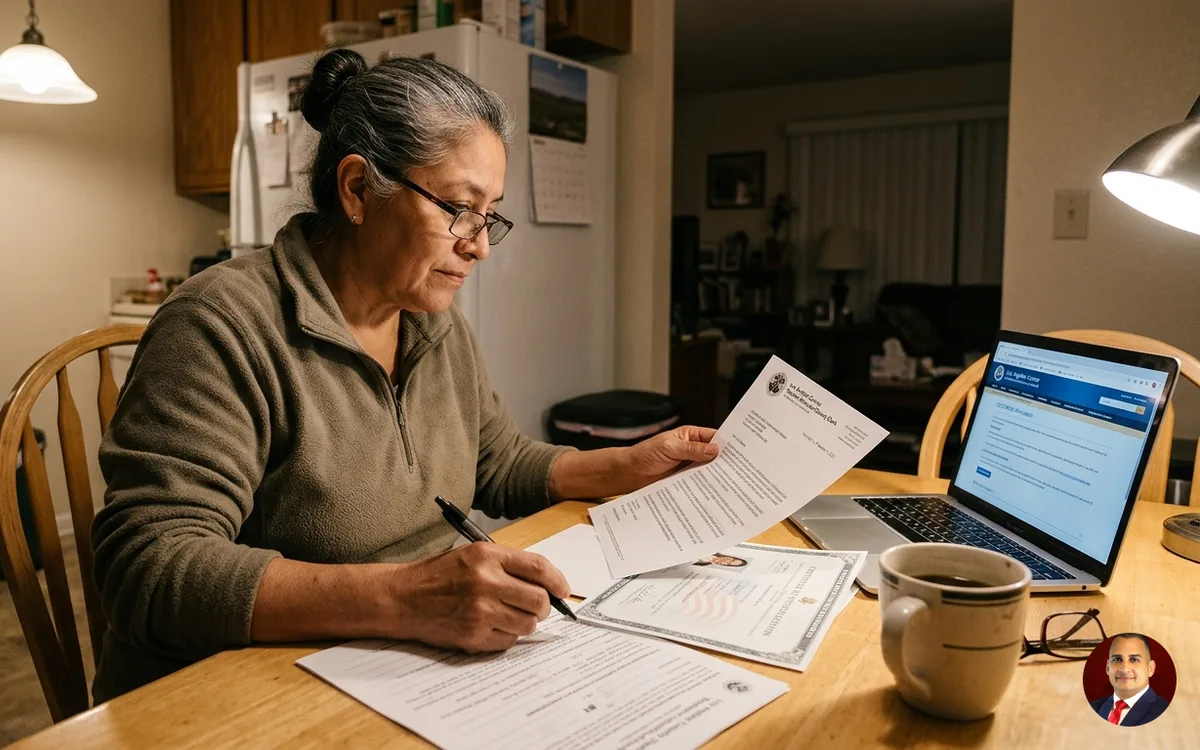
Watch for a SAVE Program verification letter. If a database mismatch flags your file, the county must notify you and give you a window to respond, consistent with the NVRA's list-maintenance protections at 52 U.S.C. § 20507. Respond in writing, within the window the letter states, with a copy of your N-550 or your passport.
Replace a lost certificate before you need it, not after. File Form N-565 with USCIS as soon as you know the original is gone, and check current processing times at egov.uscis.gov rather than relying on a general estimate.
Confirm your registration status before the registration deadline closes. The Florida Division of Elections publishes the exact deadline for each election; checking two to three weeks ahead gives you time to fix a problem the SAVE Program flagged.
A Real-World Example
Consider a composite example drawn from the kind of calls our office gets after ceremony season. Call her Rosa. Rosa naturalized at the Miami Field Office in the spring and registered to vote that same afternoon, using her Certificate of Naturalization at the table set up outside the ceremony hall.
Six weeks later, Rosa received a letter from the Miami-Dade County Supervisor of Elections asking her to confirm her citizenship, because a SAVE Program check had not matched her file on the first pass. The letter gave her a stated window to respond with documentation. Rosa gathered a copy of her N-550 and mailed it to the address on the letter, keeping copies for her own records.
At that point, Rosa's file moved into manual review at the county office, the same process any flagged registration goes through. What happens next depends on how quickly the county's review queue processes her documents and whether the SAVE Program database updates before the next registration deadline. Walking through Rosa's situation shows the step that matters: responding inside the stated window, with the right document, keeps her file moving through review instead of lapsing into removal.
William J. Vasquez is admitted to the North Carolina State Bar and to the United States Courts of Appeals for the Fourth, Fifth, and Eleventh Circuits. Naturalization applications, USCIS Form N-400 processing, and appeals to the Board of Immigration Appeals are federal matters. Under 8 C.F.R. § 1292.1, an attorney admitted to any one state bar in good standing can represent clients before USCIS and the BIA nationwide, without a separate credential for each state where a client lives.
That standing lets Vasquez advise Florida residents on naturalization delays, denials, and the documentation questions that follow an oath ceremony, working from the firm's Florida office. He does not hold a Florida state bar license, and nothing here claims one. His authority in these matters comes from federal immigration-bar standing, not from any state-specific credential. The firm's practice is scoped to USCIS filings, BIA appeals, and related federal immigration matters, handled near the Miami and Orlando Field Offices so Florida clients can meet in person instead of coordinating across state lines.
Key Terms Explained
Certificate of Naturalization (Form N-550): the document USCIS issues at your oath ceremony proving you are a U.S. citizen; it is the primary document used as proof of citizenship when registering to vote.
SAVE Program (Systematic Alien Verification for Entitlements): a USCIS-run database that government agencies, including county election offices, can query to confirm a person's citizenship or immigration status.
National Voter Registration Act (NVRA), 52 U.S.C. § 20507: the federal law governing how states maintain voter rolls, including the notice and response steps required before a registered voter can be removed.
Oath of Allegiance ceremony: the final step in the naturalization process under Form N-400, where an applicant formally becomes a U.S. citizen and receives the Certificate of Naturalization.
Form N-565: the USCIS application used to request a replacement Certificate of Naturalization if the original is lost, stolen, or damaged.
Board of Immigration Appeals (BIA): the administrative body that reviews certain decisions from immigration judges and USCIS; representation before it is governed by 8 C.F.R. § 1292.1, not state-specific bar admission.
Frequently Asked Questions
Q: Can I register to vote the same day I take the Oath of Allegiance? A: Yes. Many naturalization ceremonies, including those at the USCIS Miami Field Office, have a voter registration table on site, and your Certificate of Naturalization, Form N-550, is accepted as proof of citizenship that same day.
Q: What if my voter registration gets flagged by the SAVE Program after I naturalize? A: The county Supervisor of Elections must notify you and give you a window to respond under the list-maintenance protections in the National Voter Registration Act, 52 U.S.C. § 20507. Respond in writing with a copy of your N-550 or U.S. passport before the deadline stated in the letter.
Q: I lost my Certificate of Naturalization. How do I replace it before an election? A: File Form N-565, Application for Replacement Naturalization/Citizenship Document, with USCIS as soon as you discover it is missing, and check current processing times at egov.uscis.gov so you know whether it will arrive before your county's registration deadline.
Q: Does Florida require extra proof of citizenship beyond the standard voter registration form? A: No. Arizona v. Inter Tribal Council of Arizona, Inc., 570 U.S. 1 (2013), held that states cannot require documentary proof of citizenship beyond the federal voter registration form for federal elections, though a county may still follow up if its own database check does not match on the first attempt.
Clients who come to us after a naturalization ceremony are usually looking for someone who will explain the federal paperwork in plain terms, not promise a particular result. Our reviews reflect that: people describe getting a straight answer about what a SAVE Program letter means and which document to send back, rather than a vague reassurance. We handle these matters from our Florida office, in English and Spanish, within the federal immigration-practice scope described above.
A flagged registration or a missing certificate is a paperwork problem with a federal fix, not a reason to assume the worst. The next step is making sure the right document reaches the right office before a deadline closes.
If you received a SAVE Program letter, need help replacing a Certificate of Naturalization, or have questions about a naturalization delay, schedule a consultation with our office to go over your documents and the deadline you're working against. We handle these matters from our Florida location, built around the federal immigration process described above.
- Naturalization & Citizenship Services
- USCIS Form N-400 Guidance
- BIA Appeals
- Schedule a Consultation
- Florida Division of Elections Voter Registration