NACARA Attorney
October 10, 2026
You still remember the year you filed, even if the folder is gone now. Maybe it was 1988 in a church basement in Little Havana, or a stack of papers handed to a paralegal in a strip mall in Hialeah before you had even learned the word 'asylum' in English. NACARA exists because Congress decided that decades of limbo for people like you deserved a second look. Whether your specific dates and papers still add up to eligibility is the question that keeps you up at night, and it deserves a straight answer instead of another form letter.
NACARA lets certain Nicaraguans, Cubans, Salvadorans, Guatemalans, and former Soviet-bloc nationals apply for suspension of deportation or special rule cancellation of removal if they meet arrival-date and continuous-presence rules under Pub. L. 105-100 (1997). Eligibility turns on your exact entry date, asylum history, and country category, not on the law existing in general.
The Hard Truth
NACARA is not a fresh start for anyone who missed its narrow windows. Section 202 covers Cuban and Nicaraguan nationals physically present in the United States by December 1, 1995, with no continuous-presence filing requirement attached. Section 203 covers Guatemalans, Salvadorans, and nationals of former Soviet-bloc countries, but only with proof of ABC class registration, a timely asylum filing, or TPS registration under the 1990-1991 deadlines set by Pub. L. 105-100, Title II, Section 203, 111 Stat. 2160 (1997). If your paper trail from that era is thin, a missing court date, an old A-number, or a lost ABC registration receipt can be the difference between a viable filing and a denial. EOIR's docket for these cases has narrowed for years, and few attorneys still build these files from scratch.
What Happens If You Wait
Delay does not preserve your eligibility. It erodes the evidence you need to prove it. Immigration court records from the late 1980s and early 1990s are not always digitized, and the people who could vouch for your ABC class registration or asylum filing date are harder to find every year. If you are already in removal proceedings, an immigration judge can order you removed while your NACARA eligibility goes unraised, and once a removal order is final, a special rule cancellation application becomes a much narrower motion to reopen rather than a straightforward filing. Waiting also gives USCIS's Miami Asylum Office, which handles affirmative Form I-881 filings for applicants not in proceedings, less time to develop your file before any hearing gets calendared.
Step-by-Step Process
Confirm your category. Section 202 (Cuban/Nicaraguan) requires physical presence in the U.S. by December 1, 1995. Section 203 (Guatemalan, Salvadoran, former Soviet-bloc) requires proof tied to ABC class registration, an asylum application filed by the 1990-1991 deadlines, or TPS registration, per 8 C.F.R. Section 1240.66.
Reconstruct your documentary history. Request your immigration court file through EOIR's Freedom of Information Act process, and, where relevant, your A-file through USCIS, to locate any surviving ABC settlement registration, asylum receipt notice, or prior TPS application.
Determine where to file. If you are not currently in removal proceedings, Form I-881 goes to USCIS's Asylum Division, with jurisdiction for Florida-based applicants generally resting with the Miami Asylum Office. If you are already in proceedings, the same form goes to the immigration judge assigned to your case, whether that is Miami Immigration Court at 333 S. Miami Ave. or Orlando Immigration Court at 3535 Lawton Rd.
Prepare the hardship showing. Suspension of deportation under NACARA requires proof of continuous physical presence for the statutory period and extreme hardship to yourself or a qualifying relative, a lower bar than the exceptional and extremely unusual hardship standard required in standard cancellation of removal under INA Section 240A.
Attend the merits hearing. If you are detained, this may mean a hearing calendared out of Krome North Service Processing Center before any transfer; if not detained, expect a scheduled merits hearing at whichever Florida immigration court holds your file.
A Real-World Example
Consider a composite example built from the kind of file this office sees. A Salvadoran client, now in his sixties, registered for ABC class benefits at a legal aid clinic in 1989 but was never given a copy of the intake form. Decades later, in removal proceedings, the immigration judge asked for proof of that registration and none existed in the client's possession.
Our approach in a case like this starts with an EOIR FOIA request to pull the immigration court's own file, cross-checked against USCIS records for any surviving A-file notation of the 1989 filing. Where the government's own paperwork does not confirm the date, we look at secondary evidence: old community organization intake logs, prior notices of hearing, or any TPS registration filed in the same period, since 8 C.F.R. Section 1240.66 allows credible secondary evidence when primary documents are unavailable. The judge then decides, at a scheduled merits hearing, whether the assembled record meets the statute's registration and continuous-presence requirements. That determination rests with the court, not with any attorney's assurance beforehand.
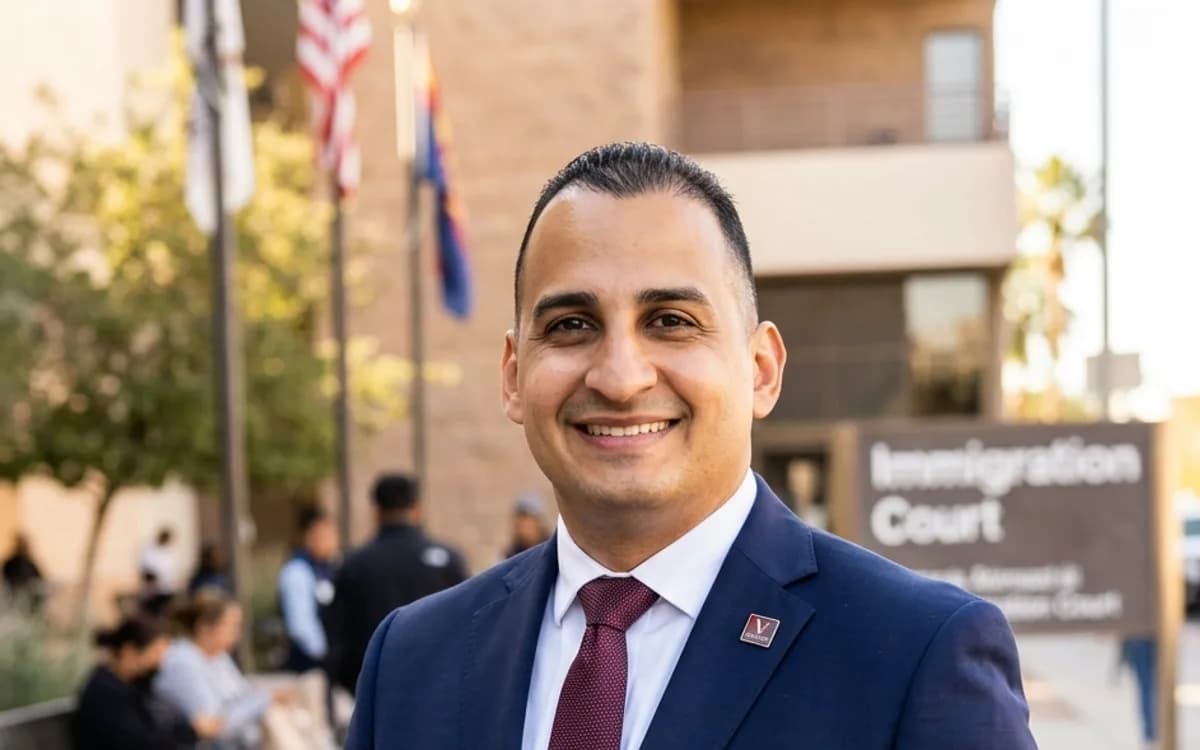
William J. Vasquez handles NACARA suspension of deportation and special rule cancellation of removal matters as part of the firm's federal immigration practice. He holds active admission to the North Carolina State Bar and to the Fourth, Fifth, and Eleventh Circuit Courts of Appeals, which permits him to represent clients before the immigration courts and the Board of Immigration Appeals nationwide, since EOIR and USCIS proceedings are governed by federal, not state, licensing rules. His work described on this page is scoped to federal immigration relief, including NACARA Form I-881 filings, and does not extend beyond that federal practice area.
Key Terms Explained
NACARA: Nicaraguan Adjustment and Central American Relief Act, Pub. L. 105-100, Title II, Section 203, 111 Stat. 2160 (1997), a federal law creating special suspension of deportation and cancellation of removal rules for specific national-origin groups.
Section 202: The NACARA provision covering Cuban and Nicaraguan nationals, requiring physical presence in the U.S. by December 1, 1995, with no ABC class or asylum-filing prerequisite.
Section 203: The NACARA provision covering Guatemalan and Salvadoran nationals and certain former Soviet-bloc nationals, requiring proof tied to ABC class registration, a timely asylum filing, or TPS registration under the 1990-1991 deadlines.
ABC class: The settlement class created in American Baptist Churches v. Thornburgh, giving certain Guatemalan and Salvadoran nationals who registered by the specified 1990 deadlines the right to a new asylum interview, a registration later tied to NACARA Section 203 eligibility.
Suspension of deportation: An older form of relief, predating cancellation of removal, revived by NACARA for eligible applicants, requiring continuous physical presence, good moral character, and extreme hardship to the applicant or a qualifying relative.
Special rule cancellation of removal: The NACARA-specific version of cancellation of removal available to Section 203 applicants, governed by 8 C.F.R. Section 1240.66.
Extreme hardship: The hardship standard applied in NACARA suspension of deportation cases, generally considered less demanding than the 'exceptional and extremely unusual hardship' standard required in standard cancellation of removal under INA Section 240A.
Form I-881: Application for Suspension of Deportation or Special Rule Cancellation of Removal, filed either affirmatively with USCIS or defensively with the immigration court, per the EOIR Immigration Court Practice Manual.
Frequently Asked Questions
Q: I'm Nicaraguan and entered the U.S. before 1995 but never filed anything. Can I still apply for NACARA? A: Possibly. Section 202 requires physical presence in the U.S. by December 1, 1995, but does not require a prior asylum filing or ABC registration, per Pub. L. 105-100, Title II, Section 203, 111 Stat. 2160 (1997). You will still need to document that presence through records like old leases, pay stubs, school enrollment, or affidavits.
Q: My ABC class registration record from 1989 is missing. Does that automatically disqualify me? A: Not automatically. 8 C.F.R. Section 1240.66 allows secondary evidence, such as community organization intake logs or related filings from the same period, when primary registration records cannot be located. Whether that evidence is sufficient is decided by the immigration judge or USCIS adjudicator handling your specific file.
Q: Can nationals of former Soviet-bloc countries still qualify for NACARA today? A: Yes, if you meet Section 203's registration and filing-date requirements, since NACARA eligibility is fixed by the statute's original 1990-1991 windows, not by the current year. What has changed over time is the difficulty of proving those decades-old filings, not the underlying legal eligibility.
Q: What is the difference between filing NACARA affirmatively with USCIS and filing it in immigration court? A: If you are not currently in removal proceedings, Form I-881 is filed with USCIS's Asylum Division, with jurisdiction for Florida-based applicants generally resting with the Miami Asylum Office. If you are already in proceedings, the same form is filed with the immigration judge handling your case at whichever court has jurisdiction, such as Miami or Orlando Immigration Court.
Clients come to this practice after years of uncertainty, often after another office told them NACARA was too old a law to bother with. What they consistently describe afterward is not a promised result, since no attorney can guarantee how an immigration judge or USCIS adjudicator will rule, but a clear explanation of what their specific file does and does not show, and what evidence still needs to be gathered before a hearing date arrives.
You do not need to have your whole file organized before you call. Bring whatever you have, an old notice, a faded receipt, a name you remember from a legal aid clinic decades ago, and we will tell you plainly whether it points toward Section 202, Section 203, or neither.
If you think you may qualify for NACARA suspension of deportation or special rule cancellation of removal, schedule a consultation with our immigration team to review your arrival dates, prior filings, and documentation gaps before your next hearing date. Call our office or use the consultation request form to start that review.
- Cancellation of Removal
- Asylum Applications
- Temporary Protected Status
- Immigration Court Representation
- Adjustment of Status