Immigration Lawyer Near Me
October 10, 2026
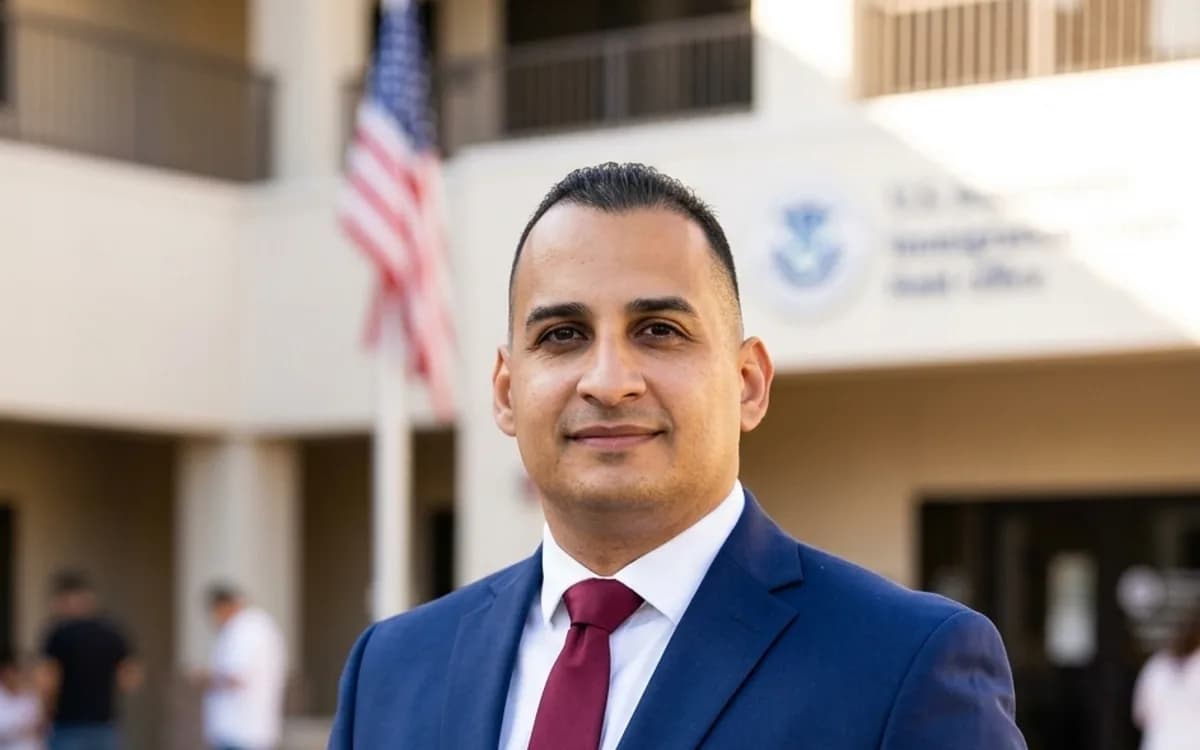
The notice arrived last week, or your cousin got picked up outside Krome, or your green card renewal came back with a request for evidence you don't understand. Typing 'immigration lawyer near me' at midnight usually means one of two things: a deadline you didn't know existed, or a hearing date you can't stop thinking about. Proximity matters less than you'd think. What matters is whether the attorney you call knows the Miami Immigration Court's docket, the USCIS Miami Field Office's processing habits, and the difference between a form you can still fix yourself and one that needs a federal filing today.
An immigration lawyer handles federal matters only, USCIS filings, EOIR removal defense, and BIA appeals, so bar admission in any state qualifies an attorney to represent you nationwide if they hold federal immigration-bar standing (8 C.F.R. § 1003.102). Search for attorneys who regularly appear before your local immigration court, such as Miami's EOIR at 333 SE 2nd Avenue.
The Hard Truth
A lawyer's office being five miles away does not change your case. The Miami Immigration Court, at 333 SE 2nd Avenue, and the Orlando Immigration Court, at 3170 McCrory Place, are both federal courts under the Executive Office for Immigration Review, applying the same federal law an attorney in Tallahassee or Atlanta would apply. What actually changes outcomes is whether your Notice to Appear was properly served under Pereira v. Sessions, 585 U.S. 198 (2018), whether you filed within the deadline, and whether your facts fit a form of relief that actually exists. Some cases have no available relief no matter who represents you, and an honest consultation says that in the first meeting, not the fifth.
What Happens If You Wait
Deadlines in immigration law do not bend for confusion. If the Board of Immigration Appeals denies your case, you have 30 days to file a Notice of Appeal under 8 C.F.R. § 1003.38(b); miss it and the removal order becomes final. A petition for review of a BIA decision to the Eleventh Circuit Court of Appeals must be filed within 30 days under 8 U.S.C. § 1252(b)(1) and Federal Rule of Appellate Procedure 15, and the clerk's office in Atlanta will not accept a late filing for any reason. Unlawful presence keeps accruing while you wait: under INA § 212(a)(9)(B), 8 U.S.C. § 1182(a)(9)(B), 180 days triggers a 3-year reentry bar and one year triggers a 10-year bar. Waiting to find the right lawyer can cost you the case before you find one.
Step-by-Step Process
Start by identifying which system your case is in. USCIS benefits cases, like I-130 petitions, I-485 adjustment, and N-400 naturalization, are filed with USCIS and often adjudicated at the Miami Field Office, 8975 NW 33rd Street. Removal cases go through EOIR, meaning the Miami or Orlando Immigration Court, not USCIS. In a removal case, your first appearance is a master calendar hearing, a short procedural hearing, usually 5 to 15 minutes, where the judge confirms your identity, takes pleadings, and sets deadlines for filing applications. Your individual hearing, where you present evidence and testimony, is scheduled months or years later given current EOIR backlogs. If the judge denies relief, the 30-day BIA appeal clock under 8 C.F.R. § 1003.38(b) starts running the day the decision is issued, not the day you receive it in the mail. If the BIA denies the appeal, the next step is a petition for review to the Eleventh Circuit under FRAP 15, filed within 30 days of the BIA's final order.
A Real-World Example
Consider a composite based on cases we commonly see: a conditional resident, married two years, filed her I-751 to remove conditions on her green card. Her divorce finalized four months before the filing window opened under 8 C.F.R. § 216.4(a)(1), so she filed as a good-faith marriage waiver instead of a joint petition. USCIS issued a request for evidence asking for documentation of the marriage's bona fides, tax returns, joint leases, photos, and affidavits. She attended biometrics at an Application Support Center, then an interview at the Miami Field Office where an officer asked follow-up questions about the timeline of the separation. The file remains pending adjudication; the point of walking through it is the sequence, RFE, biometrics, interview, decision, not any particular result, since every I-751 waiver turns on its own facts and evidence.
William J. Vasquez is admitted to the North Carolina State Bar and to practice before the U.S. Courts of Appeals for the Fourth, Fifth, and Eleventh Circuits. Immigration cases are decided in federal forums, USCIS, the Miami and Orlando Immigration Courts, and the Board of Immigration Appeals, so an attorney's authority to represent you there comes from federal immigration-bar standing, not state bar admission. He does not hold a Florida law license and does not represent clients in Florida state-court matters. His practice focuses on removal defense, family- and employment-based petitions, and appeals to the Eleventh Circuit, the federal appellate court that reviews BIA decisions arising from Florida cases.
Key Terms Explained
Notice to Appear (NTA): the charging document that starts removal proceedings, filed with the immigration court by DHS. EOIR: the Executive Office for Immigration Review, the Department of Justice agency that runs immigration courts, including Miami and Orlando. Master Calendar Hearing: a short scheduling hearing where the judge takes pleadings and sets deadlines, not where evidence is presented. Individual Hearing: the full evidentiary hearing where testimony and evidence are presented and the judge decides relief. Board of Immigration Appeals (BIA): the administrative body that reviews immigration judge decisions; appeals must be filed within 30 days under 8 C.F.R. § 1003.38(b). Petition for Review: the filing that asks a federal circuit court, here the Eleventh Circuit, to review a final BIA order under 8 U.S.C. § 1252(b)(1). I-601A Provisional Unlawful Presence Waiver: a waiver filed before leaving the U.S. for a consular interview, addressing bars under INA § 212(a)(9)(B). Conditional Resident: a green card holder whose status is valid two years, tied to a marriage less than two years old at approval, requiring an I-751 filing to remove conditions.
Frequently Asked Questions
How much does an immigration lawyer near me charge for an I-130 petition consultation? Fees vary by case complexity and attorney; ask for a written fee agreement before paying anything, and confirm whether the quote covers the full petition or the consultation only. Can I find a Spanish-speaking immigration lawyer for my asylum interview at the Miami Asylum Office? Yes; ask specifically whether the attorney or a staff interpreter will be present at the interview itself, since USCIS allows the applicant to bring their own interpreter. What happens if my relative is detained at Krome North Service Processing Center? A bond hearing may be available before an immigration judge; scheduling depends on the Miami court's docket, and detained dockets often move faster than non-detained ones. What do I do if USCIS denies my N-400 naturalization interview? You can file Form N-336 requesting a hearing before a USCIS officer within 30 days of the denial notice under 8 C.F.R. § 336.2(a); missing that window generally means starting over. Can I switch from an H-1B to a green card without leaving the country? Often yes, through adjustment of status if a family or employment petition and priority date allow it, but timing depends on visa bulletin backlogs specific to the applicant's category and country of birth.
Client feedback for this firm is posted on Google and other public review platforms, where readers can see comments about communication, responsiveness, and how a case was handled from filing through hearing. We do not publish success rates or predicted outcomes; Florida Bar Rule 4-7.13(b)(2) restricts publishing case-result statistics because immigration outcomes are not objectively verifiable in the way a settlement figure might be. Read the reviews for how the firm communicates and prepares clients, not for a promise about your specific case.
None of this tells you what happens in your specific case, because that depends on your Notice to Appear, your entry date, your prior filings, and facts a general article can't know. A consultation is where those specifics get sorted out against the actual deadlines that apply to you.
If you have a hearing date, a USCIS denial, or a detained family member at Krome, schedule a consultation with our office to review your documents and identify what deadline, if any, is running right now. Call or use the contact form to set a time; bring your Notice to Appear, any USCIS notices, and your immigration filing history so the first meeting covers your actual case instead of general background.
- Removal Defense Before the Miami and Orlando Immigration Courts
- Family-Based Petitions (I-130, I-485)
- I-751 Removal of Conditions
- Provisional Unlawful Presence Waivers (I-601A)
- Board of Immigration Appeals Practice
- Petitions for Review to the Eleventh Circuit
- Naturalization (N-400) Denials and Appeals
- Contact Our Office