Immigration Attorney Near Me
October 10, 2026
You typed "immigration attorney near me" because something just happened. A Notice to Appear showed up in the mail. USCIS sent a denial. A relative got picked up and is sitting at Krome right now. The search itself tells you the clock already started. You do not need the lawyer with the nicest office in Miami. You need one who knows exactly which building your case lives in, and what happens if nobody answers it in time.
An immigration attorney near me handles federal immigration matters, USCIS applications, EOIR removal hearings, and BIA appeals, because immigration law is federal jurisdiction under 8 U.S.C. § 1229a, not a state-by-state license. In South Florida, that means direct access to USCIS Miami Field Office and Miami Immigration Court.
The Hard Truth
Immigration law is federal, not local. Appearing before USCIS, the Miami Immigration Court, or the Board of Immigration Appeals (BIA) does not require a Florida law license, because those are federal forums governed by 8 U.S.C. § 1229a and the EOIR Immigration Court Practice Manual. What matters is federal immigration-bar standing and whether the attorney has actually filed cases in the system yours sits in. Being physically close to Miami helps with hearings and with visiting a detained relative at Krome North Service Processing Center, but proximity does not fix a missed deadline. A fair number of "attorney near me" consultations end with the attorney confirming the filing window already closed.
What Happens If You Wait
Removal proceedings move whether you show up or not. Under 8 U.S.C. § 1229a(b)(5), an immigration judge can order removal in absentia if you miss a hearing at the Miami Immigration Court, even by a day, even if the notice went to an old address. USCIS denials carry their own clock: an I-130 denial you do not appeal within the window stated in the denial notice becomes final, and a DACA renewal filed after its deadline can mean months without work authorization. Searching for the right attorney for weeks while a deadline runs is still a form of missing it.
Step-by-Step Process
Start by identifying which system actually has your case, because the next steps depend entirely on that. If USCIS is adjudicating a petition or application, your file likely routes through USCIS Miami Field Office on 2nd Avenue. If you are in removal proceedings, your case is docketed at the Miami Immigration Court, 333 S Miami Ave, under EOIR. If an immigration judge already ruled against you, the next stop is the BIA, which hears appeals nationwide under 8 C.F.R. § 1292.1 without requiring circuit-specific admission. Second, pull every date off whatever notice you received: hearing date, response deadline, appeal window. Third, call the court or USCIS directly to confirm your hearing or application status before you do anything else; EOIR's automated case information line and the USCIS online case status tool are both free and do not require a lawyer. Fourth, if you are detained at Krome, a bond hearing request can often be filed before a full attorney relationship is finalized, so timing matters more than polish. Fifth, once you retain counsel, filings in Miami Immigration Court go through EOIR's ECAS electronic filing system, which has its own formatting and deadline rules under the Practice Manual. Finally, attend every hearing. A master calendar hearing is a short procedural hearing, typically 5 to 15 minutes, where the judge confirms identity, takes pleadings, and sets the next date; it is not your trial, and skipping it does not make the case go away.
A Real-World Example
Consider a composite drawn from common Miami Field Office filings, not an actual client. A U.S. citizen files an I-130 for a spouse. USCIS issues a Request for Evidence (RFE) asking for more proof of a shared life together, specific line in the notice, 87-day response window stated on the form. The couple gathers joint leases, bank statements, and affidavits, and the attorney organizes them against the exact evidentiary categories USCIS cited rather than submitting everything at once. The response goes in before the deadline through the appropriate USCIS filing channel. From there, the case sits in USCIS's adjudication queue, and the couple waits for either an approval notice, a second RFE, or a denial with appeal rights explained. The point of walking through this is the sequence: identify the request, respond to the specific evidence gap, meet the stated deadline, and then wait for the agency's decision like everyone else in the queue.
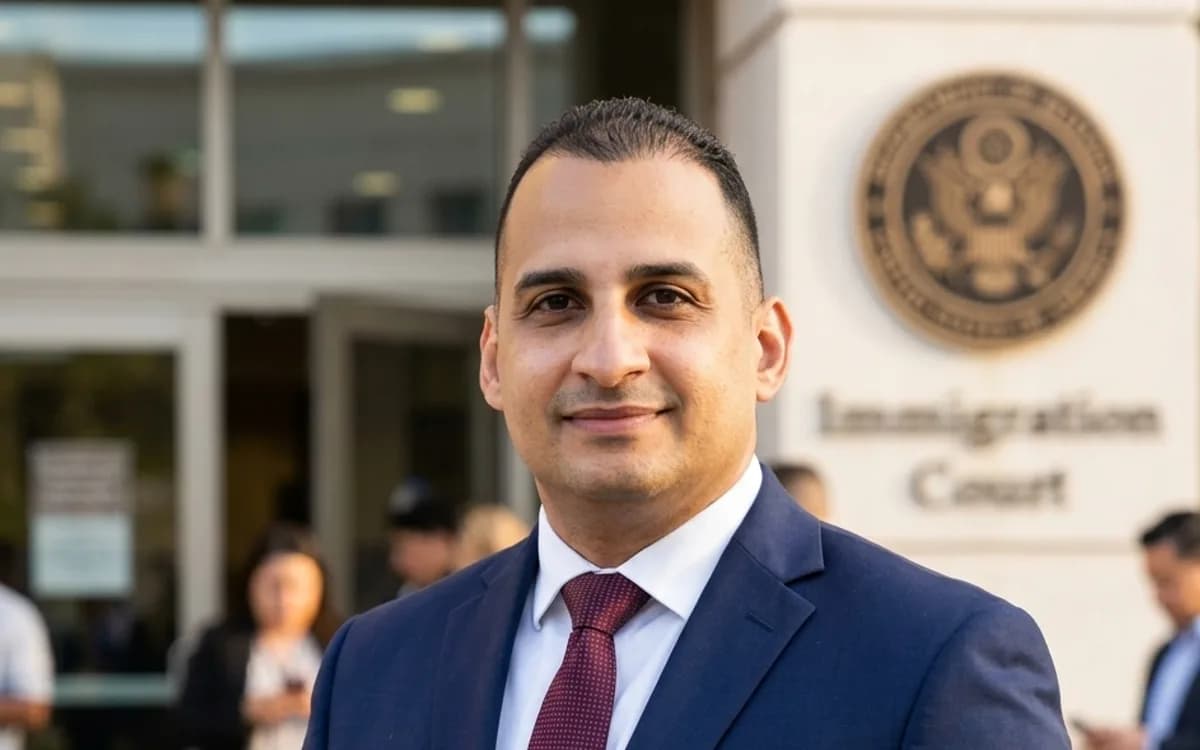
William J. Vasquez is admitted to the North Carolina State Bar and to the 4th, 5th, and 11th Circuit Courts of Appeals, and handles federal immigration matters, USCIS filings, Miami Immigration Court proceedings, and BIA appeals, under the federal framework that allows any attorney with federal immigration-bar standing to practice immigration law nationwide regardless of state bar admission, per 8 C.F.R. § 1292.1. His work on this page is limited to federal immigration matters; he does not hold a Florida law license, and nothing here should be read as a claim that he does. Our team coordinates case strategy across USCIS, EOIR, and BIA filings from the firm's Florida office, with direct access to USCIS Miami Field Office and the Miami Immigration Court.
Key Terms Explained
EOIR: the Executive Office for Immigration Review, the Department of Justice agency that runs immigration courts and the Board of Immigration Appeals.
USCIS: U.S. Citizenship and Immigration Services, the DHS agency that adjudicates petitions and applications like I-130s, I-140s, and naturalization.
BIA: the Board of Immigration Appeals, which reviews immigration judges' decisions and can affirm, reverse, or remand a case; appearing before it does not require admission to a specific state bar or circuit.
Notice to Appear (NTA): the charging document that starts removal proceedings in immigration court; per Pereira v. Sessions, 585 U.S. 198 (2018), an NTA missing a hearing date or time has specific legal consequences for certain forms of relief.
ECAS: the EOIR Courts & Appeals System, the electronic filing platform now required for most filings in Miami Immigration Court under the EOIR Practice Manual.
601A waiver: a provisional unlawful presence waiver filed with USCIS before leaving the U.S. for a consular interview, for certain relatives of U.S. citizens or lawful permanent residents.
RFE: Request for Evidence, a USCIS notice asking for additional documentation before it will decide a pending petition or application.
Cancellation of removal: a form of relief an immigration judge can grant in removal proceedings if the respondent meets specific statutory requirements under 8 U.S.C. § 1229b; it is not automatic and requires proving each element.
Frequently Asked Questions
Q: Do I need a Florida-licensed attorney for my immigration case? A: No. Immigration cases before USCIS, the Miami Immigration Court, and the BIA are federal matters, so any attorney with federal immigration-bar standing can represent you regardless of which state bar they belong to.
Q: What happens if I miss my hearing at Miami Immigration Court? A: Under 8 U.S.C. § 1229a(b)(5), the judge can order you removed in absentia even if you were not personally served or the notice went to a wrong address; a motion to reopen is possible but has its own strict deadline and standard.
Q: Can an attorney near me help if my relative is detained at Krome? A: Yes. An attorney can request a bond hearing, review the detention paperwork, and communicate with Krome North Service Processing Center directly, and physical proximity to Miami makes in-person visits and hearing attendance more practical.
Q: My I-130 was denied. Can I still get help nearby? A: An I-130 denial from USCIS Miami Field Office generally comes with appeal or motion-to-reopen rights stated in the denial notice itself, and an attorney can review whether the stated deadline and grounds still allow for action.
Q: Does an immigration attorney near me need to speak Spanish or Haitian Creole? A: It helps for direct communication with you, but what matters legally is that the attorney or a qualified interpreter can accurately represent your statements to USCIS or the immigration judge, since misstatements in a filing can affect your case.
Clients come to this firm after finding a notice in the mail they did not understand or a hearing date they almost missed. What they describe afterward is less about outcomes and more about process: someone explained what the Notice to Appear actually meant, what ECAS filing required, and what to expect at the next hearing. That kind of feedback does not show up as a star rating alone, but it is the pattern across client comments about this immigration practice.
You do not have to decide today whether to hire a lawyer. You do have to find out, today, what deadline is attached to whatever notice you are holding. That part does not require a retainer.
If you have a USCIS notice, a Miami Immigration Court hearing date, or a detained relative at Krome, schedule a consultation with our immigration team to go over the specific deadlines and filings in your case before the next date arrives.
- Immigration Consultation Scheduling
- USCIS Case Status Tool
- EOIR Automated Case Information
- Krome North Service Processing Center Visitation Information
- Board of Immigration Appeals Practice Manual
- Notario Fraud: What to Know Before You Sign Anything