California Immigration Cases: Federal Attorney, Your Next Steps
October 10, 2026
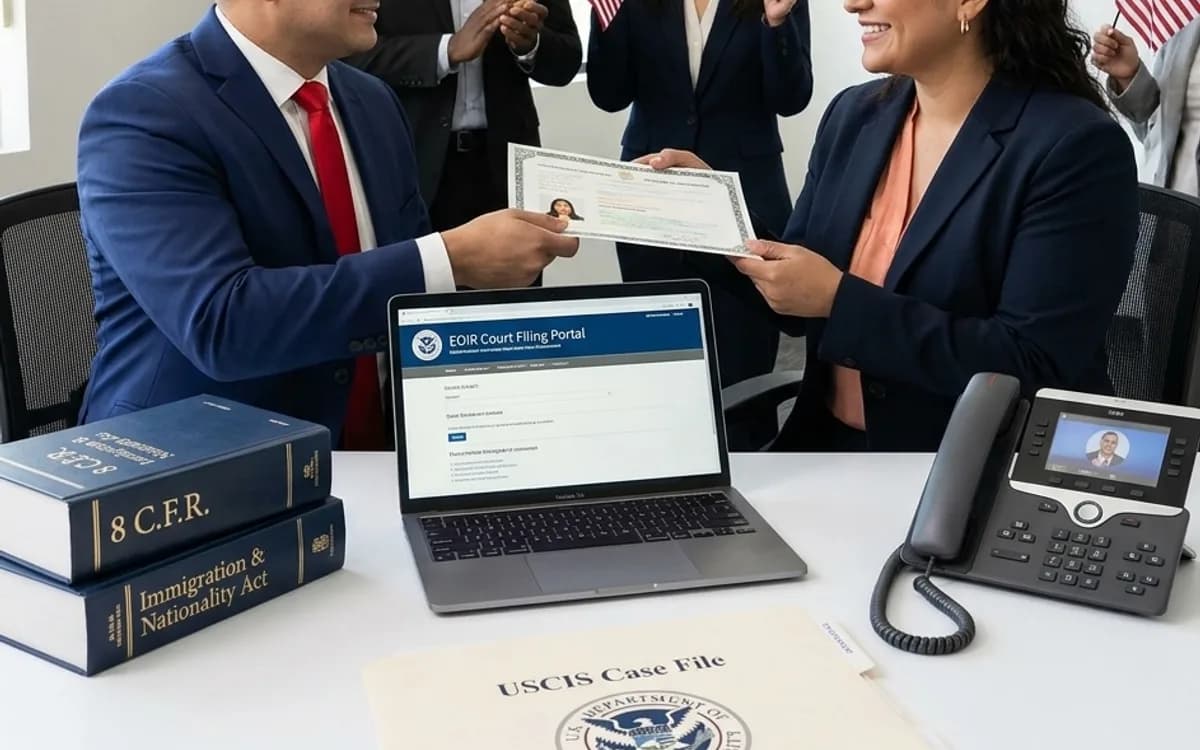
You got a notice in the mail, or ICE detained you at a check-in, or a letter with a hearing date at the Los Angeles Immigration Court showed up and nobody explained it. Maybe your family in Fresno or San Jose doesn't know who to call tonight. Here's one fact that changes your options immediately: your attorney does not need a California law license to represent you in this case, because immigration law is federal. What you do in the next thirty days, not the next six months, usually determines how much room you have left to act.
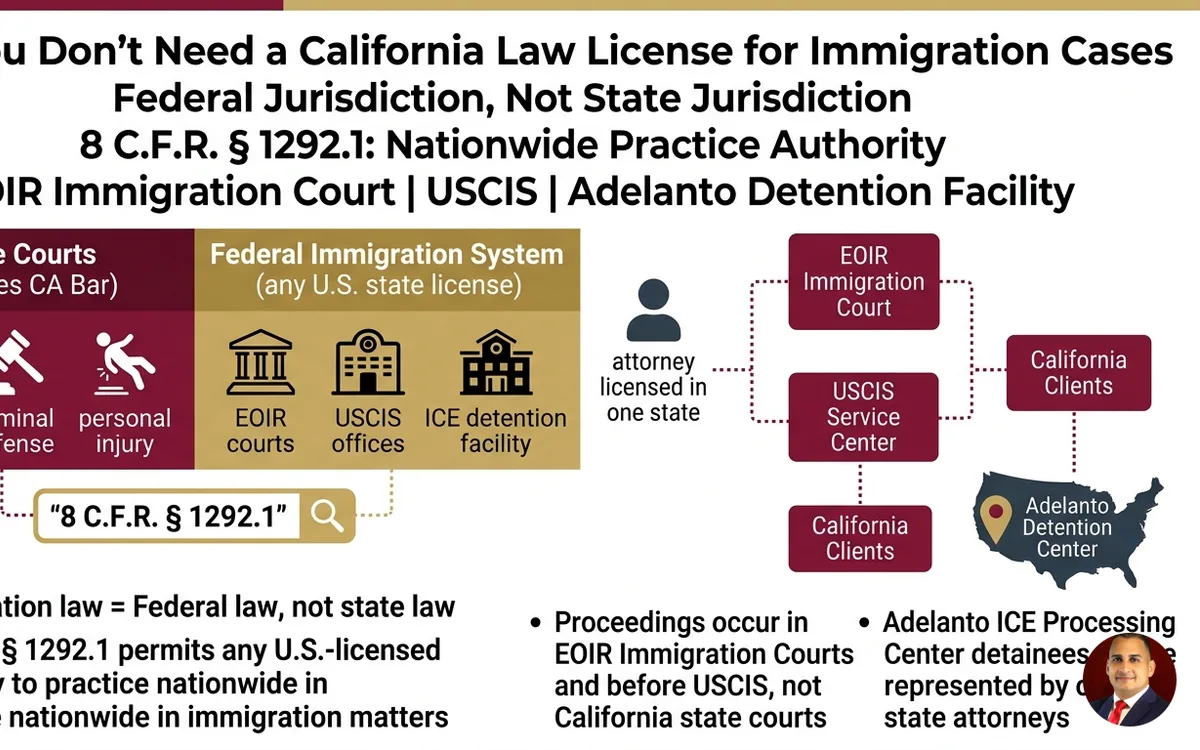
An immigration attorney for California cases does not need a California law license. Immigration law is federal: proceedings happen before EOIR immigration courts and USCIS, not state courts. Under 8 C.F.R. § 1292.1, any attorney licensed in one U.S. state can represent clients nationwide in these federal matters, including California residents and detainees at Adelanto.
The Hard Truth
The Hard Truth About How Long California Immigration Cases Take
Most removal defense cases in California take years, not months. The Los Angeles Immigration Court sets Master Calendar hearings first, often two to three months out, and the individual merits hearing where your asylum or cancellation case actually gets decided can follow two to four years later, depending on the judge's docket at that court.
Relief is never automatic, and no attorney can promise it. Cancellation of removal under INA § 240A requires ten continuous years of physical presence, good moral character, and proof that a qualifying U.S. citizen or lawful permanent resident relative would suffer hardship well beyond what removal normally causes a family. Asylum claims are evaluated under standards reaffirmed in Matter of A-B-, 27 I&N Dec. 316 (A.G. 2018), which still requires a protected ground and a government unable or unwilling to control the harm. A sympathetic story alone does not satisfy that standard.
One more limit, stated plainly because it matters to your planning: William J. Vasquez is admitted to practice before the Fourth, Fifth, and Eleventh Circuit Courts of Appeals, not the Ninth. BIA appeals themselves are open nationwide to any state-licensed attorney under 8 C.F.R. § 1292.1, so our team can file and brief a Board appeal from a Los Angeles or San Francisco case without issue. If a case moves past the BIA to a petition for review at the Ninth Circuit, Ninth Circuit-admitted counsel needs to file that petition, either in coordination with our office or through local counsel we help you identify.
What Happens If You Wait
What Waiting Actually Costs You
Deadlines in immigration court do not bend for a hard month. Miss a Master Calendar hearing at the Los Angeles Immigration Court and the judge can order removal in absentia, meaning the case proceeds and a removal order enters without you present, under INA § 240(b)(5).
A Board of Immigration Appeals notice of appeal is due within 30 days of the immigration judge's decision under 8 C.F.R. § 1003.3; file it late and the Board has no authority to accept it, no matter how strong your underlying removal defense claim is. A motion to reopen generally has to be filed within 90 days under INA § 240(c)(7)(C)(i), with narrow exceptions for changed country conditions in an asylum claim.
Asylum has its own clock. INA § 208(a)(2)(B) requires filing the I-589 within one year of your last arrival in the United States, or showing changed or extraordinary circumstances that excused the delay; applicants who wait past that window without a documented excuse can be barred from asylum entirely, even with a strong asylum claim on the merits. If you are weighing a provisional I-601A waiver before consular processing, leaving the country before that waiver is approved can trigger a separate bar under INA § 212(a)(9)(B) that keeps a family apart for years longer than planned.
Step-by-Step Process
What Happens After You Receive a Notice to Appear
A Notice to Appear (NTA) starts removal proceedings in immigration court. It lists an initial hearing date, sometimes a real one, sometimes 'TBD,' and once filed with the court it puts your case on the docket of whichever Immigration Court has jurisdiction, commonly the Los Angeles Immigration Court for Southern California respondents.
Master Calendar Hearing
This first hearing is short, usually 5 to 15 minutes. The judge confirms your identity and address, reads the allegations, takes your plea, and sets a schedule for filing applications like asylum or cancellation of removal. It is not the hearing where your case gets decided.
If You Are Detained: Bond Hearings at Adelanto
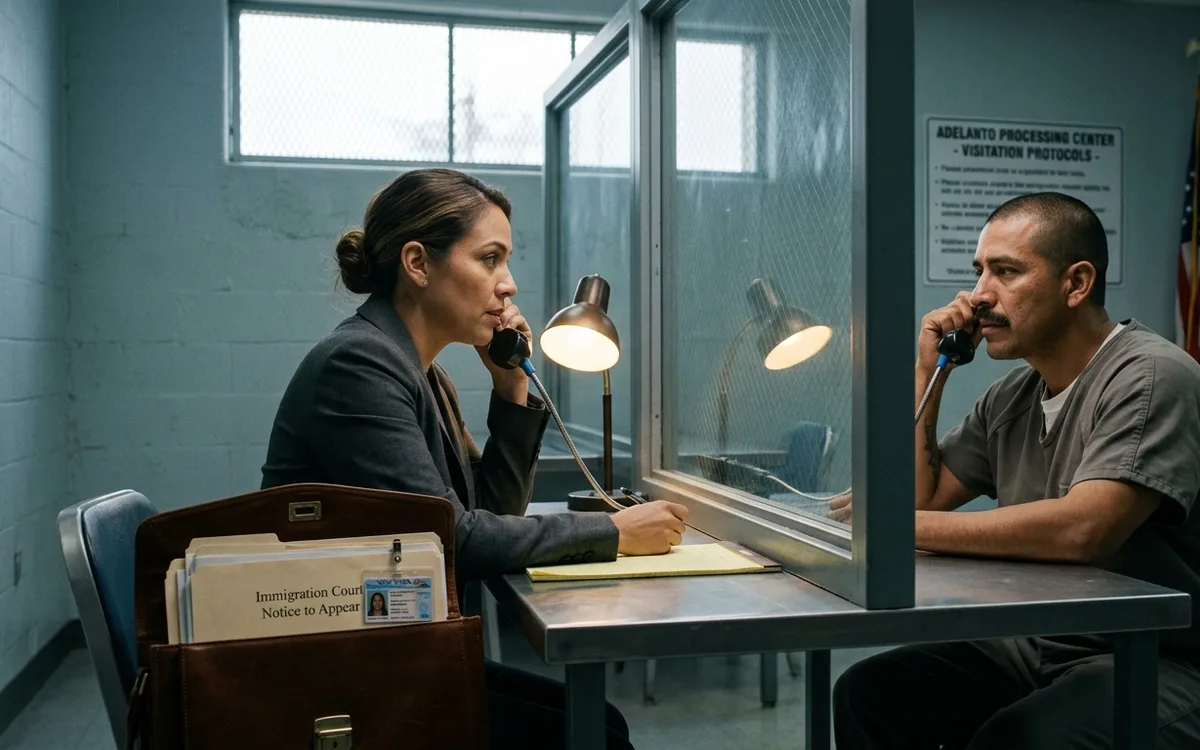
Noncitizens held at the Adelanto ICE Processing Center can request a bond hearing before an immigration judge, separate from the removal case itself. The judge weighs flight risk and danger to the community under 8 C.F.R. § 1003.19; hearings are typically calendared within a few weeks of the written request, though the Adelanto docket's exact pace varies by month.
Individual (Merits) Hearing
This is the actual trial of your case; it is where an immigration judge takes testimony and rules on relief like asylum, withholding of removal, or cancellation of removal. In Los Angeles, Individual Hearings are commonly scheduled one to three years after the Master Calendar, depending on the court's current docket.
If the Judge Denies Relief: Appeal Options
A Notice of Appeal to the Board of Immigration Appeals (BIA) is due within 30 days under 8 C.F.R. § 1003.3. A BIA appeal is briefed on the existing record, without new testimony. If the Board denies the appeal, a petition for review can go to the federal circuit court covering the immigration court that issued the order, which for Los Angeles and San Francisco cases is the Ninth Circuit; our office handles the BIA stage and coordinates Ninth Circuit-admitted counsel for the petition for review stage.
The USCIS Track: Asylum, Adjustment, and Naturalization
Affirmative Asylum at the San Francisco Asylum Office
If you are not in removal proceedings, you file Form I-589 directly with USCIS. California cases route to the San Francisco Asylum Office for interviews; per the USCIS Asylum Office processing-times tool (checked June 2025), affirmative asylum interview wait times for newly filed, non-expedited applications commonly run three to five years from filing, far longer than the agency's older target timelines.
Adjustment of Status at the Fresno Field Office
Form I-485 applicants in the Fresno Field Office's territory should check the USCIS processing-times tool before assuming a date; per that tool (checked June 2025), I-485 interview scheduling in Fresno has recently run in the 12 to 20 month range from filing, depending on category and current staffing.
Naturalization (N-400)
N-400 applications filed with the California Service Center or adjudicated at local California field offices have recently run roughly 5 to 9 months from filing to decision per USCIS's posted processing times (checked June 2025); local office backlogs vary enough that this range is a starting point, not a guarantee.
Family Petitions and the National Visa Center
Form I-130 approved at the USCIS California Service Center moves to the National Visa Center for visa number allocation if the beneficiary is abroad; the wait after NVC receipt depends entirely on the State Department Visa Bulletin category and country of chargeability, not on anything the attorney controls. See the family-based immigration page for how petition stages connect.
A Real-World Example
A Composite Example: From Detention to Bond Hearing
Here is a composite scenario built from the kind of case our office sees regularly in California removal defense work; it does not describe a real client, and it does not promise any result.
A woman we'll call Teresa is detained by ICE after a routine check-in and transferred to the Adelanto ICE Processing Center. She has lived in Riverside County for eleven years and has two U.S. citizen children. Her family contacts our office within the first week, which matters, because a bond motion can be filed as soon as counsel is retained, without waiting for the first Master Calendar date.
We file a bond motion with the immigration court, attaching proof of community ties: school records for the children, a lease, a pastor's letter, and documentation of any prior criminal history or its absence. At the bond hearing, the judge hears argument from both DHS counsel and Teresa's attorney on flight risk and danger to the community under 8 C.F.R. § 1003.19, then either sets a bond amount, denies bond, or takes the matter under advisement before issuing a written decision. Whatever the judge decides on bond, Teresa's underlying removal case continues separately on its own Master Calendar and Individual Hearing schedule, and that is the stage where asylum, cancellation of removal, or another form of relief gets decided on the merits.
About William J. Vasquez
William J. Vasquez is admitted to the North Carolina State Bar and to practice before the Fourth, Fifth, and Eleventh Circuit Courts of Appeals. Immigration proceedings before EOIR and USCIS are federal matters, so that admission authorizes him to represent clients in removal defense, asylum, waiver, and BIA appeal cases nationwide, including California-based cases at the Los Angeles Immigration Court, the San Francisco Asylum Office, and the Adelanto docket.
He does not hold a California law license, and this content does not claim one for him or for the firm's attorneys collectively. For matters that reach a Ninth Circuit petition for review, a step beyond the BIA appeal itself, his office coordinates with Ninth Circuit-admitted counsel rather than filing that petition directly. You can verify any attorney's license status through the relevant state bar's public attorney directory before hiring.
Key Terms Explained
Key Terms Used on This Page (Last updated June 2025)
Notice to Appear (NTA): The charging document that starts removal proceedings in immigration court; it lists the allegations against you and the legal basis DHS claims for removal.
Master Calendar Hearing: A short initial hearing, typically 5 to 15 minutes, where the judge takes pleadings and sets deadlines. It is procedural, not the hearing where relief is decided.
Individual (Merits) Hearing: The hearing where the immigration judge hears testimony and evidence and rules on applications for relief such as asylum or cancellation of removal.
Cancellation of Removal: Relief under INA § 240A that can be granted to certain long-term residents who meet statutory requirements, including continuous physical presence and proof of hardship to a qualifying relative.
Board of Immigration Appeals (BIA): The administrative appellate body that reviews immigration judge decisions; a Notice of Appeal is due within 30 days under 8 C.F.R. § 1003.3.
Petition for Review: The next step after a BIA denial, filed with the federal circuit court covering the immigration court of origin; for California cases, that is the Ninth Circuit, under INA § 242(b)(1), with a 30-day filing deadline.
Credible Fear Interview: A screening interview, usually conducted at or soon after detention, used to determine whether someone facing expedited removal can pursue an asylum claim instead.
I-601A Provisional Unlawful Presence Waiver: A waiver filed with USCIS before a consular interview abroad, intended to let certain family members avoid long separations caused by inadmissibility bars under INA § 212(a)(9)(B).
Frequently Asked Questions
Frequently Asked Questions
Q: Do I need a California-licensed attorney for my immigration case? A: No. Immigration proceedings are federal, handled through EOIR immigration courts and USCIS, so any attorney admitted to a U.S. state bar and authorized to practice immigration law, like William J. Vasquez under North Carolina State Bar admission, can represent you regardless of where you live in California.
Q: How long does the San Francisco Asylum Office take to schedule an interview? A: Per the USCIS Asylum Office processing-times tool (checked June 2025), newly filed affirmative asylum cases commonly wait three to five years for an interview, though applicants with older filing dates or qualifying circumstances may be scheduled sooner under USCIS's interview-scheduling priorities.
Q: What happens if I miss my Master Calendar hearing in Los Angeles? A: The immigration judge can order removal in absentia under INA § 240(b)(5), meaning the case proceeds and a removal order is entered without you present; reopening an in absentia order requires showing you did not receive proper notice or that exceptional circumstances excused the absence.
Q: Can your firm file my appeal if it goes to the Ninth Circuit? A: Our office can file and brief the BIA appeal stage nationwide under 8 C.F.R. § 1003.3 and 8 C.F.R. § 1292.1. A Ninth Circuit petition for review needs an attorney admitted to that specific circuit, so we coordinate with Ninth Circuit-admitted counsel for that stage rather than filing it ourselves.
Q: How does a U visa certification work with a California police department? A: A U visa petitioner needs a signed Form I-918B certification from a California law enforcement agency confirming the victim was helpful in investigating or prosecuting the crime; agencies set their own internal certification procedures and timelines, so requesting it early, before filing the I-918 with USCIS, matters.
Clients contacting our office about California cases most often mention two things afterward: that we explained the actual timeline instead of a rushed promise, and that we returned calls about upcoming deadlines without being chased. We do not publish star ratings or outcome statistics here, because case results in immigration matters depend on facts, law, and judges we do not control. What we can speak to is how we handle a case file: tracking every EOIR and USCIS deadline, explaining each filing before it goes out, and telling clients plainly when a legal theory is weak rather than taking a fee for a filing with poor odds.
If you have a hearing date at the Los Angeles Immigration Court, a detained family member at Adelanto, or a USCIS deadline approaching at the Fresno Field Office or California Service Center, the next useful step is confirming exactly what that deadline requires, not guessing. A consultation with our office starts there: pulling your specific notice, filing receipt, or court date and mapping what happens next.
Call our office to schedule a consultation on your removal defense, bond hearing, asylum, waiver, or appeal matter. William J. Vasquez and our team handle California-based EOIR and USCIS cases from Notice to Appear through BIA appeal, coordinating Ninth Circuit-admitted counsel when a case requires a petition for review. Bring your notice, any prior filings, and your hearing or interview date to the first call so we can map the actual deadlines in your case.
- Removal Defense
- Bond Hearings (Adelanto ICE Processing Center)
- Asylum Applications
- I-601A Provisional Waivers
- BIA and Federal Court Appeals
- Naturalization (N-400)
- Family-Based Immigration (I-130)
- U Visa for Crime Victims
- Employment-Based Immigration (H-1B)